
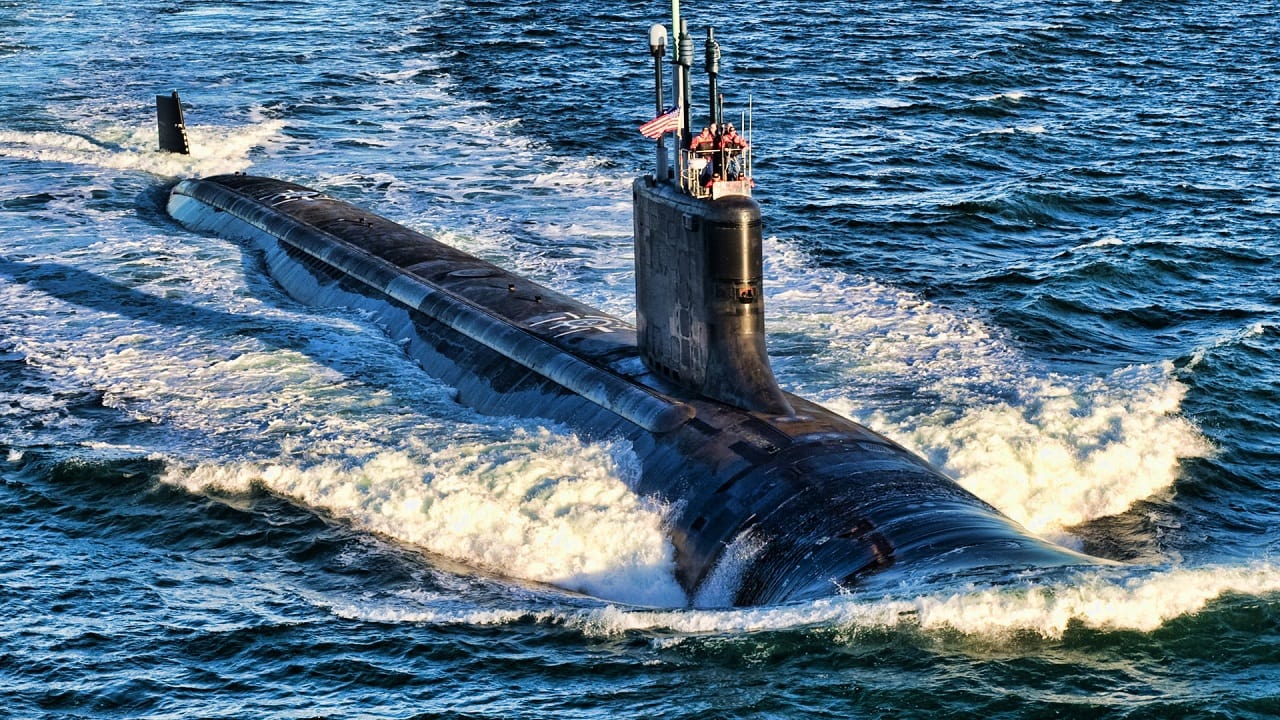
Summary and Key Points: The US Navy’s five SSN(X) priorities are speed, availability, lethality, stealth, and integrated unmanned systems, echoing the Seawolf class, of which only three were built. Congressional Budget Office estimates put SSN(X) at about 10,000 tons submerged, against 7,800 for the Virginia class, and about $9 billion per boat.
SSN(X) Nuclear Attack Submarine for the US Navy: Coming Soon?
The US Navy has outlined its vision for SSN(X), the next-generation nuclear-powered attack submarine intended to succeed the Virginia class.
The submarine will be faster, stealthier, more heavily armed, easier to maintain, and capable of operating as a mothership for underwater drones. Said another way, the Navy expects the SSN(X) to be better in every way than existing platforms.
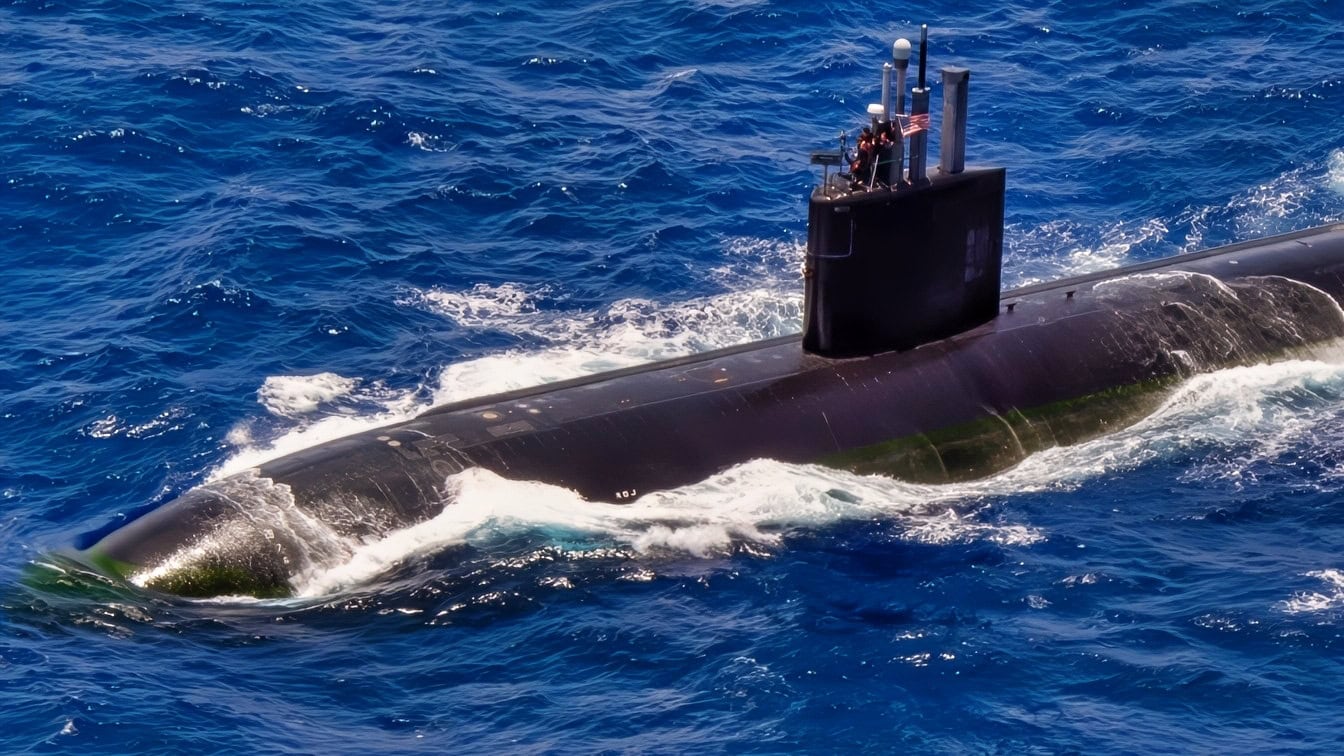
Virginia-class submarine USS North Carolina (SSN-777) sails during the at-sea phase of Exercise Rim of the Pacific (RIMPAC) 2024. Twenty-nine nations, 40 surface ships, three submarines, 14 national land forces, more than 150 aircraft and 25,000 personnel are participating in RIMPAC in and around the Hawaiian Islands, June 27 to Aug. 1. The world’s largest international maritime exercise, RIMPAC provides a unique training opportunity while fostering and sustaining cooperative relationships among participants critical to ensuring the safety of sea lanes and security on the world’s oceans. RIMPAC 2024 is the 29th exercise in the series that began in 1971. (U.S. Navy photo by Mass Communication Specialist 2nd Class Terrin Hartman)
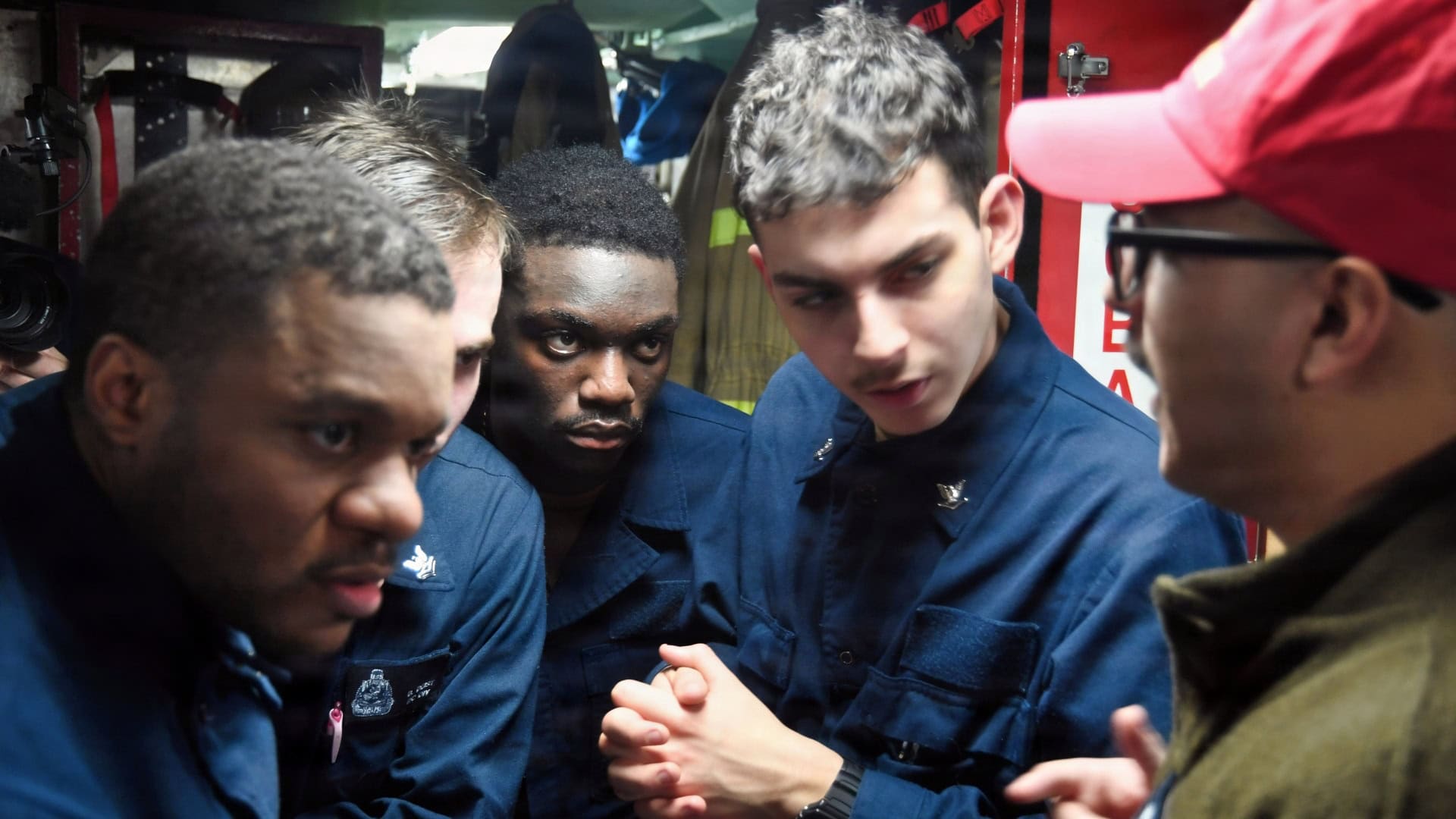
260321-N-ME988-1286 ARCTIC OCEAN (March 21, 2026) Machinist’s Mate (Nuclear) 1st Class Christian Garcia, right, assigned to the Virginia-class fast attack nuclear-powered submarine USS Delaware (SSN 791), provides feedback during a Crucible event to earn the Submarine Warfare qualification, commonly referred to as “fish,” while Delaware transits the Arctic Ocean, March 21, 2026. The Crucible event is the final stage in earning the Submarine Warfare qualification and consists of a question-and-answer board as well as damage control drills to demonstrate knowledge and skills learned. Delaware and crew operate under Submarine Squadron (SUBRON) 12 whose primary mission is to provide fast-attack submarines that are ready, prepared, and committed to meet the unique challenges of undersea combat and deployed operations in unforgiving environments across the globe. (U.S. Navy photo by Chief Mass Communication Specialist Darren M. Moore)
Rear Admiral Andrew Miller, the Navy’s submarine requirements chief, described the concept at the Naval Submarine League’s annual conference in Arlington, Virginia, on November 12.
The Navy’s latest shipbuilding plan anticipates beginning construction in the early 2040s. The program remains in early development; no submarine has been ordered or built.
Replacing Virginia
The Virginia class remains the backbone of the US nuclear attack submarine fleet and will continue serving for decades.
But, as Miller argues, future threats will require capabilities beyond what the Virginia can offer. “To dominate high-end peer threats in the middle of this century, a clean-sheet design is required,” Miller said.
Accordingly, the Navy wants greater payload capacity, additional electrical power, improved hydrodynamic performance, and the flexibility to integrate future technologies.

The Virginia-class attack submarine Pre-commissioning Unit (PCU) John Warner (SSN 785) is moved to Newport News Shipbuilding’s floating dry dock in preparation for the Sept. 6 christening. A team of shipbuilders spent about eight hours to move the submarine from the facility where it was assembled to the dock. (U.S. Navy photo courtesy of Huntington Ingalls Industries by John Whalen/Released)

The USS Constitution sails past the Virginia-class nuclear-powered fast-attack submarine USS Massachusetts (SSN 798) during Massachusetts’ commissioning in Boston, on March 28th, 2026. Massachusetts is the newest fast-attack submarine and the fifth U.S. Navy vessel to bear the name. (U.S. Navy photo by Mass Communication Specialist 2nd Class Lucas J. Hastings)
The Virginia class currently in operation is a capable boat, displacing 7,800 tons, with larger Block V boats incorporating the Virginia Payload Module (VPM).
But the proposed SSN(X) could displace approximately 10,000 tons submerged, according to Congressional Budget Office estimates.
So the Navy is seeking a fundamentally different submarine, not another incremental Virginia-class upgrade.
Return to Seawolf
SSN(X) is expected to incorporate characteristics associated with the Seawolf-class attack submarine, developed during the later Cold War.
The Navy built only three Seawolf-class boats before terminating the larger procurement program amid high costs and shifting strategic priorities.
Seawolf was designed for demanding anti-submarine warfare missions against advanced Soviet submarines.
It emphasized high speed, acoustic stealth, and substantial weapons capacity.
Specifically, the Navy has identified five priorities for SSN(X): one, high maximum or flank speed and improved tactical control speed; two, greater operational availability; three, increased lethality; four, superior stealth and layered survivability; and five, integrated unmanned systems and command-and-control capabilities.
Of course, the exact SSN(X) specifications remain undisclosed.

(August 16, 2006) – USS Jimmy Carter (SSN 23) sits moored in the Magnetic Silencing Facility at Naval Base Kitsap Bangor Aug 16 for her first ìdepermingî treatment. The deperming process reduces a ships electromagnetic signature as she travels through the water. U.S. Navy Photograph by MCCM(AW) Jerry McLain (Released)
Underwater Drone Mothership
Perhaps the most significant departure from existing attack submarine concepts is SSN(X)’s emphasis on uncrewed underwater vehicles (UUVs).
Miller described a transformation from the traditional submarine role: “We are redefining the role of the submarine from standalone hunter-killer to a capital mothership.” The Navy envisions launching unmanned systems directly through submarine torpedo tubes.
Those vehicles could then extend the submarine’s reach beyond the immediate operating area of the vessel.
Potential missions for UUVs include intelligence, surveillance, and reconnaissance; underwater reconnaissance and mapping; detecting enemy submarines or maritime threats; and supporting mine warfare and other missions in dangerous waters.
UUVs offer a strategic advantage in that they can investigate contested waters while the crewed submarine remains farther from immediate threats.
However, significant technical challenges remain before the Navy can fully utilize a fleet of UUVs, including underwater communication, autonomous navigation, recovery, and command and control.
The Navy has not disclosed the specific drones SSN(X) will carry or how many it could deploy.
Development Timeline
The Navy completed its SSN(X) analysis of alternatives in November 2025. The Pentagon’s Cost Assessment and Program Evaluation office endorsed the requirements in March 2026.
The service hopes to receive Milestone A approval by the end of 2026, permitting entry into the technology maturation and risk reduction phase.
Construction is currently envisioned for the early 2040s, meaning the first boat remains many years away.
A Congressional Budget Office analysis estimated that SSN(X) could cost approximately $9 billion per submarine on average.
Of course, that is a planning estimate—not an agreed-upon procurement price.
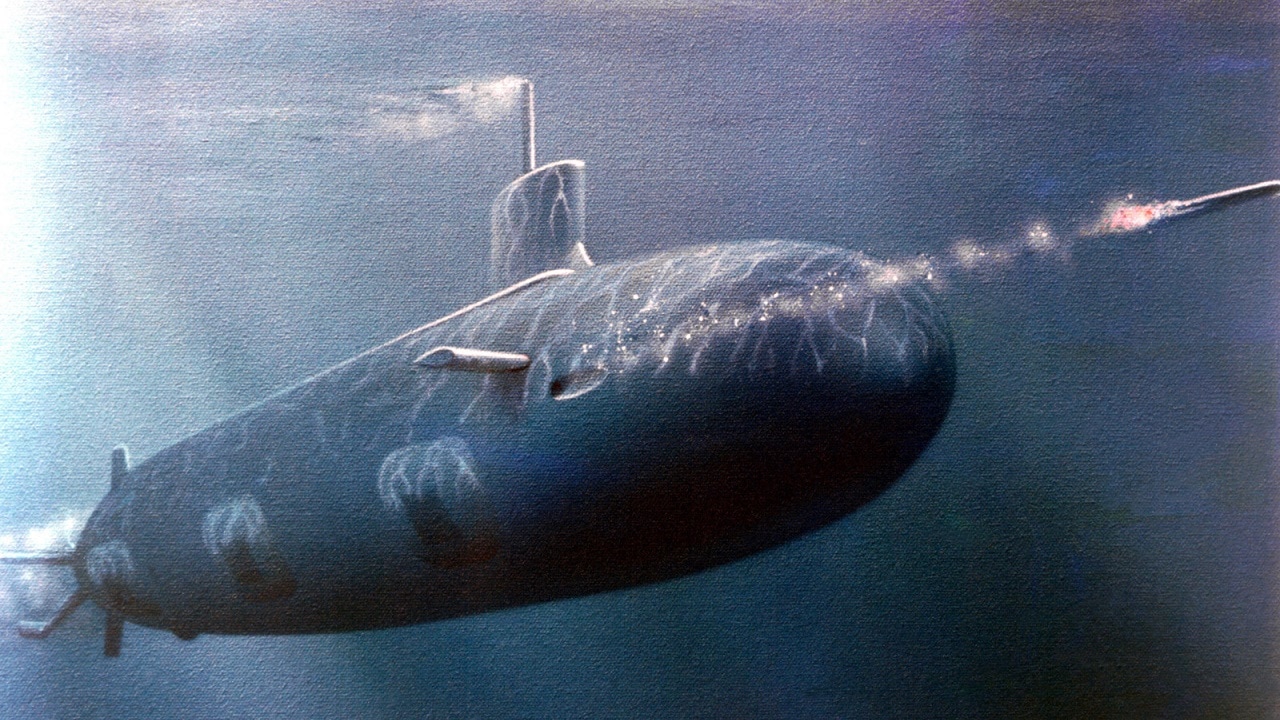
An artist’s concept of the nuclear-powered submarine SEAWOLF (SSN-21).
Of course, the Navy’s concerns center on increasingly capable Chinese and Russian undersea forces.
China is investing in nuclear-powered attack submarines and conducting extensive undersea mapping in the western Pacific.
Some analysts suggest China may produce 20 to 40 comparable submarines over the next decade. Russia, meanwhile, remains a significant undersea competitor too, with advanced submarines and systems, including the Poseidon nuclear-armed, nuclear-powered underwater vehicle.
About the Author: Harrison Kass
Harrison Kass is a writer and attorney focused on national security, technology, and political culture. His work has appeared in Tablet, City Journal, The Hill, The Spectator, and The Cipher Brief. He holds a JD from the University of Oregon and a master’s in Global & Joint Program Studies from NYU—more at harrisonkass.com.