
Summary and Key Points: Expert Harrison Kass traces Chester Nimitz’s line, “Some of the best advice I’ve had comes from junior officers and enlisted men,” to the career behind it: a 1905 Naval Academy graduate, seventh of 114, who ran the destroyer USS Decatur aground in 1908, was court-martialed and reprimanded, then became a submarine and diesel-engine specialist and the Pacific Fleet commander who trusted the codebreakers at Midway in June 1942 and ended the war a five-star fleet admiral.
Chester W. Nimitz Is a Real US Navy Legend
Fleet Admiral Chester W. Nimitz ranks among the most consequential American naval commanders of World War II.
As commander of the Pacific Fleet, he helped direct the American naval campaign against Imperial Japan, where his leadership contributed to victories at Midway, Guadalcanal, and across the Central Pacific.
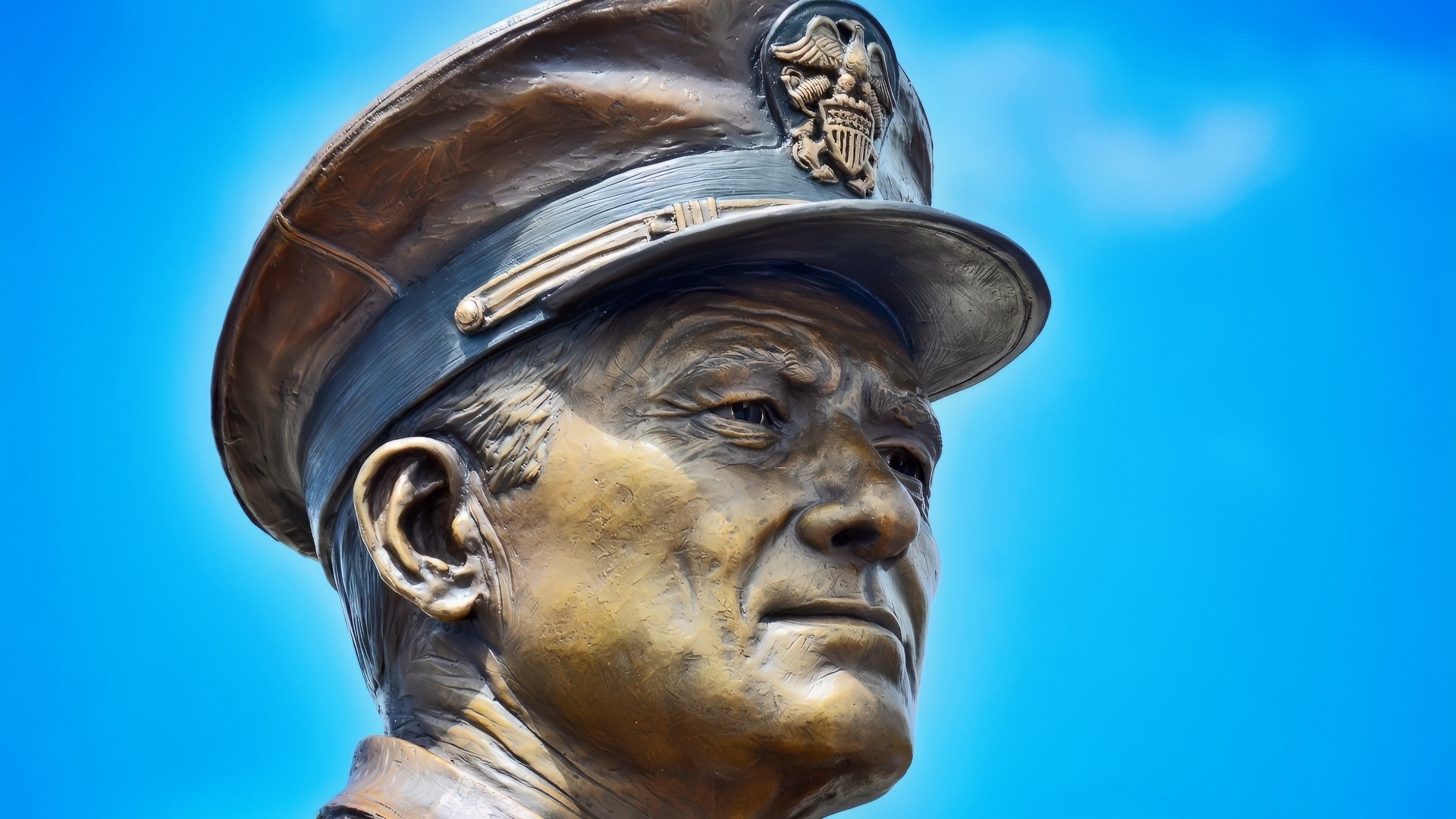
A 9-foot tall bronze statue of Fleet Adm. Chester Nimitz is unveiled at a statue dedication ceremony in front of the Battleship Missouri Memorial. Created by sculptor Rip Caswell, the statue depicts Nimitz as he appeared in battle in 1944. Nimitz commanded the largest ocean area and most ships of any single commander in history. (U.S. Navy photo by Mass Communication Specialist 1st Class Daniel Barker/Released)
Yet despite his accomplishments, Nimitz’s approach to command was understated. “Some of the best advice I’ve had comes from junior officers and enlisted men,” Nimitz once said—a sentiment that captures his belief that valuable knowledge was not only gained from senior officers, an attitude he gained in part from mistakes early in his career.
Early Life
Born February 24, 1885, in Fredericksburg, Texas, his father died before he was born, and Nimitz was raised in a family with only modest financial resources.
Nimitz was inspired by his grandfather, Charles Henry Nimitz, a former merchant mariner, to develop an interest in the sea.
After originally considering West Point, Nimitz decided instead to attend the US Naval Academy, entering in 1901 and graduating in 1905, seventh in a class of 114.
Initially, Nimitz served aboard surface warships in the rapidly modernizing US Navy.
His early career coincided with the Navy’s transition toward increasingly complex machinery and modern naval warfare.
Despite early promise, Nimitz soon faced a significant professional setback.

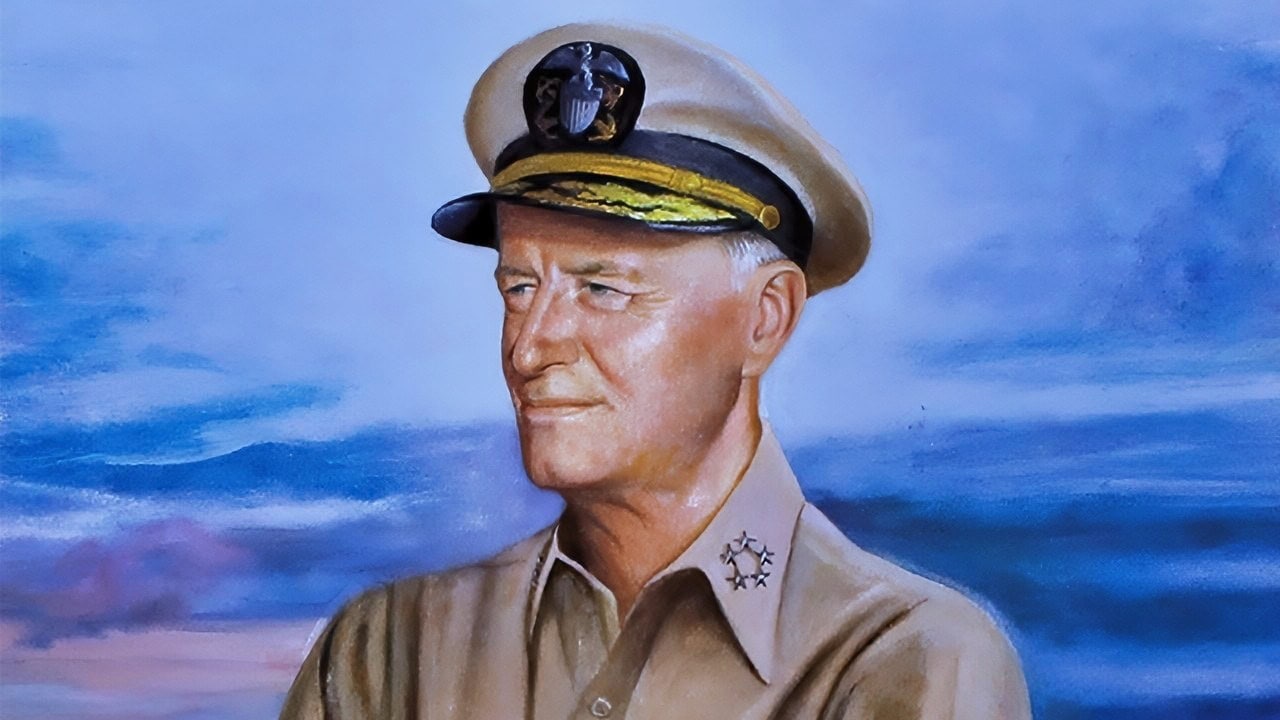
U.S. Navy Admiral Chester W. Nimitz Portrait. Image Credit: Creative Commons.
Grounding Decatur
In 1908, Nimitz was commanding the destroyer USS Decatur (DD-5) in the Philippines. On July 7, 1908, Decatur ran aground while entering Batangas Harbor.
Nimitz was held responsible for the accident and subsequently court-martialed.
He was found guilty of neglect of duty and received a letter of reprimand.
The incident could have seriously damaged his career, as groundings were especially serious—a mistake that fell on Nimitz, who was responsible for the safety of his ship and sailors.
The mistake was serious.
But the Navy did not sideline him permanently.
He continued serving and eventually became one of the service’s foremost submarine specialists.
The Submarine Years
After his destroyer service, Nimitz entered the Navy’s emerging submarine community.
Submarines were still primitive, dangerous, and unreliable.
Operating them successfully required extensive technical knowledge and close cooperation between officers and enlisted men.
Nimitz commanded several early submarines, including USS Plunger and USS Snapper.
He also commanded the USS Skipjack, later renamed E-1.
In 1912, Nimitz received the Silver Lifesaving Medal for rescuing a sailor from drowning.
He developed substantial expertise in submarine propulsion, particularly diesel engines.
In 1913, he traveled to Germany to study diesel-engine technology and later helped oversee its application in American submarines.
In sum, submarine service exposed Nimitz to an environment where practical expertise often mattered more than formal rank, where an experienced enlisted mechanic might understand a machinery problem better than the commanding officer.
Professional Development
Nimitz’s career advanced through a combination of operational assignments, technical work, and senior staff positions. During World War I, he served as chief of staff to the commander of the Atlantic Fleet’s submarine force.
He subsequently held positions involving submarine construction, fleet operations, and naval administration.
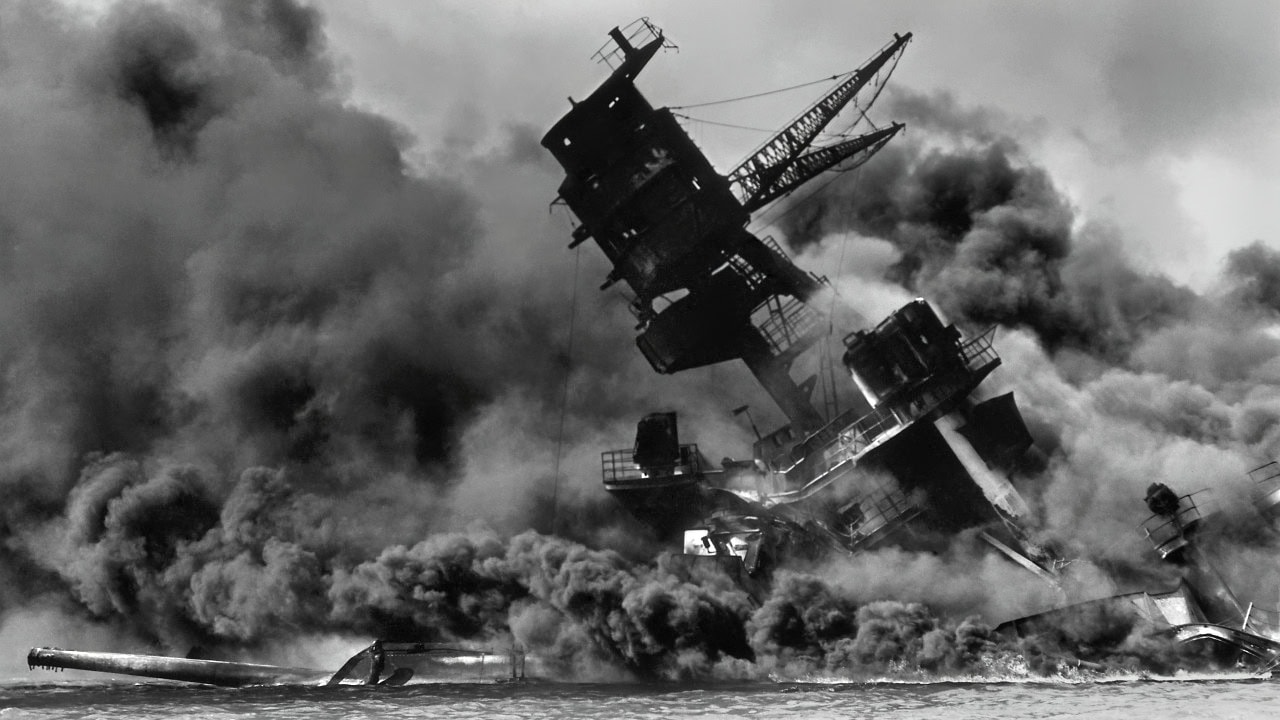
The USS Arizona (BB-39) burning after the Japanese attack on Pearl Harbor, 7 December 1941.
His experience gave him an unusually broad understanding of the Navy’s technical and organizational requirements.
Nimitz also attended the Naval War College and graduated in 1923.
There, officers studied strategy, operational planning, and hypothetical conflicts with Japan.
This development reinforced for Nimitz the benefits of preparation and informed decision-making.
Along the way, Nimitz developed a reputation for composure and collaborative leadership. He emphasized information gathering as part of the decision-making process.
World War II
Following Japan’s attack on Pearl Harbor, the US Pacific Fleet faced a severe crisis. President Roosevelt selected Nimitz to command the fleet.
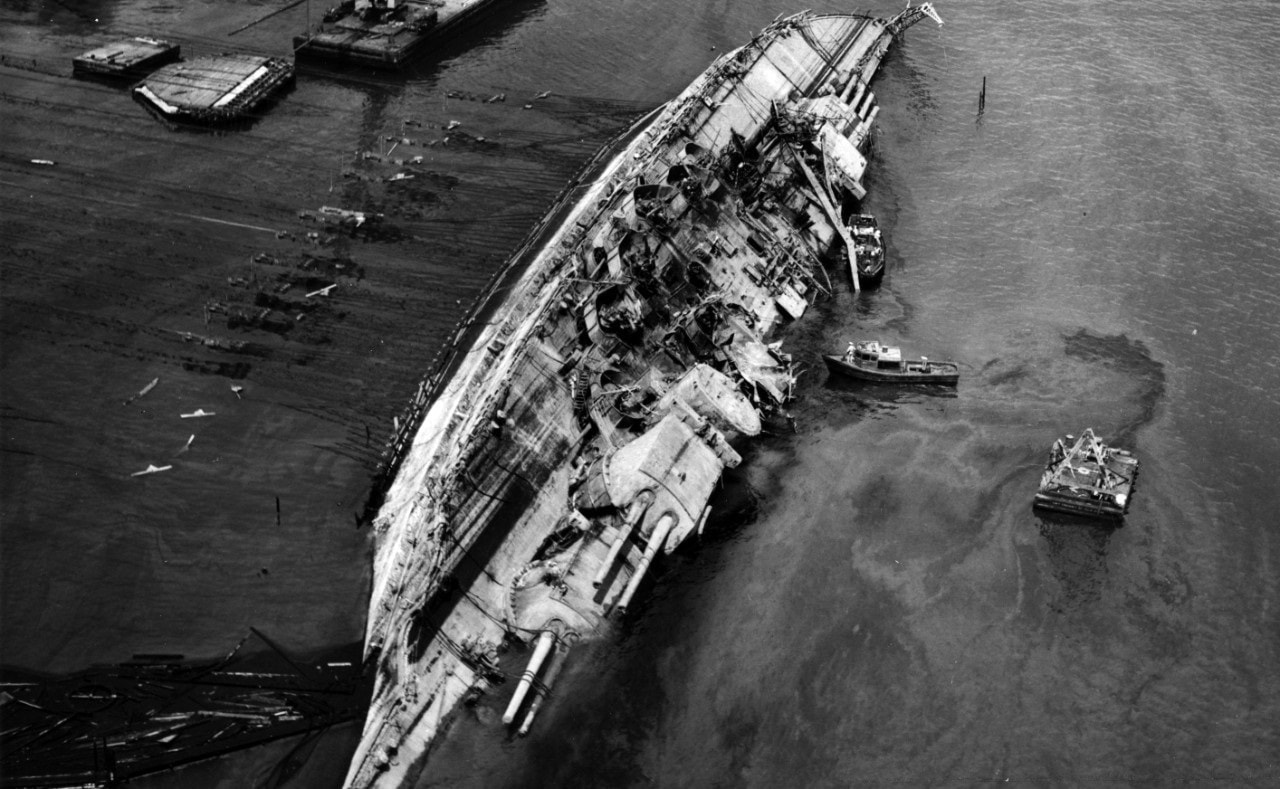
The USS Oklahoma, moored at Ford Island, Pearl Harbor, was sunk by Japanese aircraft during the attack on Pearl Harbor. A total of 429 crewmen aboard the USS Oklahoma were killed in the early morning hours of Dec. 7, 1941, after the ship quickly capsized from the numerous torpedo hits.
Nimitz immediately began focusing on restoring morale and preparing the fleet for future operations. He delegated responsibility and considered competing points of view.
At the Battle of Midway in June 1942, Nimitz acted on intelligence suggesting Japan intended to attack Midway Atoll; Nimitz trusted the intelligence assessment of codebreakers and intelligence officers, despite the uncertainty inherent in predicting enemy movements.
The resulting American victory destroyed four Japanese aircraft carriers and tipped the balance of the war in favor of the US. Nimitz ultimately became one of only four American naval officers promoted to the five-star rank of fleet admiral.
About the Author: Harrison Kass
Harrison Kass is a writer and attorney focused on national security, technology, and political culture. His work has appeared in Tablet, City Journal, The Hill, The Spectator, and The Cipher Brief. He holds a JD from the University of Oregon and a master’s in Global & Joint Program Studies from NYU—more at harrisonkass.com.