

Summary and Key Points: “If you’re not making waves, you’re not under way.” The line, widely credited to Chester Nimitz, fits the arc of his career: an ensign who ran the destroyer USS Decatur aground at Batangas on July 7, 1908, reported it himself and took a court-martial conviction and reprimand, then, 37 years later, signed Japan’s surrender aboard USS Missouri. Steve Balestrieri follows him through submarines and diesel engines, the December 31, 1941, change of command aboard the submarine USS Grayling, the decision to keep Pearl Harbor’s shaken staff, and the gamble on Joseph Rochefort’s codebreakers at Midway.
US Navy Admiral Chester Nimitz Made Naval History
Some naval careers end on a mudbank. Chester Nimitz’s very nearly did. On July 7, 1908, a 23-year-old ensign ran the destroyer USS Decatur aground while bringing her into Batangas Harbor in the Philippines. He reported the grounding himself, was relieved of command, and faced a court-martial for culpable inefficiency in the performance of duty. The court found him guilty.
However, it weighed his otherwise spotless record and handed down only a public reprimand.
Thirty-seven years later, that same officer stood on the deck of the USS Missouri in Tokyo Bay and signed the Japanese surrender on behalf of the United States.
Nimitz is widely credited with a line that sums up that arc better than any biographer could: “If you’re not making waves, you’re not under way.” A ship sitting at anchor leaves a flat sea.
A ship that’s moving disturbs the water.
Nimitz kept moving, and early on he hit the mud. None of that stopped him.
A Texas Hill Country Kid Made An Unlikely Admiral
Nimitz was born on February 24, 1885, in Fredericksburg, Texas, a landlocked German settlement in the Hill Country near a hotel his grandfather, Charles, a retired sea captain, built.
Locals called it the Steamboat Hotel for its bow-shaped front, and today it anchors the National Museum of the Pacific War. His grandfather’s sea stories stuck.
Young Chester left high school before graduating to enter the Naval Academy with the Class of 1905, where the Lucky Bag yearbook described him as a man “of cheerful yesterdays and confident tomorrows.”
That optimism would be seriously tested.
The Submariner And The Engineer
After the Decatur grounding incident, the Navy moved Nimitz to submarines, and he thrived there.
He commanded several early boats and led the Atlantic Submarine Flotilla.
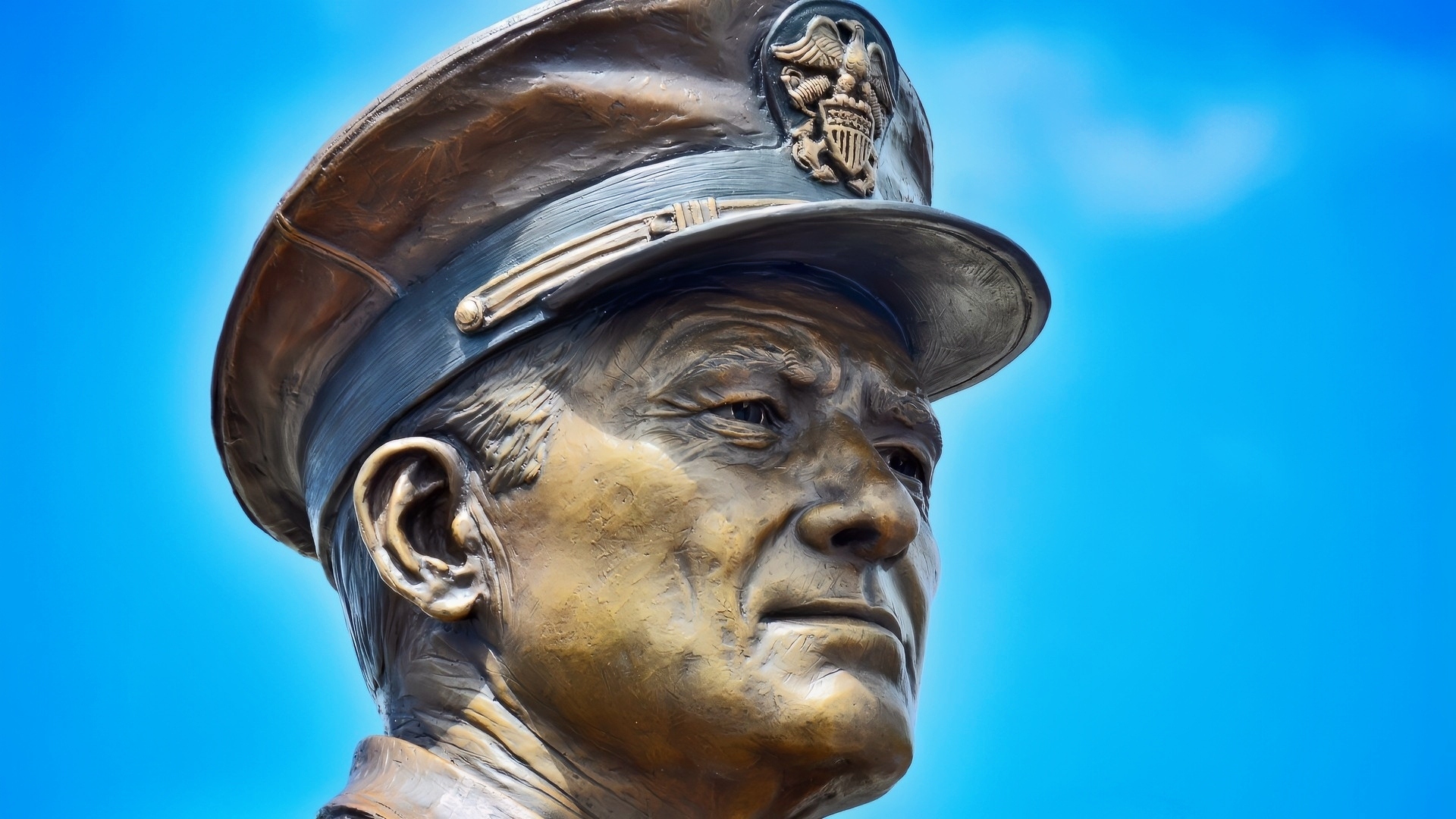
A 9-foot tall bronze statue of Fleet Adm. Chester Nimitz is unveiled at a statue dedication ceremony in front of the Battleship Missouri Memorial. Created by sculptor Rip Caswell, the statue depicts Nimitz as he appeared in battle in 1944. Nimitz commanded the largest ocean area and most ships of any single commander in history. (U.S. Navy photo by Mass Communication Specialist 1st Class Daniel Barker/Released)
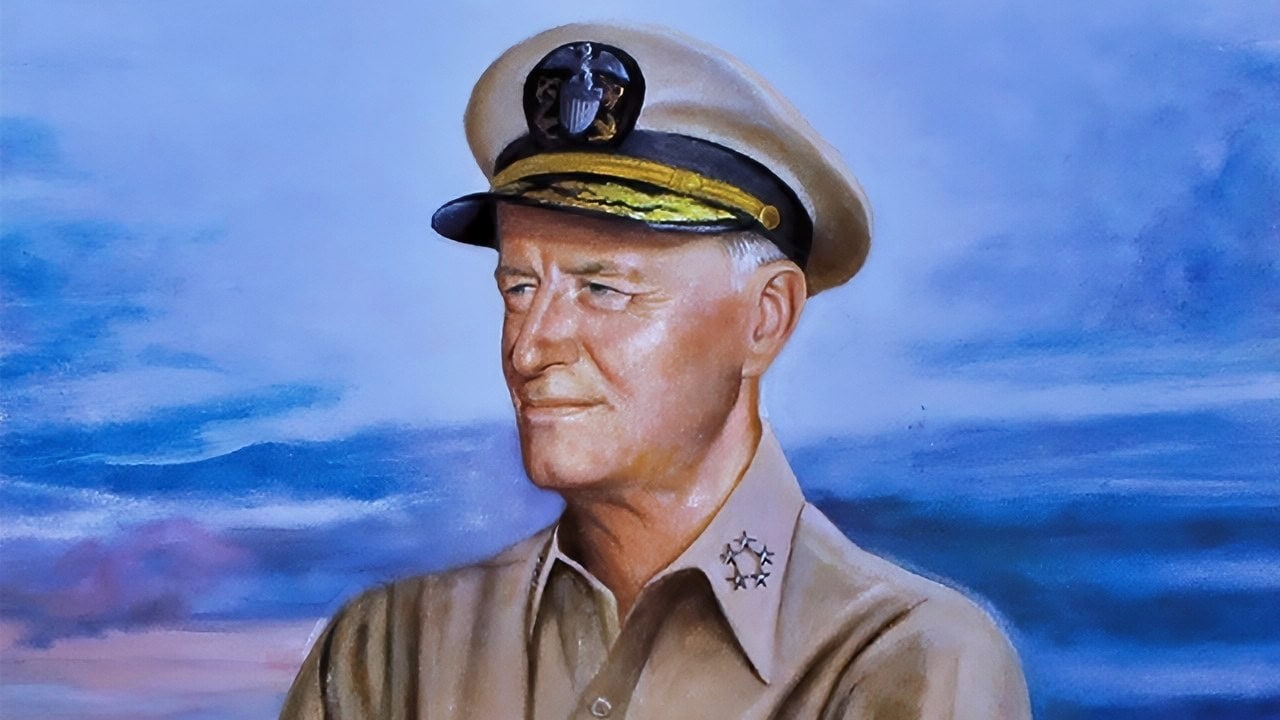
Chester Nimitz Navy Admiral. Image Credit: Creative Commons.
As a lieutenant, he saved the life of a drowning sailor, diving into the water to keep him alive until a boat could pick them both up.
In 1913, he was sent to Germany to study diesel engines, and he came home to oversee the diesel installation on the oiler USS Maumee.
For those keeping score at home, that’s an ensign with a court-martial on his record becoming one of the Navy’s leading diesel experts.
During World War I, he served as chief of staff to the commander of the Atlantic submarine force, a tour that convinced him of the value of submarine warfare.
This experience would later inform his decisions.
Later, at the Naval War College, he studied the logistics of a possible war in the Pacific.
Those studies would become very relevant two decades later.
He returned to the surface fleet and commanded the heavy cruiser Augusta as flagship of the Asiatic Fleet from 1933 to 1935, and in 1939 he became Chief of the Bureau of Navigation.
Then came December 7, 1941.
Taking Command Of A Wrecked Fleet
A few days after Pearl Harbor, President Roosevelt famously ordered the Secretary of the Navy to tell Nimitz “to get the hell out to Pearl and stay there until the war is won,” according to the National Museum of the Pacific War’s history.
Navy Secretary Frank Knox told Nimitz he would be gone a long time, and the news stunned him because his promotion leapfrogged him over 20 senior Admirals.
On December 31, 1941, Nimitz took command of the Pacific Fleet in a ceremony aboard the submarine USS Grayling. It was a nod to his roots, and also a reflection of reality.
The battleships he would have used were sitting on the bottom of the harbor.
In my opinion, his first decision was one of his best.
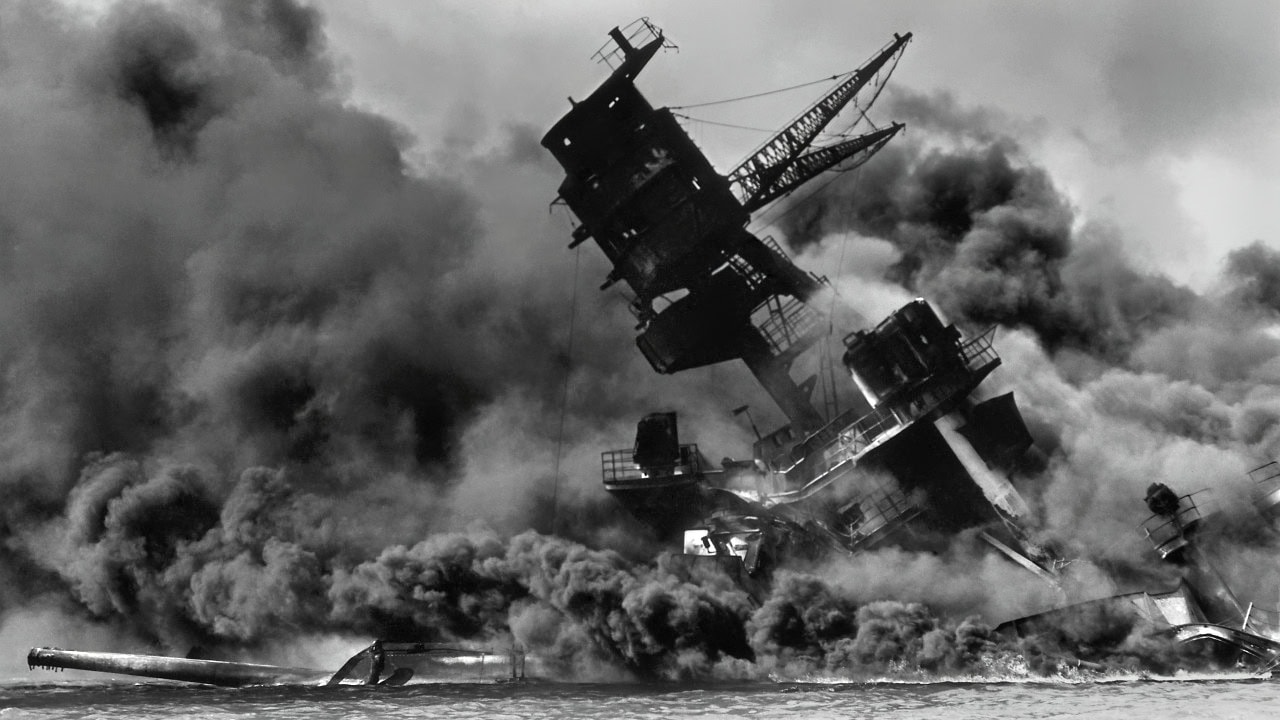
The USS Arizona (BB-39) burning after the Japanese attack on Pearl Harbor, 7 December 1941.
A shaken, demoralized staff expected to be purged. Instead, Nimitz expressed his full confidence in them and kept them all.
Keeping the staff intact prevented a massive loss of institutional knowledge during a time of extreme crisis.
Some officers, such as intelligence officer Lieutenant Commander Edwin T. Layton and war plans officer Captain Charles “Socrates” McMorris, fully expected immediate dismissal or transfer in disgrace following the Pearl Harbor disaster.
But they would play large roles in Nimitz’s staff.
Trusting The Codebreakers Was A Real Gamble That Paid Off
So how does an admiral with a crippled battle line turn the tide against the Imperial Japanese Navy? He listens to and trusts the right people.
Commander Joseph Rochefort’s codebreakers at Station Hypo concluded that Midway was Japan’s next target.
They would stage an invasion of the Aleutian Islands and draw out the US aircraft carriers, and ambush them before taking Midway, thus depriving the US of any offensive capability in the Pacific.
Intelligence officials in Washington disagreed. Nimitz sided with Rochefort and his fleet intelligence officer, Edwin Layton, and positioned his outnumbered carriers accordingly.
Had he guessed wrong, those carriers could have been thousands of miles away when the Japanese fleet arrived.
Instead, the U.S. Navy sank four Japanese carriers in June 1942 and turned the tide of the war in just a few hours.
Granted, a lot of things went the US’ way; however, Nimitz put his carriers where they needed to be, and that took nerve.
Under his direction, the island campaigns that followed, from the Solomons and Gilberts to the Marshalls, Marianas, Iwo Jima, and Okinawa, were fought.
In December 1944, he was promoted to the newly created five-star rank of fleet admiral.
After the bloody battle for Iwo Jima, he wrote the line that still defines the Marine Corps: “Uncommon valor was a common virtue.”
The Quiet Man In A Loud War
The press often overshadowed Nimitz with louder personalities like the self-serving Douglas MacArthur and Admiral “Bull” Halsey. However, he was the architect of the American victory over Japan.
I’ve always thought that his low-key style was a big part of why it worked.
He didn’t need the headlines.
He and General George Marshall were the quiet but indispensable leaders the US needed.
After the war, he served as Chief of Naval Operations from 1945 to 1947.
In 1947, answering questions in the war-crimes trial of German Admiral Karl Dönitz, Nimitz candidly acknowledged that the U.S. had waged unrestricted submarine warfare against Japan.
That’s not the kind of honesty you see often from senior officers.
According to the Naval Academy’s archive of his papers, Nimitz never formally retired from the Navy.
He died at his home on Yerba Buena Island in San Francisco Bay on February 20, 1966. The Navy later named the lead ship of its supercarrier class, the USS Nimitz, in his honor.
He started his career stuck in the mud. He finished it underway as the CNO.
About the Author: Steve Balestrieri
Steve Balestrieri is a National Security Columnist. He served as a US Army Special Forces NCO and Warrant Officer. In addition to writing on defense, he covers the NFL for PatsFans.com and is a member of the Pro Football Writers of America (PFWA). His work was regularly featured in many military publications.