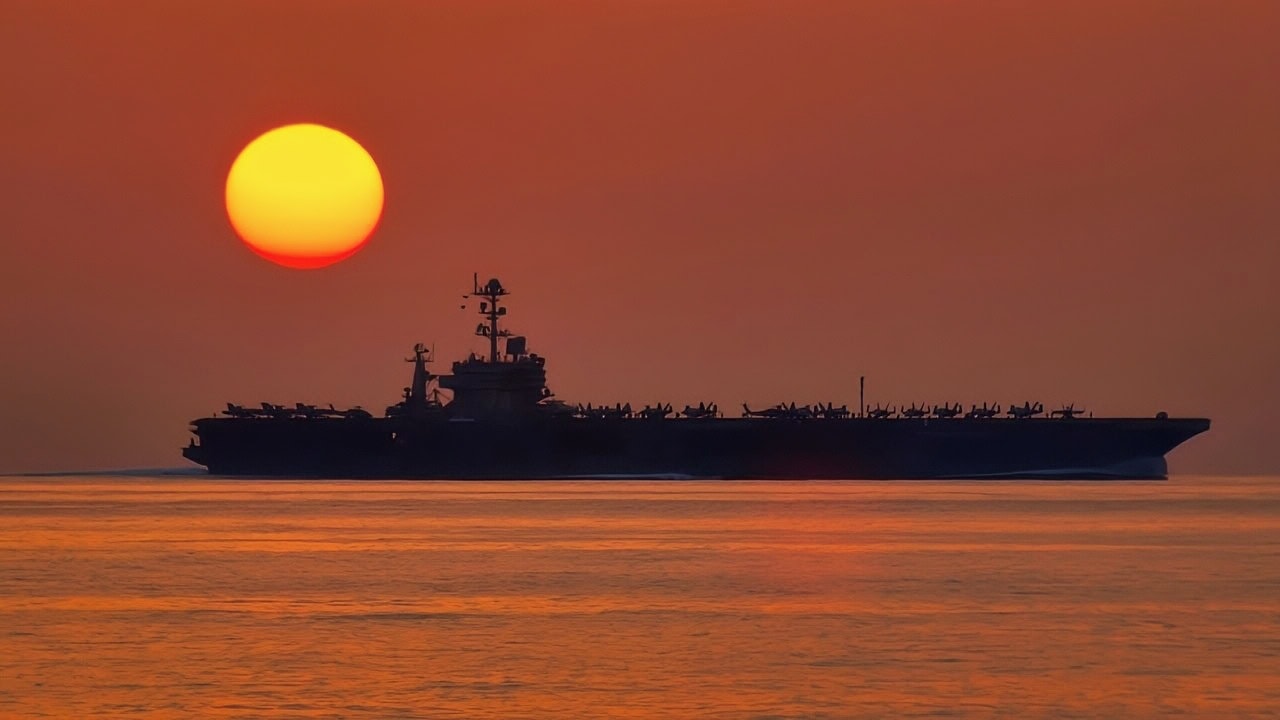
Summary and Key Points: Sean Spoonts, a Navy veteran who flew as a helicopter anti-submarine aircrewman from frigates and destroyers in the Cold War, describes the adjustment awaiting the crew of the aircraft carrier USS Abraham Lincoln (CVN-72) after a 10-month deployment: 12-hour days, 7 days a week, time frozen at “eight more days and a wake-up,” missed seasons and holidays, a 2-or-3-friend social circle, sea legs, bells every 30 minutes, and reported self-harm attempts across the strike group.
Aircraft Carrier USS Abraham Lincoln: 10 Months Onboard Isn’t Easy
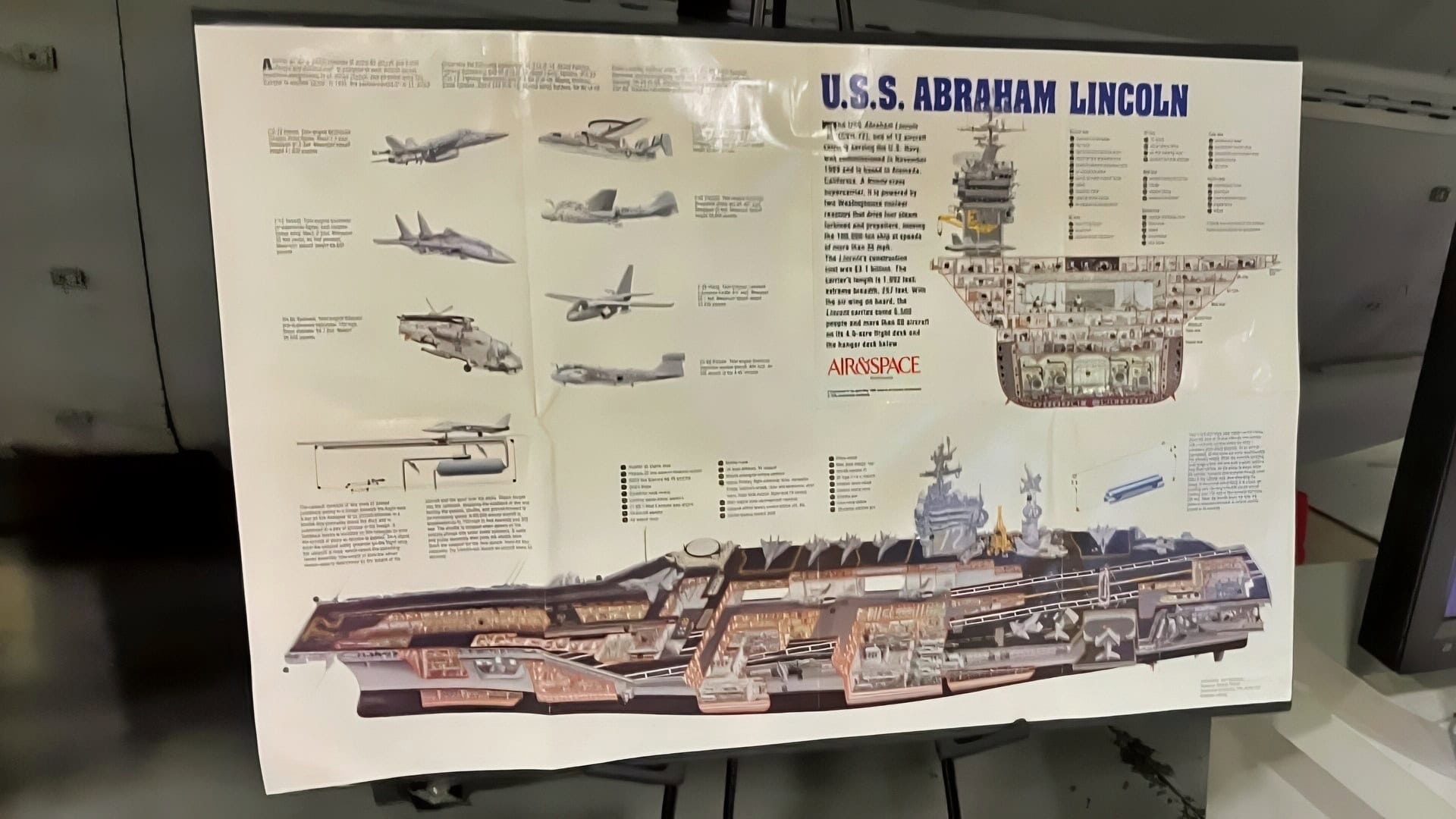
Aviation Museum of Kentucky USS Abraham Lincoln Carrier Photo. 19FortyFive.com Image.
In the Navy, we used to say that going to sea was like being sent to a prison that could also sink and drown you. For the crew “imprisoned” aboard USS Abraham Lincoln and her escorts, somebody was also shooting missiles at your jailhouse.
I served at sea as a Helicopter Anti-submarine Warfare Aircrewman on guided-missile frigates and guided-missile destroyers during the Cold War.
While deployments were only 3-4 months at a time, with much more frequent port calls than the Lincoln’s crew, the conditions were the same, just on a smaller time scale.
Of course, times have changed some.
Sailors in the US Navy today take more of the comforts of home with them to sea.
Aircraft carriers like the USS Abraham Lincoln (CVN-72) have Starbucks coffee bars, game rooms, lounges with cushy chairs, a small supermarket, a movie theater, internet access, and even satellite phones to call home.
A 10-month deployment is still a long time away from home and can affect the crew in many ways.
Long deployments degrade sailors’ mental health and morale.
Among all the ship crews of the Lincoln’s strike group, it is reported that there were 8 self-harm attempts during this deployment.
This is not uncommon on long deployments.
The stresses of operating in a combat zone, the round-the-clock operational tempo, and the often dangerous work itself can physically and mentally exhaust sailors.
Sailors have reported that they often don’t ask for help because of the stigma attached to it by those who are coping better with conditions.
They don’t want to be seen as shirkers or as not pulling their weight compared with their shipmates.
One of the most common ways a sailor struggling with mental issues is discovered is when one of their friends or co-workers reports that a sailor has been thinking about self-harm.
The Navy has tried to promote a culture of saying something if a shipmate seems to be unraveling under strain so they can get help.
You might think that once the Lincoln’s sailors are back ashore, everything returns to normal instantly, but that’s not the case.
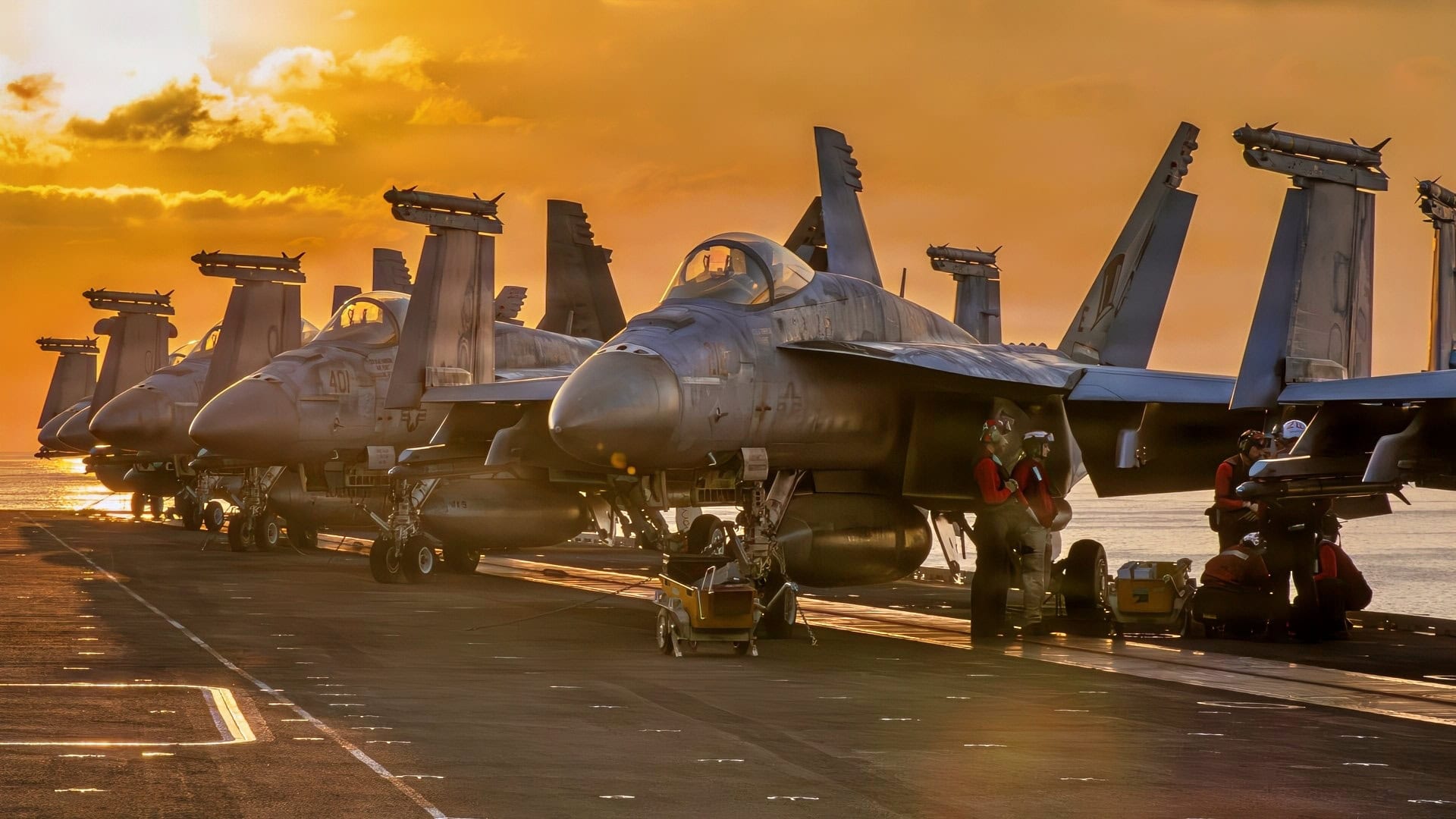
Aircraft is staged for flight operations on the flight deck of Nimitz-class aircraft carrier USS Abraham Lincoln (CVN 72) in support of Operation Epic Fury, Mar. 3, 2026. (U.S. Navy photo)
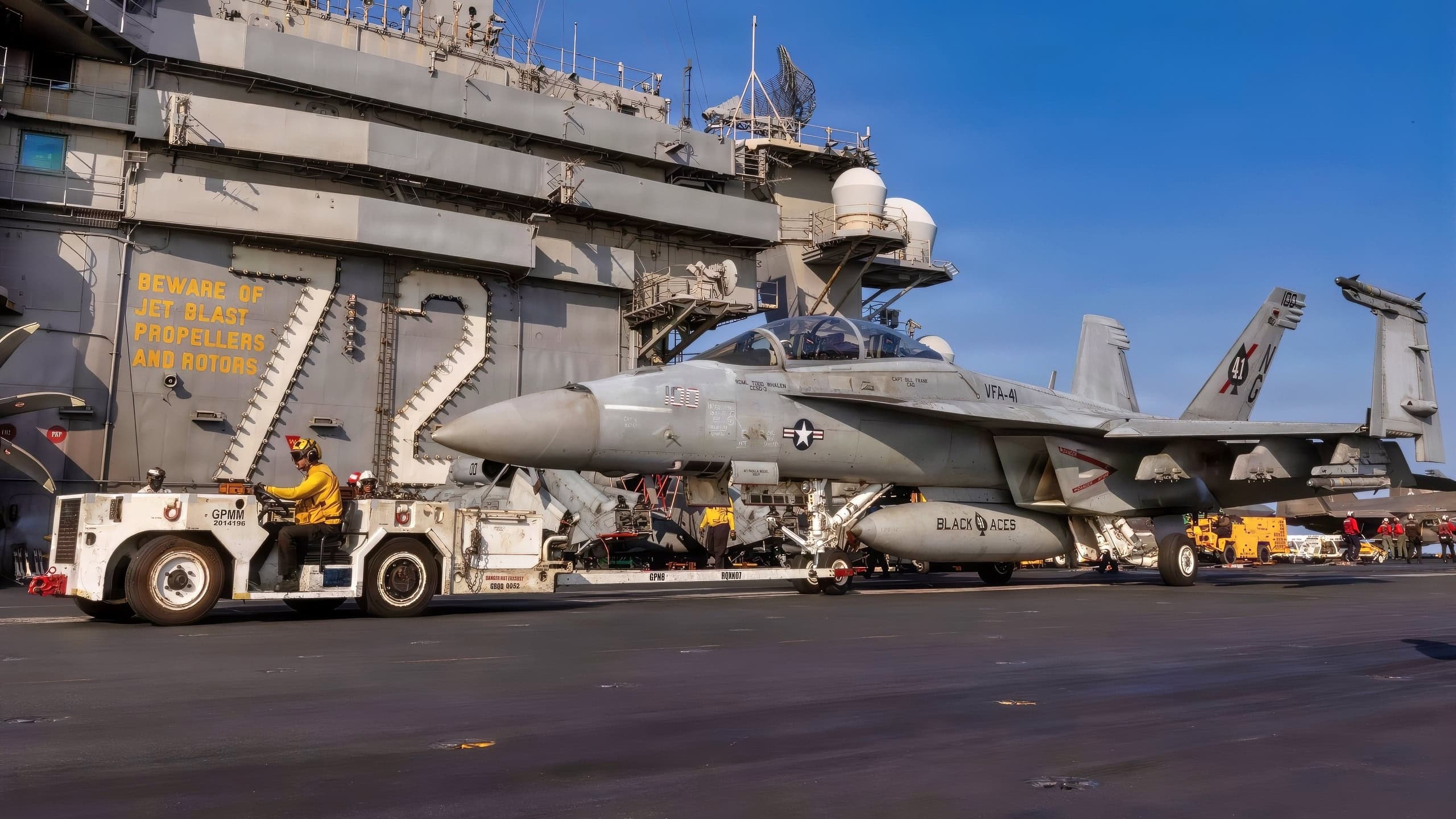
An F/A-18F Super Hornet, attached to Strike Fighter Squadron (VFA) 41, is taxied on the flight deck of Nimitz-class aircraft carrier USS Abraham Lincoln (CVN 72) in support of Operation Epic Fury, March 6, 2026. Abraham Lincoln is deployed to the U.S. 5th Fleet area of operations to support maritime security and stability in the Middle East. (U.S. Navy photo)
For the crew of Lincoln, her air group, and her escorts, being home again is the start of a lengthy adjustment period.
I wouldn’t presume to speak for all sailors, but these are my personal recollections of returning to land after being at sea.
You Live In Groundhog Day
The movie Groundhog Day is about a weatherman who keeps waking up every day and finding it’s the same day as the day before.
Everything happens at the same time with the same people, over and over.
As this day repeats day after day, the weatherman goes from surprised to amused to bored to a bit crazy and wacky, then finally settles on making the best use of the one day he must repeat seemingly forever.
I’ve always said that this movie accidentally captures what it’s like to be aboard a Navy ship.
You’re living Groundhog Day.
Your Life Seems Frozen in Time Aboard Ship
Your life somehow seems frozen in time.
Ashore, you mark the passing of the weekdays until Friday, typically working 8-9 hours a day.
Your command is secure from operations (mostly) until Monday.
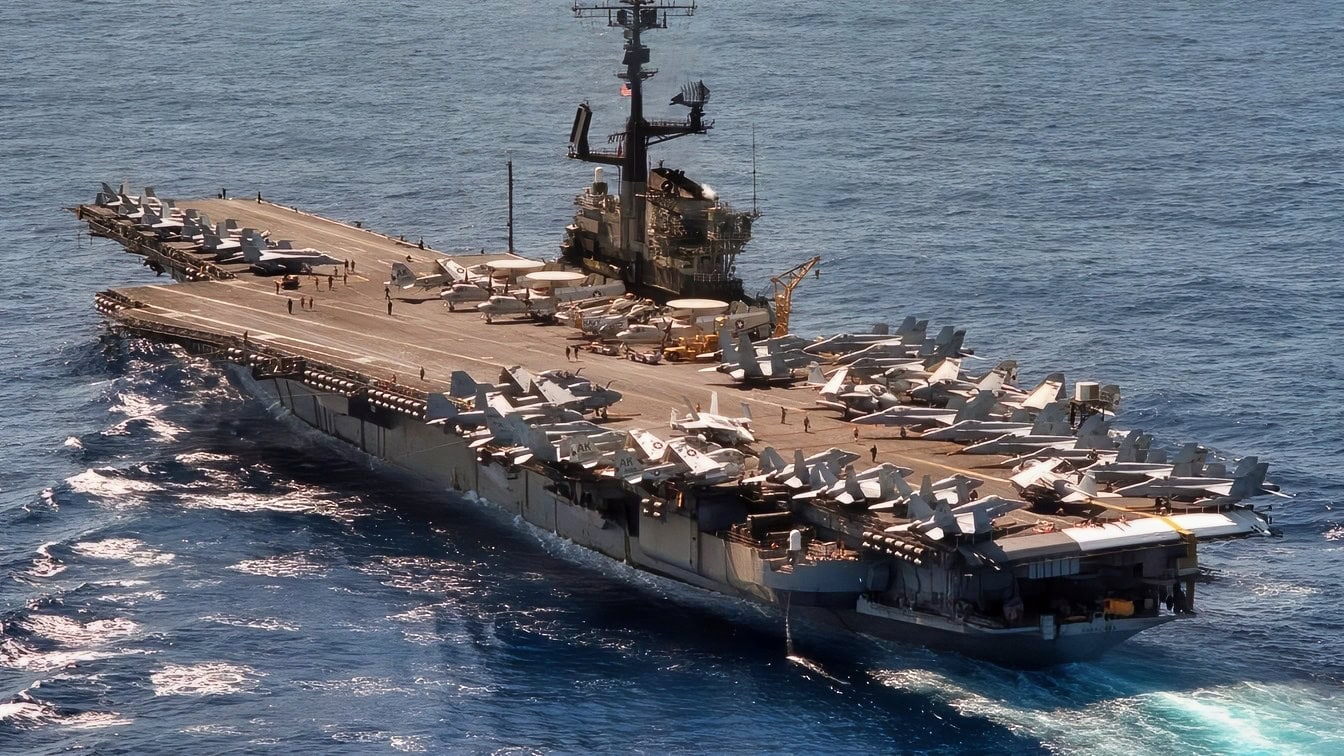
USS Coral Sea Aircraft Carrier in 1986. Creative Commons Photo.
You might have a 4-hour watch on occasion, and a skeleton crew still catches up in the hangar, but you’re mostly free.
Aboard ship, you work 12 hours a day, 7 days a week.
The days of the week lose all meaning.
You remember two dates in particular: the date you left your home port and the “On or about” date you expect to return.
When you first put out to sea, you think of time in terms of how many days have passed since you left; halfway through the cruise, your time perspective flips to how many days remain before you return.
As a cruise nears its end, you find shipmates smiling at each other and saying, “Eight more days and a wake-up,” to motivate you to keep going.
Other than that, the hours and days blur into a cycle of working, eating, sleeping, and repeating the same tasks for months.
The Cultural and Social Isolation Aboard Ship
Another prison-like aspect of deploying aboard a ship is profound cultural and social isolation.
All the movies, music, and stuff going on ashore when you leave will all be swept away by the time you return.
When you get back after a cruise and step off the ship, it’s like waking up from a coma.
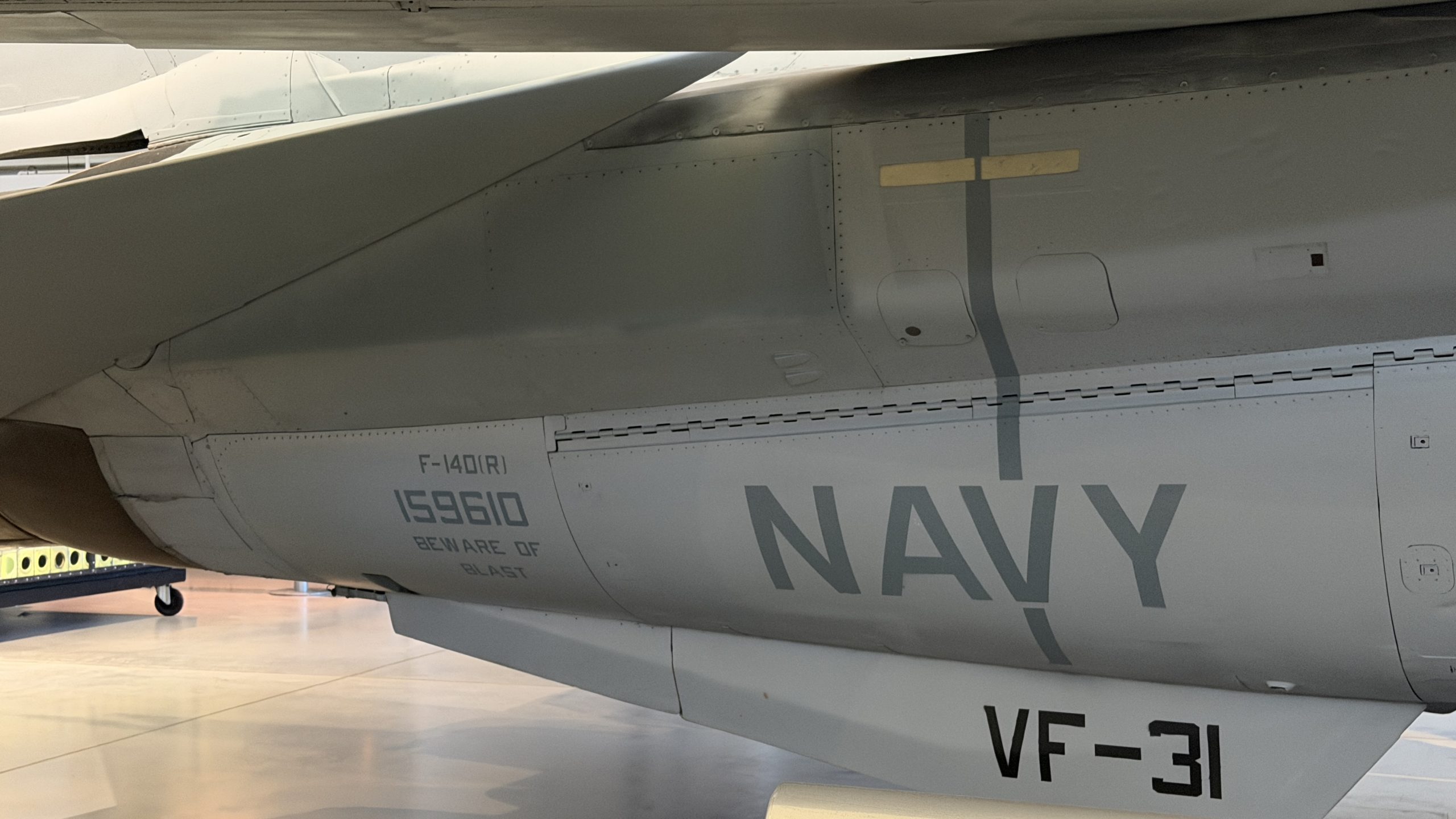
F-14 Tomcat that was on USS Abraham Lincoln Aircraft Carrier. Smithsonian 19FortyFive visit.
That building on base, a concrete slab when you left, is almost finished now.
You turn on the radio; all the songs are different.
You don’t recognize any of the movie titles on the theater marquee.
All the TV shows are different; you missed months of programming you can’t catch up on.
You got snippets of news at sea; now you read and watch the news and ask people around you, “When did this happen? What’s this about?”
While you were away, you could miss entire seasons.
You might leave in the chill of Fall in October and return in April to warm, sunny skies.
The ship made sure you celebrated Thanksgiving and Christmas, but you missed the entire festive season around those holidays.
You also missed friends’ and loved ones’ birthdays.
Your Social Circle Is Suddenly Much Bigger
Aboard a ship, you see the same people every day for months.
Even fewer where you are working.
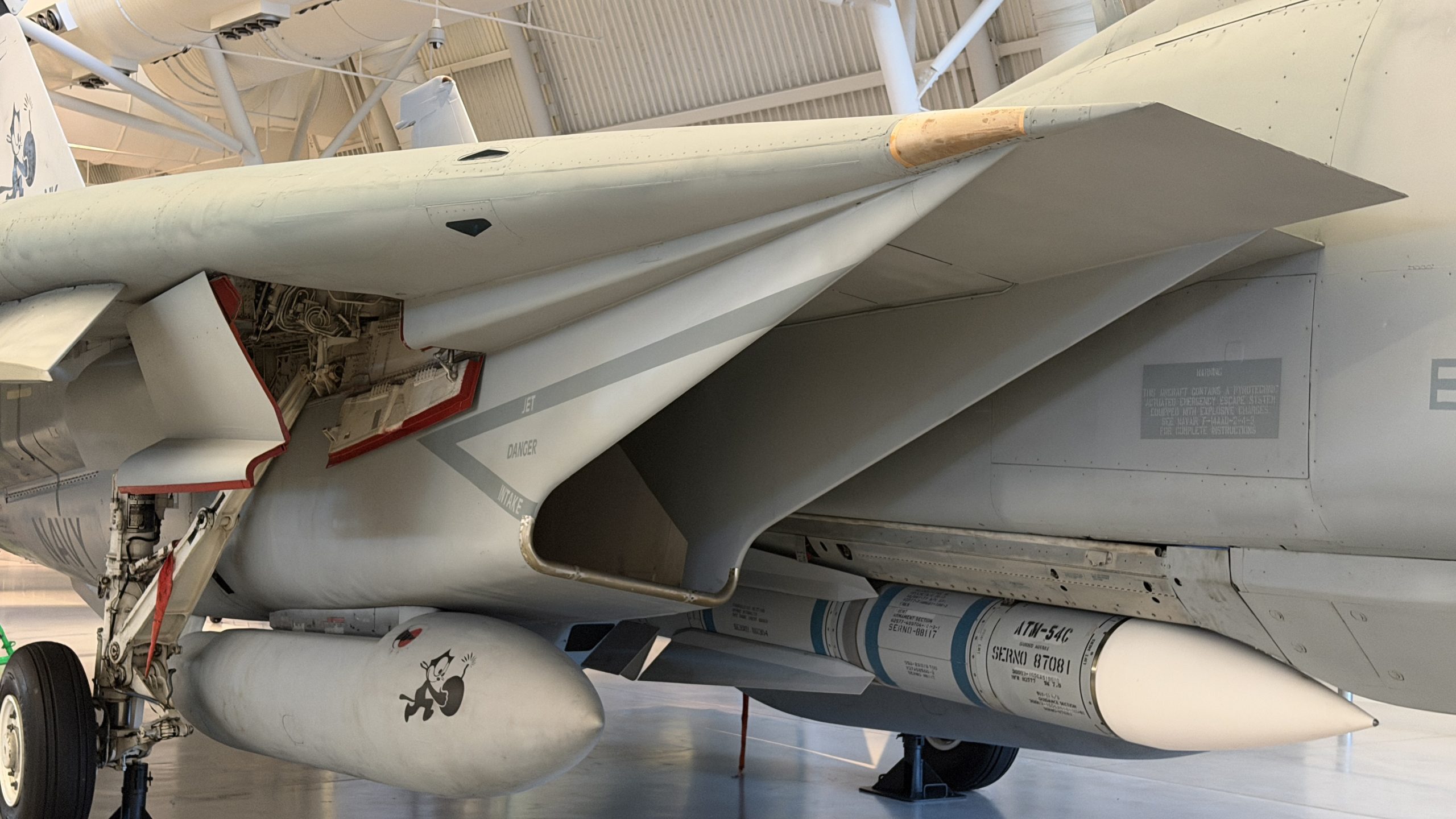
F-14 Tomcat that was on USS Abraham Lincoln Aircraft Carrier. Smithsonian 19FortyFive visit.
You will have 2 or 3 friends you spend most of your spare hours with, playing cards or games or watching a movie.
When you return, suddenly your social circle explodes.
Now family wants to see you, or a girlfriend or wife and kids need your time.
On base and outside the gate, new faces are everywhere, and none of them are the faces you knew so well on ship.
The friends you left behind when you deployed want your time too and want to hear about the deployment and catch up.
You might also return to find your wife wants a divorce and your girlfriend met somebody else.
You feel a bit stretched and almost long for that smaller social circle aboard ship. It takes time to adjust to.
Your Own Sense of Smell Attacks You
A Navy ship has a distinct smell, a slightly sweet aroma of coffee, tobacco, paint, and fuel oil (At least when I was a Sailor); it’s all you know.
If one guy used aftershave, your scent-starved olfactory nerves would smell it three decks below you.
Now, ashore again after months at sea, your nose attacks every smell in the air with intensity for several days until you get used to it again.
Everything Seems So Far Away Back On Land
Aboard ship, you live in a tightly packed metal box of machinery that people also have to live inside.
The distance from where you sleep to where you eat and work is typically less than a minute away. This is by design.
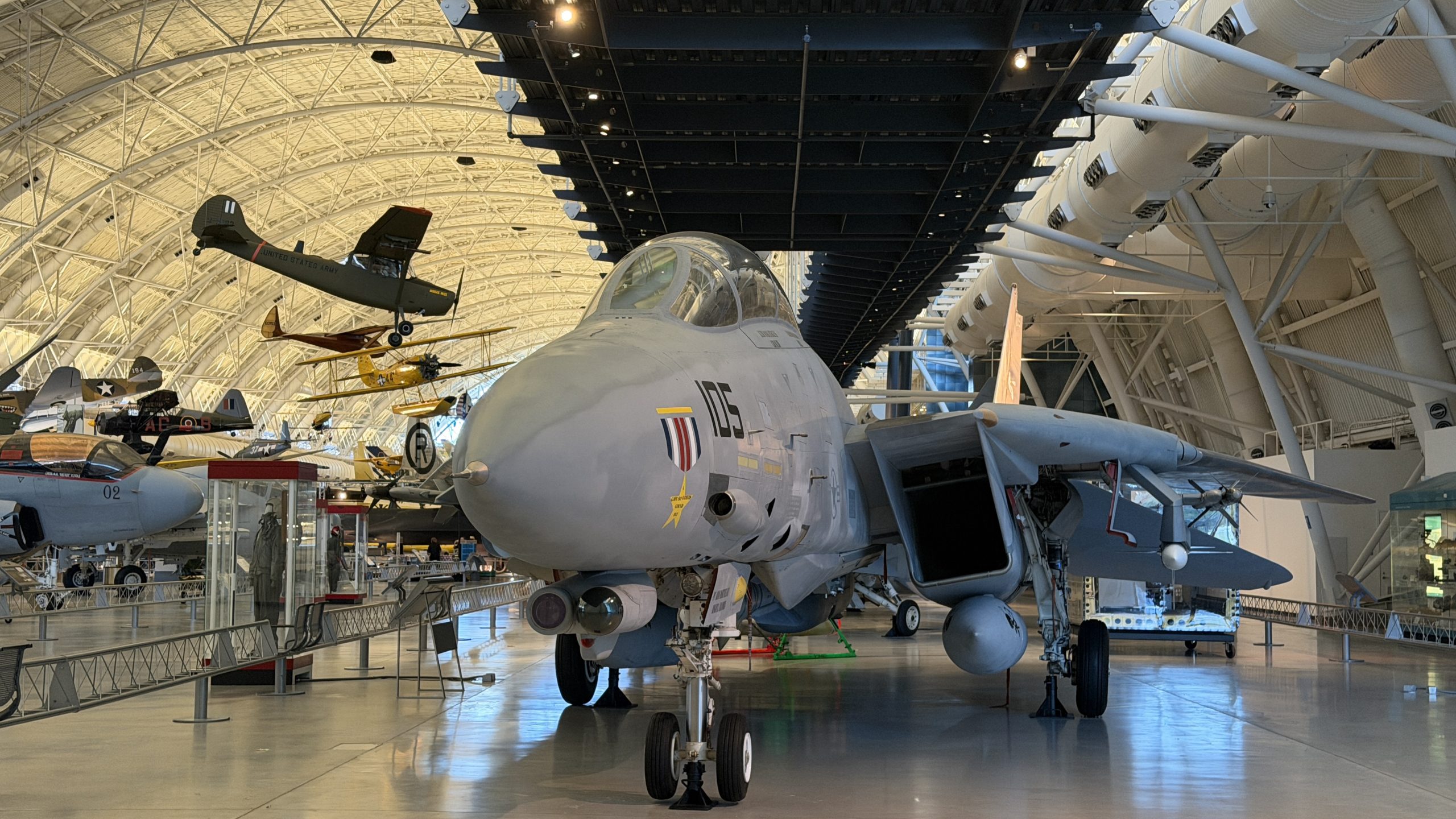
F-14 Tomcat that was on USS Abraham Lincoln Aircraft Carrier. Smithsonian 19FortyFive visit.
Getting to your battle station when they sound the General Quarters alarm is a matter of life and death in war, so the location of berthing compartments and the galley are such that the crew can scramble to “Manned and Ready” status in under 2 minutes on a destroyer and under 5 minutes on a giant aircraft carrier.
When you return to shore, everything seems miles away.
The enlisted mess might be half a mile away, but it feels like forever to walk there.
It Takes A While To Get Your ‘Land Legs’ Back
When you leave port, you spend a few days stumbling around like a klutz until your inner ear adjusts to the ship’s motion and helps steady you.
This is called getting your “Sea Legs.” This motion is much more pronounced on a destroyer than on an aircraft carrier, but you still get your “Legs” regardless.
When you return ashore, for several hours to several days, you’ll be told you’re walking funny, moving side to side to center your weight as you did aboard ship.
When you stand still, you have brief moments when you catch yourself feeling off balance.
When you stand in a line somewhere, you feel yourself swaying slightly from side to side and stop yourself.
You’re trying to get your “Land Legs” back again.
We could always tell when a destroyer or frigate returned to port: in the chow line at the enlisted mess, 50 sailors would stand there, swaying slightly from side to side, unconsciously.
You Are Overwhelmed With Choices Suddenly
Living aboard a ship, most of your life choices are already made for you.
What you do, eat, wear, when you go to sleep, and when you wake up are already decided for you. Bells ring to mark the division of a 24-hour day into seven Watchkeeping segments.
You don’t even need a watch or a clock to know what time it is.
One bell rings to start a watch; eight bells mark the end.
The bells ring every thirty minutes. You don’t even have to look up.
You hear six bells and your brain tells you it’s 7 AM, Morning Watch.
All these things taken together leave you feeling like you somehow don’t belong on land anymore.
You don’t quite fit in, like everyone’s in on a joke but you aren’t.
It all feels very strange for a while until you get your Land Legs back.
One final thing you never quite shake for as long as you live.
While you’re at sea, you miss being ashore.
You may spend long hours thinking about all the things you will do and experience when you get back.
You will end up doing many of them too, but after a month or so you’ll start to miss being aboard a ship at sea: the deck moving under you, the ocean beyond, the salty air.
Perhaps it has to do with the environments of land and sea, each able to cure the other’s miseries. I don’t really know.
What I do know is this. It’s been decades since I put to sea on a warship, but some place deep inside me still misses it, like someone loved and lost before you really knew what they meant to you.
Some of Abraham Lincoln’s sailors will feel that way too. Sailors are always sailors.
About the Author: Sean Spoonts
Sean Spoonts is the former Editor-In-Chief of SOFREP.com. He is a military analyst, writer, and commentator whose work has appeared in Newsweek, CNS News, Ukrinform, and various 30military/veteran media networks and professional publications, including the Military Intelligence Professional Bulletin. He is a U.S. Navy veteran, having served as an Aviation Anti-Submarine Warfare Operator and Search and Rescue Helicopter Aircrewman.