
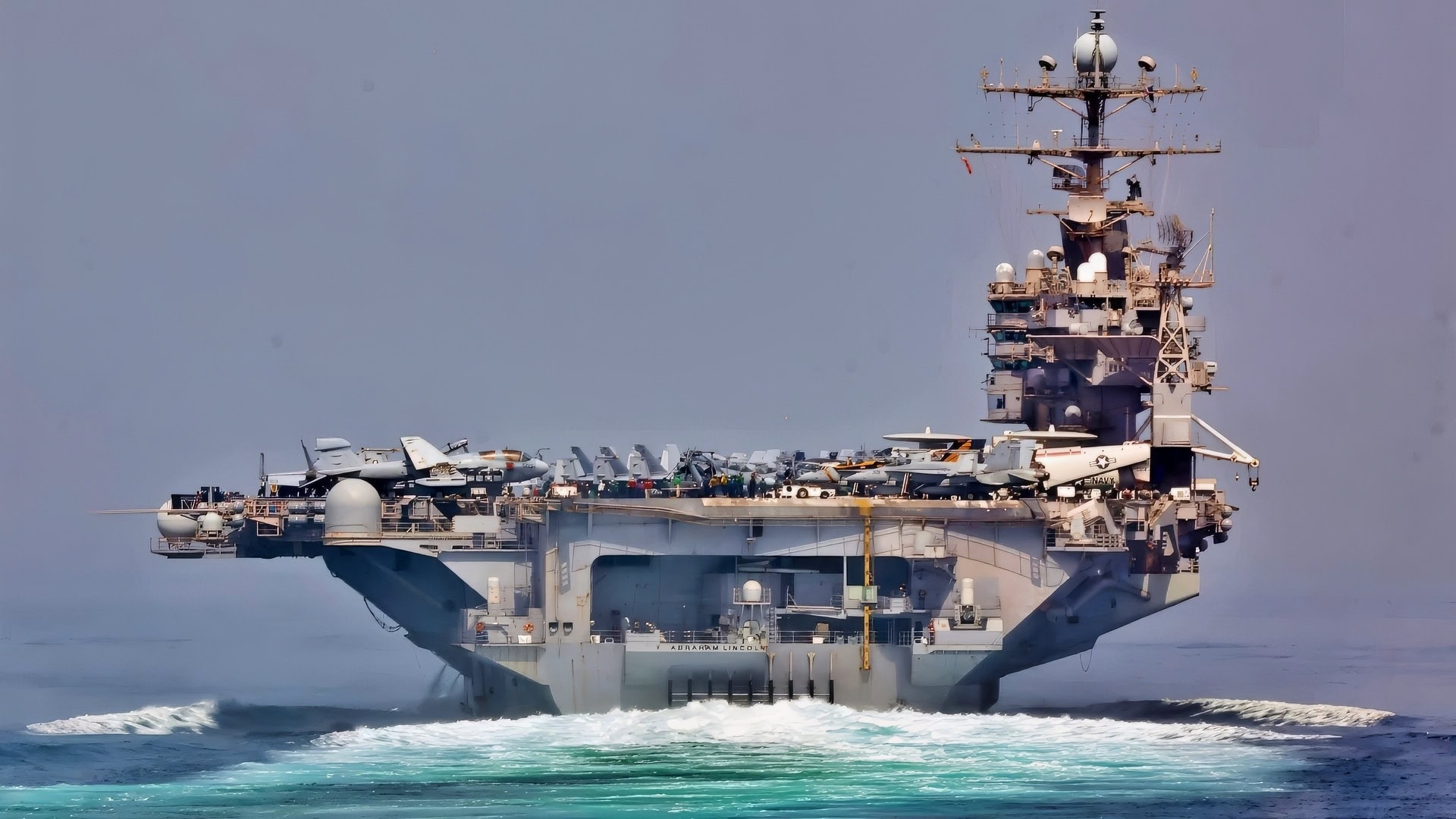
The USS Abraham Lincoln (CVN-72) was one of the finest aircraft carriers the U.S. Navy has ever put to sea. But the carrier’s situation has changed, affecting the morale of the sailors and the ship’s operations.
What has changed is what we are asking of the roughly 5,000 Americans on board her, just like what happened to the USS Gerald Ford earlier this year.
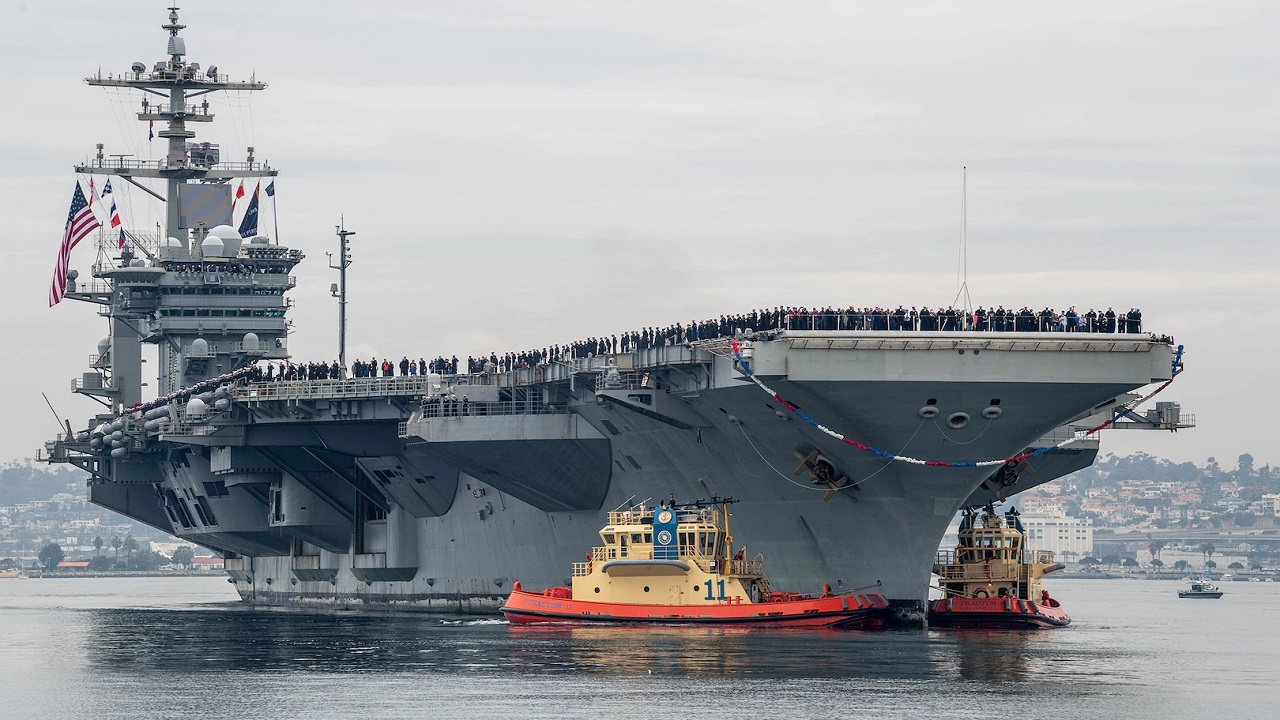
USS Abraham Lincoln back in 2015.
Lincoln left San Diego on November 21, 2025, on a planned seven-month deployment.
Today is day 272. She was extended twice, then extended again, and is finally coming home.
Carrier Strike Group 3 has flown for 40+ straight days of combat operations, with more than 10,000 sorties and expended 1.5 million pounds of ordnance since the shooting started with Iran on February 28.
Those are U.S. Central Command’s figures, and they describe a warship doing exactly what a warship is built to do. However, they also describe a crew that has not set foot on solid ground since December.
The Record That Actually Matters
There is a lot of conversation about the USS Lincoln setting a deployment record. She hasn’t, not by total days. USS Gerald R. Ford came home in May after 326 days, the longest since Vietnam. Nimitz spent 341 days away from homeport in 2020–21.
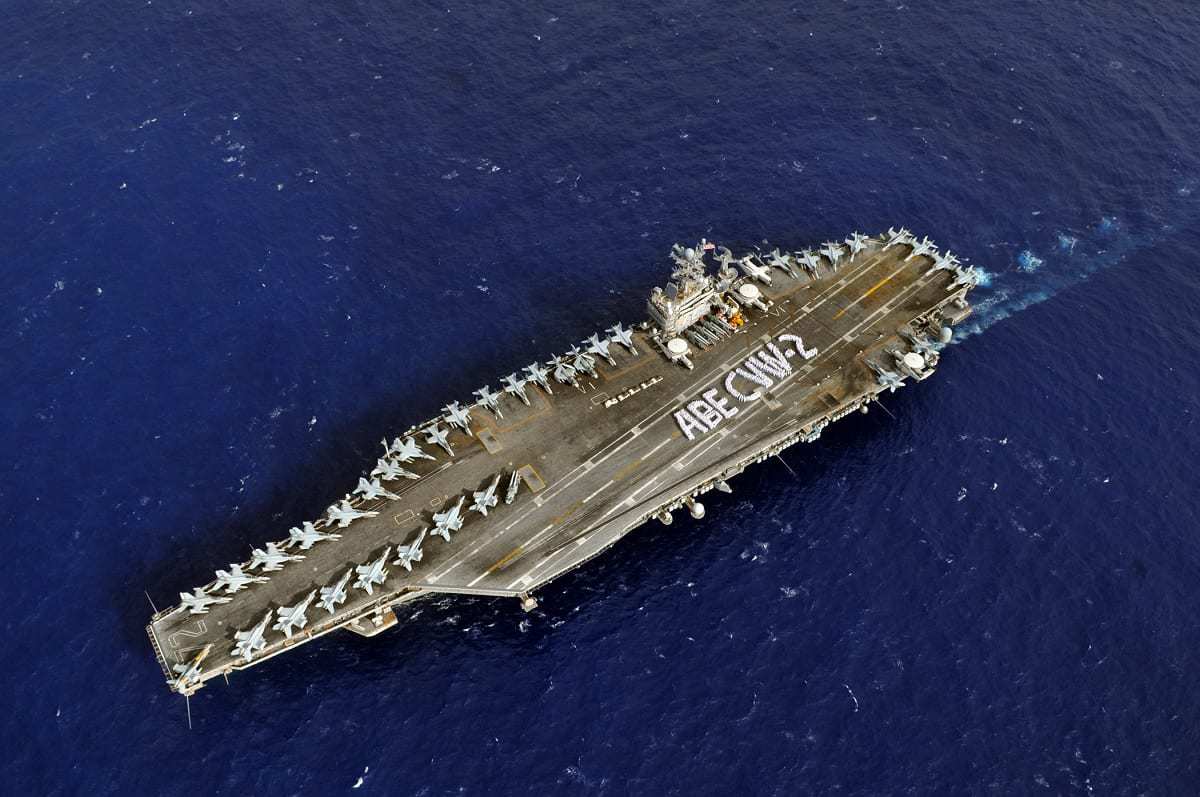
(Sept. 27, 2008) Sailors assigned to the aircraft carrier USS Abraham Lincoln (CVN 72) and Carrier Air Wing (CVW) 2 participate in a “flight deck spell out” aboard Lincoln while transiting the Pacific Ocean. The Abraham Lincoln Strike Group is on a scheduled deployment in the U.S. 7th Fleet area of responsibility operating in the western Pacific and Indian oceans. (U.S. Navy photo by Mass Communication Specialist 2nd Class James R. Evans/Released)
The USS Midway operated off Vietnam for roughly eleven months. Lincoln herself set the prior post-Cold War mark at 295 days in 2019–20.
The record that the USS Lincoln’s crew has broken is a different one, and it should worry people.
Lincoln has been at sea for more than 210 or more consecutive days with one genuine port call — a brief December stop in Guam, so short that much of the crew likely never went ashore.
There was also a reported logistics stop in Oman in July that kept sailors inside a secure compound. That is not a shore liberty.
A Long Deployment Takes A Toll On The Crew And Equipment
According to U.S. Naval Institute News, the only longer carrier deployments in the past 50 years were the 1973 deployment of USS Midway, at 332 days, and the 1965 deployment of USS Coral Sea, at 329 days.
While the crew of the USS Nimitz spent 341 days away from home during the pandemic in 2020-2021, a large segment of that time was spent ashore in isolation due to the pandemic.
However, the long deployment doesn’t just take a toll on sailors being away from home; it also takes a massive toll on the ship’s equipment and infrastructure, requiring months of maintenance.
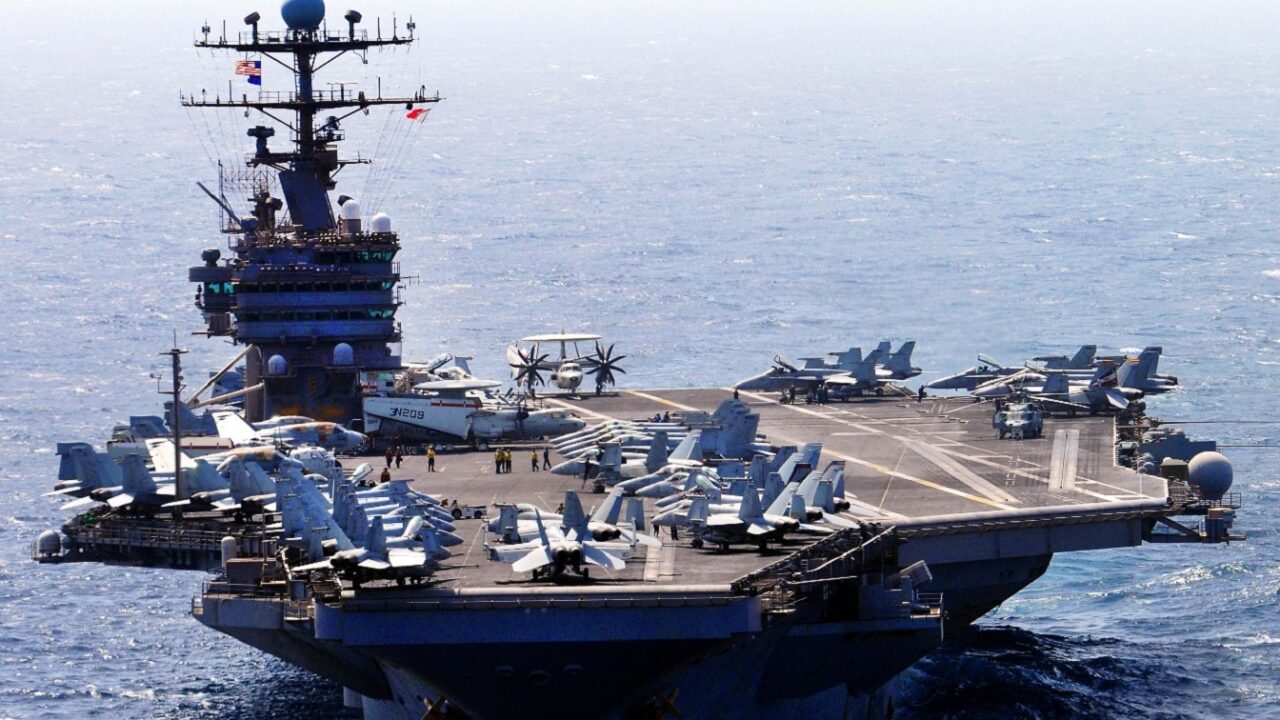
ARABIAN SEA (May 24, 2012) The Nimitz-class aircraft carrier USS Abraham Lincoln (CVN 72) transits the Arabian Sea. Abraham Lincoln is deployed to the U.S. 5th Fleet area of responsibility conducting maritime security operations, theater security cooperation efforts and support missions as part of Operation Enduring Freedom. (U.S. Navy photo by Mass Communication Specialist 3rd Class Amanda L. Kilpatrick/Released)
The USS Ford and the USS Lincoln will need extensive and expensive repairs that could take two years or longer.
The Navy’s Chief Of Naval Operations (CNO) Doesn’t Like Extensions
Adm. Daryl Caudle, the Chief of Naval Operations (CNO), addressed this situation of extended sea deployments at the Surface Navy Association’s annual symposium earlier this year.
“I think the Ford, from its capability perspective, would be an invaluable option for any military thing the president wants to do,” Caudle said. “But if it requires an extension, it’s going to get some pushback from the CNO. And I will see if there is something else I can do.”
“I am a big non-fan of extensions, and because they do have a significant impact,” Caudle said to TWZ.
“Number one, I’m a sailors-first CNO. People want to have some type of certainty that they’re going to do a seven-month deployment.”
“When it goes past that, that disrupts lives,” Caudle added. “It disrupts things like funerals that were planned, marriages that were planned, okay, babies that were planned, you know, so the human element of extension, I’m not a big fan of obviously.”
Extended Sea Deployments Hurt Readiness, Maintenance, And Morale
Prolonged sea deployments profoundly affect the U.S. Navy by straining sailors’ mental health, increasing the risk of shipboard accidents, disrupting maintenance schedules, and causing significant emotional distress for military families.
Extended periods underway significantly increase the risk of depression, anxiety, and PTSD among crew members.
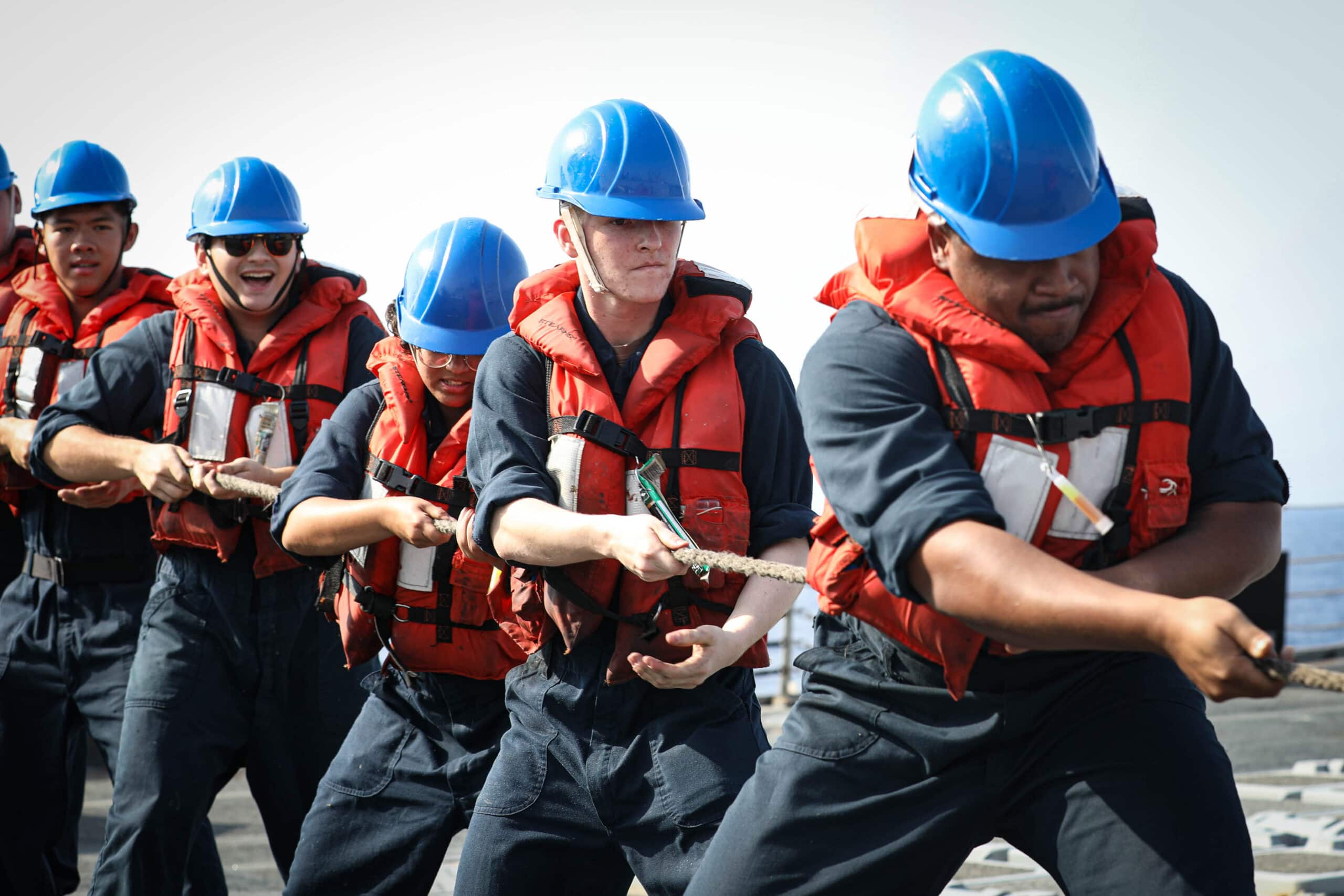
U.S. CENTRAL COMMAND AREA OF RESPONSIBILITY (Dec. 19, 2024) U.S. Sailors handle lines during a replenishment-at-sea (RAS) aboard the Arleigh Burke-class guided-missile destroyer USS Jason Dunham (DDG 109) in the U.S. Central Command area of responsibility. (Official U.S. Navy photo)
The monotonous shipboard environment, constant noise, demanding sleep schedules, and isolation from a normal support system add severe psychological strain.
Fatigue and burnout during deployments lasting well beyond the standard 6–9-month window increase the likelihood of operational accidents, particularly on high-tempo flight decks.
As Admiral Caudle stated, extended deployments create immense difficulties for military spouses and children, who shoulder increased responsibilities at home and endure prolonged absences of their loved ones during major life events.
The Navy’s Own Fleet Plan States 6-7 Month Deployments
The Navy’s own standard, written into the Optimized Fleet Response Plan in 2014, is a six- to seven-month deployment with port visits every 30 to 45 days.
Adm. William Gortney, when launching the OFRP, said 9–10-month deployments were “just not sustainable over the long haul” and that sailors on 8-month cruises are already at the “ragged edge.”
The Ford’s 326 days included roughly nine port calls, while the longer deployment of the Lincoln and others was a radically different human experience.
After 9/11, USS Theodore Roosevelt went 160 days without pulling into port, a record that stood for 18 years until USS Dwight D. Eisenhower went 206 days in 2020 because the pandemic had closed the ports.
Vietnam-era carriers deployed longer than Lincoln, but they spent 30 days at Yankee Station before rotating through Subic Bay, Hong Kong, and Yokosuka for four to seven days each. Nobody in that era did 240 days without a port call.
The Reason The USS Lincoln Has Not Visited A Port Since December
The cause of the USS Lincoln’s lack of a port call was not mismanagement by the Navy. It is Iranian targeting. Per reporting in the New York Times, Iranian missiles and drones destroyed the Navy’s primary regional logistics hub at Naval Support Activity Bahrain in late February.
The Pentagon shifted the hub to Diego Garcia, some 2,200 miles away; Iran fired two ballistic missiles at Diego Garcia on March 20, although one was shot down and the other missed.
The Strait of Hormuz has been mined and contested since February 28, putting Jebel Ali — the traditional carrier liberty port — on the wrong side of a minefield. Duqm and Salalah in Oman were struck by drones in March.
The Navy could not put a $13 billion warship alongside a pier anywhere in CENTCOM. That explanation is more damning than incompetence.
The Navy’s own description of how it adapted is the most revealing sentence in this story: leadership prioritized “mission-critical supplies: first food, then hygiene items, then mail.” You do not triage a pipeline that is working.
Sailors and families report no fresh milk for three months, rotten produce, depleted soap and toothpaste supplies, water restrictions, mold, failed plumbing, and long-delayed mail.
Acting Navy Secretary Hung Cao’s rebuttal is carefully built: clean water, working air conditioning, two protein options per meal, no meals missed, though menus were “adjusted when fresh resupply was unavailable.” Note what it does not deny.
The Maintenance Bill Comes Due Later
The Navy is doing what it can.
It has surged counselors and social workers to a ship whose behavioral health staff amounts to one clinical psychologist for 5,000 people in month nine of combat, and Cao sat with 200 family members in San Diego on August 11.
USS George Washington, the forward-deployed carrier in Japan, is steaming west to relieve Lincoln — her first Middle East deployment since 2004, which signals that the Western Pacific is being stripped of a carrier to cover CENTCOM.
That is the deeper problem. Truman is in overhaul until 2029 or later; Ford went into the shipyard in July, and USS John F. Kennedy’s delivery slipped to March 2027. Eisenhower’s six-month post-Red Sea availability took roughly fifteen months.
Every extra month at sea costs more than a month of unavailability two years from now.
Former Defense Secretary Lloyd Austin told Nimitz’s crew after 341 days, “I don’t want deployments this long to be the norm.”
The Navy already knows the answer. The question is whether it still has the fleet to act on it. The USS Lincoln and the USS Ford are a pair of magnificent ships; however, they are proof that you cannot buy readiness by burning out the crews.
About the Author: Steve Balestrieri
Steve Balestrieri is a National Security Columnist. He served as a US Army Special Forces NCO and Warrant Officer. In addition to writing on defense, he covers the NFL for PatsFans.com and is a member of the Pro Football Writers of America (PFWA). His work was regularly featured in many military publications.