
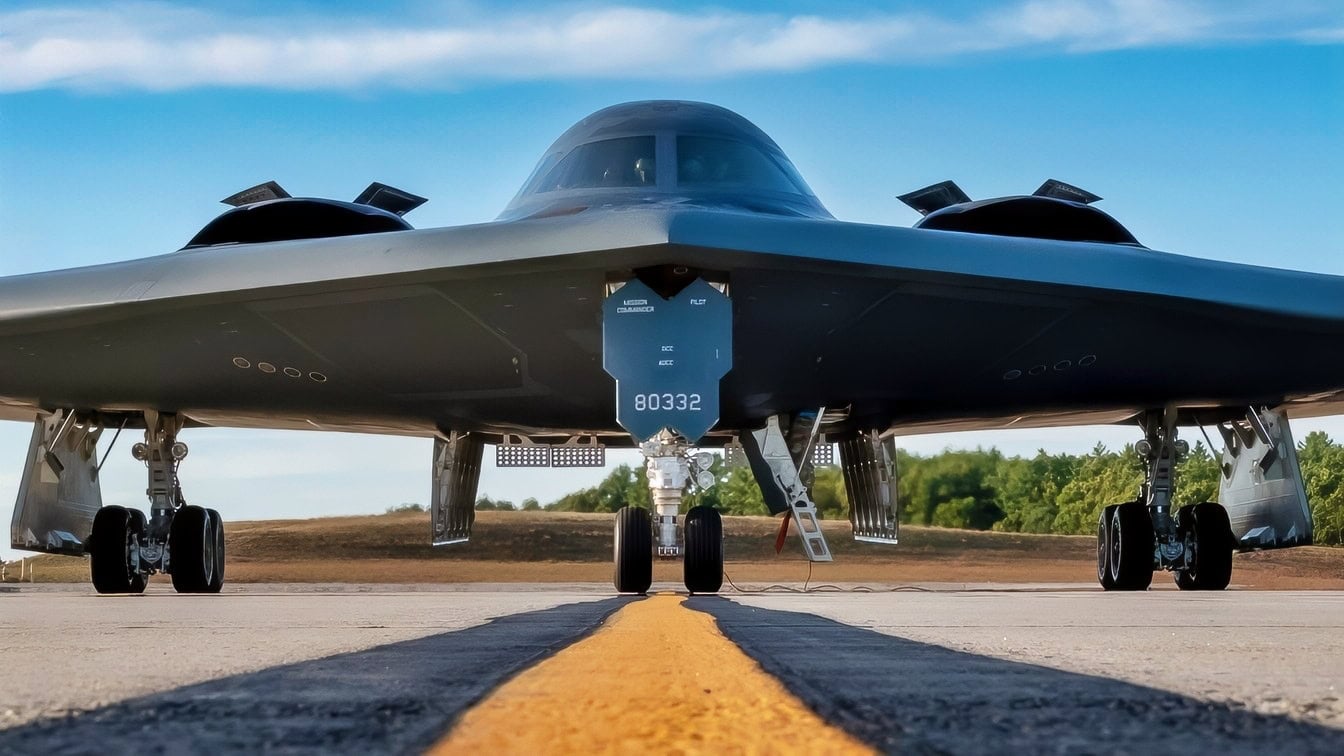
The US Air Force has publicly confirmed for the first time that the Northrop Grumman B-2 Spirit can employ the AGM-158C Long Range Anti-Ship Missile (LRASM) during Exercise Valiant Shield 2026.
During the exercise, a B-2 launched an LRASM against the decommissioned USS Juneau during a multinational SINKEX north of Guam.
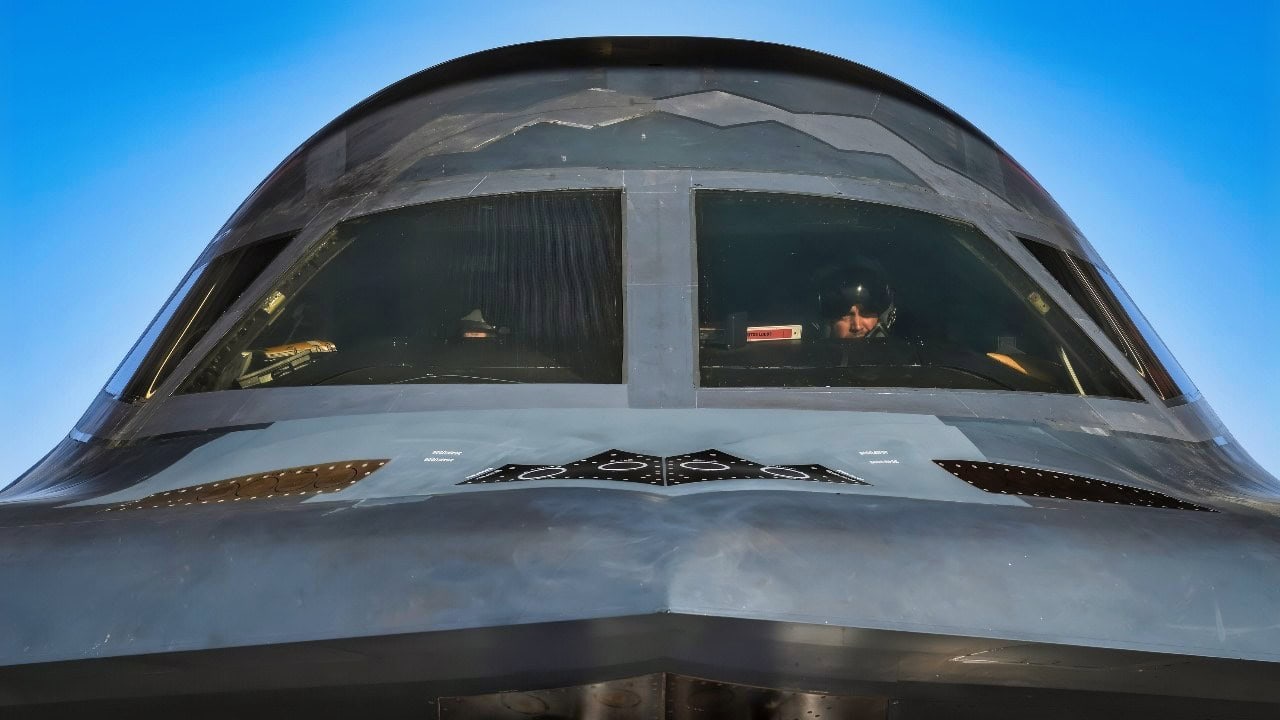
A U.S. Air Force B-2 Spirit aircrew performs pre-flight checks in the cockpit of their aircraft at Whiteman Air Force Base, Missouri, March 8, 2020. The B-2 took off from Whiteman AFB to support U.S. Strategic Command Bomber Task Force operations in Europe. The 131st Bomb Wing is the total-force partner unit to the 509th Bomb Wing. (U.S. Air Force photo by Tech. Sgt. Alexander W. Riedel)
And while the B-2 has long been considered a stealth strategic bomber, the LRASM integration expands the bomber’s role into long-range maritime strike.
This carries important implications for future conflict in the Indo-Pacific, though the B-2 is scheduled to be phased out soon to make way for the B-21 Raider.
What Happened
Pacific Air Forces confirmed that the B-2 fired an LRASM during Valiant Shield.
The target was the former USS Juneau, and the exercise also involved US and allied forces, including a Japanese submarine that ultimately delivered the finishing torpedo.
This marks the first time that the Air Force has ever publicly disclosed LRASM integration on the B-2. Officials did not discuss details, however, stating that the integration remains classified.
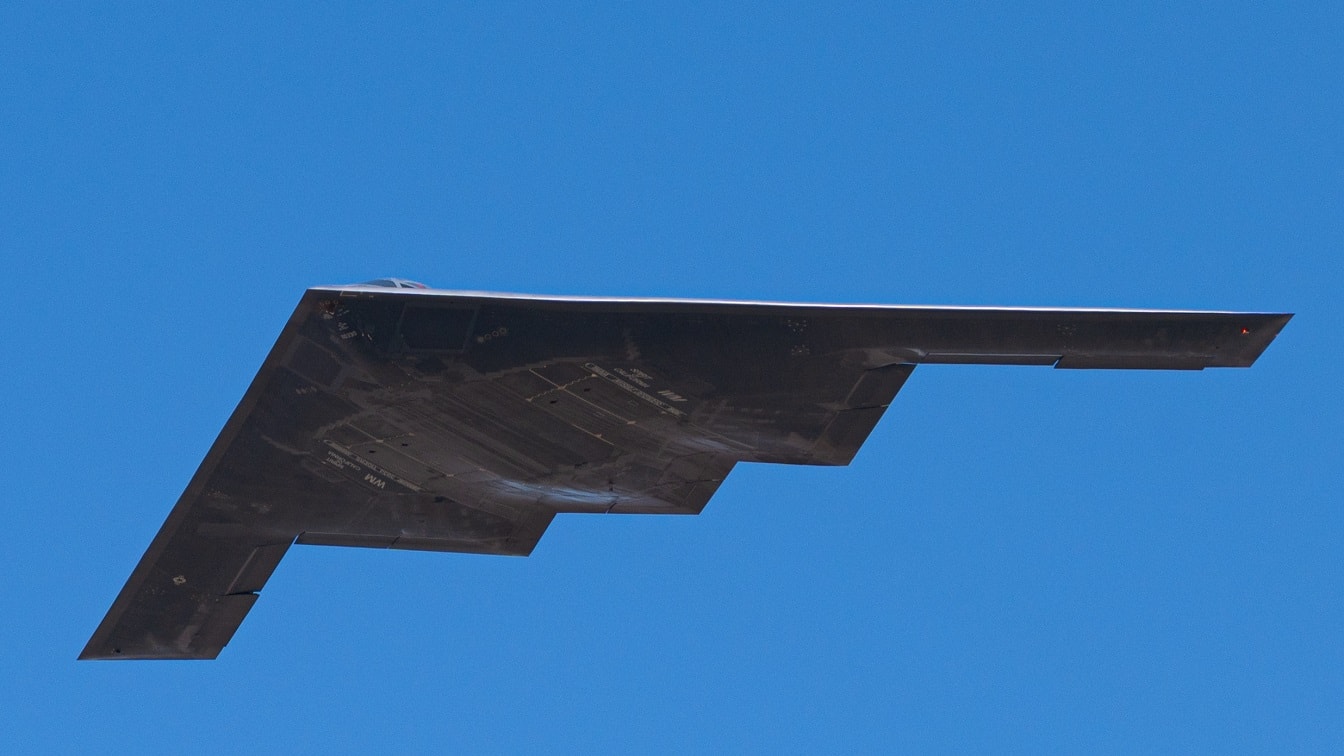
A B-2 Spirit stealth bomber from Whiteman Air Force Base completes a fly-over during the Sound of Speed Airshow at Rosecrans Air National Guard Base, in St. Joseph, Missouri, May 1, 2021. The air show was hosted by the city of St. Joseph and 139th Airlift Wing, Missouri Air National Guard to thank the community for their support. (U.S. Air National Guard photo by Airman Janae Masoner)
The LRASM and the B-2
LRASM is derived from the AGM-158 JASSM family, which the B-2 already carries.
And because LRASM shares essentially the same external dimensions, the bomber can likely carry up to 16 missiles internally, preserving the B-2’s stealth characteristics.
LRASM is a modern weapon; unlike older anti-ship missiles, LRASM is designed to operate with a high degree of autonomy.
The guidance sequence includes GPS/INS navigation during cruise, onboard electronic support measures that detect enemy emitters, the ability to route around air defenses mid-flight, a passive infrared seeker that acquires the target during the terminal phase, and an onboard target library that identifies ship class and vulnerable impact points.
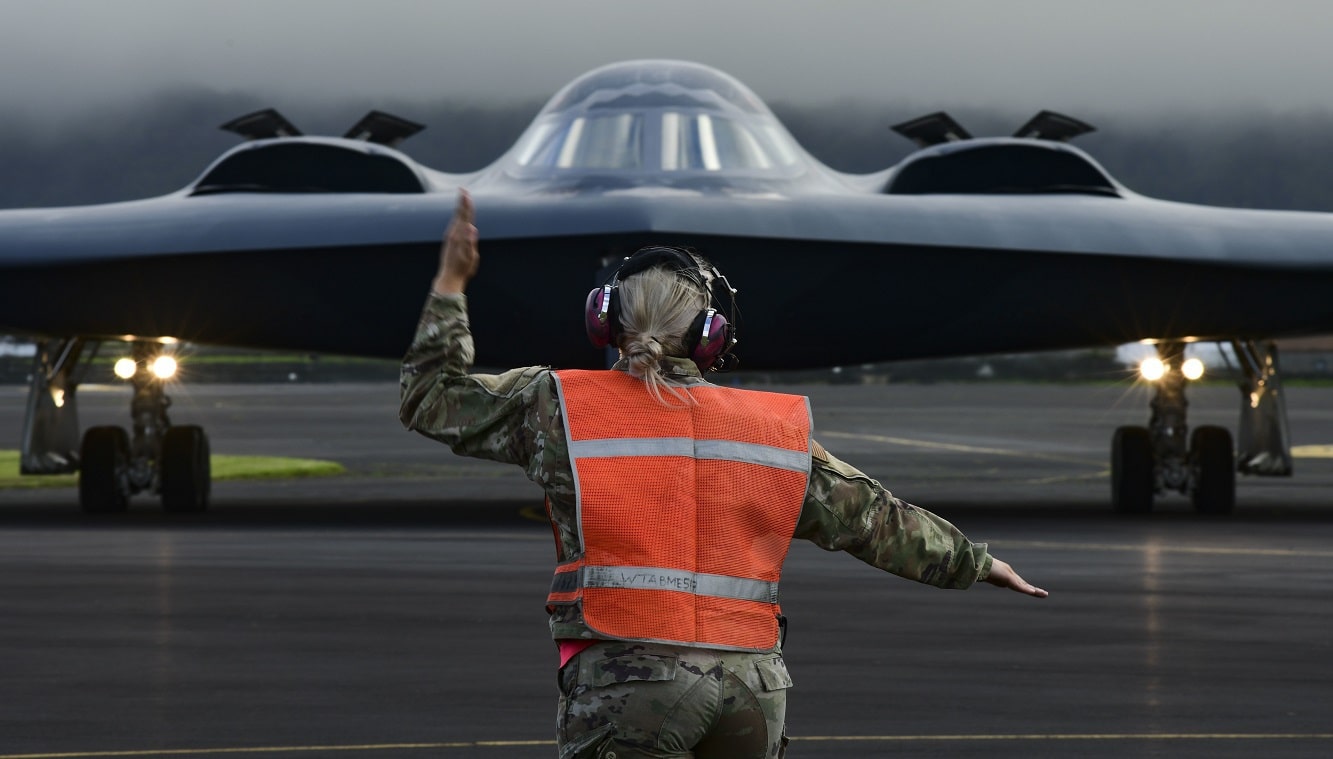
Crew chiefs assigned to the 393rd Expeditionary Bomb Squadron, prep a B-2 Spirit stealth bomber for take off, at Lajes Field, Azores, March 16, 2021. Three B-2s, assigned to Whiteman Air Force Base, Missouri, arrived at Lajes to hot-pit refuel prior to supporting several bomber task force missions in the high north. Strategic bomber missions are conducted periodically to enhance the readiness necessary to respond to challenges, in coordination with partner and allied nations, around the world. Members assigned to U.S. European Command regularly train, fight and live with allies and partners from bases in Europe, to ensure timely and coordinated responses when needed. (U.S. Air Force photo by Tech. Sgt. Heather Salazar)
The Perfect Combo
The B-2 provides stealth penetration while the LRASM provides long-range precision maritime strike. Together, they create a platform capable of approaching heavily defended naval formations while remaining difficult to detect.
Instead of relying on stand-off bombers or surface ships, the Air Force gains a stealth aircraft capable of striking high-value naval targets from inside contested airspace.
This capability is especially relevant in a potential future conflict with China, whose naval strategy is dependent on aircraft carriers, large amphibious assault ships, and dense escort formations—and is difficult to penetrate because of integrated A2/AD defenses.
A stealth bomber launching numerous autonomous anti-ship missiles can target China’s densely concentrated capital ships while complicating Chinese defensive planning.
And whereas traditional anti-ship missions often require aircraft to approach defended fleets, the B-2 can change that equation. Stealth reduces the likelihood of early detection, while the LRASM’s reported stand-off range allows launch from hundreds of miles away from the target.
The missile itself is designed to survive sophisticated air defenses through low observability, autonomous routing, and passive terminal guidance.
Beating A2/AD
Modern naval warfare increasingly revolves around defeating anti-access/area-denial (A2/AD) networks. China has invested heavily in a robust A2/AD network, including long-range missiles, integrated sensors, and layered naval and air defenses designed to keep US forces away from the First Island Chain.
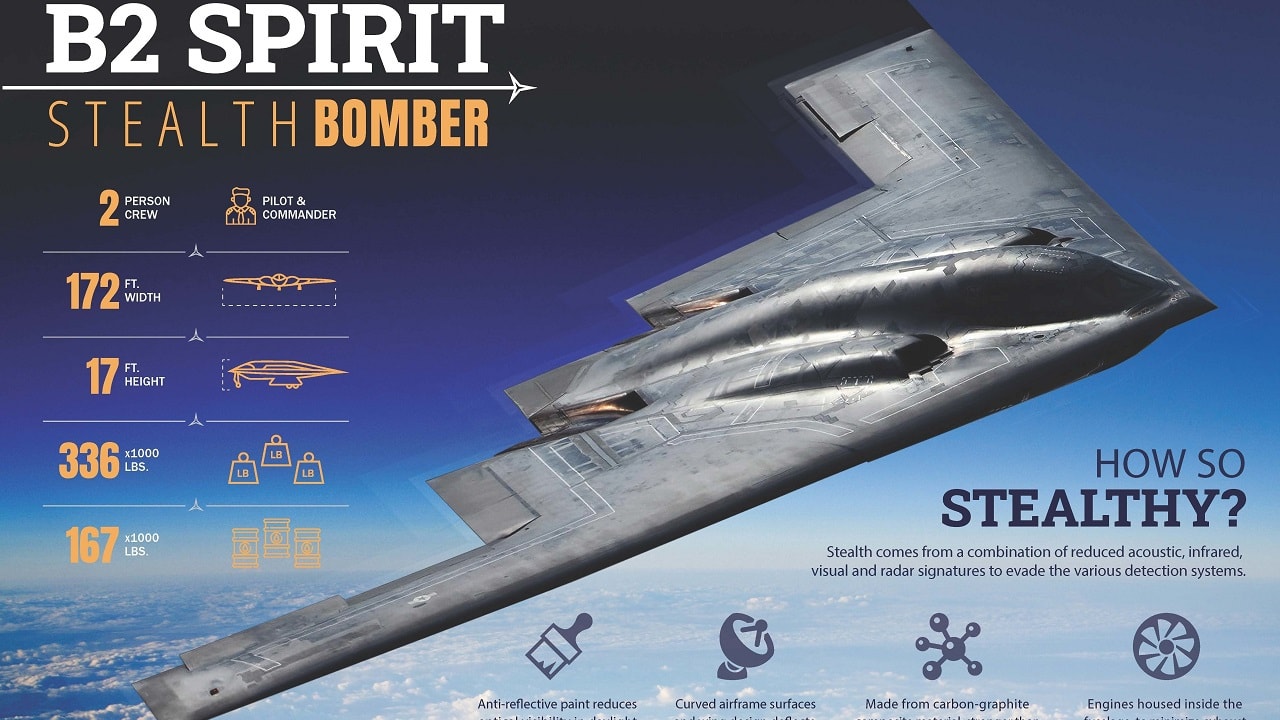
191209-N-HG846-2001 NORFOLK,Va. (Dec. 9, 2019) This poster is designed to communicate the aircraft specifications of the B2 Spirit Stealth Bomber. The B2 bomber was introduced on Jan. 1, 1997 by the Northrop Corporation.
LRASM gives the US another means of penetrating the A2/AD system without exposing surface fleets or strategic bombers to unnecessary risk deep within the A2/AD network.
The announcement may also offer insights into B-21 Raider capabilities.
Although the B-21 is smaller and will carry fewer weapons than the B-2, it will be procured in greater numbers (fewer than two dozen B-2s were ever fielded, whereas the Air Force is debating whether to exceed the original projection of 100 procured B-21s).
LRASM integration on the B-2, which will be phased out soon, heavily suggests that the B-21 will also feature LRASM integration.
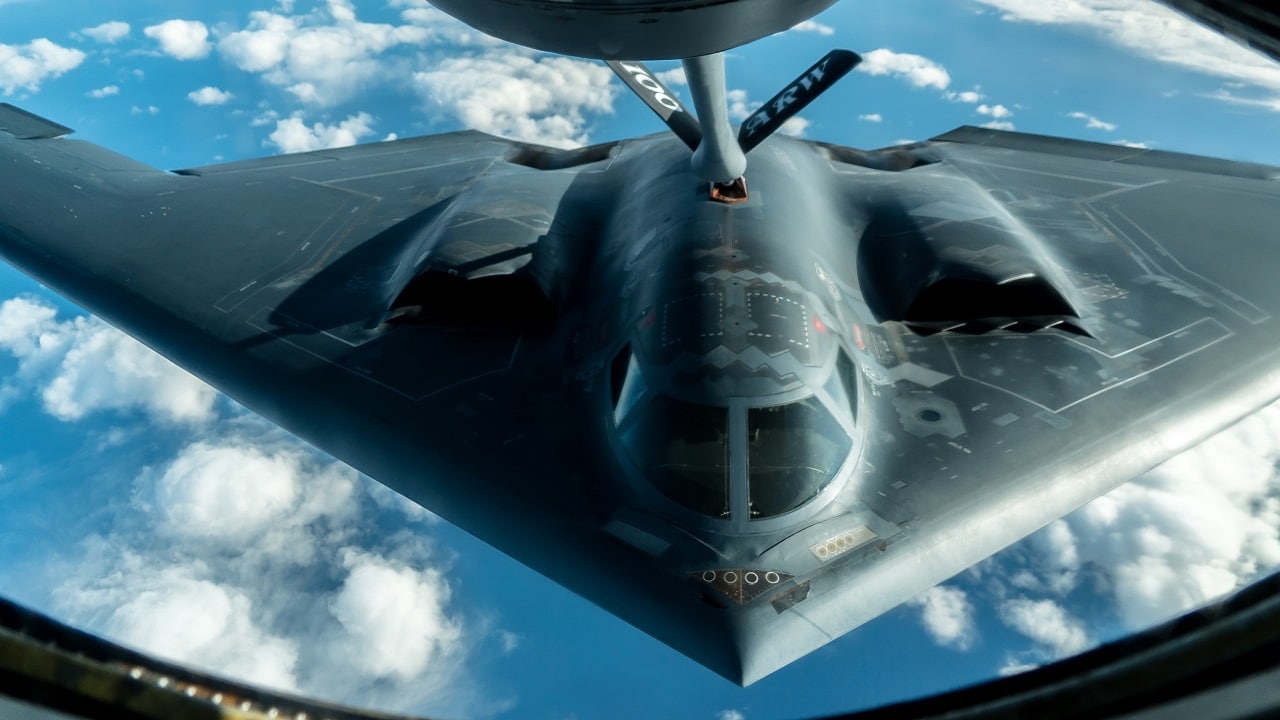
A U.S. Air Force B-2 Spirit assigned to the 509th Bomb Wing from Whiteman Air Force Base, Missouri, receives fuel from a 100th Air Refueling Wing KC-135 Stratotanker during Global Thunder 20, Oct. 28, 2019. Global Thunder is an annual command and control exercise that provides training opportunities for all of U.S. Strategic Command’s mission areas, tests joint and field training operations, and has a specific focus on nuclear readiness. (U.S. Air Force photo by Staff Sgt. Trevor T. McBride)
The Big Takeaway
The announcement suggests that the Air Force’s doctrine is evolving.
Specifically, the B-2 is expanding from a strategic bomber into a long-range, stealthy maritime strike platform capable of threatening enemy surface fleets.
In the Pacific, where surface vessels and amphibious groups are likely to determine the outcome of the war, combining stealth penetration with autonomous anti-ship cruise missiles gives the US a method for threatening high-value naval targets.
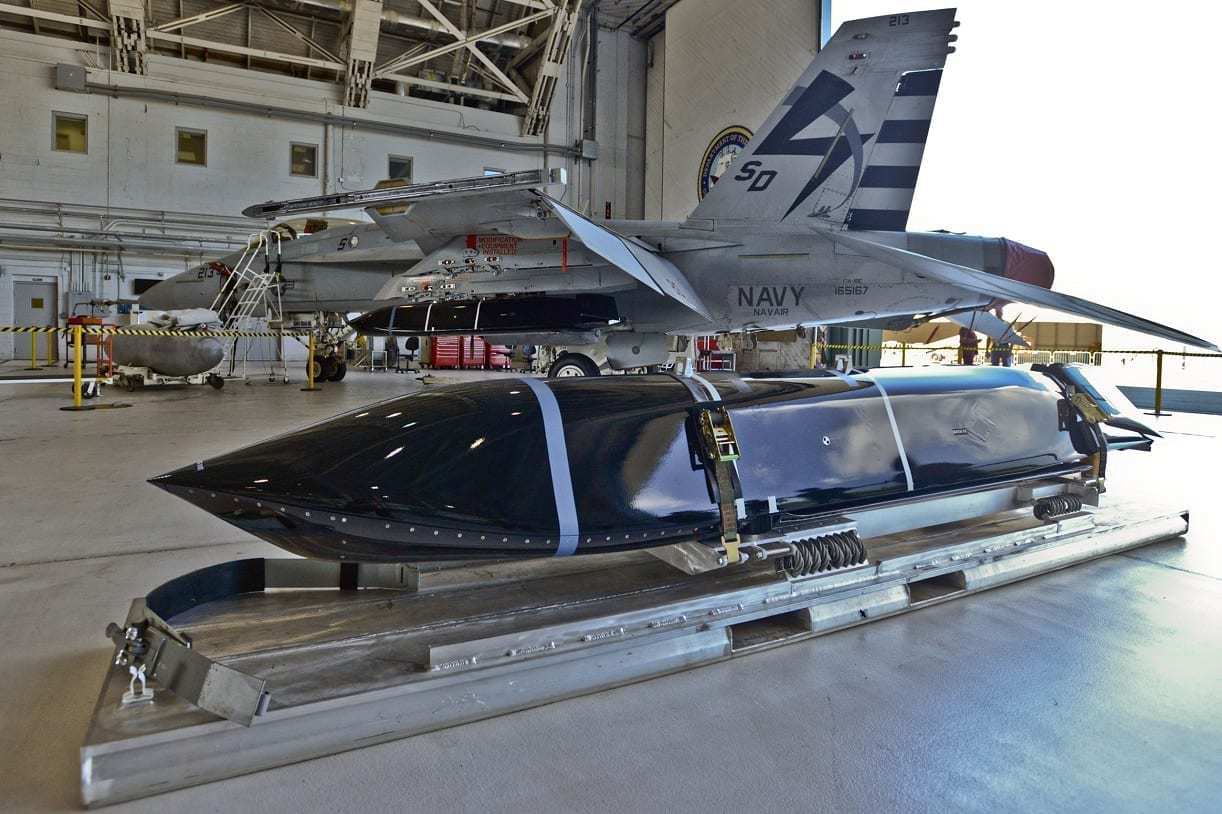
A Long Range Anti-Ship Missile (LRASM) integrated on F/A-18E/F Super Hornet 12 August 2005 at NAS Patuxent River, Md.
About the Author: Harrison Kass
Harrison Kass is a writer and attorney focused on national security, technology, and political culture. His work has appeared in Tablet, City Journal, The Hill, The Spectator, and The Cipher Brief. He holds a JD from the University of Oregon and a master’s in Global & Joint Program Studies from NYU. More at harrisonkass.com.