
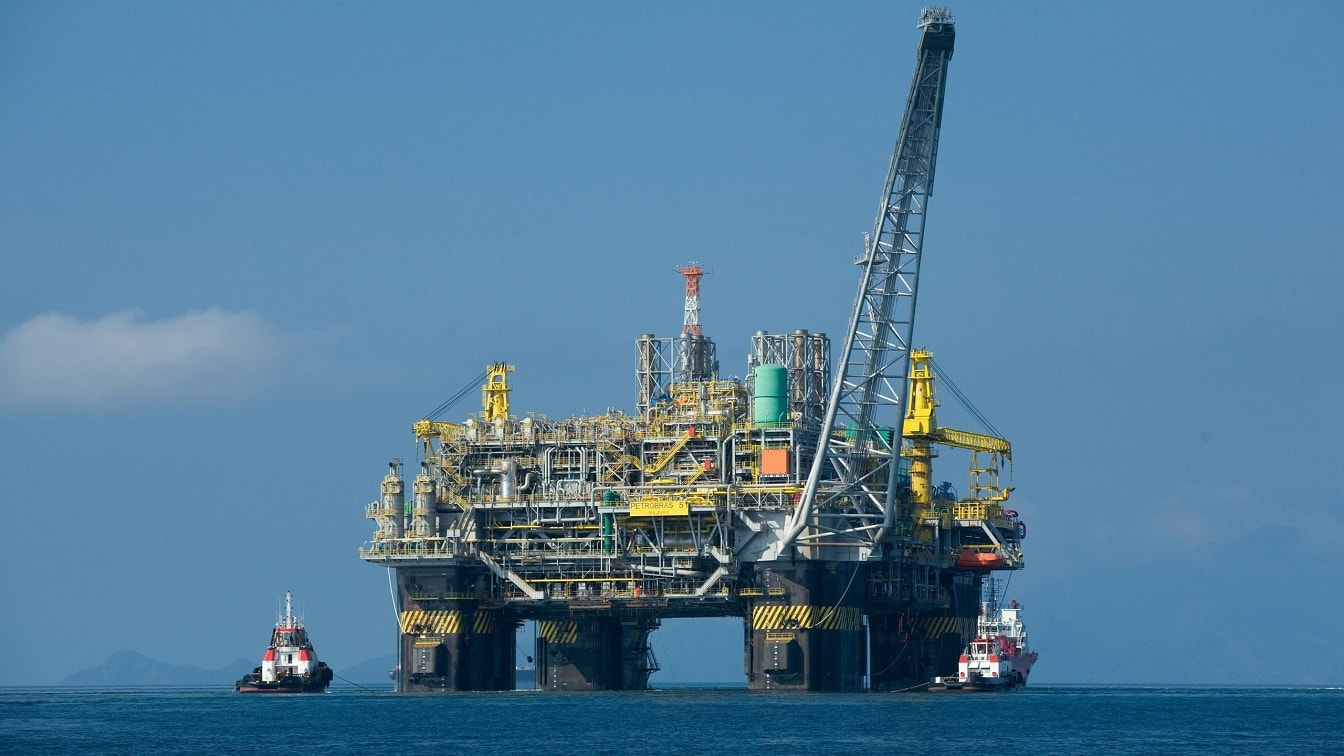
With the Strait of Hormuz’s governance still unclear and the war’s status uncertain, another major concern has emerged: Are global oil stocks big enough?
According to a Reuters report Thursday, both oil traders and policymakers are concerned about the condition of those reserves.
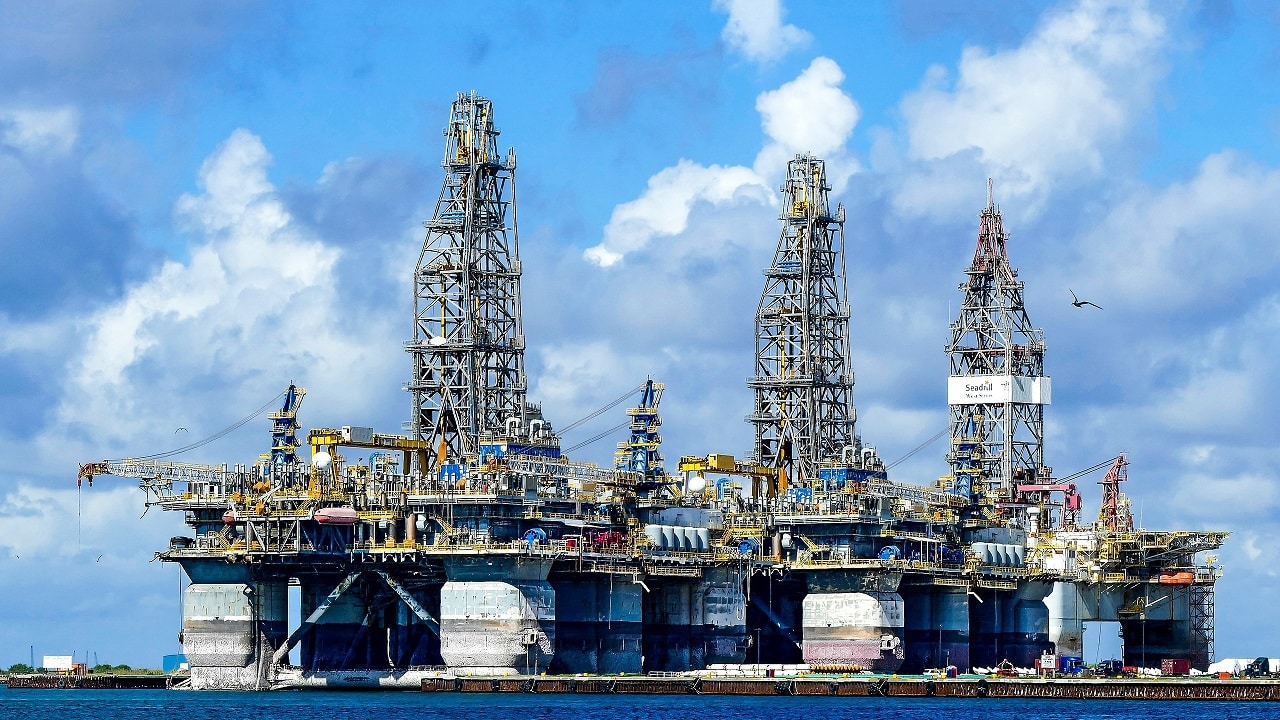
Refurbishment Platform for Drilling Rigs in Corpus Christi Bay.
The report cited the head of Saudi Aramco, who estimated that the world has lost 2.6 billion barrels of oil since the war began, the largest oil disruption since the crisis that followed the Iranian Revolution in 1979.
This would amount, Reuters said, to “25 days of global consumption based on pre-war global oil demand of 103 million barrels per day.”
The world, however, is consuming less oil, in part because China has cut demand, although how they’ve done so has been a much-discussed mystery.
The State of Emergency Reserves
The International Energy Agency released 400 million barrels from emergency reserves earlier this year, Reuters said.
Those stocks, Reuters said, consist of a mixture of “government-held stocks and commercial stocks,” currently estimated at 1.5 billion barrels.
However, Reuters noted, the IEA cannot unilaterally order the release of commercial stocks. Government-held stocks are therefore less than 1 billion barrels.
That includes the U.S. Strategic Petroleum Reserve, which has also hit a recent low.
According to a CNBC report earlier this week citing the Department of Energy, the SPR is now at 298.7 million barrels, the first time it has fallen below the 300 mark since 1983.
President Donald Trump had ordered the release of 172 million barrels in March, after Iran blocked the Strait of Hormuz.
Trump had been critical of Joseph Biden for taking the same action, shortly after Russia invaded Ukraine in 2022.
Trump, during the campaign in August of 2024, had ripped Biden for “using the strategic reserves, which is meant for military, which is meant for war,” and went on to state that “we have to fill up the strategic reserves immediately.”
An Energy Department spokesperson told CNBC that the “minimum amount of oil needed to safely operate the SPR is about 70 million barrels.”
David Goldwyn, a State Department official during the Obama Administration, told CNBC that the SPR has enough oil for another release.
“I’m not worried about the stability of the reserve or our ability to do another drawdown, if we needed to,” Goldwyn told CNBC.
But other potential worries remain related to the SPR, not the amount of oil in it.
SPR Infrastructure Trouble?
CNBC reported earlier this summer on a Government Accountability Office report that the SPR had become strained, as “massive stockpile releases in response to wars in the Middle East and Europe have stressed old infrastructure in need of repair.” The auditors added that the SPR now risks being unable to respond adequately to future emergencies.
The GAO, in that report, found that up to a quarter of the SPR was “not available for drawdown due to a combination of construction outages and cavern outages.”
“Investments in the SPR are again not keeping pace with the aging reserve’s needs, resulting in a growing backlog and looming operational limitations—as in 2014 when DOE last identified the need to invest in a life extension project,” the GAO report said.
The report also criticized both Congress and the Department of Energy for lacking a “unified long-term plan” for the SPR.
A “long-term strategic review” was held in 2016, after Congress directed one, but the report said it was not adequately followed up.
The Oil Market Report
The International Energy Agency issued its monthly report earlier this week, in which it found that global oil consumption and both supply and demand are expected to contract.
Global energy consumption is expected to fall by 1.6 million barrels per day this year, up from previous forecasts of about 1 million.
“The continued closure of the Strait of Hormuz disrupts international supply chains and curtails product availability,” the IEA said in that report. “Elevated fuel prices are putting further downward pressure on oil use.”
About the Author: Stephen Silver
Stephen Silver is an award-winning journalist, essayist, and film critic, and contributor to the Philadelphia Inquirer, the Jewish Telegraphic Agency, Broad Street Review, and Splice Today. The co-founder of the Philadelphia Film Critics Circle, Stephen lives in suburban Philadelphia with his wife and two sons. For over a decade, Stephen has authored thousands of articles that focus on politics, national security, technology, and the economy. Follow him on X (formerly Twitter) at @StephenSilver, and subscribe to his Substack newsletter.