
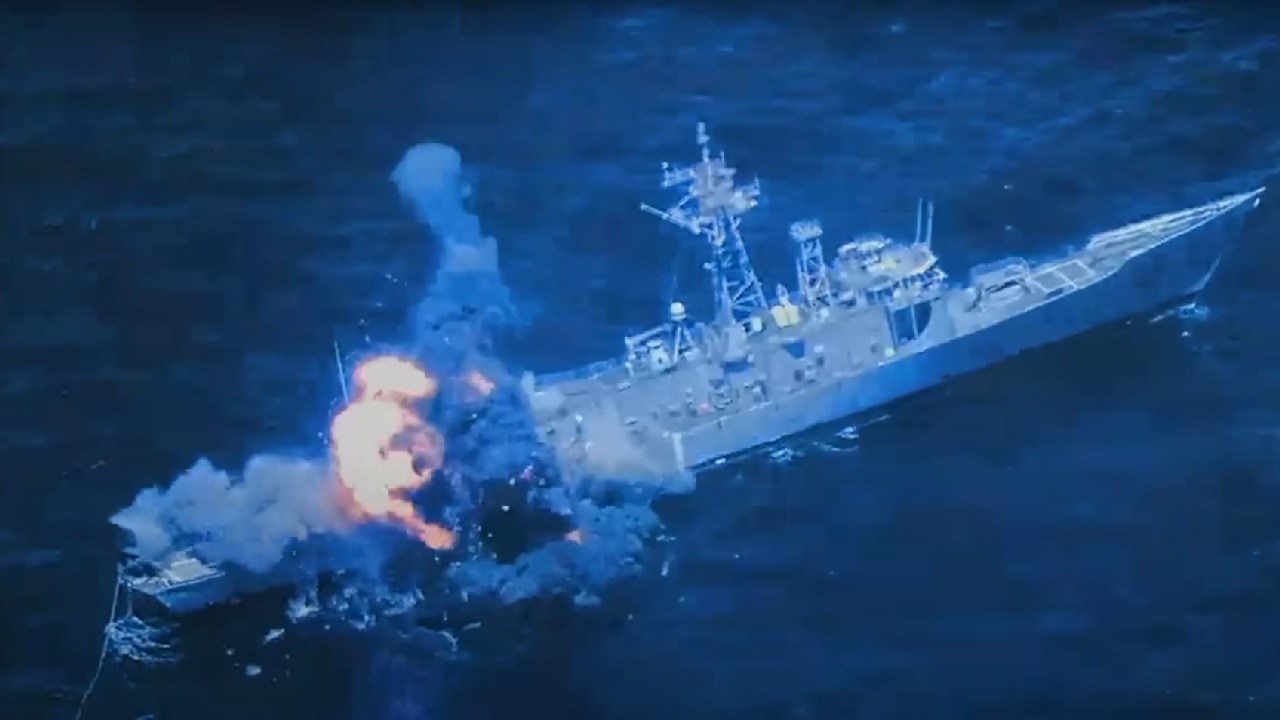
Iran has British Warships the US Navy Sank: The Alvand-class (Vosper Mark 5) comprised of four light patrol frigates built in the United Kingdom for the pre-revolutionary Imperial Iranian Navy during the late 1960s and early 1970s.
Originally named after Persian mythical figures from the Shahnameh, they were renamed after Iranian mountain ranges following the 1979 Islamic Revolution that brought Ayatollah Khomeini to power and deposed the Shah.
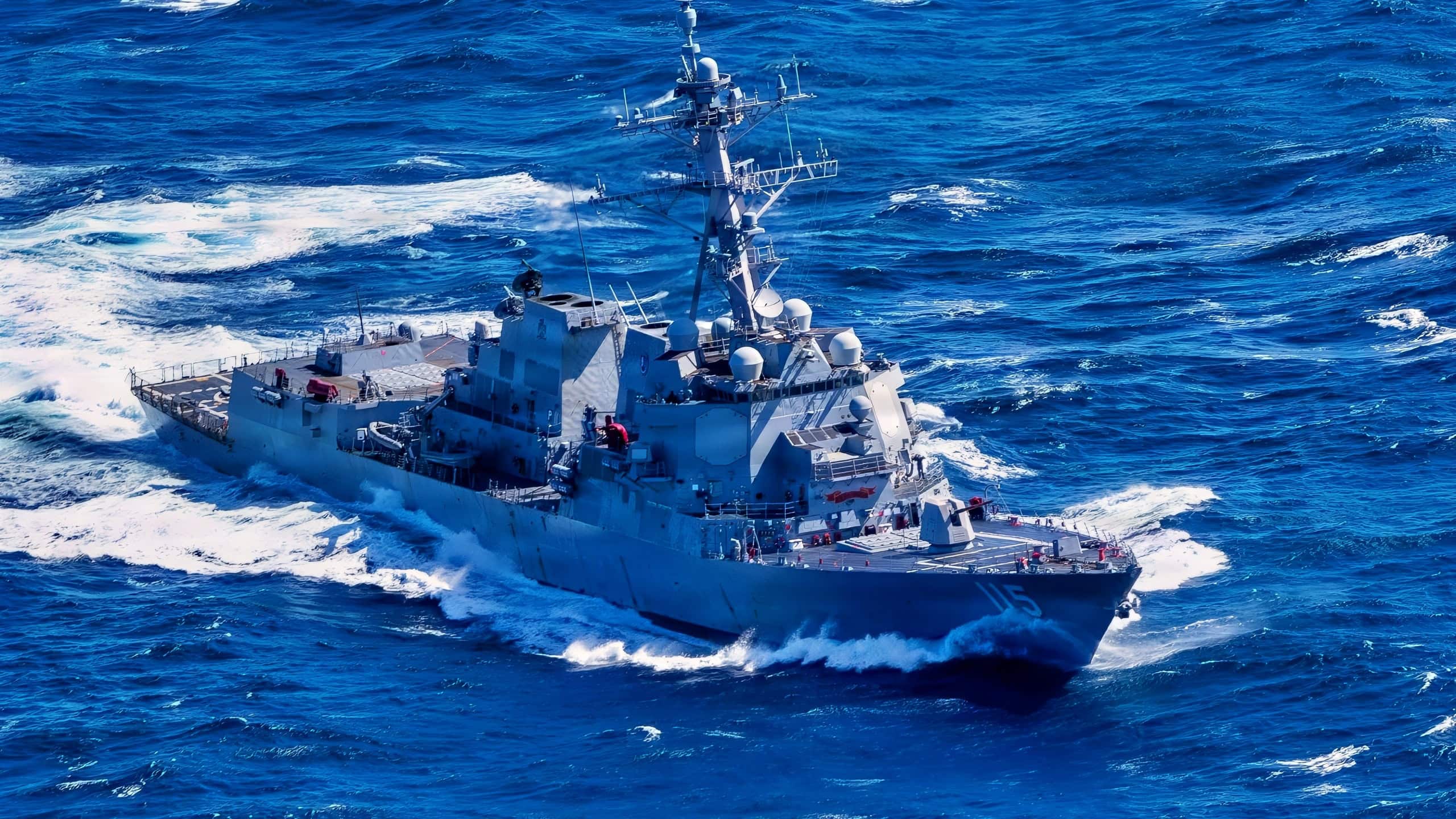
Navy Arleigh Burke-class guided-missile destroyer USS Rafael Peralta (DDG 115) transits the North Pacific Ocean, March 10, 2026. Rafael Peralta is forward-deployed and assigned to Destroyer Squadron (DESRON) 15, the Navy’s largest DESRON and the U.S. 7th Fleet’s principal surface force. (U.S. Navy photo by Mass Communication Specialist 1st Class Ryre Arciaga)
The four frigates were the IRIS Alvand (originally Saam), IRIS Alborz (originally Zaal), IRIS Sahand (originally Faramaz), and the IRIS Sabalan (originally Rostam).
The Iranian frigates took part in the Iran-Iraq War between 1980 and 1988. The IRIS Sahand was sunk by the U.S. Navy during Operation Praying Mantis in 1988. The remainder were sunk by the US Navy during the current conflict earlier this year.
The Alvand-Class Frigates Specs
The four light frigates (closer in size to corvettes) were built in the United Kingdom by Vosper Ltd and based on their Mark 5 design. They had a length of 310 feet, with a beam of 36.3 feet and a draught of 10.7 feet.
The ships weighed 1,100 tons and 1,540 tons with a full combat load and were crewed with 125 to 146 officers and sailors.
The ships were powered by 2 Paxman Ventura cruising diesels, 3,800 bhp (2,800 kW), and 2 Rolls-Royce Olympus TM2 boost gas turbines, 46,000 shp (34,000 kW), on 2 shafts.
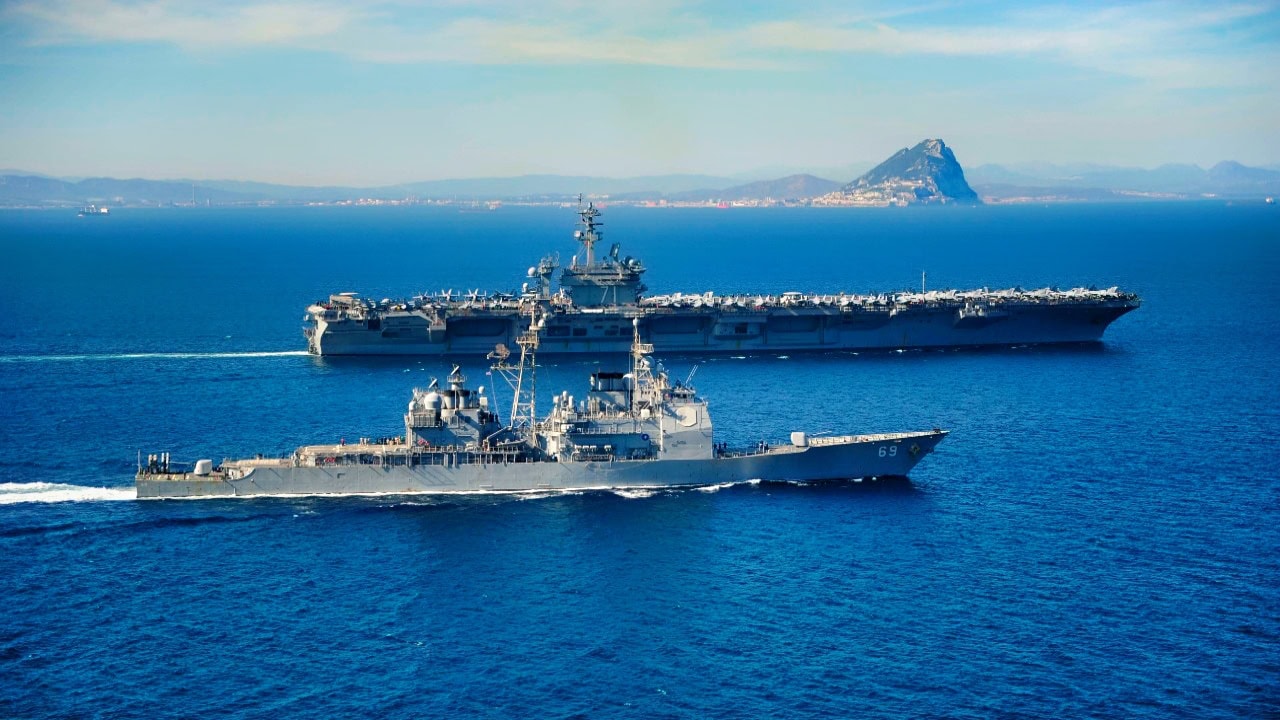
Ticonderoga-Class Cruiser U.S. Navy. Image Credit: Creative Commons.
The top speed was 17 knots on diesel power and 39 knots on the gas turbines. The ships had a range of 5,000 nautical miles at 15 knots.
At the time of the sale, each of the frigates was initially equipped with the following armaments.
ASuW – 1 × quintuple Sea Killer Mk2 surface-to-surface missile
AAW – 1 × triple Sea Cat surface-to-air missile launcher
ASW – 1 × 3-barrelled Anti-Submarine Mortar Mark 10 Limbo launcher
Guns – 1 × Mark 8 Mod 0 4.5 inch general purpose & 1 × twin 35mm Oerlikon AA
Electronics – Plessey AWS 1 air surveillance radar with on-board IFF; 2 × Contraves Seahunter systems (For use with Sea Cat, Sea Killer & the 35mm mount); Decca RDL 1 passive direction-finding equipment
They were refitted in the UK shortly before the 1979 Iranian Revolution.
However, the Sea Killer missiles were obsolete by the early 1990s and replaced by Chinese-made C-802s. The Sea Cats were replaced by a 20 mm AA gun.
Two triple 12.75-inch (324 mm) torpedo tubes, two 81 mm (3 in) mortars, and two .50 caliber machine guns were also added to the ships.
Operation Praying Mantis And The Sinking Of the IRIS Sahand
In April 1988, the USS Samuel B. Roberts (FFG-58) struck a mine, tearing a 21-foot hole in the hull and nearly sinking her.
Four days later, forces of the Joint Task Force Middle East (JTFME) executed Operation Praying Mantis. In response to this, and to sink two oil platforms that the Iranians used to attack shipping in the Gulf.
Navy A-6 Intruder attack aircraft targeted and disabled the IRIS Sabalan with a 500-pound bomb down her stack, leaving her dead in the water. Meanwhile, missiles fired from the USS Wainwright (CG-28) and frigates USS Bagley (FF-1069) and USS Simpson (FFG-56) sank the 147-foot missile patrol boat IRIS Joshan.
The IRIS Sahand sailed out of Bandar Abbas port to challenge the American fleet. It was not a wise decision by the Sahand’s aggressive skipper, Captain Shahrokhfar.
The Sahand fired on two A-6s flying Surface Combat Air Patrol (SUCAP).
The A-6s responded with the launch of three Harpoon anti-ship missiles, all of which struck home. The A-6s further attacked with Skipper missiles and bombs. Aircraft from the USS Enterprise soon joined in the attack.
The Sahand was then a flaming wreck from bow to stern.
The fires reached her magazines, and she exploded and sank along with at least 45 crewmen.
Iran lost several fast attack boats and the two oil platforms, as well as the two ships. It was a huge blow to the Iranian Navy, but not the last.
Iran Has More Problems: The US Destroys The Remainder Of The Class Early In 2026
The IRIS Alvand, the lead ship of her class of Iranian frigates, was sunk by United States airstrikes on February 28, 2026, during the opening salvo of Operation Epic Fury at the naval port of Bandar Abbas.
U.S. Central Command (CENTCOM) later released imagery confirming the destruction of the historic frigate alongside sister vessels like the IRIS Sabalan, effectively concluding over five decades of the class’s operational service.
The Iranian Navy frigate IRIS Alborz was destroyed on May 12, 2026, while sitting in dry dock during the 2026 conflict with the United States.
High-resolution satellite imagery confirmed the loss of the 53-year-old warship, which was the last active Alvand-class frigate in Iran’s fleet.
MORE – The Royal Navy’s HMS Prince of Wales Aircraft Carrier Has Issues
About the Author: Steve Balestrieri
Steve Balestrieri is a National Security Columnist. He served as a US Army Special Forces NCO and Warrant Officer. In addition to writing on defense, he covers the NFL for PatsFans.com and is a member of the Pro Football Writers of America (PFWA). His work was regularly featured in many military publications.