
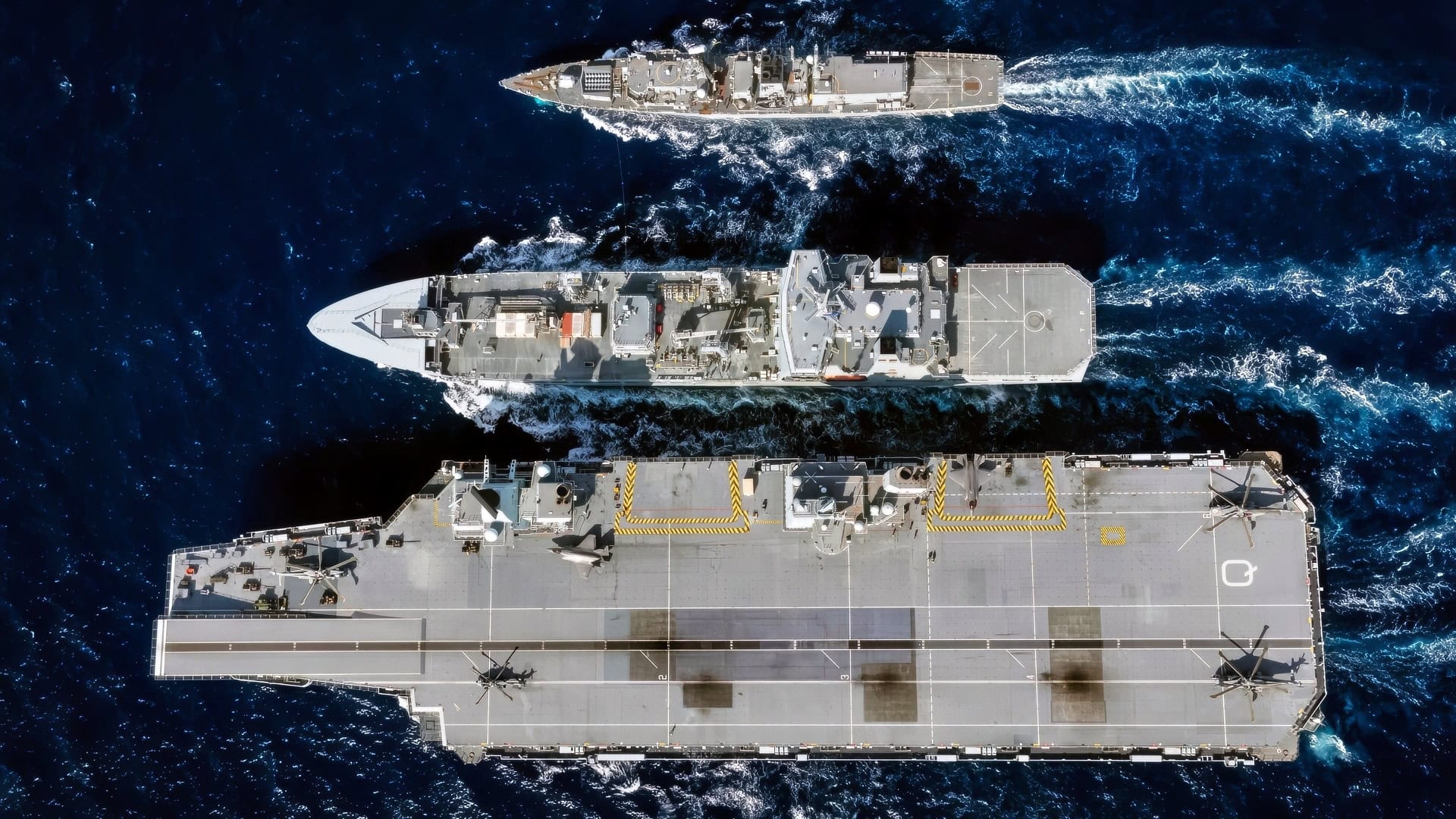
HMS Prince of Wales sailed from Portsmouth on August 27, 2022, for a three-month deployment to North America. Within two days, Britain’s 65,000-tonne aircraft carrier was anchored off the Isle of Wight with a failed coupling on her starboard propeller shaft. The mission was canceled, the ship returned to port, and repairs eventually cost about £25 million. Prince of Wales did not leave dry dock at Rosyth until July 21, 2023.
The official investigation found a more serious explanation than bad luck at sea. The starboard shaft had been misaligned during construction, and key components had been installed incorrectly. The Ministry of Defence identified one causal factor and numerous contributory and aggravating factors behind the defect. The coupling failure was the final event in a problem that had been built into the ship before she entered Royal Navy service.
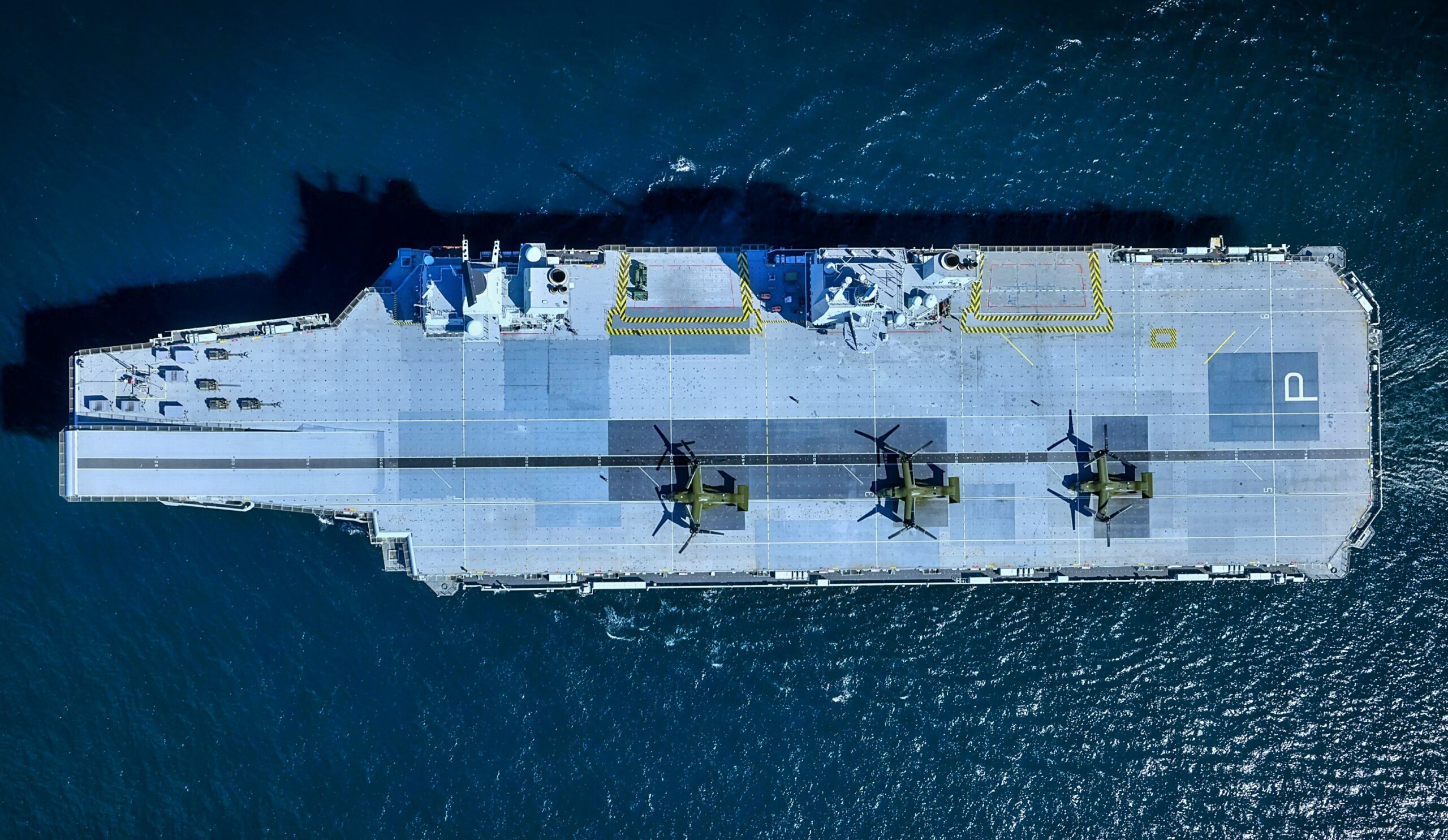
HMS Prince of Wales Aircraft Carrier. Image Credit: Creative Commons.
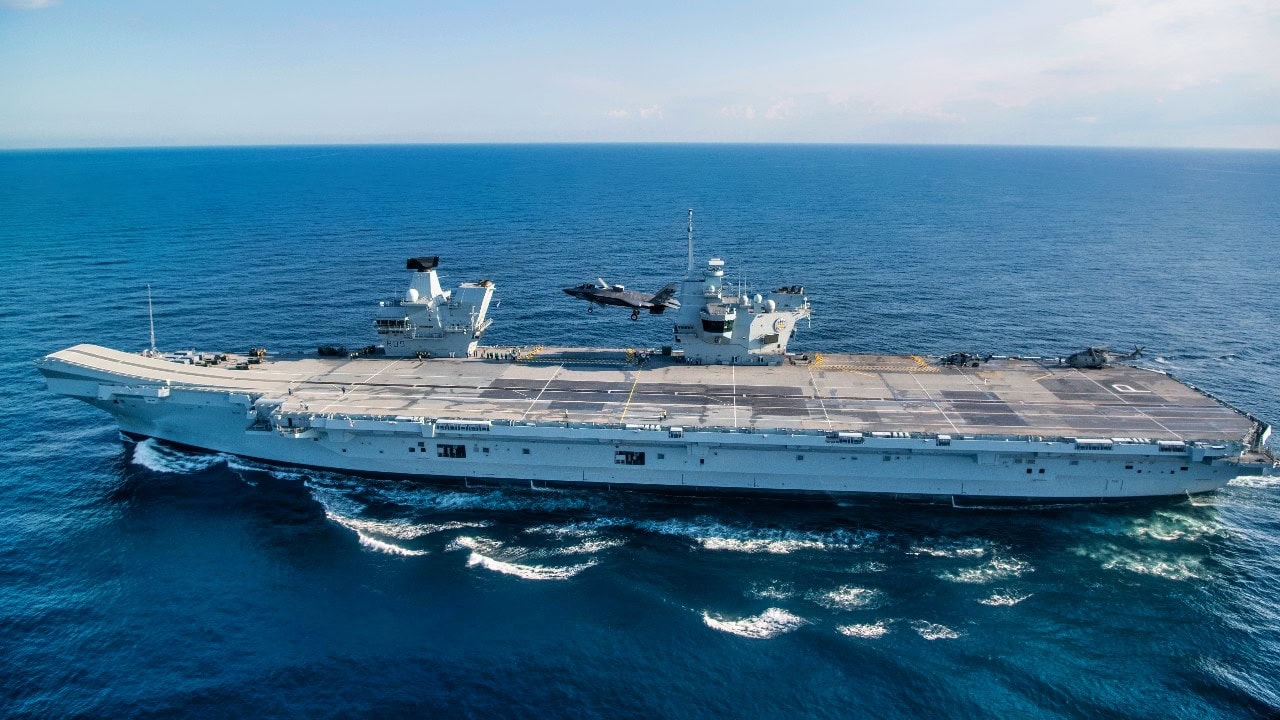
HMS Prince of Wales Aircraft Carrier.
The inquiry also revealed how the problem persisted despite acceptance. The effect of the misalignment had been reviewed during construction, and the decision was made to proceed to sea trials with further monitoring. Prince of Wales then sailed thousands of nautical miles while vibration readings remained within limits. She received the required naval and Lloyd’s Register certificates in 2019, with no restriction placed on the shafts and no continuing monitoring requirement transferred to the Navy.
After the starboard failure, engineers found an alignment issue on the port shaft as well and repaired both sides. Checks on HMS Queen Elizabeth found no comparable misalignment, leading the Ministry of Defence to reject the idea of a class-wide construction defect. The public investigation did not identify every wrongly installed component or publish the alignment measurements, leaving the engineering details behind the failure only partly disclosed.
A Coupling Failure Disabled a 65,000-Tonne Aircraft Carrier
The Queen Elizabeth-class uses integrated electric propulsion. Two Rolls-Royce MT30 gas-turbine alternators and four diesel generators produce electricity for ship systems and four large propulsion motors. Those motors drive two long shafts and fixed-pitch propellers. Because each shaft runs through a large part of the hull, it is manufactured in sections. The coupling that failed joined the final two sections of the starboard shaft.
A shaft line has to remain aligned through its bearings, couplings, and supports while transferring enormous torque to the propeller. Misalignment creates loads the system was not intended to absorb. Royal Navy divers found significant damage to the shaft and 33-tonne propeller, plus superficial damage to the rudder. The propeller was removed before Prince of Wales sailed north on one shaft for Rosyth, one of the few British docks large enough to take the carrier.
The breakdown carried extra reputational damage because the Prince of Wales had entered commission only in December 2019. The two-carrier construction program cost £6.4 billion. Between October 2020 and April 2021, the ship had already spent 193 days alongside while workers repaired flood damage. The 2022 shaft failure therefore looked less like an isolated early-service defect and more like another warning about the material state of Britain’s newest capital ship.
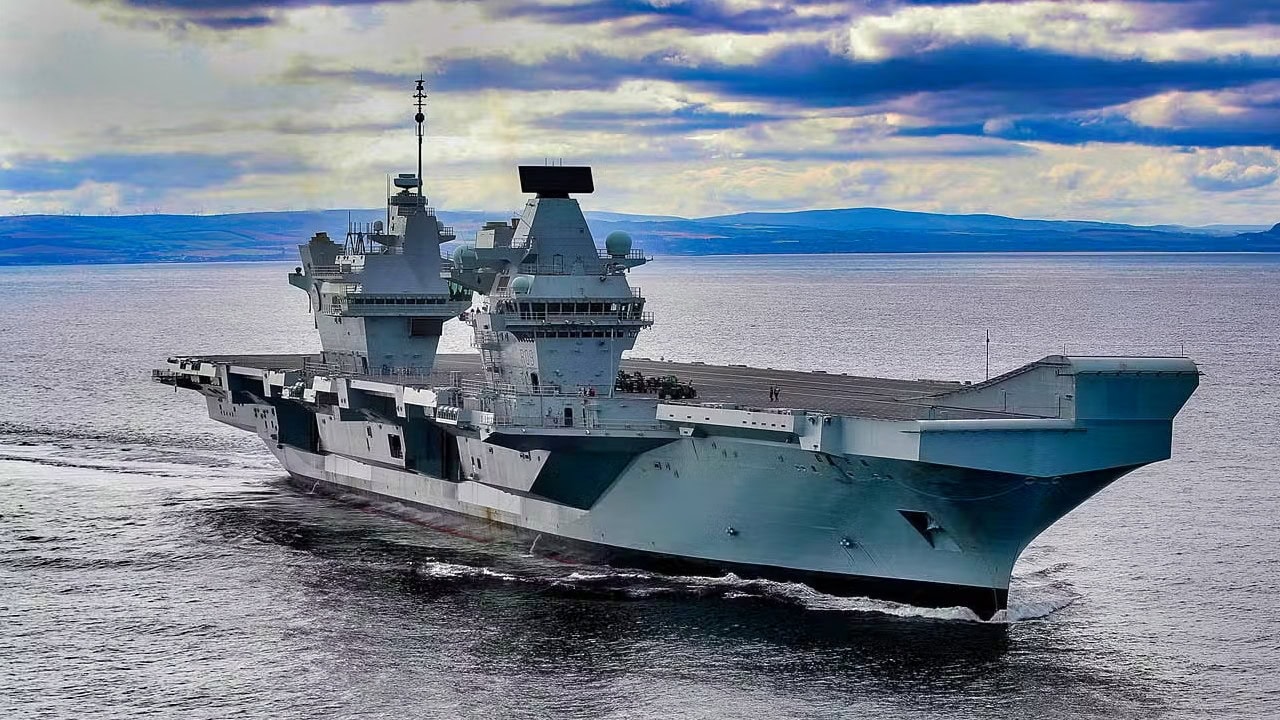
HMS Prince of Wales Aircraft Carrier.
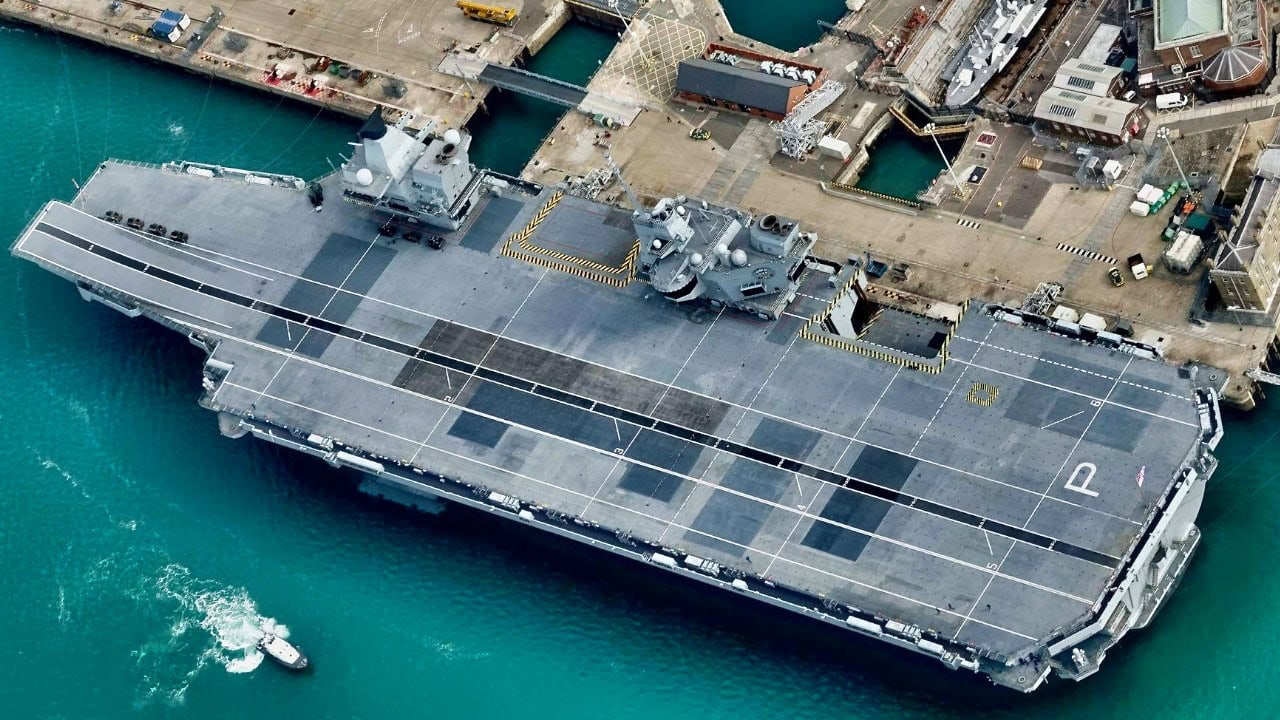
Royal Navy HMS Prince of Wales Aircraft Carrier. Image Credit: Creative Commons.
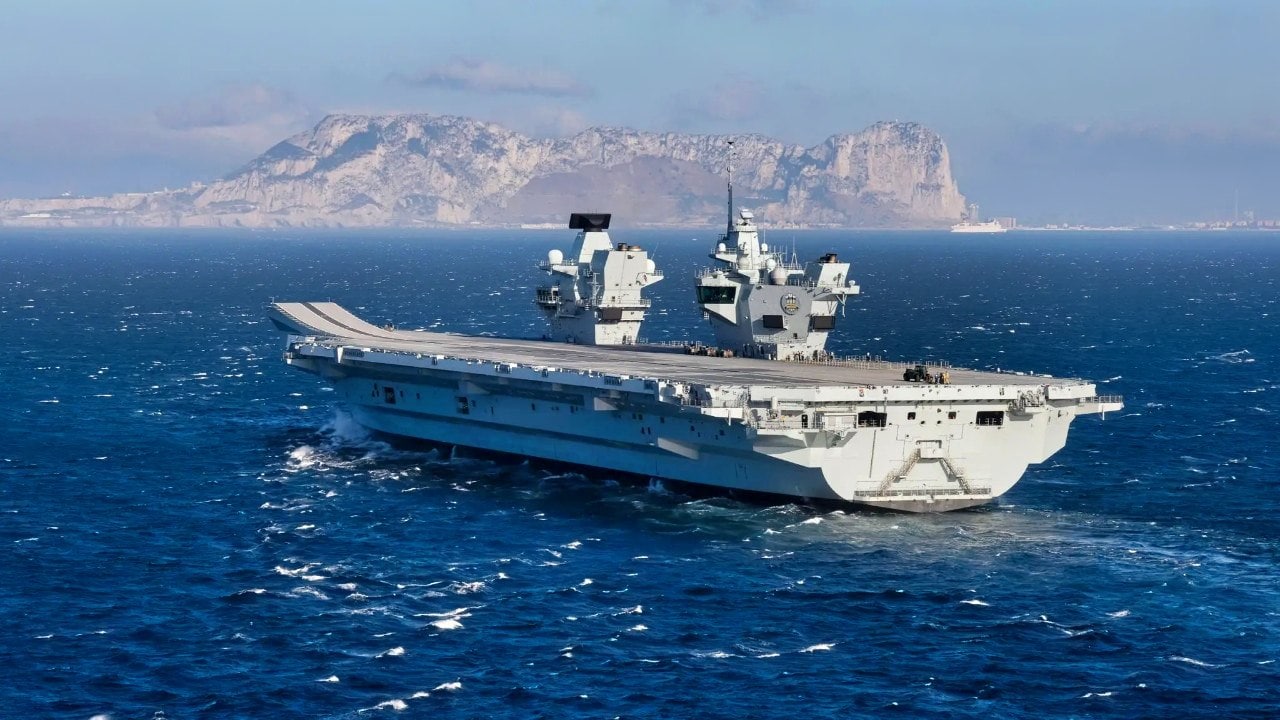
HMS Prince of Wales Royal Navy. Image Credit: Royal Navy.
WESTLANT 22 Lost Its Most Important Flight Trials
The canceled deployment was not part of the routine port-visit schedule. WESTLANT 22 was intended to expand F-35B operations, test uncrewed aircraft, and refine how Britain’s two carriers would use new aviation technology. The task group planned to work with American and Canadian forces and visit New York, Halifax, and the Caribbean. HMS Queen Elizabeth crossed the Atlantic to assume some of the diplomatic and operational work, allowing the Royal Navy to meet its NATO commitments.
Queen Elizabeth could not duplicate the entire test program at short notice because the Prince of Wales carried specialized equipment for the developmental flying. The lost F-35 and drone work moved into 2023. The Ministry of Defence later argued that the wider operational effect was limited because Prince of Wales had already been scheduled to spend much of 2023 alongside for flight-deck, communications, and combat-system upgrades. Those upgrades were completed at Rosyth while both shafts were repaired.
The £25 Million Repair Raised a Liability Question
The Navy initially paid the repair bill from its own budget. Officials estimated the work at roughly £25 million and said responsibility had not yet been established. The complication was the contracting model. Prince of Wales had been delivered by the Aircraft Carrier Alliance, a partnership in which the Ministry of Defence itself worked with BAE Systems, Babcock and Thales. Officials told Parliament that an extended warranty for a project of this scale would have cost far more than the repair.
That explanation protected the original procurement model but did not erase the central failure: a known alignment concern was deemed acceptable, passed trials, and became a major casualty three years after the vessel was accepted. The episode now sits at the center of the debate over Prince of Wales’ availability record. It also reinforced the case for keeping two carriers rather than placing Britain’s entire carrier-strike capability in one hull.
Two Carriers Limited the Damage but Did Not Remove It
Here, the redundancy worked in both directions. Queen Elizabeth covered part of the abandoned 2022 program.
In February 2024, Prince of Wales prepared in eight days and replaced her sister on a major NATO exercise after inspectors found a different problem with Queen Elizabeth’s starboard shaft coupling. The government said the second defect was not the same as the 2022 failure.
The exchange showed why the two-carrier force has operational value, even when each ship spends long periods in maintenance.
Prince of Wales also completed the work lost in 2022. Her 2023 American deployment expanded the F-35B operating envelope and tested uncrewed aircraft from the flight deck. She later led the 2025 carrier deployment to the Indo-Pacific, returning after eight months and more than 40,000 nautical miles.
That voyage supplied the strongest evidence that the shaft repairs had restored the ship rather than produced a temporary fix.
The repaired carrier then returned to high-readiness work in northern waters.
The 40,000-mile deployment had already tested the ship across three oceans. On July 24, 2026, HMS Prince of Wales returned to Portsmouth after three months leading Operation Firecrest in the North Atlantic and Arctic. The next phase was scheduled for northern European waters that autumn.
About the Author: Harry J. Kazianis
Harry J. Kazianis (@Grecianformula) was the former Senior Director of National Security Affairs at the Center for the National Interest (CFTNI), a foreign policy think tank founded by Richard Nixon based in Washington, DC. Harry has over a decade of experience in think tanks and national security publishing. His ideas have been published in the NY Times, The Washington Post, The Wall Street Journal, CNN, and many other outlets worldwide. He has held positions at CSIS, the Heritage Foundation, the University of Nottingham, and several other institutions related to national security research and studies. He is the former Executive Editor of the National Interest and the Diplomat. He holds a Master’s degree focusing on international affairs from Harvard University.

