
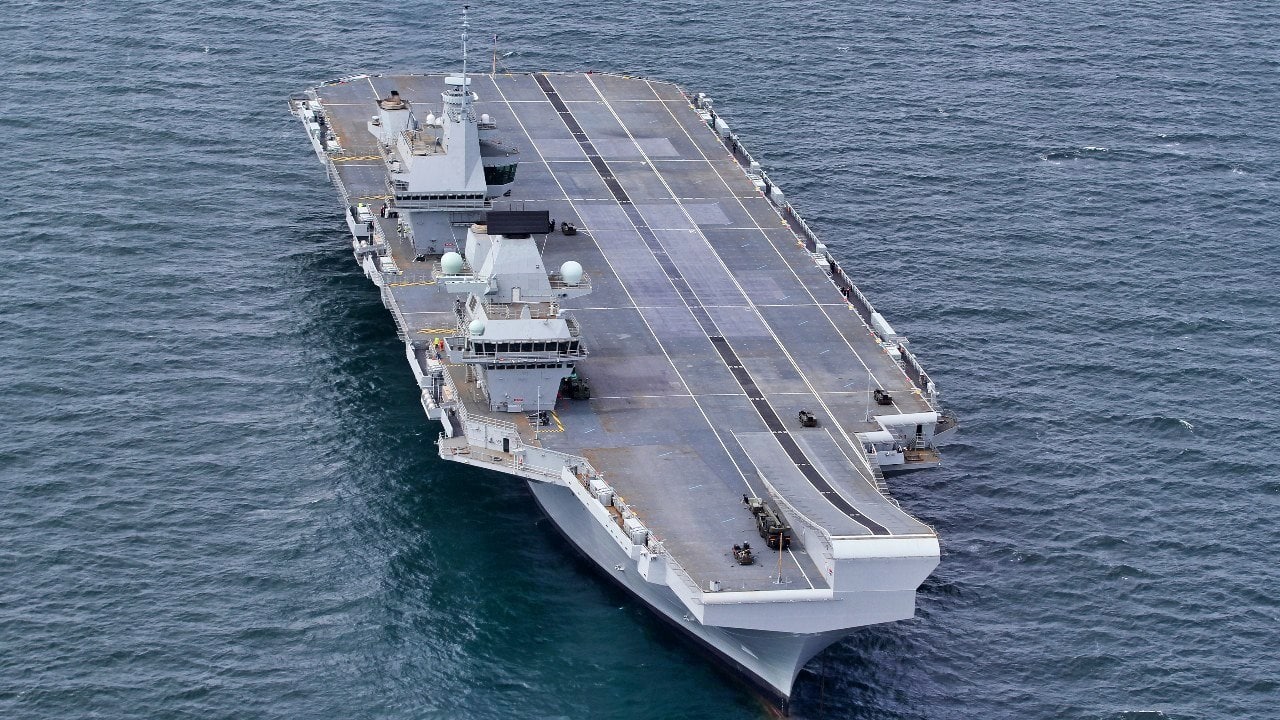
Summary and Key Points: Britain’s Queen Elizabeth-class carriers project impressive, coalition-ready power, but their value clashes with the Royal Navy’s most pressing demands near home.
-The North Atlantic and Europe’s narrow seas reward endurance—submarines, anti-submarine escorts, maritime patrol support, and sustainment—not episodic “chosen deployment” presence.
-Carrier operations also consume scarce fleet mass, crews, and escorts, making carriers magnets for readiness trade-offs when destroyers and frigates are already stretched.
-A limited F-35 inventory further caps sustained carrier airpower. The argument isn’t to abolish carriers, but to realign priorities toward sea control and undersea defense where UK security is actually decided.
Britain’s Queen Elizabeth-Class Aircraft Carriers Have a Message: Prestige Isn’t Sea Control
Britain’s two big-deck carriers appear to be a national flex.
They can sail far, host fifth-generation jets, and pull allies into a single moving package of sea-based airpower. In 2025, the Royal Navy demonstrated this with a long global deployment centered on HMS Prince of Wales, covering more than 40,000 nautical miles over roughly eight months.
That success is precisely what makes the uncomfortable question unavoidable. The Queen Elizabeth-class aircraft carriers are tactically impressive. Yet Britain’s most binding maritime burdens sit closer to home, where sea control and undersea defense matter more than a flight deck photo op.
London has built an instrument optimized for discretionary global presence at a moment when the Navy’s day-to-day strategic problem is endurance in the North Atlantic and the narrow seas around Europe.
Geography Doesn’t Care About Prestige
The North Atlantic has returned as a serious strategic theatre. It is the corridor for reinforcement and resupply in any European war. It is also the zone where Russian submarines, surveillance platforms, and undersea operations can pressure NATO without firing a shot.
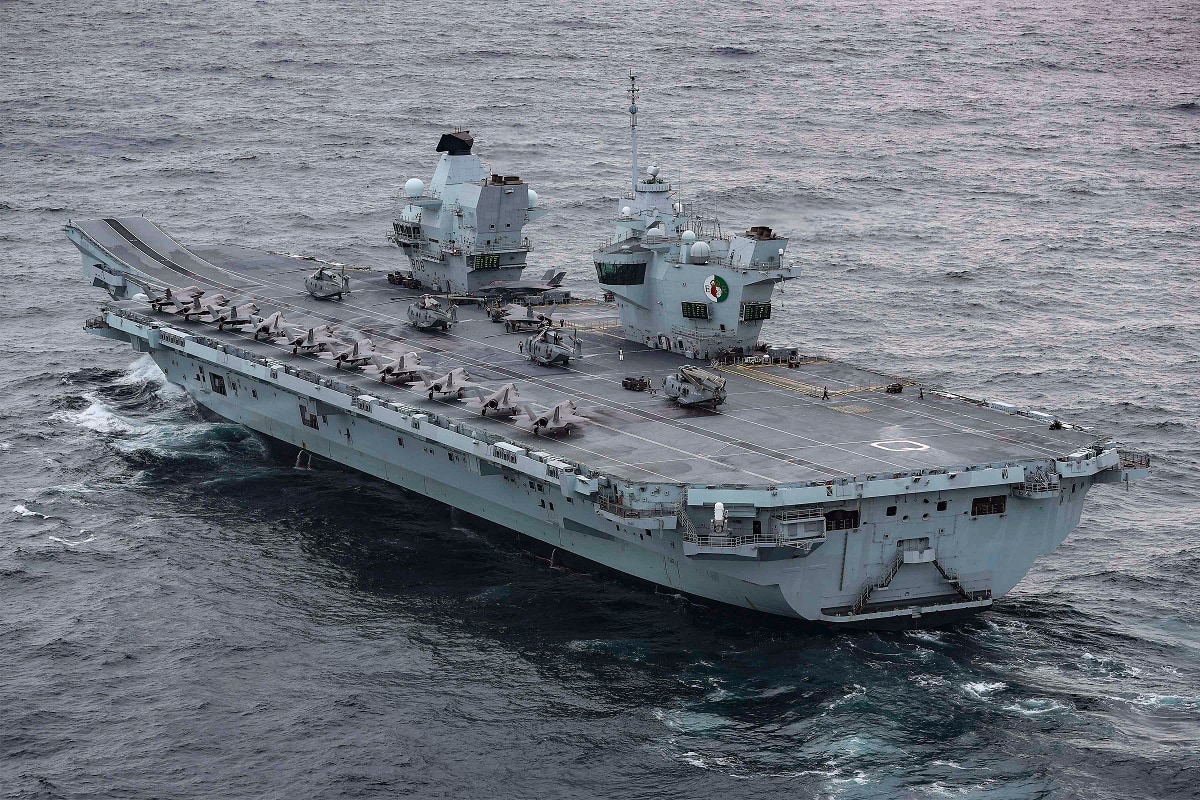
The full United Kingdom (UK) Carrier Strike Group (CSG) assembled at sea on 04 October, 2020. The (CSG) is led by Her Majesty’s Ship Queen Elizabeth and includes flotilla of destroyers and frigates from the UK, the Netherlands, the USS The Sullivans, and 15 F-35B Lightning II’s from Marine Fighter Attack Squadron 211 and the UK’s 617 Squadron. The Navy-Marine Corps team is humbled and proud to represent the United States and serve alongside our United Kingdom counterparts.
(Royal Navy Photo by LPhot Alker)
In that environment, what decides outcomes is not how far a carrier can range. It is how well a navy can find, track, and hold at risk underwater threats over weeks.
Carriers can contribute to that fight at the margins. They can provide air cover in some scenarios. They can host helicopters. But they do not substitute for the unglamorous core of North Atlantic naval power: attack submarines, anti-submarine escorts, maritime patrol support, and the sustainment system that keeps those assets on task.
Britain’s carriers were designed for a different rhythm. They are at their best when London chooses the time and place, then shows up with partners and political intent. The North Atlantic imposes its own tempo, indifferent to when London would prefer to arrive.
The Real Bill Comes Due for Queen Elizabeth-Class
A carrier is never just a ship. It sits at the center of a strike group and draws heavily on the rest of the fleet when it deploys. When those ships and crews are already committed, the carrier appears to be a liability rather than an asset.
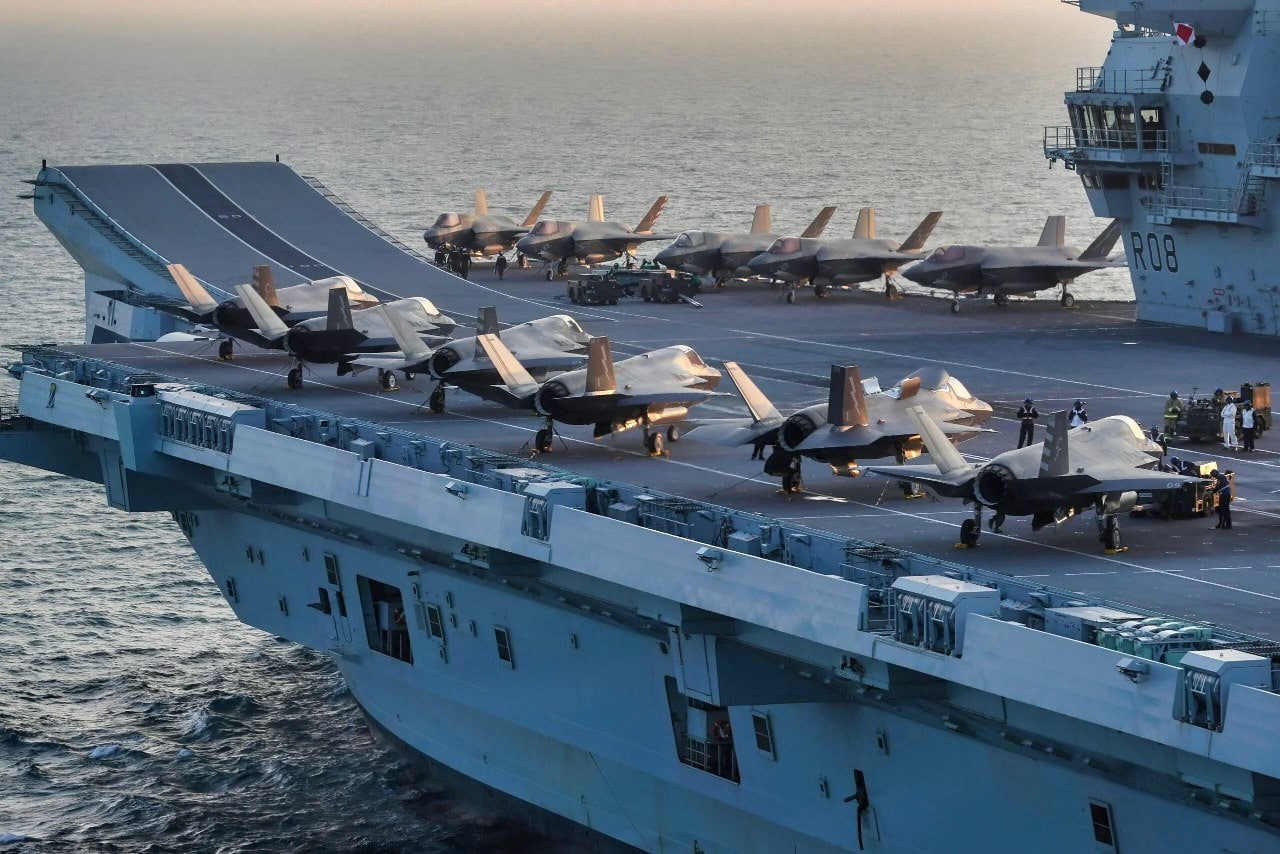
Queen Elizabeth-Class Aircraft Carrier Deck. Image Credit: Creative Commons.
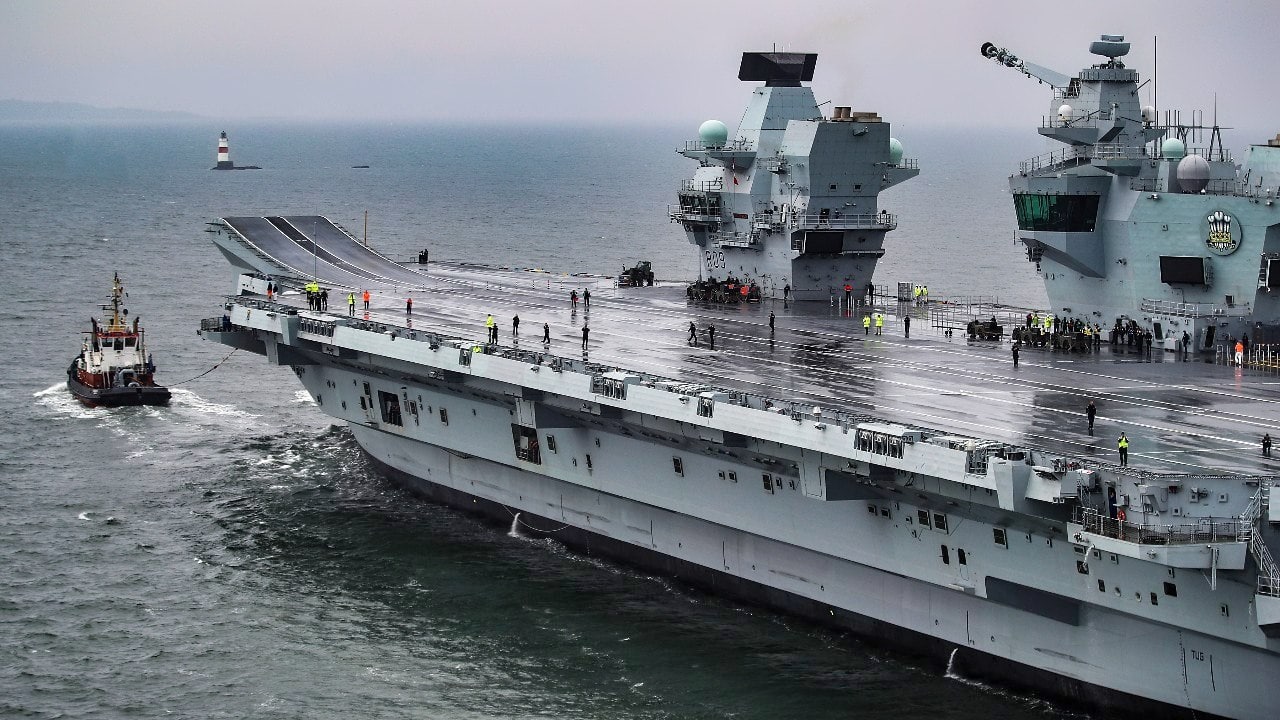
HMS Prince of Wales Aircraft Carrier Queen Elizabeth-Class Aircraft Carrier. Image Credit: Creative Commons.
Maintenance backlogs narrow its availability. Personnel shortages force tradeoffs elsewhere in the fleet.
That is why the carrier debate cannot be reduced to arguments about ski jumps or sortie rates. The constraint is fleet mass and availability. In January 2026, the Ministry of Defence stated in a parliamentary answer that only three of the six Type 45 destroyers were operational. That is not an abstract statistic. It speaks to how hard it is to generate the protective screen that a carrier needs, even in peacetime.
The same logic applies to frigates. The escort fleet is already stretched by standing tasks and NATO commitments, with home waters coverage absorbing what slack remains. When older ships retire faster than replacements arrive, the gap first appears in cancelled deployments, then in maintenance deferred to keep ships available, and eventually in crews thinned to keep hulls on the line.
Even carrier advocates should be uneasy when the fleet tasked with protecting the capital ships is forced into permanent triage.
The Air Wing Constraint
The carriers were built around the F-35B. The aircraft is excellent. Britain’s fleet plan, however, indicates a finite carrier air wing for years to come, with broader force-structure demands pulling in different directions. In mid-2025, the government announced plans to buy 12 F-35A aircraft for NATO’s dual-capable mission, alongside the existing F-35B buy.
That decision may be defensible on deterrence grounds. It also underscores the underlying problem: Britain is attempting to undertake more missions with a limited Lightning inventory. Carriers appear most credible when they deploy a robust air group at sea and sustain it.
A small jet pool entails awkward trade-offs among carrier strike, training, readiness recovery, and land-based tasking. It also constrains sortie generation during prolonged deployments, limiting the amount of combat airpower a carrier can sustain once the initial surge window closes. No amount of flight deck steel changes the arithmetic.
This matters because the carriers are sold politically as instruments of decisive power. In practice, they risk becoming instruments of episodic power. They will still be useful. They may also be misaligned with the persistent operational load Britain faces in European waters.
Alliance Value, National Cost
There is another layer that London rarely states plainly. The carriers make the most strategic sense when they operate as part of a wider coalition system, often with U.S. enablers in the background.
That is not a criticism. It is how NATO maritime power works at the high end. The 2025 carrier strike deployment was explicitly framed as a major international effort, operating with multiple partners across regions.
But this raises a hard budgeting question. If carriers are primarily valued for alliance contributions, then the United Kingdom is paying sovereign-level money to field a capability that is most potent within a collective framework.
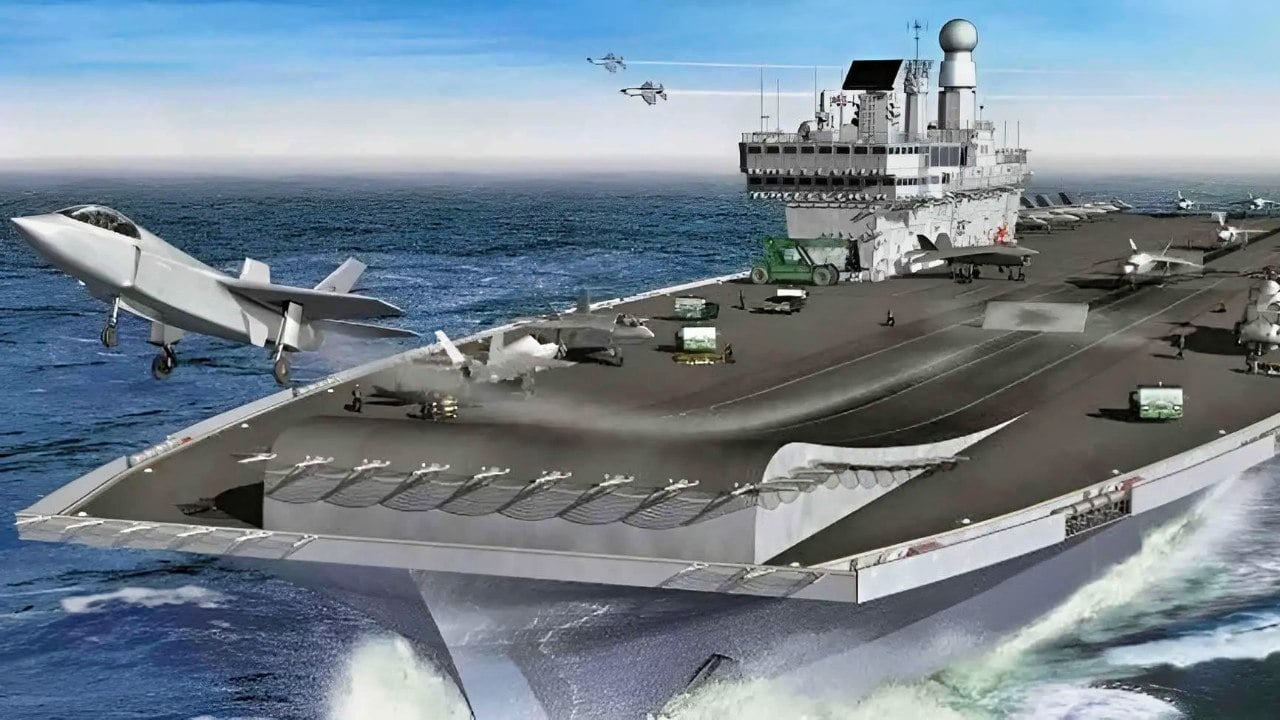
Queen Elizabeth-Class Aircraft Carrier Artist Rendering.
Meanwhile, the missions that are most relentlessly national in character include protection of home waters, North Atlantic escort duties, and undersea infrastructure security. Those are missions where numbers, availability, and persistence do more work than spectacle.
A navy can absolutely choose to prioritize alliance relevance through capital ships. It just needs to admit what is being traded away. Britain’s strategic problem is that it does not demonstrate it can sail with the Americans. It demonstrates that it can cover its own neighbourhood without overextending the fleet.
A Navy Built for Endurance
So does the Royal Navy “need” aircraft carriers? The better question is what kind of navy Britain needs, given what it can fund and crew. The carriers are not worthless. They are also not free. They pull attention, money, and scarce personnel toward a high-visibility form of power that is least aligned with the daily geometry of Britain’s maritime security problem.
The sensible way forward is not a theological debate about abolishing carriers. It is a sober reconsideration that treats sea control and undersea defense as the Navy’s organizing priorities, and judges everything else against that standard. That shift would pull resources back toward escorts and submarines and force a more rigorous examination of availability as a strategic constraint rather than a maintenance issue. It would also put some distance between naval power and the instinct to measure it by the size of its flagships.
Britain built two magnificent flight decks. The risk is that London ends up with a Navy that can impress the world on a chosen deployment, yet struggles to generate sustained maritime power where Britain’s security is actually decided. In strategy, the most expensive mistake is buying the right tool for the wrong job.
About the Author: Dr. Andrew Latham
Andrew Latham is a non-resident fellow at Defense Priorities and a professor of international relations and political theory at Macalester College in Saint Paul, MN. You can follow him on X: @aakatham. Dr. Latham writes a daily column for 19FortyFive.com.