Summary and Key Points: The USS Abraham Lincoln is on her way home to San Diego after one of the longest American carrier deployments in recent memory. The Navy says the ship accumulated 286 days at sea, including 200 days operating in a combat zone. CENTCOM puts the air wing’s output at roughly 10,000 flights and 1,500,000 pounds of ordnance. When the carrier pulled into Thailand for shore leave, the world got its first good look at her, and the photographs went viral for one reason: a 100,000-ton nuclear-powered aircraft carrier, 1,092 feet long, was streaked with rust. The Navy’s position is that the condition is cosmetic — that routine preservation work the crew performs in peacetime simply cannot be done during sustained combat operations. That may well be true. But wider repairs might be needed.
The USS Abraham Lincoln Is In Need Of Some Repairs and Is Sailing Home
The USS Abraham Lincoln is heading back to its homeport in San Diego, California, after a marathon deployment that lasted 274 days.
That deployment included a significant stint in major combat operations against the Islamic Republic of Iran that began on February 28 (although the Lincoln was on station before that).
When she entered harbor in Thailand for some shore leave before returning home, the world got its first glimpse of the carrier.
A Viral Moment
Those images went viral as the great ship was covered in rust and overall degradation.
It looked less like an American aircraft carrier and more like the sclerotic Russian aircraft carrier, the Admiral Kuznetsov, which has been the butt of many jokes in the international naval community for decades.
Of course, the Abraham Lincoln is in better condition than the Kuznetsov.
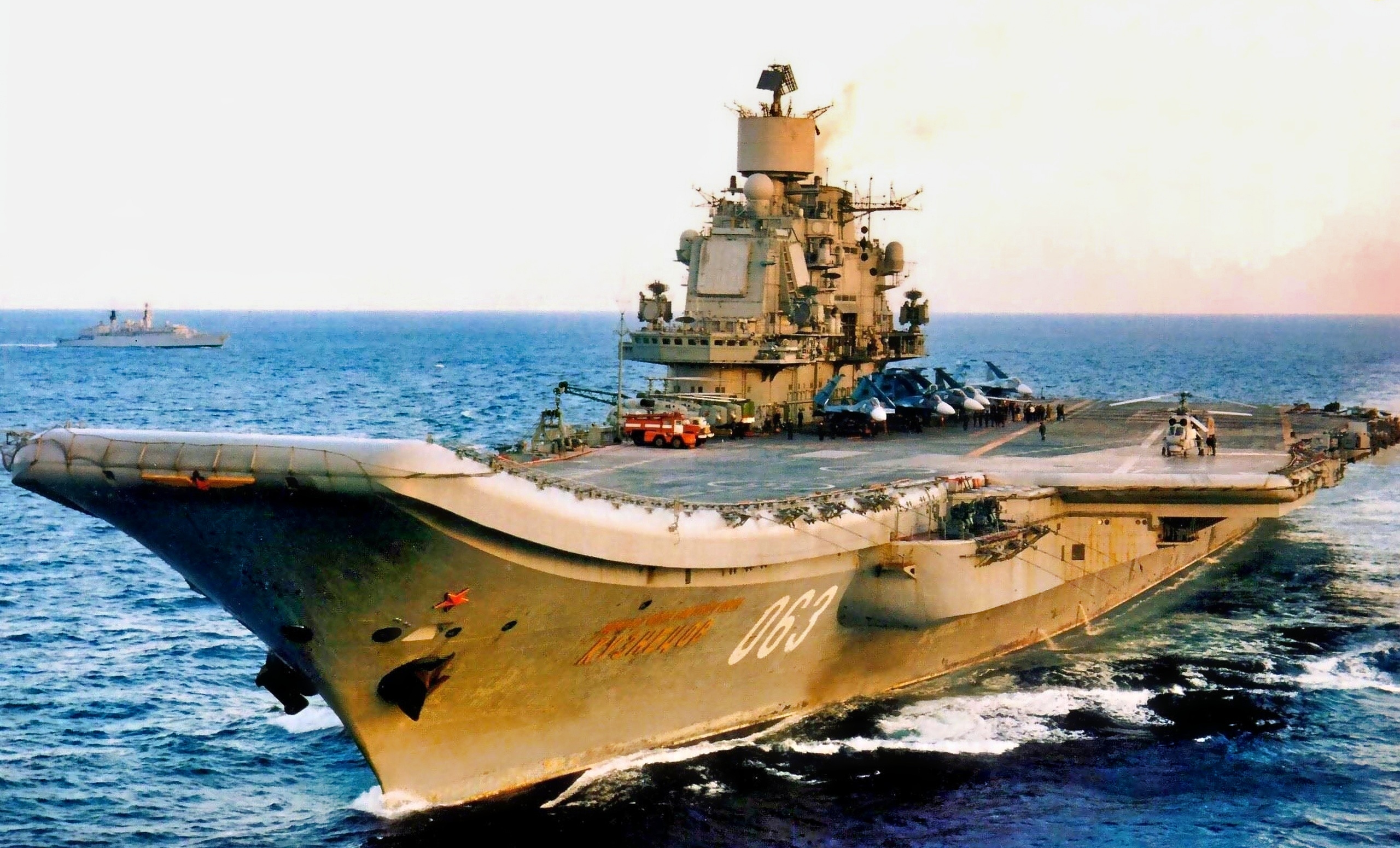
Russia Aircraft Carrier Admiral Kuznetsov. Image Credit: Creative Commons.
Yet its condition is nowhere near what it should be.
Now that it is sailing home, the ship will undergo a significant maintenance cycle.
That cycle may be more intense than originally planned because of its extended deployment.
You see, when carriers are extended beyond their intended deployment date–especially as significantly as the Abraham Lincoln was–the United States Navy must then put the carriers through an even more extensive, costly maintenance cycle than what it might normally have undergone.
This unplanned extension creates a gap in the Navy’s overall carrier availability and deployment cycle.
According to the Navy, the carrier’s visible disrepair is merely cosmetic.
You see, during combat operations, certain routine maintenance that the crew performs during peacetime could not have been performed adequately, meaning that the carrier merely appeared to be in a state of decay.
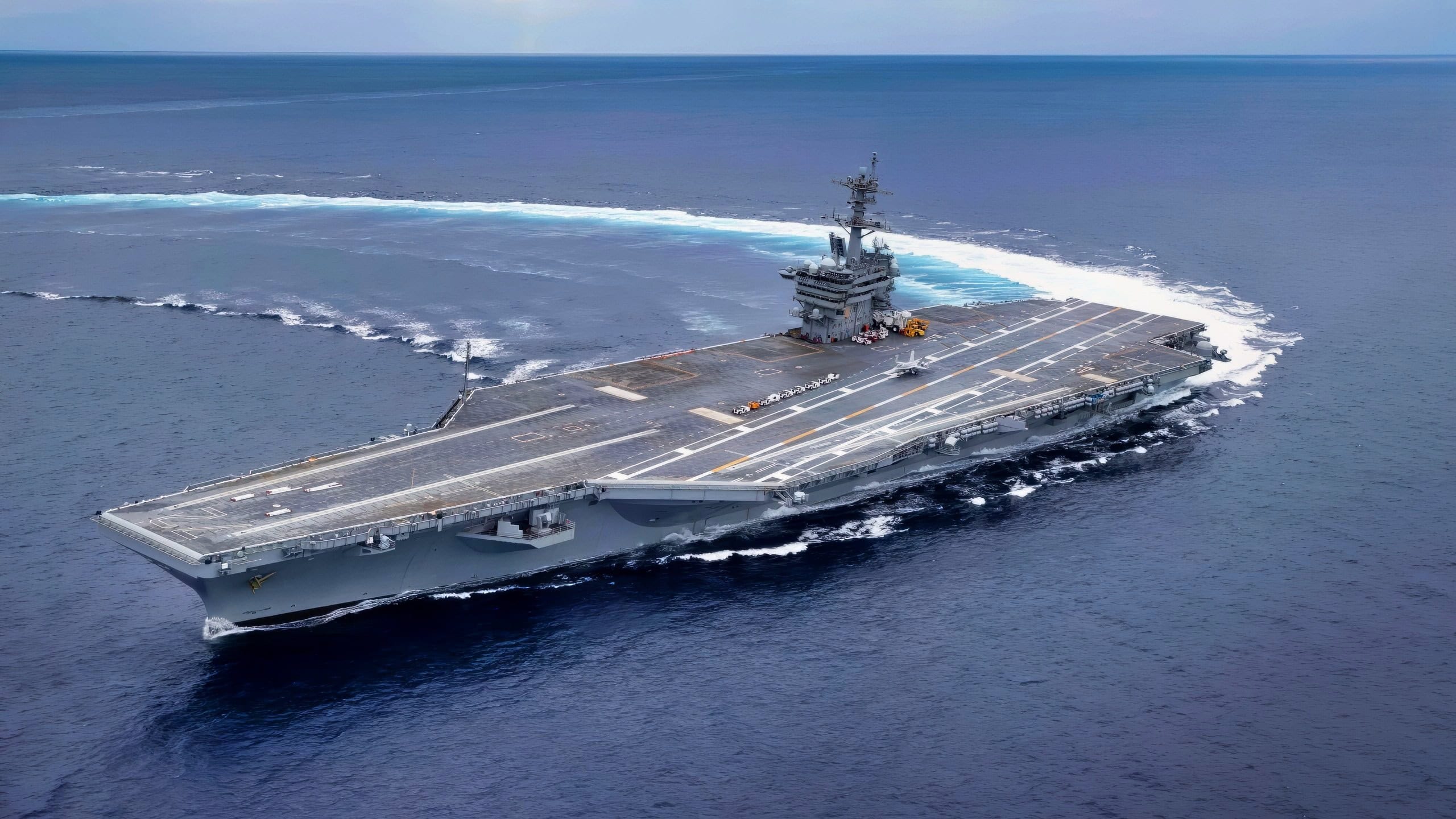
(May 11, 2017) Nimitz-class aircraft carrier USS Abraham Lincoln (CVN 72), conducts high-speed turn drills during sea trials. Abraham Lincoln is underway after successfully completing its mid-life refueling and complex overhaul and will spend several days conducting sea trials, a comprehensive test of many of the ship’s key systems and technologies. (U.S. Navy photo by Mass Communication Specialist 3nd Class Juan A. Cubano/Released)
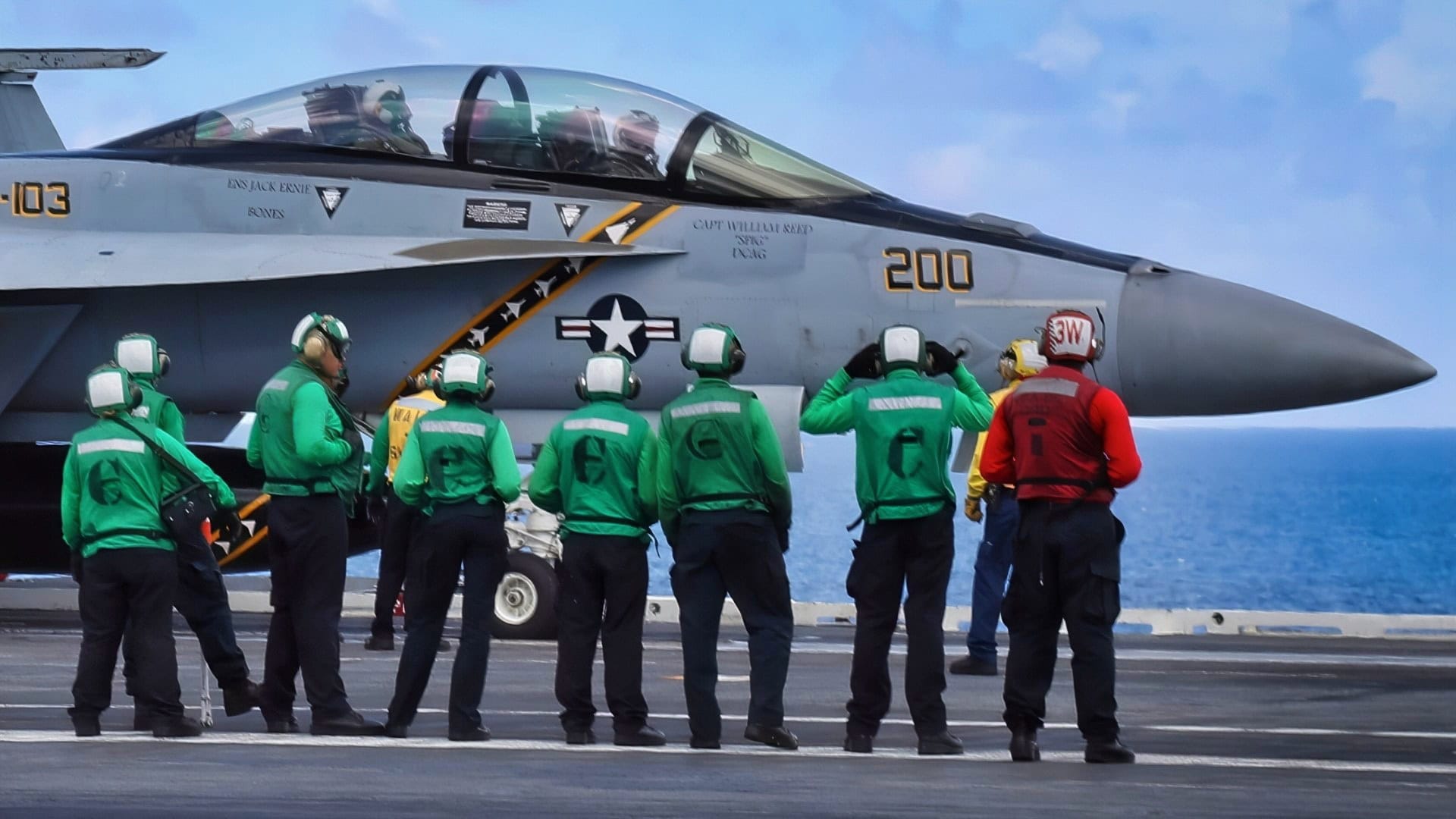
ATLANTIC OCEAN (Aug. 1, 2018) Sailors stand by as an F/A-18E Super Hornet from Strike Fighter Squadron (VFA) 103 taxies to a catapult on the flight deck aboard the Nimitz-class aircraft carrier USS Abraham Lincoln (CVN 72). (U.S. Navy photo by Mass Communication Specialist 3rd Class Jeff Sherman)
Yet stories of low crew morale and limited supplies, combined with the carrier’s overall abysmal appearance, lead many to assume that the required maintenance is extensive.
What’s more, the Abraham Lincoln has not returned yet, meaning it is still putting wear and tear on the already overburdened ship.
It will not reach San Diego until late this month at the earliest, or possibly early next month.
The Navy said the warship accumulated 286 days at sea, including 200 days operating in a combat zone, a serious deployment for the carrier and her crew.
Once the ship reaches San Diego, it will have been at sea for more than 300 days (depending on its actual arrival day).
The Specs
Coming in at 1,092 feet long, with a 252-foot-wide flight deck that covers about 4.5 acres, the Nimitz-class USS Abraham Lincoln displaces up to 100,000 tons and can exceed 30 knots.
Two A4W nuclear reactors provide propulsion, while the carrier has 65 or more aircraft and a crew of roughly 5,000 sailors and Marines when its air wing is embarked.
CENTCOM says 10,000 flights emanated from the carrier, dropping a whopping 1.5 million pounds of ordnance. That all adds up to more wear and tear.
A Marathon Deployment and a Nightmare Time in Drydock
So, how long will Lincoln’s time in drydock last?
Let’s look at the USS Carl Vinson, a sister Nimitz-class carrier. After returning from deployment last year, that carrier began a Planned Incremental Availability in November 2025 and completed it on June 12, 2026 — a seven-month maintenance period.
Historically, the Navy allocated six months for a Planned Incremental Availability. But more extreme Docking Planned Incremental Availabilities run up to 15 months.
After its 2017 deployment, the USS Nimitz endured a 15-month DPIA.
In all likelihood, that timeline will be similar to what the Lincoln must endure following this marathon deployment.
Indeed, the USS Gerald R. Ford is likely to follow a similar timeline after its own marathon deployment, which was well documented earlier this year during the opening phases of the Iran War.
The USS Abraham Lincoln will likely require major hull, propulsion, electrical, and flight-deck inspections.
There will likely be serious issues with at least some of those systems.
Further clues suggest a longer maintenance cycle, as reports indicate the carrier may eventually relocate to Bremerton, Washington, home of the Puget Sound Naval Shipyard, a move the Navy may be signaling will require one.
How Long Can This Last?
In the future, this means the Navy will be down yet another carrier for a long time at a time when it needs its carriers more than ever. The few carriers available will therefore be pushed to extend their deployment cycles.
That, in turn, will ensure that the carriers experience extended maintenance cycles — all as demand for the finite number of carriers explodes.
This is a vicious cycle that will lead to a major crisis, especially as shipyards become overburdened and strained amid this severe defense industrial crisis.
About the Author: Brandon J. Weichert
Brandon J. Weichert is the Senior National Security Editor at 19FortyFive.com. He also manages The Weichert Brief on Substack. Weichert also hosts “National Security Talk” on Rumble. He is the author of four bestselling national security books, the most recent of which is A Disaster of Our Own Making: How the West Lost Ukraine (Encounter Books). Follow him via Twitter/X @WeTheBrandon.