
With all the media coverage and handwringing over the wars in Iran and Ukraine, one potential conflict has recently been lost in the shuffle.
China has not received the kind of attention it deserves in recent weeks, but that is changing.
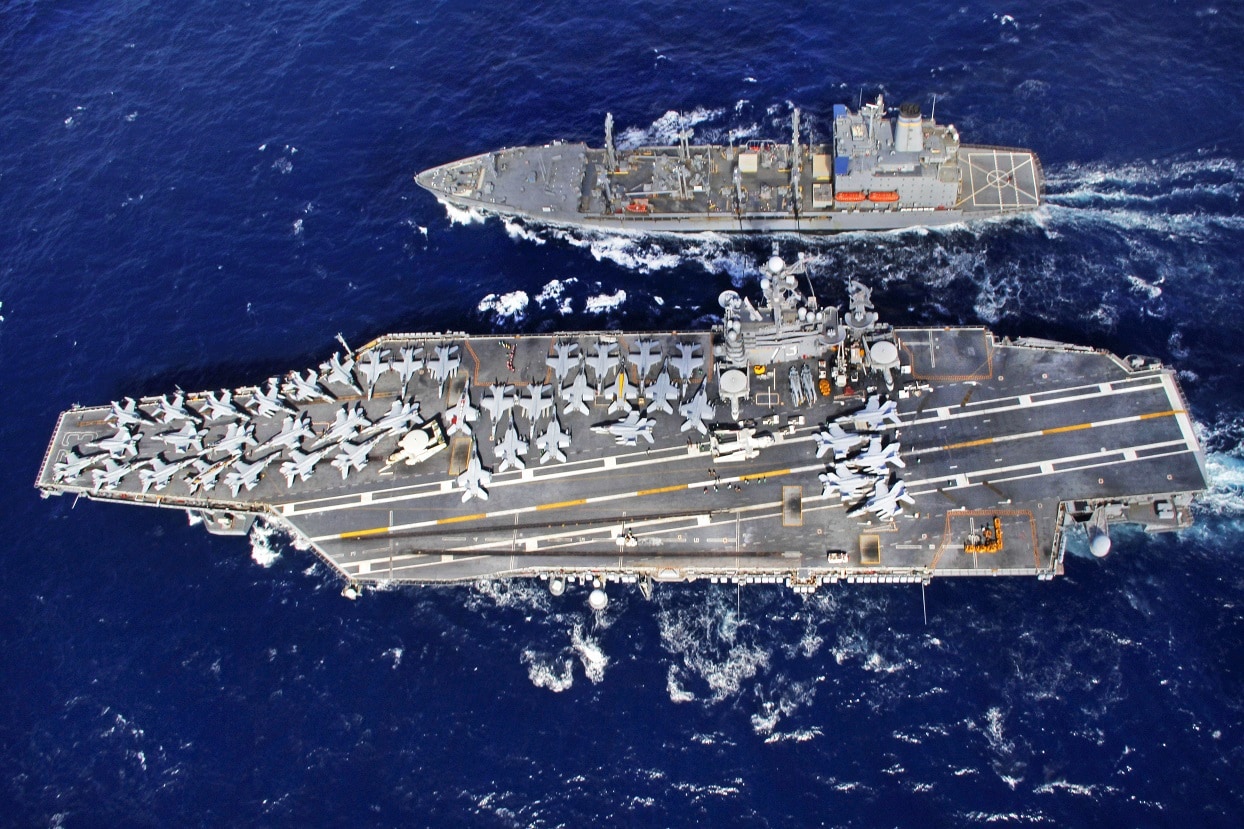
(July 19, 2013) The aircraft carrier USS George Washington (CVN 73) conducts a replenishment-at-sea with the Military Sealift Command fleet replenishment oiler USNS Yukon (T-AO 202) during Talisman Saber 2013. The exercise is a biennial training event aimed at improving Australian Defense Force and U.S. combat readiness and interoperability as a combined joint task force. (U.S. Navy photo by Mass Communication Specialist 2nd Class Benjamin K. Kittleson/Released)
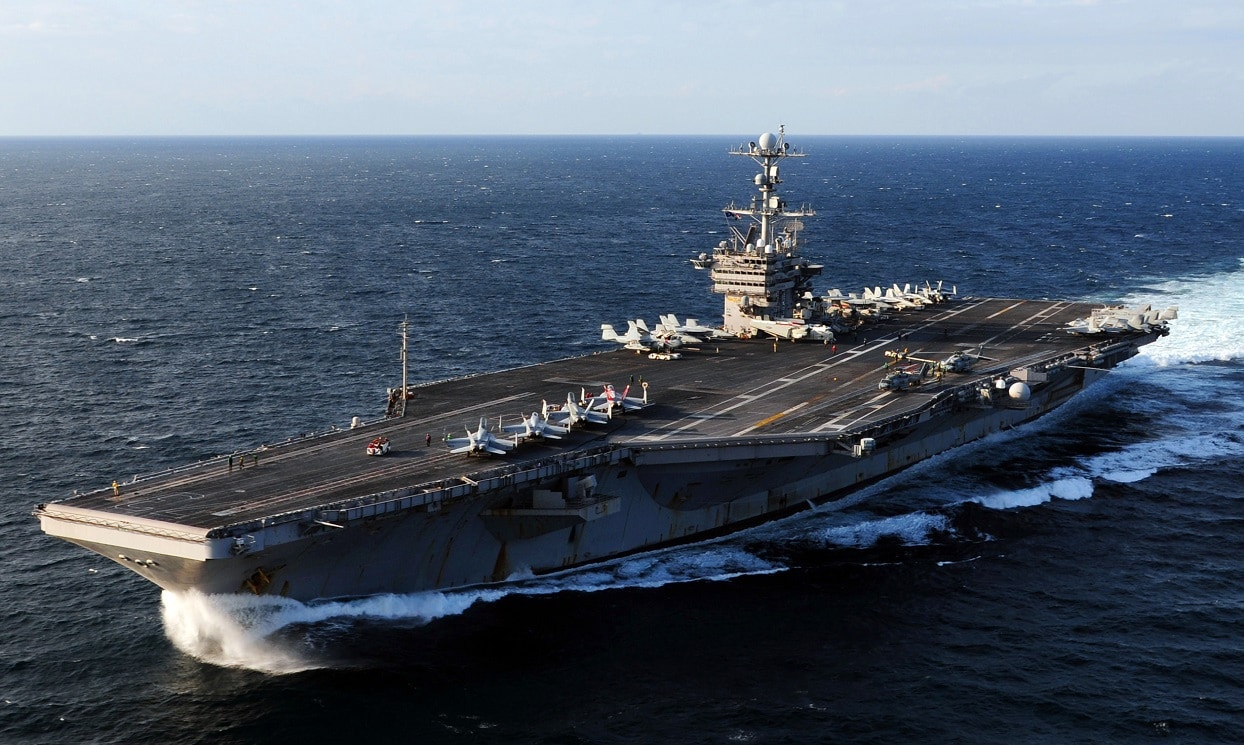
(Dec. 6, 2010) The aircraft carrier USS George Washington (CVN 76) transits the East China Sea. George Washington is participating in Keen Sword 2010 with the Japanese Maritime Self-Defense Force through Dec. 10. (U.S. Navy photo by Mass Communication Specialist 3rd Class Casey H. Kyhl/Released)
The United States wants the People’s Republic to realize that the Americans are not taking their eye off the ball in the Indo-Pacific.
This means an aircraft carrier strike group has been sent to East Asia to promote freedom of navigation in the region and to quell any Chinese mischief around disputed territory near the Philippines and Japan.
The U.S. Navy Has an Answer
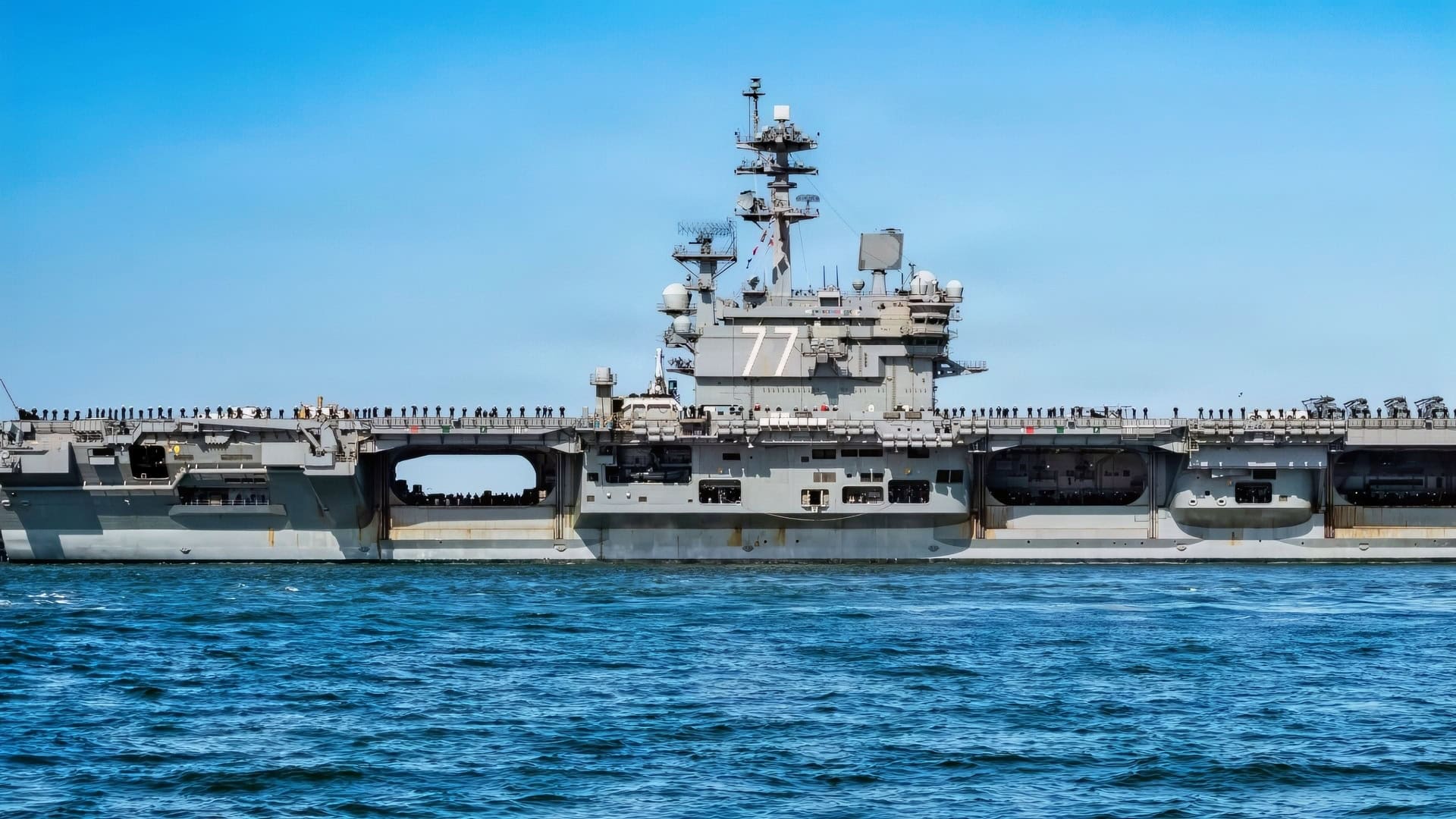
The USS George Washington carrier is now steaming in the South China Sea. The Nimitz-class flat-top and its sailors are employing a show of force and deterrence to ensure the United States maintains a strong presence in the strategic waterway.
The Navy Is Ready to Rumble
The George Washington emerged through the Luzon Strait on July 22 after a mission around the Philippine Sea.
The carrier strike group had just participated in the June Valiant Shield Exercise, which featured a partnership with Japanese ships to demonstrate that the alliance with Tokyo is stronger than ever.
“The USS George Washington Carrier Strike Group’s advanced capabilities, including the F-35, are upholding freedom of navigation and overflight in the South China Sea,” said Lee Lipton, U.S. ambassador to the Philippines, as noted by the Navy Times. “We challenge excessive maritime claims around the world.”
Chinese Coast Guard Is Acting Naughty
This deployment has not been without incident. The pesky People’s Liberation Army Navy (PLAN) is up to no good again. The PLAN is working with the Chinese Coast Guard to needle the Philippines.
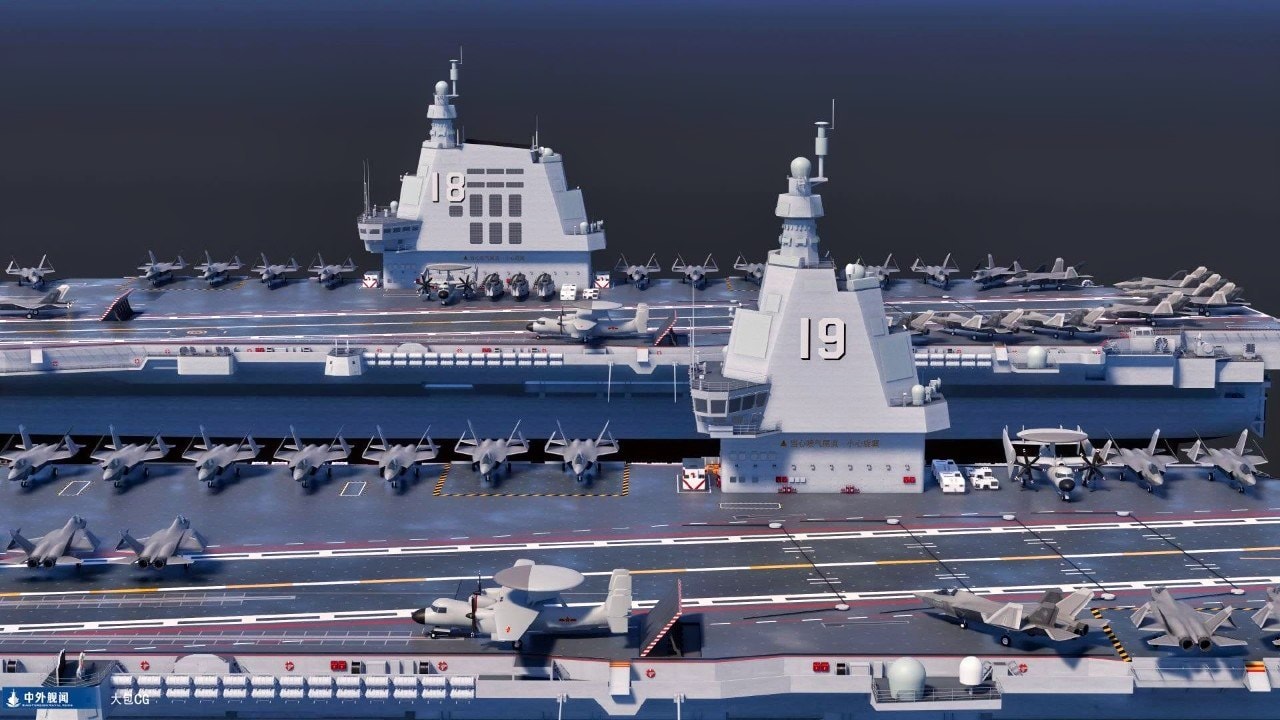
China Aircraft Carrier Models. Image Credit: Creative Commons.
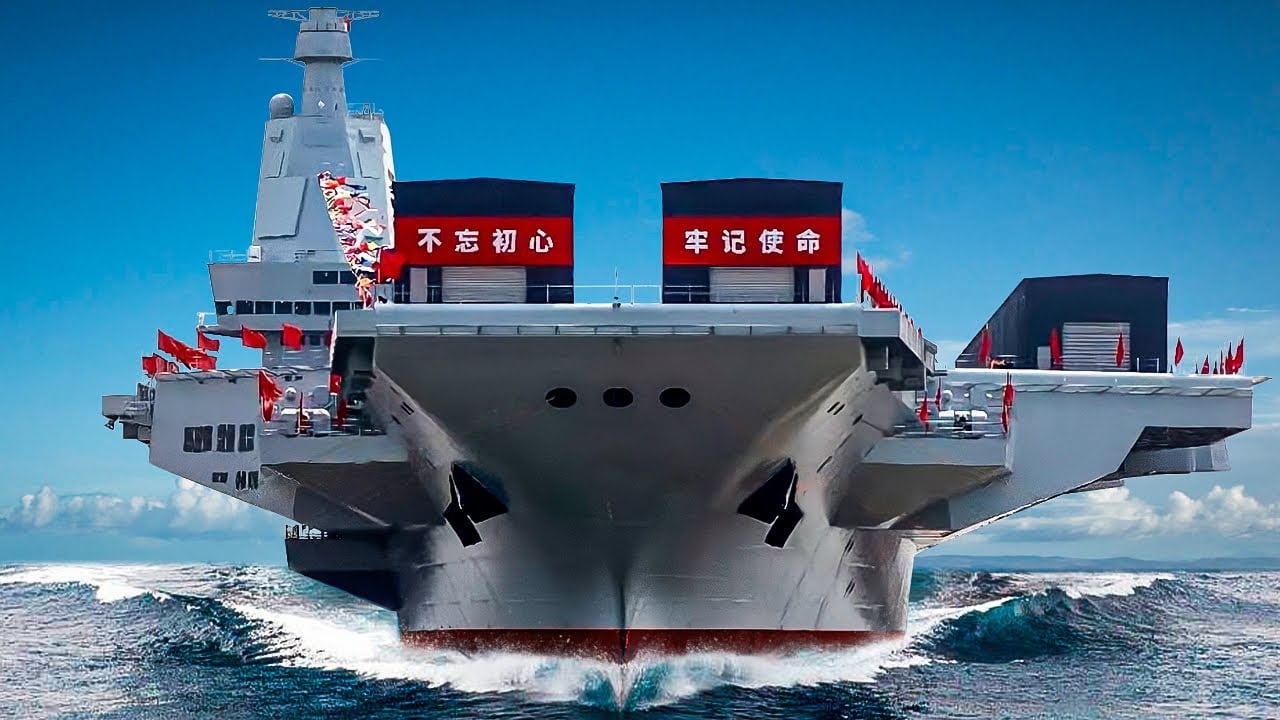
China Aircraft Carrier. Image Credit: YouTube Screenshot.
This has created a bee in the bonnet situation that may lead to an accident or miscalculation, sparking a greater conflict.
Hybrid Warfare Could Spark a Broader Multinational Conflict
The Chinese are using micro-aggressions in a form of hybrid warfare to annoy the Philippines and the United States.
Xi Jinping’s coast guard sent an inflatable raft to the disputed territory of Second Thomas Shoal. The boat came close to a Philippine warship as it sailed in a threatening pose.
Soon, the Filipinos reacted by sending their own swift, small vessels.
Then a Chinese Coast Guard sailor took a small club and struck a shipmate from the Philippines. This sounds innocuous, but it could have sparked a more severe response from both sides.
The Chinese do not play by the rules near disputed islands, and this will take a concerted effort between Washington and Manila to respond prudently and wisely.
What Happened Next?
The United States issued a statement condemning the incident and vowed that China is causing enough mischief to warrant a more muscular response from the Americans, and that a carrier strike group is needed to show the Navy means business.
Then on July 24, the Chinese Coast Guard used water cannons to intimidate Philippine vessels, including official fishing boats sponsored by the government in Manila near the problematic area of the Scarborough Shoal.
Secretary Rubio Said Enough Is Enough
U.S. Secretary of State Marco Rubio is getting tired of Chinese bullying in the South China Sea. “We’re committed to supporting our treaty partners, and obviously we’ve already done quite a bit,” Rubio said at a recent conference. “In fact, there was a U.S. Coast Guard vessel in the region at the time that this happened and actually helped stand between the two sides and allowed the individual who was injured to be rescued and brought back for medical treatment,” the Navy Times reported.
“We’re already here, we’re already present, we have a role, and we’re not going to abandon our allies,” he added. “We’ve made that abundantly clear.”
Propping Up American Allies
This shows U.S. resolve and should give the Philippines greater confidence that the Americans will serve as a backstop in the South China Sea.
China continues to be a malign actor, and it takes some discipline not to overreact and create another more violent international incident that could include a shooting conflict.
Easy Does It
The Americans in the carrier strike group must be careful.
The Philippine government is growing frustrated with China and wary of Beijing’s incessant acts of intimidation.
Is the United States acting appropriately with strategic foresight? The deployment of a carrier strike group near Manila could be misconstrued by China.
This could lead to even more aggressive actions by the PLAN and Xi’s coast guard.
Experts American Shipmates Standby With Resolve
U.S. sailors have a difficult job.
They must show strength, but they can’t overreact.
This blend of war and peace, known as grey zone tactics, will be ever-present in the region.
It will require the Americans to fall back on their expertise and training. Reacting with restraint while still coming to the aid of allies is a tough mission.
We’ll see if U.S. allies can also hold their water and refrain from needless violence that could create a critical situation with China.
The Filipinos are done with the constant harassment, and it may take a special form of joint training to make sure that Chinese grey zone tactics can be mitigated before a war starts.
The PLAN and the coast guard seem not to heed warnings.
The Chinese sailors have the upper hand, and it will require intelligent, disciplined action to counter these annoying incidents.
Look for more demonstrations of strength by carrier strike groups to send the message to China that the United States has the resolve to support its allies and to react steadfastly with appropriate force if necessary.
MORE – How Canada ‘Sunk’ A US Navy Aircraft Carrier
About the Author: Brent M. Eastwood, PhD
Author of now over 3,500 articles on defense issues, Brent M. Eastwood, PhD, is the author of Don’t Turn Your Back On the World: A Conservative Foreign Policy and Humans, Machines, and Data: Future Trends in Warfare, plus two other books. Brent was the founder and CEO of a tech firm that predicted world events using artificial intelligence. He served as a legislative fellow for US Senator Tim Scott and advised the senator on defense and foreign policy issues. He has taught at American University, George Washington University, and George Mason University. Brent is a former US Army Infantry officer. He can be followed on X @BMEastwood.