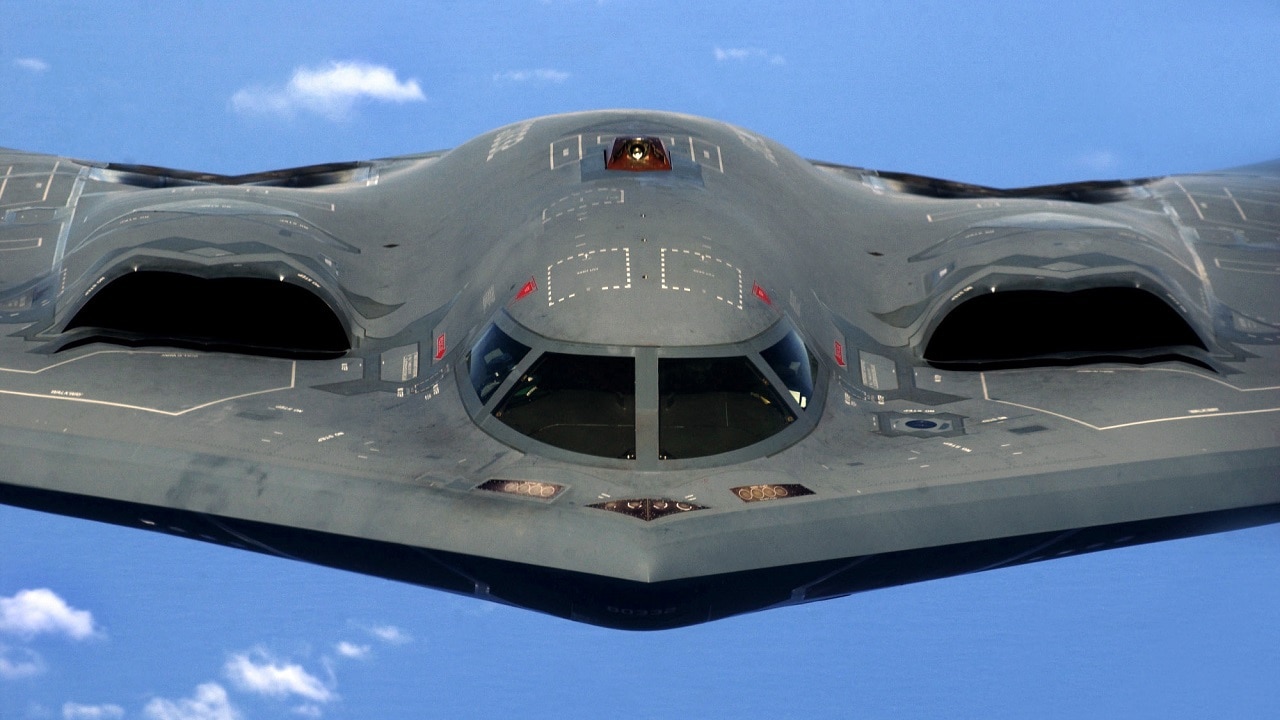
Summary and Key Points: The Air Force wanted 132 B-2 Spirits. In 1990, the Pentagon costed the program at roughly $571,000,000 per bomber, totaling $75.4 billion. Then the Cold War ended faster than anyone had planned for. In April 1990, Defense Secretary Dick Cheney cut the buy from 132 to 75, dropping maximum production from 24 aircraft a year to 12 and the fiscal 1991 order from five to two. Projected program cost fell from $75.4 billion to $61.1 billion — and the price of each aircraft rose to about $815,000,000. In 1992, the order was cut again to 20 operational bombers, after the Soviet Union collapsed outright. Bill Clinton later funded the conversion of a test aircraft, bringing the fleet to 21.
The B-2 Spirit Fleet Is Small for a Reason
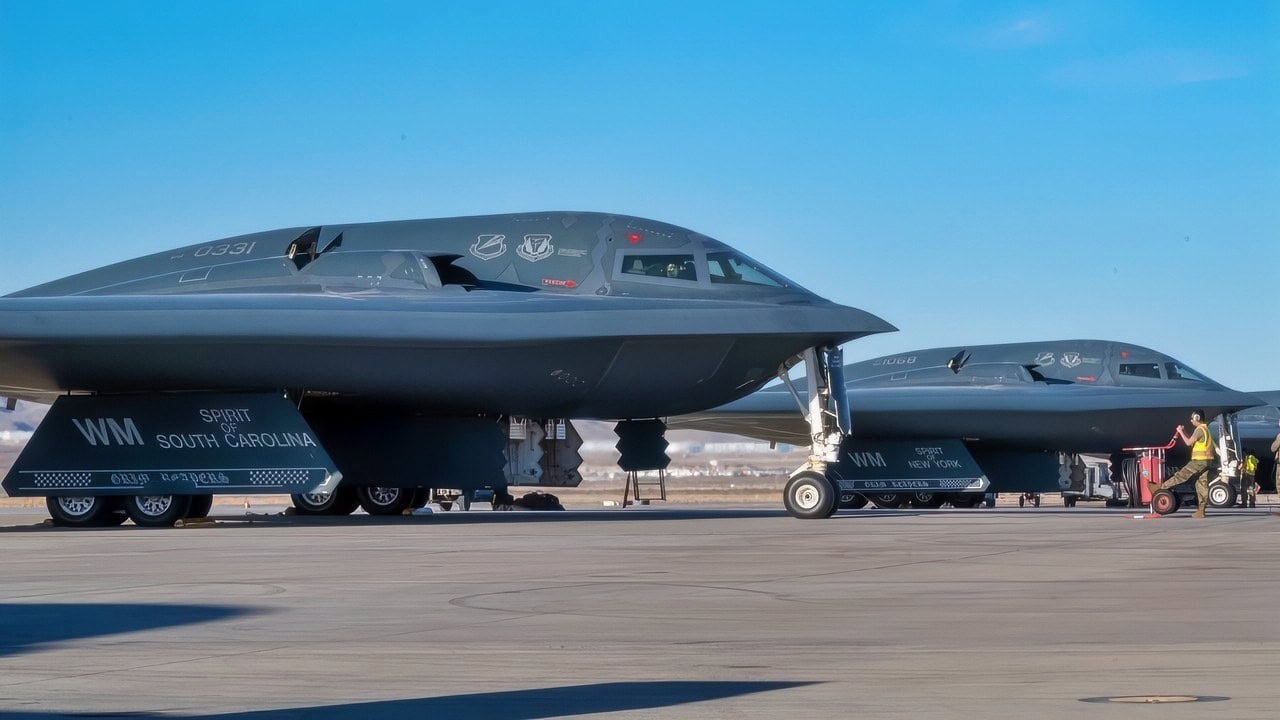
Three B-2 Spirit stealth bombers prepare for departure during Exercise Bamboo Eagle at Nellis Air Force Base, Nevada, Feb. 10, 2025. Bamboo Eagle incorporates multiple mission scenarios, preparing aircrews for complex operational challenges. (U.S. Air Force photo by Senior Airman Bryson Sherard.)
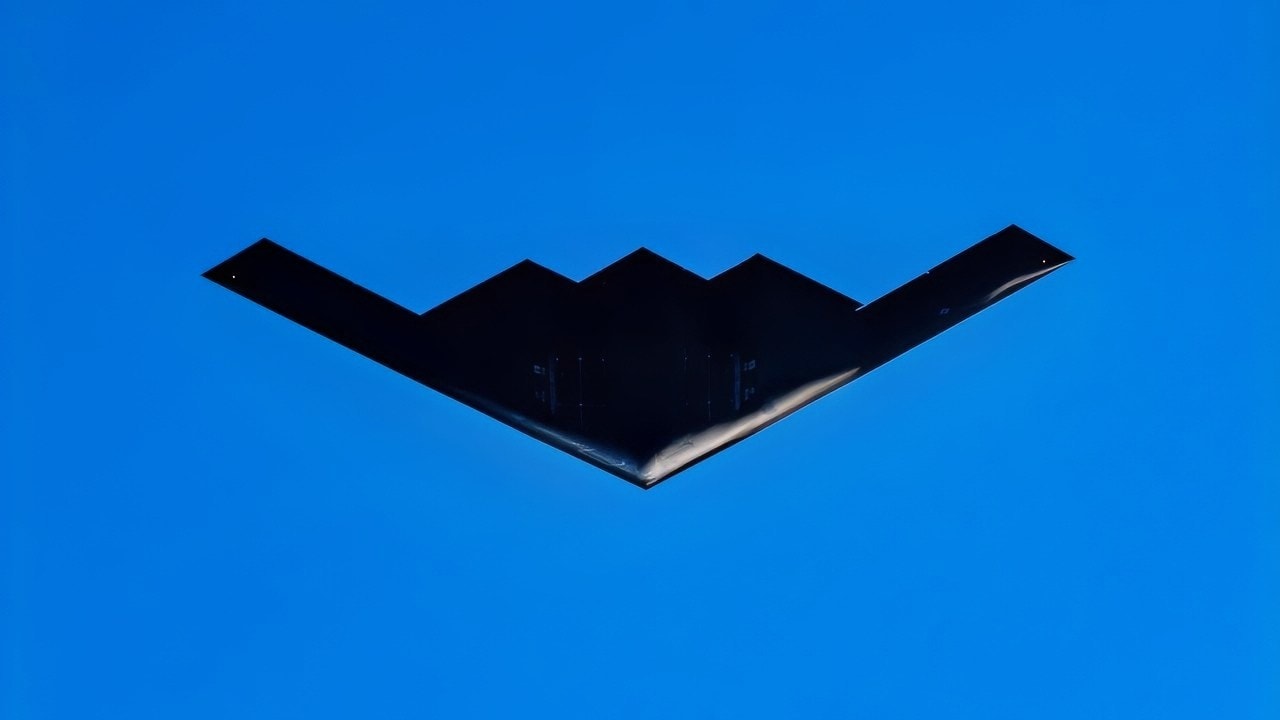
The B-2 Spirit flies over the Rose Parade at Pasadena Ca., Jan. 1, 2024. The Rose Parade is a parade of flower covered floats, marching band, and equestrian units that is produced by the Tournament of Roses. (U.S. Air Force photo by Airman 1st Class Bryce Moore)
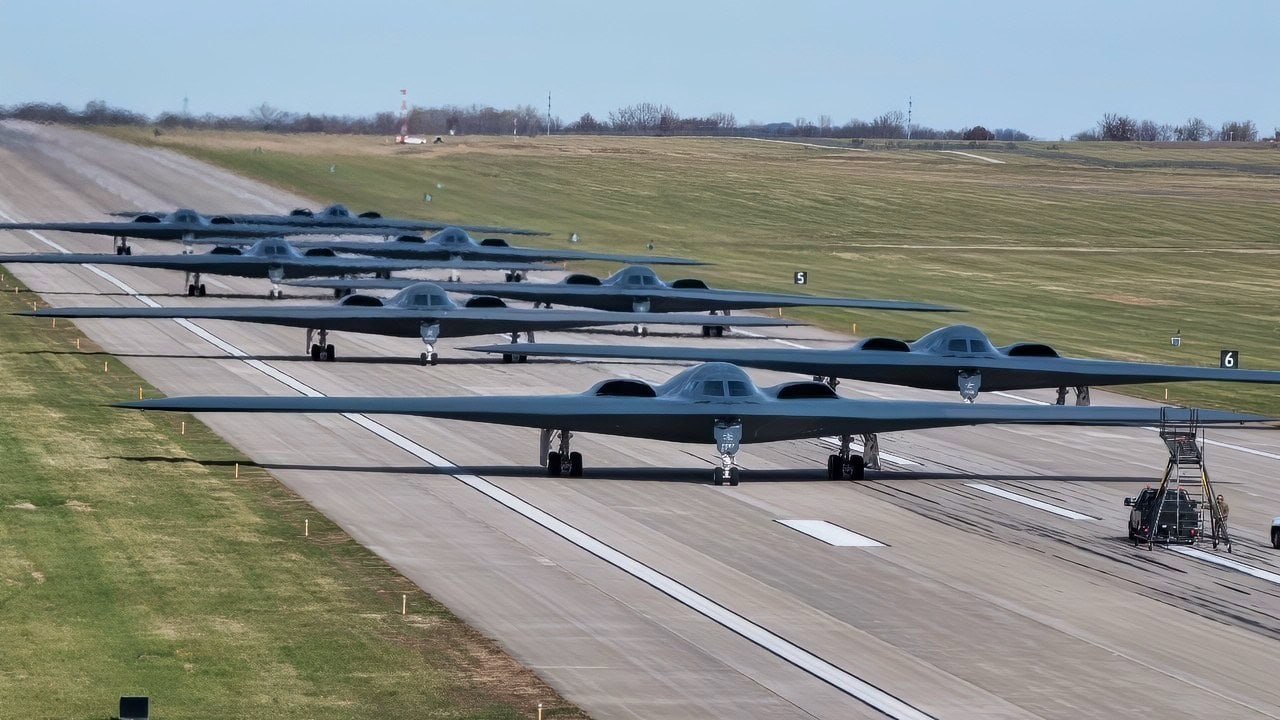
B-2 Spirit stealth bombers assigned to Whiteman Air Force Base taxi and take-off during exercise Spirit Vigilance on Whiteman Air Force Base on November 7th, 2022. Routine exercises like Spirit Vigilance assure our allies and partners that Whiteman Air Force Base is ready to execute nuclear operations and global strike anytime, anywhere. (U.S. Air Force photo by Airman 1st Class Bryson Britt)
When the Air Force revealed their iconic B-2 Spirit long-range stealth bomber, the world sat in awe.
The massive, flying-wing, all-black stealth bird was the stuff of dreams if you were an American, and they were meant to be the stuff of nightmares if you were a Soviet.
But the program never fully matured.
Originally, the Air Force desired 132 units of this plane.
Instead, they got stuck with only 21 units — and were saddled with exorbitant costs because of that relatively low procurement figure. There are only 19 left today.
The History
The B-2 Spirit program was initiated under President Ronald Reagan, at the height of the Cold War.
The idea was for the Air Force to have a plane that could quietly penetrate deep within the Soviet Union’s increasingly advanced air defenses and attack well-defended nuclear command-and-control facilities and other strategic targets.
Pentagon planners projected the cost of the B-2 Spirit program in 1990 (for 132 aircraft) at around $571 million per bomber, for a total of $75.4 billion.
But the Cold War ended faster than the Air Force planned.
As a result, the penny-pinchers in the Pentagon went to work on cutting costs.
In April 1990, then-Secretary of Defense Dick Cheney announced a reduction in the planned B-2 force from 132 to 75.
Thus, maximum production rates were slashed from 24 to only 12.
Planned fiscal 1991 procurement dropped from five planes to only two.
The projected program costs fell from $75.4 billion to $61.1 billion.
The downside of that move was simple to understand, if not counterintuitive: because the B-2 program was based upon budgets for a system built at scale, the fewer planes meant higher costs.
So, the original plan of 132 planes was around $571 million per unit.
Reducing the order to 75 made each B-2 Spirit cost more (around $815 million).
The billions already spent on research, development, testing, and infrastructure now had to be divided among fewer bombers.
In 1992, the government again reduced the B-2 order to just 20 operational aircraft because the Soviet Union had imploded and the Cold War had unexpectedly ended.
President Bill Clinton later funded the conversion of the test plane into another operational bomber, making the B-2 fleet 21 planes. So, the B-2 became forever known as the “$2 billion bomber.”
A $2 Billion Per Bomber System
Spread over only 21 aircraft, the total acquisition cost per plane was $2.13 billion. Of course, the actual manufacturing and procurement cost was lower.
That cost around $737 billion per plane.
But the larger procurement calculation included items such as spare parts and software support, which added another $929 million.
Military construction associated with the B-2 Spirits totaled around $554 million.
Even though the costs were exorbitant and the rationale for the bombers had evaporated, the 21 birds that the Air Force possessed (it’s less than that now, because two planes were lost due to accidents over the years), the B-2 is an impressive platform that continues dominating the bomber discourse, as last year’s 12-Day War against Iran highlighted.
Powered by four General Electric F118-GE-100 engines that each produce 17,300 pounds of thrust, the B-2 has a 172-foot wingspan.
Your standard B-2 Spirit enjoys a maximum takeoff weight of 336,500 pounds.
The B-2 carries about 167,000 pounds of fuel and another 60,000 pounds of payload.
This plane can fly a whopping 6,000 nautical miles without refueling and operate at altitudes above 50,000 feet. Two crew members fly the plane.
When Cost Cutting Increases Costs
Whether it be the aforementioned airstrikes on suspected Iranian nuclear weapons facilities last year or Operation Allied Force in 1999, the B-2 has demonstrated its usefulness in combat.
During Operation Allied Force in 1999, B-2s departed from Whiteman and flew nonstop to Kosovo (and back).
In the middle of that round trip, the B-2 destroyed 33 percent of all Serbian targets during the campaign’s opening eight weeks.
Again, during Operation Iraqi Freedom, B-2s flew 22 sorties from a forward location and another 27 from Whiteman itself.
They dropped more than 1.5 million pounds of munitions.
Washington saved tens of billions of dollars by terminating its production earlier than planned (because of the USSR’s unplanned, bloodless demise).
Yet that decision ballooned the program’s costs, taking it from a $571 million-per-bomber program to a more than $2 billion-per-plane project.
In this case, fewer B-2s made the program more expensive.
About the author: Brandon J. Weichert
Brandon J. Weichert is the Senior National Security Editor at 19FortyFive.com. He also manages The Weichert Brief on Substack. Weichert also hosts “National Security Talk” on Rumble. He is the author of four bestselling national security books, the most recent of which is A Disaster of Our Own Making: How the West Lost Ukraine (Encounter Books). Follow him via Twitter/X @WeTheBrandon.