
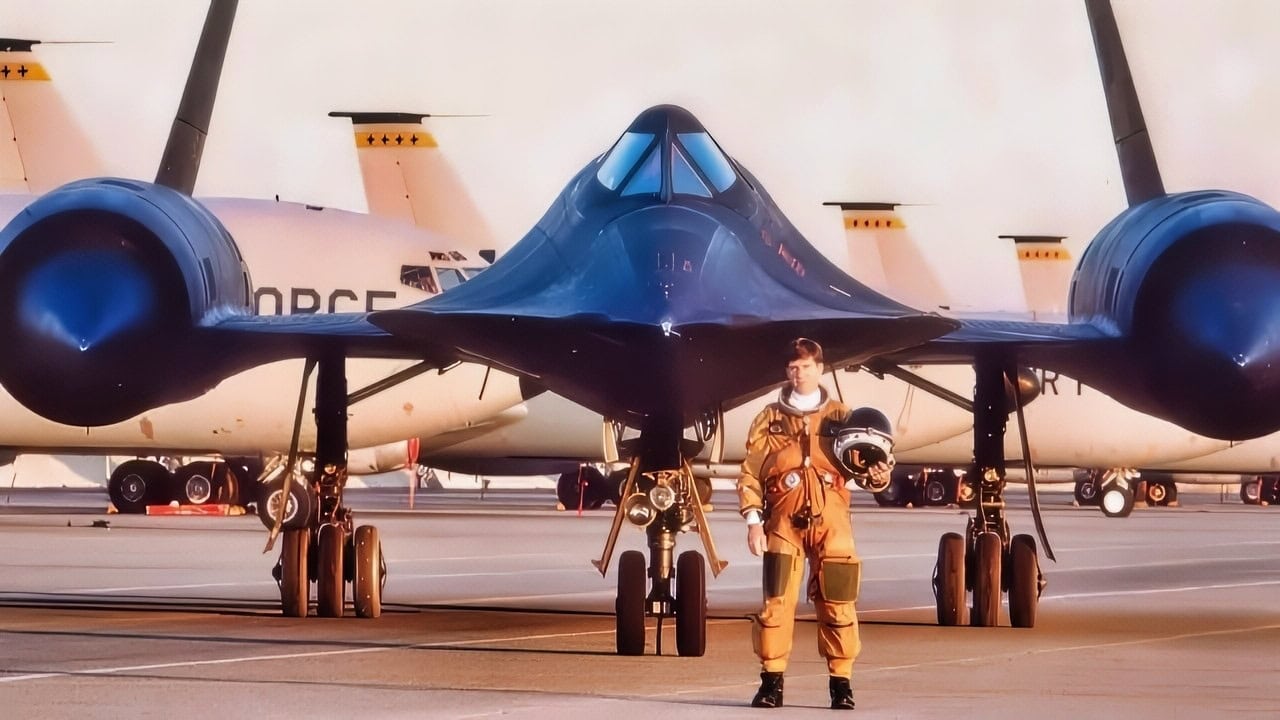
Summary and Key Points: The Lockheed SR-71 Blackbird was never defeated by anything that flew, and it was defeated completely by something that never left the ground. Across three decades, an estimated 4,000 missiles were fired at the airplane, and every one missed; no enemy fighter ever touched it, and the speed and altitude records it set in 1976 still stand half a century later. What brought it down was a ledger. The Blackbird was staggeringly expensive to design, expensive to build, and above all expensive to operate, a machine whose every component, from its fuel to its tankers to its tools, had to be invented for it alone, and by the end of the 1980s the airplane that no adversary could hit had become a line item its own service wanted dead. The official story wrapped the decision in satellites and changing threats, and the record shows those claims collapsing almost immediately while the money argument never did.
SR-71 Blackbird: What It Cost to Create
The bill began before the first aircraft existed, because almost nothing needed to build a Mach 3 airplane could be bought.
The airframe demanded titanium in quantities and grades the United States could not supply, so the metal was covertly purchased from the Soviet Union, and an entire manufacturing discipline had to be created to work it, with new tools, new drills, and new procedures after cadmium-plated wrenches and chlorinated tap water were found to destroy titanium parts.
The fuel did not exist, so Shell devised JP-7 from scratch.
The engines had to run for hours in a regime no engine had sustained.
The windows had to be solid quartz, developed over years at a cost of millions, because glass would have distorted in the heat.
Even the crews required their own infrastructure, with pressure suits shared with the space program and a dedicated physiological support division to keep them alive.
Each finished SR-71 cost roughly $34 million in 1960s dollars, several hundred million in today’s money, and 32 were built for the Air Force atop the CIA’s A-12 program that preceded them, meaning the development mountain was climbed twice for two closely related aircraft.
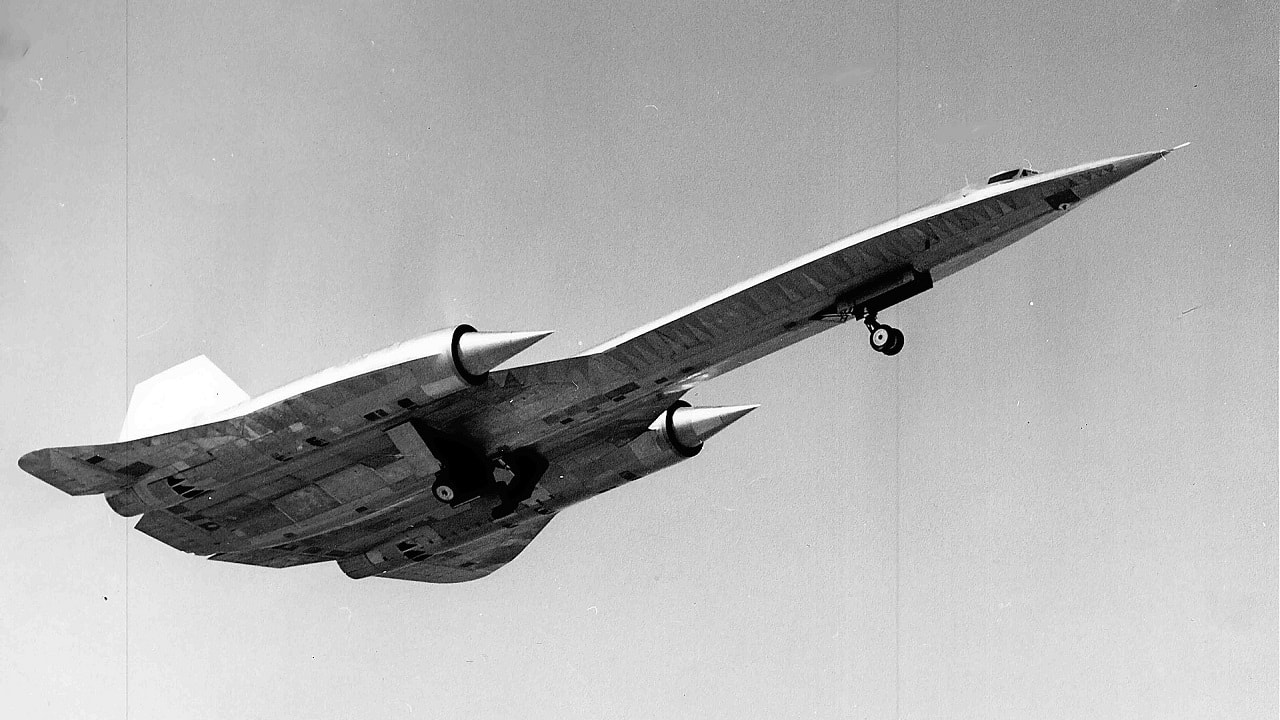
An A-12 (60-6924) takes off from Groom Lake during one of the first test flights, piloted by Louis Schalk. Lockheed Martin dates this image (mouse over) as the maiden flight of the A-12, taken April 26, 1962. Roadrunners Internationale, a reunion website for employees of secret US programs, labels the image as the second Schalk flight, dated May 4, 1962. According to habu.org, this photograph was taken during the official maiden flight on April 30, 1962 (and the April 26 flight was an accidental take-off).
The doubled bill claimed its first victim early, because when the Air Force’s SR-71 won a 1967 fly-off against the CIA’s nearly identical jet, Washington proved unwilling to fund two such fleets, and the A-12 was retired within a year, the first Blackbird killed by its own price tag and a preview of everything that followed.
The full program total remains scattered across classified-era accounting, and no clean figure exists in the open record, but the shape of the expense is visible in the simple fact that a mission-ready Blackbird required titanium techniques, a fuel, an ignition chemical, a tanker fleet, and a ground apparatus that existed for no other machine on earth.
The SR-71 Blackbird was not an airplane with some custom parts. It was a closed economy.
What It Cost to Fly
Buying was cheaper than owning, and owning is what killed the program.
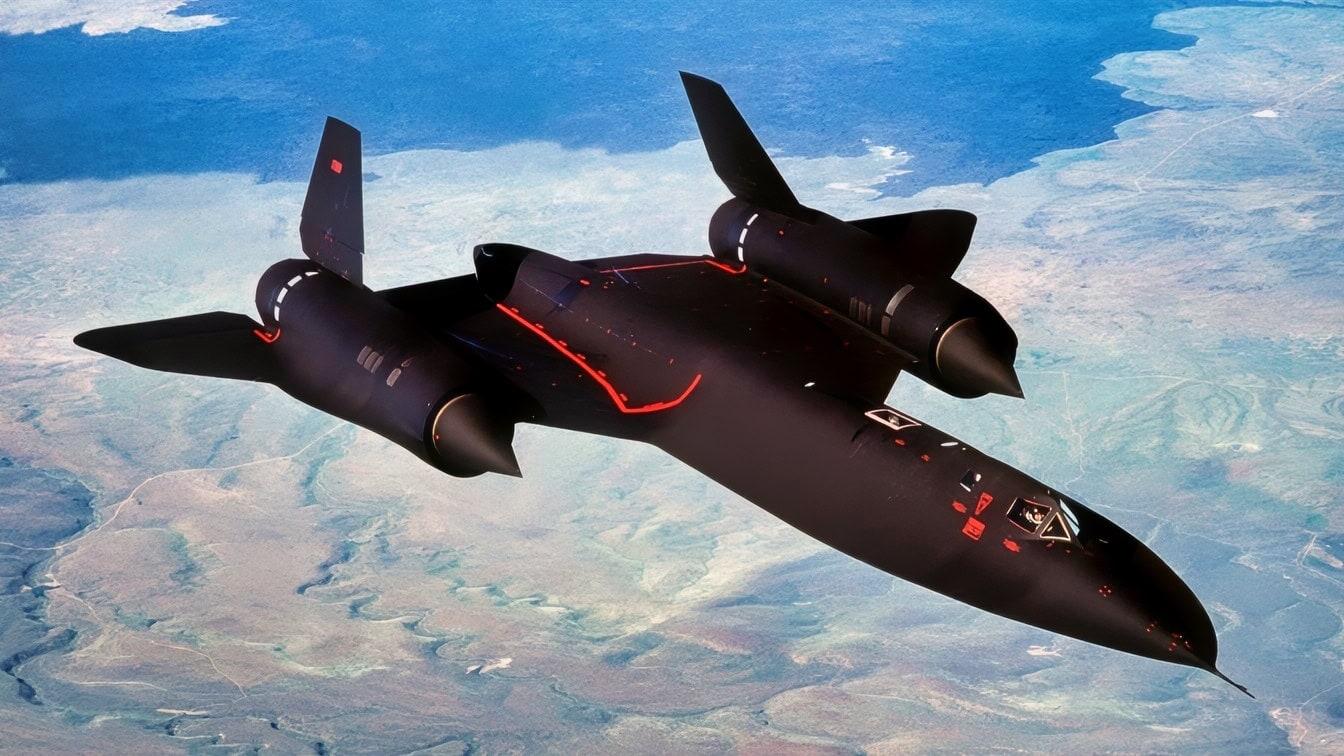
SR-71 Blackbird Creative Commons Photo
The airplane consumed about 12,000 gallons of its special JP-7 at a rate of tens of thousands of pounds per hour, and the fuel cost about three times that of ordinary jet fuel, with the fuel bill alone estimated at $18,000 per flight hour.
No standard tanker could carry that fuel, so the Air Force maintained a dedicated fleet of modified KC-135Q tankers that hauled JP-7 and nothing else, choreographed along every mission route in the world, a private aerial-refueling force serving a dozen airplanes.
The engines demanded a pyrophoric chemical, triethylborane, to light them, handled by crews in protective suits, and the fuel itself was so chemically aggressive it dissolved the linings of ordinary hoses and tank trucks, forcing constant flushing of every vessel that touched it.
Maintenance consumed hundreds of man-hours per flight hour on an airframe that heated, stretched, and leaked as part of its normal operation, and every sortie mobilized the suit technicians, medical checks, and specialized ground crews of an operation closer to a space launch than a flight. The per-hour arithmetic depended on who was counting.
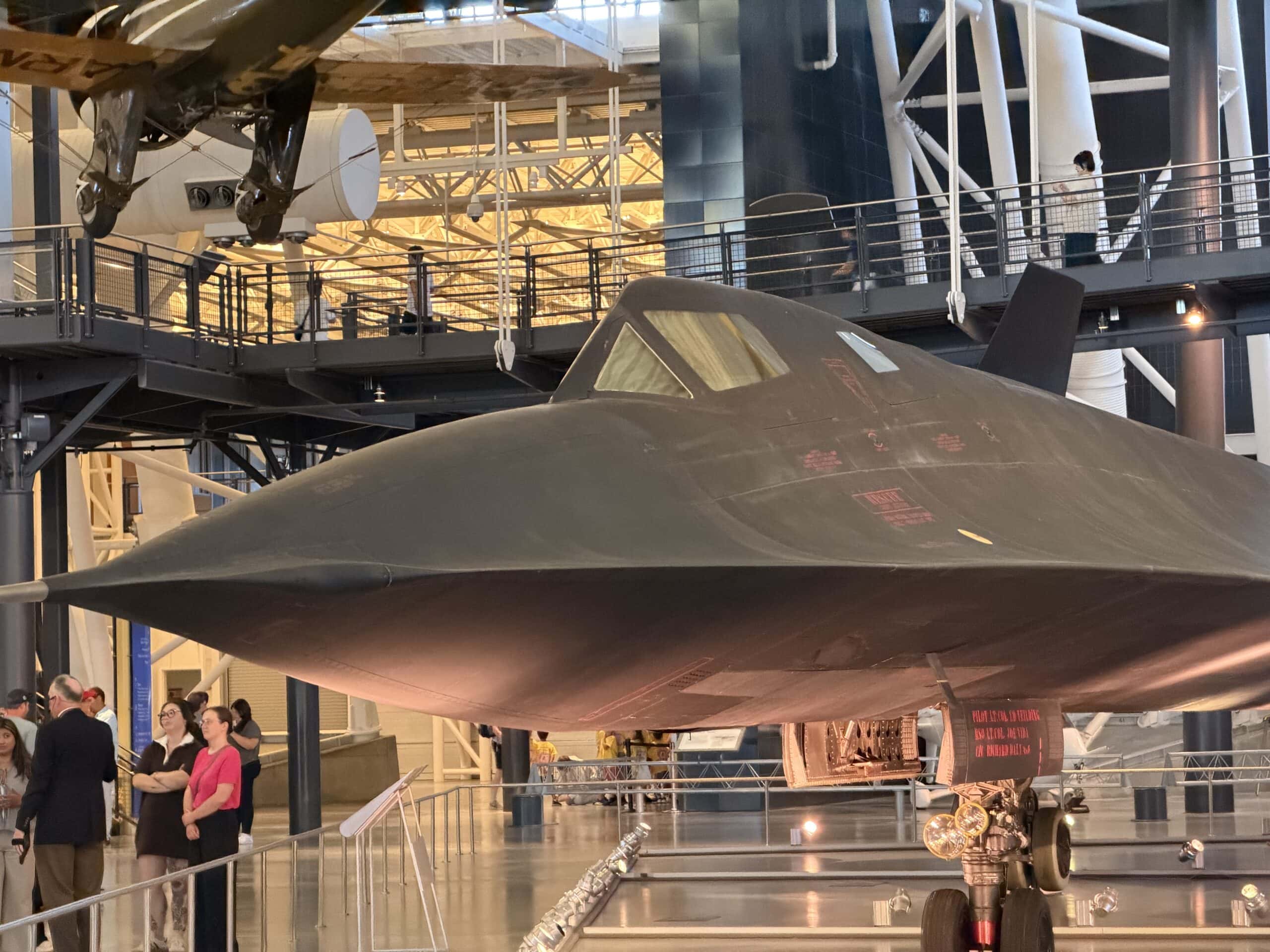
SR-71 Blackbird. Image taken at the Smithsonian on 6/30/2026 by 19FortyFive
Defense Secretary Dick Cheney put the figure at around $85,000 per flight hour, while fuller accountings that fold in the tankers and the dedicated infrastructure ran far higher, and individual missions were commonly described as costing millions of dollars each.
At the fleet level, the figures converged into the number that decided everything: by the late 1980s the surviving dozen aircraft cost on the order of a quarter of a billion dollars a year to operate, with official estimates ranging from $200 million to $300 million and the most commonly cited figure around $260 million.
Over the program’s life, those dollars bought 53,490 flight hours across 17,300 sorties, including 11,675 hours above Mach 3, a production record no other reconnaissance aircraft approached.
The Case the Air Force Made
The campaign against the Blackbird was waged inside its own service, and it was waged in dollars.
Air Force Chief of Staff General Larry Welch led the effort on Capitol Hill in the late 1980s, and his congressional testimony identified three reasons to retire the fleet: the survivability of reconnaissance satellites, the airplane’s theoretical vulnerability to the Soviet SA-5 missile, and the cost of operations, with the Air Force’s own framing acknowledging that the cost factor was the most significant because it constrained spending everywhere else.
Air Force Secretary Edward Aldridge told Congress the annual Blackbird budget could operate two tactical fighter wings instead.
Welch, a former Strategic Air Command chief whose priorities ran toward bombers, wanted the money for the B-2 program, and the columnist Rowland Evans quoted him dismissing the aircraft in a single sentence, saying the Blackbird “can’t fire a gun and doesn’t carry a bomb,” a line preserved in the Skunk Works memoir of Ben Rich.
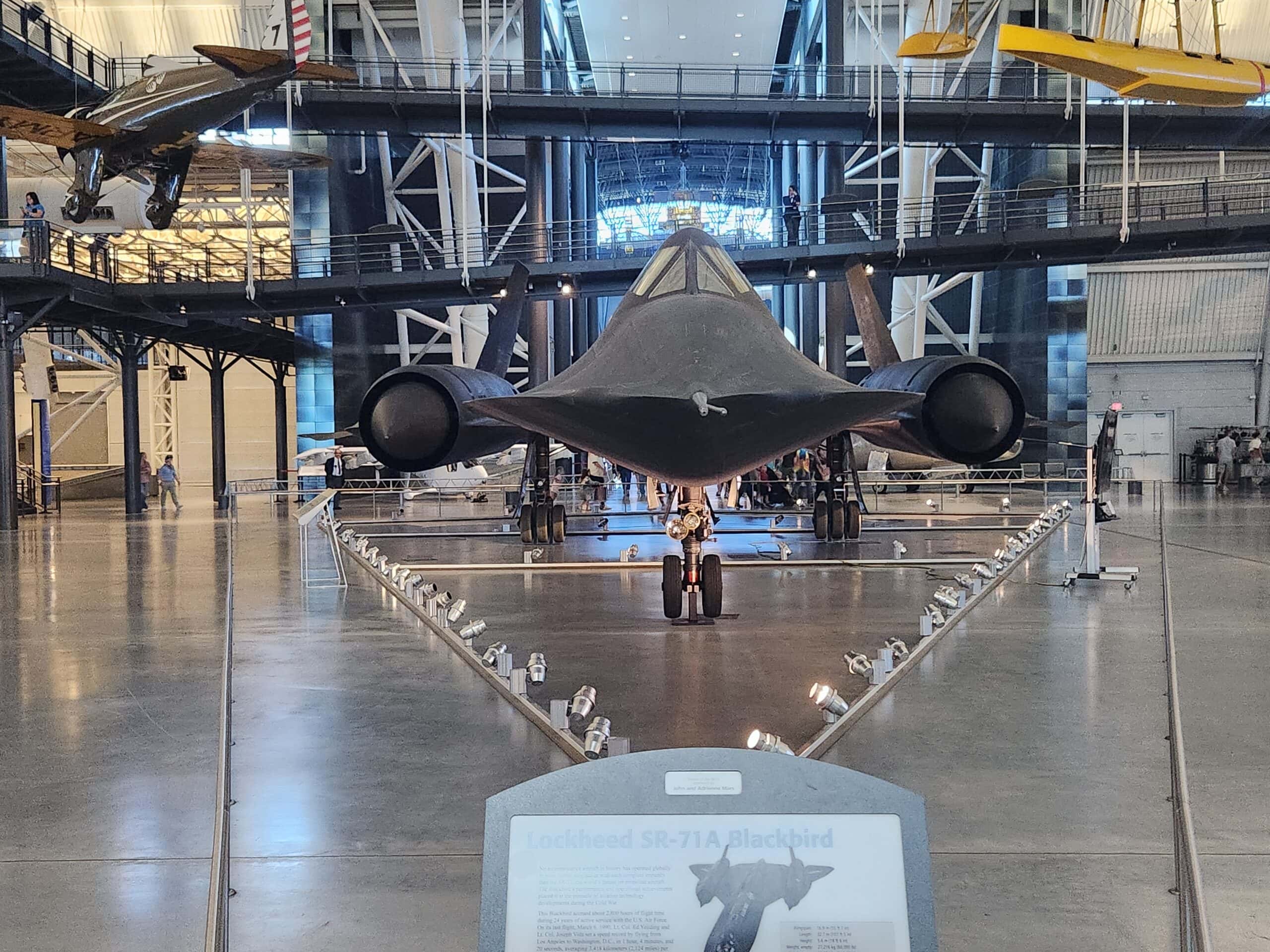
SR-71 Blackbird. 19FortyFive.com original image.
The argument worked.
Blackbird operations ended in November 1989; the fleet was formally retired on January 26, 1990, and the airplane exited with a characteristic flourish, one aircraft setting four speed records on its final delivery flight to the Smithsonian that March, crossing the country in 64 minutes on its way to a museum.
But were these legit concerns? Well, to be fair, the SR-71 was a film-era machine in a digitizing world, and its intelligence cycle required the aircraft to land, offload film, and wait for processing while satellites were learning to transmit imagery in near real time, and planners worried about a new generation of Soviet defenses, the SA-10 and the MiG-31, that looked more dangerous than anything the airplane had outrun.
Both points had substance, and neither drove the decision, since the timeliness gap was an upgrade problem rather than an airframe problem and the vulnerability argument remained forever theoretical against a record of zero losses.
Every element of the official case would age badly except one.
The satellites did not replace it, the SA-5 had never hit it, and the vulnerability argument sat awkwardly beside a combat record of thousands of missiles and zero losses.
The cost was real, and the cost was enough.
The Case Against the Case
The strongest attack on the official story came from the man who ran the shop that built the airplane, and his version sharpens rather than softens the money thesis.
Ben Rich, who succeeded Kelly Johnson as director of the Skunk Works, wrote that Welch staged what he called a one-man campaign to kill the program, that the general regarded the Blackbird as a disposable luxury in the age of satellites, and that the cost figures deployed on the Hill were inflated for effect, with Welch claiming he could operate a wing of fifteen to twenty F-15E fighter-bombers on the Blackbird’s budget while the actual cost was about $260 million a year.
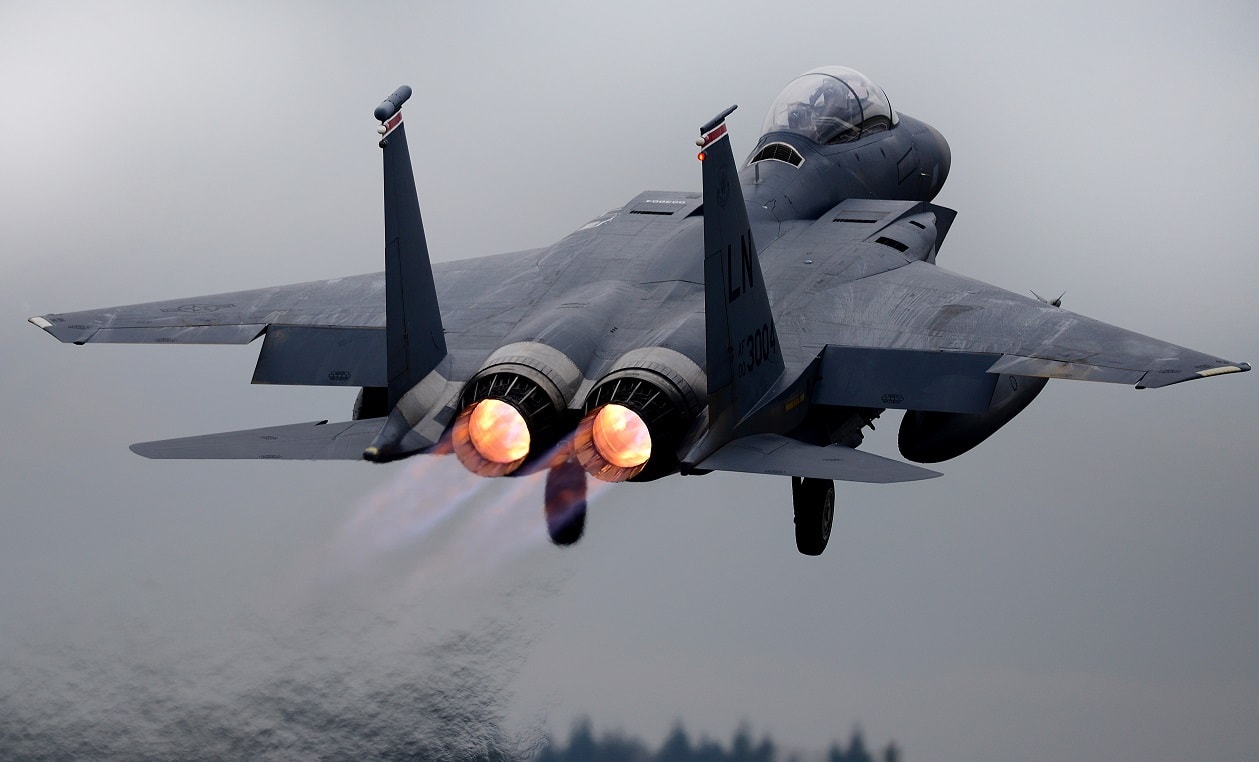
An F-15E Strike Eagle assigned to the 494th Fighter Squadron takes off for a training sortie at Royal Air Force Lakenheath, England, Oct. 26, 2018. The 494th trains regularly to ensure RAF Lakenheath brings unique air combat capabilities to the fight. (U.S. Air Force photo/ Tech. Sgt. Matthew Plew)
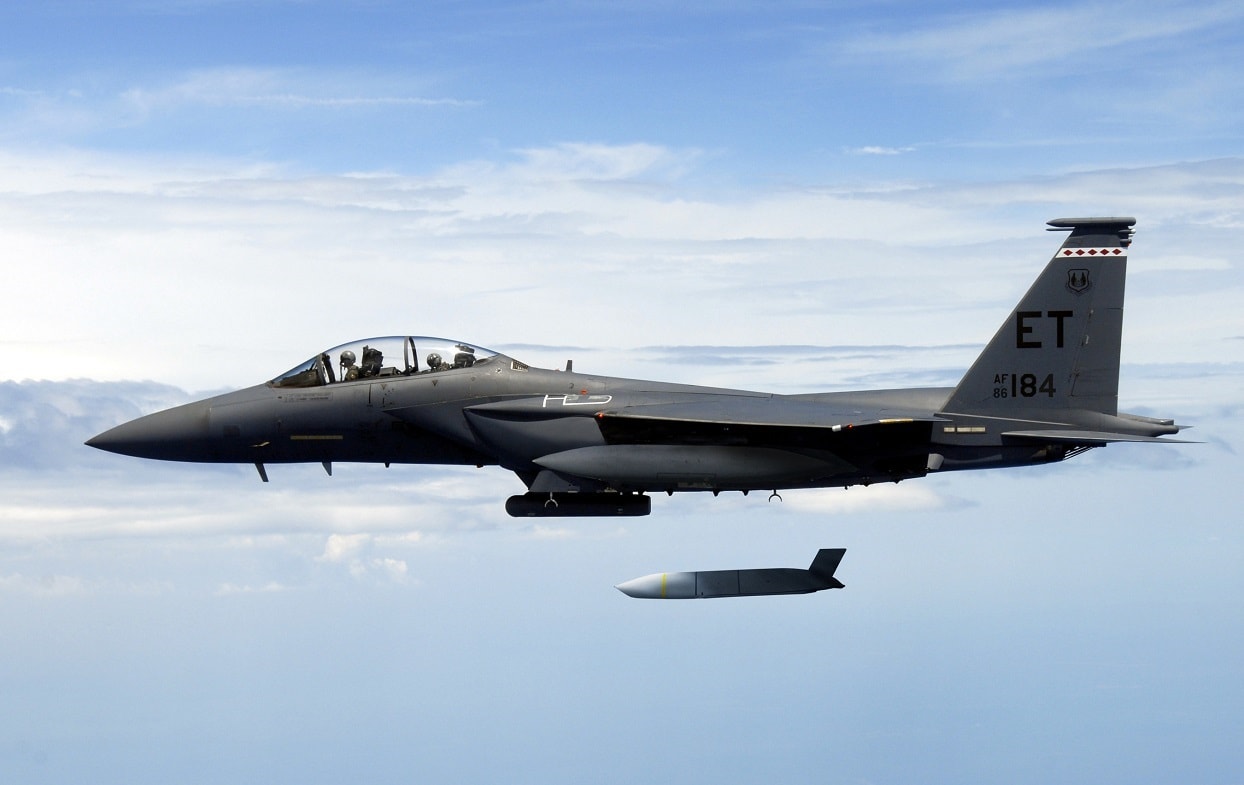
A U.S. Air Force F-15E Strike Eagle flies with a Joint Air-to-Surface Standoff Missile (JASSM). JASSM-Extended Range has more than two-and-a-half times the range of JASSM for greater standoff distance. Photo credit: U.S. Air Force. (PRNewsfoto/Lockheed Martin)
Rich’s deeper point was institutional: a general’s career and glory ride on large fleets of visible fighters and bombers, while the Blackbird offered deep secrecy, small numbers, and no limelight, making it an orphan in every budget fight regardless of what it delivered.
The two versions of the story disagree about whether the numbers were honest and agree completely about the weapon. In the official telling, the airplane genuinely cost too much to keep.
In Rich’s telling, the airplane’s costs were exaggerated and weaponized to free money for the B-2.
In both tellings, the instrument that killed the SR-71 was the budget, wielded by its own service, against an aircraft whose operational record contained no defeat of any kind.
Nobody on either side of the fight argued the Blackbird had failed.
The Satellite Story Collapses
The replacement theory was tested within a year of the retirement, and it failed in public.
When the Gulf War came in 1991, commanders discovered that no satellite could deliver what the Blackbird had, and the Pentagon’s own final report to Congress on the war conceded that the SR-71 could have provided broad coverage of Iraqi forces and would have been valuable for bomb damage assessment, findings preserved in the congressional record by the senators who fought the retirement.
The physics of the gap were simple.
A satellite passes over a target on a schedule an adversary can learn, while the Blackbird arrived when it chose, and in 1993 Admiral Richard Macke of the Joint Staff told Congress that operators needed a track of events rather than a spot in time, testimony recorded in the reactivation histories, describing satellites that could photograph tanks stacked at a bridge but could not say whether they ever crossed it.
Senators pressed the point that the reconnaissance gap was real while the government spent enormous sums on a new headquarters for the satellite agency itself, and the pilots who had flown the missions made the same argument from experience: that nothing in orbit could respond to a crisis within hours the way the airplane could. In September 1994,
Congress delivered its verdict on the replacement theory by voting $100 million to bring the Blackbird back, an appropriation that only makes sense as an official admission that the thing retired as redundant had been nothing of the kind.
Killed Twice by the Same Weapon
The reactivation proved that the airplane still worked and that money still ruled, because the second death was purchased the same way as the first.
The $100 million funded the return of the fleet under Detachment 2 at Edwards Air Force Base, with two aircraft ultimately restored to service by 1995, and an additional roughly $30 million added in 1997.
The Air Force had never wanted the airplane back, had not budgeted for it, and waged a quiet campaign of passive resistance, flying the revived jets on training sorties while declining to deploy them operationally, an absence of missions that was later cited as evidence the fleet was unneeded.
In 1996, the service claimed the funding had not been properly authorized and moved to ground the program; Congress reauthorized the money, and in October 1997 President Bill Clinton used the new line-item veto to strike the $39 million allocated for Blackbird operations.
The Supreme Court ruled the line-item veto unconstitutional in June 1998, and the money was never issued anyway, with the Air Force moving that September to redistribute the funds and permanently retire the aircraft.
NASA flew the last two airworthy Blackbirds for research until the type’s final flight in October 1999.
The airplane’s entire second life, from congressional resurrection to presidential veto, had been a fight about appropriations in which the aircraft itself performed flawlessly and irrelevantly, and the coda arrived two years later.
Days after the September 11 attacks, the Pentagon asked whether the Blackbird could return once more, and the answer came back yes, within 60 to 90 days, for about $45 million covering startup and a year of operations.
It did not happen. The price was known, the capability was proven, and the money went elsewhere, which, by then, was the program’s oldest story.
Never Beaten, Only Billed
The Blackbird’s epitaph is usually written in speed, and it belongs in arithmetic.
The airplane cost a fortune at every stage of its existence because it was built beyond the technology of its time out of materials bought from its target, fed on a fuel invented for it, refueled by a tanker fleet that served nothing else, and maintained like a spacecraft, and those costs were the single thread connecting every decision that ended it.
The 1990 retirement was argued in dollars. The 1998 termination was executed through an appropriations fight and a veto. The 2001 revival died on a $45 million price tag during the largest defense buildup in a generation.
At no point in that sequence did the aircraft fail, fall behind, or lose its mission, and the satellite rationale offered in its place was contradicted by the Pentagon’s own Gulf War report, by the Joint Staff’s testimony, and by the $100 million Congress spent trying to undo the decision. The fastest and highest-flying operational aircraft ever built, with a fuel system that doubled as its coolant and a performance ceiling set by heat rather than power, retired with a combat record no aircraft has matched and a cost record no aircraft survived. The missiles went zero for four thousand.
The accountants only needed to win once, and they won three times.
About the Author: Harry J. Kazianis
Harry J. Kazianis (@Grecianformula) was the former Senior Director of National Security Affairs at the Center for the National Interest (CFTNI), a foreign policy think tank founded by Richard Nixon based in Washington, DC. Harry has over a decade of experience in think tanks and national security publishing. His ideas have been published in the NY Times, The Washington Post, The Wall Street Journal, CNN, and many other outlets. He has held positions at CSIS, the Heritage Foundation, the University of Nottingham, and several other institutions related to national security research and studies. He is the former Executive Editor of the National Interest and the Diplomat. He holds a Master’s degree focusing on international affairs from Harvard University.

