

Lockheed’s SR-71 Blackbird first flew more than 62 years ago, and it remains as the fastest crewed jet ever. The Blackbird outran more than 4,000 missiles during its service. Its combination of revolutionary stealth, sustained Mach 3+ speed, and advanced engineering made it virtually untouchable.
While streaking across the sky at 80,000 feet, the SR-71 could photograph 100,000 square miles of terrain in an hour.
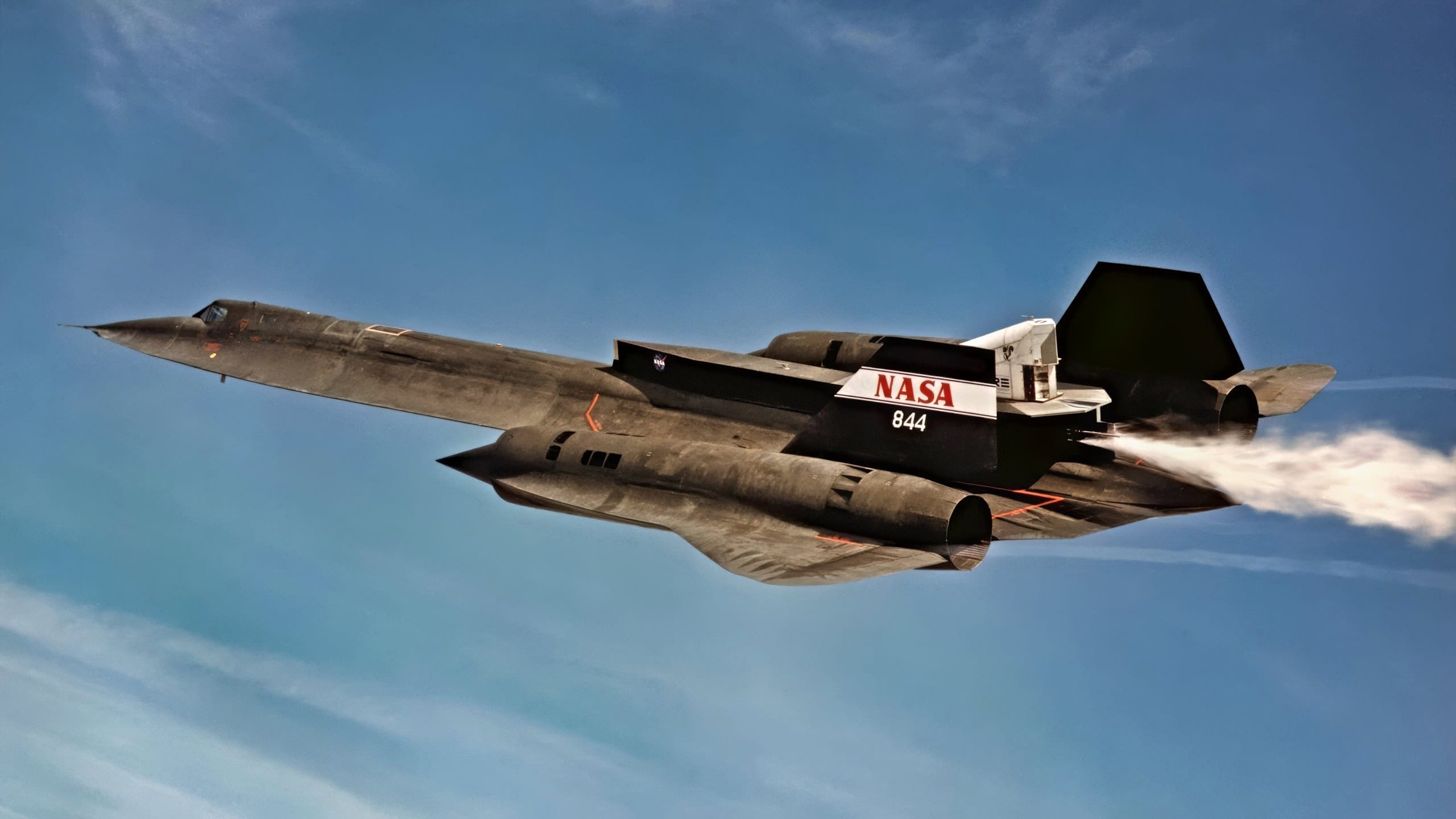
SR-71 Blackbird with NASA
The SR-71 was the most successful design of famed aeronautical engineer Kelly Johnson. He had already proven his design mettle with previous projects, such as World War II’s P-38 Lightning—America’s first jet fighter—the P-80 Shooting Star, and the high-flying U-2 Spy Plane.
Johnson’s secret work during the U-2 program led to the establishment of the secretive military facility known today as Area 51.
But Johnson’s Skunk Works team was sailing in uncharted waters with the SR-71. “Everything had to be invented. Everything,” Johnson recalled in an article published on the Lockheed Martin website.
Starting The SR-71 Blackbird’s Engines Was A Dangerous Exercise:
The SR-71 Blackbird used triethylborane (TEB), also known as triethylboron, to reliably ignite its specialized JP-7 fuel, which was designed for high thermal stability and very low volatility.
JP-7 is difficult to ignite with conventional spark plugs—especially at high speeds and altitudes. TEB, which spontaneously ignites upon contact with air, was injected to start the engines and light the afterburners.

SR-71 Blackbird at the Smithsonian 19FortyFive.com Photo
Linda Sheffield Miller, who has written extensively on the SR-71, posted on X that the engines, which were started one at a time, would fire up with a beautiful green color.
What Is Triethylborane (TEB)?
TEB is a pyrophoric liquid, meaning it ignites instantly when exposed to oxygen, producing a high-temperature flame that ensures engine ignition. It is an incredibly dangerous material, but it works.
The JP-7 fuel that fed the SR-71’s Pratt & Whitney J-58 engines had a high flash point, meaning it cannot ignite easily—a safety feature that prevented it from exploding when the jet’s skin temperatures reached as high as 466 degrees Fahrenheit during Mach 3 flight.
Each of the two J58 engines had a small 20-ounce tank containing enough TEB for 16 injections per flight. When the pilot increased the throttle, a measured amount of TEB was injected, igniting the JP-7 and producing the characteristic green flash.
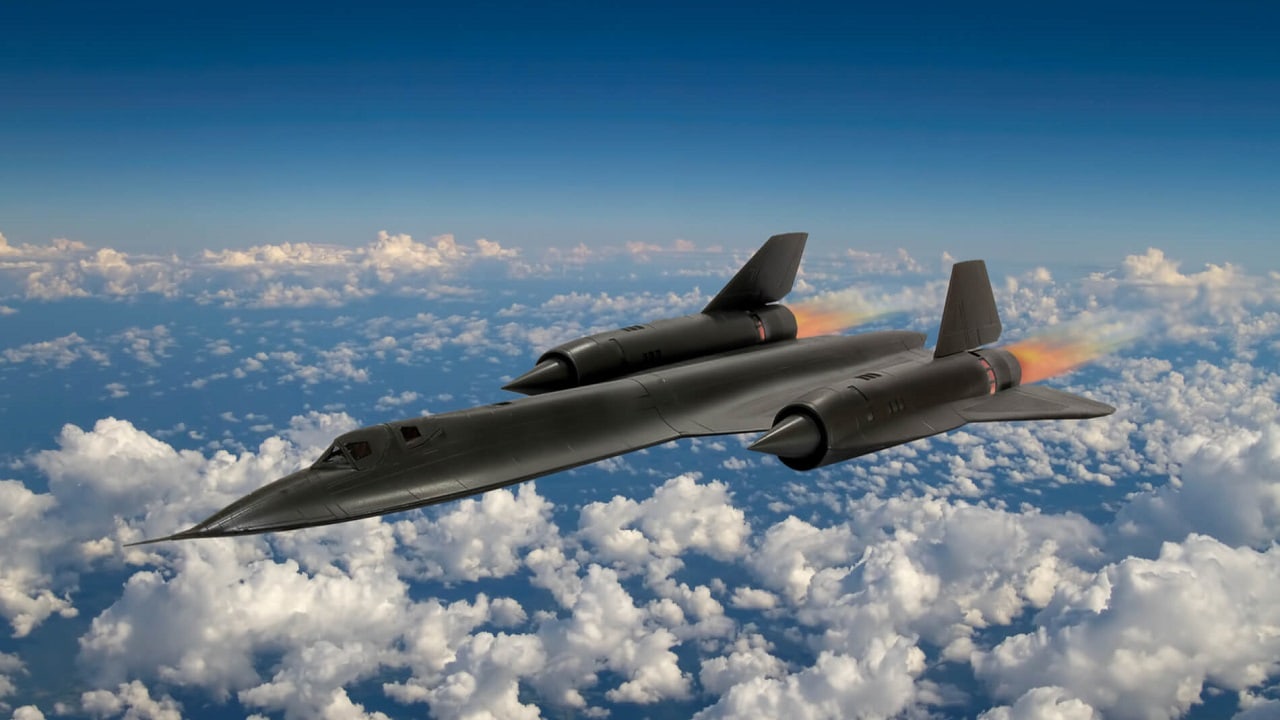
SR-71 Spy Plane. Image Credit: Creative Commons.
How The Air Force Used TEB To Start The SR-71:
Richard H. Graham, a former Air Force SR-71 pilot, explained the process in his book SR-71 Revealed: The Inside Story:
“The high flashpoint (of the fuel) brings up another problem. Most jet engines use igniter plugs, nothing more than a very hot spark plug, if you will.
“Using these igniter plugs they used with the JP-7 just drowns it out, it won’t ignite. Kelly [Johnson] put his engineers to work, and he said, ‘OK, gentlemen, how are we going to start this?’ They came up with a very unique way.
“Triethylborane – TEB for short. Each engine has a one-and-a-quarter pint. If I had it in a squirt gun and I squirted it into the atmosphere, it would go Kaboom! – it explodes with contact with the atmosphere.

SR-71 Spy Plane. Artist Rendition per Creative Commons.
“And that’s how we started the engines. As the engines rotate, at the right time, it sprays this amount of TEB into the turbine section, which goes kaboom, which in turn lights the engine. When you take the throttles up into the afterburner, it puts this metered amount of TEB in that lights up the JP-7. You get 16 shots for each engine.”
Ground Crews Were Well-Trained, As Was Necessary:
Sheffield Miller wrote that a sealed tank was mounted on each engine, inerted with nitrogen gas, and filled by maintenance crews with 600 ccs of TEB prior to each flight.
Former SR-71 Blackbird pilot David Peters recalled that, “An interesting note to this is the transport of it. If we landed away, servicing had to be hauled to our location. The NTSB lists TEB as the following most dangerous material, one step below fissionable nuclear material. The folks that handled this stuff were highly trained and good.”
About the Author: Stephen Silver
Steve Balestrieri is a National Security Columnist. He served as a US Army Special Forces NCO and Warrant Officer. In addition to writing on defense, he covers the NFL for PatsFans.com and is a member of the Pro Football Writers of America (PFWA). His work was regularly featured in many military publications.