
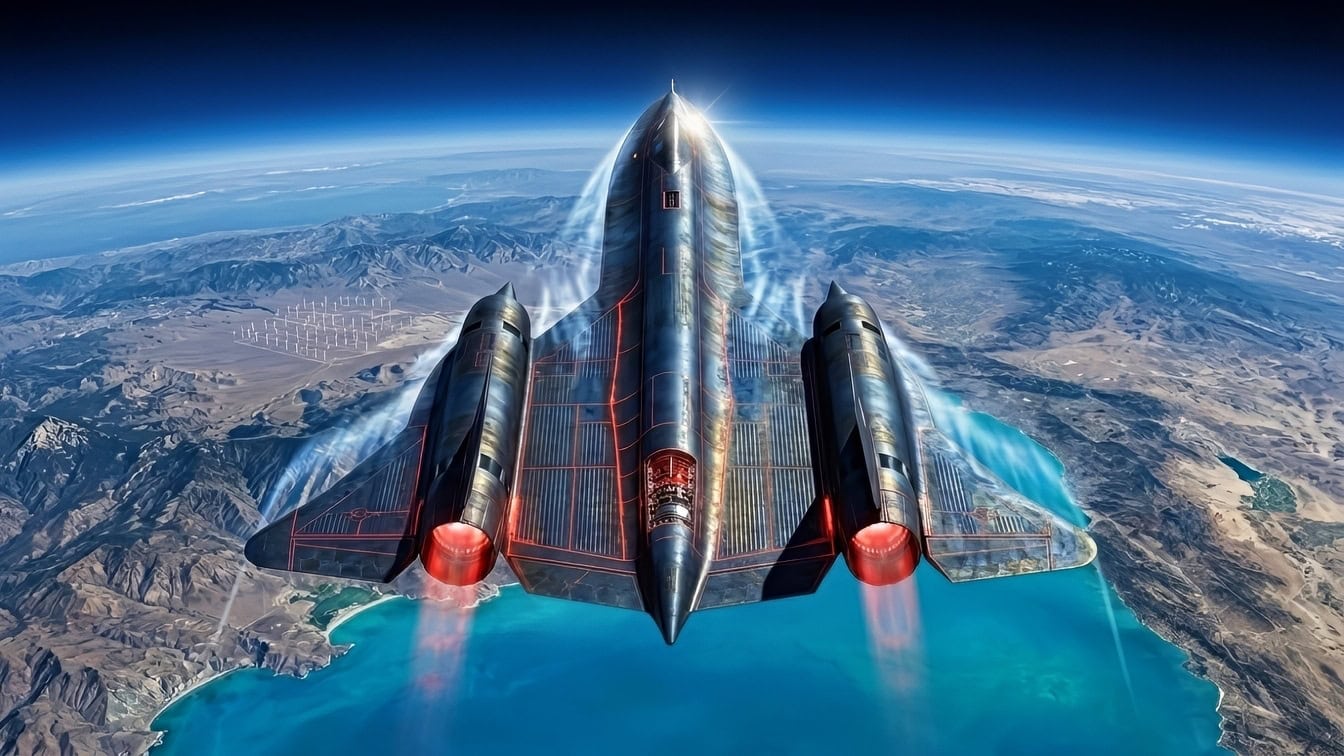
As the United States once again prioritizes long-range, survivable strike and reconnaissance platforms, much of the focus has shifted to future systems like hypersonic aircraft and next-generation stealth bombers. But decades before those concepts resurfaced, the Lockheed SR-71 Blackbird had already demonstrated what extreme speed and altitude could accomplish in real-world operations.
The SR-71 Blackbird Deserves Its Place in Aviation History
One account from SR-71 pilot David Peters continues to circulate because it captures that capability in a way that raw performance figures cannot. The story is often presented as an impossible one – a flight that appears to arrive before it departs.
It’s true, but it’s also not technically true – and while the details come from a pilot recollection rather than official documentation, the mechanics here make perfect sense.
Everything we know about the SR-71 points to the story being accurate, because the claims are supported by the fact that this thing was extraordinarily fast.
What the SR-71 Was Built to Do
The SR-71 was developed in the 1960s by Lockheed Skunk Works under the direction of Kelly Johnson as a response to Cold War reconnaissance requirements. The shootdown of a U-2 spy plane in 1960 had demonstrated that altitude alone was no longer sufficient protection. The solution was simply speed.
The SR-71 was designed to cruise at more than Mach 3 – over 2,200 miles per hour – at altitudes approaching 85,000 feet, placing it above most air defenses and allowing it to outrun missiles if necessary. At those speeds, the aircraft could survey vast areas rapidly.
From 80,000 feet, it could monitor roughly 100,000 square miles of terrain per hour.
That performance was very real, despite sounding like sci-fi, and it was the basis of the aircraft’s incredible survivability. If threatened, the standard response was not evasive maneuvering like a fighter jet, but stepping on the gas and flying as fast as possible.
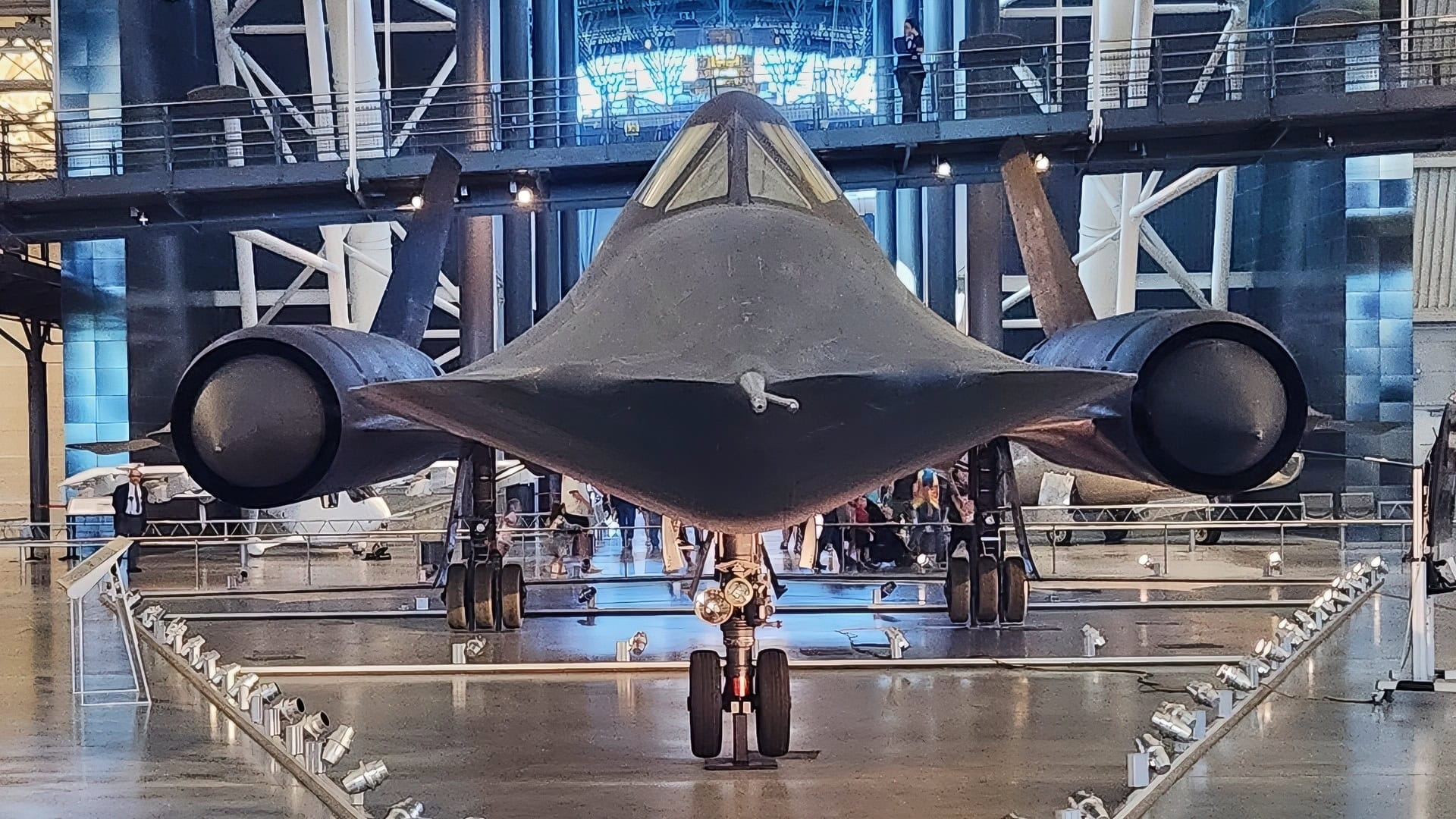
SR-71 At the Smithsonian. Image Credit: Creative Commons.
SR-71 missions were not simple point-to-point flights. They were tightly planned operations involving forward deployments and carefully defined routing along the edges of hostile airspace, supported by tankers.
Aircraft were often deployed to locations such as Kadena Air Base, which put them within operational reach of the Soviet Far East and China. From there, missions would typically involve multiple aerial refueling events and high-speed reconnaissance passes before returning to the continental United States. It was a long and tiring journey for the pilots of this futuristic aircraft.
Refueling, obviously, was fundamental to its operations – but not just because of the long distances it flew.
The SR-71 deliberately took off with only a partial fuel load to reduce stress on its structure, since its fuel tanks, which formed part of the aircraft’s outer skin, expanded and sealed only at high temperatures. That context is important to consider when reading Peters’ story.
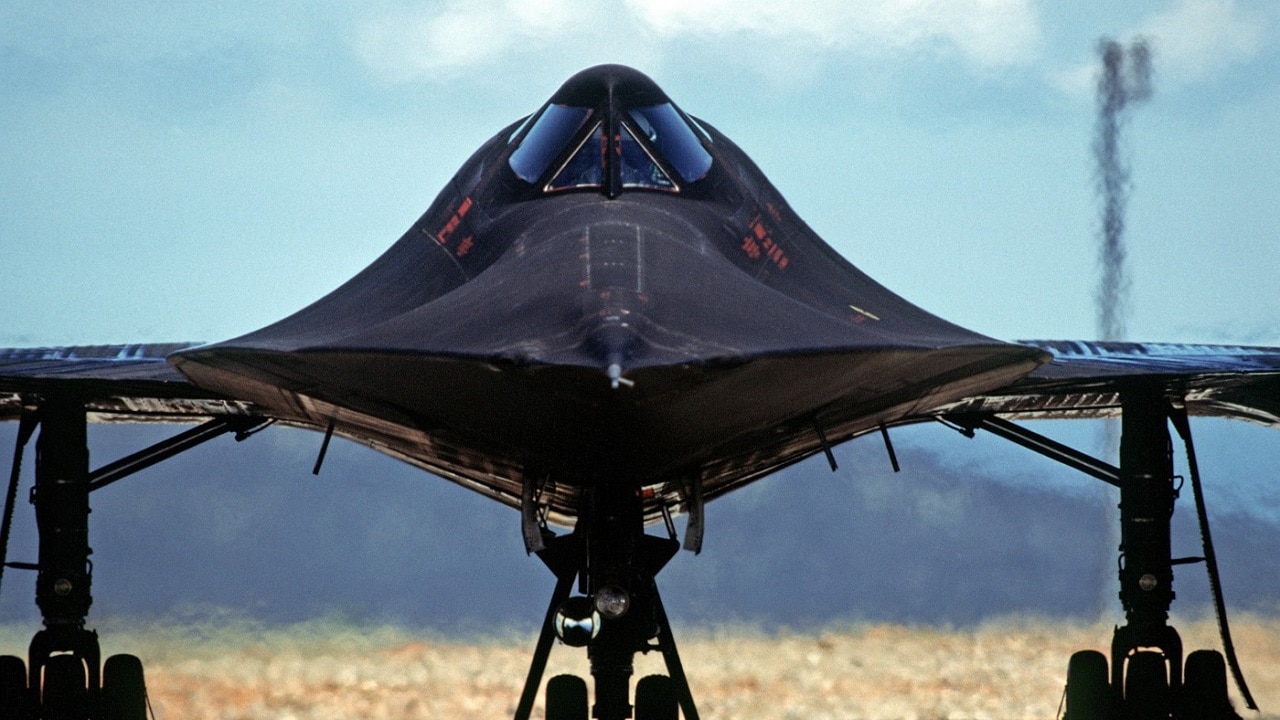
SR-71 Spy Plane. Image Credit: Creative Commons.
The David Peters Story
The Peters story revolves around a routine aircraft transfer from Okinawa back to California – a route that covered thousands of miles at sustained Mach 3 speeds.
“We were TDY to Det. 1 at Kadena AB, Okinawa. One of the birds was scheduled for swap out and my back seater, Ed Bethart, and I were to fly it home. The replacement came in on Friday and we were to leave Saturday morning. So, in true Habu tradition we welcomed the incoming crew and went to happy hour Friday evening at the officers club.”
“Habu” is a nickname for the SR-71, derived from a venomous snake native to Okinawa. It became synonymous with Blackbird operations in the Pacific. TDY, meanwhile, refers to “temporary duty.”
It is a standard term used across the U.S. Air Force (and the U.S. military) to describe when personnel are assigned to a location other than their permanent duty station for a limited period. Peters, then, is describing how he and his Reconnaissance Systems Officer had been temporarily assigned to a forward detachment and were tasked with flying the SR-71 back to the United States.
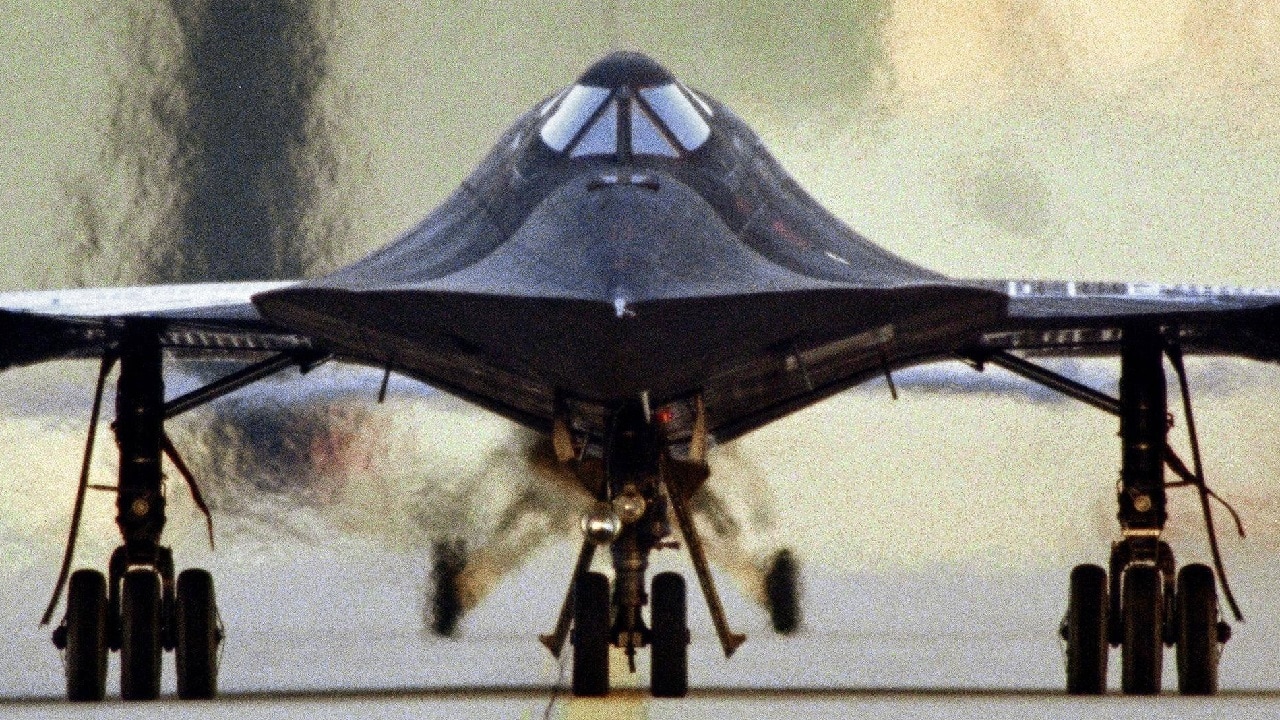
SR-71 Blackbird Spy Plane. Image Credit: Creative Commons.
The next part of his account describes a mission profile that fits known SR-71 routing patterns.
“‘We got up Saturday morning and got ready to go home. Departure was scheduled for 1000. Everything went well and we departed right on time. Headed out to do a pass through the Korean DMZ then into the tankers in the Sea of Japan. Good refueling and climb out headed for the Sea of Okhotsk and the Kamchatka peninsula of Russia and from there to more tankers off of Adak in the Aleutian Islands. Another good refueling and on to Beale AFB California. We arrived with a low approach pulled up into a closed pattern and landed. Following de-suiting and debrief we deposited our classified flight documents jumped in a car and arrived at the officers club for Friday night happy hour at 1630 17 1/2 hours before we left Kadena,” he said.
This is where things get interesting.
Peters means that because the aircraft was traveling east at extremely high speed and crossed the International Date Line, the time zone change effectively gave him back hours, meaning that when they landed in California, the local time was still Friday afternoon – almost a full day earlier than when they had departed Okinawa on Saturday morning.
That creates the illusion that they had arrived before they left.
SR-71. Image: Creative Commons.
The Technology That Made It Happen
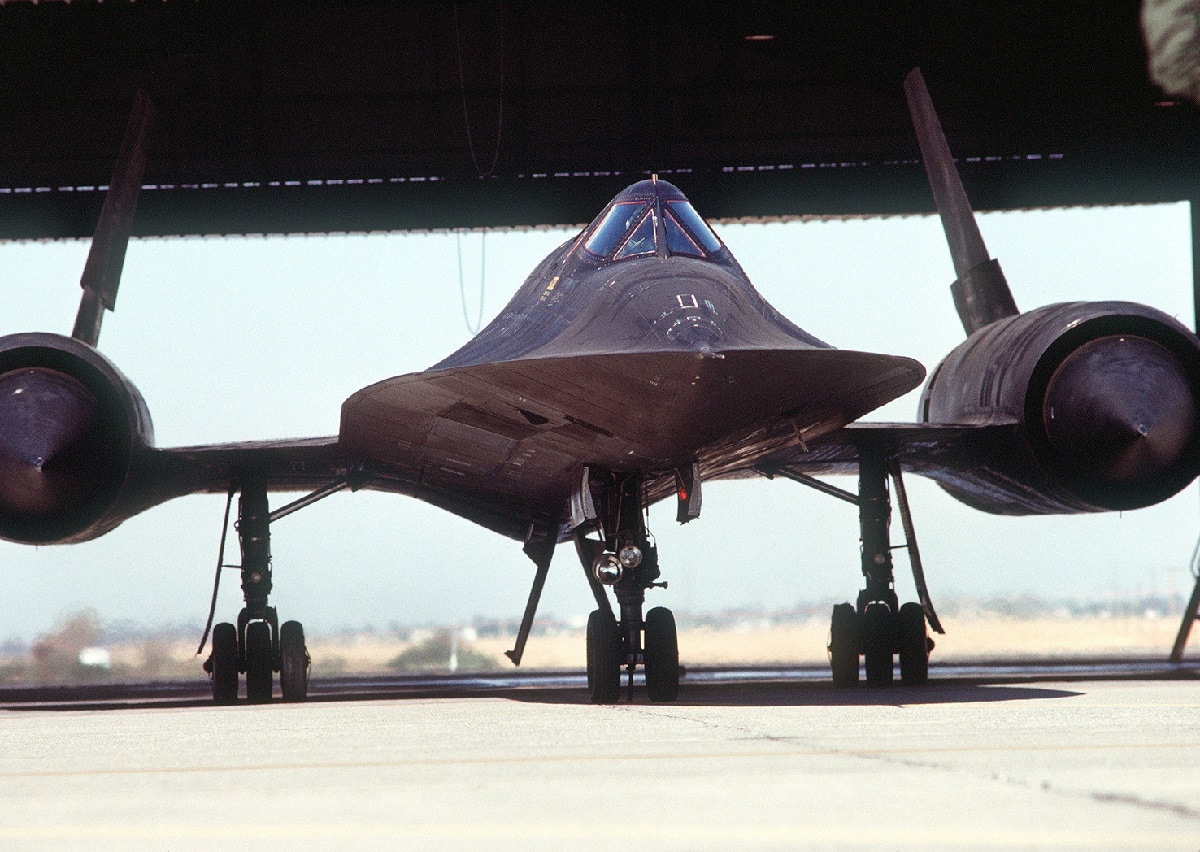
The technology that made a flight like this possible is astonishing, even now. The SR-71 was powered by two Pratt & Whitney J58 engines, which were unlike conventional jet engines. At lower speeds, they operated as standard turbojets.
But above Mach 2, they transitioned into a ramjet-like mode, using incoming air pressure to generate additional thrust and efficiency.
Those engines allowed the aircraft to sustain speeds above Mach 3 for extended periods, something no other operational aircraft has consistently achieved. At cruise, the aircraft also operated in an extreme thermal environment. Flying at high speeds creates friction with the air, and airframe temperatures would exceed 500°F. Much of the aircraft was constructed from titanium in order to withstand those conditions.
The propulsion system was, unsurprisingly, unconventional. At high speed, much of the thrust did not come from the engine core itself but from the inlet and airflow system, which effectively turned the entire engine nacelle (the aerodynamic housing that encloses an aircraft engine) into part of the ramjet itself.
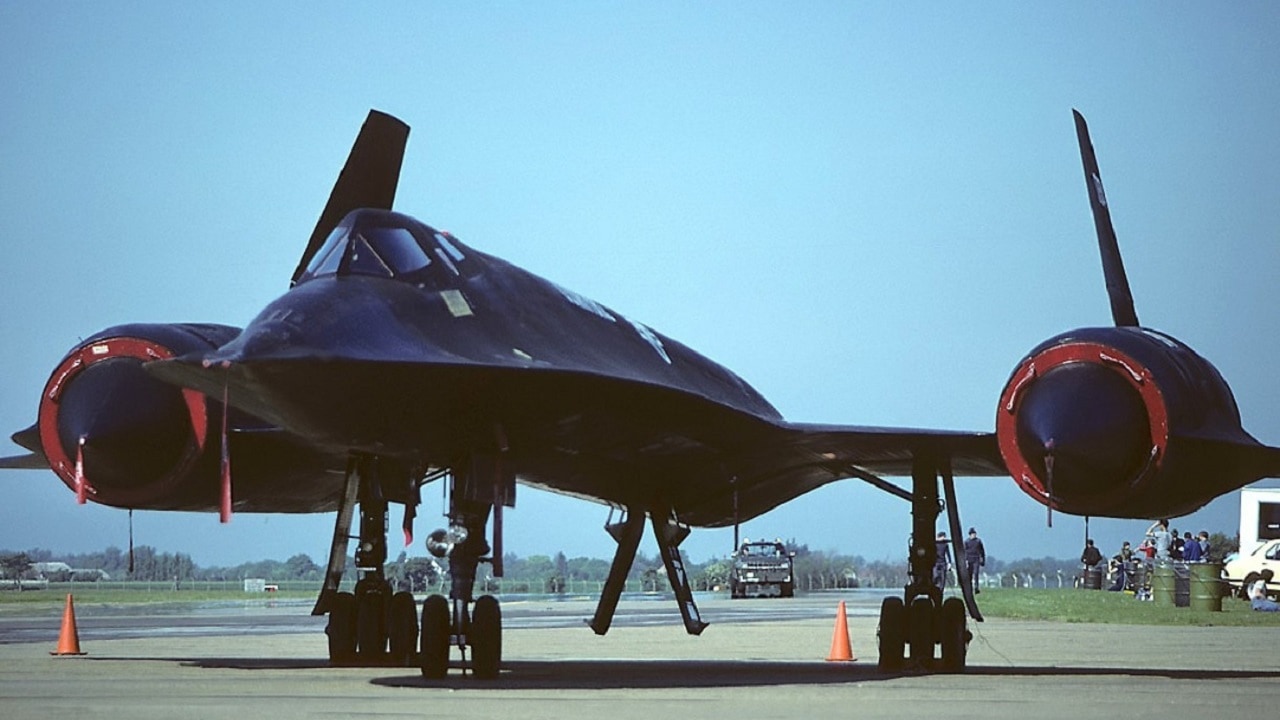
Image of SR-71 Spy Plane. Image Credit: Creative Commons.
The SR-71 also relied on highly specialized fuel and ignition systems. Its JP-7 fuel had an unusually high flash point, requiring a chemical ignition system using triethylborane (TEB), which ignited on contact with air. This allowed reliable engine starts and afterburner relights under extremely high-speed, high-altitude conditions.
The SR-71 occupied a unique place in aviation history and is one aircraft surrounded by myth. Pilots have told similar incredible stories about their time flying the aircraft, and those stories often capture the imagination and attention of online readers.
MORE – There Is ‘Chatter’ That F-47 NGAD Fighter Might Have Flown Iran Combat Missions
The aircraft deserves its legendary status, too; it boasted extreme performance, and its operations were highly classified, meaning that much of what it did was never fully documented in public.
That’s precisely why these stories are so loved.
About the Author: Jack Buckby
Jack Buckby is a British researcher and analyst specializing in defense and national security, based in New York. His work focuses on military capability, procurement, and strategic competition, producing and editing analysis for policy and defense audiences. He brings extensive editorial experience, with a career output spanning over 1,000 articles at 19FortyFive and National Security Journal, and has previously authored books and papers on extremism and deradicalization.

