
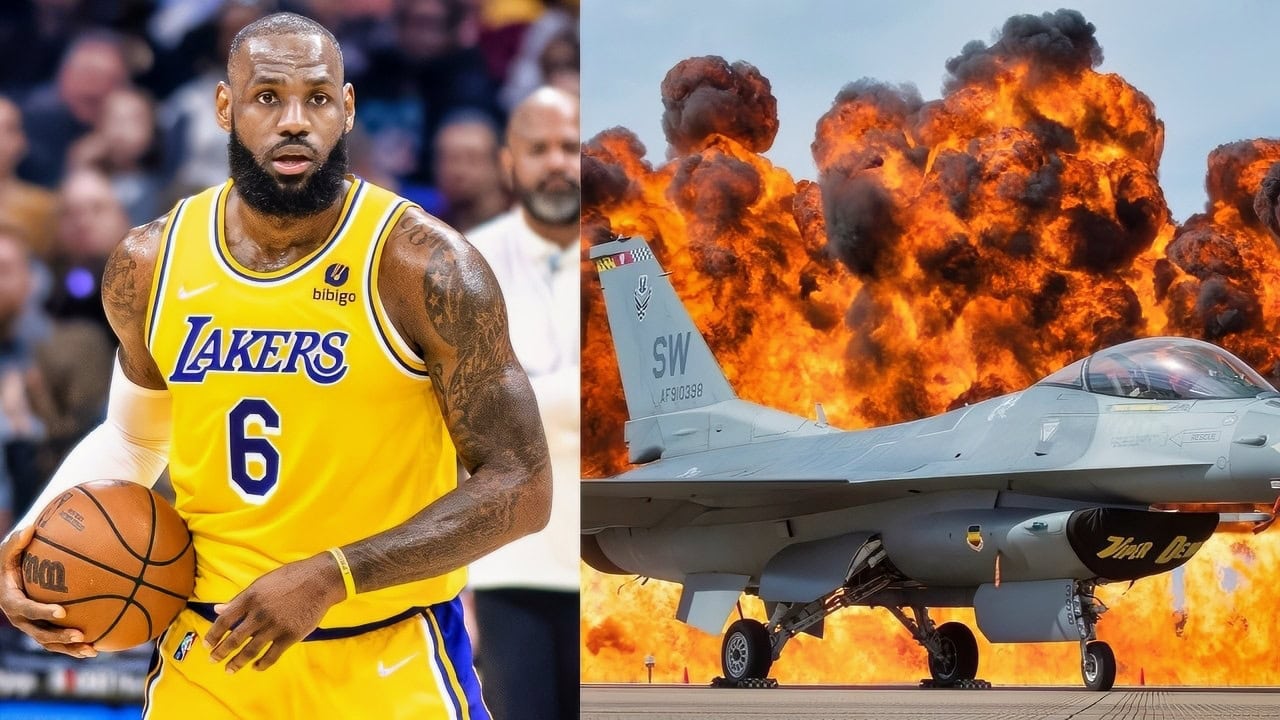
Summary and Key Points: This week, a 41-year-old free agent is deciding which team gets him for an unprecedented 24th season, and a third of the league is lined up at his door. It is the most LeBron James situation imaginable, and the United States has been running its aviation version for years. The F-16 Fighting Falcon first flew in 1974, and in 2026, it has a production backlog more than a hundred jets deep, three hundred more potential sales behind that, and a brand-new customer that just signed for $1.5 billion. Every air force debate has its Jordan-versus-LeBron argument. In American fighters, the F-16 is LeBron: never the purest specialist, inarguably the greatest totality — and still getting signed at 50.
LeBron James and the F-16: A Match Made In Heaven
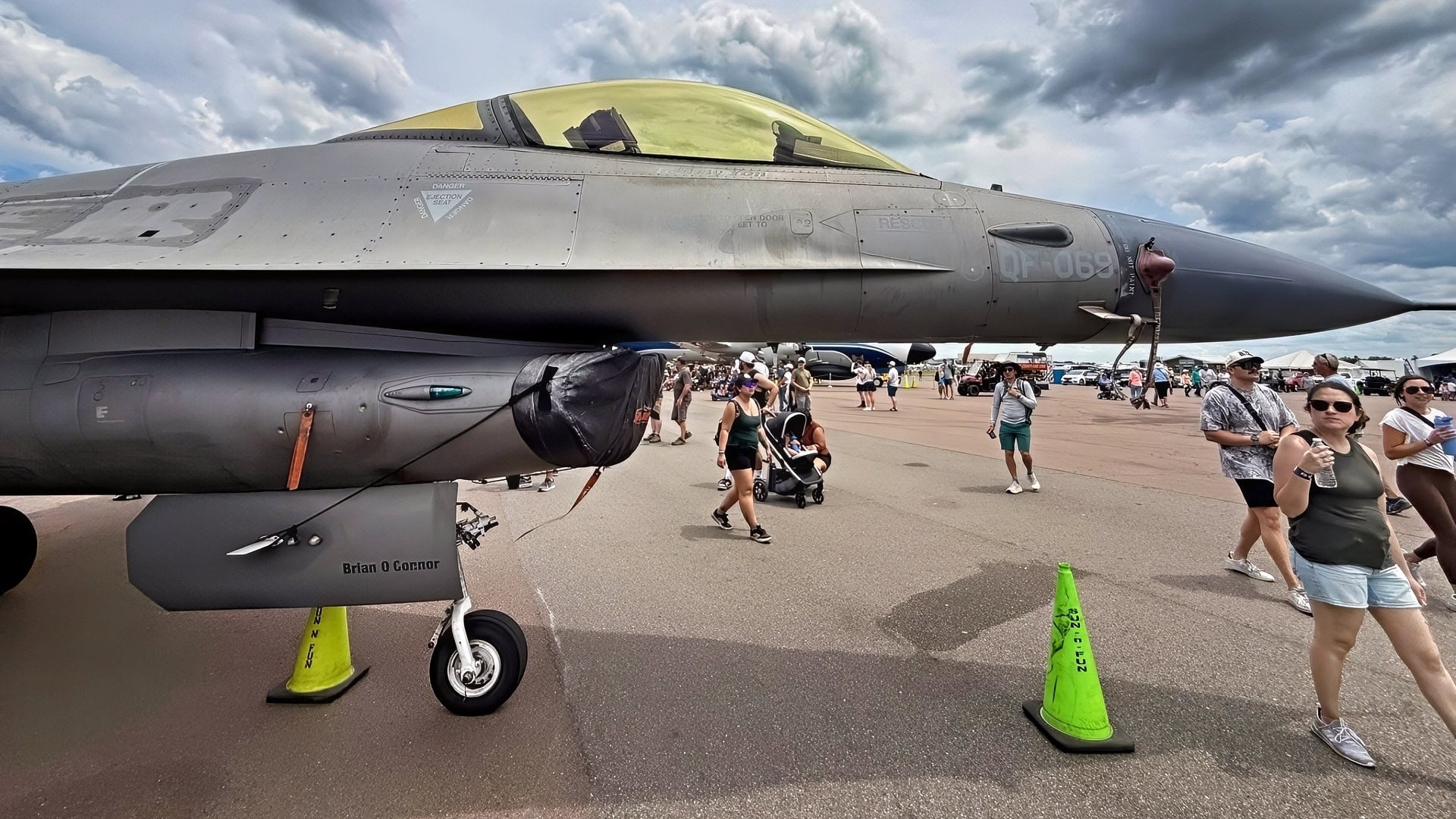
F-16 Fighter Lakeland Florida 19FortyFive.com Image. Taken on 4/19/2026.
Both careers began before they were supposed to. LeBron James was on the cover of Sports Illustrated at 17, anointed “The Chosen One” before he had played a professional minute. The F-16 went further: it flew before anyone decided it should. On January 20, 1974, the YF-16 prototype was running a high-speed taxi test at Edwards Air Force Base, deliberately staying on the ground, when its brand-new fly-by-wire controls, tuned too sensitively, threw the jet into a violent rocking roll, its wingtips scraping sparks off the runway, until test pilot Phil Oestricher concluded that the one safe direction left was up. He flew one circuit, landed six minutes later, and the official first flight followed thirteen days after the accidental one. Fifty-two years on, the jet that couldn’t wait for its own debut still hasn’t left the stage, and this is the case because it is the LeBron James of fighter aircraft: the all-around, all-era, all-situation franchise player of American airpower.
The Draft: A Disruptor Against the Establishment
Like the kid from Akron, the F-16 arrived as a challenge to the established order. It came out of the Lightweight Fighter program, championed by a band of Pentagon insurgents nicknamed the Fighter Mafia, who believed the Air Force’s beloved heavyweight, the F-15, was too big and too expensive to buy in the numbers a real war would demand. Their answer was a small, cheap, absurdly agile day fighter, and the establishment’s compromise was the “high-low mix”: a few expensive Eagles up top, lots of affordable lightweights underneath. The stakes rose mid-audition when the Secretary of Defense announced the flyoff’s winner would go into full production, and in early 1975, the YF-16 beat Northrop’s YF-17 for the contract (the loser, in a nice touch of league symmetry, going on to a fine career with the other franchise as the Navy’s Hornet). Within months, four NATO nations signed for 348 aircraft in what was called the deal of the century. The disruptor had a max contract before its rookie season ended.
All Five Positions
LeBron’s résumé argument is positional: he has played and defended one through five, and been the first option for two decades while doing it. The F-16’s résumé reads the same way. It was drafted as a point guard, a lightweight day dogfighter, and nothing else, and its first aerial kill came in April 1981 against a Syrian helicopter. Two months later came the signature road win: eight Israeli F-16s flew the Osirak raid and destroyed an Iraqi nuclear reactor using unguided bombs, trusting the jet’s bombing computer to do what other air forces needed laser guidance for.
The following year, over Lebanon’s Bekaa Valley, Israeli F-16s ran up a 44-to-nothing record against Syrian MiGs — the final run, on the record, no losses. Then the jet started switching positions. It took over the Wild Weasel air-defense-killing mission from the F-4G by 1996, picked up nuclear delivery duty in Europe, flew close air support over two decades of Iraq and Afghanistan, served as the Thunderbirds’ showpiece and the Navy’s sparring partner, and today flies for Ukraine, where one pilot became a national hero by downing six Russian cruise missiles in a single engagement. One airframe, every position on the floor, a chameleon that has changed its game for five straight decades.
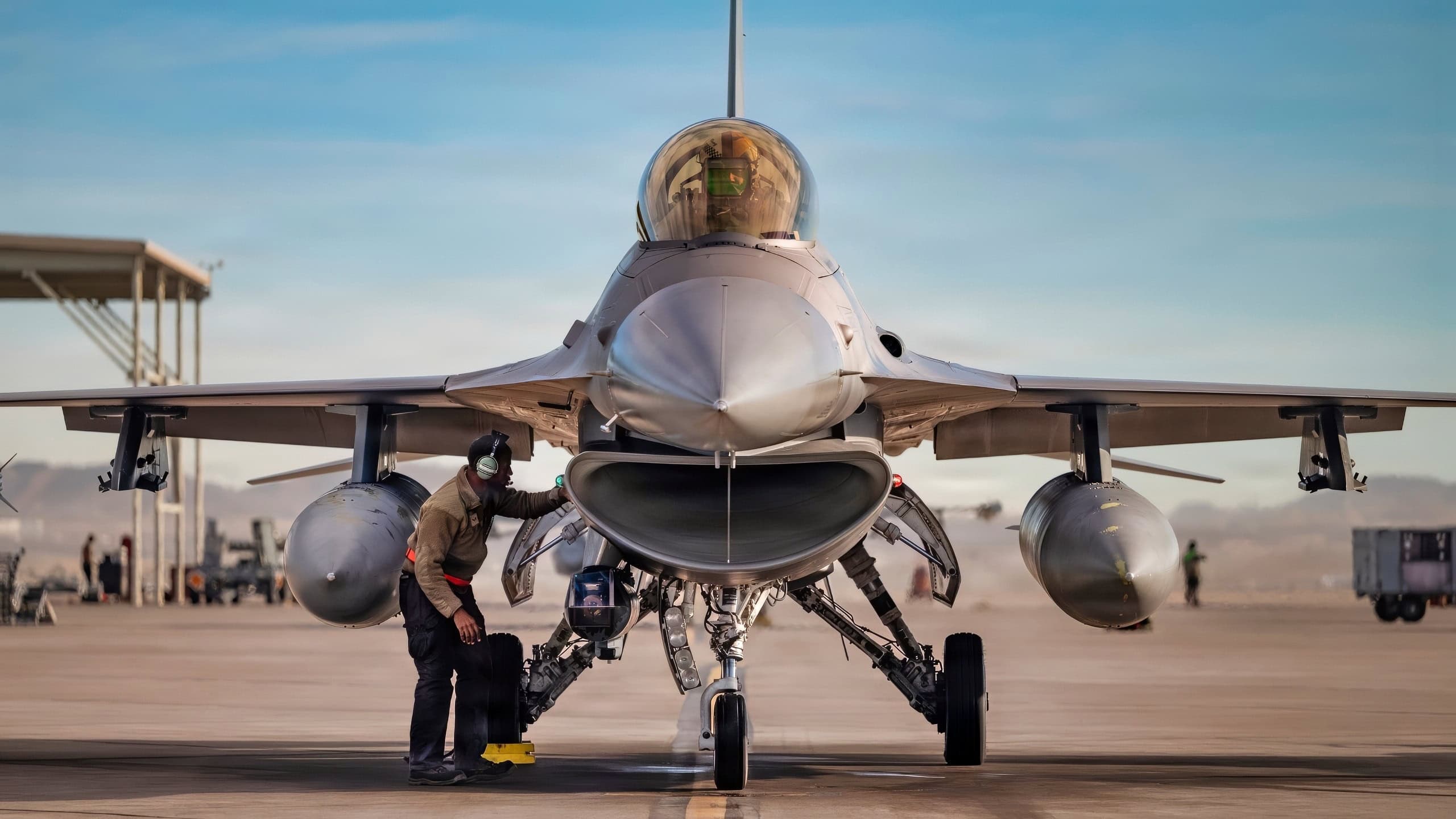
U.S. Air Force Senior Airman Gregory Chastang, a crew chief assigned to the 857th Aircraft Maintenance Squadron, conducts a post-flight inspection on an F-16C Fighting Falcon assigned to the 16th Weapons Squadron, U.S. Air Force Weapons School, at Nellis Air Force Base, Nevada, Feb. 24, 2026. Members of the 857th AMXS performed pre- and post-flight inspections, and launch and recovery for F-16Cs following a mission. (U.S. Air Force photo by Airman 1st Class Jennifer Nesbitt)
The Counting Stats and the Reinvention
The totality argument always comes down to the numbers, and the F-16s are LeBron’s scoring record: more than 4,600 built, flown by the United States and 25 other nations, over 3,100 still operational worldwide with 700-plus in Europe alone, the most numerous Western fighter of its era by a distance. And like LeBron, it survived by reinventing its game every time the league changed.
The analog day fighter of 1978 became the precision night striker of the LANTIRN era, then the radar-killing Wild Weasel, then the AESA-radar Block 70 of today, a jet whose structure has been reinforced from 8,000 toward 12,000 flight hours while its cockpit absorbed fifth-generation sensors: the aviation equivalent of the athletic freight train who added a post game, then a three-point shot, then became a playmaking savant. It is even still adding skills deep in its late career; the automatic ground-collision avoidance system fitted to modern Vipers has been saving pilots the way a 40-year-old’s film study saves legs, and the upgrade roadmap runs into the 2040s. Even the arrival of the F-35 didn’t render it. It freed it, the way a loaded roster frees a veteran star into the role he plays best.
Free Agency at 50
This week, the analogy stops being cute and becomes literal. As of today, LeBron James is an unsigned free agent: he told the Lakers on June 30 that he will play his 24th season — the first player ever to reach a 23rd — somewhere else, and he is taking his time choosing among roughly ten suitors while the entire league waits. A 41-year-old, coming off an All-Star season at 20.9 points a night, with franchises queuing for the privilege.
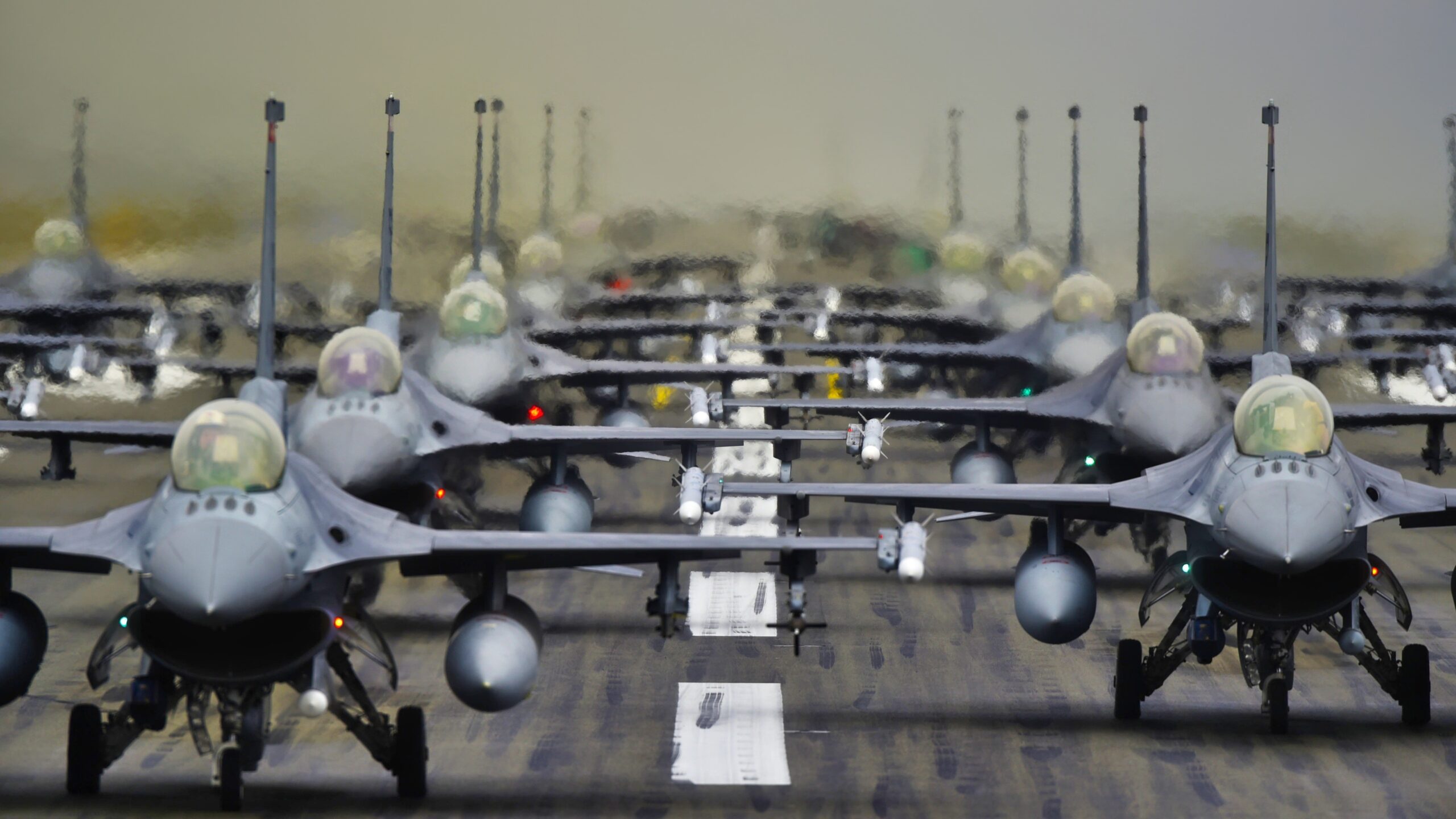
F-16 Fighter in a Elephant Walk. Image Credit: Creative Commons.
Now look at the F-16’s July. This spring, Peru signed a roughly $1.5 billion deal for 12 new F-16s, choosing the 50-year-old American design over France’s Rafale and Sweden’s Gripen after an eighteen-month competition — a brand-new franchise paying premium money for the oldest star on the market, with deliveries starting when the design turns 55. Behind Peru sits a backlog of roughly 110 new-build jets (66 for Taiwan, 24 for Morocco, 12 for Jordan, a second batch for Bulgaria), and behind the backlog, Lockheed Martin says it is tracking as many as 300 more potential sales, with Turkey approved for 40 and the Philippines for 32, contracts awaiting signatures. In December, the production line completed every jet for Slovakia and Bulgaria’s first squadron, the first two European air forces to buy the newest model factory-fresh, both replacing Soviet-era MiG-29s with an American design older than the MiGs it is retiring. LeBron has ten teams courting him this week. The F-16 has a longer suitor list than that, at twice the age, and its free agency never ends.
The Supporting Cast
Every LeBron needs his foils, and the American fighter roster assigns them almost too neatly. The F-15 Eagle is Michael Jordan: the purists’ pick, the peak that admits no argument, carrying an air-to-air ledger its maker counts at 104 victories and zero defeats, the fighter version of never losing a Finals. The F-16-versus-F-15 argument is, beat for beat, the LeBron-versus-Jordan argument: untouchable dominance against overwhelming totality, six rings against four MVPs, 22 All-Star seasons, and the all-time scoring record.
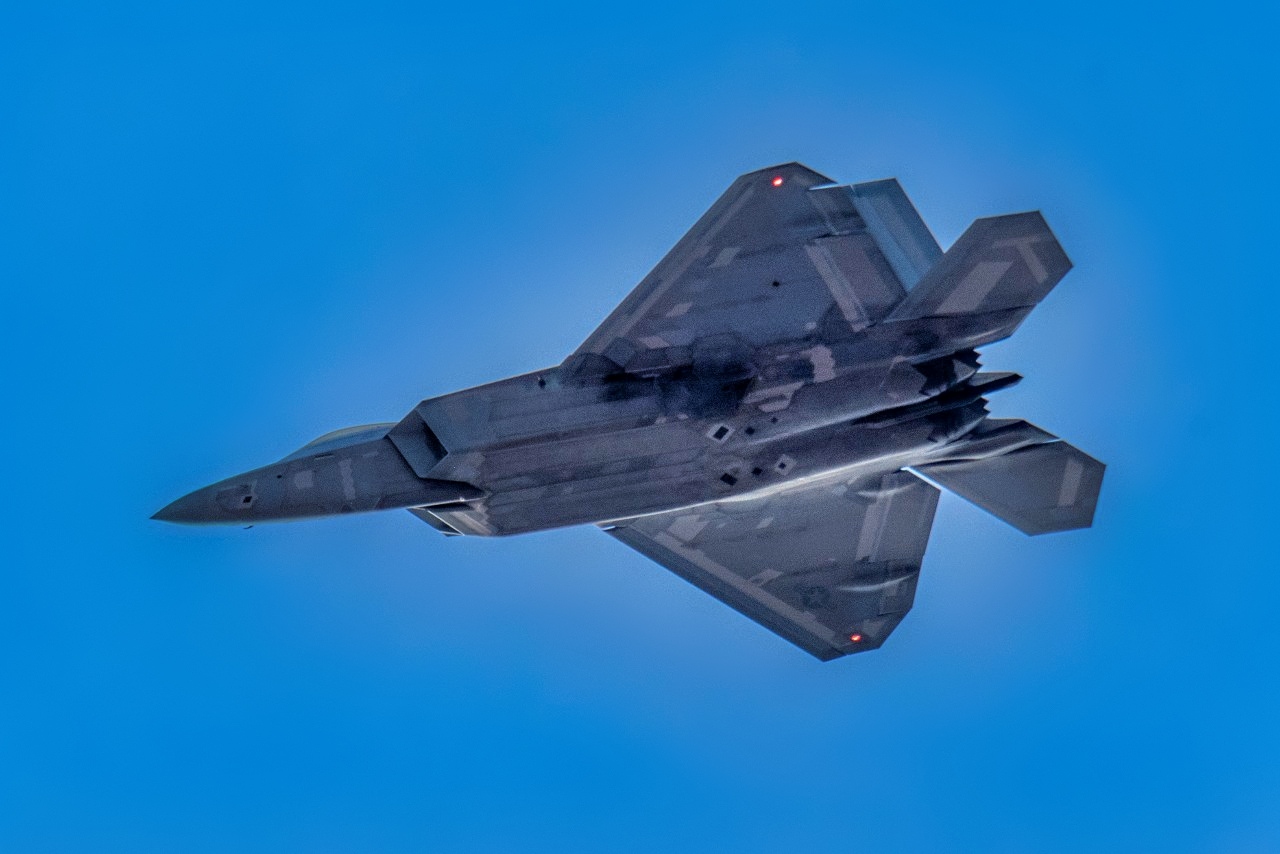
A U.S. Air Force F-22 Raptor assigned to the 3rd Wing conducts aerial practices at Joint Base Elmendorf-Richardson, Alaska, March 28. The F-22 is an American twin-engine, all-weather, supersonic stealth fighter aircraft and provides power projection across the Indo-Pacific region. (U.S. Air Force photo by Airman 1st Class Tala Hunt)
The F-22 Raptor is the transcendent talent whose career was cut short: the most physically gifted airframe ever built, its production line closed in 2011 at just 187 jets, the league’s eternal what-if. And the F-35 is the obvious counter-pick, which is exactly why it fails. The chosen-one hype, the playmaker’s gene for making every aircraft around it better, more than 1,100 already built — all true, and it is a decade into its career. That is 2013 LeBron. The award this piece is handing out requires the one thing the F-35 cannot yet show anyone: twenty more years at the top. Ask again in 2040.
The Counterpoints: Where the Analogy Earns Its Keep
The honest objections deserve the floor. The purist case is real: the F-16 was never the outright air-superiority king; that crown belonged to the F-15, just as LeBron was never the league’s purest shooter. Correct both times, and beside the point both times; totality is the argument, not perfection at one skill. The second objection is more serious: the aging star’s minutes problem.
Greenville built only 16 jets last year against a target near two dozen, Taiwan’s 66-jet order has slipped toward 2027 while Taipei publicly floated legal options, and Bulgaria’s first delivered jet arrived with a fuel leak that briefly grounded it. Demand is generational; the production line is mortal, and managing it is the load-management problem of a 50-year-old franchise player.
There is even a possible contract after this one, a proposed Block 80 that would be the jet’s final reinvention, though it exists today as a concept with one big problem: nobody has funded it. And one limit of the analogy should be said plainly, because it flatters the airplane: LeBron’s body will eventually make the decision for him. A fighter’s body can be rebuilt, re-skinned, and re-winged for as long as someone pays, which is precisely why the F-16’s 24th season has no scheduled end.
MORE – The F-15 Eagle Is the Michael Jordan of Fighter Jets
This brings the two careers to the same week. Somewhere in America, a 41-year-old is choosing the team that gets his next act, and the sports world has stopped to watch. In Greenville, South Carolina, a production line is building fighters for what will soon be the 26th foreign air force to fly it, for deliveries stretching toward the design’s 55th birthday, and almost nobody outside the industry has noticed how strange and remarkable that is. Two franchises, both born ahead of schedule — one on a magazine cover at 17, one throwing sparks off a California runway because it refused to stay on the ground. Half a century later, the company is still taking new contracts.
The Chosen One should be flattered by the comparison.
MORE – The Iowa-Class Battleship Has Firepower No Warship Can Match
About the Author: Harry J. Kazianis
Harry J. Kazianis (@Grecianformula) was the former Senior Director of National Security Affairs at the Center for the National Interest (CFTNI), a foreign policy think tank founded by Richard Nixon based in Washington, DC. Harry has over a decade of experience in think tanks and national security publishing. His ideas have been published in the NY Times, The Washington Post, The Wall Street Journal, CNN, and many other outlets worldwide. He has held positions at CSIS, the Heritage Foundation, the University of Nottingham, and several other institutions related to national security research and studies. He is the former Executive Editor of the National Interest and the Diplomat. He holds a Master’s degree focusing on international affairs from Harvard University.

