
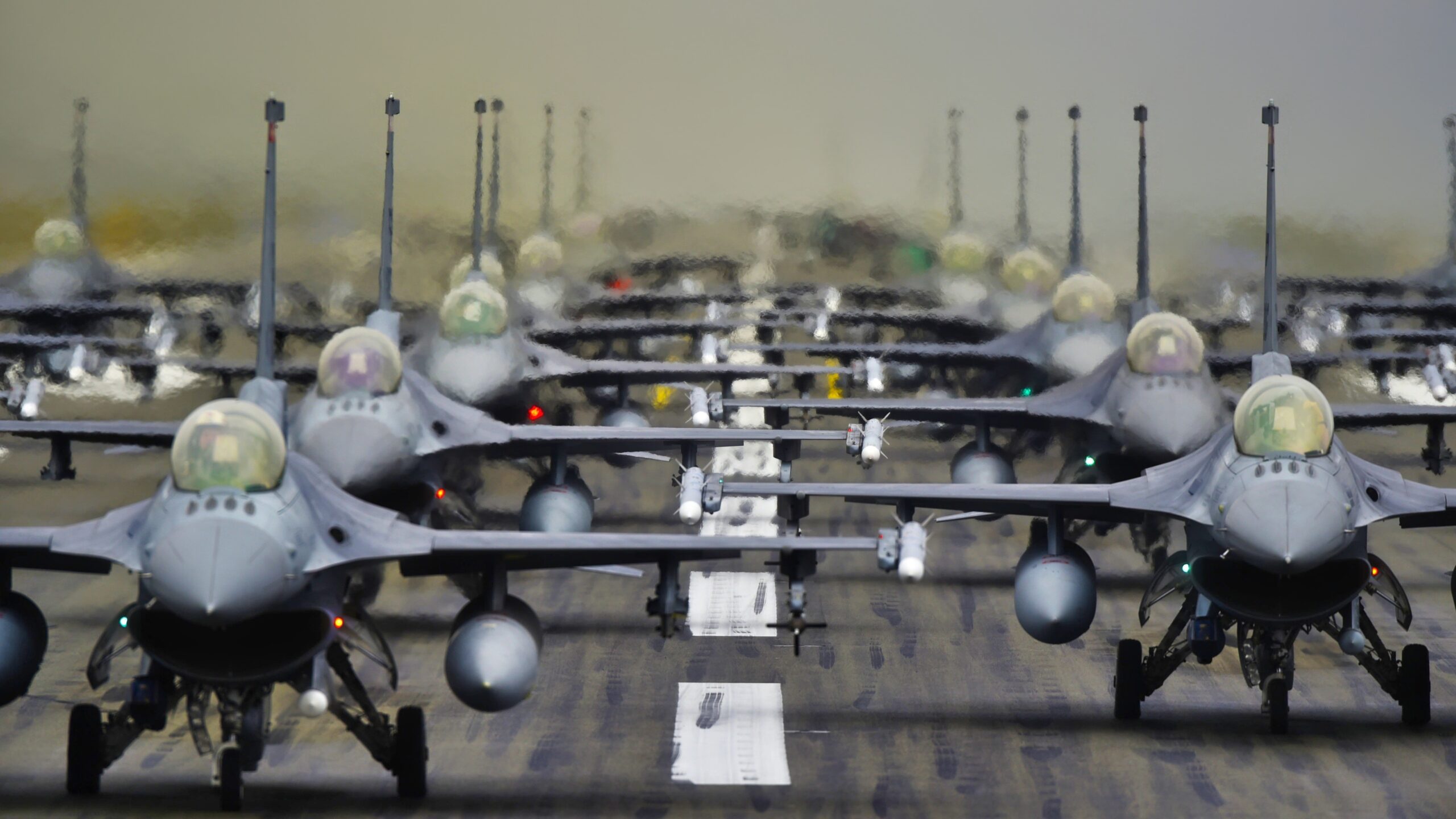
Summary and Key Points: Dr. Brent M. Eastwood, a defense analyst and former US Army Infantry officer, evaluates the F-16 Fighting Falcon’s five-decade evolution.
-From the initial Block 1 in 1978 to the sophisticated Block 70/72 Viper, the F-16 has integrated AN/APG-83 AESA radar, LANTIRN pods, and the “Angry Kitten” electronic warfare suite.
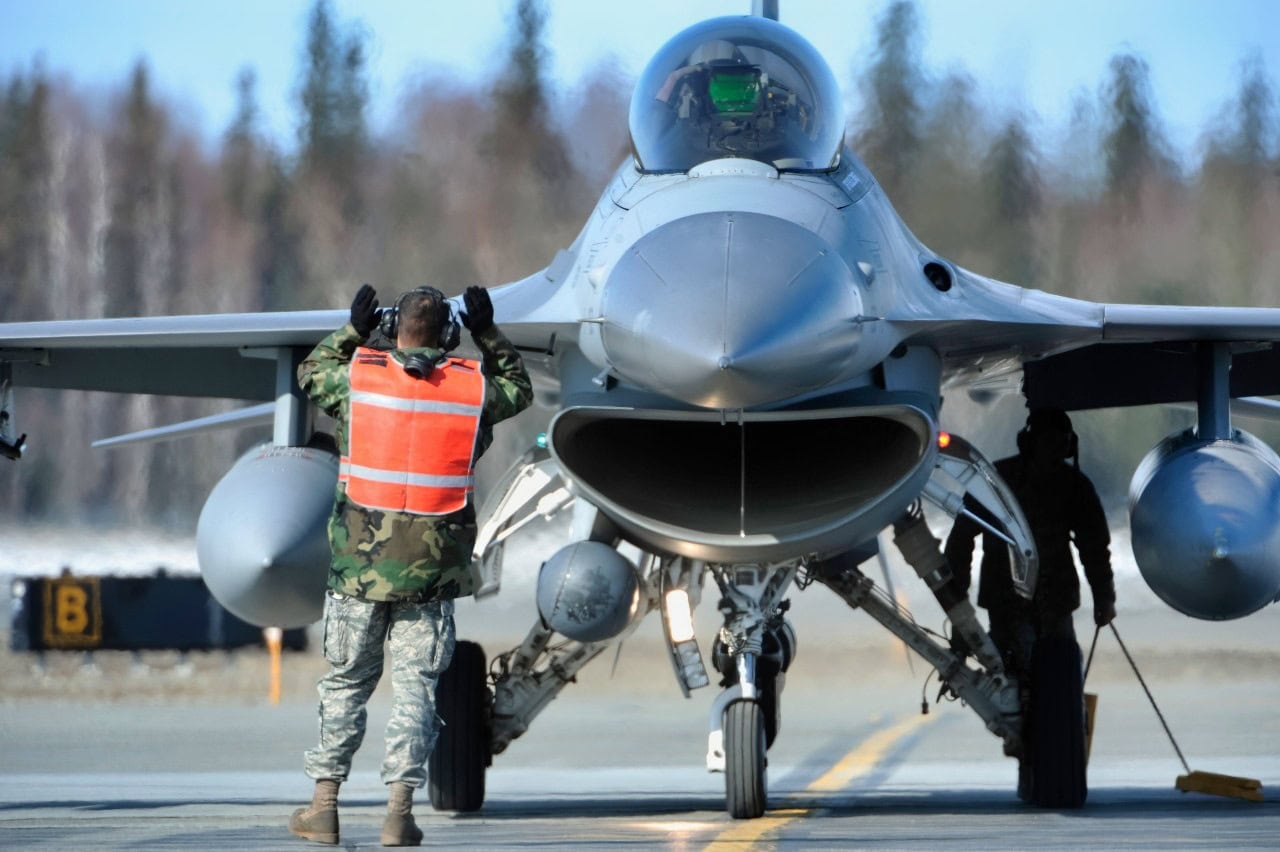
F-16 Fighter. Image Credit: Creative Commons.
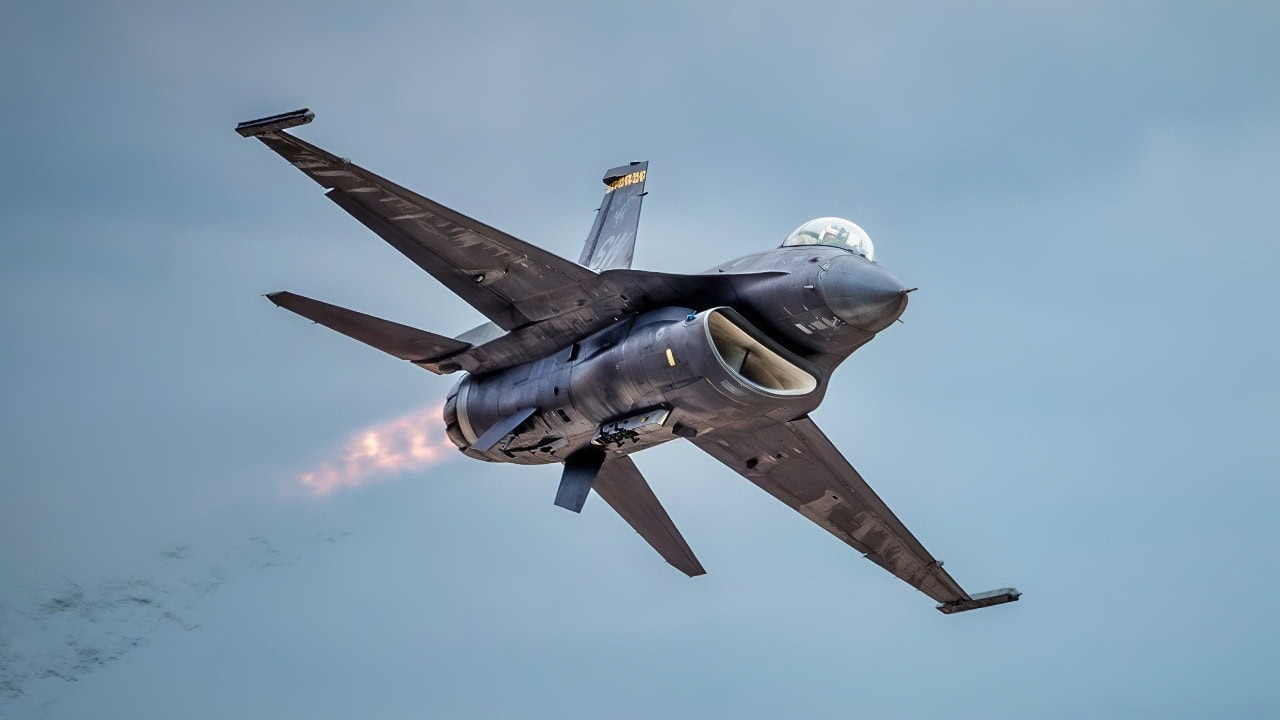
U.S. Air Force Maj. Taylor “FEMA” Hiester, F-16 Viper Demonstration Team commander and pilot, takes off for a practice demonstration at Shaw Air Force Base, S.C., Feb. 13, 2025. Hiester leads a team of Airmen charged with showcasing the combat capabilities of the F-16 Fighting Falcon for millions of spectators each year. (U.S. Air Force photo by Senior Airman Meghan Hutton)
-This 19FortyFive report analyzes the platform’s transition from an air-superiority dogfighter to a multi-role mainstay, exploring how structural upgrades have extended its service life to 12,000 hours while maintaining its status as a “Viper” that can out-sense and out-maneuver modern threats.
The 50-Year Dominance: How the F-16 Fighting Falcon Evolved from Dogfighter to Multi-Role Stalwart
The F-16 Fighting Falcon is now more than 50 years old. It is hard to believe that it is possible for a fighter jet to be so dominant for five decades.
The F-16 was first conceived in an age when there were just two super powers, and not the multi-polar geopolitical system that now prevails. When the F-16 debuted, China was not a military power, and rogue states such as Iran and North Korea were not as threatening as they are currently.
The F-16 has gone through a bevy of upgrades and modernizations in its time. Earlier pilots who flew the Fighting Falcon during the Cold War probably would not even understand the cockpit and would require some refresher training to fly the modern F-16. This warbird has aged like fine wine.
Flexibility Is the Watchword
As air proponents like to say, “flexibility is the key to airpower,” and the F-16 has certainly shown that it can be an agile airplane. Its upgrades have been evolutionary and sometimes even revolutionary, including new radar systems, avionics upgrades, the ability to fire modernized weapons, better engine performance, enhanced electronic warfare capabilities, and structural upgrades.
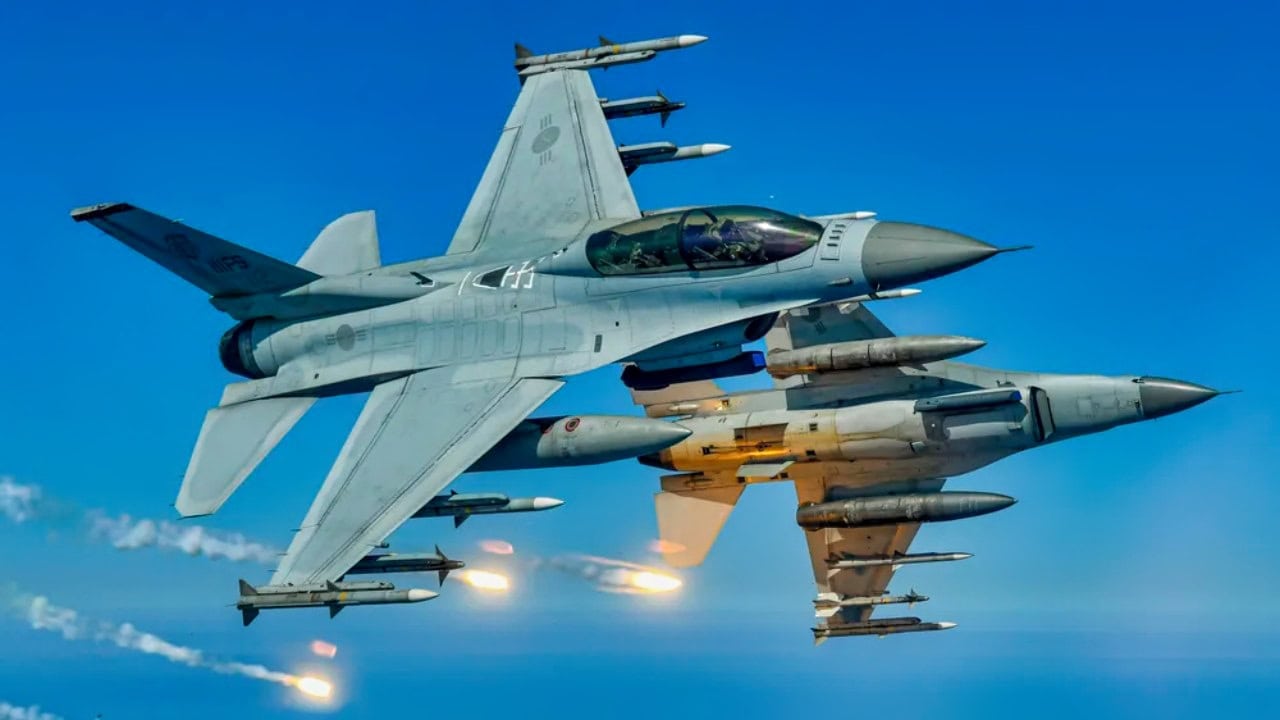
KF-16 Fighter. Image Credit: Creative Commons.
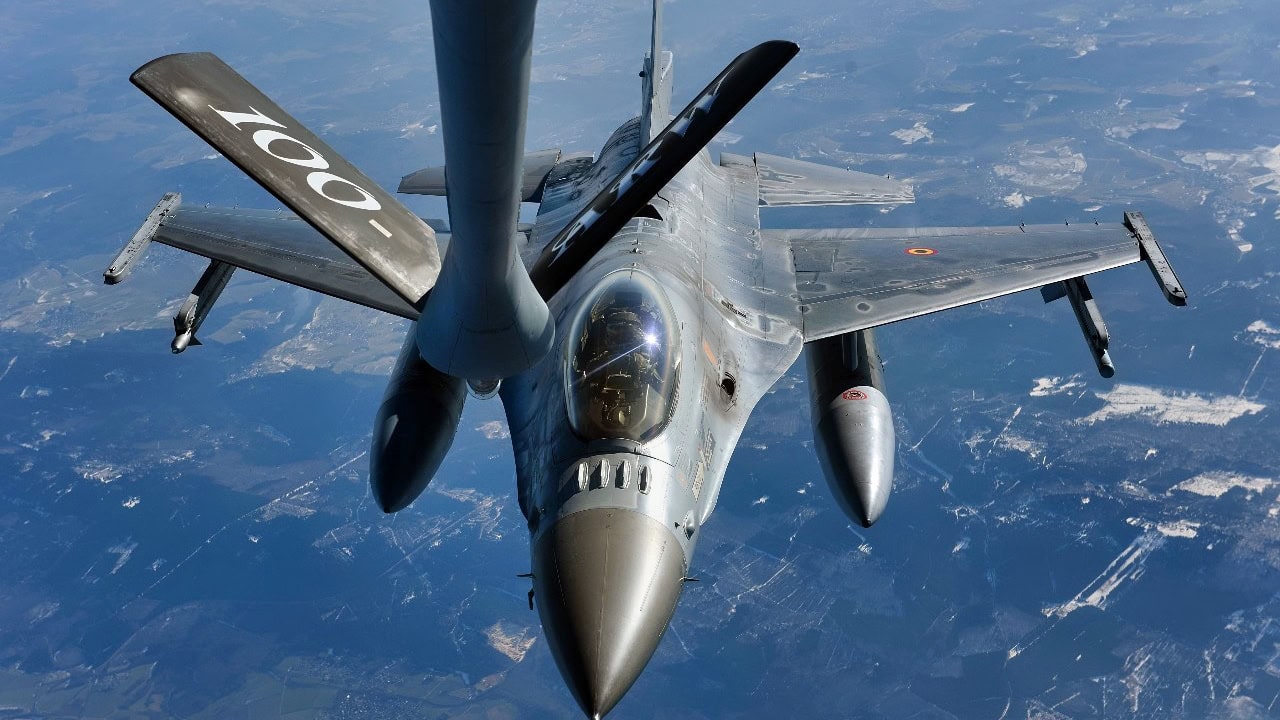
A Belgian Air Component F-16 flies behind a U.S. Air Force KC-135 Stratotanker from the 100th Air Refueling Wing, RAF Mildenhall, England, before receiving fuel over Germany, Feb. 23, 2018. The air refueling was part of a large force exercise with NATO allies including the Belgian, Dutch, French and German air forces. (U.S. Air Force photo by Airman 1st Class Luke Milano)
Air Superiority to Multi-Role Greatness
The Fighting Falcon started off as a dogfighting air-superiority fighter, but it has become a multi-role stalwart that excels at ground strike. This airplane is great at close air support, saving untold numbers of soldiers and Marines fighting for their lives.
This Viper Can Bite
One of the biggest milestones of the F-16’s service life came in 2012, when the F-16V Viper model appeared. The Viper has the AN/APG-83 active electronically scanned array (AESA) radar, a new main computer, and better electronic warfare capability. The ground collision software was updated, radar cross section was reduced, and airframe structural strength was given greater longevity. There was also new infrared targeting system and triple missile launcher adapters.
The Platform Has Been the Target of Tender Loving Care For Decades
In 1978, the first Block 1 F-16 took flight. The Block 5 first took to the skies in 1981. The Block 10 and Block 15 followed in the 1980s, and the Block 15 was the most produced variant. It had two hardpoints added to the inlet chin, and the tail was 30 percent larger. This provided better stability and control.
“The Block 15 upgrade added a data transfer unit and a radar altimeter. The radar was improved, and the fire control and stores control computers were expanded. OCU also allowed Block 15 aircraft to fire the AGM-119 Penguin anti-ship, the AGM-65 Maverick air-to-ground, and the AIM-120 Advanced Medium Range Air-to-Air Missile, or AMRAAM. The Block 15 aircraft built from 1988 had OCU, a larger wide-angle head-up display, and the Pratt & Whitney F100-PW-220 engine. Fifteen air arms fly Block 15 aircraft today, including the US Navy,” according to Code One Magazine.
Block 25 Packs a Punch
The Block 25 was the version to replace the F-16 A/B, debuting the F-16 C/D. The advanced medium-range air-to-air missile (AMRAAM) became its standard weapon. The Fighting Falcon also became a great night fighter. There was an improved fire control microprocessor, and the AN/APG-68 radar. The cockpit was more pilot-friendly, with new head-up displays and head-down multifunctional displays.
Better Engines and Missile Capability
Block 30/32 upgrades featured two new engine choices—the Pratt & Whitney F100-PW-220 and the General Electric F110-GE-100. This F-16 version could carry the high-speed anti-radiation (HARM) and Maverick missiles.
Block 40/42
The Block 40/42 models had better landing gear. They carried Low Altitude Navigation and Targeting Infrared for Night (LANTIRN) targeting and navigation pods. Laser-guided bombs were added to the munitions mix. The radar had automatic terrain following capability, and pilots could also fly with night vision goggles.
Block 50/52
The Block 50/52 F-16s were delivered in 1999. The idea was for the F-16 to be able to suppress enemy air defenses better. New laser targeting pods helped the accuracy of the HARM missiles. There were also revitalized electronic counter-measures.
The Desert Falcon
The F-16 Block 60 had an even better electronic warfare suite that became known as the Desert Falcon. “The Block 60’s electronic warfare system, produced by Northrop Grumman, is the most sophisticated subsystem on the aircraft. It provides threat warning, threat emitter locating capability, and increased situational awareness to pilots. A fiber-optic data-bus handles the throughput and speed needed for many of these systems. The maintenance system is laptop-based,” according to Code One Magazine.
By 2019, the F-16s were also receiving major structural upgrades, which extended the service life of the latest models. The airplane could now fly 12,000 hours. The F-16 received new computers, better software, enhanced targeting systems, and new AESA radars.
This Kitty Is Angry
The latest standard is the Block 70/72, which carries the “Angry Kitten” pod for advanced electronic warfare capabilities. The cockpit displays can jam enemy radar more effectively, making the F-16 more survivable than ever.
The F-16 has evolved greatly over the years. Who would think that a platform first envisioned in the 1970s could fly this long? Pilots from all over the world love to fly the F-16, and it continues to stand as a symbol of American ingenuity.
About the Author: Brent M. Eastwood
Author of now over 3,000 articles on defense issues, Brent M. Eastwood, PhD is the author of Don’t Turn Your Back On the World: a Conservative Foreign Policy and Humans, Machines, and Data: Future Trends in Warfare plus two other books. Brent was the founder and CEO of a tech firm that predicted world events using artificial intelligence. He served as a legislative fellow for US Senator Tim Scott and advised the senator on defense and foreign policy issues. He has taught at American University, George Washington University, and George Mason University. Brent is a former US Army Infantry officer. He can be followed on X @BMEastwood.