

Key Points and Summary – Lockheed Martin’s F-21 is a heavily upgraded F-16 Block 70 pitched as a made-for-India “4.5-gen plus” fighter with F-22/F-35-style avionics, APG-83 AESA radar, and triple missile launchers that boost air-to-air load by 40 percent.
-Built with Tata under Make in India, it would give the IAF more range, weapons flexibility, and networked capability while anchoring a domestic production and export hub.
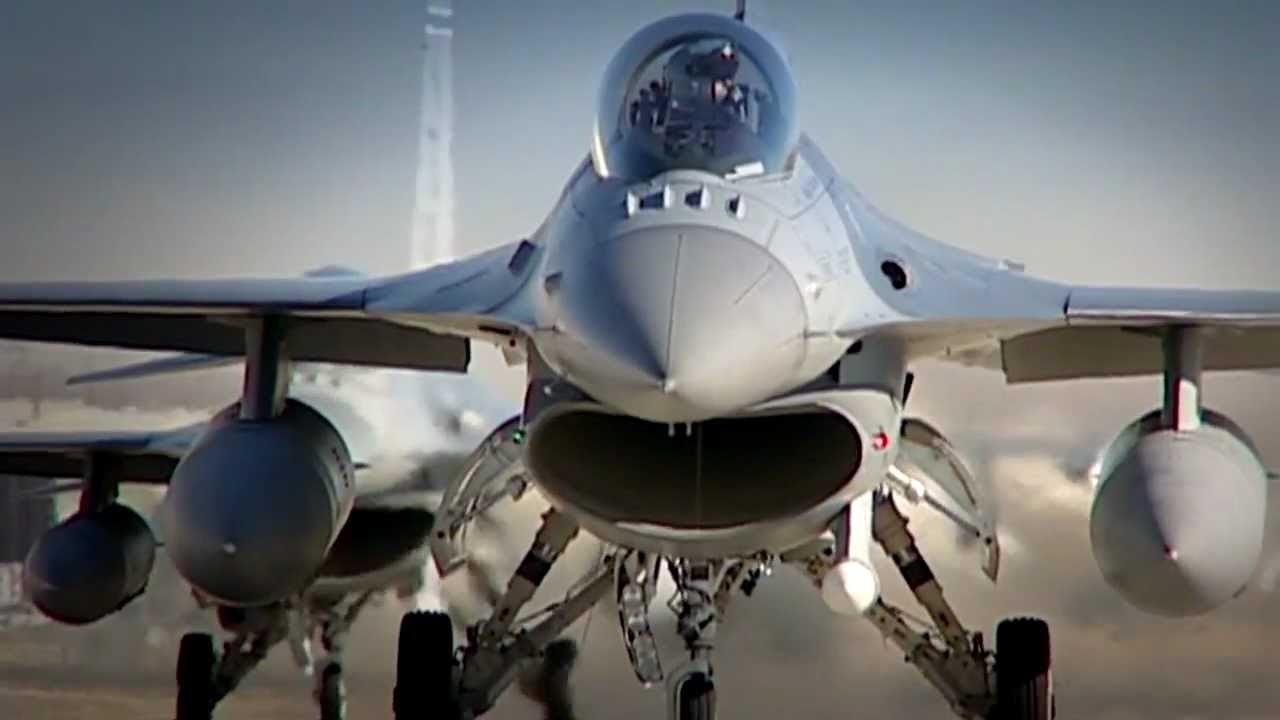
F-16 Viper. Image Credit: Lockheed Martin.
-Yet New Delhi has stalled on the deal and appears to favor Rafale, raising the question of whether the F-21 will remain a paper fighter or become India’s bridge to Western airpower.
F-21 vs F-16: The “Best Falcon Ever” India Still Hasn’t Bought
The Lockheed Martin F-21 is a proposed, advanced single-engine multi-role fighter jet based on the F-16 Fighting Falcon, specifically tailored for the Indian Air Force (IAF).
It features advanced avionics, including a modern AESA radar, new cockpit displays, and technologies derived from the F-22 and F-35. It is being offered with the potential for significant local production under the “Make in India” initiative.
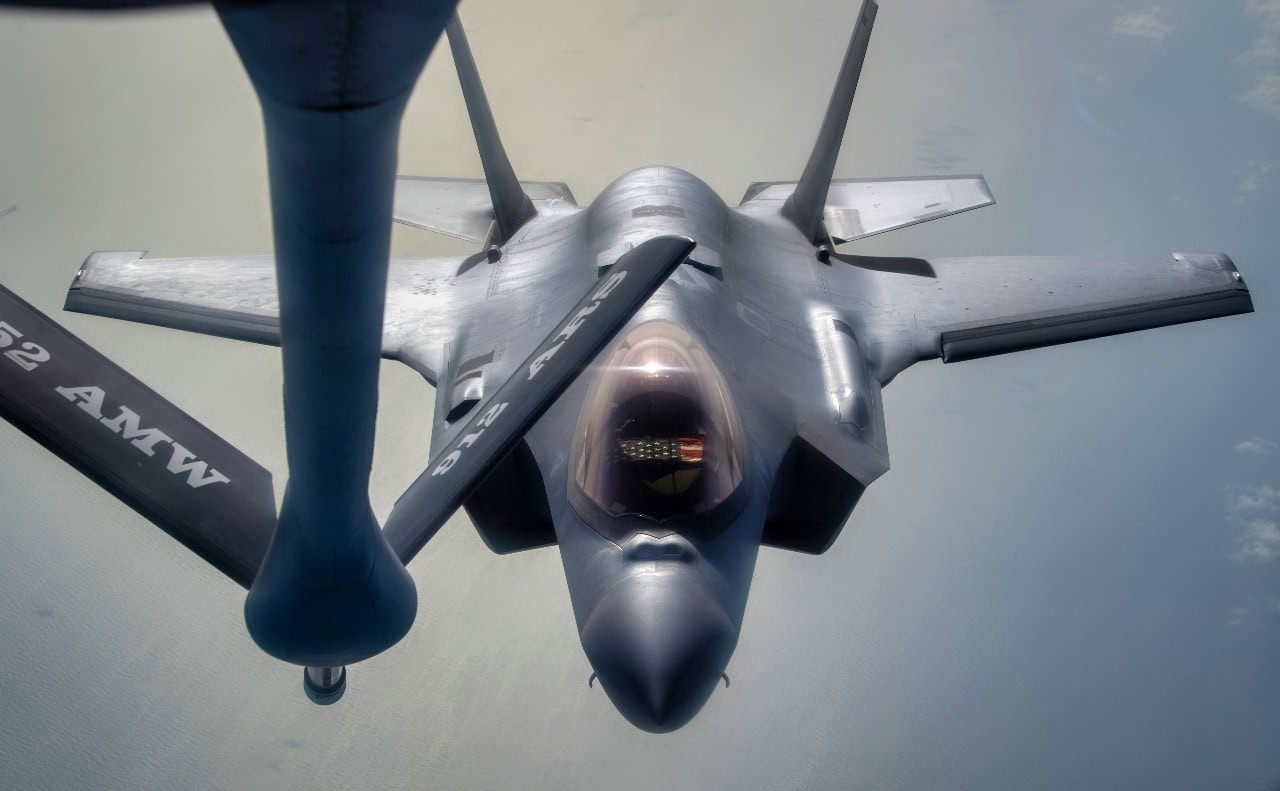
A U.S. Air Force F-35 Lightning II approaches a U.S. Air Force KC-135 Stratotanker over the U.S. Central Command area of responsibility, July 22, 2020. The F-35 Lightning II is an agile, versatile, high-performance, multirole fighter that combines stealth, sensor fusion and unprecedented situational awareness. (U.S. Air Force photo by Airman 1st Class Duncan C. Bevan)
The F-21 is designed to provide the IAF with enhanced air-to-air and air-to-ground capabilities while integrating India into the global fighter aircraft ecosystem.
In some aviation circles, it is considered the best F-16 variant.
F-21 Block 70 Agreement:
The F-21 Block 70 is designed to meet the Indian Air Force’s single-engine fighter requirements, and the proposed US-Indian industry partnership directly supports India’s initiative to develop private aerospace and defense manufacturing capacity.
This F-21 production partnership between the world’s largest defense contractor and India’s Tata Advanced Systems, Tata Group, and created Tata Lockheed Martin Aerostructures Limited. The facility in India would manufacture aircraft and components for the F-16 global supply chain.
Tata has stated, “The F-21 Block 70 is ideally suited to meet the Indian Air Force’s single-engine fighter needs, and this unmatched US-Indian industry partnership directly supports India’s initiative to develop private aerospace and defense manufacturing capacity in India.”
It will allow India to produce, operate, and export F-21 Block 70 aircraft, the newest and most advanced version of the world’s most successful, combat-proven multi-role fighter.
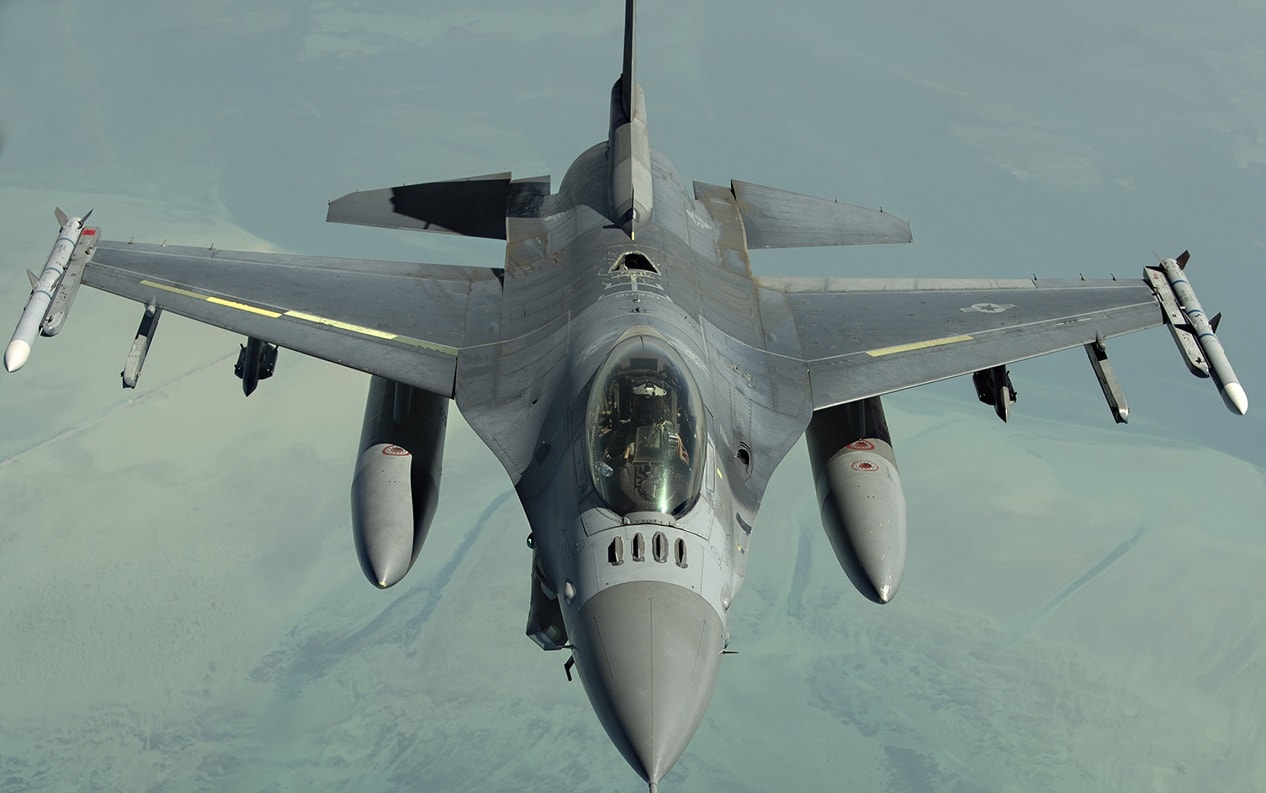
A U.S. Air Force F-16 Fighting Falcon assigned to the 77th Expeditionary Fighter Squadron flies over Southwest Asia, Feb. 24, 2021. U.S. Central Command maintains robust defensive capabilities to preserve security and stability throughout the region. (U.S. Air Force photo by Senior Airman Bryan Guthrie)
The F-21 will integrate fifth-generation avionics, sensor-fusion technologies, and open-system architectures to meet emerging operational demands. The F-21 is designed to be suited for India’s specific tactical and strategic theater of operations.
F-21 production in India will support thousands of Lockheed Martin and F-21 supplier jobs in the US, create new manufacturing jobs in India, and position Indian industry at the center of the world’s most extensive fighter aircraft supply ecosystem.
The F-21/F-16 Block 70
The F-21 would feature specifications akin to the F-16 Block 70/72, on which it is based:
-Wingspan: 31 ft/9.45 m
-Length: 49.3 in/15.09 m
-Height: 16.7 ft/5.09 m
-Maximum Takeoff Weight: 48,000 lb/21,772 kg
-Maximum Speed: 1,500 mph/2,414 kmh
The F-21 fighter’s powerplant is the General Electric F110-GE-129 afterburning turbofan engine, which produces around 18,000 pounds of thrust dry and nearly 30,000 pounds with afterburner. This is the same engine type used in other advanced variants of the F-16 fighter aircraft.
Most Advanced 4th-Generation Fighter
While the Eurasian Times reported that the F-21’s design and capabilities place it closer to more sophisticated fifth-generation fighters, such as the F-22 Raptor, the aircraft is still a fourth-generation++ aircraft.
Still, with features such as sensor fusion, avionics, and an advanced pilot interface, it is far more advanced than any other fourth-generation aircraft, including the F/A-18E/F Super Hornet.
This would be a major step for the IAF, which has traditionally relied on Russian weapons, as using the F-21 would require integrating compatible US weapons and sensors, changing supply systems, and retraining troops.
The F-21 will feature Triple Missile Launcher Adapters (TMLAs) that allow it to carry 40 percent more air-to-air weapons than previous F-16 variants.
Lockheed Martin released a video where the new variant carries ten missiles- eight medium-range, radar-guided AMRAAM missiles in addition to two AIM-9x Sidewinders. The fighter also featured an aerial refueling probe and a Snipe electro-optical targeting pod.
The F-21 features an advanced APG-83 Active Electronically Scanned Array (AESA) radar, which has detection ranges nearly double those of previous mechanically scanned array radars and the ability to track and attack more targets with higher precision.
Advantages of the F-21 Over The F-16:
The F-21 variant offers several advantages over the F-16. Some of these include:
-12,000 flight hours (the same as the F-16 Block 70)
-40 percent more air-to-air weapons carriage TMLAs
-Increased range and loiter periods
-Probe/drogue & boom aerial refueling
-Latest sensors and mission avionics featuring the APG-83 AESA radar
While India has enemies in Pakistan and China, the government remains non-aligned, with no true allies. It remains close to Russia and has helped Moscow circumvent US and Western sanctions, but those tend to be more self-serving than any sense of allying with Russia.
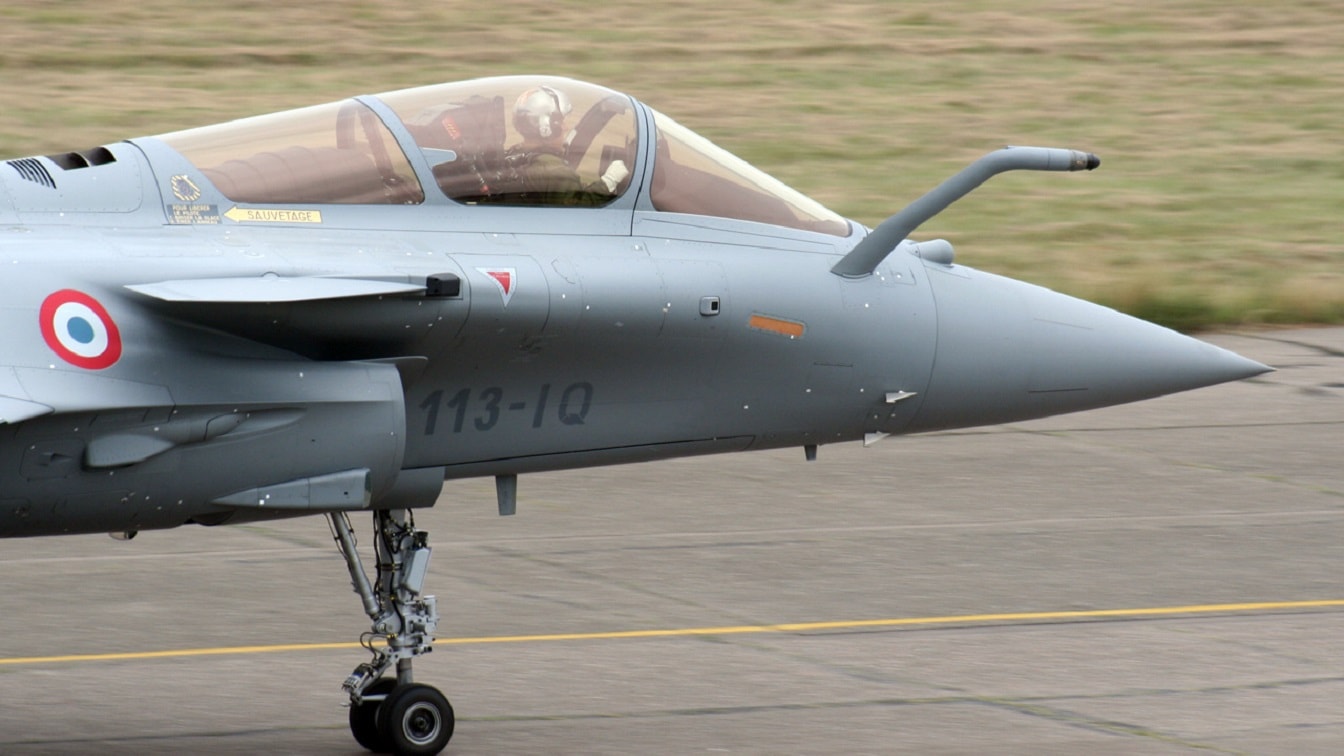
Dassault Rafale. Image Credit: Creative Commons.
But there hasn’t been any movement on the government of India’s proposed production of the F-21. And it probably isn’t coming any time soon. Indications are the Indians are leaning toward the Rafale.
About the Author: Steve Balestrieri
Steve Balestrieri is a National Security Columnist. He served as a US Army Special Forces NCO and Warrant Officer. In addition to writing on defense, he covers the NFL for PatsFans.com and is a member of the Pro Football Writers of America (PFWA). His work was regularly featured in many military publications.