
Russia’s Staggering Su-35 Losses In Ukraine
The Russian Air Force (VKS) has taken a beating since the invasion of Ukraine began in February 2022, and clearly, the Su-35 Super Flanker fighter is a big part of those numbers.
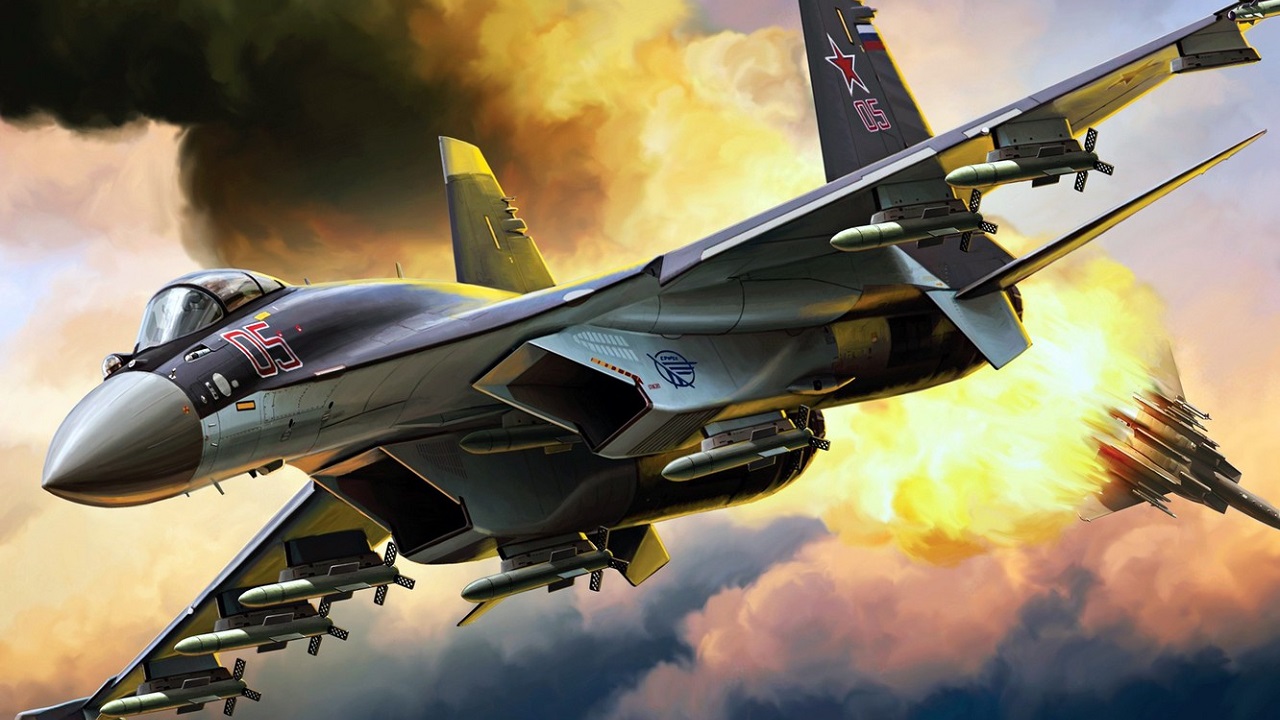
Artist rendering of a Russian Su-35 fighter. Image Credit: Creative Commons.
The overconfidence of the pilots and generals who planned the invasion has been an uncomfortable truth that the Russian government has yet to publicly face.
They expected to capture Kyiv within a couple of days and achieve total air superiority immediately.
But that never happened. Instead, Ukrainian defenses have been far more robust than anticipated and have exacted a toll, with air defenses that are far better than anyone thought possible. Now supplied with Western air defense platforms, the Ukrainians significantly targeted Russian aircraft in 2024.
The General Staff of the Armed Forces of Ukraine claims that 435 Russian aircraft have been shot down since the 2022 invasion by Russia. That number is considered higher than the actual losses.
However, the Oryx open-source intelligence tracker listed a total of 361 Russian airplanes and 166 helicopters destroyed during the Ukraine war as of January 2026, including eight Su-35 jets. However, that number is reported to be significantly higher by other sources.
Russia’s Su-35 Fleet Numbers
Russia possesses approximately 114 Su-35S fighter jets. This number is based on the latest estimates from sources like the World Directory of Modern Military Aircraft (WDMMA).
While some sources might cite slightly different figures, the consensus is that Russia’s Su-35 fleet is close to this number, although it’s worth noting that Russia has had some losses of the aircraft in the ongoing conflict in Ukraine.
Despite the claimed capability of a 4th-generation ++ aircraft, the Su-35 and Russian aviation have suffered in the skies of Ukraine. The Russian Aerospace Forces (VKS) have failed to establish air superiority.
This has led to the deadly war of attrition and a stalemate where the number of casualties has soared.
At least eight Russian Su-35 fighter jets have reportedly been lost in the ongoing conflict in Ukraine. Some sources suggest the number may be higher, with unconfirmed reports indicating more than 25 losses. Russia has lost more than 360 combat aircraft since the “Special Military Operation” began nearly four years ago.
Ukraine shot down one Su-35 last June, in the Kursk region, reportedly by an F-16, with video evidence of the wreckage emerging. The losses, whether through Ukrainian fire, friendly fire, or accidents, highlight the challenges faced by Russia’s air force in the conflict.
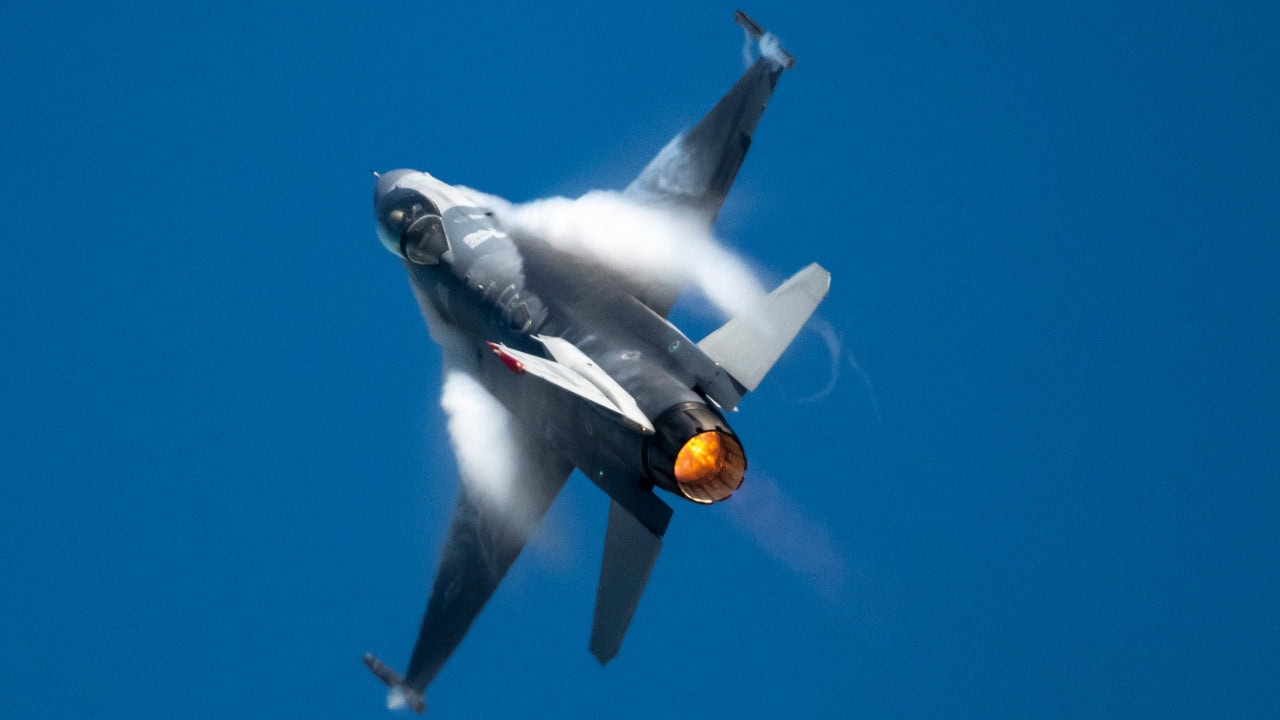
U.S. Air Force Capt. Ethan “Bantam” Smith, Pacific Air Forces F-16 Demonstration Team pilot, conducts a falcon turn during Misawa Air Fest at Misawa Air Base, Japan, Sept. 8, 2024. The demonstration team’s primary mission is to inspire goodwill and promote positive relations between the U.S. and partner nations across the Indo-Pacific region by showcasing displays of F-16 combat prowess and dedication to U.S. Air Force core values. (U.S. Air Force photo by Tech. Sgt. Peter Reft)
This is exacerbated by Russia’s difficulty in producing and replacing aircraft.
Number Of Su-35 Losses Varies by Source
Multiple sources indicate at least eight confirmed losses of Su-35s. If that number is correct, it has not yet reached critical status; however, unconfirmed reports suggest the number could be closer to 25 or even higher.
The Ukrainian military has claimed to have shot down 25 Su-35s since the invasion. While that number may be inflated, if it were close to that, it would represent near-catastrophic losses of nearly a quarter of Russia’s Su-35 fleet.
The Su-35 air superiority fighter has not met expectations. Initially, due to intense anti-aircraft fire, the Su-35s dropped glide bombs far out of range from SAM batteries over Ukraine, which was very effective. However, the Ukrainians have adapted their defenses.
The Ukrainian air defenses, now equipped with additional Western systems, have become more adept at intercepting glide bombs. Thus, the Flanker-E has no proper mission.
A Brief History of the Su-35 Flanker-E
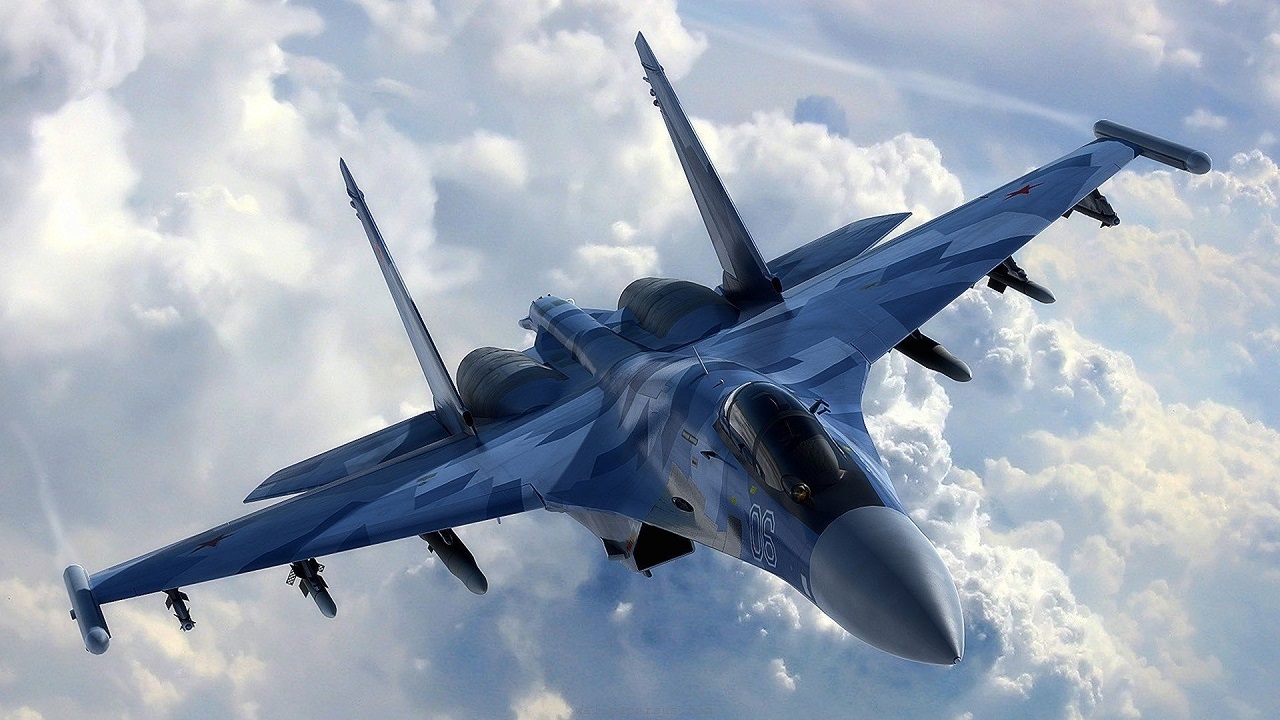
The Su-35 is an older fighter. It was initially designed to counter the U.S. F-15 Strike Eagle and F-14 Tomcat air superiority fighters in the early 1980s. The Flanker-Es have excellent speed (Mach 2.25, or 1726.3 MPH), a fly-by-wire design that makes them highly maneuverable, capable of 10g turns, and outstanding radar and weapons systems.
The Flanker-E can track up to ten targets and simultaneously fire several weapons. It has a dozen hardpoints for bombs or missiles.
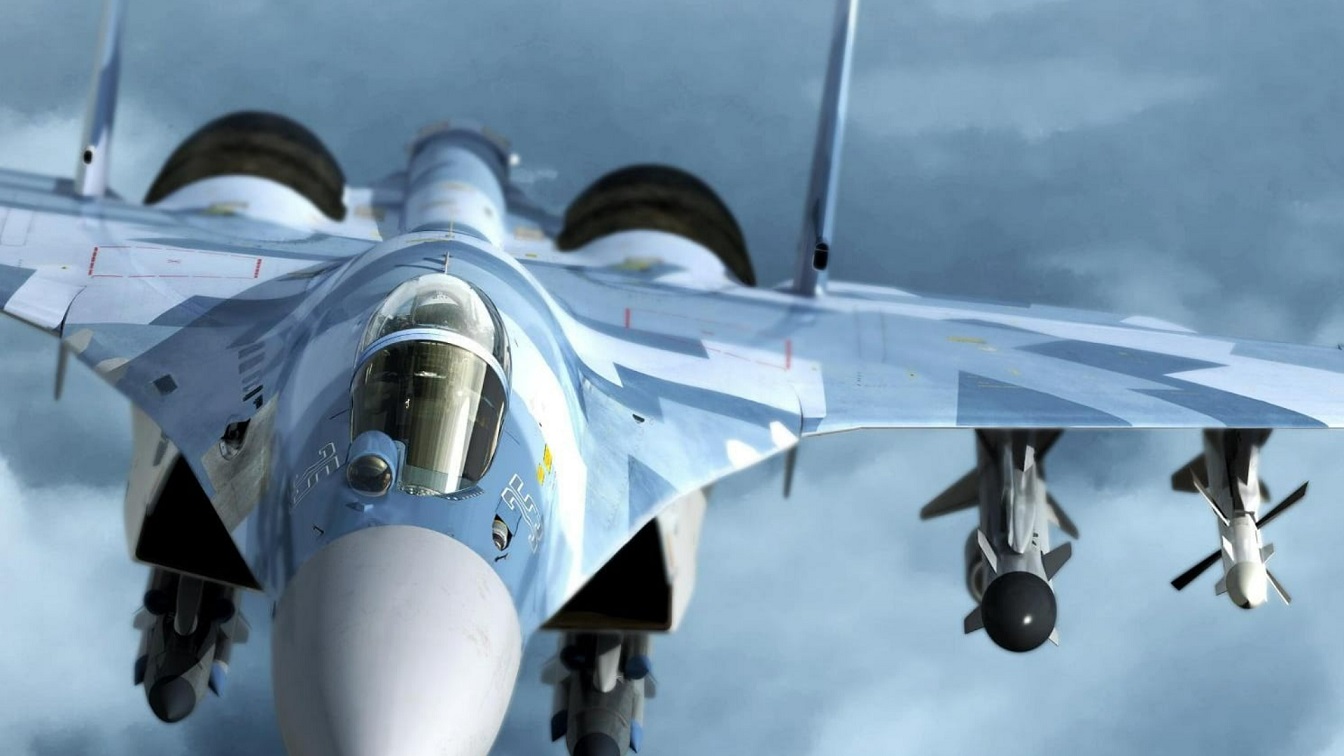
Su-35. Image Credit: Creative Commons.
It can fire various air-to-air and air-to-surface missiles, as well as laser-guided bombs, in engagements with enemy aircraft or in support of ground troops.
So why are the Russians losing so many?
Russia’s Losses Have Been Shocking To Moscow
The Ukrainian air defenses were considered far below the Russian air forces’ (VKS) capability to defeat them. However, Ukrainians proved to be much better and more adaptable than had been believed at the onset of the war.
Now armed with Western air defenses, including the American-built Patriot PAC-2 missile batteries, they have become much better at targeting and shooting down Russian military aircraft and forcing Russia to use more drones and long-range missiles to target Ukrainian targets.
One of the Su-35’s drawbacks is its maintenance-intensive design, reducing operational availability. Additionally, Russia’s Su-35 fleet is nearing the end of its useful lifespan.
Michael Bohnert of Rand wrote in August that the aircraft are wearing out much faster due to an increased operational tempo.
“In a protracted war, where one force tries to exhaust the other, it’s the total longevity of the military force that matters,” he wrote for Defense News. “And that’s where the VKS [Russian Air Force] finds itself now.”
Impact on Russia’s Capabilities and Manufacturing
The Su-35 is an advanced fighter jet, and these losses, along with other aircraft losses, are impacting Russia’s air combat capabilities in the conflict.
The downing of a Su-35 in the Kursk region, claimed by Ukraine, is significant as it may represent the first air-to-air kill of a Su-35 by a Ukrainian F-16, according to some military analysts.
According to Oryx, an open-source intelligence tracker, Russia has lost numerous advanced aircraft, including Su-35s. The Su-35, was developed from the Su-27 to match Western fourth-generation fighters like the F-15 Eagle and F-14 Tomcat. It has seen production halted and restarted due to economic constraints following the collapse of the USSR, as well as Western sanctions.
Losses are attributed to Ukrainian air defenses, including potential engagements with F-16s and other systems. Friendly fire incidents and accidents have also been reported.
The Su-35: A 4th-Generation ++ Fighter Or Just Overhyped
The Russians have struggled to replace their aircraft losses. In late June, however, it announced that the United Aircraft Corporation (UAC) had delivered a fresh batch of Su-35s. The exact number is unknown.
Rostec’s first deputy CEO, Vladimir Artyakov, was quick to sing the praises of the Su-35S’s capabilities.
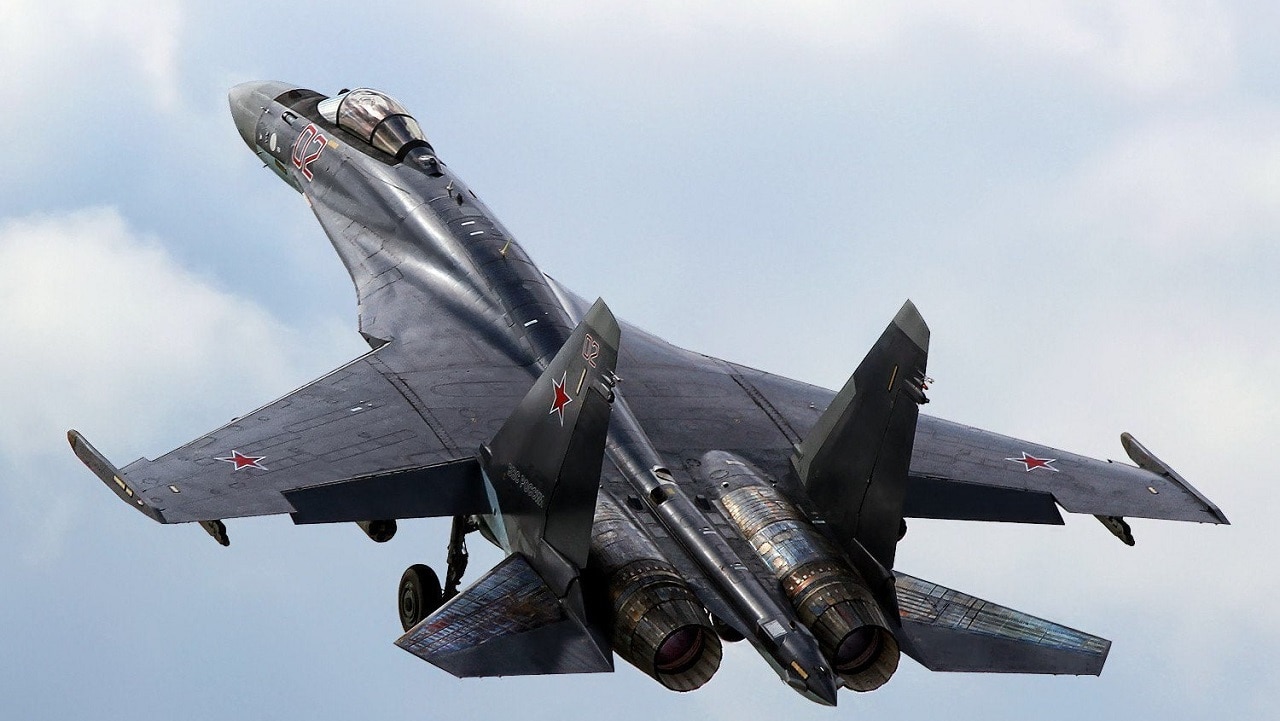
Su-35 fighter. Image Credit: Creative Commons.
“The new fighter jets of generation 4++ have passed a full cycle of factory tests in various operational regimes and flew to the deployment airfield,” Artyakov said, who added that Russia’s pilots have praised the “Superflanker” as being the best of its class.
“The fighter jets display the best flying qualities, excellent characteristics of navigational complexes, and sights. The craft fulfilled all missions and bring the victory closer,” Artyakov said, according to Russian state media Tass.
However, in a post by the Aviation Geek Club writer Dario Leone, he excoriated the Su-35, calling it the most overhyped 4th-generation fighter aircraft.
“It’s marketed as ‘world-beating’ – something it doesn’t come close to,” Abhirup Sengupta, an aviation expert, said.
“Despite being marketed as 4++ gen, Su-35 has the least capable avionics suite among its competitors. It’s the only major 4th-generation aircraft without an AESA radar or any form of Sensor Fusion.”
“The Irbis-E is marketed as having a 350 km range against 3 m^2 targets, while in reality that’s only in cued-search in a tiny FoV. What’s rarely stated is that in normal volume search that range shrinks down to 200 km.
“More importantly, Su-35’s radar has a maximum targeting range of 250 km – even for a B-52-like target.
“There are many 4th gen. aircraft that have some aspect of them hyped up to a degree, but none come close to the extent of hype with Su-35 and Flanker family in general. Look beneath the propaganda, and they really don’t excel anywhere outside maybe air shows.”
Significance Of the F-16 Shootdown
The loss of the Su-35 in June to an American-made F-16 is noteworthy for several reasons. First of all, it was Russia’s first loss of the “Super Flanker” in air-to-air combat. All previous losses had been from surface-to-air missiles or ground fire.
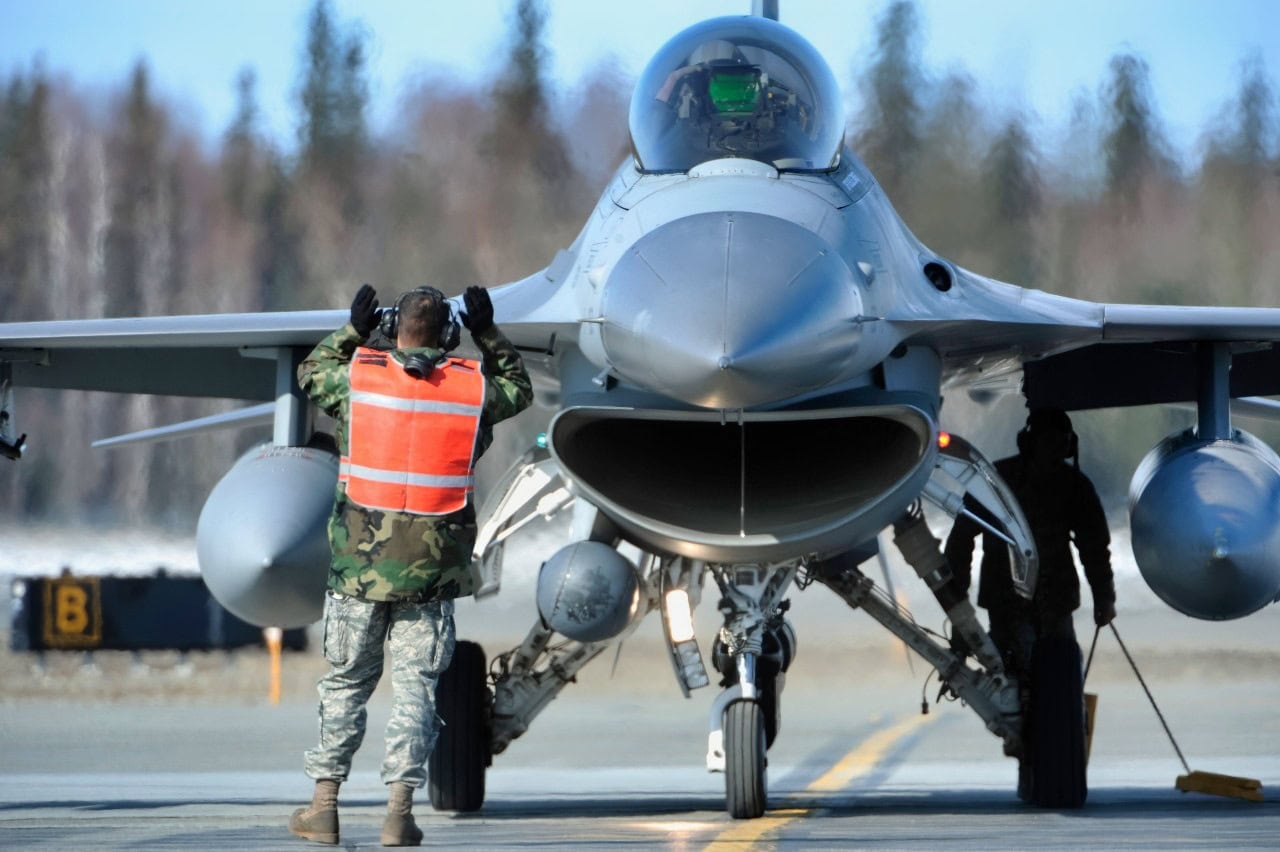
F-16 Fighter. Image Credit: Creative Commons.
Later reports noted that the F-16 received targeting data on the downed Su-35S from a Swedish-made Saab 340 airborne early warning and control (AEW&C) aircraft.
In addition, the Su-35S was likely destroyed by an AIM-120 AMRAAM (Advanced Medium-Range Air-to-Air Missile). Designed to operate as both a beyond-visual-range (BVR) and within-visual-range (WVR), the AIM-120 employs inertial guidance and active radar homing for very accurate target acquisition. Its fire-and-forget capabilities also enable the launching aircraft to disengage immediately.
Reports suggest issues with Russian command and control, including friendly fire, and Russia’s tactics of flying close to the front lines for bombing runs.
The loss rate for top-tier jets such as the Su-35 has become unsustainable, prompting Russia to prioritize new deliveries to maintain fleet numbers.
About the Author: Steve Balestrieri, Defense Expert
Steve Balestrieri is a National Security Columnist. He served as a US Army Special Forces NCO and Warrant Officer. In addition to writing on defense, he covers the NFL for PatsFans.com and is a member of the Pro Football Writers of America (PFWA). His work was regularly featured in many military publications.