
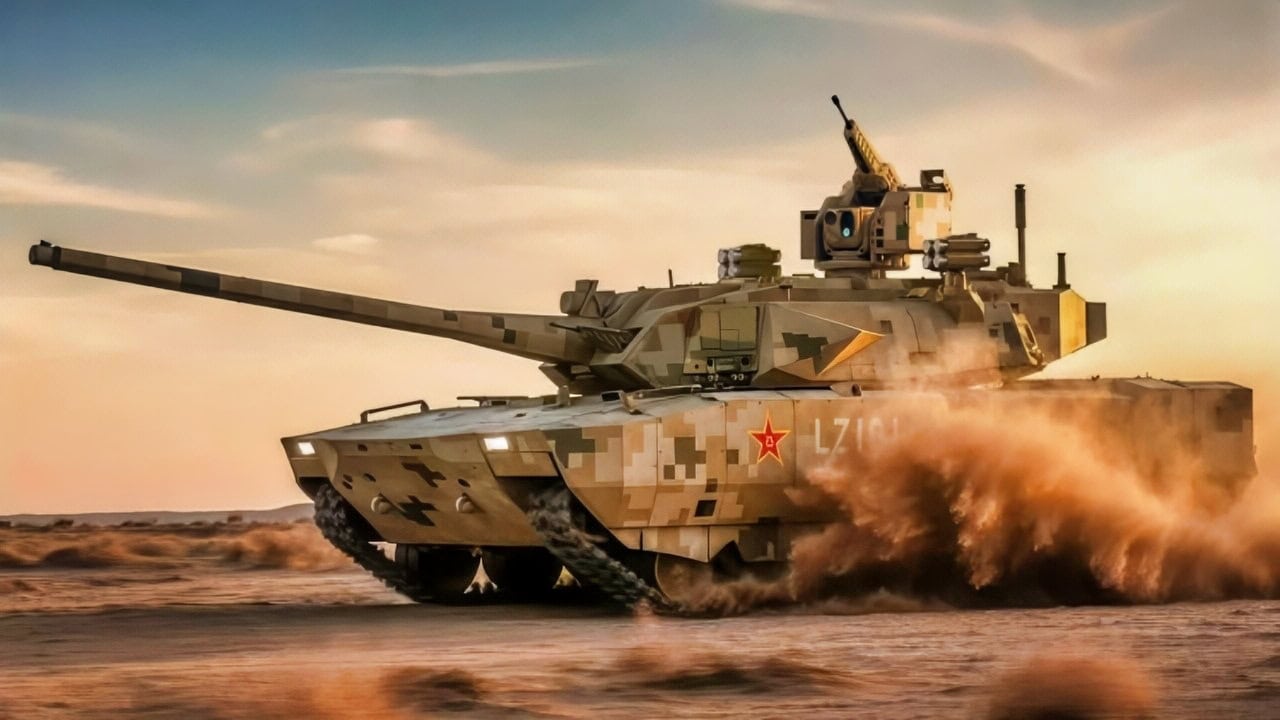
Summary and Key Points: China’s Type 100 stunned analysts when it rolled through Beijing’s Victory Day parade last September, an unmanned-turret, hybrid-electric tank built for the drone age. Ten months later, it is in service, and the U.S. Army’s own threat-analysis enterprise has published a formal assessment of it. The verdict cuts both ways: the Army credits the tank as the centerpiece of a more survivable and lethal Chinese armored force, then details exactly where American forces can break it, from battery endurance to fragile high-voltage cabling. The twist is that the Army is racing to field its own tank built on the same architecture, which makes its list of Chinese weaknesses read like a warning to itself.
China’s Type 100 Tank: A Bad Idea?
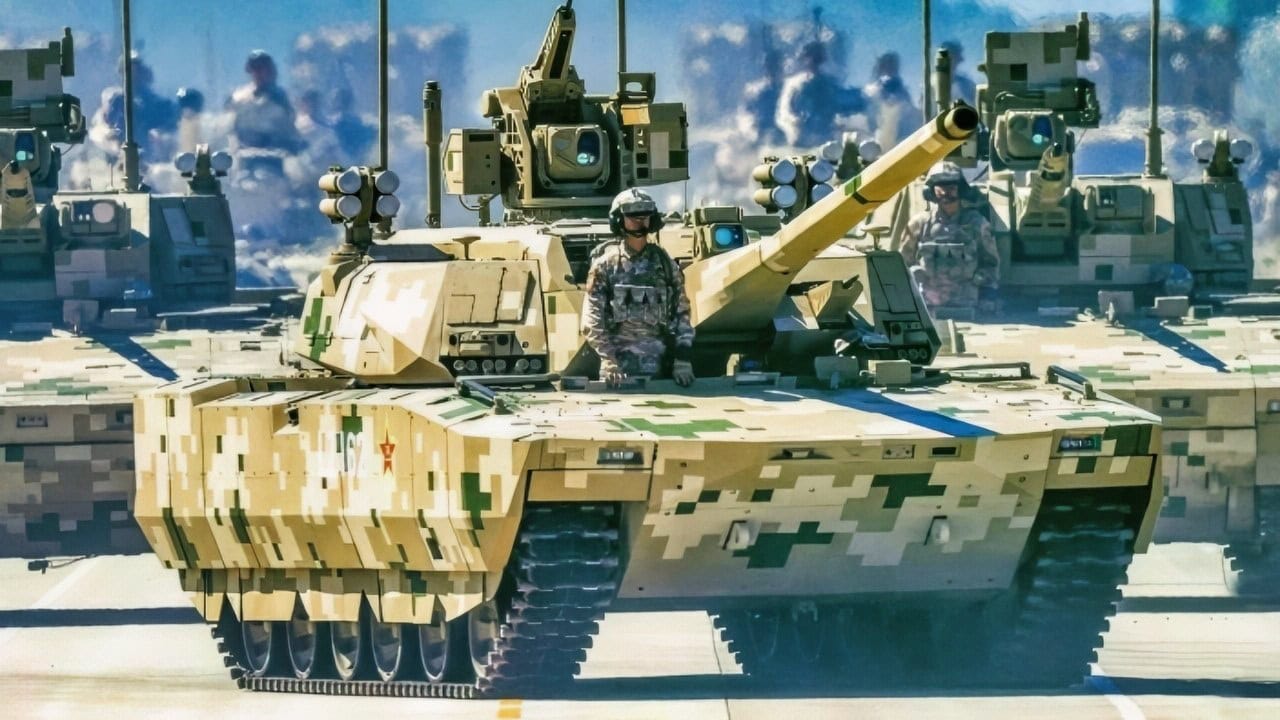
China Type 100 Tank. Image Credit: Creative Commons.
When the Type 100 debuted in Tiananmen Square, the safe assumption was that the world would wait years to learn whether it was real. Instead, the tank moved from parade piece to fielded system with unusual speed, and the Pentagon has now done something more useful than speculate. The Army’s Operational Environment enterprise, the organization charged with characterizing the threats American soldiers will face, published an assessment of China’s new hybrid-electric armor this spring, and it deserves attention on both ends: what it concedes and what it targets.
What the Army Says the Tank Does Well
The assessment does not condescend. It describes the fielding of the Type 100, designated ZTZ-100, alongside a hybrid variant of the older Type 99A, signaling a People’s Liberation Army armored force more survivable, lethal, and powerful than those of many rivals. The tank’s hybrid diesel-electric drive, rated at around 1,500 horsepower, allows silent movement on electric power, cutting the acoustic and thermal signatures that have proven fatal to armor in Ukraine, and generates the electrical surplus that active protection radars, jammers, and sensors demand. Crew members wear augmented-reality headsets fused with feeds from reconnaissance drones, turning the tank, in the Army’s telling, into a networked command node meant to fight beyond visual range rather than a standalone gun platform.
The underlying machine matches the concept. Developed by the 201st Research Institute and built at the Baotou plant, the Type 100 mounts an autoloaded 105mm gun in an unmanned turret, firing rounds at a claimed 1,706 meters per second that Chinese sources say rivals larger 120mm and 125mm guns, a claim worth attributing rather than accepting. The crew, generally reported as three in a sealed capsule in the hull, though one detailed technical analysis argues the design may operate with two and an AI gunner, sits apart from the ammunition, protected by interceptors cued by four radar panels and a laser dazzler system. At roughly 35 to 45 tons, depending on the estimate, it is a medium tank by weight, a deliberate break from the heavyweight arms race. Beijing calls it fourth-generation, a label with no agreed international standard behind it.
Where the Army Says It Breaks
Then comes the targeting memo. The same assessment concludes that hybrid-electric tanks pair their new strengths with technical, logistical, and doctrinal vulnerabilities that U.S. forces can exploit. Finite battery endurance tightly limits how long the tank can actually operate silently, creating predictable windows when it must run its diesels or expose itself to recharge, precisely when a quiet tank becomes a loud, hot target.
The battery banks and power electronics add weight and volume that constrain transportability and eat into payload. And the complex high-voltage cabling and cooling systems are vulnerable to battle damage and difficult to repair forward, a serious liability for a vehicle meant to fight far from depots.
Independent analysts add a blunter caution. The Ukrainian outlet Militarnyi, in an otherwise respectful technical review, warned that the design’s complexity, combined with Chinese manufacturing quality, could trigger cascades of equipment failures, with the PLA likely leaning on mass production and rapid replacement rather than field repair. The tank’s sophistication, in other words, is also its exposure.
Real, Fielded, and Cheap
None of that makes the Type 100 a paper tiger. Training footage released in early May indirectly confirmed the tank’s entry into operational service, with low-rate production underway and cost estimates running about $7.5 million per tank, projected toward $6 million at scale, figures analysts derive from subsystem comparison rather than official disclosure. A design developed between roughly 2016 and 2022 reached the field within about four years, the kind of industrial velocity that has already redrawn the global tank market when South Korea demonstrated it.
One respected expert analysis argues China has moved past the tank as a lone combat unit toward the tank as one component of a combat system, a 35-to-40-ton machine that can limp home on electric drive even with its diesel shot out. Speed, cost, and doctrine, taken together, are the story: China conceived a new kind of tank and fielded it while Western programs were still ranking last generation’s champions.
The Mirror: America Is Building the Same Tank
Here is the part that gives the Army’s assessment its edge. The Abrams has dominated the world’s tank debates for four decades, and its successor breaks with almost everything that made it familiar.
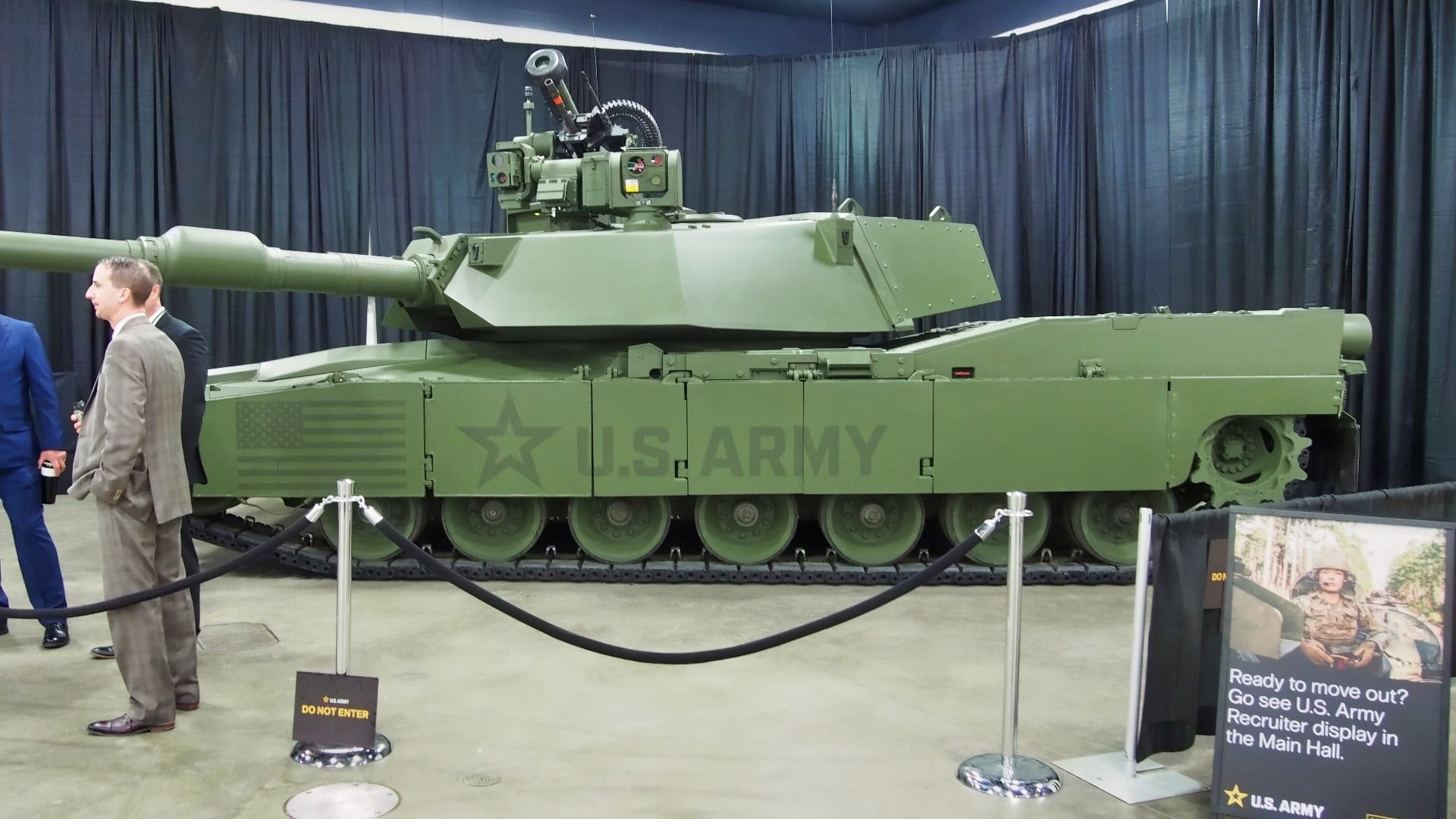
M1E3 Abrams Tank. Taken by 19FortyFive.com
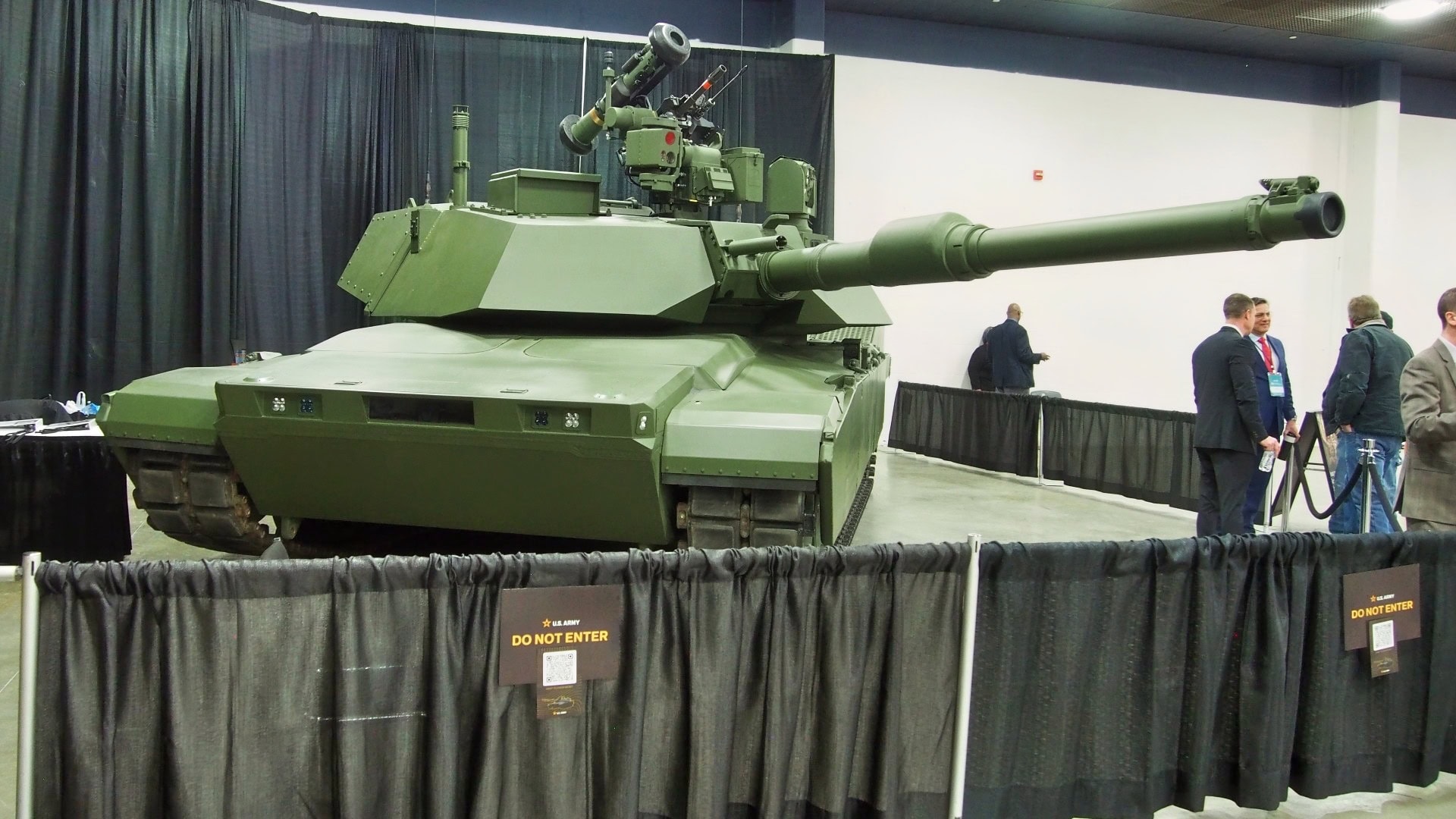
M1E3 Abrams Tank. Taken by 19FortyFive.com
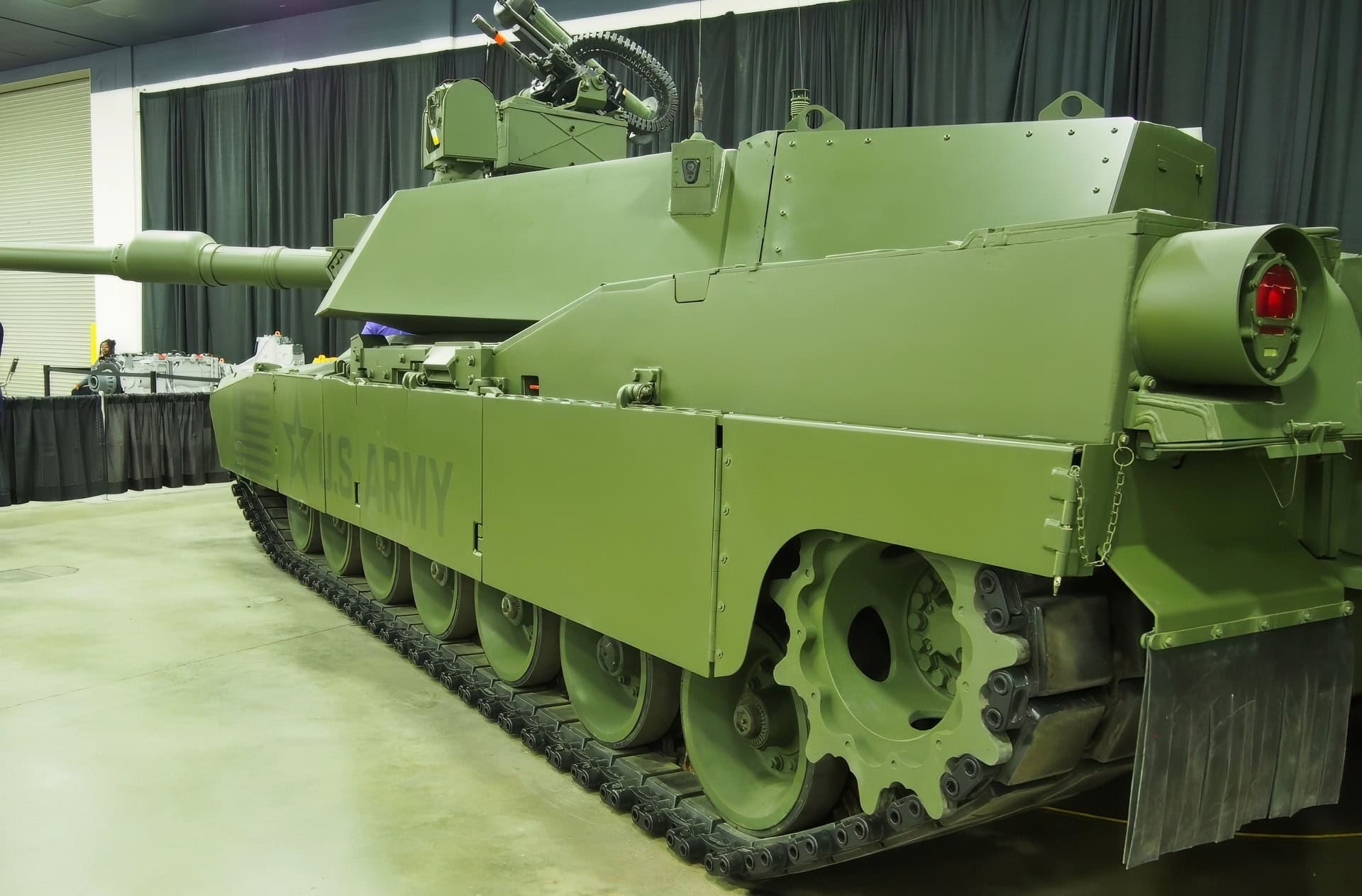
M1E3 from Detroit Auto Show. 19FortyFive.com Original Image.
The service’s next tank, the M1E3 Abrams, will carry a hybrid diesel-electric powertrain, an unmanned turret, and an autoloader, with a three-person crew moved into the hull and a target weight near 60 tons, lighter, quieter, and more deployable, protection built in rather than bolted on. The program has been accelerated by roughly five years, with the first early prototype already built and testing beginning in 2026, a $723.5 million budget request behind it, and prototypes headed to soldiers for field evaluation. 19FortyFive inspected the M1E3 up close at the Detroit Auto Show in January, where its silent hybrid drive was the headline feature.
Which means every weakness the Army cataloged in China’s tank, battery endurance windows, power-electronics fragility, forward-repair burdens, now describes the architecture of its own.
Task & Purpose framed the risk of the whole approach as resulting in “a 60-ton target built for the last war.”
The convergence is genuine: Washington and Beijing have looked at the same drone-saturated battlefields and drawn the same design conclusions, and the next great tank rivalry will be between machines that are, in engineering terms, cousins.
The Army’s assessment of the Type 100 is the most honest document yet in that competition, a scouting report on the enemy that doubles, whether the authors intended it or not, as a checklist of everything America’s own next tank must get right.
About the Author: Harry J. Kazianis
Harry J. Kazianis (@Grecianformula) was the former Senior Director of National Security Affairs at the Center for the National Interest (CFTNI), a foreign policy think tank founded by Richard Nixon based in Washington, DC. Harry has over a decade of experience in think tanks and national security publishing. His ideas have been published in the NY Times, The Washington Post, The Wall Street Journal, CNN, and many other outlets. He has held positions at CSIS, the Heritage Foundation, the University of Nottingham, and several other institutions related to national security research and studies. He is the former Executive Editor of the National Interest and the Diplomat. He holds a Master’s degree focusing on international affairs from Harvard University.

