
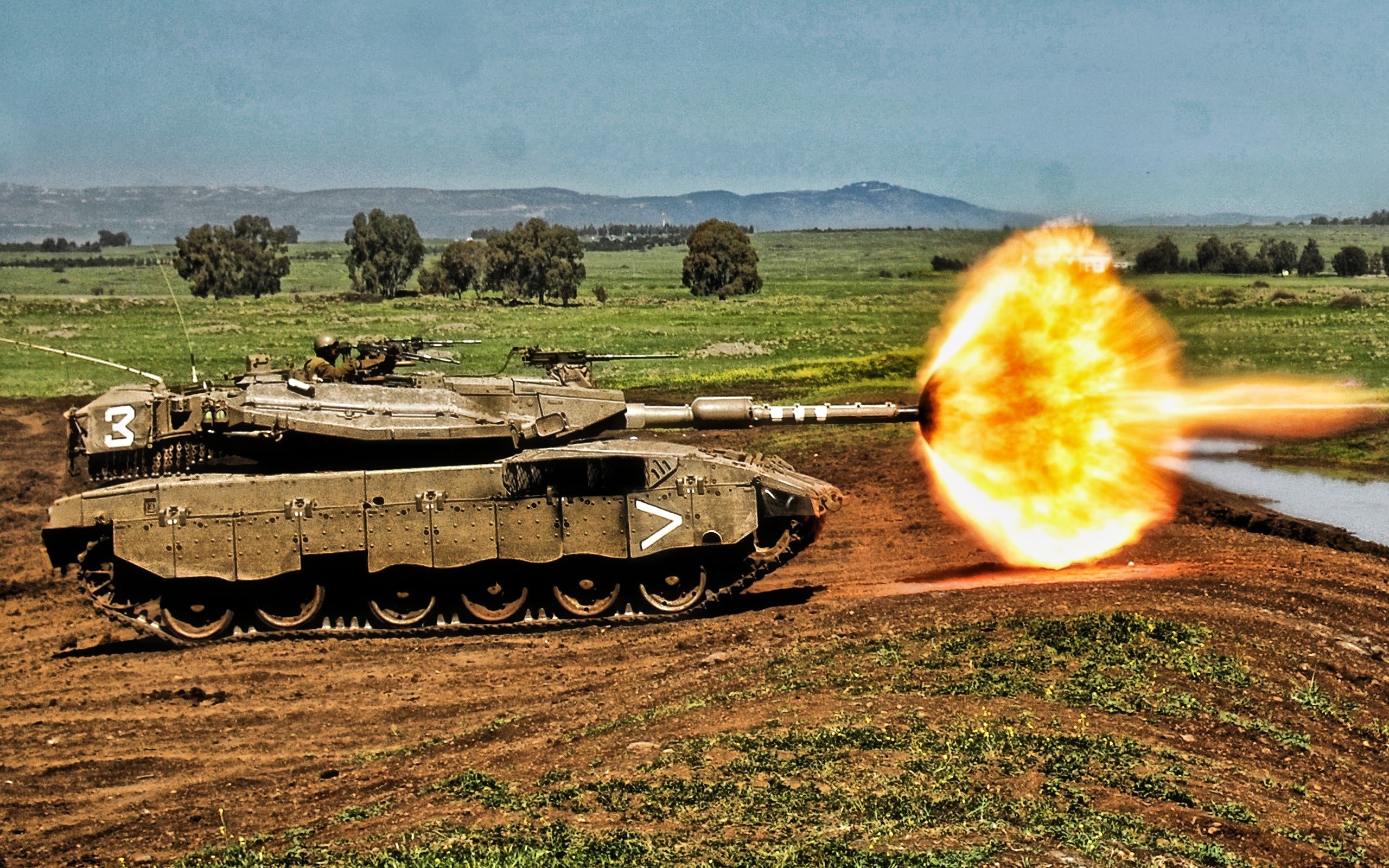
Summary and Key Points: In 2026, the world’s top tanks are defined by a mix of protection, firepower, mobility, and digital warfare tools.
-This ranking highlights five standout platforms: Germany’s Leopard 2, America’s M1A2 Abrams, Israel’s Merkava Mk 4 Barak, South Korea’s K2 Black Panther, and France’s Leclerc XLR.
-Each brings a different design philosophy, from heavy armor and hard-kill active protection to advanced sensor fusion, networking, and crew-assist automation.
-The result is a modern tank battlefield where survivability and data-sharing matter as much as raw gun power, and where upgrades are keeping legacy designs highly relevant against new threats.
The 5 Best Tanks in Service for 2026, Summed Up in Firepower and Armor
Modern technology has given tanks capabilities that were unthinkable during World War II. In 2026, the West and its allies remain at the forefront of tank engineering, producing some of the most lethal and best-protected tanks in the world. Here is a list of the top five best tanks currently in use. These entries are judged by their firepower, protection measures, digital systems, and mobility.
Unfortunately, not every tank can make the top five, so tanks like the Challenger 2 or the Japanese Type 10 are left out despite being very good.
Leopard 2
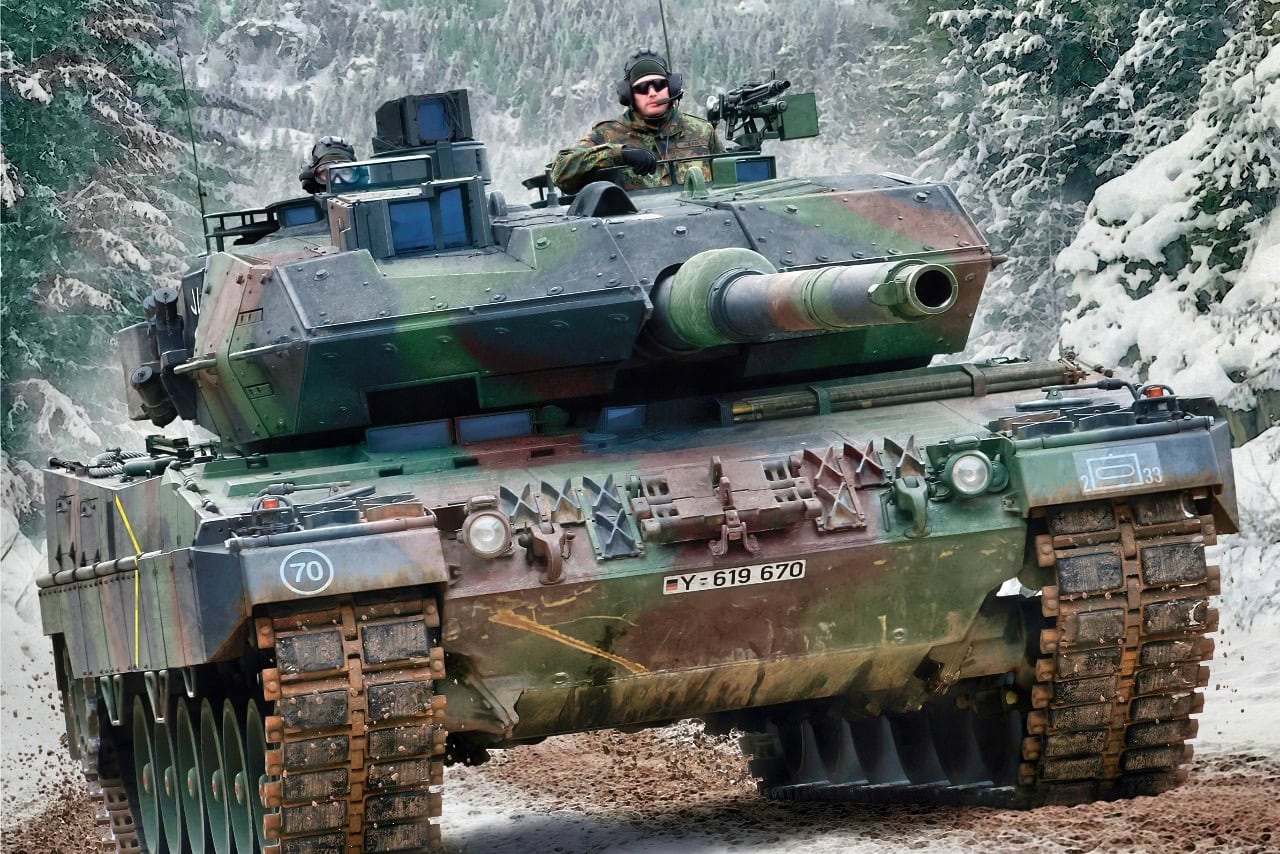
Leopard 2 Tank. Image Credit: Creative Commons.
The Leopard 2 is one of the most widely adopted tanks in the NATO alliance.
The 2A7V variant is already in service with Germany and Denmark.
It incorporates major upgrades, including hull-mine protection, modular glacis and roof armor, a 20 kW auxiliary power unit for silent-watch operations, third-generation Attica thermal imagers for commander and gunner, and the SPECTUS driver’s multispectral system.
All these systems are designed to enhance survivability and situational awareness in high-intensity or urban combat environments. Germany’s Bundeswehr has already inducted the variant into frontline units such as Panzerbataillon 393.
The tank uses a Rheinmetall Rh-120 L55A1 gun capable of handling higher chamber pressures for advanced kinetic penetrators. The 2A8 iteration stands out by making the EuroTrophy active protection system (APS) a standard fixture. This makes the Leopard 2A8 the first mass-produced European MBT to ship with a fully combat-proven hard-kill APS integrated into its baseline configuration.
With renewed industrial capacity and steady new-build production, Leopard 2 variants remain Europe’s armored backbone.
The M1A2 Abrams
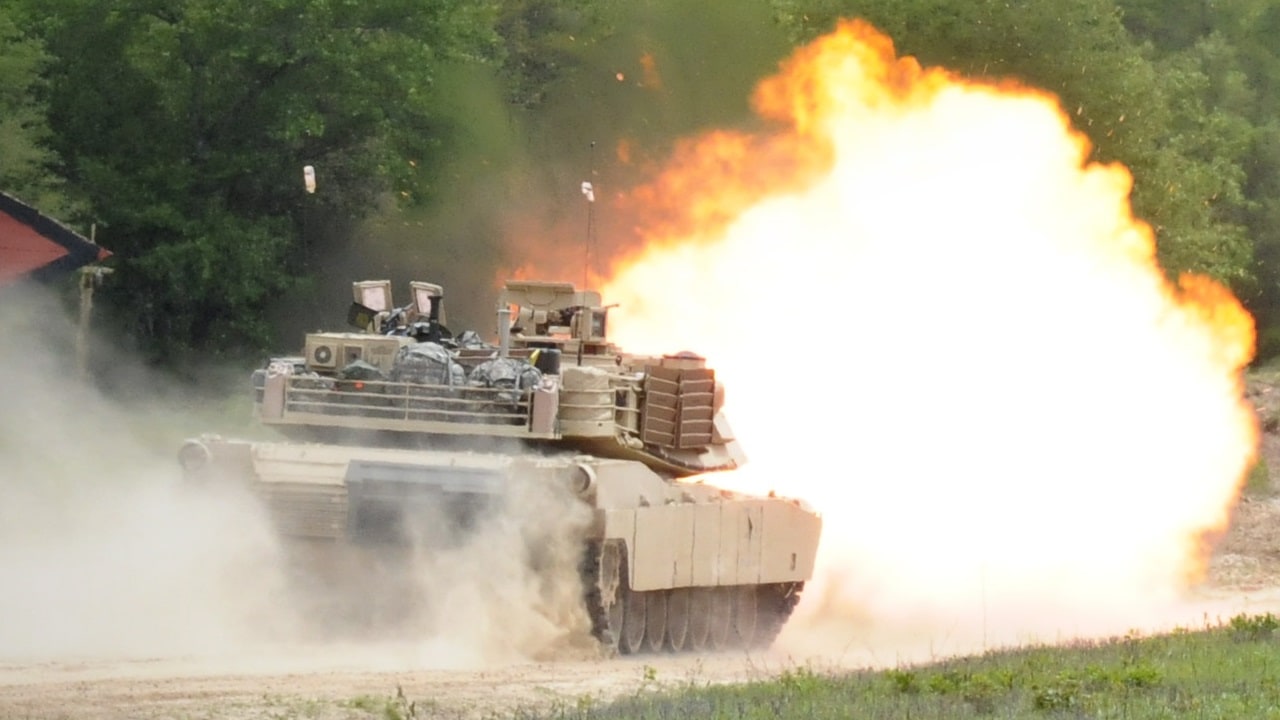
M1 Abrams Tank like in Ukraine. Image Credit: Creative Commons.
The American Abrams M1A2 SEPv3 remains one of the most lethal and survivable Western MBTs, when provided its full suite of improvements.
The SEPv3 configuration introduces significantly upgraded digital electronics, improved armor, better power distribution, the Joint Tactical Radio System for modern networking, and improved reliability and maintainability across the platform. Its M256 120-mm smoothbore cannon can fire the Advanced Multi-Purpose round and the high-energy M829A4 penetrator, maintaining decisive overmatch in long-range direct-fire engagements.
The M1A2 SEPv3 is also compatible with the Rafale Trophy APS, which further enhances the tank’s survivability against anti-tank guided missiles. The downside is that all the add-on packages balloon the tank’s weight, which is a common problem with Western tanks but is especially prominent in the Abrams line.
The future M1E3 integrates many of these packages into the hull from the get-go, seeking thereby to eliminate a lot of dead weight. It is still in its pre-prototype phase and has a long way to go before it enters service.
Merkava Mk 4
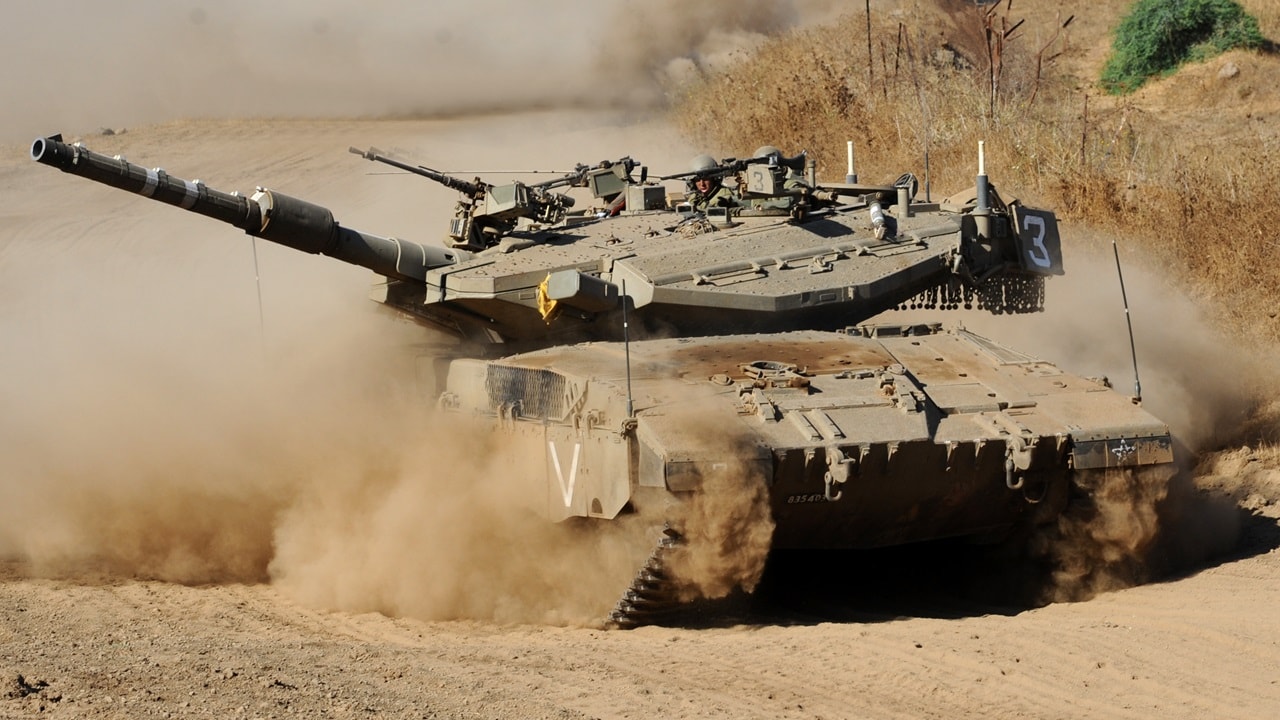
Merkava Tank from Israel
Israel’s Merkava Mk 4 “Barak” is the product of an entirely different philosophy. The tank blends proven heavy armor concepts with human-machine teaming. The Barak adds an AI-assisted mission computer capable of automated threat prioritization, updated sensors, and virtual-reality-style combat interfaces.
The crew uses the IronVision helmet for a 360-degree view, effectively letting tankers see through the armor. This integration dramatically reduces cognitive load, speeds up target engagement, and allows crew members to maintain orientation even in dense urban terrain.
The Barak also retains the battle-tested Trophy APS, which remains the most widely and repeatedly combat-tested hard-kill system in the world.
However, the fighting in Gaza has shown that even the best APS-equipped tanks can be vulnerable to modern First Person View drones and top-attack munitions, prompting Israel to explore additional roof armor, counter-Unmanned Aerial System capabilities, and directed-energy options. The Barak stands out for its unrivaled crew-aid automation, sensor fusion, and APS maturity. It might be the most technologically advanced MBT.
South Korea’s K2 Black Panther
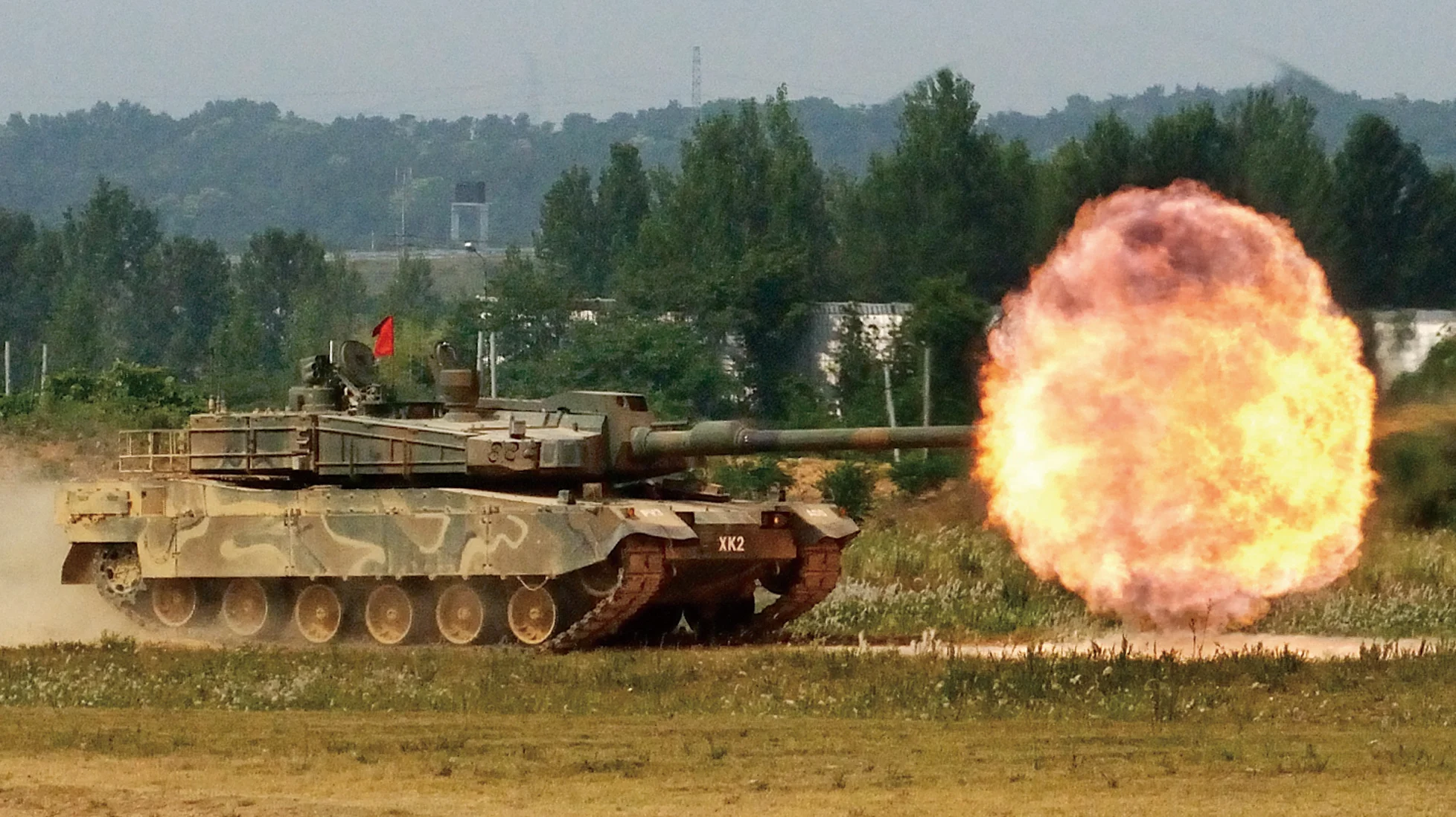
K2 Black Panther, the most expensive tank on Earth.
South Korea’s K2 Black Panther also is often cited as one of the most advanced MBTs in use. It prioritizes mobility, advanced sensing, and automation.
Developed by Hyundai Rotem, the K2 features a 120-mm L/55 gun with an autoloader, a millimeter-wave radar-assisted fire-control suite, and a hydropneumatic suspension that can raise, lower, or tilt the hull to exploit hull-down positions and complex terrain.
Its 1,500-hp diesel engine gives it excellent acceleration and high top speeds on and off road. With a combat weight of roughly 56 tons, the K2 is substantially lighter than most contemporary Western counterparts, improving its tactical and operational mobility.
South Korea equips the K2 with composite and modular armor packages and soft-kill protection suites, and export variants such as Poland’s K2PL include even more robust survivability enhancements.
Poland’s massive multi-year order, involving local production and technology transfer, ensures the K2 family will mature further and remain strategically relevant in Europe for decades.
Combined with strong battlefield agility and a digitally native design, the K2 is one of the most forward-looking MBTs in mass production.
The Leclerc

France’s Leclerc Main Battle Tank. Image Credit: Creative Commons.
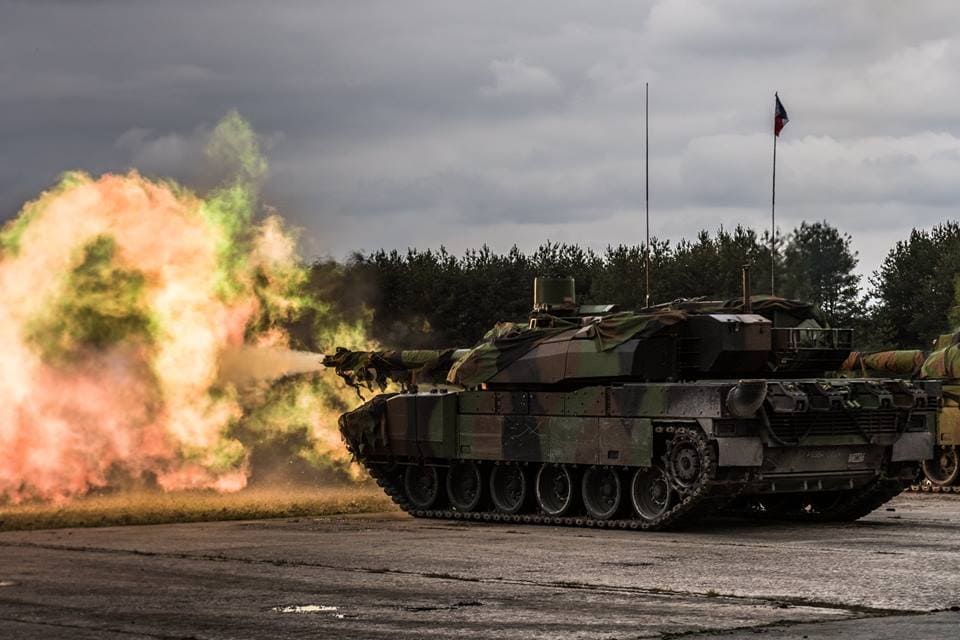
Leclerc Tank. Image: Creative Commons.
Last but not least is France’s Leclerc main battle tank. The Leclerc XLR introduces further digitization, ergonomic improvements, and modernized protection as part of the national SCORPION force-networking initiative.
The XLR is an extensive upgrade of the original Leclerc and includes the SCORPION Information and Command System enabling seamless real-time data-sharing with other French vehicles such as the Griffon, Jaguar, and Serval. The modernization package introduces upgraded modular armor for both turret and hull, a remote weapons station for urban combat, improved mine/improvised explosive device protection, and the CONTACT radio suite for integrated battlefield communications.
France has committed to upgrading approximately 200 Leclercs by 2030–35.
The autoloader, long a hallmark of the French design philosophy, complements the MBT’s strong mobility and compact layout. By tying the tank into the wider SCORPION digital ecosystem, the XLR pushes the Leclerc beyond traditional platform-centric warfare toward modern networked, multi-domain operations.
About the Author: Isaac Seitz
Isaac Seitz, a Defense Columnist, graduated from Patrick Henry College’s Strategic Intelligence and National Security program. He has also studied Russian at Middlebury Language Schools and has worked as an intelligence Analyst in the private sector.