
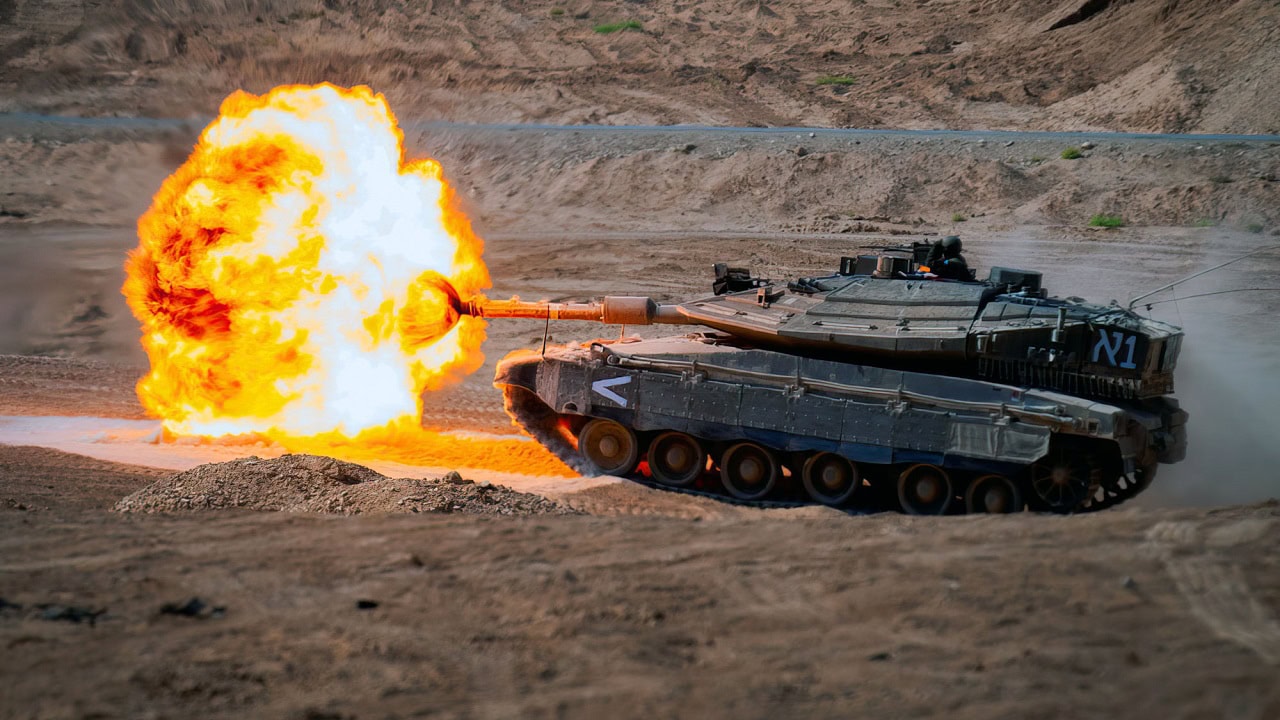
Key Points and Synopsis: Israel may be small on the map, but its defense industry is anything but—and the Merkava tank is a signature example.
-After early reliance on foreign partners faltered, Israel was pushed to design its own main battle tank with one priority above all: crew survivability, shaped by hard lessons from the 1973 Yom Kippur War.
-Adopted in 1979, the Merkava has evolved through multiple variants, adding improved electronics, “see-through” situational awareness, and upgraded sights and targeting.
-The standout is Trophy, an active protection system that helps defeat anti-tank threats and has proven influential well beyond Israel.
Is the Merkava the Best Tank on Earth? Here’s the Case
Though Israel may be the size of the state of New Jersey in the United States, the Middle Eastern nation’s defense output is anything but tiny. From main battle tanks and munitions to air defense systems and targeting pods, Israeli military innovations are widely respected across the globe.
The Jewish state’s proximity to hostile adversaries has certainly led it to prioritize defense-related innovations. To ensure its own survival since its founding more than three-quarters of a century ago, Israel has retained its position as a global leader in the military technology space. The Merkava main battle tank (MBT) undoubtedly plays a leading role in this endeavor.
Upon its founding in 1948, Israel quickly became the target of hostile actors aiming to dismantle the newly established Jewish state. Around this time, the Israeli Army began seeking foreign partnerships in an effort to bolster its military stockpiles across the board.
By 1960, Israel was collaborating with the British Army to field a joint Chieftain tank iteration that could be domestically produced in the Middle East. While two prototypes were delivered to the Jewish state as part of this program, the British Army ultimately withdrew from its commitment, leaving Israel’s armored corps empty-handed.
Forced to look inward to fulfill its MBT needs, the Merkava was born. And some say it might be the best tank on Earth today.
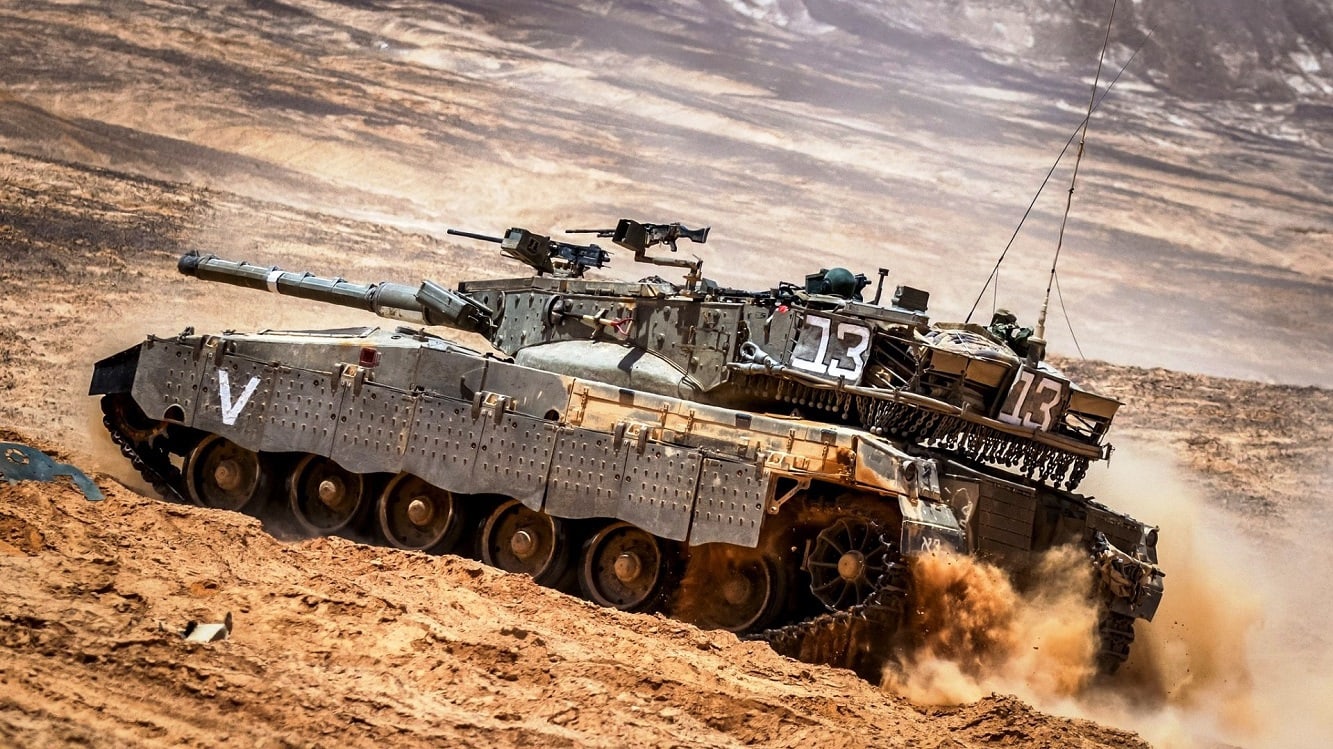
Merkava Tank. Image Credit: Creative Commons.
The Merkava’s Origin Story
The outcome of the 1973 Yom Kippur War had devastating consequences for Israel’s mechanized armor. Specifically, Israel’s tank units suffered greatly when Egyptian and Syrian forces carried out coordinated surprise attacks from the Sinai Peninsula and the Golan Heights.
Given these losses, Israel’s first domestically designed MBT prioritized survivability. The conception of the Merkava was spearheaded by Israel Tal, who served as a brigade commander in the IDF. By the end of the 1970s, initial images of the Merkava prototype were released to the public, and the tank was officially adopted by the IDF in 1979.
The Merkava Tank’s Basic Specs
Year Introduced: 1979
Number Built: Mark 1: 250, Mark 2: 580, Mark 3: 780, Mark 4: 360 in service + 300 units being delivered
Length: 9.04 m or 29.7 ft (incl. gun barrel), 7.60 m or 24.9 ft (excl. gun barrel)
Total weight battle-ready: 65 tonnes (143,000 pounds)
Suspensions: Helical spring
Engine: MTU 12V883 1119 kW (1501 hp) turbocharged diesel engine (4,5)
Armament: Payload capacity of 48 rounds
Top Speed: 64 km/h (40 mph) on road, 55 km/h (34 mph) off road
Range: 500 km (310 mi)
Crew: Four (commander, driver, gunner, and loader)
More Tank Details
The Merkava has remained Israel’s primary armored vehicle in combat despite nearly half a century of service.
Over the years, the formidable MBT has undergone numerous facelifts to ensure its relevance in the modern era.
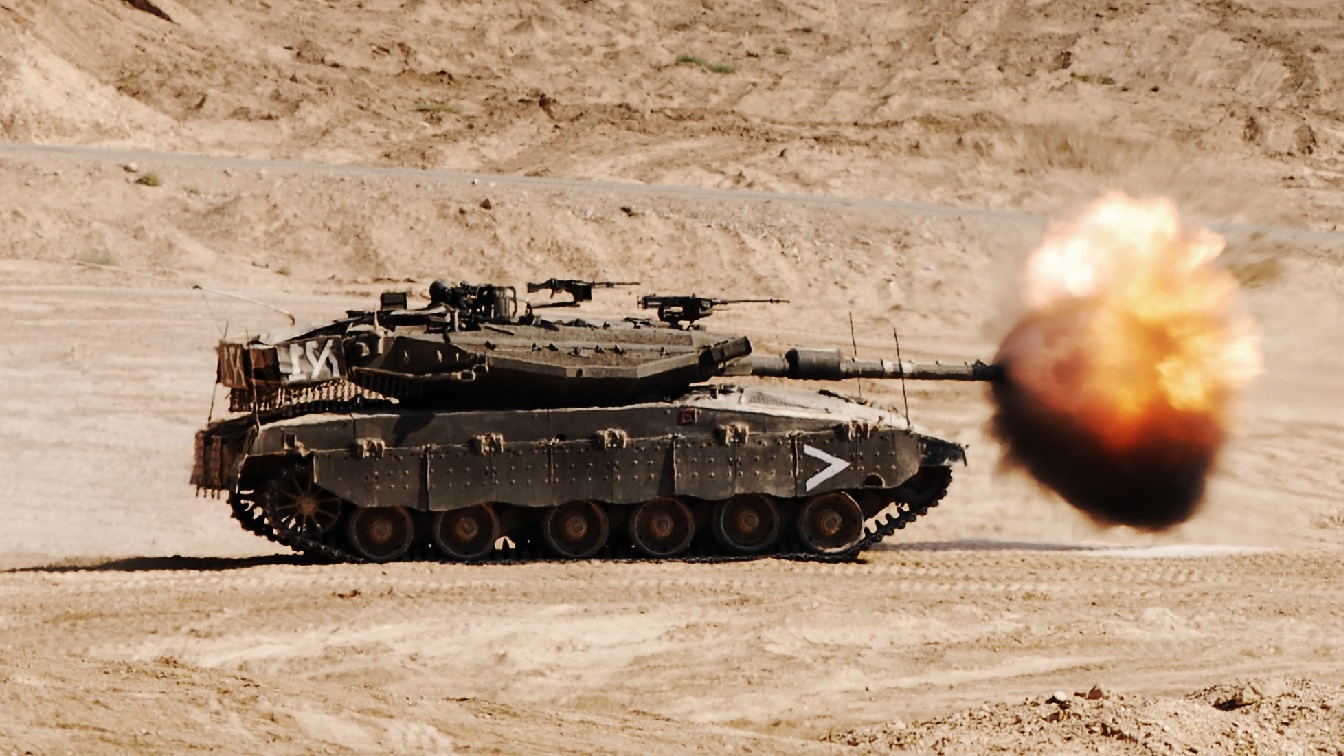
Merkava Tank Firing. Image Credit: Creative Commons.
Newer Merkava iterations feature cutting-edge technologies like the Elbit helmet displays, which “generate an image that enables the crew to ‘see through’ the vehicle’s armor,” as the manufacturer likes to say.
Elbit’s role in maintaining the Merkava’s edge is ongoing. In fact, the manufacturer signed a deal with the IDF last month worth roughly $210, ensuring continued upgrades to the tank series.
According to the President and CEO of the company, Col. (Res) Bezhalel Machlis, “Elbit Systems will carry out an extensive renewal of the electronic assemblies of the tanks to extend their operational service life, as well as the upgrade and enhancement of multiple onboard systems. Among these are high‑performance, lightweight, AI‑enhanced electro‑optical sights that provide panoramic day‑ and night‑time observation, along with advanced target detection, acquisition, and tracking capabilities.”
Additionally, “[the] contracts also include the supply of spare parts and the provision of comprehensive maintenance and support services.”
What About Trophy
When it comes to the Merkava’s unparalleled specs and capabilities, the Trophy Active Protection System is a stand-out.
The operational system defends the Merkava against a wide array of anti-tank threats while enhancing the armored vehicle’s ability to detect adversarial targets.
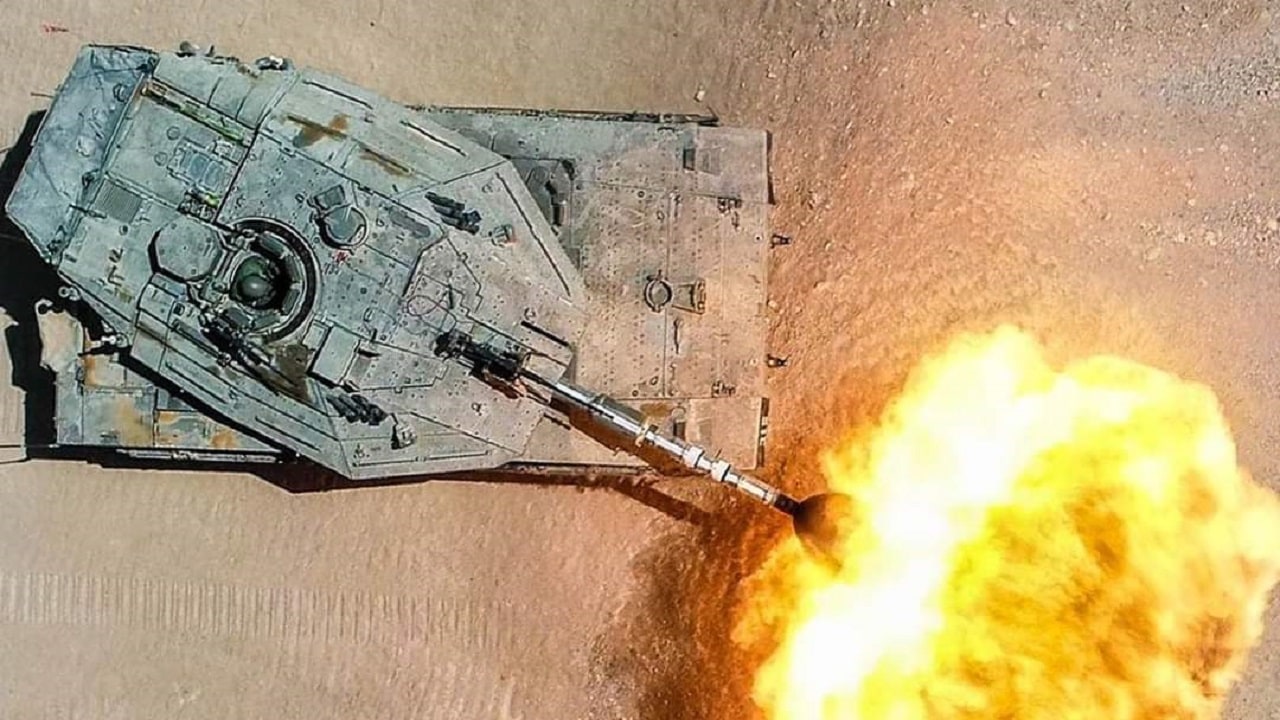
Israel’s Merkava IV tank. Image Credit: Creative Commons.
Trophy has seen such great success on the Merkava that the APS has also been integrated into other foreign MBTs. To date, Trophy is equipped on the US-made Abrams MBT series, the UK’s Challenger MBT series, Germany’s Leopard 2 MBT series, and the Merkava platform.
As the Israeli-made tank continues to prove itself on the battlefield, the Merkava will remain a key player in the IDF for years to come.
About the Author: Maya Carlin
Maya Carlin, national security writer with 19FortyFive, is an analyst with the Center for Security Policy and a former Anna Sobol Levy Fellow at IDC Herzliya in Israel. She has over 1,000 articles published over the last several years on various defense issues. Carlin has bylines in many publications, including The National Interest, Jerusalem Post, and Times of Israel. You can follow her on Twitter: @MayaCarlin.