
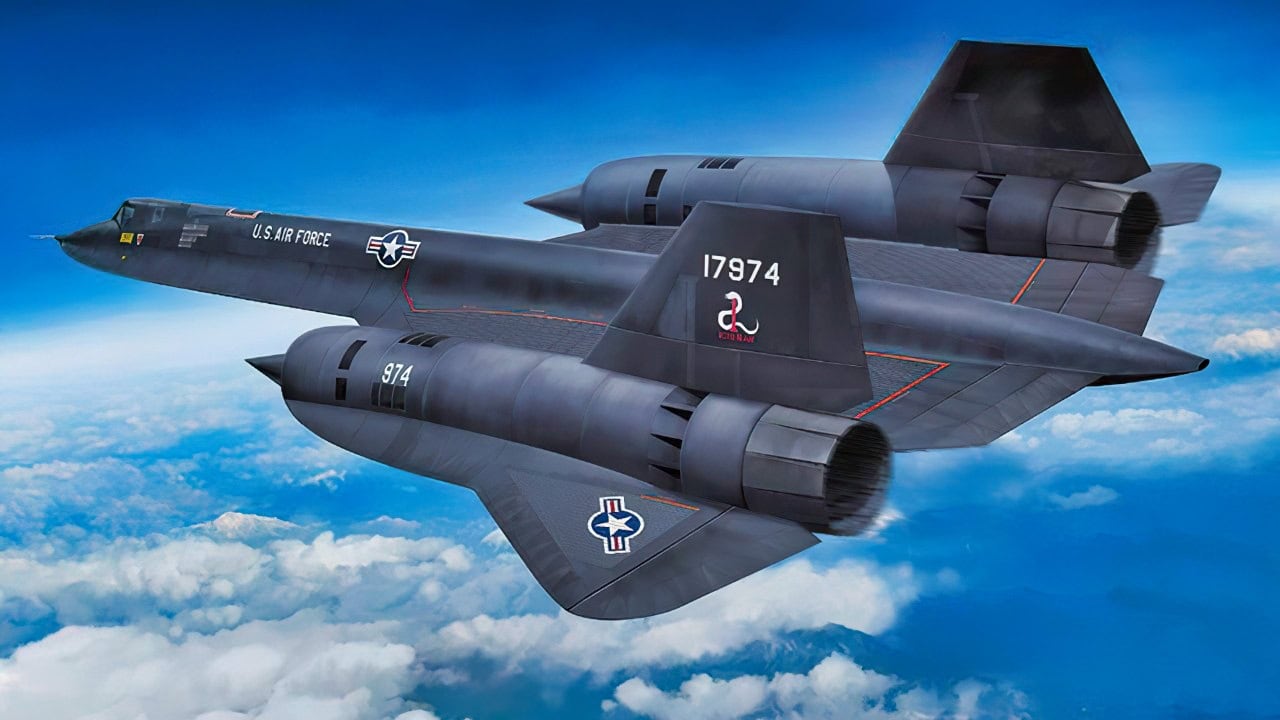
The SR-71 Blackbird Grew Out of the CIA’s A-12 Oxcart Program — And Immediately Competed With CORONA Reconnaissance Satellites for Funding
At 19FortyFive, part of our work involves visiting the facilities and museums that preserve U.S. military aviation history.
During a trip to the National Museum of the U.S. Air Force last year, along with visits to the Smithsonian this fall, we spent time examining the SR-71 Blackbird up close – an aircraft that still looks like it belongs to a different era of engineering entirely. The photographs accompanying this piece are from those trips.
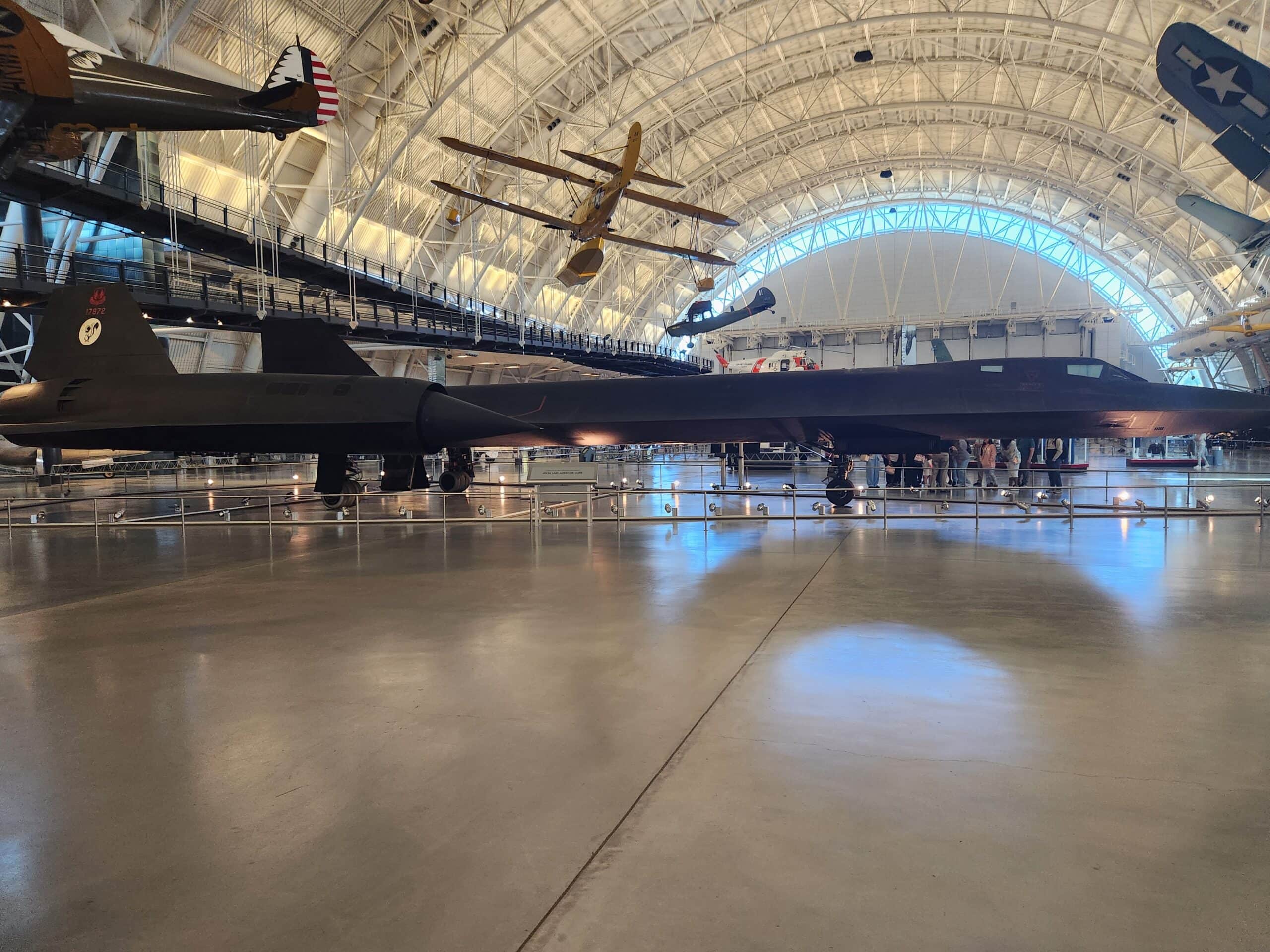
SR-71 Blackbird. 19FortyFive.com Image from the Smithsonian.
The SR-71 is an iconic and consequential design, but its origins were uncertain. In the early 1960s, the program that produced it – the CIA’s A-12 Oxcart and its Air Force successor – faced scrutiny inside the U.S. government.
Senior officials questioned whether manned reconnaissance aircraft still made sense – especially with an aircraft this radical – and engineers struggled with problems that had no existing solutions. A series of early crashes only reinforced concerns about the program’s cost and the platform’s survivability.
The Blackbird, remarkably, survived a period during which there were credible, documented reasons to believe it would fail.
The Officials Who Didn’t Believe In Blackbird
The SR-71 grew out of the A-12 Oxcart program, developed for the Central Intelligence Agency under Project Oxcart in the late 1950s.
From the outset, it competed with another rapidly advancing capability: reconnaissance satellites. By the early 1960s, the CORONA satellite program was already producing usable imagery of Soviet missile sites, with its first successful recovery mission in 1960 and routine collection established soon afterward.

YF-12, a plane that is related to the SR-71 looks very similar. 19FortyFive.com image from National Museum of the Air Force.
That sparked a debate within the newly formed National Reconnaissance Office over whether high-risk, manned overflight missions were still necessary at all. The debate really came to matter after the 1960 U-2 incident, when a U.S. U-2 was shot down over the Soviet Union.
The incident demonstrated that altitude alone was no longer a guaranteed way to ensure survivability, and raised a question inside the intelligence community about whether even faster aircraft would still be as vulnerable to Soviet surface-to-air missile systems.
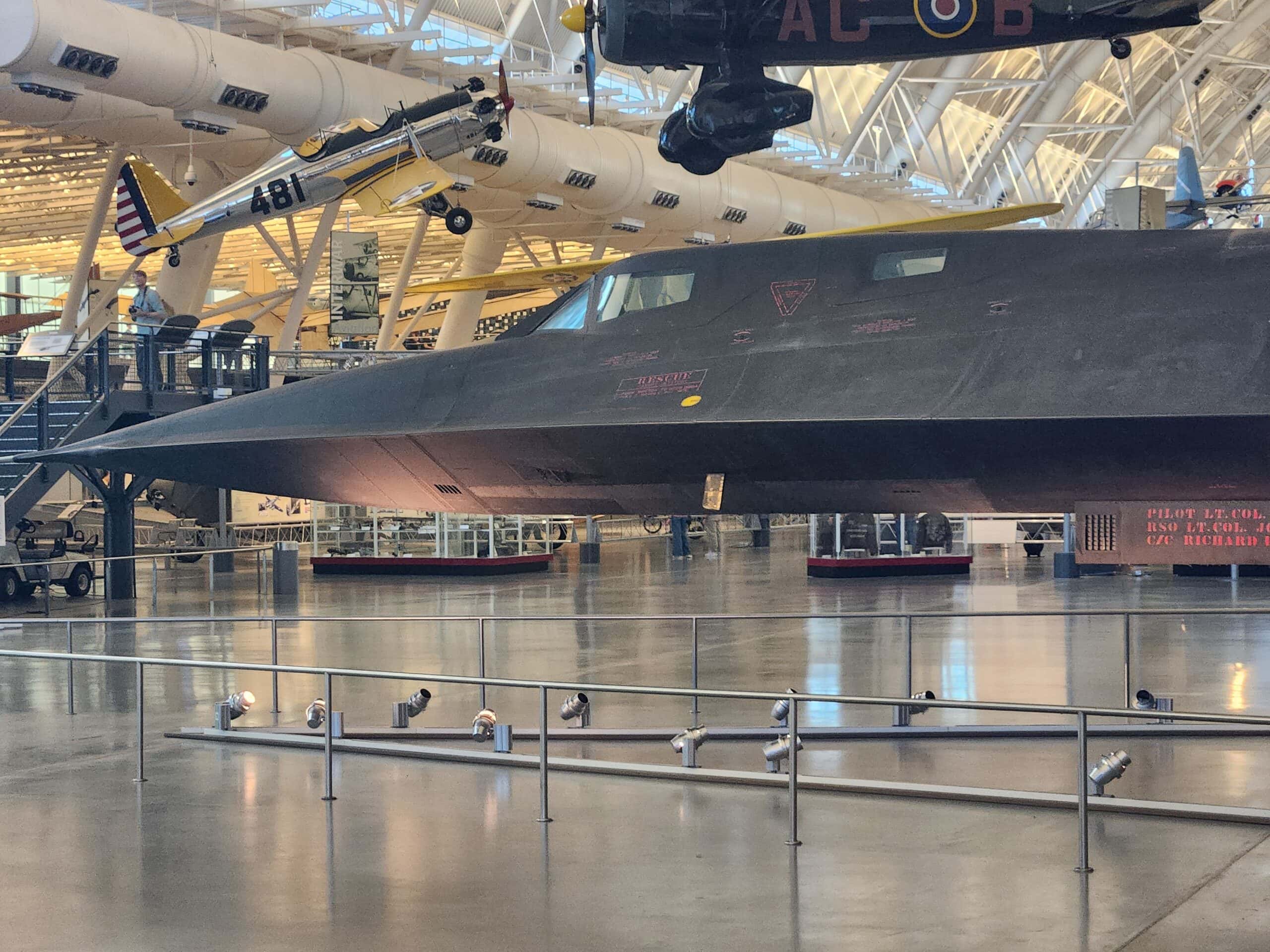
SR-71 Blackbird. 19FortyFive.com Image from the Smithsonian.
Secretary of Defense Robert McNamara was among the leading voices expressing concerns about the program. Between 1963 and 1966, McNamara repeatedly reviewed reconnaissance programs and questioned why the CIA’s A-12 and the Air Force’s SR-71 were being funded simultaneously. The aircraft were closely related, and maintaining parallel fleets raised obvious concerns about wasted resources.
And McNamara had reason to be concerned: CIA records show that by the time the A-12 was ready for operational use, the international and technological situation had changed, with satellites already fulfilling much of the strategic intelligence mission for which the aircraft had been designed.
Engineering Problems With No Clear Solutions
Even if the aircraft was strategically justified, engineers needed a clear plan to make it work – and in the early 1960s, there was no guarantee it would.
The A-12 first flew in April 1962, but it did so with interim engines because the intended Pratt & Whitney J58 powerplant was not yet ready. That alone was a sign that the project was on shaky ground, with key components of the aircraft not even in existence when development began.
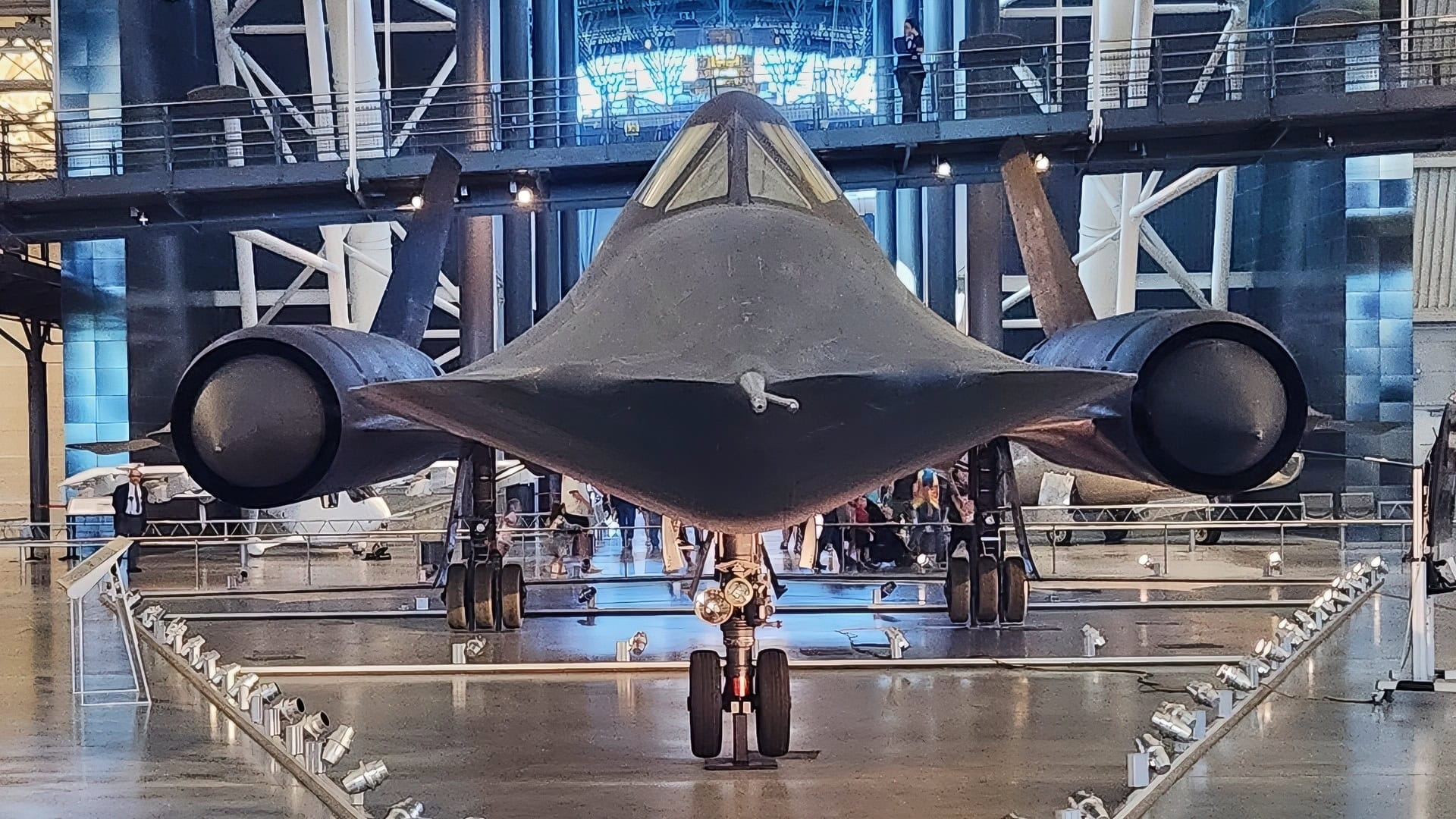
SR-71 Blackbird At the Smithsonian. Image Credit: Creative Commons.
The engineering challenges were wide-ranging. For example, it required a structure made largely of titanium – a material the U.S. aerospace industry had limited experience working with at scale. The program effectively had to create its own industrial base to support production.
And at operational speeds above Mach 3, aerodynamic heating due to friction with the air introduced a number of new problems. The aircraft’s structure expanded significantly in flight, and systems had to be designed to function under extreme thermal stress.
Its engines and inlet control also proved especially unstable. Early testing revealed that airflow disruptions, known as “unstarts,” could cause severe control issues, requiring the later development of automated control systems to stabilize performance.
These challenges were not just incremental improvements over existing aircraft, which can often be challenging enough. They were problems that had never been solved before.
The implication for decision-makers, then, was that the program was expensive and technically uncertain – something that is hard for politicians and officials to defend. There wasn’t even a guarantee that all the hard work would be worth it, because Mach 3 reconnaissance aircraft could still have been unreliable enough to justify the cost in the end.
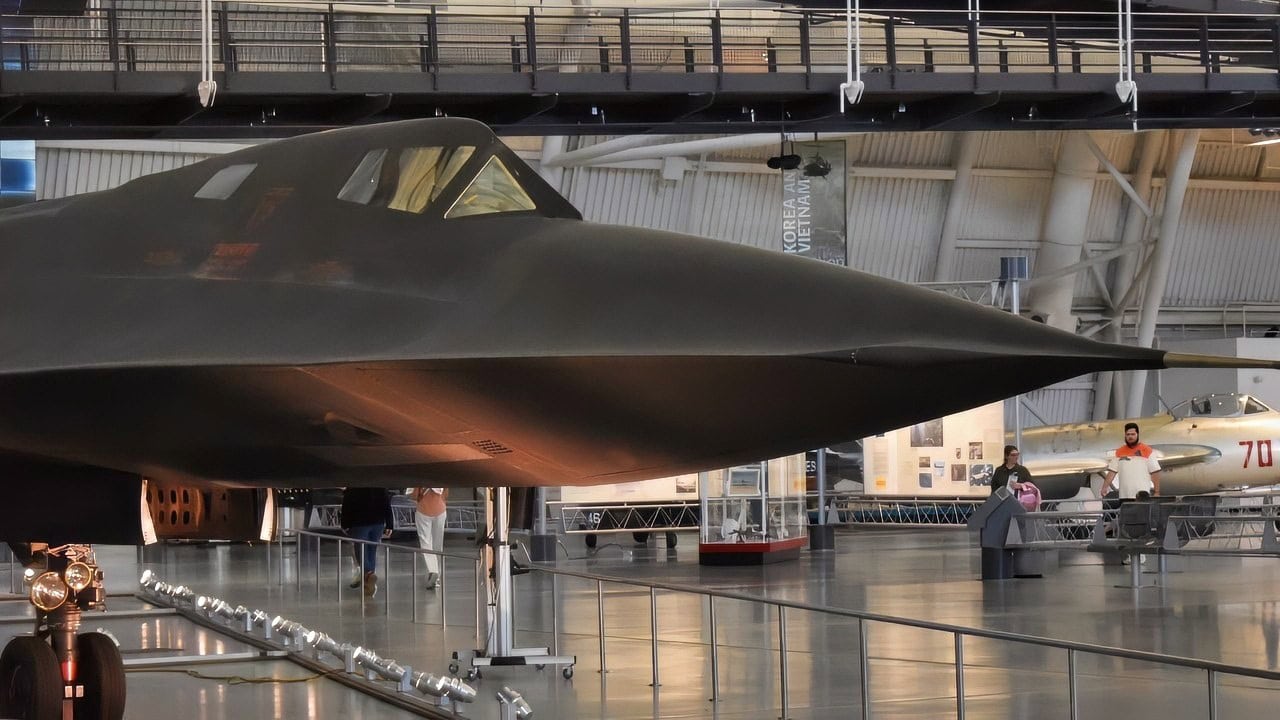
SR-71 Blackbird Photo by Dr. Brent Eastwood of 19FortyFive.

SR-71 Blackbird Photo from Dr. Brent Eastwood at the Smithsonian. 19FortyFive.com Original Image.
The Crashes That Reinforced Doubts
Throughout the program, those uncertainties translated into real crashes and losses. The CIA’s A-12 fleet consisted of just 13 aircraft, and at least five were lost in accidents between 1963 and 1968. These incidents included the first A-12 crash on May 24, 1963, which was attributed to instrument failure and pilot disorientation during testing. Then, in January 1967, an A-12 was lost due to a fuel system failure that led to engine flameout during descent, resulting in the death of CIA pilot Walter Ray.
Additional losses were linked to mechanical failures and the inherent risks of operating at extreme speeds and altitudes. The SR-71 itself also suffered losses during its service life, with multiple aircraft destroyed between its introduction in the mid-1960s and retirement.
These were often tied to engine issues, flight control problems, or the demanding flight environment associated with sustained Mach 3 operations.
Every single one of those incidents had policy implications, with crashes triggering reviews inside the Department of Defense and reinforcing the argument against continuing the program while satellite systems were proving increasingly capable. But somehow, it survived.
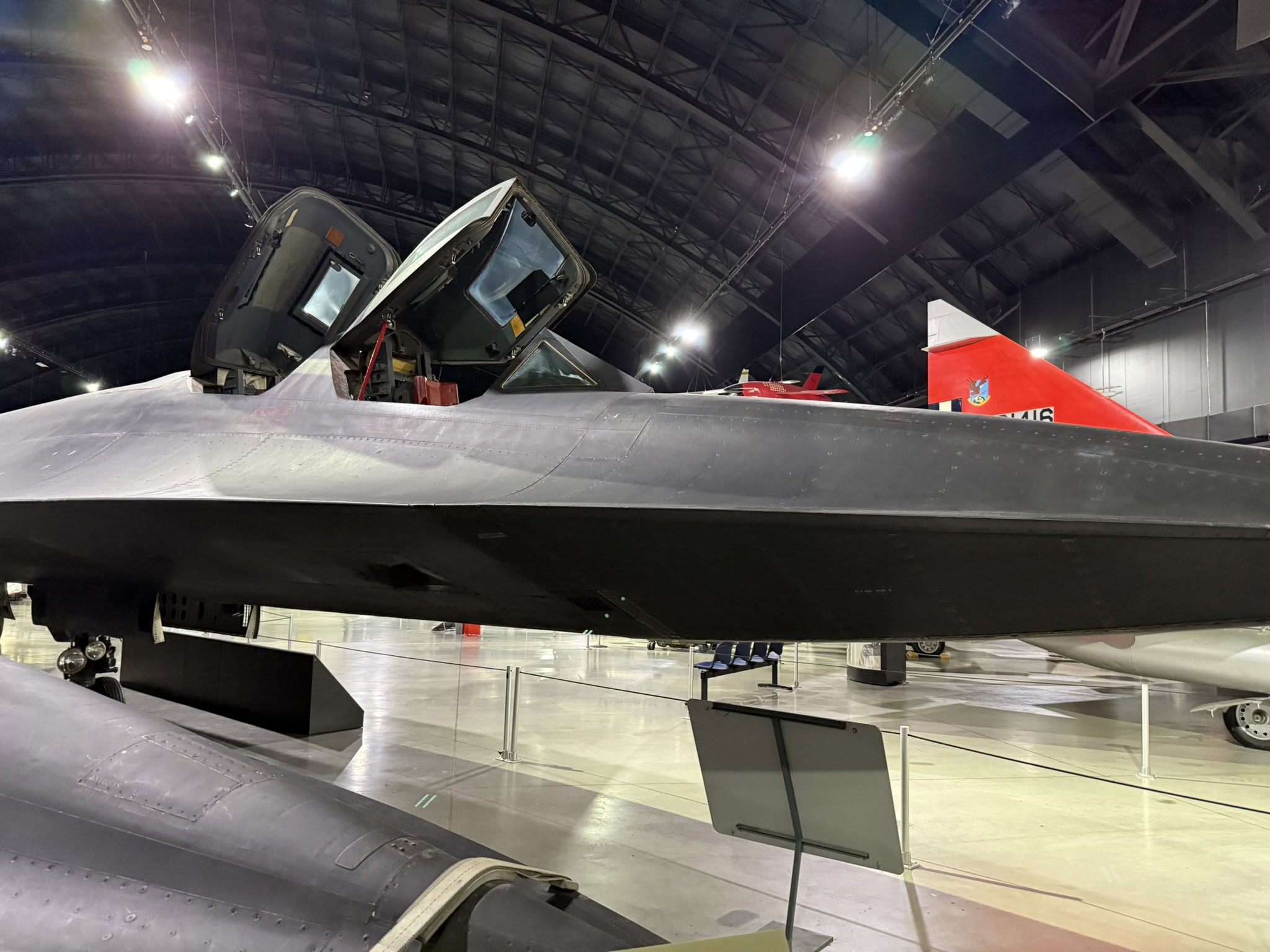
SR-71 at the National Museum of the U.S. Air Force.
Why the Program Wasn’t Canceled
Despite the concerns, the program was not canceled outright. Rather, it was adapted. The A-12 became operational in 1967 and conducted missions over Vietnam and North Korea, demonstrating that a high-speed reconnaissance aircraft could survive in heavily defended airspace. CIA records also note that neither the A-12 nor the SR-71 was ever successfully shot down during operational missions, despite repeated attempts.
And while satellites were proving themselves, there were still limitations. Early satellite systems, particularly CORONA, operated on fixed orbits and required physical film recovery, which introduced delays.
By contrast, aircraft like the SR-71 could be quickly tasked and respond to emerging situations in near real time.
That distinction ultimately proved decisive, because while satellites replaced the A-12’s original role of routine strategic surveillance, they could not fully replicate the flexibility of airborne reconnaissance. Even so, the doubts never really disappeared. The A-12 program was ultimately terminated in 1968 due to budget pressure and disagreements among agencies, even after proving the platform worked. The SR-71, meanwhile, continued in service, but serving a much narrower purpose.

SR-71 at the National Museum of the U.S. Air Force. 19FortyFive.com Image.
The Return of the Blackbird?
The SR-71 – and the mission for which it was built – is strikingly relevant today. In recent years, the United States has explored whether high-speed reconnaissance should return in some modern form.
Lockheed Martin’s proposed SR-72, often described as a hypersonic successor to the Blackbird, or the “Son of Blackbird,” is still technically a possibility.
It is expected – should it ever come to fruition – to be capable of reaching speeds above Mach 5, with company officials publicly flip-flopping about the potential of a demonstrator flying this decade.
That interest stems from a specific problem. Satellites still lack flexibility, and drones are vulnerable in contested airspace.
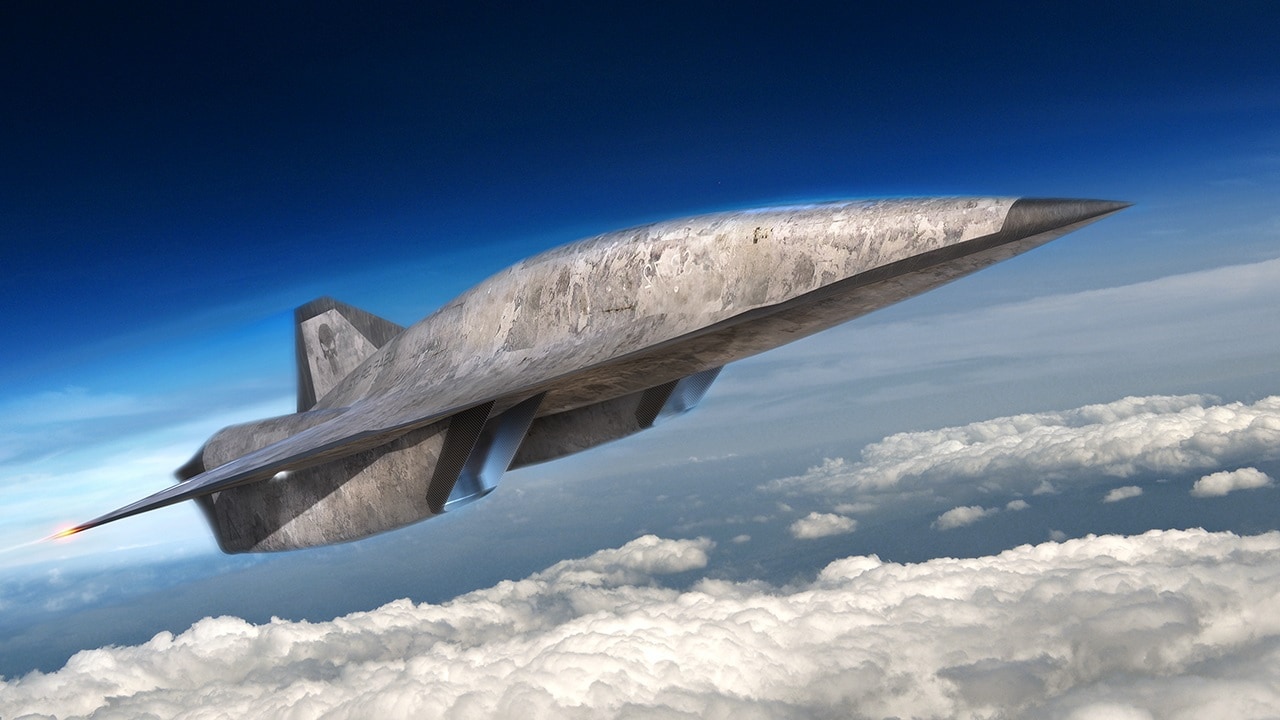
SR-72 artist rendering. Image Credit: Creative Commons.
The same gap that justified the SR-71 – a rapid and survivable reconnaissance platform that can travel over defended territory – has not really gone away.
About the Author: Jack Buckby
Jack Buckby is a British researcher and analyst specializing in defense and national security, based in New York. His work focuses on military capability, procurement, and strategic competition, producing and editing analysis for policy and defense audiences. He brings extensive editorial experience, with a career output spanning over 1,000 articles at 19FortyFive and National Security Journal, and has previously authored books and papers on extremism and deradicalization.