
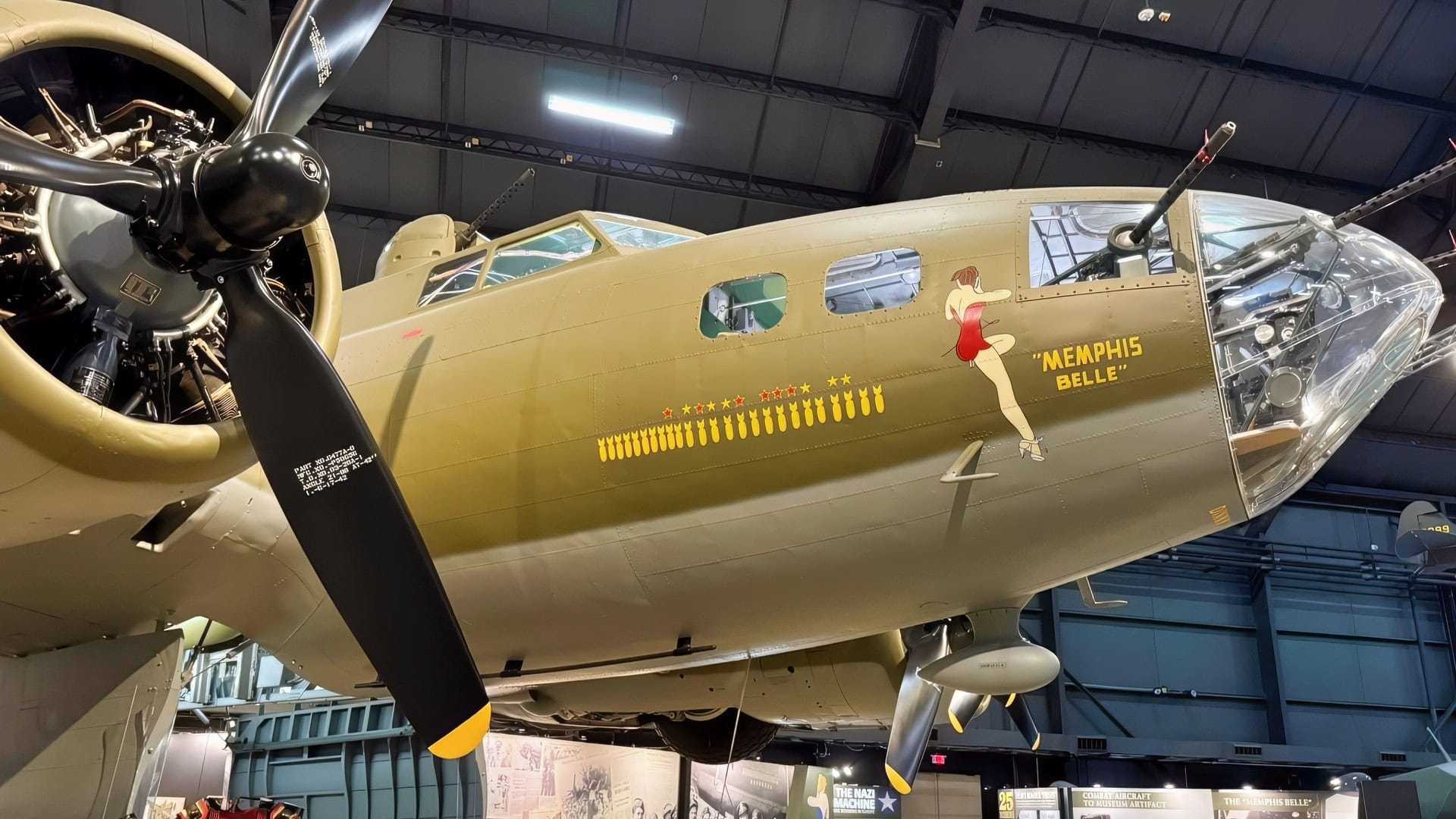
The Memphis Belle World War Two Bomber Is Unforgettable
This airplane is the pride of the Volunteer State. The B-17 bomber known as the “Memphis Belle” (0964) enjoyed a colorful history in World War II that still makes many residents of Memphis, Tennessee, smile in memory of the famous aircraft.
A point of pride and a popular feature at the National Museum of the U.S. Air Force, this bomber set the standard and boosted morale for a generation of airmen.
This B-17 Flying Fortress served in multiple theaters during the war, but it is better known for its combat missions over Europe. It made Nazi Germany’s targets pay the price.
The Memphis Belle could reach altitudes of up to 30,000 feet, loaded with bombs, powered by early supercharged turbo engines.
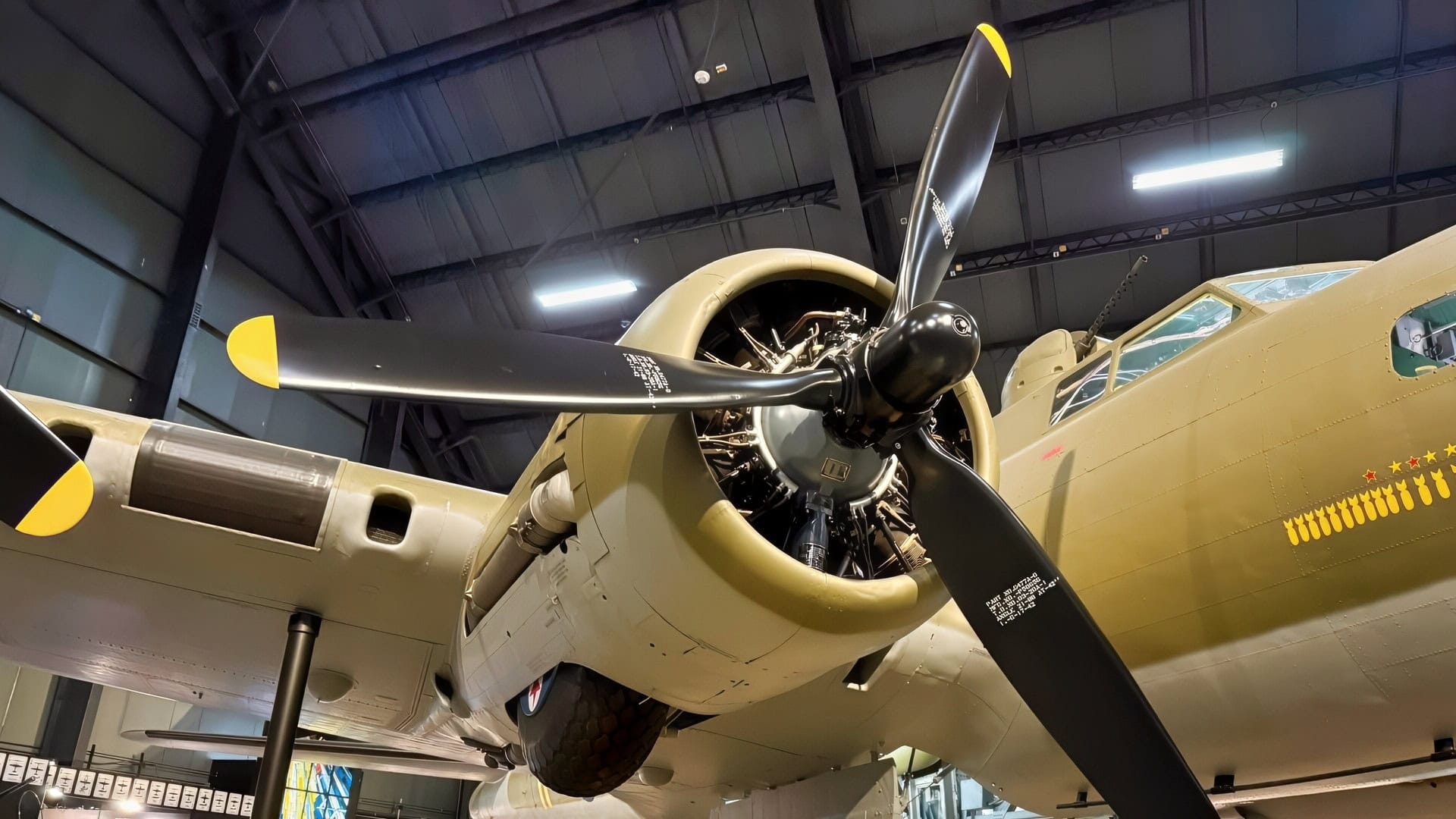
Memphis Bell Bomber WWII. 19FortyFive.com Original Photo.
Thousands of B-17s Were Produced
The B-17 first flew in 1935, but as the war reached a critical point, the U.S. aerospace industry produced them in the thousands.
Nearly 13,000 were built.
The “Queen of the Skies” bombers were everywhere and always ready for tough missions and able to defy impossible odds. Most B-17s made were of the “G” variant with a convenient nose gunner. The Memphis Belle was a B-17F.
This Air Power Stalwart Helped Win the War
The Memphis Belle was known for its charmed service during the war and symbolized the importance of the bomber in air power that helped defeat the Germans. The Memphis Belle was the first B-17 to return to the United States after 25 successful missions over Europe.
Quick Specs on the B-17
The airplane had a crew of ten. It handled a significant payload. The B-17 carried 8,000 pounds of bombs and was heavily armed for defense with 13 .50-caliber machine guns.
Its four 1,200-horsepower Wright R-1820-97 turbo-supercharged radial engines pushed it to a top speed of 325 miles per hour, with a combat range of over 600 miles.
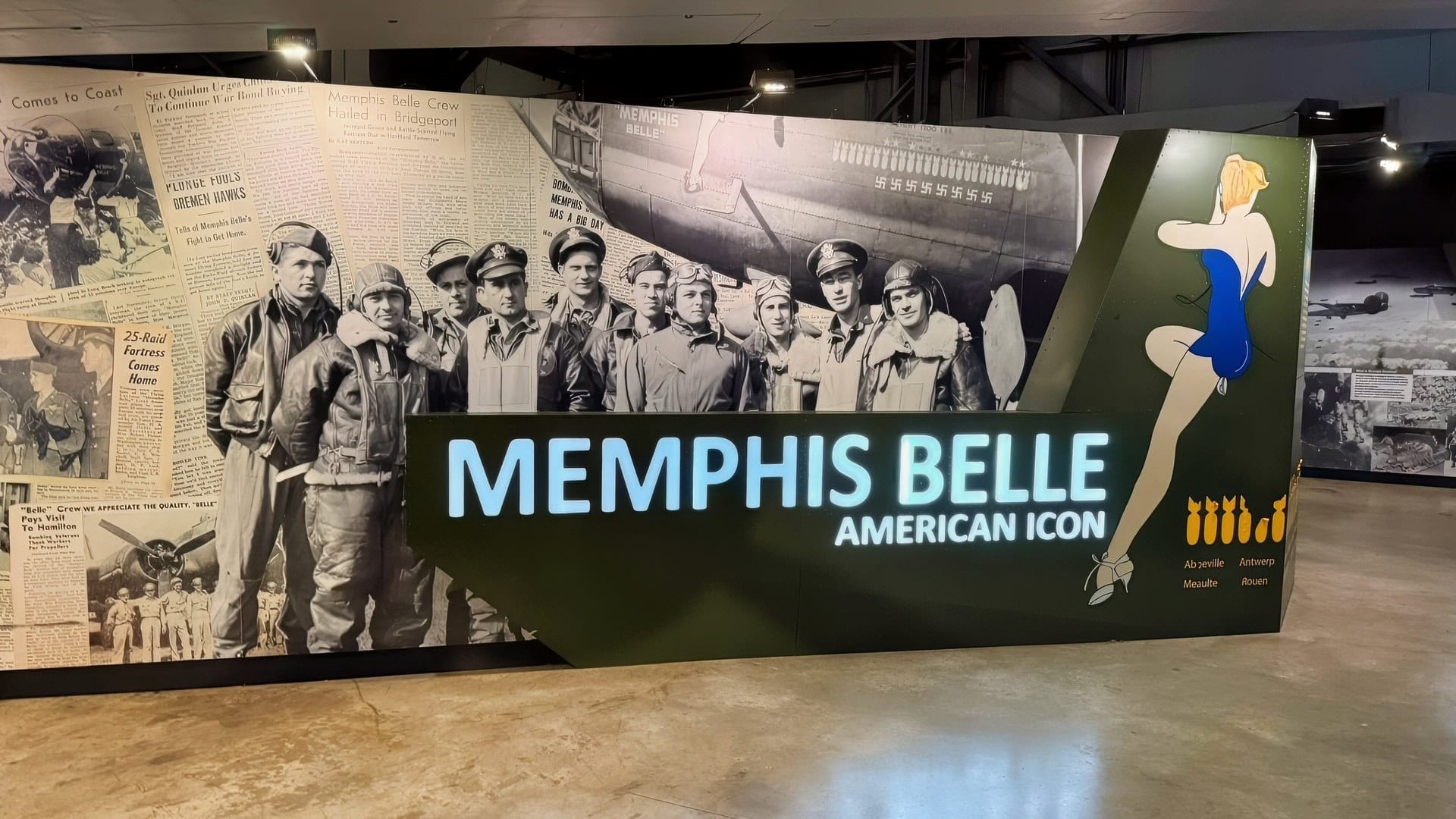
Memphis Belle National Museum of the U.S. Air Force Exhibit. Image Credit: 19FortyFive.com
Who Served on the Memphis Belle?
The crew of the Memphis Belle was a diverse group of airmen. Most were 18 or 19 years old, but some were 29. The airmen came from states like Washington, Indiana, Texas, and Connecticut.
“During the course of the combat tour, the Memphis Belle crew had three different top turret gunner/engineers [Leviticus “Levi” Dillon, Eugene Adkins, and Harold Loch] and three waist gunners [Harold Loch, who later moved to the top turret position, Bill Winchell, and E. Scott Miller]. Several different copilots also flew with the Memphis Belle’s normal crew,” according to the National Museum of the U.S. Air Force.
The Pilot Had a Head of Steam
MemphisBelle.com has extensive profiles on each crew member. Pilot Bob Morgan was an example of an adventure seeker. “Most people would have guessed that I would want to be a fighter pilot from the way I drove a car. I was a maniac for speed.
So, people would think I was crazy enough to be a fighter pilot. But I liked company. I didn’t like the idea of being up there in the air by myself. If I went up in a B-17 I would have nine other guys up there with me and I liked that fine. That was the reason I picked bombers,” he recalled.
The Co-Pilot Considered Himself Lucky
Co-pilot Jim Verinis was glad he was assigned to the Memphis Belle. “I had heard about the B-17s and they appealed to me. They had all those fans up front and you had more people up there with you if something went wrong. I had qualified as a first pilot but they didn’t have enough planes. So when Bob asked me if I’d like to go with him as co-pilot, I grabbed it. It turned out to be the right move because I’m still here today,” he said.
The Bombardier Faced Down His Fears
Bombardier Vince Evans was as brave as they come when flying 25 missions and surviving. “It’s funny, but you never quite get over being scared, no matter how many bombing runs you make. During the first five or six raids you’re pretty tense. Then you figure ‘what the heck, I’ll never come out of this alive.’ You’re kinda fatalistic about it, see. Then when you get to around the twentieth, you begin to realize that maybe you do have a chance after all and you tighten up again, just like a violin string. Boy, those last five missions are tough,” he explained.
Where Did the Name and Nose Art Come From?
What about the name, “Memphis Belle”? One of the crew members had a fiancée named Margaret Polk from Memphis.
He also carried a picture of Polk and displayed it in his turret.
That was the idea behind the moniker and the inspiration for the distinct nose art.
Illustrator George Petty created the “pin-up” picture, which appeared in an April 1941 issue of Esquire Magazine.
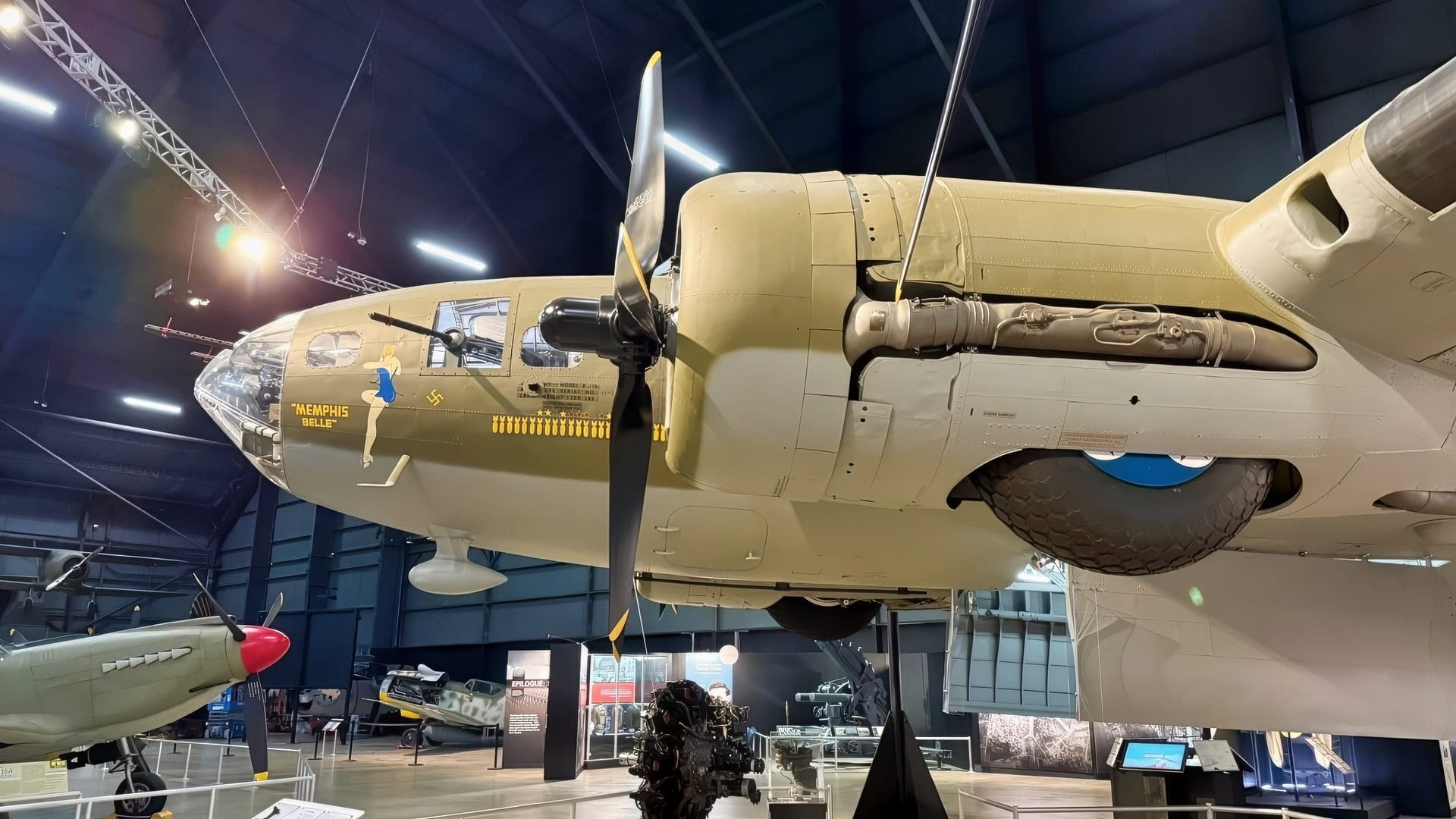
WWII Memphis Belle Bomber. Taken by Harry J. Kazianis for 19FortyFive.com.
In England, an airman named Corporal Tony Starcer took that picture and painted it on the B-17. After the Memphis Belle livery, Starcer became highly sought after by other B-17 crews, who wanted their own paintings on their bombers.
This inspired a 1990 movie called “Memphis Belle.” Matthew Modine, Billy Zane, and Sean Astin starred. I remember it as an exciting and realistic film.
The Memphis Belle is a “beauty” and boosted morale in the Army Air Corps. Bombing missions were extremely dangerous, and these crew members didn’t give in to their fears. We’ll remember them as part of the Greatest Generation, and they still inspire the people of Memphis, Tennessee.
Note: All images are original from our visit to the National Museum of the U.S. Air Force in June of 2025.
About the Author: Brent M. Eastwood
Author of now over 3,000 articles on defense issues, Brent M. Eastwood, PhD, is the author of Don’t Turn Your Back On the World: a Conservative Foreign Policy and Humans, Machines, and Data: Future Trends in Warfare , plus two other books. Brent was the founder and CEO of a tech firm that predicted world events using artificial intelligence. He served as a legislative fellow for US Senator Tim Scott and advised the senator on defense and foreign policy issues. He has taught at American University, George Washington University, and George Mason University. Brent is a former US Army Infantry officer. He can be followed on X @BMEastwood.