
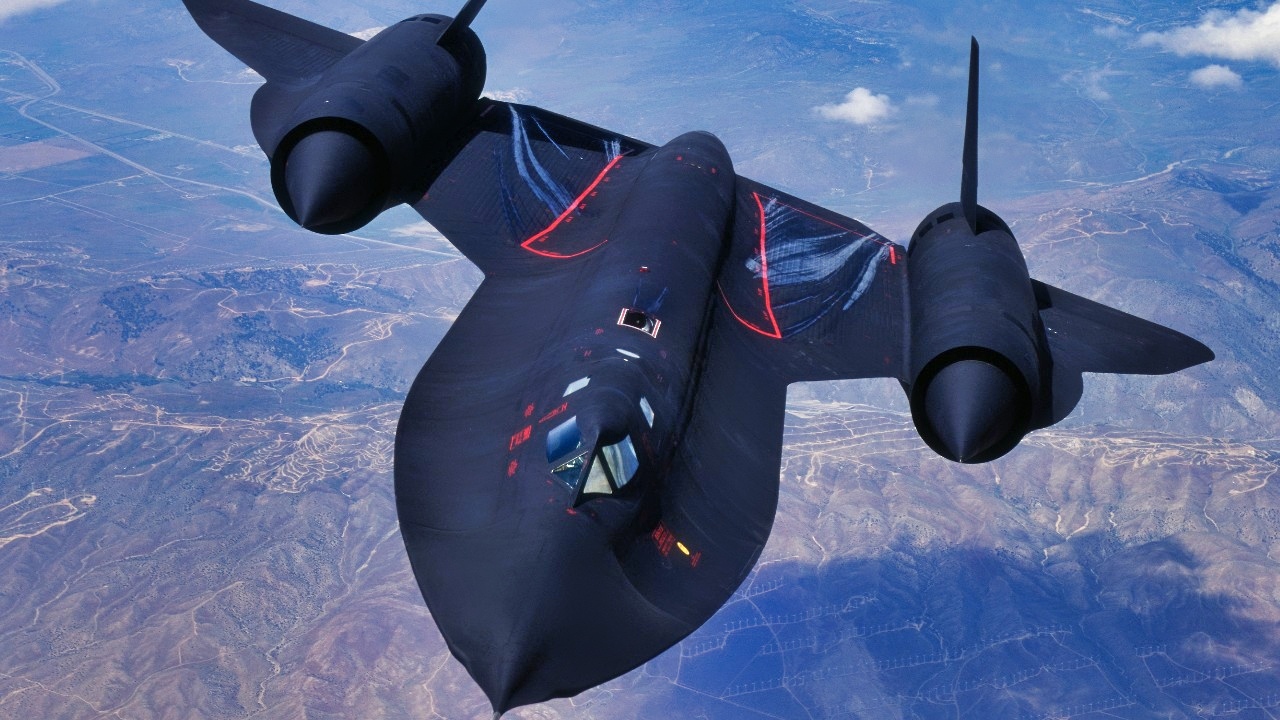
The SR-71 Blackbird Was a Legend But Even Legends Can Suffer Mechanical Failures
The Lockheed SR-71 Blackbird spy plane (AKA the “Habu”) remains the fastest air-breathing, crewed aircraft ever built, even though it has officially been retired for 27 years, and therefore is one of aviation history’s great success stories (a major point of pride for the “Skunk Works” division).
However, even the best manmade machines can and do fail, and the Blackbird was no less fallible. The most tragic of these failures—indeed, the only one involving a fatality—took place during a test flight on January 25, 1966.
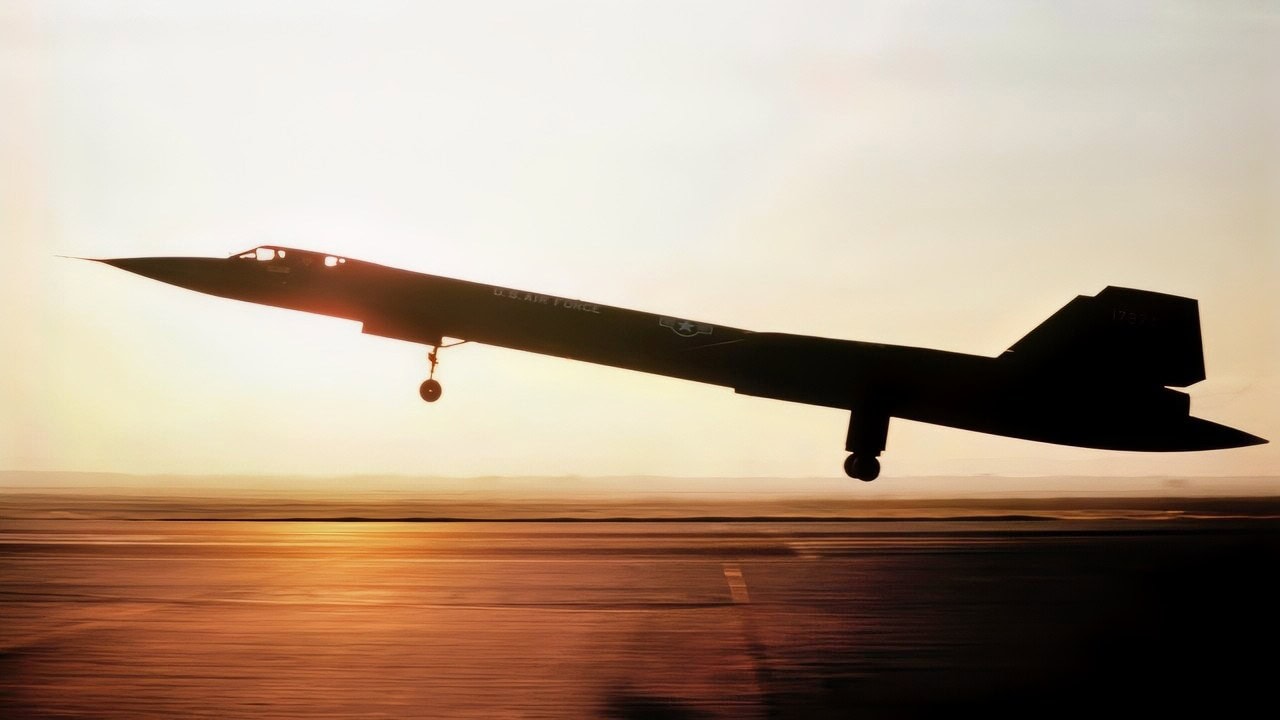
A left side view of an SR-71 aircraft from the 9th Strategic Reconnaissance Wing landing. The aircraft is silhouetted against the sunset.
The Backdrop
Besides the human tragedy element to the story (which we shall get to shortly), the timing of this particular crash couldn’t have been worse from a bureaucratic standpoint, as it could’ve caused the then-fledgling Blackbird program to have been stillborn.
You see, when that fateful day rolled around, the SR-71 had already made its maiden flight 14 months earlier (December 22, 1964, to be exact; a month-and-a-half after LBJ’s landslide presidential election victory over Barry Goldwater).
However, in January of ’66, the plane had just barely attained official operational status with the U.S. Air Force (hence the bad and potentially program-killing timing).
The ill-fated Blackbird specimen was an SE-71A bearing AF Serial No. 61-7952, and the men chosen to fly her were test pilot Bill Weaver and his friend, Lockheed flight test reconnaissance and navigation systems specialist Jim Zwayer.
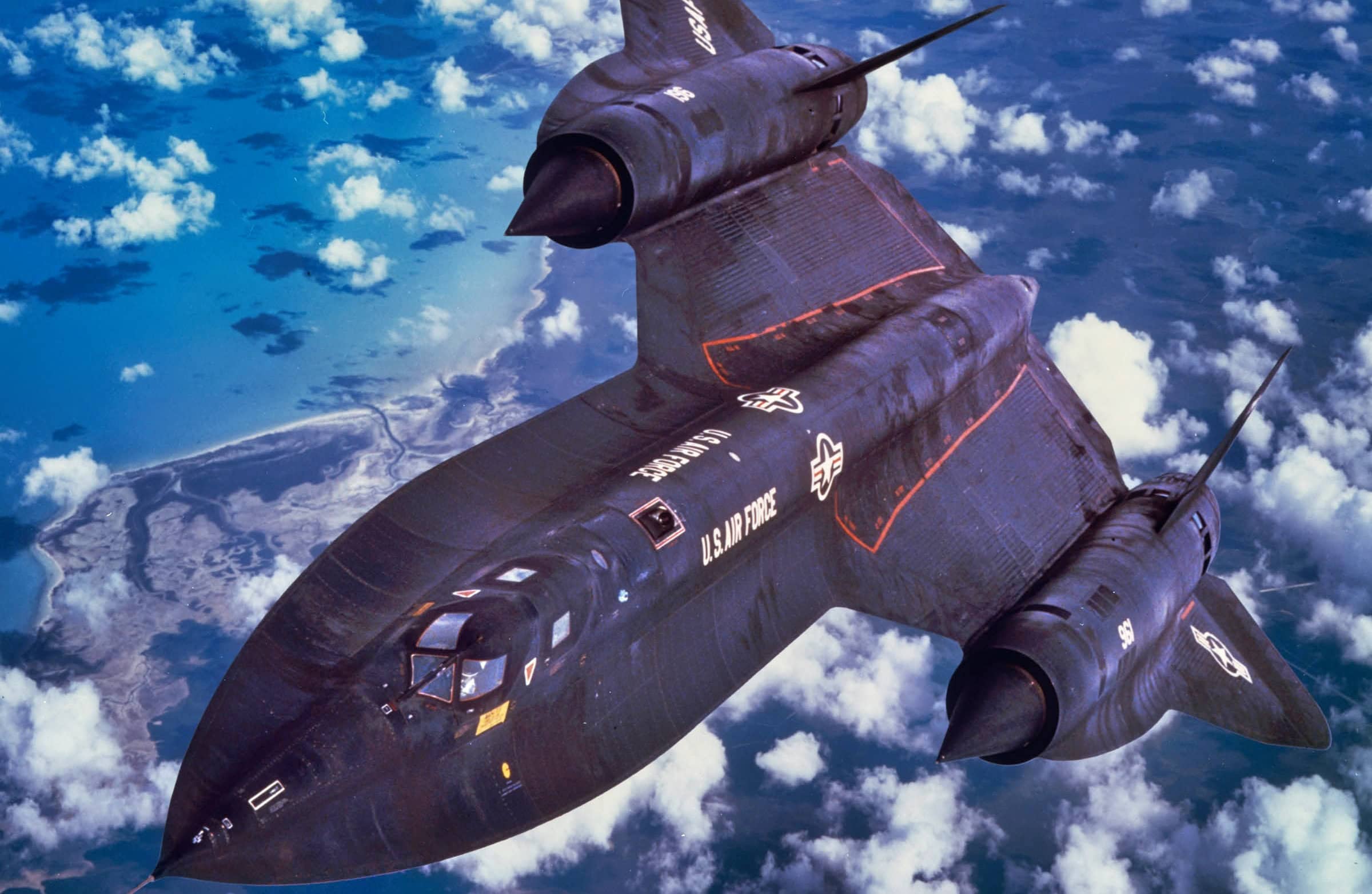
SR-71 Blackbird. Image Credit: Creative Commons.
The Fateful Fatal Flight
At 11:20 am local time, Messrs. Weaver and Zwayer embarked in 61-7952 from Edwards Air Force Base, California.
Their mission was to (1) investigate procedures designed to reduce trim drag, and (2) improve high-Mach cruise performance.
The latter objective necessitated flying with the center of gravity (CG) located further aft than normal, which reduced the warbird’s longitudinal stability.
The first leg of their mission went smoothly enough, as they linked up with a KC-135 Stratotanker for refueling, and then turned eastbound, accelerated to a Mach 3.2 cruise speed (2,455 mph; 3,951 km/h; 2,133 knots), and climbed to 78,000 feet (23,774 meters), their initial cruise-climb altitude.
However, several minutes into that second leg of the journey, something went terribly wrong: a serious engine unstart and the subsequent “instantaneous loss of engine thrust” occurred, and that thrust could not be regained.
Weaver urgently attempted to relay a warning to Zwayer, with the intent of encouraging his friend & partner to stay with the airplane until they reached a lower speed and altitude, as the prospects of surviving an ejection at Mach 3.18 and 78,800 feet seemed rather grim. But the Intercom connection was garbled, so Bill was compelled to make aviation history with the first supersonic parachute jump in an SR-71.
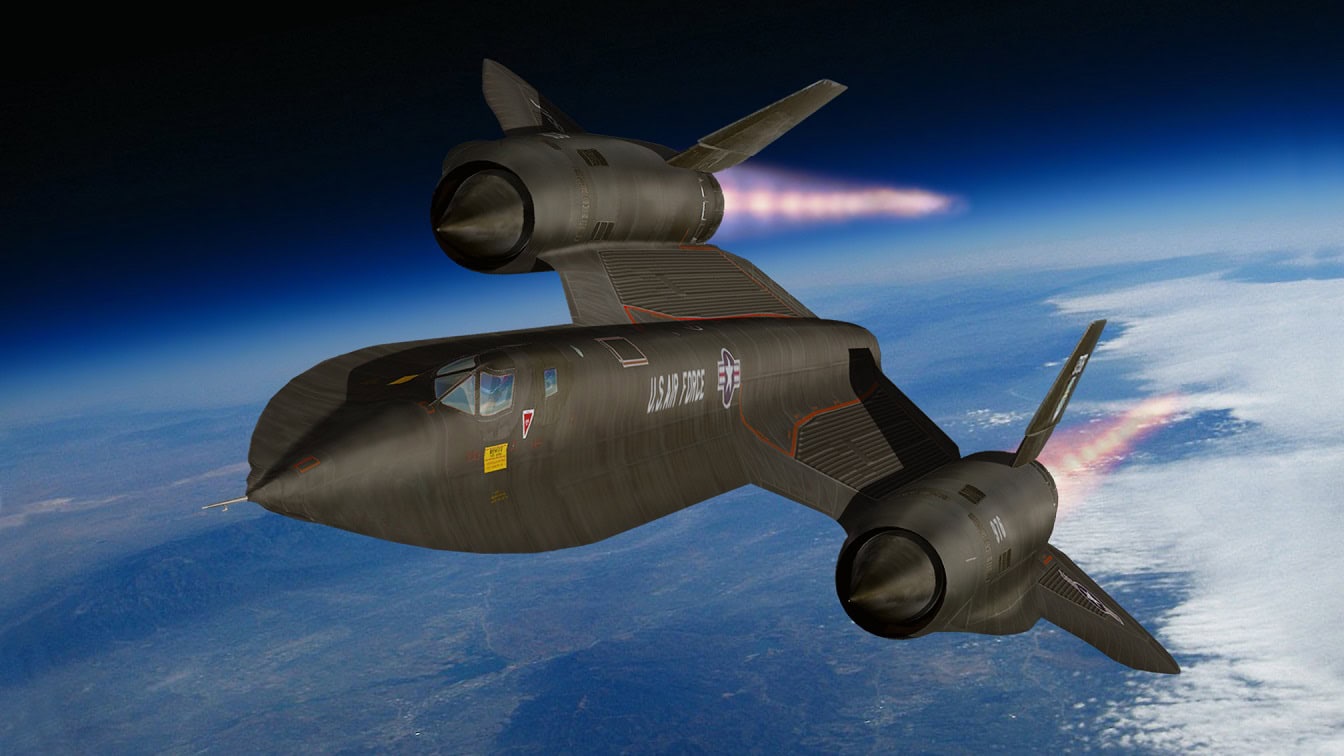
SR-71 spy plane. Image Credit: Creative Commons.
However, Bill didn’t even remember the ejection. In his own words, “Still trying to communicate with Jim, I blacked out, succumbing to extremely high g-forces. The SR-71 then literally disintegrated around us. From that point, I was just along for the ride.”
As he came to in mid-parachute flight, he initially thought in his trauma-induced haze that “I realized this was no dream; it had really happened. That was also disturbing, because I could not have survived what had just happened. Therefore, I must be dead. Since I didn’t feel bad — just a detached sense of euphoria — I decided being dead wasn’t so bad after all.”
Soon enough, Bill fully came to his senses, and his survival training kicked in.
He safely landed in a huge cattle ranch in northeastern New Mexico, and the first earthbound person to come to his aid was the ranch’s owner, a certain Mr. Albert Mitchell, Jr., who had already notified the New Mexico State Police, the Air Force, and the nearest hospital.
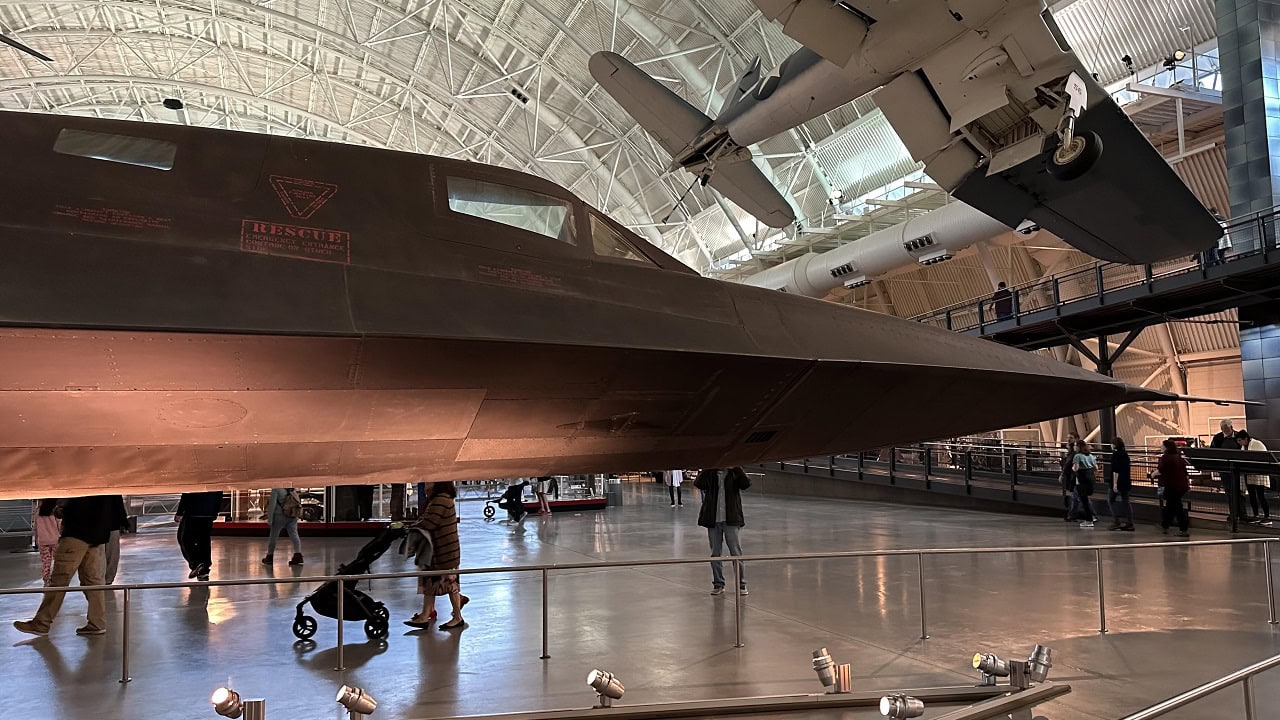
SR-71. SR-71 photo taken at the National Air and Space Museum. Taken by 19FortyFive on 10/1/2022.
Sadly, Jim didn’t make it, as he died instantly of a broken neck during the ejection.
Aftermath
Needless to say, the SR-71 program avoided cancellation, remaining in service for over three decades and breaking more speed records than you can shake a stick at. Along the way, 11 more of the Mach-busting jets were lost in accidents, but thankfully, none were fatal. (We shall cover the final such mishap in a separate article.)
Meanwhile, Bill Weaver was back in the air flying SR-71s two weeks after the incident.
This time flying out of Lockheed’s (nowadays known as Lockheed Martin’s) Palmdale, Calif., assembly and test facility, whereupon he experienced another scare, at least temporarily: a misadjusted microswitch caused the “Pilot Ejected” warning signal to light up, prompting Bill’s flight test engineer to frantically inquire, “Bill! Bill! Are you there?”
“Yeah, George. What’s the matter?” Weaver reassured George, who, highly relieved, acknowledged in a highly relieved tone of voice with “Thank God! I thought you might have left.” (The rear cockpit of the Blackbird has no forward visibility — only a small window on each side — thus preventing George from obtaining his own visual confirmation of Bill’s presence.)
In Memoriam
William A. “Bill” Weaver passed away on July 28, 2021, at the ripe old age of 92 (DOB December 6, 1928), survived by his wife of 36 years, Jeanne Weaver, his daughter, Chris Hadden, and his sons, Scott Weaver and Greg Weaver.
According to his obituary, Bill’s flying experience began after graduating from the Naval Academy in 1951, when he was commissioned in the U.S. Air Force (the Air Force Academy wasn’t opened until 1954). Not wasting any time, he deployed to Kaegu, Korea, in 1952, whereupon he flew 89 missions in the F-89 Scorpion and F-86 Sabre.
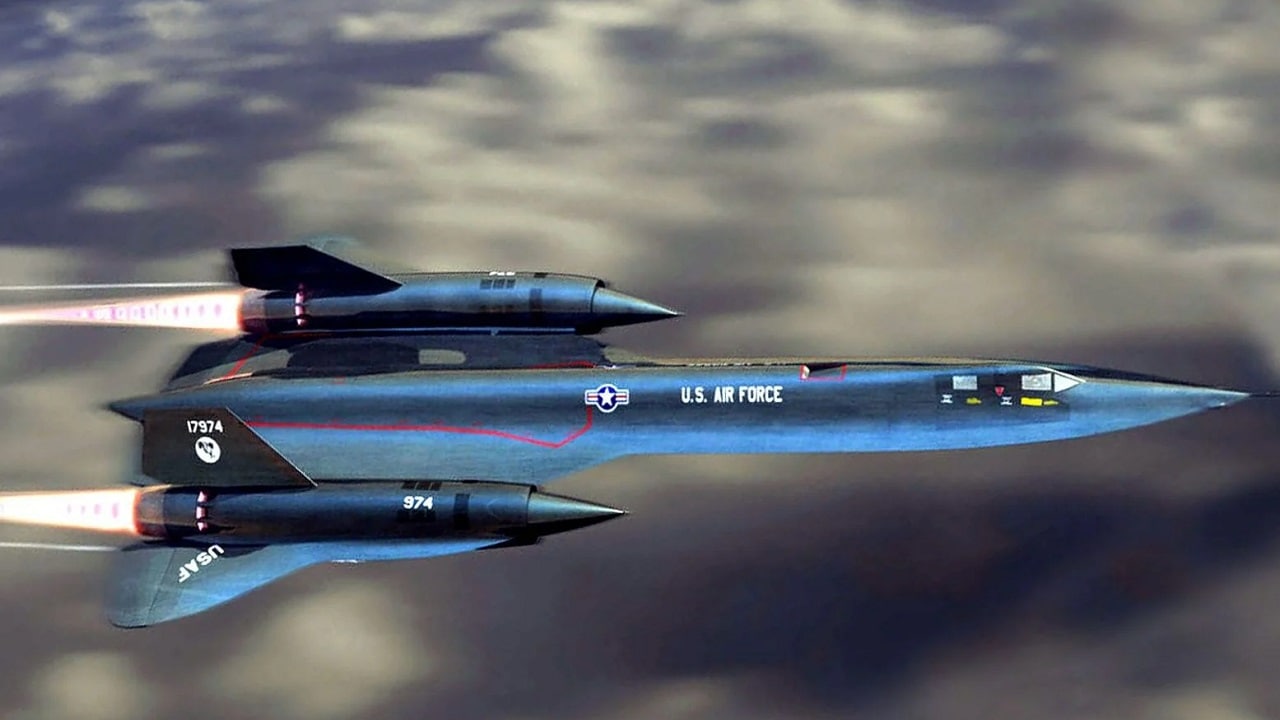
SR-71 Spy Plane. Image Credit: Creative Commons.
As for Col. James Pershing Zwayer, the Born into the Wild Blue Yonder Habubrats Facebook page notes in a May 25, 2025, post that he was born on February 26, 1918, in Bryan, Williams County, Ohio, making him 47 years old at the time of his untimely death. He was laid to rest at Arlington National Cemetery.
About the Author: Christian D. Orr
Christian D. Orr is a Senior Defense Editor. He is a former Air Force Security Forces officer, Federal law enforcement officer, and private military contractor (with assignments worked in Iraq, the United Arab Emirates, Kosovo, Japan, Germany, and the Pentagon). Chris holds a B.A. in International Relations from the University of Southern California (USC) and an M.A. in Intelligence Studies (with a concentration in Terrorism Studies) from American Military University (AMU). He is also the author of the book “Five Decades of a Fabulous Firearm: Celebrating the 50th Anniversary of the Beretta 92 Pistol Series, the second edition of which was recently published.