
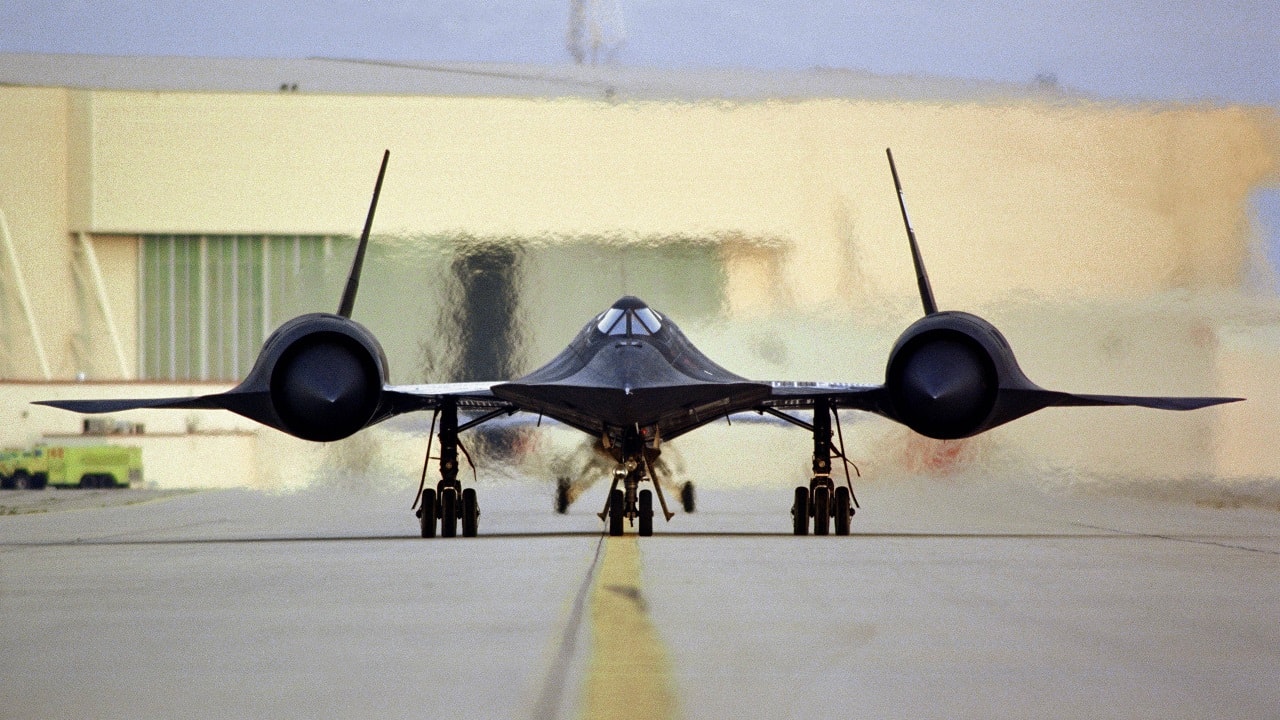
SR-71 Blackbird’s Fastest Official Flight Reached 2,193.167 MPH – The fastest officially recorded SR-71 Blackbird flight reached 2,193.167 mph on July 28, 1976. The speed was roughly Mach 3.3, although the relationship between Mach number and miles per hour changes with air temperature and altitude.
Capt. Eldon Joersz piloted SR-71A serial number 61-7958 with Maj. George Morgan is serving as a reconnaissance systems officer. The flight established the absolute speed record for its class. Another SR-71 set an altitude record of 85,068.997 feet on the same day.
Higher numbers have appeared in pilot memoirs and aviation histories. Brian Shul described exceeding Mach 3.5 during a 1986 mission near Libya, while other accounts claim brief test excursions near Mach 3.5. Those figures were never certified as world records. The best documented maximum remains 2,193.167 mph.
The distinction matters because the SR-71 was designed to cruise near Mach 3.2 for extended periods, not to make one short record attempt before returning to base. Its ability to sustain extreme speed while carrying cameras, radar, and electronic-intelligence equipment made it a useful reconnaissance aircraft rather than an experimental rocket plane.
The A-12 Gave the Air Force a Mach 3 Starting Point
The Blackbird family began with the CIA’s A-12 OXCART. After the Soviet Union shot down Francis Gary Powers in a U-2 in 1960, Washington needed a reconnaissance aircraft able to fly higher and faster while presenting a smaller radar target.
Lockheed’s Skunk Works, led by Clarence “Kelly” Johnson, built the A-12 around sustained Mach 3 flight. The Air Force developed the SR-71 as a larger, two-seat derivative capable of carrying more fuel and a broader sensor package. The first SR-71 flew on December 22, 1964, and the first operational aircraft reached Beale Air Force Base in January 1966.
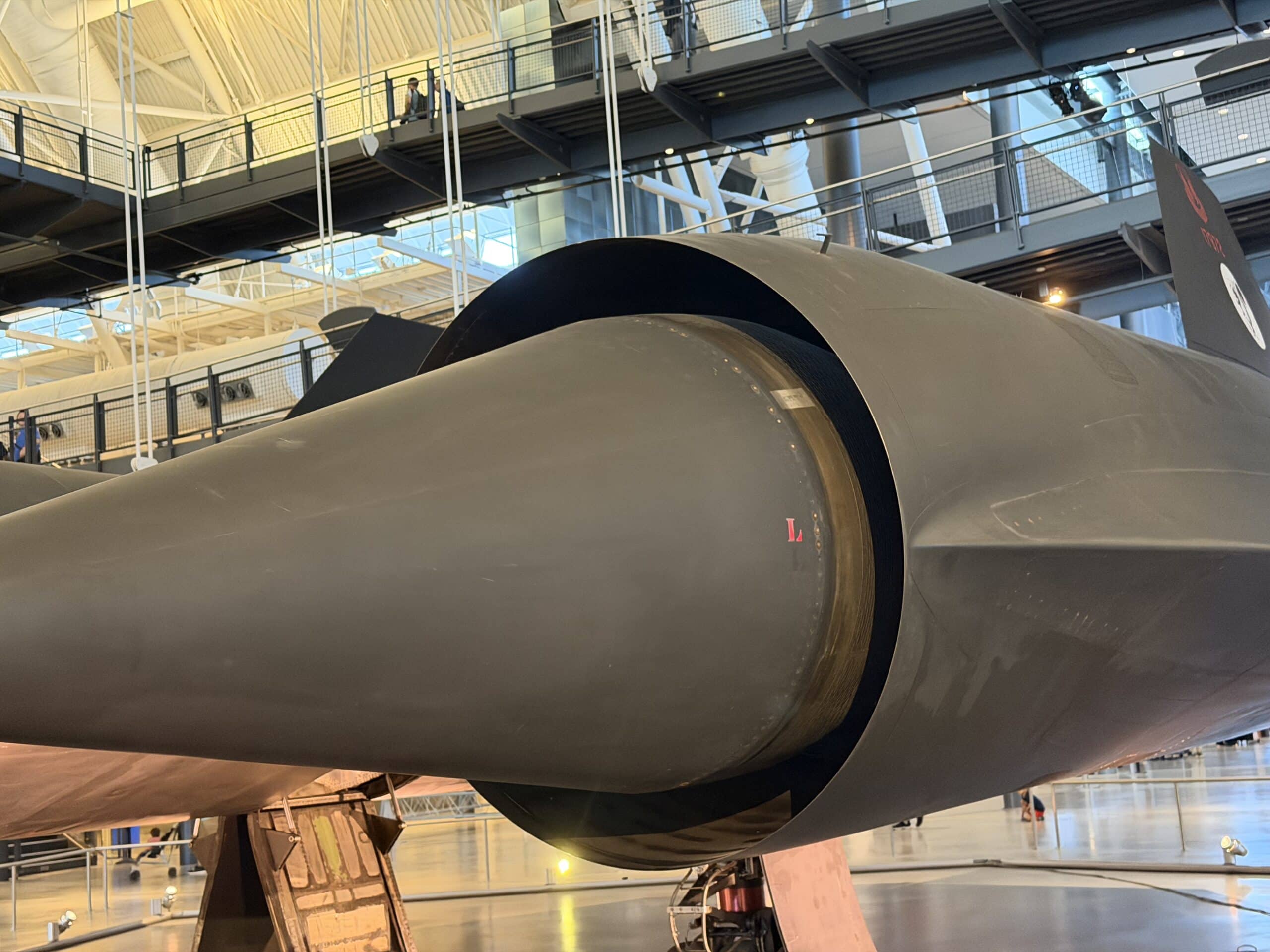
SR-71 Blackbird. Image taken at the Smithsonian on 6/30/2026 by 19FortyFive
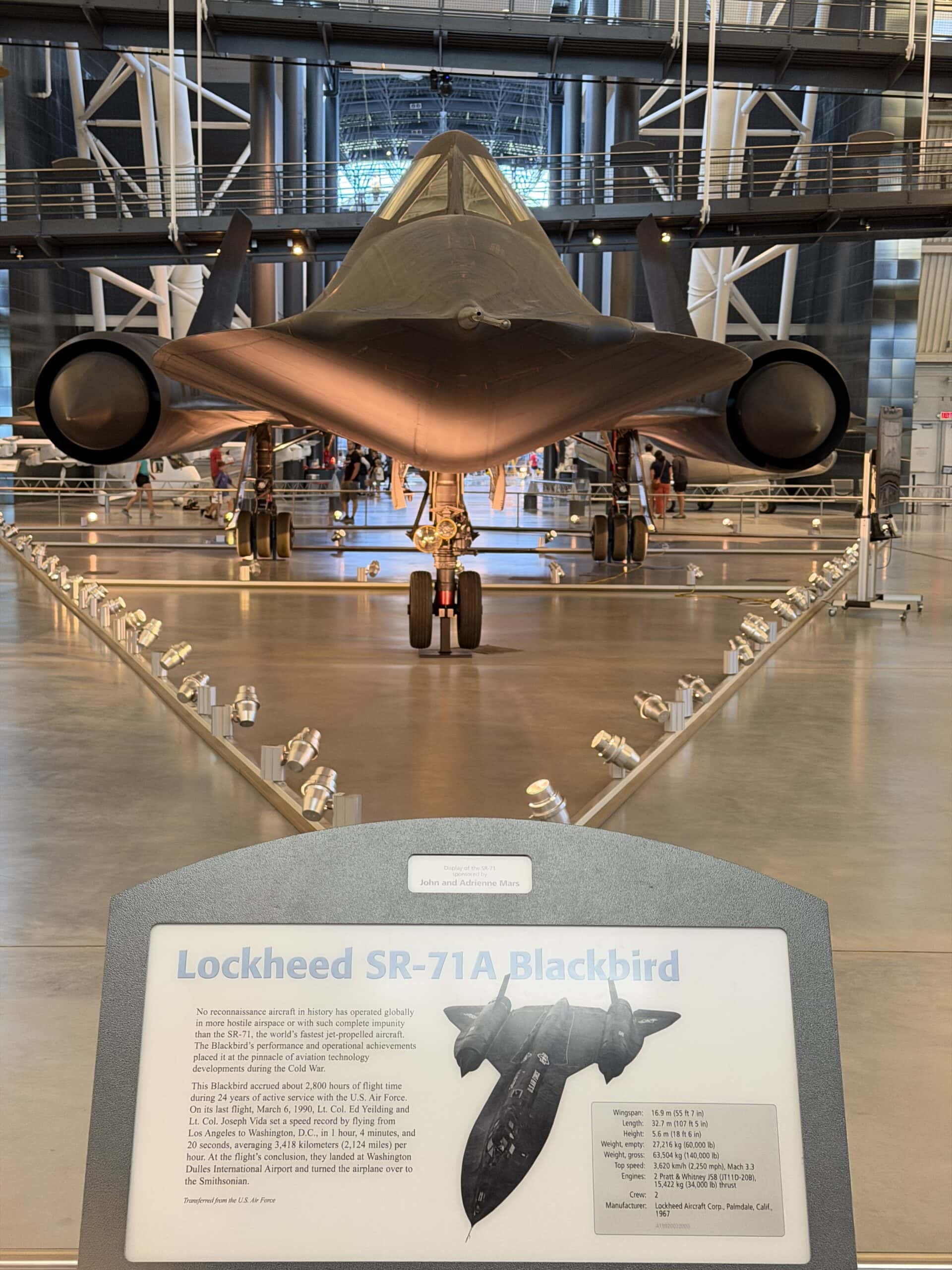
SR-71 Blackbird. Image taken at the Smithsonian on 6/30/2026 by 19FortyFive
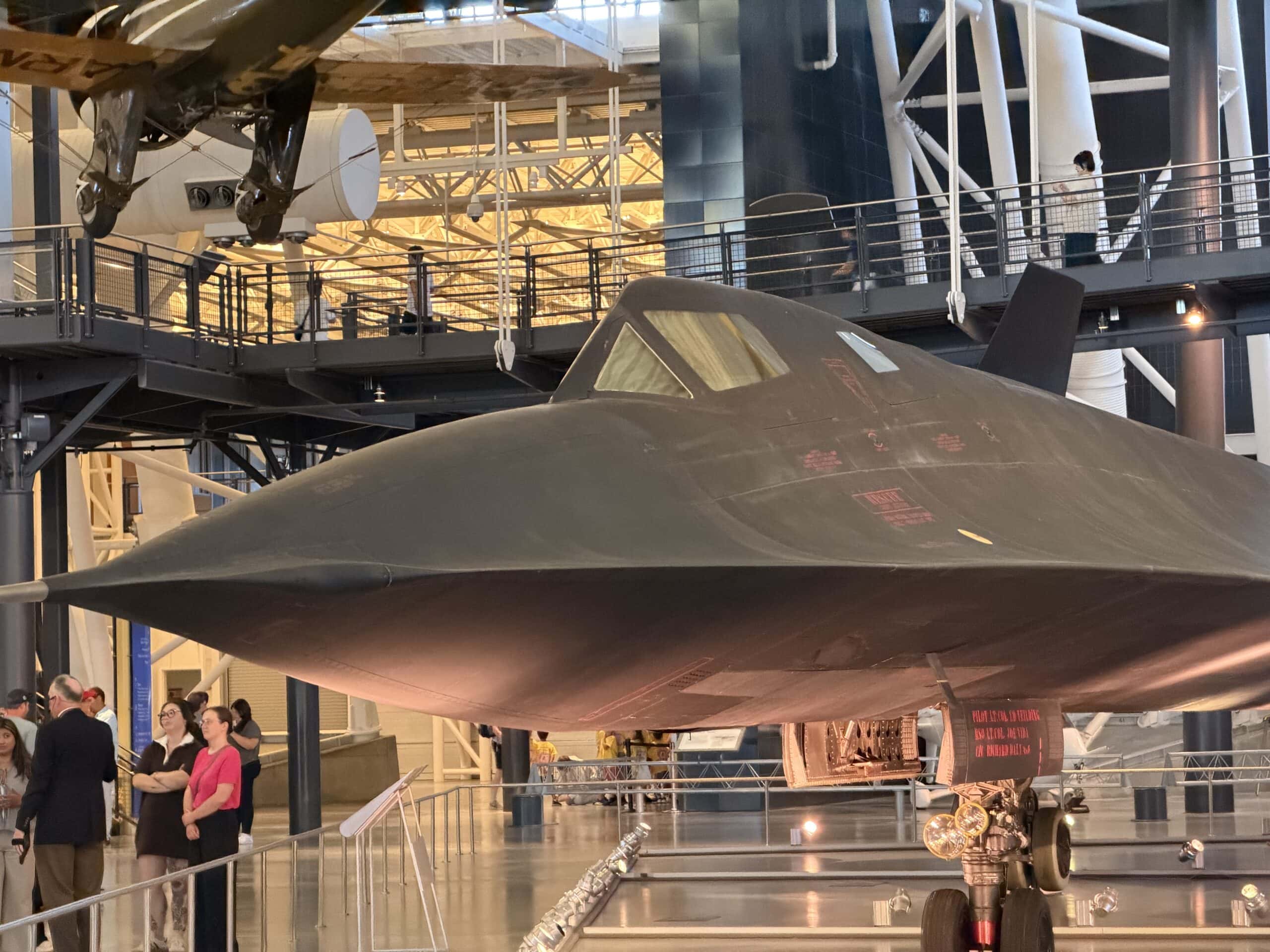
SR-71 Blackbird. Image taken at the Smithsonian on 6/30/2026 by 19FortyFive
Lockheed built only 32 SR-71s. The fleet included 29 operational SR-71As, two SR-71B trainers, and one hybrid SR-71C trainer. The small production run made every airframe valuable while creating an expensive support system for a unique aircraft.
Two J58 Engines Made Mach 3 a Cruise Setting
Two Pratt & Whitney J58 engines powered the Blackbird, each producing 32,500 pounds of thrust with afterburner. Movable inlet spikes controlled the airflow before it reached the engines. At high speed, much of the propulsion system’s thrust came from compressed air moving through the inlets and afterburners.
The aircraft measured 107 feet 5 inches long, spanned 55 feet 7 inches, and weighed about 140,000 pounds when loaded. Much of the structure used titanium because ordinary aluminum could not tolerate sustained aerodynamic heating. Parts of the exterior reached temperatures near 600 degrees Fahrenheit during Mach 3 flight.
Special JP-7 fuel resisted ignition at high temperatures. Triethylborane was used to ignite the engines and afterburners. The airframe expanded after takeoff as it heated, closing panel gaps that were visible while the aircraft sat cold on the ground.
Speed Was the Blackbird’s Main Defense
The SR-71 included early radar-signature-reduction measures, but it was not stealthy by modern standards. Its primary protection came from altitude, speed, and electronic countermeasures. Enemy radar crews had little time to detect the aircraft, establish a track, and guide a missile into a useful intercept position.
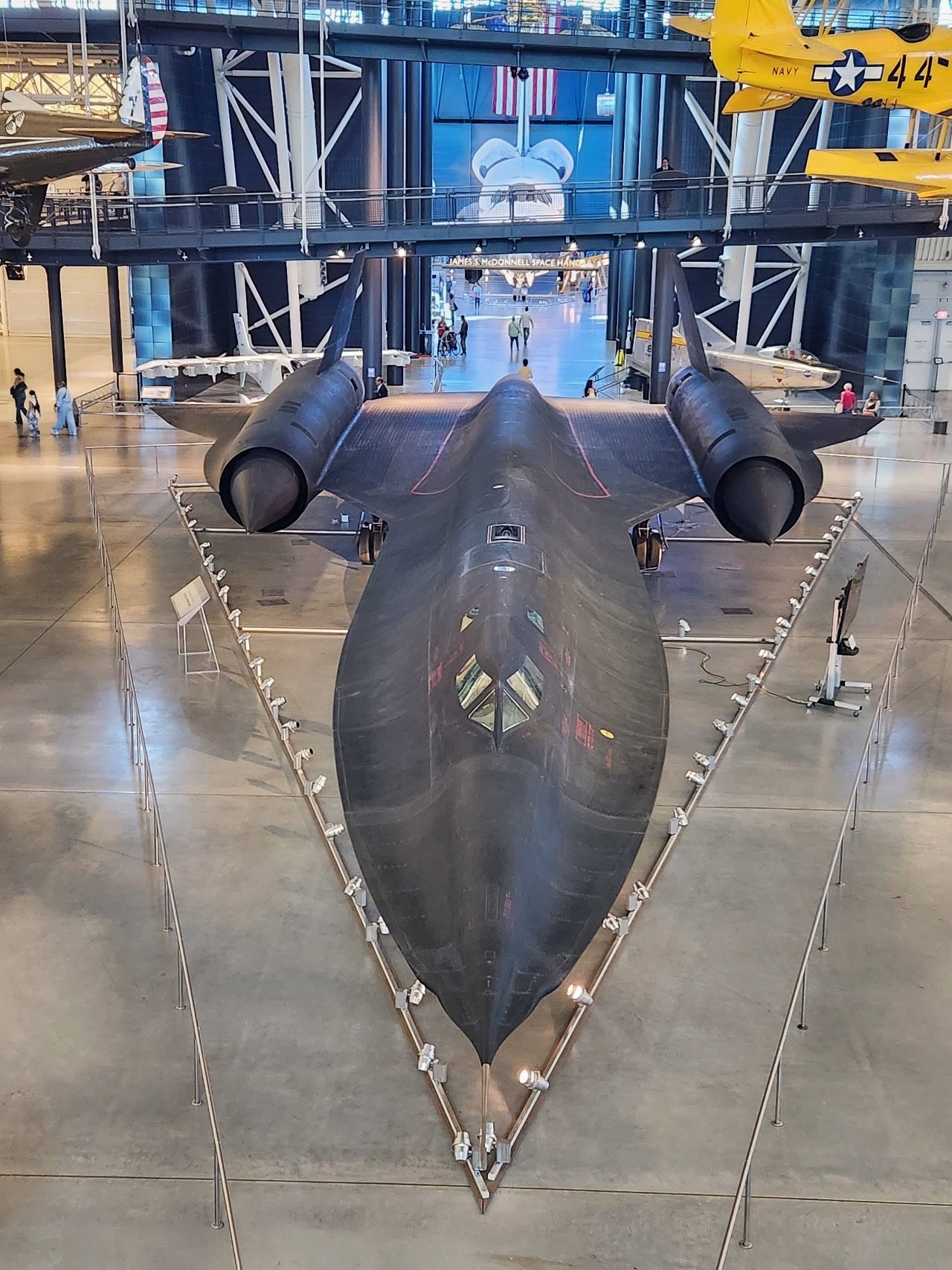
Longshot of SR-71. Image Credit: 19FortyFive.com

SR-71 Blackbird at the Smithsonian 19FortyFive.com Photo
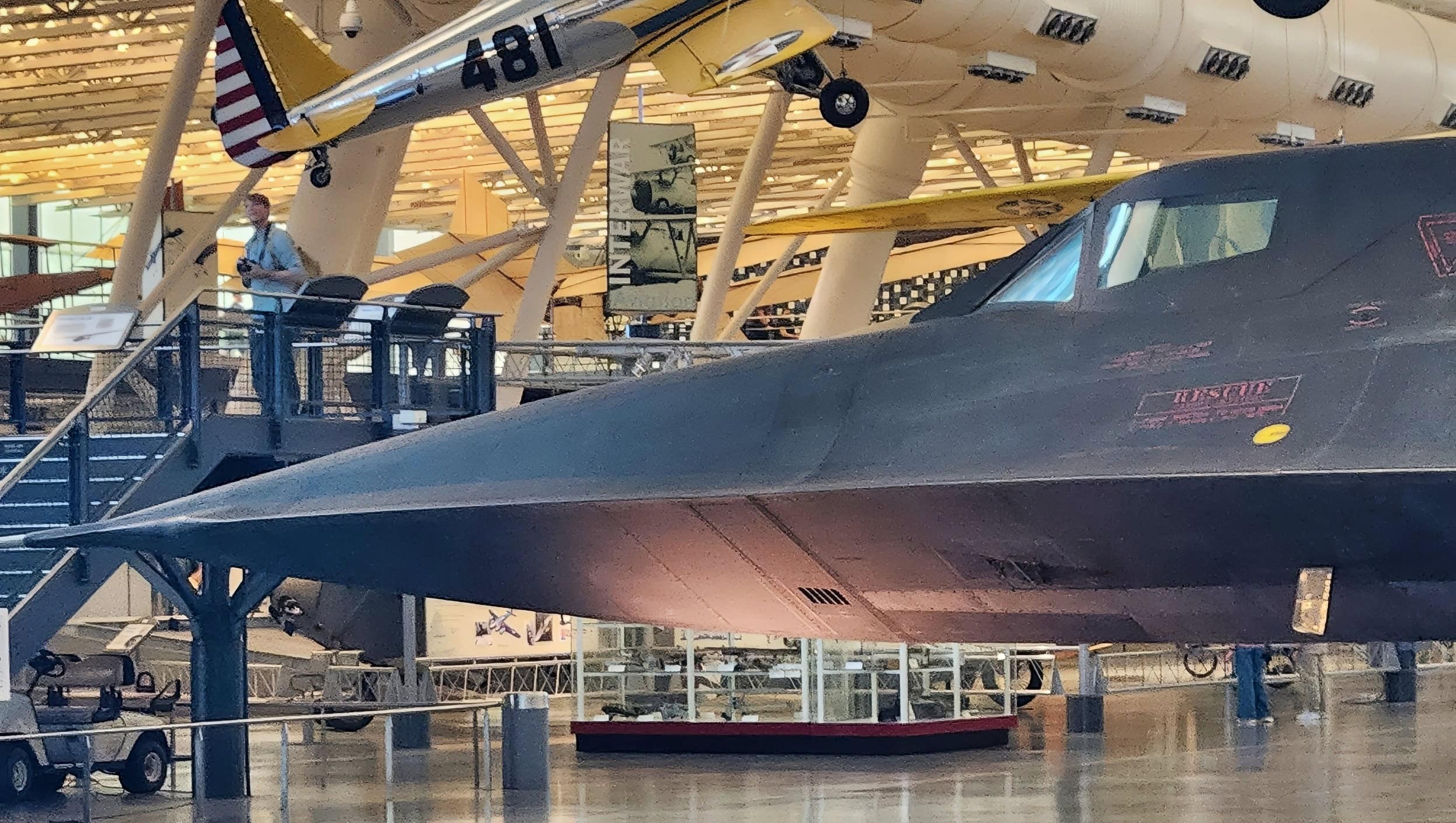
SR-71 Blackbird at Smithsonian. Image Credit: 19FortyFive.com
No SR-71 was shot down by enemy action. The aircraft flew missions around North Vietnam, North Korea, Cuba, Nicaragua, the Middle East, and Soviet naval facilities. From 80,000 feet, it could survey about 100,000 square miles in one hour.
The speed advantage was real, but later claims that thousands of missiles all narrowly missed Blackbirds are difficult to verify precisely. The stronger conclusion is simpler: hostile air defenses repeatedly tracked and engaged the aircraft without producing a confirmed kill. The survival record explains why speed and altitude became central to the Blackbird legend.
The 1976 Record Was the Best Documented Maximum
The normal operating limit was close to Mach 3.2, with higher speeds controlled by inlet temperature, structural heating, and engine limits. An SR-71 pilot could not simply push both throttles forward indefinitely. Excessive heat threatened seals, inlet operation, engines, and the titanium structure.
That is why the 2,193.167 mph record remains the most defensible answer to the question of maximum speed. Higher pilot claims describe short, exceptional events without the instrumentation, certification, and repeated measurements required for a recognized record. The debate over the SR-71’s true maximum speed has continued partly because some performance data remained classified.
The Blackbird also set distance records. On September 1, 1974, an SR-71 flew from New York to London in 1 hour, 54 minutes, and 56.4 seconds. It’s March 6, 1990, retirement flight covered Los Angeles to Washington in 1 hour, 4 minutes, and 20 seconds, averaging 2,124 mph despite acceleration, turns, and deceleration.
Cost and Timeliness Defeated a Still-Capable Aircraft
The Air Force retired the operational fleet on January 26, 1990. The official explanation centered on a declining defense budget plus the high cost of fuel, maintenance, specialized tankers, facilities, and a small support network. Satellites, U-2s, and emerging unmanned aircraft appeared capable of covering much of the reconnaissance mission.
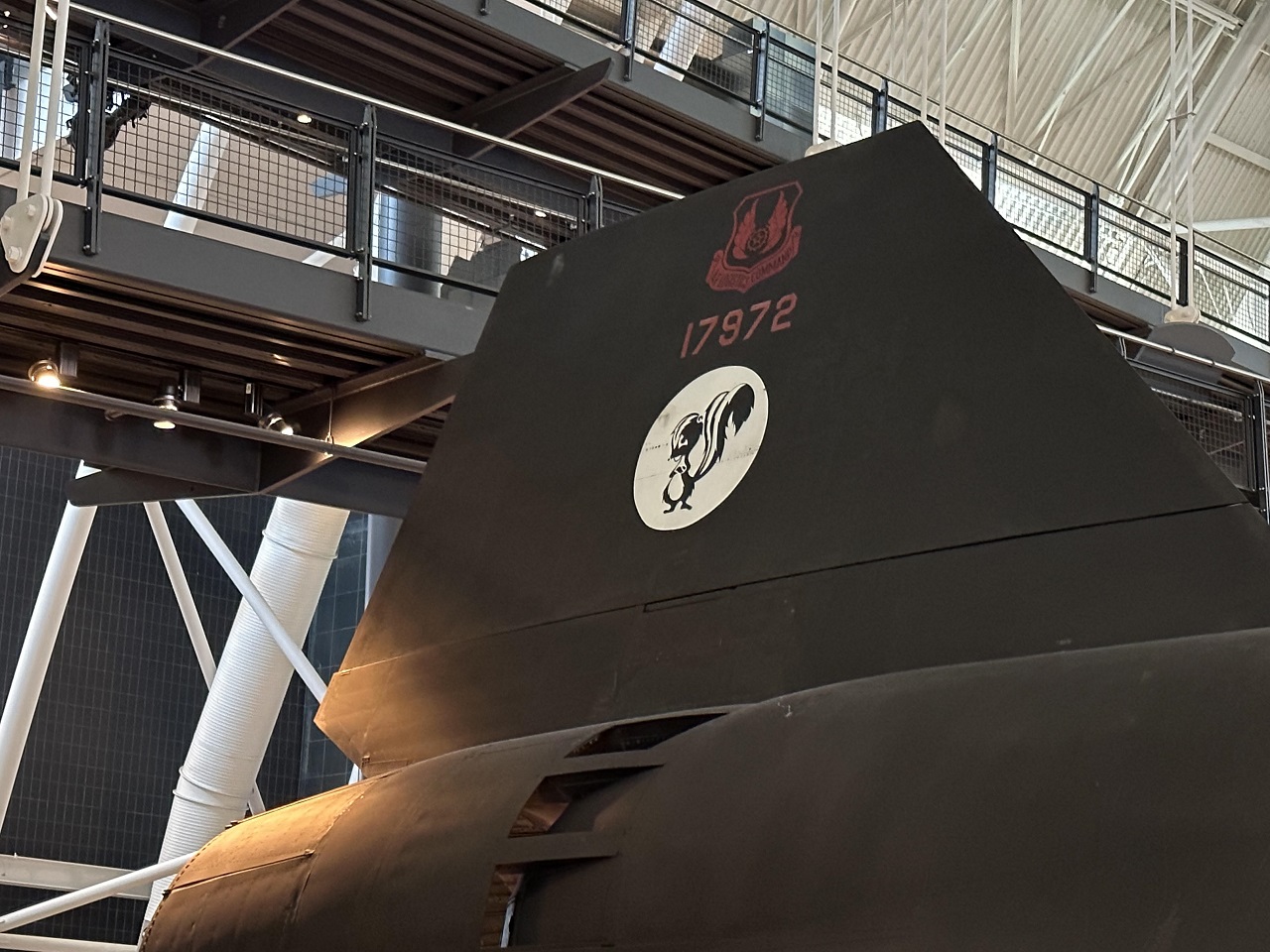
SR-71. SR-71 photo taken at the National Air and Space Museum. Taken by 19FortyFive on 10/1/2022.
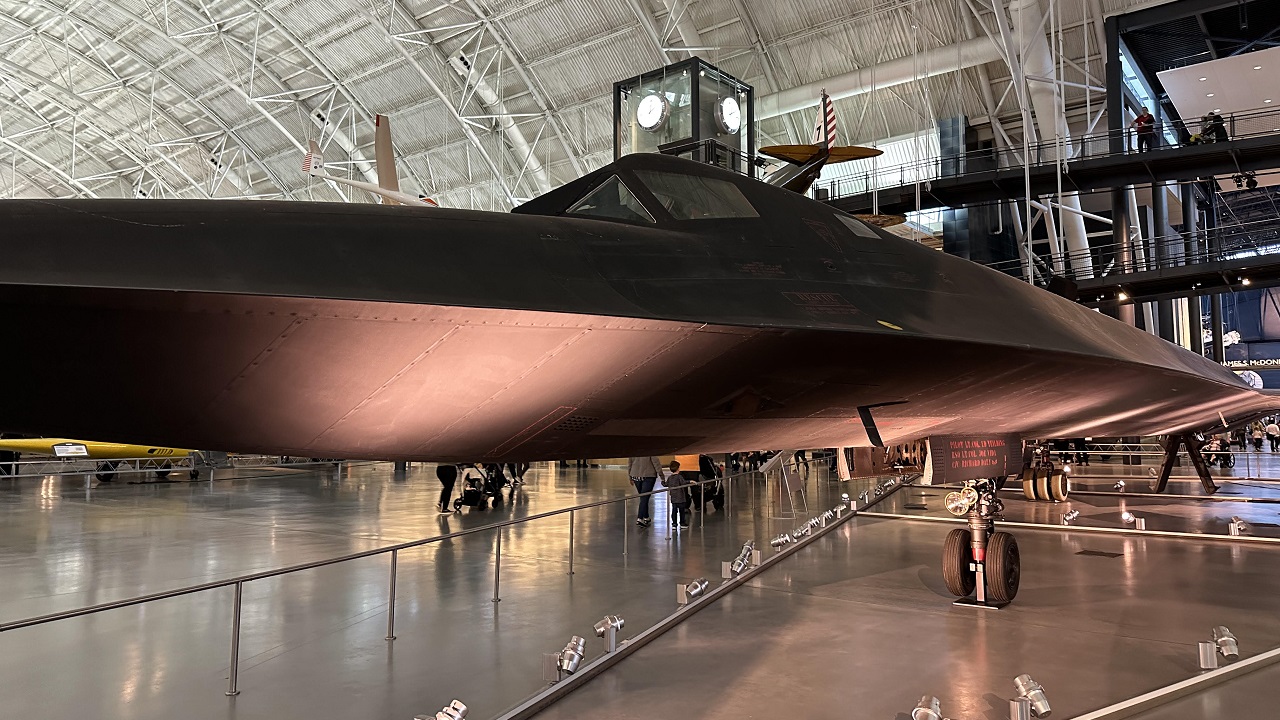
SR-71. SR-71 photo taken at the National Air and Space Museum. Taken by 19FortyFive on 10/1/2022.
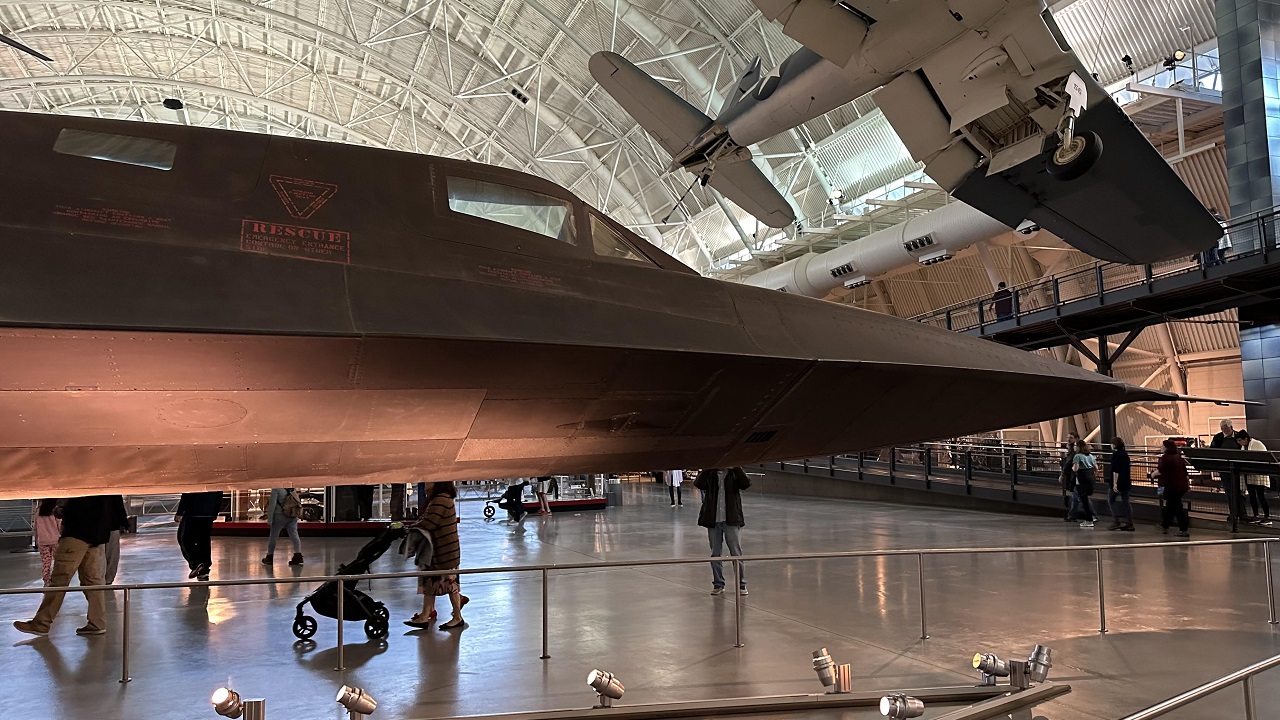
SR-71. SR-71 photo taken at the National Air and Space Museum. Taken by 19FortyFive on 10/1/2022.
The SR-71 also lacked the timely data links later added to other intelligence aircraft. Film and some sensor data had to be processed after landing, weakening their value for commanders who wanted imagery during a fast-moving battle. Supporters argued that satellites could not reposition quickly and that no replacement matched the Blackbird’s combination of speed, range, and survivability.
Congress funded a limited return during the mid-1990s after the Gulf War exposed continuing demand for rapid, wide-area reconnaissance. Three aircraft were restored, but the program remained caught between congressional support and Air Force opposition. The history of the Blackbird’s retirement and attempted return became a dispute over cost, intelligence priorities, and the value of a unique capability.
The Department of Defense permanently ended Air Force operations in 1998. The decision did not mean the aircraft had become slow or easy to intercept. It meant the Pentagon no longer wanted to pay for a specialized fleet whose intelligence mission increasingly overlapped with other systems.
NASA Flew the Final Blackbird in 1999
NASA used SR-71s for high-speed research involving aerodynamics, sonic booms, atmospheric measurements, and propulsion. One aircraft carried the Linear Aerospike SR-71 Experiment above its fuselage to collect data for a possible reusable launch vehicle.
The final flight of any SR-71 took place on October 9, 1999, when NASA 844 flew from Edwards Air Force Base. The aircraft were then distributed among museums, leaving later generations to debate why a platform with no true replacement was allowed to disappear.
The record-setting aircraft, serial number 61-7958, now sits inside the Museum of Aviation at Robins Air Force Base in Georgia.
About the Author: Harry J. Kazianis
Harry J. Kazianis (@Grecianformula) was the former Senior Director of National Security Affairs at the Center for the National Interest (CFTNI), a foreign policy think tank founded by Richard Nixon based in Washington, DC. Harry has over a decade of experience in think tanks and national security publishing. His ideas have been published in the NY Times, The Washington Post, The Wall Street Journal, CNN, and many other outlets worldwide. He has held positions at CSIS, the Heritage Foundation, the University of Nottingham, and several other institutions related to national security research and studies. He is the former Executive Editor of the National Interest and the Diplomat. He holds a Master’s degree focusing on international affairs from Harvard University.

