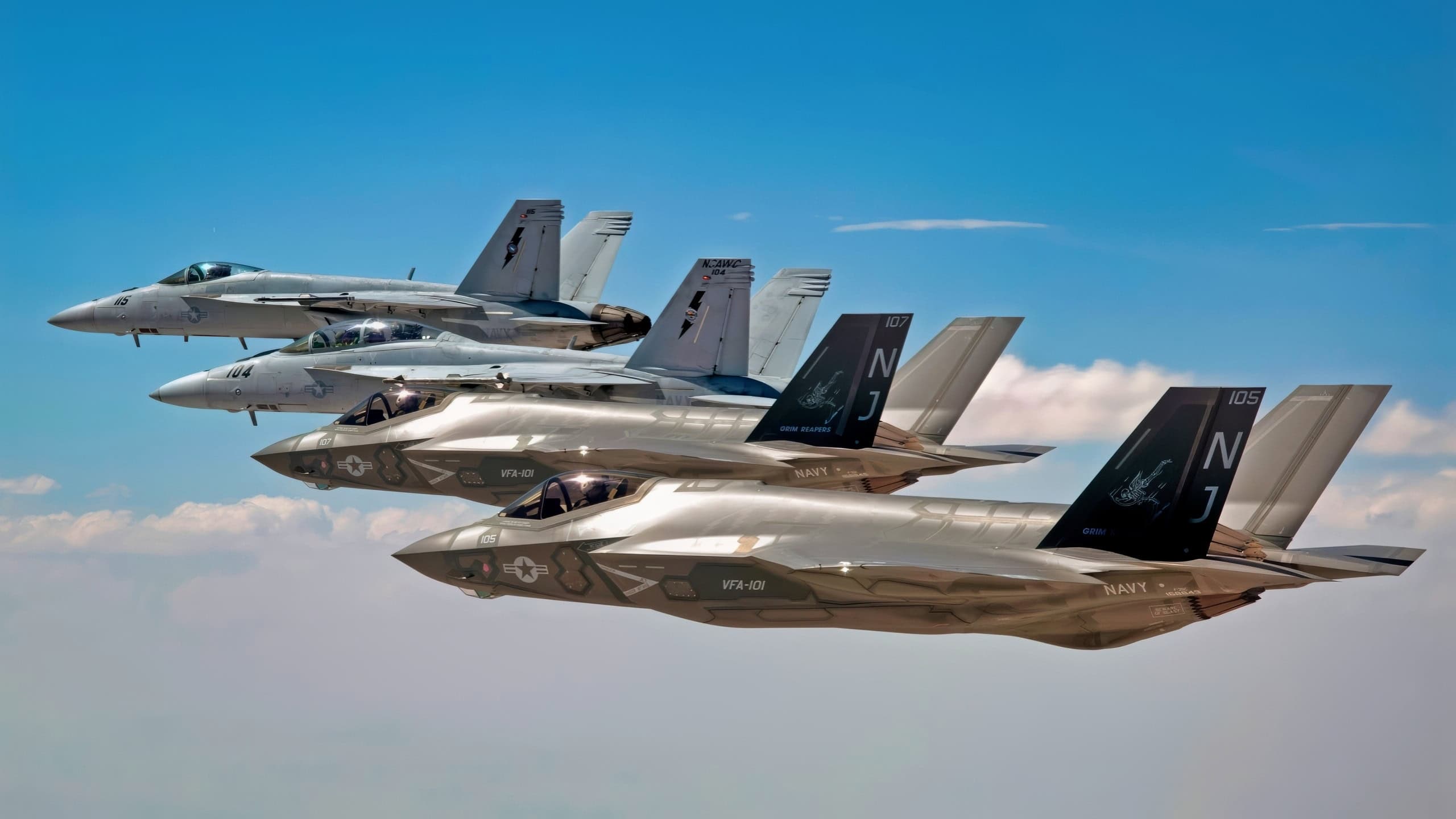
The USS Gerald R. Ford (CVN-78) was proclaimed as America’s most advanced aircraft carrier. According to multiple assessments, the next-generation carrier–the namesake of an entirely new class of aircraft carriers–incorporated next-level technologies that were unmatched anywhere in the world.
Everything from electromagnetic aircraft launch systems (EMALS) to advanced arresting gear (AAG), the Ford was the Starship Enterprise of the High Seas.
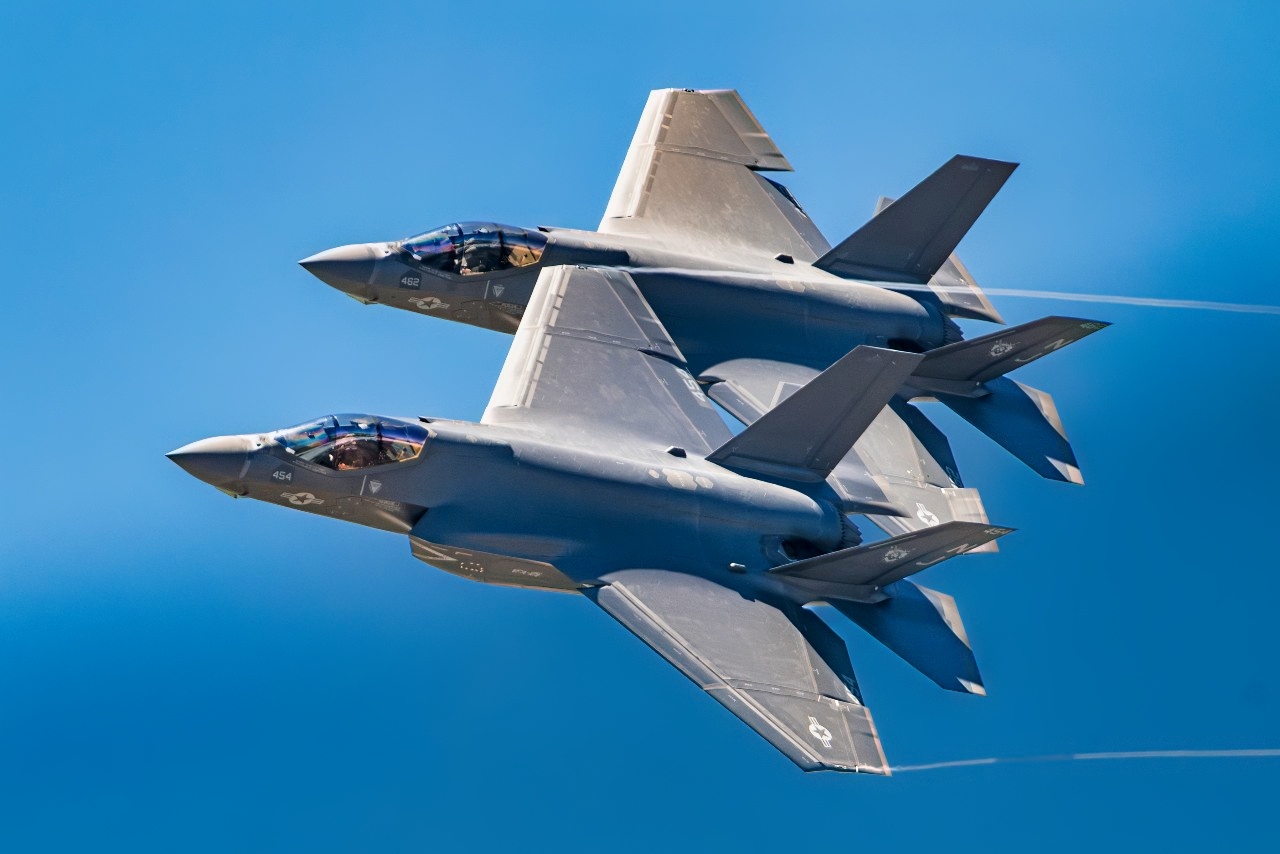
The U.S. Navy F-35C Lighting II Demo Team performs a flight demonstration at the Wings Over South Texas Air Show. This year’s air show marks Wings Over South Texas’s first return to Naval Air Station Corpus Christi since 2019.
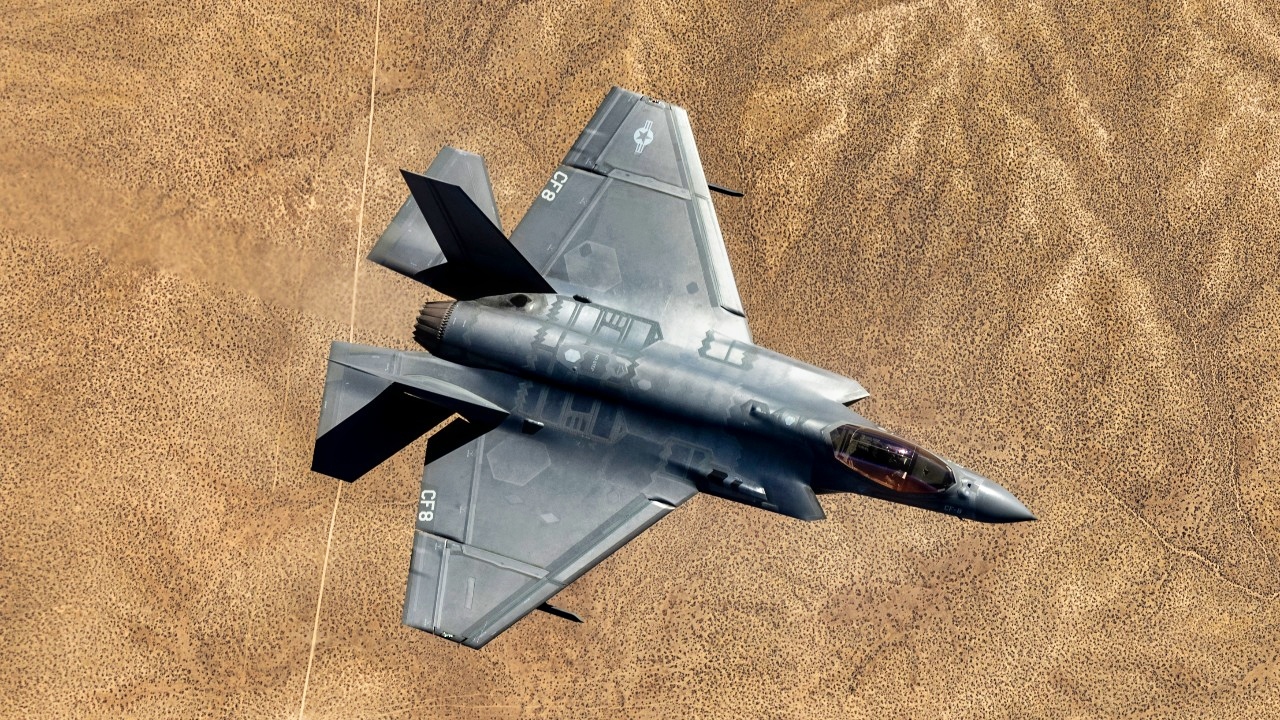
Maj. Nicholas Helmer conducts a mission over the Mojave Desert on October 8, 2024. The F-35C aircraft is assigned to the 461st Flight Test Squadron, F-35 Integrated Test Force at Edwards Air Force Base, California. The aircraft’s dual markings of United States Navy Air Test and Evaluation Squadron Nine (VX-9) and 461st FLTS represents the joint mission of the Integrated Test Force. The F-35 ITF includes people and aircraft from the United States Air Force, United States Navy, United States Marine Corps, foreign partners, Air Force Reserve Command 370th FLTS, and the Air Force Operational Test and Evaluation Center’s 31st TES. (Courtesy Photo, Lockheed Martin Edwards Team)
And it certainly had a high price tag. At $13 billion, many Americans expected the ship to meet— and even surpass— all the hype surrounding it.
Yet, that was not the case.
A Massive Series of Failures
The carrier struggled to meet any of its development timelines.
There were serious complications with some of the most basic, essential systems on the carrier.
The EMALS and AAG suffered multiple problems.
There were complications with the aircraft’s onboard elevators as well.
The litany of complications caused massive budget overruns and scheduling delays.
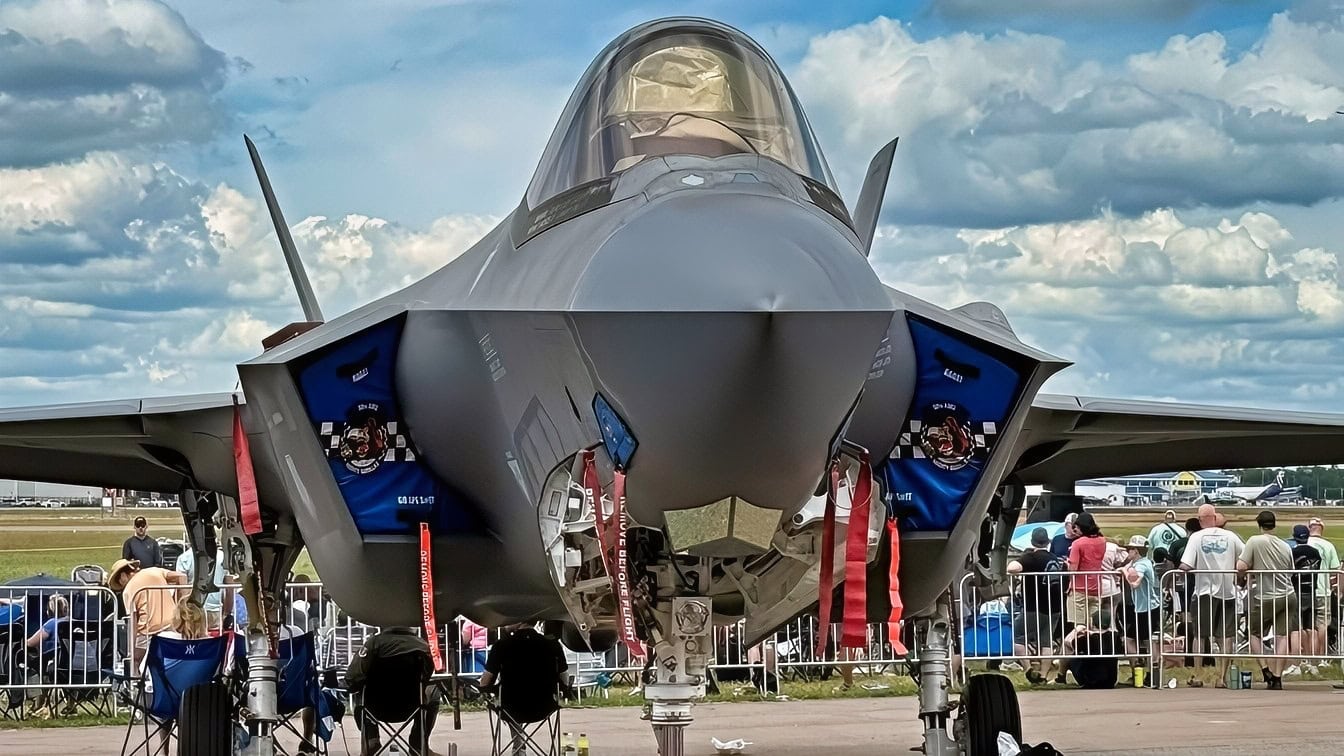
F-35C Lakeland Airshow Photo 19FortyFive Image Taken on 4/19/2026.
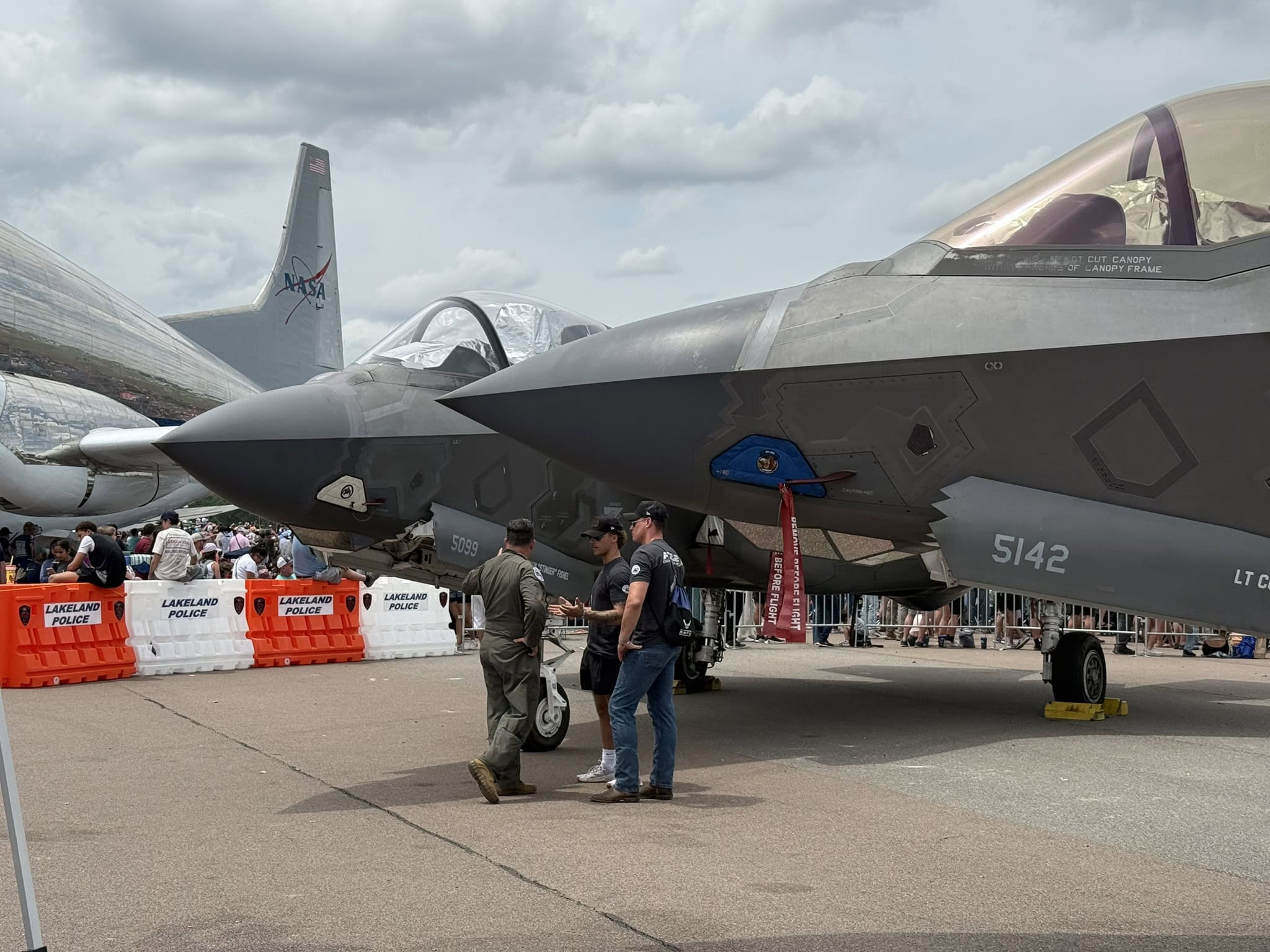
F-35C. Image Credit: 19FortyFive.com taken on 4/19/2026.
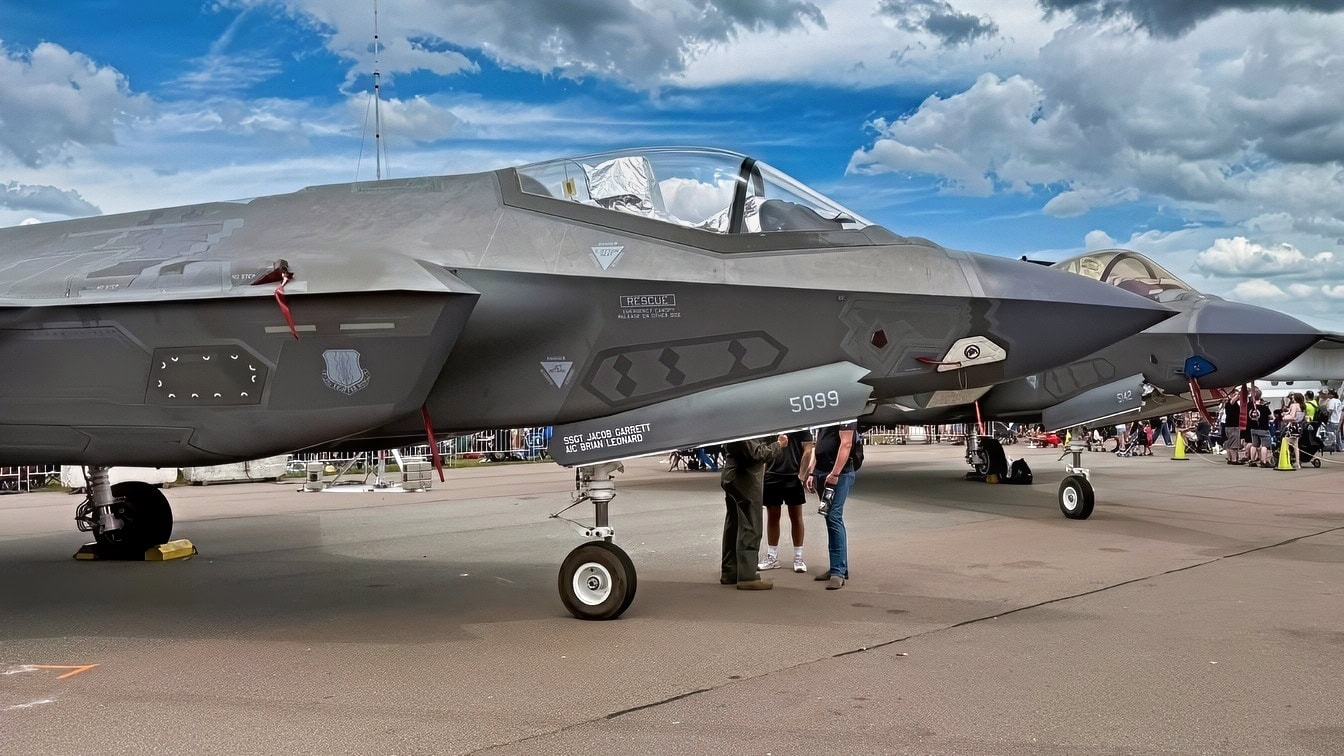
F-35C Lakeland Airshow 19FortyFive.com Image
In fact, the Navy forced the ship into service before many of those technical problems were resolved.
That became apparent when even basic systems on the carrier, such as the sewage system, failed to work as designed during the Ford’s deployment in the Iran War.
There was also allegedly a laundry room fire that erupted, which basically took the great carrier out of the war.
All those problems were bad enough.
But, more fundamentally, the Ford-class was meant to carry the Navy’s next-generation warplanes.
Notably, the carrier was supposed to be the mothership for air wings of F-35C Lightning II fifth-generation multirole stealth warplanes.
But the carrier left the shipyards without the ability to launch and recover these planes. That’s because the F-35C generates far too much exhaust heat–about 3,600 degrees Fahrenheit–during high-tempo operations. Apparently, the USS Gerald R. Ford’s flight deck was not built to withstand those temperatures.
The deck melts if exposed to F-35C exhaust heat!
The Gerald R. Ford Can’t Take the F-35C’s Heat
The Pentagon has, of course, provided many excuses for this critical design failure.
Initially, the carrier was designed in tandem with the F-35C. But delays and changes to the F-35C back in the 2000s, when the Ford was being developed, broke the synchronization of the Ford and F-35 development programs.
So, the F-35C embraced a hotter, more powerful Pratt & Whitney F135 engine after the final design of the Ford’s flight deck plating had been accepted.
In other words, the next-generation aircraft carrier cannot carry the Navy’s next-generation warplanes. The older Nimitz-class carriers that are already being retired in sequence, though, can carry the F-35Cs.
That’s because the Navy created a special coating for the Nimitz-class carriers and applied it to carriers like the USS Carl Vinson, which it did not have time to apply to the USS Gerald R. Ford because the newest carrier was forced into deployment.
The Ford carries the older, fourth-generation F/A-18 Super Hornets instead.
If one were to believe the Navy, then it sounds like fixing the incompatibility between the USS Gerald R. Ford and the F-35C is as easy as spraying on some paint the next time the great ship is in port.
Indeed, the Ford is now being serviced at Norfolk. Sadly, there’s more to the design failure of the Ford when it comes to managing the F-35C.
Breaking Defense reports that the Navy needed to expand the aircraft maintenance facilities on the Ford.
Because the F-35Cs are such complex machines, the carrier also required new logistics support equipment. New, secure mission-planning spaces needed to be installed.
Most importantly, the Navy had to expand the ship’s storage areas to accommodate the stealth fighter’s unique requirements.
Many of the upgrades have already been made to the other Ford-class carriers being built. But the namesake of the class, the ship that cost the most, the USS Gerald R. Ford, very much remains a work in progress.
$13 Billion Doesn’t Buy the Navy What It Used To…
And it’s a costly work in progress.
Taken together, the Ford does not represent the next generation of American aircraft carrier capability.
It is clearly a gigantic, floating boondoggle that has yet to ever live up to the immense promise, exorbitant cost, and strategic needs of the United States Navy today.
A carrier that was designed to launch and recover the Navy’s F-35C warplane left port without the ability to do so. That’s quite a scandal.
About the Author: Brandon J. Weichert
Brandon J. Weichert is the Senior National Security Editor at 19FortyFive.com. He also manages The Weichert Brief on Substack. Weichert also hosts “National Security Talk” on Rumble. He is the author of four bestselling national security books, the most recent of which is A Disaster of Our Own Making: How the West Lost Ukraine (Encounter Books). Follow him via Twitter/X @WeTheBrandon.