

“The basic objectives and principles of war do not change. The final objective in war is the destruction of the enemy’s capacity and will to fight”- Admiral Chester Nimitz
Admiral Chester W. Nimitz (1885-1966) was a fleet admiral in the United States Navy. He played a major role in the naval history of World War II as Commander in Chief, US Pacific Fleet, and Commander in Chief, Pacific Ocean Areas, commanding Allied air, land, and sea forces.
His quote highlights that, despite technological advancements (changing from sail to steel to nuclear), Nimitz argues that the core nature of war remains the same.
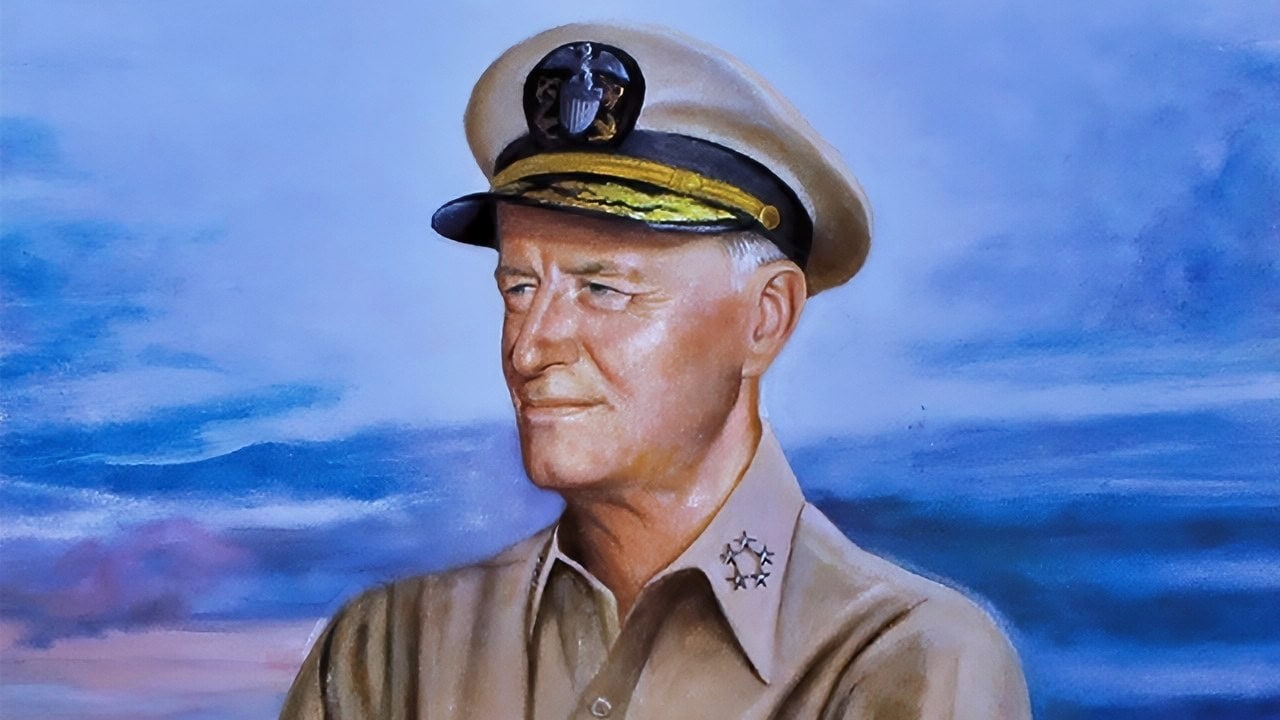
Chester Nimitz Navy Admiral. Image Credit: Creative Commons.
Key Aspects Of Nimitz’s Philosophy From This Quote
Nimitz emphasizes that “Capacity to fight” refers to the enemy’s logistical, industrial, and military power (ships, planes, troops).
The “Will to fight” is crucial—breaking the enemy’s morale so they cease resistance.
“Naval forces are able, without resorting to diplomatic channels, to establish offshore anywhere in the world, air fields completely equipped with machine shops, ammunition dumps, tank farms, warehouses, together with quarters and all types of accommodations for personnel.”
The ultimate goal isn’t just killing, but changing the enemy’s political or strategic behavior to match the victor’s goals. This philosophy echoes Carl von Clausewitz’s idea of war as an extension of politics by other means, which is intriguing because, at the time, the US military was a strong adherent of his theories.
Nimitz believed in empowering subordinates, meticulous preparation, and calm resilience, famously stating, “Leadership consists of picking good men and helping them do their best”.
His philosophy emphasized taking action while possible, valuing junior officers’ advice, and maintaining faith in personnel over machines.
One of his quotes is still very true today. “Our present control of the sea is so absolute that it is sometimes taken for granted.”
Admiral Chester W. Nimitz, The Navy’s WWII Leader
Fleet Admiral Chester W. Nimitz (1885–1966) was a towering figure in U.S. naval history, serving as Commander in Chief, Pacific Fleet (CINCPAC) during World War II.
Chester William Nimitz was born on February 24, 1885, in Fredericksburg, Texas. His father died shortly before he was born, and his grandfather was a major influence on his life.
In a rare feat, Nimitz never finished high school; he dropped out to attend the US Naval Academy at Annapolis. However, he excelled at the Naval Academy, graduating seventh in a class of 114.
Early in his naval career, he served on small surface ships, including the command of the gunboat Panay, which many years later would be bombed by the Japanese in China in 1937, prior to World War II.
It was on submarines that he found his niche. Nimitz served in and commanded submarines for nearly two decades early in his career. He was a leading authority on submarine propulsion, specializing in diesel engines, and commanded vessels such as the USS Plunger (A-1), USS Snapper, and USS Skipjack.
He was considered a leading expert, commanding Atlantic submarine forces and influencing early submarine development.
World War II Comes for Admiral Nimitz
After he was promoted to Admiral, he directed Allied air, sea, and land forces to victory over Japan, including the pivotal Battle of Midway, and culminated in Japan’s surrender aboard the USS Missouri.
Shortly after the disaster at Pearl Harbor that thrust the United States into World War II, President Franklin Delano Roosevelt chose Nimitz over 28 other officers to lead the Pacific Fleet.
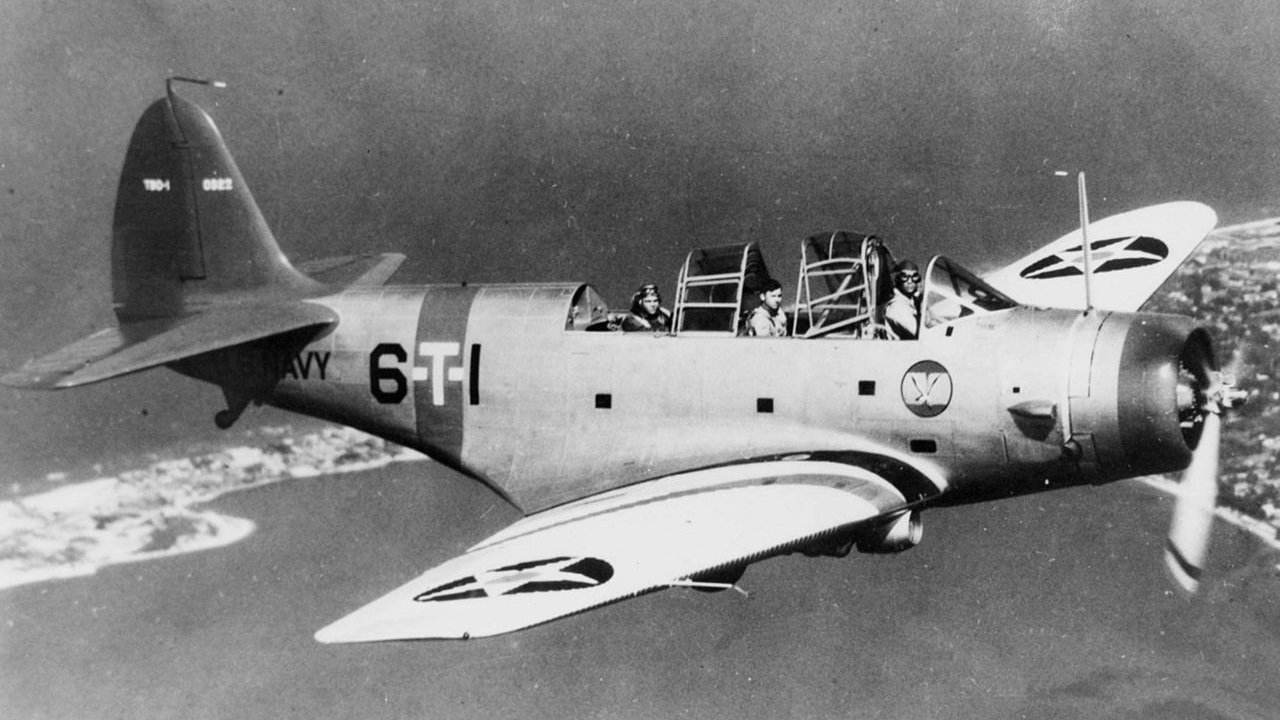
A U.S. Navy Douglas TBD-1 Devastator (BuNo 0322) of Torpedo Squadron Six (VT-6) pictured in flight, probably over Virginia (USA). Note the squadron insignia, a Great White Albatross, on the fuselage beneath the cockpit. Established as VT-8S in 1937, the squadron was redesignated VT-6 that same year. Accepting delivery of its first TBD-1 aircraft in 1938, the squadron operated from USS Enterprise (CV-6) until after the Battle of Midway in June 1942. The TBD-1 0322 ditched after stalling on takeoff from the Enterprise on 10 March 1939. The crew could be rescued uninjured.
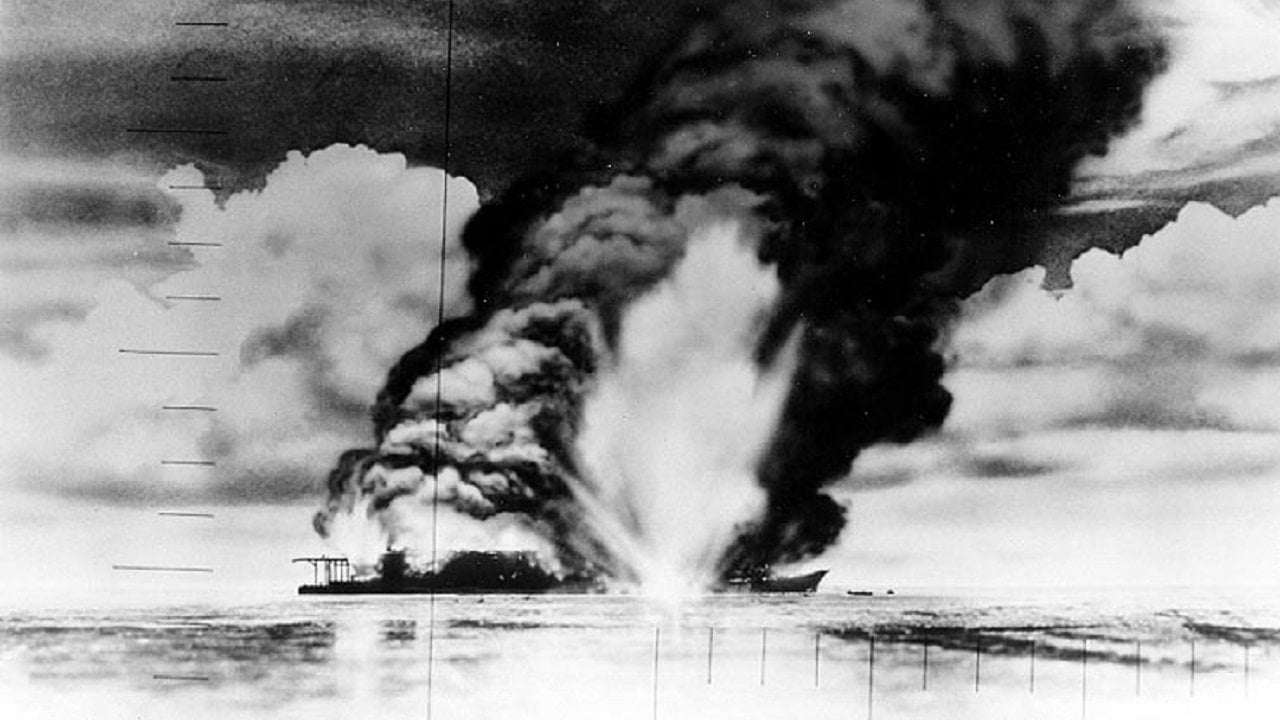
Diorama simulating periscope view from Nautilus, attacking a Japanese aircraft carrier at the Battle of Midway.
On December 16, 1941, just nine days after the Pearl Harbor raid, Secretary of the Navy Frank Knox relayed to Nimitz that he was the next Commander in Chief, US Pacific Fleet (CinCPac) and Commander in Chief, Pacific Ocean Areas, commanding Allied air, land, and sea forces in the region.
Roosevelt’s orders were for Nimitz to “get the hell out to Pearl Harbor and don’t come back until the war is won.”
Nimitz quickly improved the US’ shattered morale, and six months later, an outnumbered US fleet turned the tide of the war with the stunning victory over the Japanese Navy at the Battle of Midway.
After the island-hopping campaign that saw bloody fighting on Guadalcanal, Tarawa, New Guinea, and Saipan, he led the United States to victory at the Battle of the Philippine Sea (known also as “The Great Marianas Turkey Shoot“) and the Battle of Leyte Gulf.
On December 19, 1944, he was promoted to the newly created five-star rank of Fleet Admiral.
In 1945, the US invaded Iwo Jima and Okinawa, while Army B-29 air raids of Japan itself devastated Japan’s ability to wage war. Nimitz credited the planning and training the US Navy conducted even before the war, which prepared them for any eventuality, except the Japanese kamikaze.
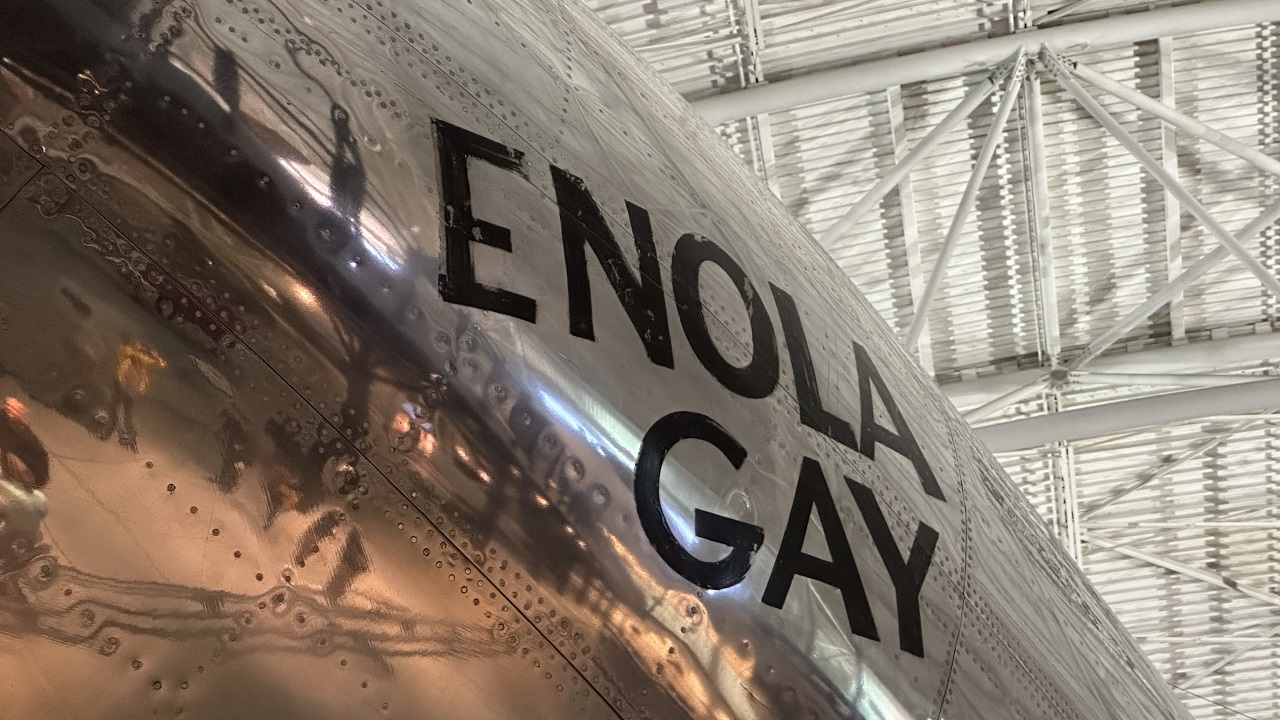
Enola Gay B-29. The image was taken on October 1, 2022. Image Credit: 19FortyFive.com
He oversaw the buildup and the gradual, inexorable march toward Japan. At the height of the Pacific War, Nimitz commanded more than two million men and women, 5,000 ships, and 20,000 planes.
Retirement
He retired from the Navy in 1947 as a Fleet Admiral.
Nimitz died in 1966 of a stroke and was buried beside his wife and fellow admirals Raymond A. Spruance, Richmond K. Turner, and Charles A. Lockwood, and their wives, something all of them agreed to when they were alive.
About the Author: Steve Balestrieri
Steve Balestrieri is a National Security Columnist. He served as a US Army Special Forces NCO and Warrant Officer. In addition to writing on defense, he covers the NFL for PatsFans.com and is a member of the Pro Football Writers of America (PFWA). His work was regularly featured in many military publications.