Chester Nimitz took command of the Pacific Fleet weeks after Pearl Harbor — when American naval power was at its lowest point in history. He turned it into the force that destroyed the Imperial Japanese Navy and signed the surrender on the deck of the USS Missouri.
Weekend Quote of the Day from the U.S. Navy Legend
“Some of the best advice I’ve had comes from junior officers and enlisted men.” – Admiral Chester Nimitz
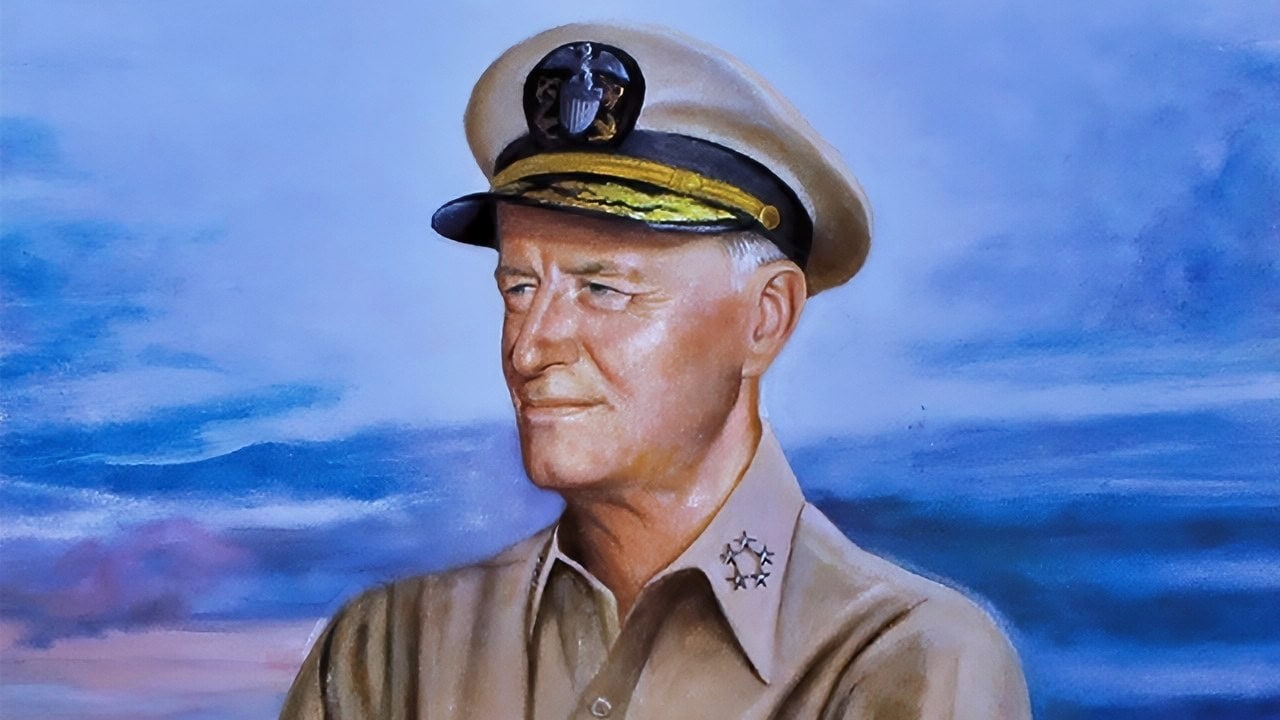
Admiral Chester Nimitz was one of the most influential admirals in U.S. Naval history.

U.S. Navy Admiral Chester W. Nimitz Portrait. Image Credit: Creative Commons.
He inherited command of the U.S. Pacific Fleet during one of its lowest points and transformed it into a globe-spanning fighting force that destroyed the Imperial Japanese Navy at its height.
In the midst of it all, Nimitz remained humble and accepted the heavy burden of leadership, doing his best to save the lives of those under his command. He was shaped by his experiences during WWI, which helped shape him into the legendary commander of WWII.
Chester Nimitz: Early Life and Education
Chester William Nimitz was born on February 24, 1885, in Fredericksburg, Texas, a German-Texan community steeped in frontier culture.
His grandfather, Charles Nimitz, a retired sea captain, operated a hotel that would later become part of the National Museum of the Pacific War.
His father died before he was born, leaving his mother, Anna Nimitz, to raise him under modest financial circumstances.
Although Nimitz originally hoped to attend West Point and pursue an Army career, no appointments were available. Determined to pursue military service, he took the competitive examination for the U.S. Naval Academy, earning an appointment from Texas’s Twelfth Congressional District and entering Annapolis in 1901.
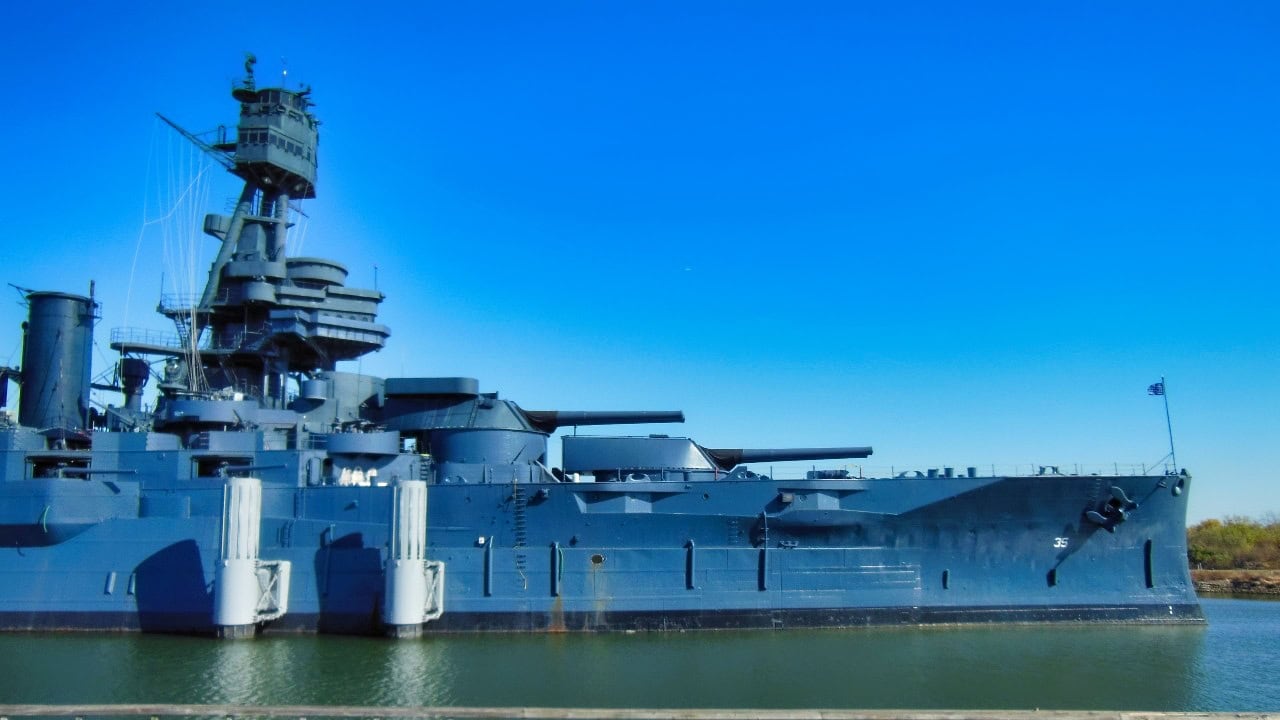
Battleship USS Texas. Image Credit: Creative Commons.
At the Naval Academy, Nimitz excelled academically, showing particular talent in mathematics. He graduated seventh in his class of 114 in 1905, earning distinction and praise from his peers, who described him as a man of “cheerful yesterdays and confident tomorrows.”
His years at the Academy helped develop the discipline and intellectual rigor that would define his later career.
Early Naval Career
After graduation, Nimitz served the two years of sea duty then required by law, beginning aboard the battleship USS Ohio on a cruise across the Pacific. He became an ensign in 1907 and was assigned his first command, the gunboat USS Panay.
Shortly thereafter, he commanded USS Decatur but ran the vessel aground, resulting in a court-martial. Although the incident might have jeopardized his future, Nimitz’s professionalism and strong reputation allowed him to continue rising through the ranks.
By 1913, Nimitz had been sent to Germany and Belgium to study diesel engine technologies, a critical innovation in naval engineering.
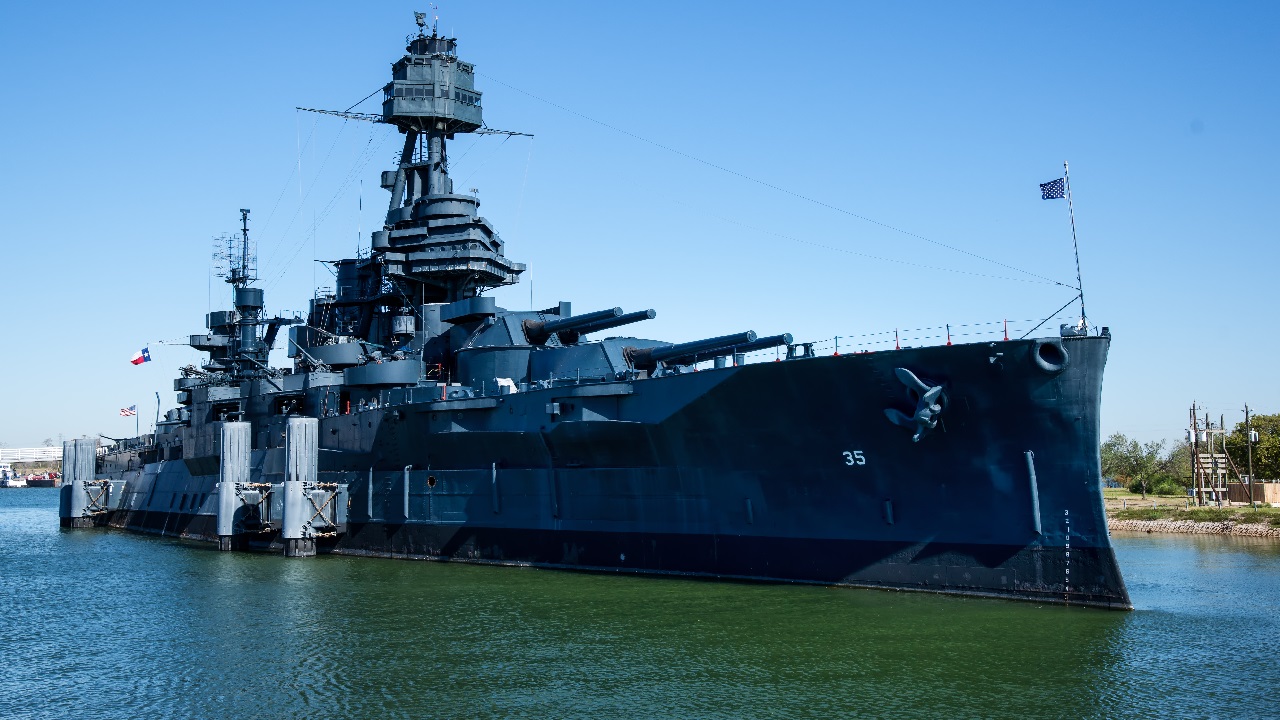
Battleship USS Texas from 2011. Image Credit: Creative Commons.
His subsequent work as an engineering officer aboard the oiler USS Maumee made him a key figure in the Navy’s transition to diesel propulsion, a shift that enhanced safety and operational range.
This early involvement in advanced propulsion would later influence his support for nuclear-powered submarines, culminating in the launch of USS Nautilus, the world’s first nuclear submarine.
World War I and the Interwar Years
During World War I, Nimitz served as aide and chief of staff to the commander of the Atlantic submarine force (COMSUBLANT), playing a central role in shaping undersea warfare strategy and coordination.
After the war, he joined the Office of the Chief of Naval Operations and served on the Board of Submarine Design, helping develop the next generation of U.S. submarines.
His interwar career was marked by increasing leadership and technical expertise. He served as executive officer of the battleship USS South Carolina and later commanded the heavy cruiser USS Augusta, flagship of the U.S. Pacific Fleet. His extensive service in the submarine force made him the Navy’s preeminent expert in undersea operations. In 1939, he was appointed Chief of the Bureau of Navigation, one of the most significant administrative roles in the Navy on the eve of World War II.

USS Alabama South Dakota-Class. Image Credit: Creative Commons.
World War II: Leadership in the Pacific
The Japanese attack on Pearl Harbor on December 7, 1941, thrust the United States into World War II and transformed Nimitz’s role overnight. Just weeks later, he was appointed Commander in Chief, U.S. Pacific Fleet (CINCPAC), and later Commander in Chief, Pacific Ocean Areas (CINCPOA). These dual appointments placed him in charge of all Allied naval, ground, and air forces across the central Pacific, giving him one of the most demanding commands in military history.
Nimitz inherited a fleet devastated by the attack, yet through his calm leadership, strategic foresight, and reliance on intelligence breakthroughs, he quickly shifted the momentum. The defining moment came in June 1942 at the Battle of Midway, where U.S. cryptanalysts uncovered Japanese plans.
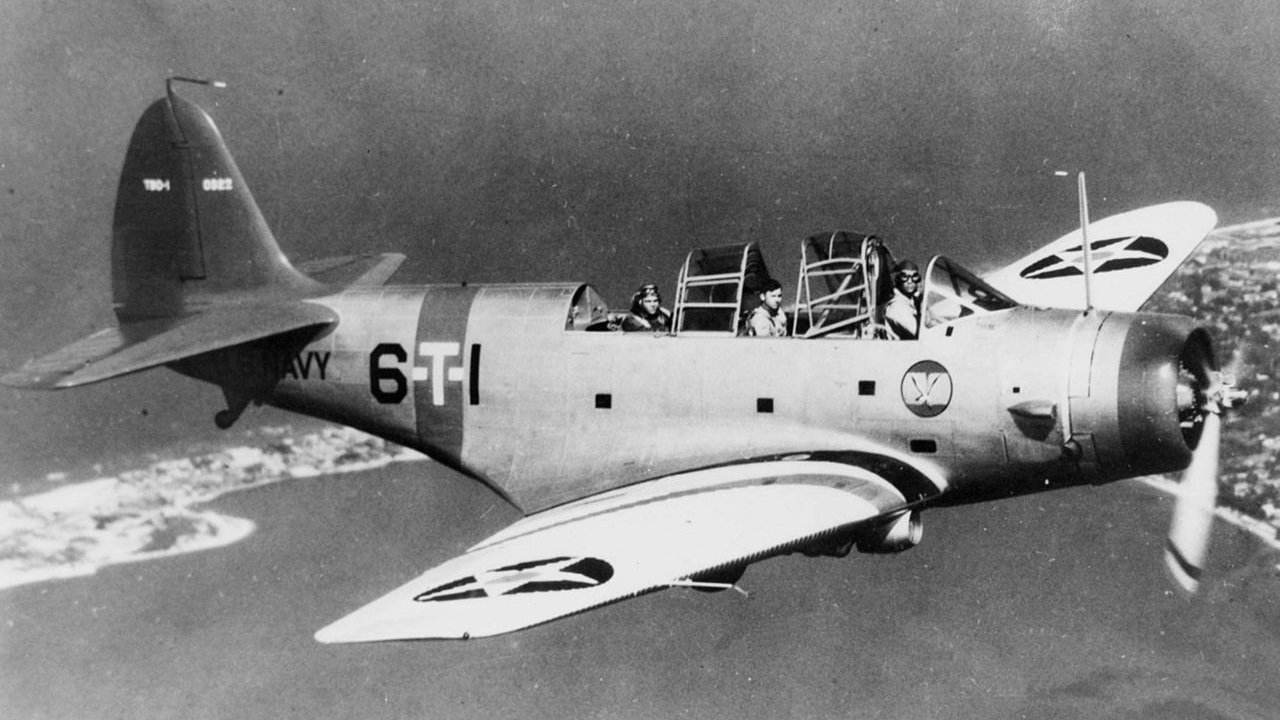
A U.S. Navy Douglas TBD-1 Devastator (BuNo 0322) of Torpedo Squadron Six (VT-6) pictured in flight, probably over Virginia (USA). Note the squadron insignia, a Great White Albatross, on the fuselage beneath the cockpit. Established as VT-8S in 1937, the squadron was redesignated VT-6 that same year. Accepting delivery of its first TBD-1 aircraft in 1938, the squadron operated from USS Enterprise (CV-6) until after the Battle of Midway in June 1942. The TBD-1 0322 ditched after stalling on takeoff from the Enterprise on 10 March 1939. The crew could be rescued uninjured.
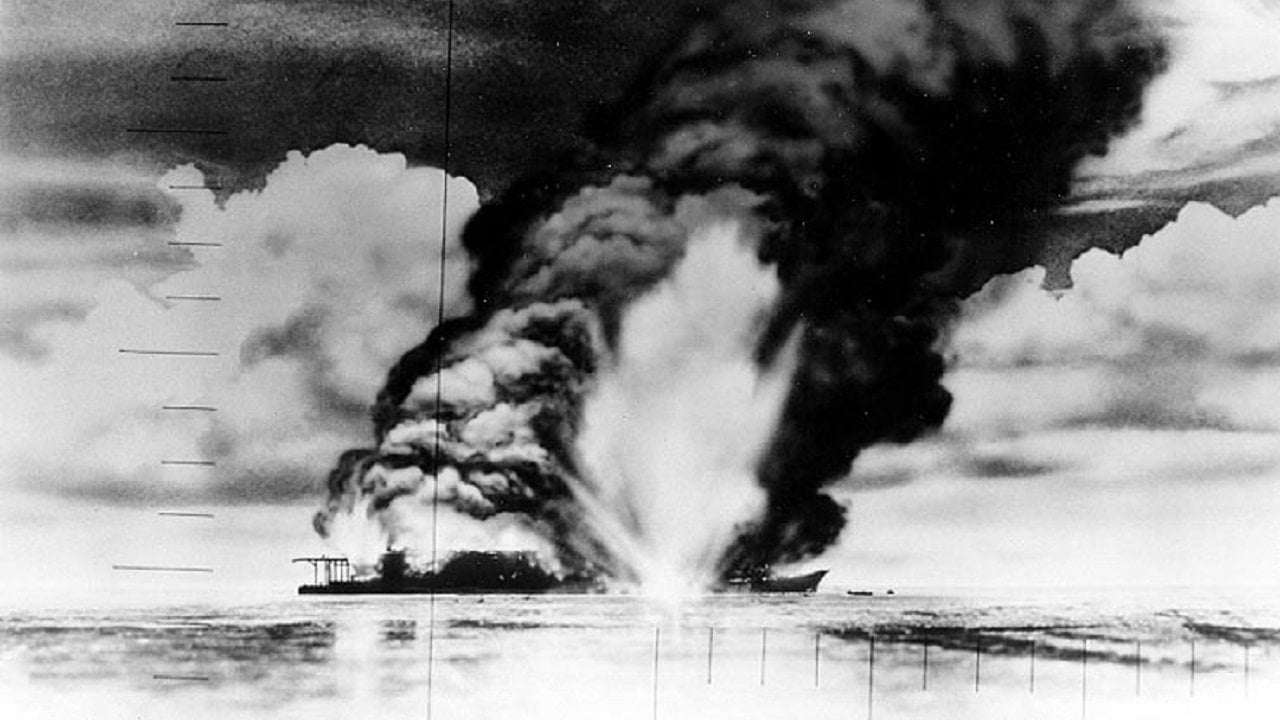
Diorama simulating periscope view from Nautilus, attacking a Japanese aircraft carrier at the Battle of Midway.
Using this information, Nimitz orchestrated an ambush that resulted in the destruction of four Japanese aircraft carriers. This battle decisively turned the tide of the Pacific War in favor of the Allies.
His leadership proved decisive in numerous other major operations, including the Coral Sea, the Solomon Islands, the Gilbert and Marshall Islands, the Marianas, the Philippine Sea, Iwo Jima, and Okinawa.
Each campaign required coordinating massive amphibious assaults, naval engagements, and logistical efforts across vast distances. His earlier innovations in underway replenishment allowed U.S. forces to maintain operational tempo far from established bases, giving the Navy unprecedented range and endurance.
On September 2, 1945, aboard the battleship USS Missouri in Tokyo Bay, Nimitz signed the instrument of Japan’s surrender as the U.S. representative, formally ending World War II in the Pacific.
Postwar Service
In recognition of his wartime achievements, Congress promoted Nimitz to Fleet Admiral in December 1944, the highest rank in the U.S. Navy. After the war, he became Chief of Naval Operations from 1945 to 1947.
In this role, he oversaw the Navy’s transition into the Cold War era, advocating for the adoption of jet aircraft, the continuing development of submarine technology, and adjustments required under the National Security Act of 1947.
Many of his efforts helped shape the modern Navy’s global posture and technological direction.
MORE – There Is ‘Chatter’ That F-47 NGAD Fighter Might Have Flown Iran Combat Missions
Nimitz retired from active duty in 1947 but continued to serve the nation as a public figure, advisor, and regent of the University of California. In 1960, he co-edited the influential naval history volume Sea Power, demonstrating his continued commitment to the study and teaching of maritime strategy.
He passed away on February 20, 1966, near San Francisco at the age of 80 and was buried in Golden Gate National Cemetery.
His legacy endures not only in the scholarship of naval warfare but also in the strategic principles he championed: innovation, flexibility, and the integration of intelligence and logistics into operational planning.
About the Author: Isaac Seitz
Isaac Seitz, a Defense Columnist, graduated from Patrick Henry College’s Strategic Intelligence and National Security program. He has also studied Russian at Middlebury Language Schools and has worked as an intelligence Analyst in the private sector.