The M10 Booker Was Built to Save Infantry. The Pentagon Turned It Into a Billion-Dollar Failure: Beginning around 2013, US Army infantry units, notably the 82nd Airborne and 101st Airborne, wanted something they had lacked since the retirement of the M551 Sheridan Main Battle Tank (MBT). They wanted protected direct fire support. These units needed a system that could blast bunkers and fortified positions that could be deployed at much faster rates than the M1 Abrams MBT–and something easily transportable aboard a C-130 aircraft.
The M10 Booker Mistake
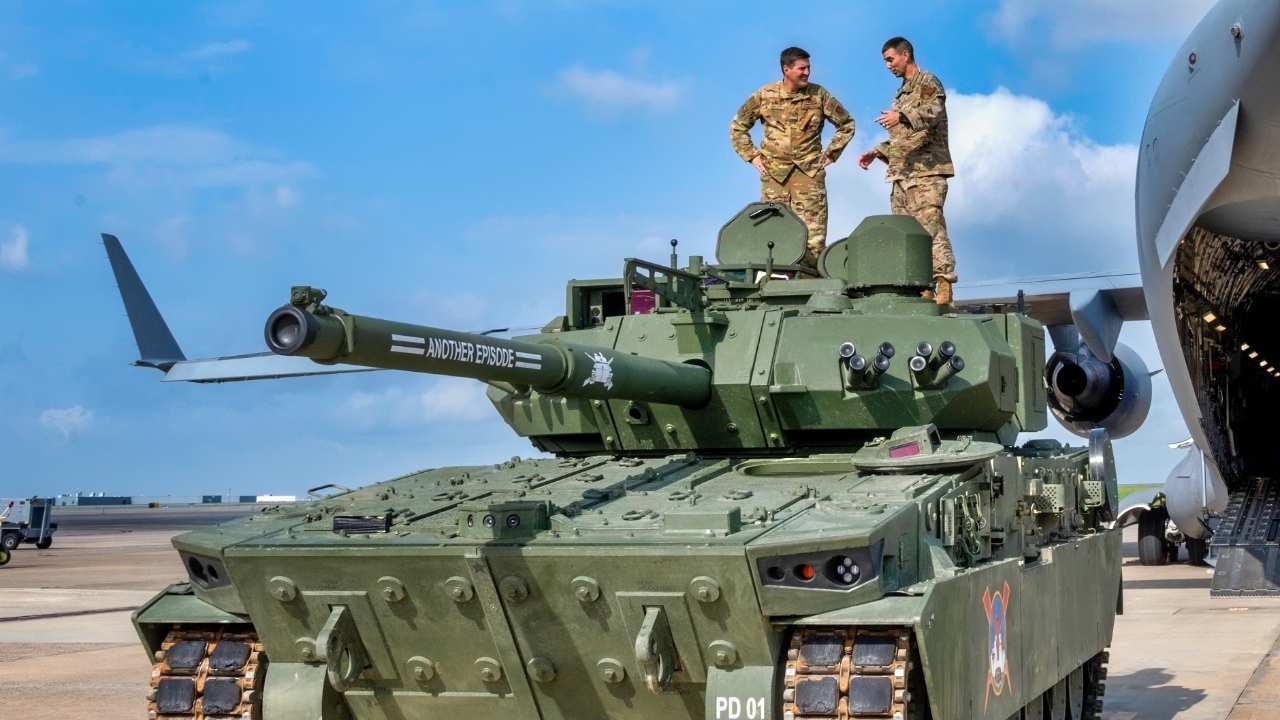
Members of the North Carolina Air National Guard assess an Army M10 Booker Combat Vehicle before it is loaded onto a C-17 Globemaster III aircraft, at the North Carolina Air National Guard base, Charlotte-International Airport, August 3, 2024. Portions of this photo were masked for security reasons. (U.S. Air National Guard photo by Staff Sgt. Reanna Hartgrove)
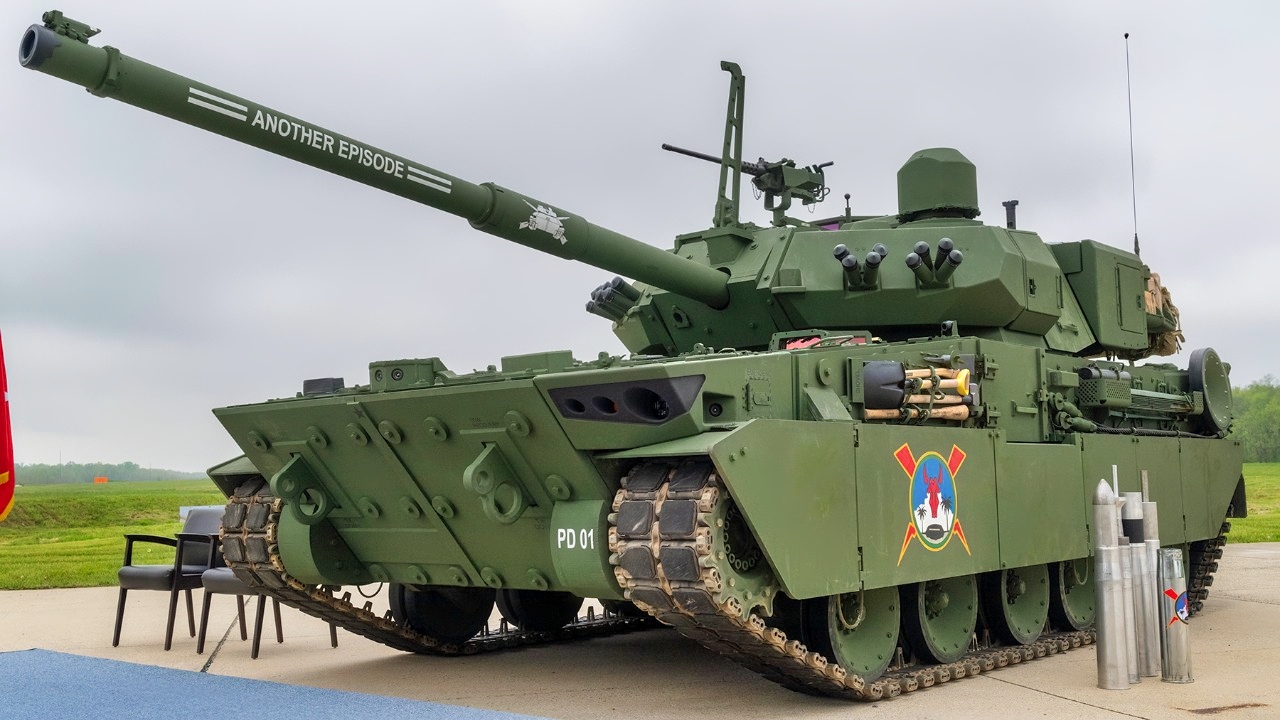
The M10 Booker displayed at it’s dedication ceremony at Aberdeen Proving Ground in Aberdeen, Md., April 18, 2024. As part of the dedication of the M10 Booker Combat Vehicle in their name, Pvt. Booker, a Medal of Honor recipient, and infantryman, assigned to the 133rd Infantry Regiment, 34th Infantry Division, during World War II, and Staff Sgt. Stevon A. Booker, a Distinguished Service Cross recipient, and tank crewman, assigned to Alpha Company, 1st Battalion, 64th Armor Regiment, 3rd Infantry Division, in support of Operation Iraqi Freedom, will be recognized and honored for their ultimate sacrifice, heroism and commitment to service and the country, represented by family members during the ceremony. (U.S. Army photo by Christopher Kaufmann).
The Army was applying hard lessons learned in the war zones of Iraq and Afghanistan in preparation for what Big Green assumed would be its next ground campaign. The land warfare branch called this endeavor the “Mobile Protected Firepower” (MPF). They vehemently refused to refer to this concept as a “light tank” because officials insisted that the proposed MPF’s mission was infantry support rather than armored maneuver warfare.
While a very smart insight, the Pentagon’s execution was very dull.
Classic “Requirements Creep”
We hear often about the folly of “mission creep” in modern US military operations. We rarely understand that there is a similar creep when building new platforms for the United States military. Invariably, no matter what cost defense contractors quote and the Pentagon shares with Congress, US military systems balloon in cost once they’re authorized and funded by Congress.
The Navy experienced this most recently with its failed Constellation-class warship.
But the Army encountered it, too, with the MPF. As the design of the proposed MPF progressed through the Pentagon’s labyrinthine acquisition process, managers kept adding requirements. What began as a narrowly defined requirement set for infantry support rapidly devolved into Big Green simply building a small tank that no one had asked for (and no one really wanted).

M10 Booker is part of a static display while a live segment for FOX and Friends is being filmed at Fort Liberty, N.C., May, 21, 2024. The M10 Booker Combat Vehicle is named after two American service members: Pvt. Robert D. Booker, who posthumously received the Medal of Honor for actions in World War II, and Staff Sgt. Stevon A. Booker, who posthumously received the Distinguished Service Cross for actions during Operation Iraqi Freedom. Their stories and actions articulate the Army’s need for the M10 Booker Combat Vehicle, an infantry assault vehicle that will provide protection and lethality to destroy threats like the ones that took the lives of these two Soldiers. (U.S. Army Photo by Sgt. Jacob Bradford)
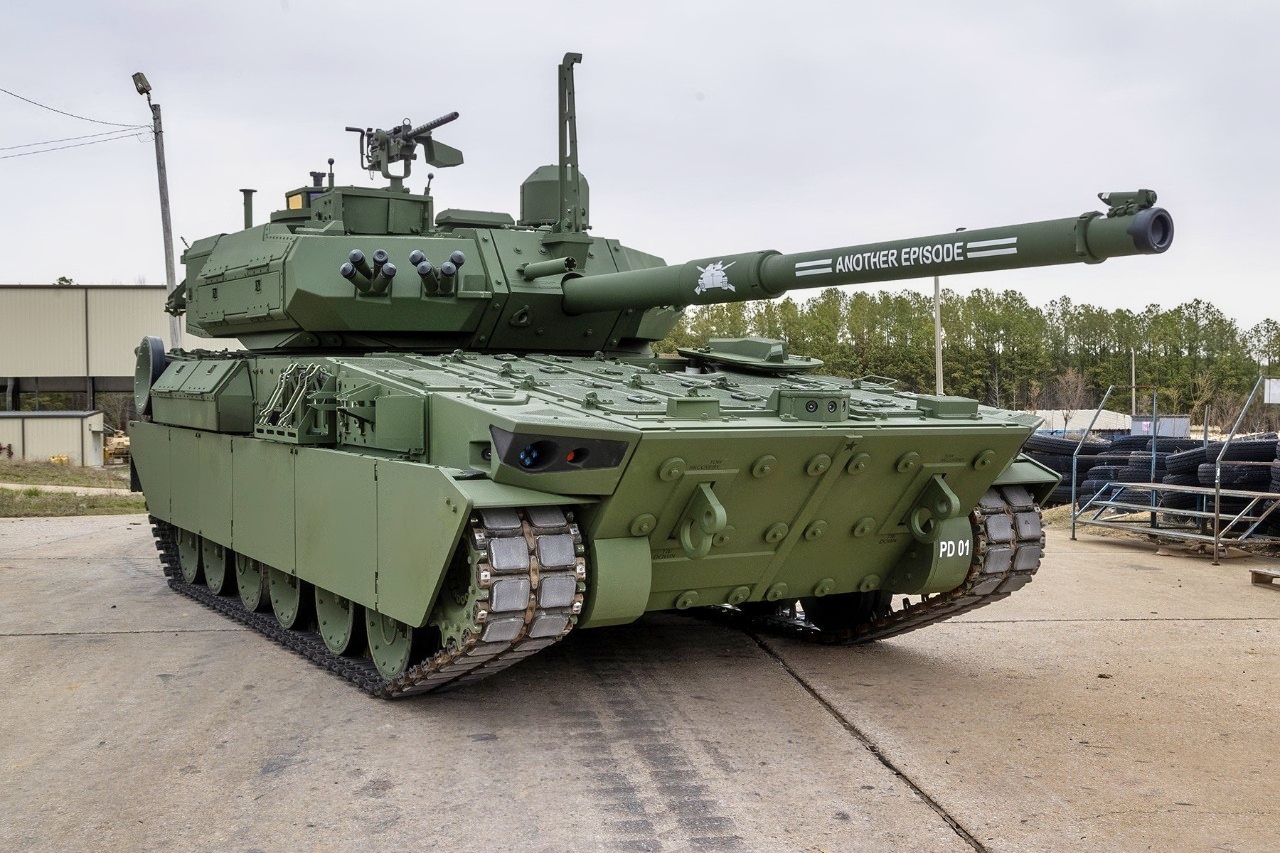
PD1 – Delivery of First Production Vehicle M10 Booker Combat Vehicle
They added more armor, more electronics, greater networking capability, and all manner of additional equipment that the tiny systems were never intended to employ. Each change may have looked reasonable on its own. But it all added up. Every additional requirement added physical weight to the MPF. In fact, so much was added to what was supposed to be a mobile, light-infantry support platform that it weighed nearly 42 tons, depending on its configuration!
So, with the weight change in mind, analysts concluded that whatever advantages the MPF would have offered the Army were negated.
No One Stopped It
Despite its obvious failures early in its design, US Army Chief Technology Officer Alex Miller argued that the MPF was not a failure of the Pentagon’s acquisitions bureaucracy. He insisted that the requirements imposed on the program caused the early problems with the MPF. Per Miller at the time, “The requirements process created so much inertia that the Army couldn’t get out of its own way.”
Miller seems to have taken up for his acquisitions specialists. But those are the people who were key to adding requirements beyond what the Army had originally wanted. Yes, Congress played a role, too. But those acquisitions specialists were the problem. Trying to separate the “requirements failure” from the overarching failure (again) of the Pentagon’s acquisitions bureaucracy at the time is ridiculous.
What Did the Army Know and When Did Big Green Know It?
Most annoying in the whole MPF affair was that, once the Army chose the M10 Booker design and began increasing requirements as it built the system, it knew the system was overweight. According to Sandboxx, an online defense publication, the Army knew the system was too heavy as early as 2015.
Per Sandboxx, just two years after the MPF went into its design phase, Army leaders abandoned the original requirement that the vehicle be air-droppable. When that occurred, a fundamental reassessment within the Pentagon bureaucracy should have been immediately initiated. At that point, the very feasibility–the essential purpose–of what would become the M10 Booker was basically erased, without so much as a word from Congress or even the Army’s brass.
Despite this new reality, the program continued essentially on autopilot, adding requirements and changing the Booker’s entire mission as they went through the iterative design process.
Lessons Unlearned From the Fort Campbell Bridge Fiasco
Once the M10 Booker was realized, and testing started on the platform, the Army sent the system to its usual training center at Fort Campbell. Remember, the tank was supposed to be lightweight and small enough to be dropped from the back of a C-130. At Fort Campbell, 11 bridges must be successfully crossed by new armored systems to be certified.
The M10 could not cross eight of those 11 bridges. The mismatch was impossible to ignore—a mismatch known to the Pentagon all the way back in 2015.
So, a system designed to assist light infantry with force protection and mobility during offensive operations was essentially too heavy to perform the very basic mission for which it was originally designed. By the time this painful failure was demonstrated at Fort Campbell, the Army was committed to the platform.
Collapsing Utility and Spiraling Costs
With the endlessly expanding requirements, as well as the constantly ballooning weight issue of what was supposed to be a very light mobile system, each new requirement necessitated constant redesigns; with every redesign came extensive–expensive–testing. After which, entirely new certifications were needed. All these requirements then added manufacturing complexity on a system that was supposedly simple.
Because of the exploding costs, the Army eventually committed more than $1 billion to the program before finally terminating procurement. They took only a limited number of production vehicles for use in future combat. The M10 itself grew into an expensive system because production never reached the economies of scale it was intended to achieve, and the Army had to shut down the production line early (thanks to those exploding costs).
No Operational Niche
Like so many modern Pentagon designs, the Booker today occupies a bizarre place: it is absolutely useless in its original mission and completely unfit to serve in a more conventional combat role.
M10 Bookers are not light enough to be rapidly deployable as originally intended. These non-tank-tanks are not armored enough to replace the aging Abrams MBTs. Nor are the Bookers cheap enough to justify mass production. The Army hilariously tried to save face by rebranding the Booker as a “medium-weight assault gun.”
Instead, it was really just another procurement disaster in a long line of critical acquisition failures.
Bigger Lesson?
The Army started the MPF program with a clear battlefield requirement: to provide infantry formations with mobile, protected firepower that could deploy rapidly in any environment. This system, as it was originally designed, could have saved many lives and ensured mission success. Over time, however, the eggheads and bean counters at the Pentagon–who were clearly not coordinating on the design–made incremental changes to the design.
These unwanted changes expanded program requirements, creating a bureaucratic logic that prized constant expansion of requirements over any real thought for how this system could be used at the tactical level. In fact, there is ample evidence that, very early in the design of the M10 Booker, the Army knew the system was not viable and pressed ahead with it anyway!
One billion tax dollars later, we now have a virtually useless system. The M10 Booker cannot serve its original function, and it is too complex, too heavy, and too expensive to be used in any serious function today. The lessons from the M10 Booker acquisition failure recur throughout modern Pentagon acquisition programs. It is not unique to the Army. It is systemic. And it has reached critical levels.
While Secretary of War Pete Hegseth has implemented some positive reforms to the acquisition process and the Pentagon bureaucracy, the current distractions of the Iran War and the Ukraine War have stunted whatever effectiveness those reforms were meant to have in saving the system itself.
The Booker is another reminder of how more than one trillion dollars spent on defense doesn’t buy us what it used to. It’s also an example of how badly the United States needs to reform the Pentagon before the next great power war starts. Under current conditions, the US military is ill-equipped to fight a great-power rival. The Booker experience proves that.
About the Author: Brandon J. Weichert
Brandon J. Weichert is the Senior National Security Editor at 19FortyFive.com. He also manages The Weichert Brief on Substack. Weichert also hosts “National Security Talk” on Rumble. He is the author of four bestselling national security books, the most recent of which is A Disaster of Our Own Making: How the West Lost Ukraine (Encounter Books). Follow him via Twitter/X @WeTheBrandon.