

Summary and Key Points: The U.S. Army has terminated low-rate initial production of the M10 Booker combat vehicle after delivering 80 of the light tanks to the force, according to a statement from Army Secretary Daniel Driscoll. The program will not enter full-rate production as originally planned, with the decision announced as part of the broader Army Transformation Initiative modernization and acquisition reform effort.
The M10 Booker ‘Light Tank’ Fiasco
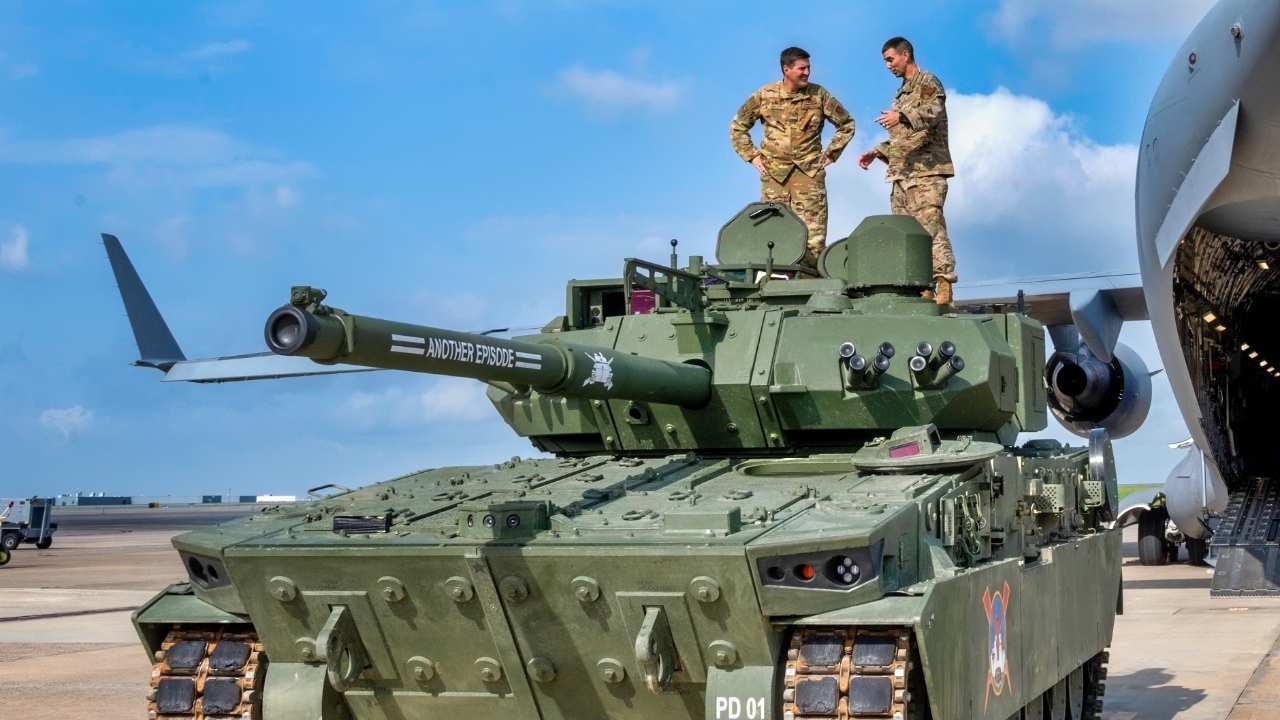
Members of the North Carolina Air National Guard assess an Army M10 Booker Combat Vehicle before it is loaded onto a C-17 Globemaster III aircraft, at the North Carolina Air National Guard base, Charlotte-International Airport, August 3, 2024. Portions of this photo were masked for security reasons. (U.S. Air National Guard photo by Staff Sgt. Reanna Hartgrove)
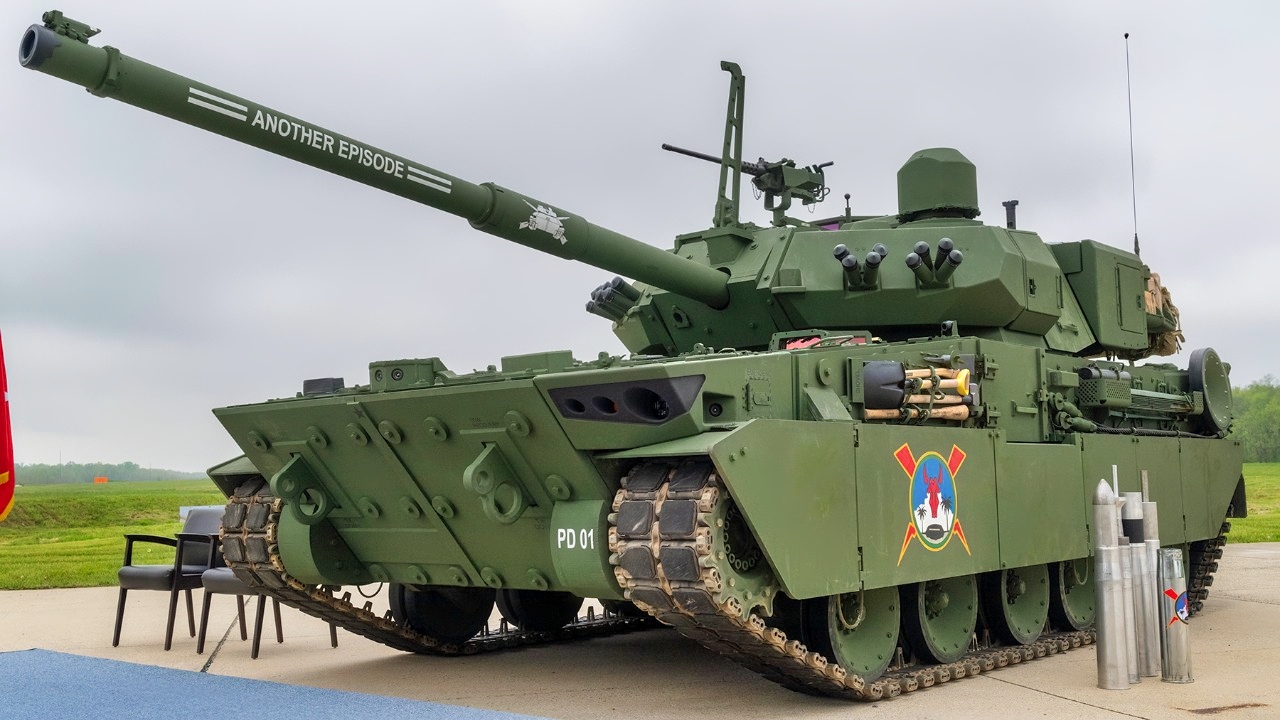
The M10 Booker displayed at it’s dedication ceremony at Aberdeen Proving Ground in Aberdeen, Md., April 18, 2024. As part of the dedication of the M10 Booker Combat Vehicle in their name, Pvt. Booker, a Medal of Honor recipient, and infantryman, assigned to the 133rd Infantry Regiment, 34th Infantry Division, during World War II, and Staff Sgt. Stevon A. Booker, a Distinguished Service Cross recipient, and tank crewman, assigned to Alpha Company, 1st Battalion, 64th Armor Regiment, 3rd Infantry Division, in support of Operation Iraqi Freedom, will be recognized and honored for their ultimate sacrifice, heroism and commitment to service and the country, represented by family members during the ceremony. (U.S. Army photo by Christopher Kaufmann).
The US Army spent well over a billion dollars on a light tank, but terminated the program just as it was slated to enter full-rate production. The program was formerly known as Mobile Protected Firepower (MPF).
The cancellation was announced as part of a broader Army modernization and acquisition reform effort, according to the US Army and Defense News. The decision was driven by concerns about the vehicle’s weight, logistical challenges, and the program’s high cost.
The Army was left with a tank that was supposed to be airdroppable for airborne units, but it’s no longer airdroppable due to constant meddling and additions to the vehicle.
Too Many Cooks Stirring the Pot:
The US Army began developing an armored vehicle to support light infantry forces in 2013. Mobile Protected Firepower, the competition to create a new light tank for the US Army, was repeatedly handed additional requirements, leading to the selection of a tank that did not meet the original conceptual requirements and was neither needed by nor useful to the Army.
The M10 Booker displayed at it’s dedication ceremony at Aberdeen Proving Ground in Aberdeen, Md., April 18, 2024. As part of the dedication of the M10 Booker Combat Vehicle in their name, Pvt. Booker, a Medal of Honor recipient, and infantryman, assigned to the 133rd Infantry Regiment, 34th Infantry Division, during World War II, and Staff Sgt. Stevon A. Booker, a Distinguished Service Cross recipient, and tank crewman, assigned to Alpha Company, 1st Battalion, 64th Armor Regiment, 3rd Infantry Division, in support of Operation Iraqi Freedom, will be recognized and honored for their ultimate sacrifice, heroism and commitment to service and the country, represented by family members during the ceremony. (U.S. Army photo by Christopher Kaufmann).

M10 Booker is part of a static display while a live segment for FOX and Friends is being filmed at Fort Liberty, N.C., May, 21, 2024. The M10 Booker Combat Vehicle is named after two American service members: Pvt. Robert D. Booker, who posthumously received the Medal of Honor for actions in World War II, and Staff Sgt. Stevon A. Booker, who posthumously received the Distinguished Service Cross for actions during Operation Iraqi Freedom. Their stories and actions articulate the Army’s need for the M10 Booker Combat Vehicle, an infantry assault vehicle that will provide protection and lethality to destroy threats like the ones that took the lives of these two Soldiers. (U.S. Army Photo by Sgt. Jacob Bradford)
The result was the M10 Booker, and despite early optimism, the results left the Army with a light armored vehicle that has become a textbook example of a requirements process badly in need of revamping—one more concerned with checking boxes than actually evaluating the Army’s needs.
The M10 Booker was going to be the first new combat vehicle to enter the force in four decades. It no longer meets the need, as it is too heavy for its intended purpose.
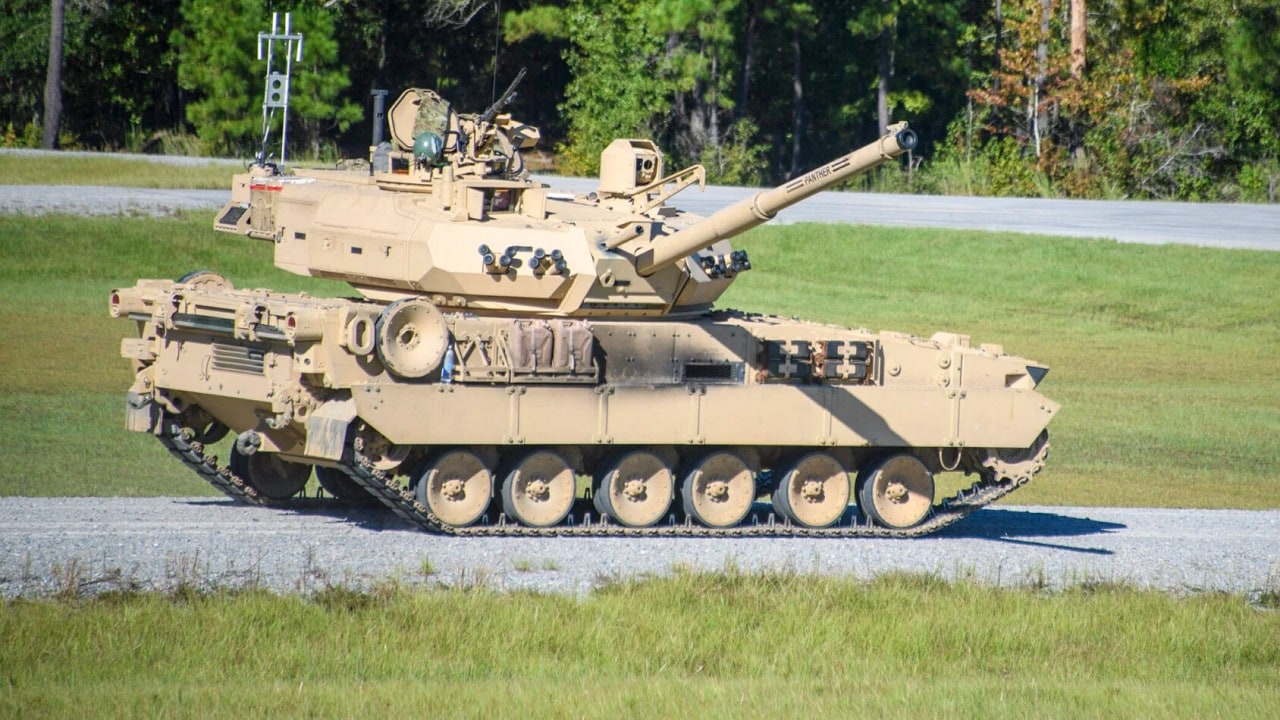
The M10 Booker was intended as a lightweight, C-130 airdroppable “light tank” to support airborne and light infantry units; successive requirement additions (“creep”) resulted in a 42-ton vehicle that was too heavy for airdrop and even some base infrastructure, such as bridges at Fort Campbell.
“In response to current world events and in support of the strategic objectives outlined in the Army Transformation Initiative, the U.S. Army has issued a termination for convenience of the current low-rate initial production of the M10 Booker combat vehicle and will not enter into full-rate production as originally planned,” the Army said in a released statement.
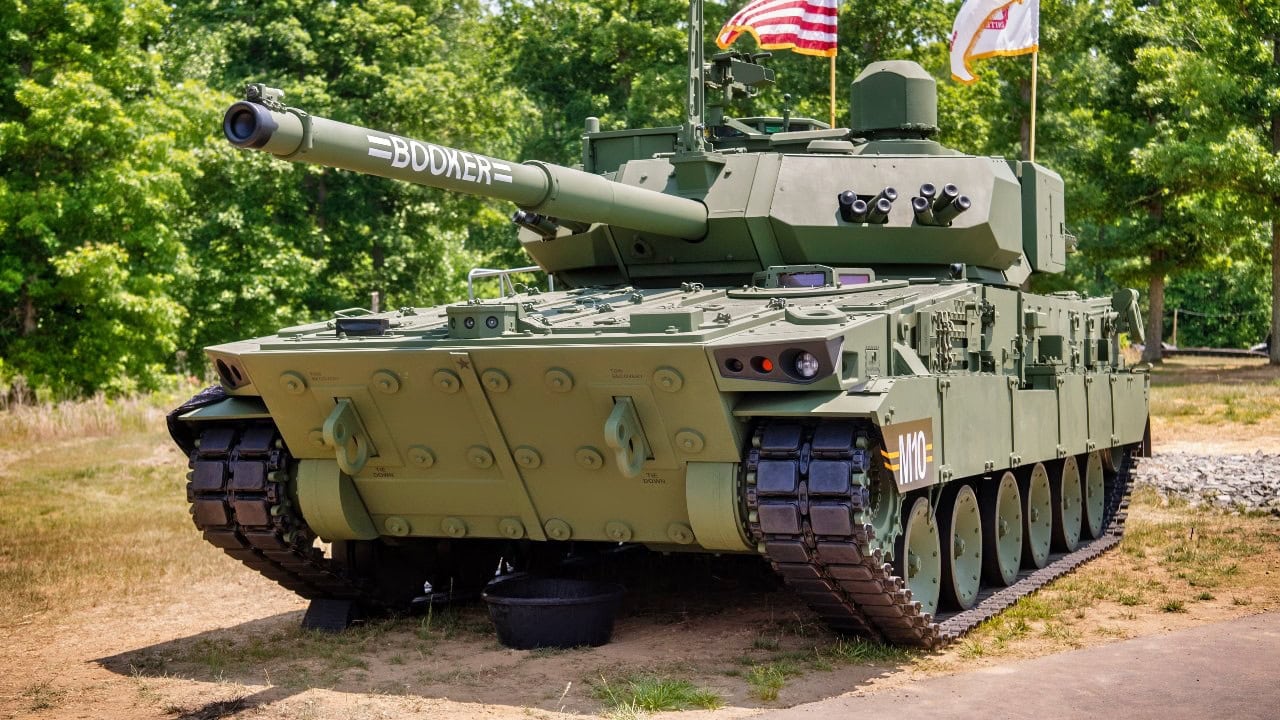
The M10 Booker Combat Vehicle proudly displays its namesake on the gun tube during the Army Birthday Festival at the National Museum of the U.S. Army, June 10, 2023. The M10 Booker Combat Vehicle is named after two American service members: Pvt. Robert D. Booker, who posthumously received the Medal of Honor for actions in World War II, and Staff Sgt. Stevon A. Booker, who posthumously received the Distinguished Service Cross for actions during Operation Iraqi Freedom. Their stories and actions articulate the Army’s need for the M10 Booker Combat Vehicle, an infantry assault vehicle that will provide protection and lethality to destroy threats like the ones that took the lives of these two Soldiers. (U.S. Army photo by Bernardo Fuller)
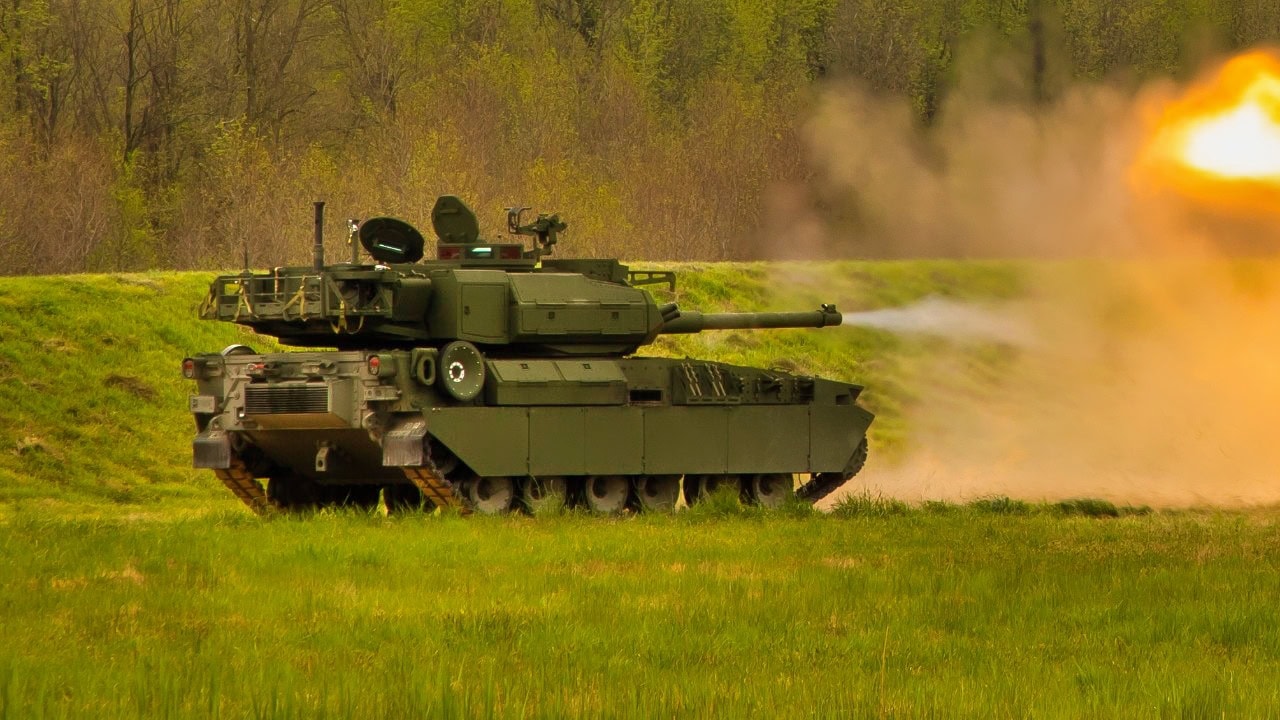
M10 Booker Light Tank. Image Credit: Creative Commons.
Background on the Fiasco That Was The M10 Booker:
The 82nd Airborne Division recognized the need for armor support for troops following the retirement of the M551 Sheridan. It requested a replacement from the Army. One requirement was that the new vehicle could be airdropped from a C-17 or a C-130.
The M10 was designed to equip airborne and air assault troops with limited armor protection. It was to serve as a weapon that could effectively engage enemy strongpoints and armored vehicles.
The airborne insertion would enable rapid deployment in battle after airborne infantry troops jumped in, or after air assault troops were infiltrated by helicopter.
But by the time the Army finished adding all of the M10 Booker’s extra requirements, it weighed 42 tons—far too heavy to drop from a C-130. Then, in a further snafu, the Air Force stated that although they had originally planned to load two M10 Bookers on a C-17, the aircraft could only load one.
Boomer M10. Image Credit: U.S. Army.
Instead of stopping the order and re-evaluating the M10, the Army pushed forward with the project. The Army Requirements Oversight Council reviewed the 2015 requirements submission and said it doesn’t need to be loaded onto a C-130 or airdropped. The Joint Requirements Oversight Council agreed.
Army Acquisition Run Amok:
“This is not a story of acquisition gone awry,” Alex Miller, the Army’s chief technology officer, said. “This is a story of the requirements process creating so much inertia that the Army couldn’t get out of its own way, and it just kept rolling and rolling and rolling.”
Miller added, “As soon as you remove the requirement for airdropability, you’re no longer actually helping infantry. You are just as maneuverable as a main battle tank at that point, which means you are less maneuverable.”
“We cannot f***ing wait to innovate until Americans are dying on the battlefield. We must act now to enable our soldiers. Our window to change is right now, and we have a plan to do it. We will set the pace with innovation, and we will win with silicon and software, and not with our soldiers’ blood and bodies.”Army Secretary Daniel Driscoll said to Army Times.
The M10 Booker was “intended to be a light tank that served all of these new purposes,” he said. “It ended up medium. I don’t think the manufacturer liked it all that much, and we, the Army as a customer, kind of helped create this Frankenstein that came to be.”
Driscoll said that in the past, the Army would have continued production, despite being unhappy with the tank. “We would have just made it work.”
Now the question is: what does the Army do with the 80 M10 Bookers it has? The first 80 of the vehicles were delivered. There are several options to consider.
Options To Consider: Include Inter-Service Transfer:
The Army’s options include, but are not limited to: Transferring to Armored Units or the National Guard, foreign sales, Storage (Mothballed), Transferring the M10 already manufactured to the Marine Corps, or using them for training purposes.
Transfer to Armored or the Army National Guard – One possible solution is to integrate the M10 Bookers into existing armored or National Guard units.
The M10 possesses many features that could be useful on the battlefield. These Bookers could improve the firepower and protection of units operating lighter vehicles, such as the M2 Bradley Infantry Fighting Vehicle.
This integration could enhance these units’ overall combat effectiveness by providing additional direct-fire support.
However, this possibility is one of the issues plaguing the vehicle. The manufacturer, General Dynamics, is responsible for maintaining these vehicles. That alone would increase the maintenance costs of these “light” tanks.
Foreign Military Sales – The US’s possible sale of the remaining M10S to foreign allies is interesting. Many countries are seeking to modernize their armored forces, and the M10 Booker could be a compelling option for nations that require a versatile armored vehicle.
Many of our allied or friendly countries either cannot support or do not need a heavy tank like the M1A1 Abrams due to its size and weight.
This would not only recoup some of the program’s costs but also strengthen military ties with allied nations.
Transfer The M10S To The Marine Corps –
At first glance, this possible solution seems out of place. The Commandant of the Corps, David Berger, divested the service of its armor units in 2020.
However, two Marine officers, Marine Lt. Col. John Dick and Lt. Col. Daniel D. Phillips, the commanding officer and executive officer, respectively, of the 3rd Light Armored Reconnaissance Battalion, wrote an article about how the Marines could utilize the not-so-light tanks the Army didn’t want.
The Marine officers want to incorporate the M10 Bookers into the USMC’s light armored reconnaissance (LAR) battalions. The four light armored reconnaissance battalions are transforming into mobile reconnaissance battalions (MRB).
The Booker would address the firepower and survivability concerns that some in those units have, especially around the Ultra Light Tactical Vehicles, or ULTVs, which are a key component of the MRB.
The Marines currently have a capability gap in survivable, mobile firepower, the officers wrote.
“Its armor, fire control systems, and mobility allow Light Armored Reconnaissance units to survive first contact, dominate key terrain, and provide reconnaissance-in-force capabilities aligned with expeditionary advanced base operations and stand-in force concepts.
“Unlike legacy Light Armored Vehicle platforms, which prioritized mobility over protection, the Booker delivers both lethality and survivability, enabling reconnaissance marines to maneuver under fire, mass effects, and conduct shaping operations forward of the main force.”
However, adopting the M10 would require the Marines to rely on Air Force support to move the Bookers.
Use the M10 Booker as OPFOR At Ft. Irwin, NTC –
The Army uses Ft Irwin, California, also known as the National Training Center, to train units to fight in the desert. The 11th Armored Cavalry is the host unit and serves as the base’s “opposing forces” (OPFOR) at Ft Irwin.
The unit uses doctored vehicles to resemble potential enemy vehicles, and the M10 could be used there to simulate OPFOR tanks in training. The manufacturer’s maintenance facilities could be based there, and a good purpose could be found for the M10.
About the Author: Steve Balestrieri
Steve Balestrieri is a National Security Columnist. He served as a US Army Special Forces NCO and Warrant Officer. In addition to writing on defense, he covers the NFL for PatsFans.com and is a member of the Pro Football Writers of America (PFWA). His work was regularly featured in many military publications.