

The F-22 Raptor, Zumwalt-Class Stealth Destroyer, and M10 Booker All Share Something In Common – Cancellations
One of the cool things about being a lifelong military history and technology buff (and now being blessed enough to get paid to write about it) is keeping track of all of the amazing hi-tech weapon systems that come down the pike.
To cite just a couple of examples, this writer was in middle school in the waning years of the Cold War when the U.S. government officially unveiled the F-117 Nighthawk stealth “fighter” (that wasn’t really a fighter after all) and the B-2 Spirit stealth bomber (that really was and still is a bomber).

B-2 Spirit Stealth Bomber 19FortyFive Photo. Taken by Harry J. Kazianis back in July 2025.
Today, there’s much excitement (and controversy) about the upcoming F-47 NGAD 6th-generation fighter jet and the Trump-class battleships.
However, there’s also an unfortunate flip side: all too many seemingly promising weapon systems that were either stillborn (i.e., canceled before ever attaining production status), underproduced, or produced in substantial numbers but then failed to live up to expectations.
These setbacks, in turn, have compelled the U.S. Armed Forces to continue relying on weapons that are time-honored and battle-proven but also aging and long in the tooth.
What’s going on, and how much longer can the U.S. military sustain these?
We’ll take a look at several examples.
Example #1: The F-22 Raptor
Speaking for myself as a former U.S. Air Force officer, this one really hits home for me.
The F-22 made history as the world’s first 5th Generation stealth fighter (an actual fighter plane this time, built by the same prestigious Lockheed Martin “Skunk Works” division that built the F-117), and despite its relative age, many experts still consider it to be the best air superiority fighter in the world.
Oddly enough, you can find one sitting already at the National Museum of the U.S. Air Force, and we have the photos below to show you.
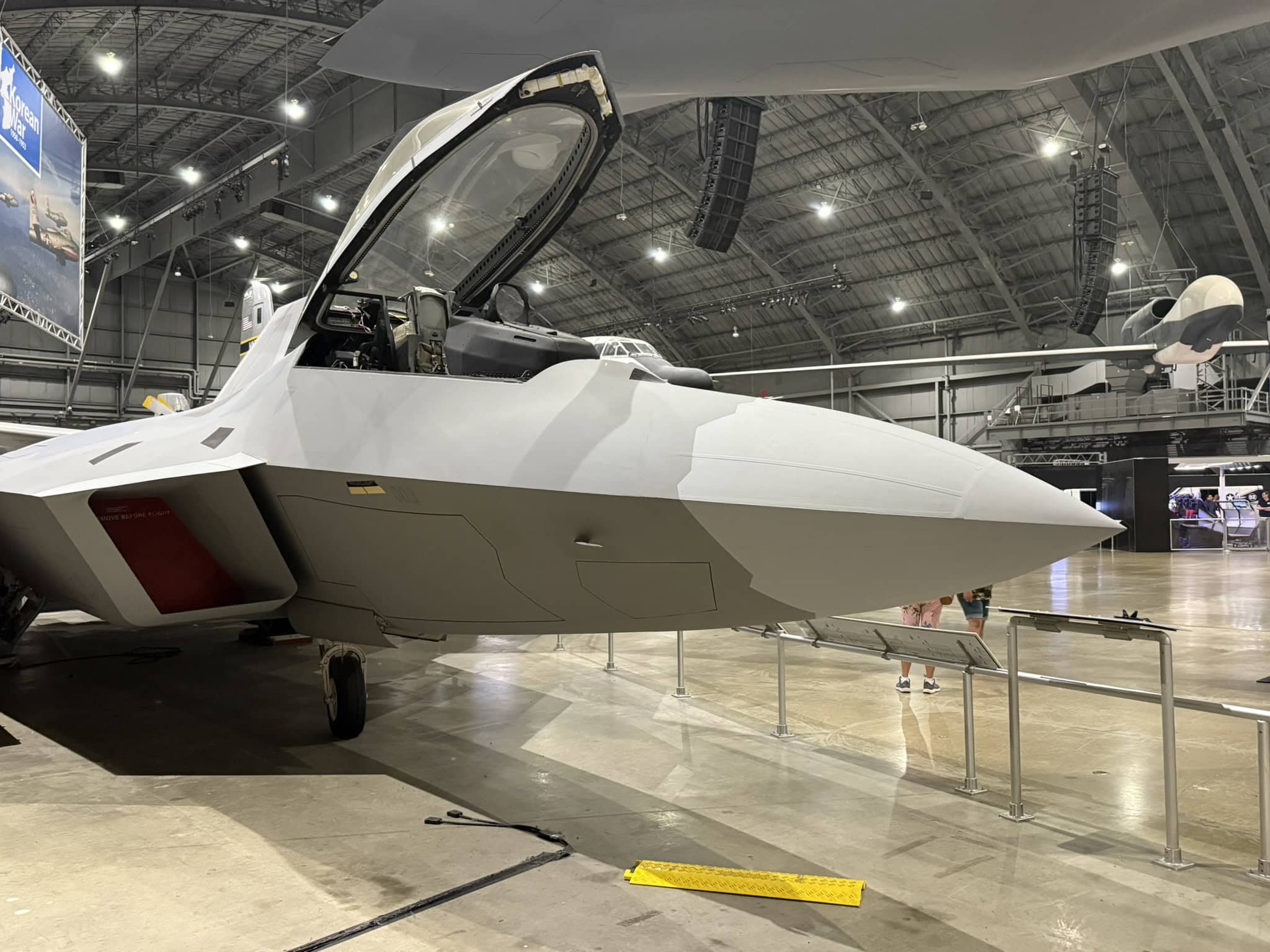
F-22 Raptor Photo Taken at the National Museum of the U.S. Air Force. 19FortyFive.com Photo.
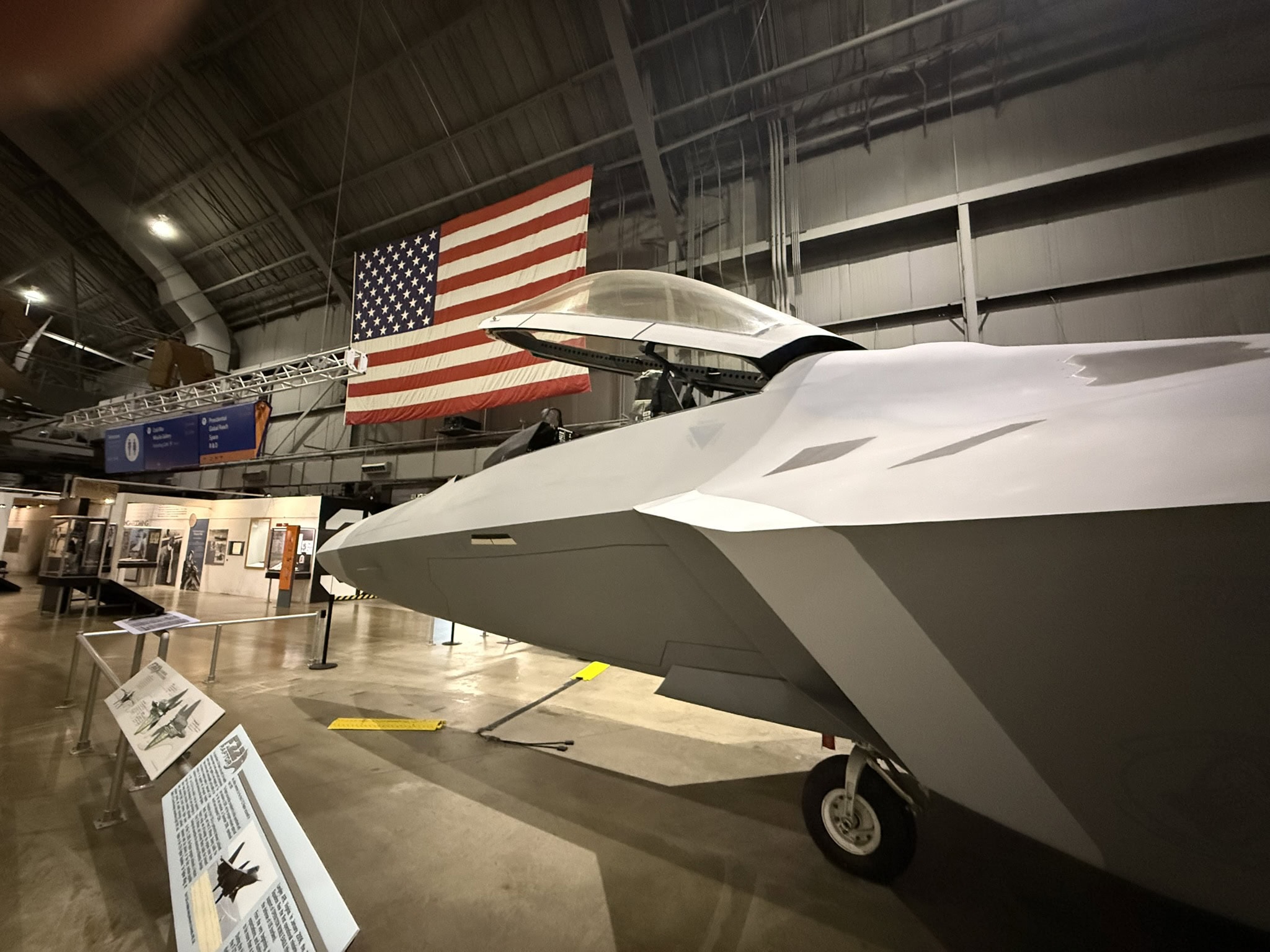
F-22 Raptor Photo Taken at the National Museum of the U.S. Air Force. 19FortyFive.com Photo. Taken on July 20, 2025.
The good news on the F-22 is clear. Thus far, it has proven its worth.
The problem? Not enough of them were built, and we can’t build more now.
We’ve got former Secretary of Defense Bob Gates to thank for that, who made the incredibly boneheaded decision back in 2009 to kill the F-22 Raptor program after only 187 airframes were built out of the original 381 planned.
Luckily, we’ve still got another Gen 5 stealth fighter to fall back on, that being the F-35 Lightning II (yet another Skunk Works product).
But though the F-35 is a top-notch multirole warbird that has earned its own spurs in combat multiple times over, it doesn’t have the pure dogfighting capabilities that the Raptor does.
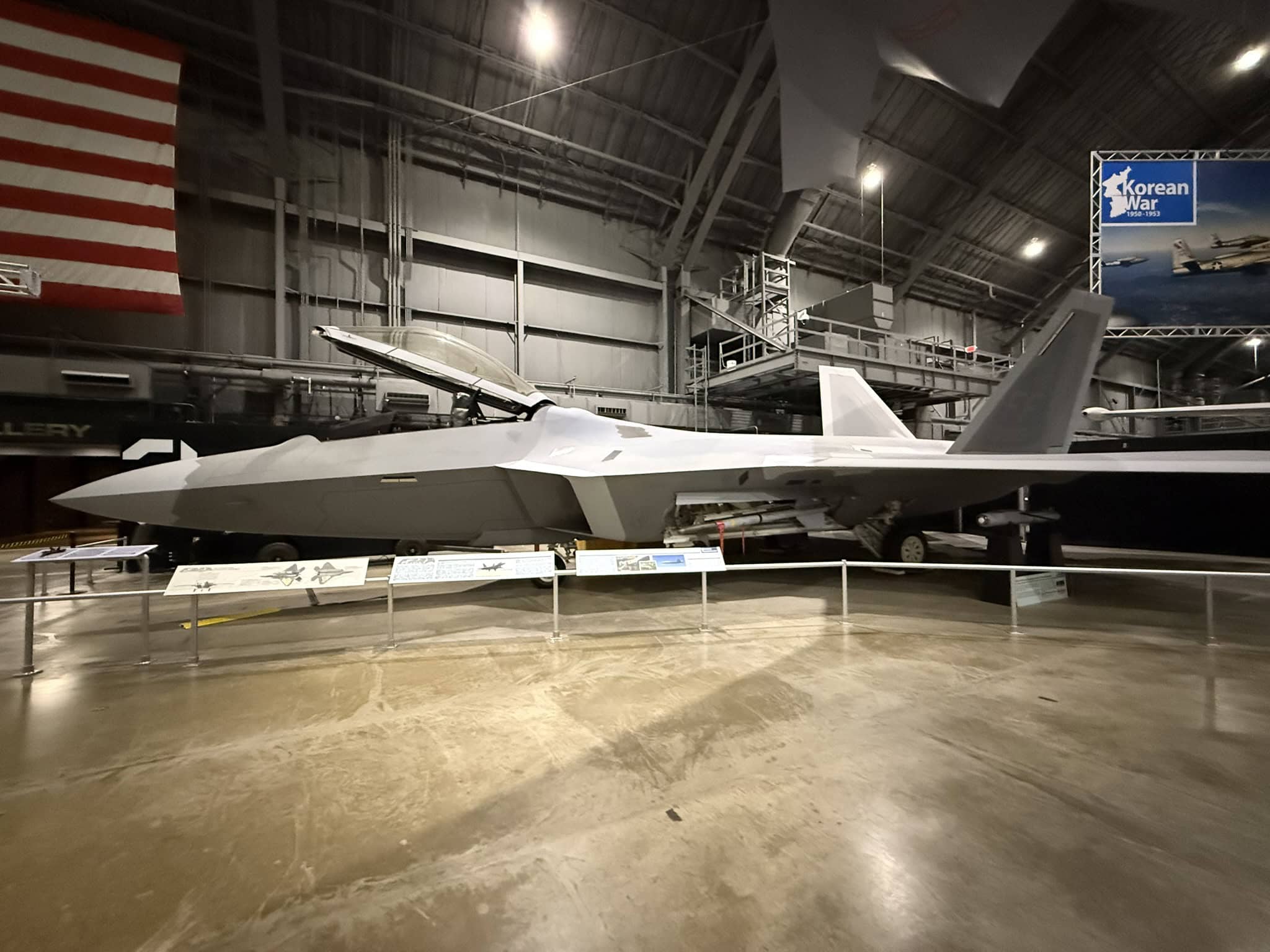
F-22 Raptor. Photo Taken for 19FortyFive.com by Harry J. Kazianis on July 19, 2025.
Example #2: The M10 Booker
Aka the “light tank” that wasn’t a light tank.
The Booker had a proud namesake, named in honor of (1) Pvt. Robert D. Booker, who was posthumously awarded the Medal of Honor after being killed under heavy machine-gun fire in the vicinity of Fondouk, Tunisia, on April 9, 1943, and (2) Staff Sgt. Stevon A. Booker, who was killed in Iraq on April 5, 2003, during the Thunder Run in Baghdad, was posthumously awarded the Distinguished Service Cross (the Army’s second-highest honor).
The M10 was intended as the successor to the Bradley Fighting Vehicle, which has faithfully served as the U.S. Army’s mainstay armored fighting vehicle (AFV) and infantry fighting vehicle (IFV) since 1981.
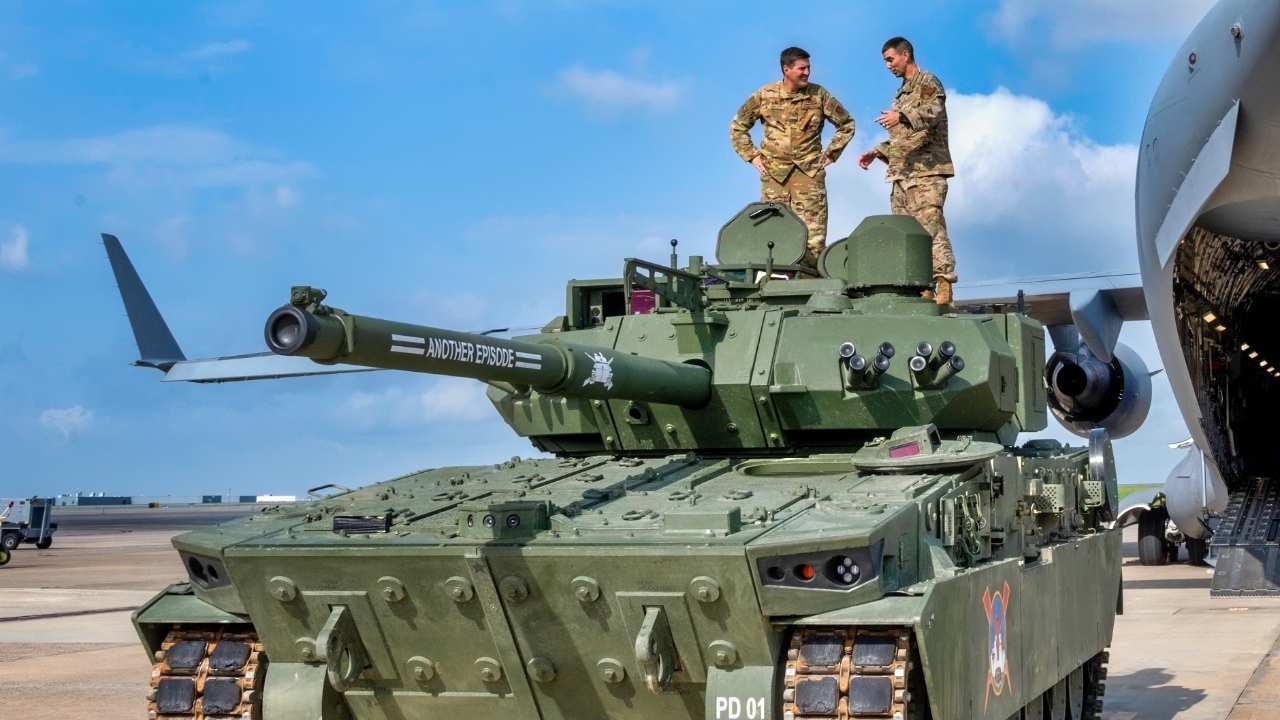
Members of the North Carolina Air National Guard assess an Army M10 Booker Combat Vehicle before it is loaded onto a C-17 Globemaster III aircraft, at the North Carolina Air National Guard base, Charlotte-International Airport, August 3, 2024. Portions of this photo were masked for security reasons. (U.S. Air National Guard photo by Staff Sgt. Reanna Hartgrove)
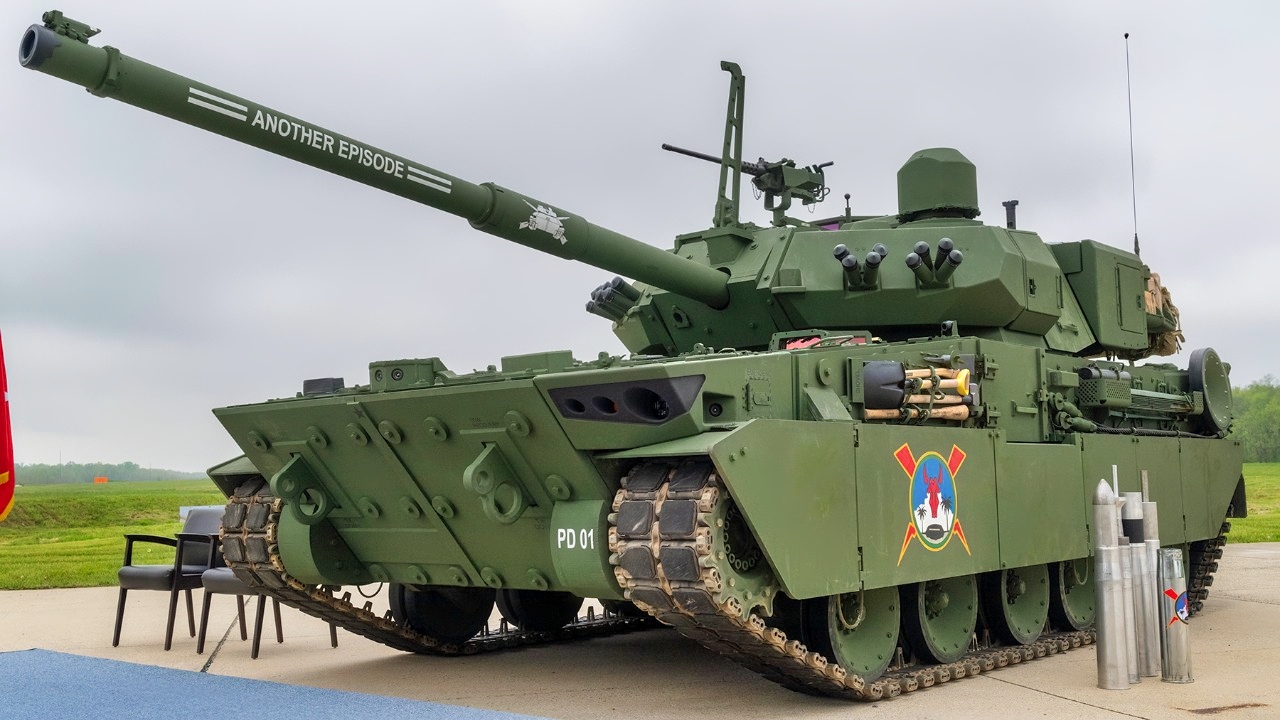
The M10 Booker displayed at it’s dedication ceremony at Aberdeen Proving Ground in Aberdeen, Md., April 18, 2024. As part of the dedication of the M10 Booker Combat Vehicle in their name, Pvt. Booker, a Medal of Honor recipient, and infantryman, assigned to the 133rd Infantry Regiment, 34th Infantry Division, during World War II, and Staff Sgt. Stevon A. Booker, a Distinguished Service Cross recipient, and tank crewman, assigned to Alpha Company, 1st Battalion, 64th Armor Regiment, 3rd Infantry Division, in support of Operation Iraqi Freedom, will be recognized and honored for their ultimate sacrifice, heroism and commitment to service and the country, represented by family members during the ceremony. (U.S. Army photo by Christopher Kaufmann).
Unfortunately, the Booker program received the kibosh due to excessive weight; at 42 tons, it was too heavy for its air-deployable “light tank” role, offering tank-like weight without tank-like protection. In addition, the Booker was plagued by safety issues, including toxic gas filling the turret after the main gun was fired.
Ergo, the M10 was canceled, and the Bradley will have to keep soldiering on, despite its own vulnerabilities.
Example #3: The Zumwalt-Class Destroyers
Named for one of the most beloved officers ever to hold the position of Chief of Naval Operations—that being Admiral Elmo Russell “Bud” Zumwalt Jr. (November 29, 1920 – January 2, 2000)—these guided missile destroyers (DDGs) initially showed a lot of promise as “stealth destroyers.”
However, the originally planned fleet of 32 ships was pared down to three.
These ships were plagued by (yep, you guessed it) cost overruns and technical failures.
The biggest culprit was the 155mm Advanced Gun System (AGS) turrets, which were theoretically capable of firing GPS-guided Long-Range Land Attack Projectiles (LRLAP) at ranges of over 53.99 nautical miles (62.1 statute miles; 100 kilometers).
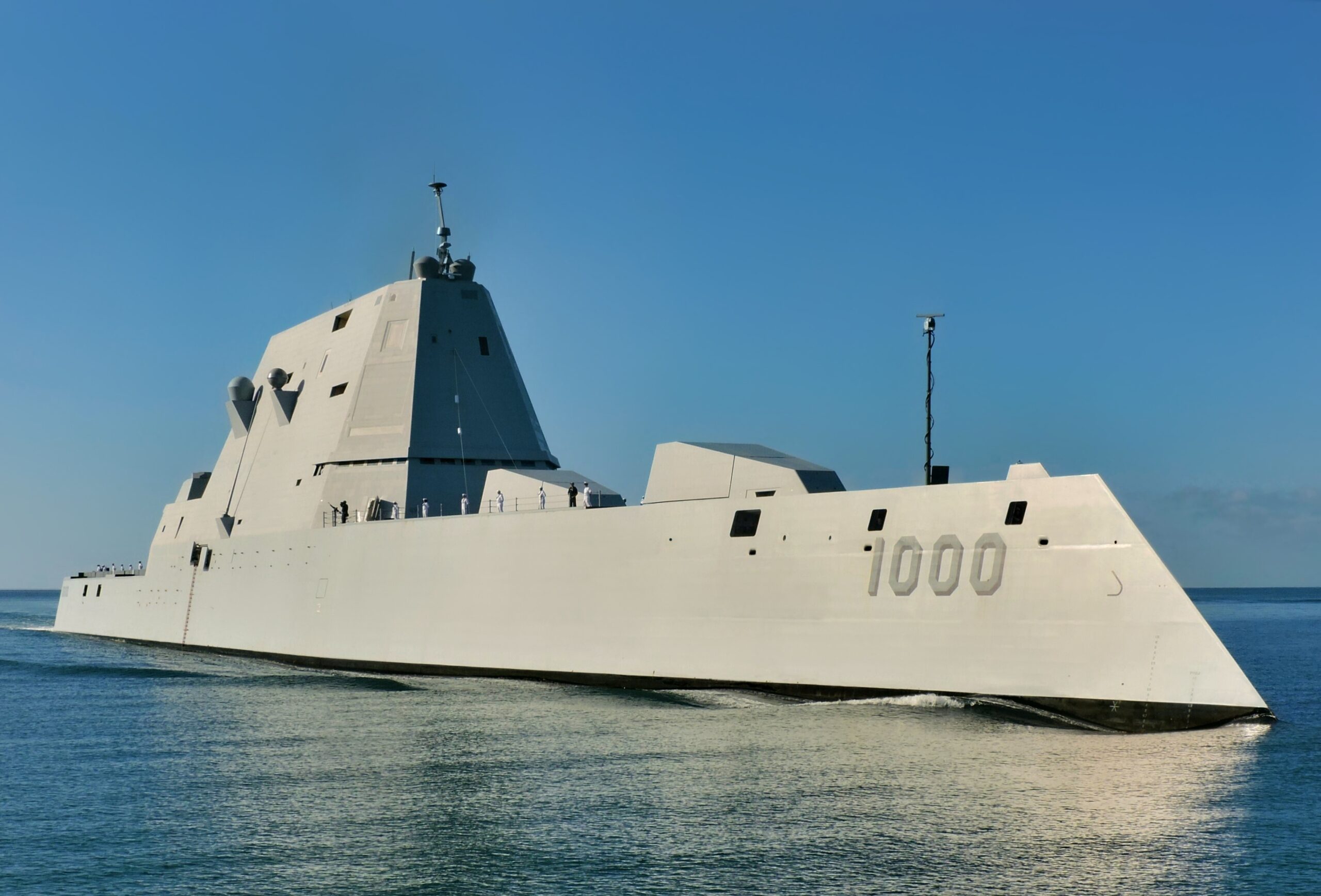
Zumwalt-Class Destroyer U.S. Navy. Image Credit: Creative Commons.
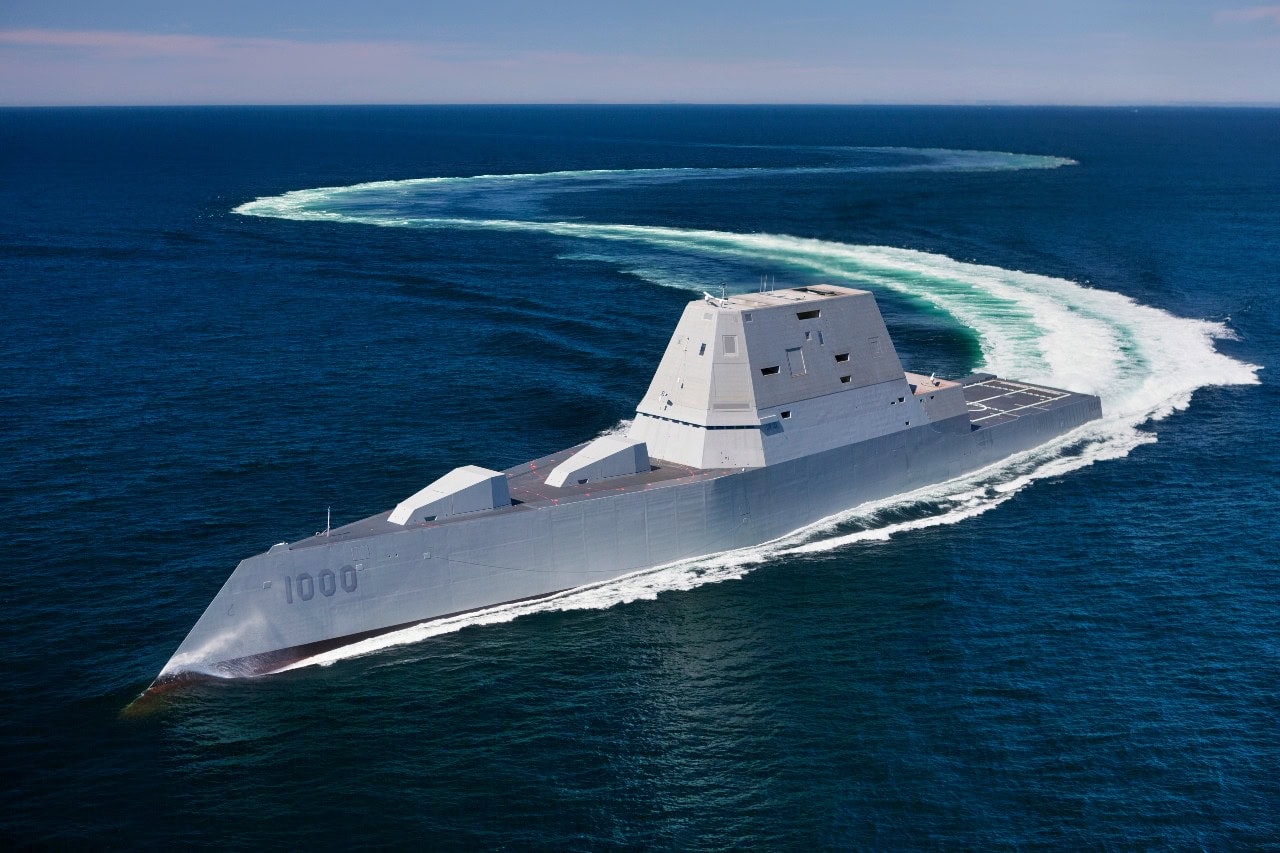
Zumwalt-Class Destroyer U.S. Navy.
However, in practice, the AGS/LRLAP duo failed to live up to these lofty expectations, and, to make matters worse, the ammo cost $ 800,000 per shot!
Fortunately, the Zumwalts are getting a new lease on life, thanks to the Conventional Prompt Strike (CPS) hypersonic missile system. Perhaps new missile missions will also save another disappointing USN warship class, the Littoral Combat Ships (LCS) (the recently stymied Constellation-class cruisers probably won’t be so lucky).
Meanwhile, the U.S. Navy continues to make do with the reliable Arleigh Burke-class destroyers.
So Then, What’s the Problem?
The short (and admittedly somewhat oversimplified) answer is the Pentagon’s arcane, convoluted, and discombobulated acquisition process (described in agonizing detail by Hedrick Smith in his Pulitzer Prize-winning book “The Power Game: How Washington Works”), which leads to seemingly interminable delays and those oh-so-dreaded and oh-so-cliched “cost overruns.”
Since Pete Hegseth assumed his current position as U.S. Secretary of War, he has made it one of his chief goals to improve on that mishmash. Needless to say, Secretary Hegseth faces an uphill battle.
But there’s at least one tentatively hopeful sign of incremental progress being made toward his goal: back in January, the Army officially unveiled the first early prototype of the M1E3—the latest & greatest addition of the M1 Abrams MBT—at the Detroit Auto Show (we saw it and have photos below), thus accomplishing delivery years ahead of the program’s original schedule.
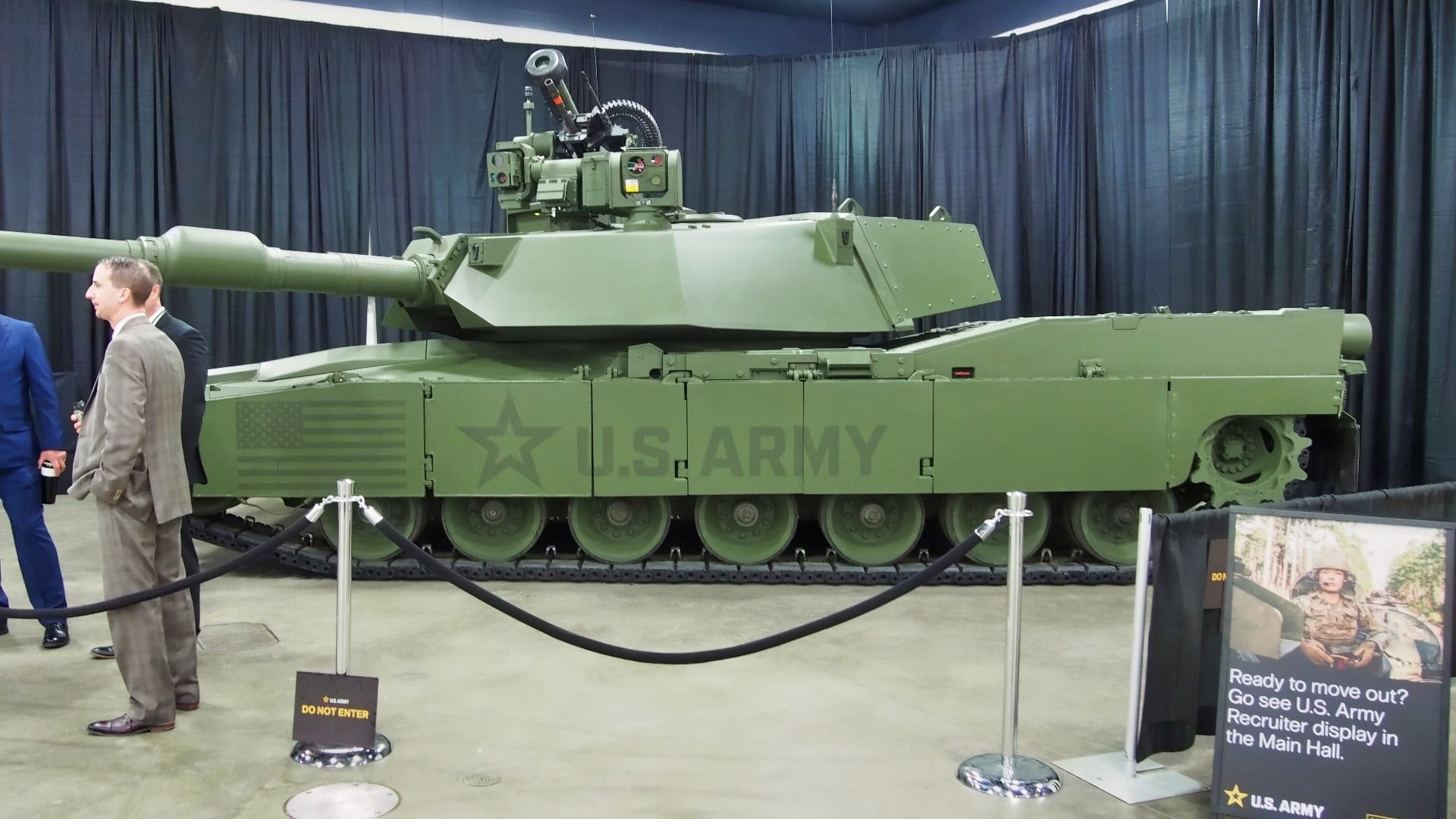
M1E3 Abrams Tank. Taken by 19FortyFive.com
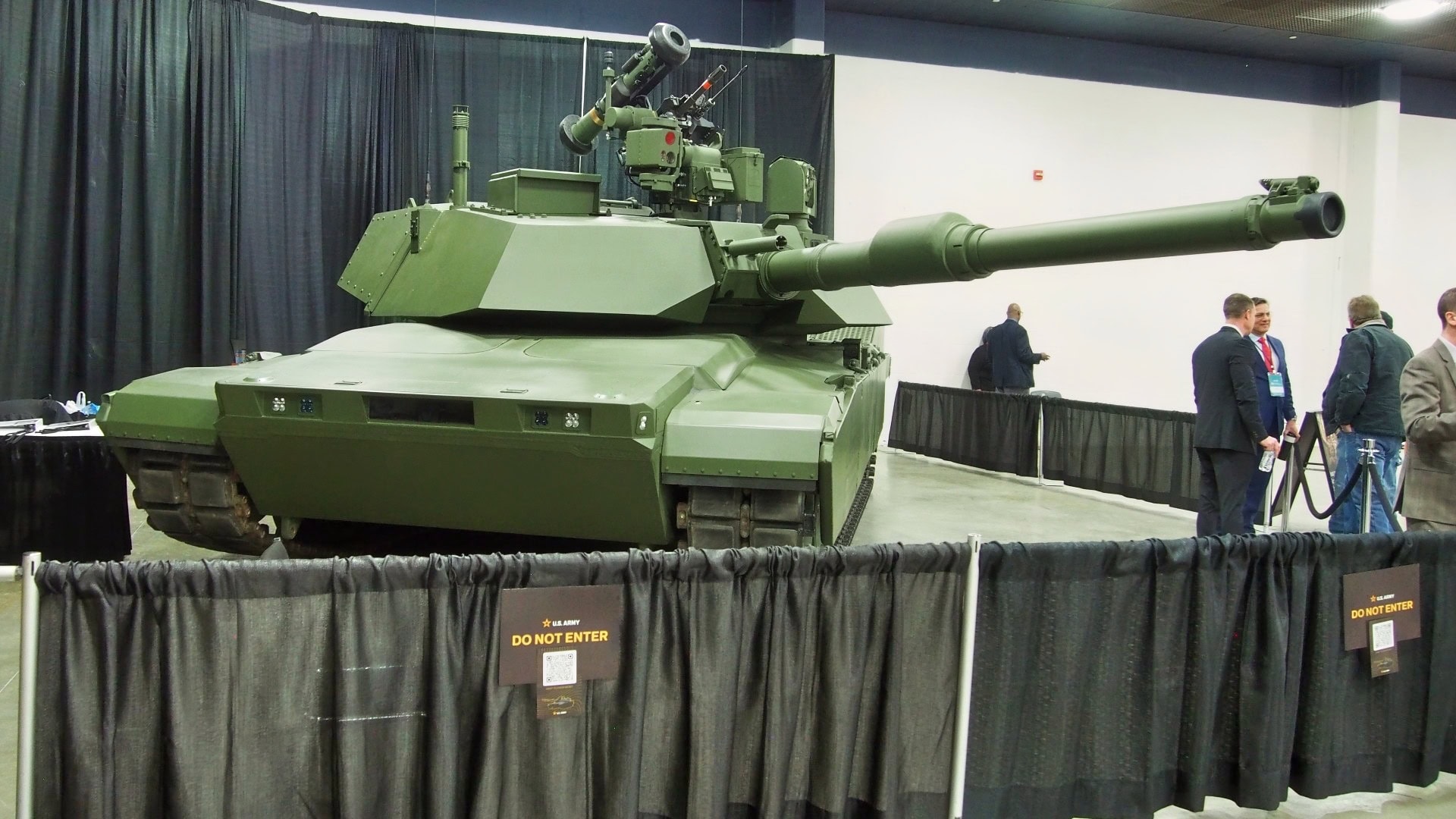
M1E3 Abrams Tank. Taken by 19FortyFive.com
A minor miracle in and of itself, and a hopeful contrast to another once-promising weapon gone by the wayside, the M1A2 Abrams SEPv4.
About the Author: Christian D. Orr, Defense Expert
Christian D. Orr is a Senior Defense Editor. He is a former Air Force Security Forces officer, Federal law enforcement officer, and private military contractor (with assignments worked in Iraq, the United Arab Emirates, Kosovo, Japan, Germany, and the Pentagon). Chris holds a B.A. in International Relations from the University of Southern California (USC) and an M.A. in Intelligence Studies (with a concentration in Terrorism Studies) from American Military University (AMU). He is also the author of the book “Five Decades of a Fabulous Firearm: Celebrating the 50th Anniversary of the Beretta 92 Pistol Series,” the second edition of which was recently published.