
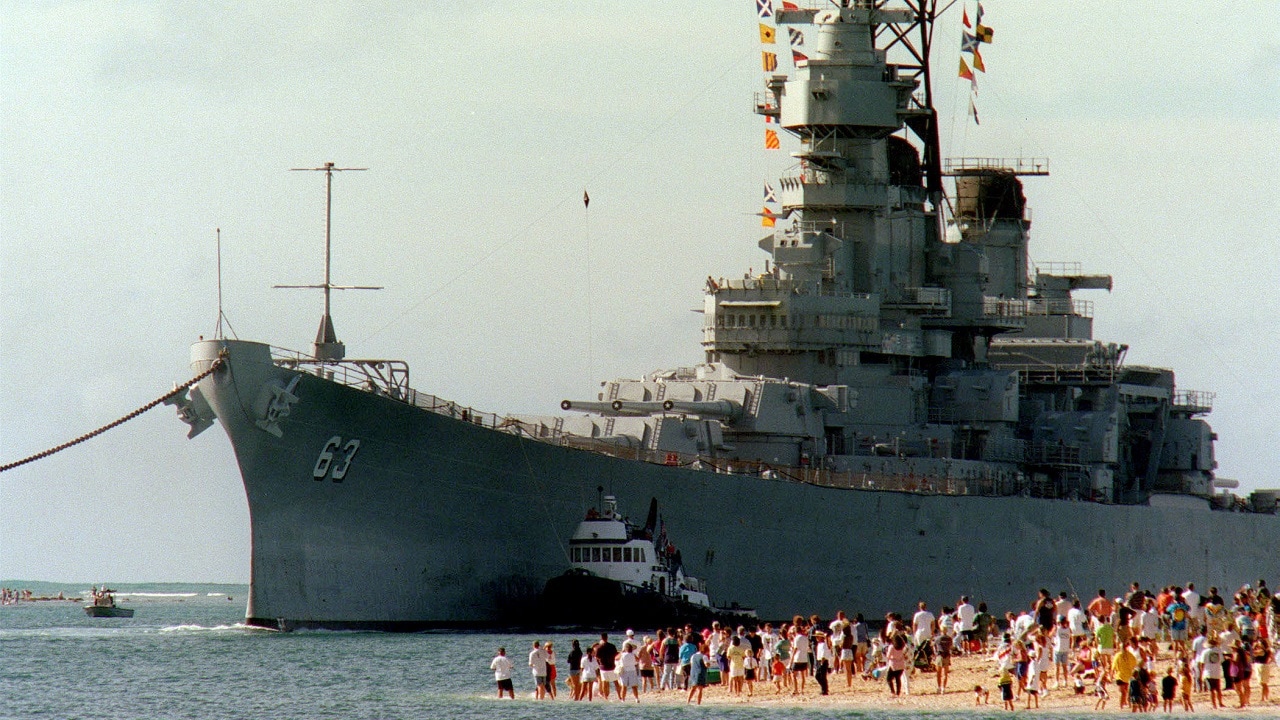
Summary and Key Points: In September 1950, the USS Missouri became the first American battleship to join the Korean War, but its journey was nearly derailed by a hurricane off North Carolina that swept helicopters into the sea.
-After emergency repairs in Pearl Harbor, the “Mighty Mo” arrived to provide critical fire support for the Inchon Landings and the Hungnam Evacuation (the “Miracle of Christmas”).
-Firing nearly 11,000 rounds of 16-inch and 5-inch shells, the Missouri’s massive guns devastated North Korean and Chinese lines, proving that the WWII-era dreadnought remained an essential “wall of fire” in modern 1950s combat.
Hurricane Time: The USS Missouri’s Service in the Korean War
When it comes to deploying a ship, one usually doesn’t consider weather a factor in determining when a vessel can arrive in theater on time. But sometimes even the largest warships have to deal with Mother Nature. This is what happened in 1950 when President Harry S. Truman ordered the battleship USS Missouri to transit the Pacific Ocean for a showdown with enemy forces on the Korean Peninsula.
Things Did Not Look Promising at First
The Mighty Mo encountered quite a storm on the way to the combat theater.
The Iowa-class battleship had to sail through a hurricane, and it looked like the sailors on board would have their hands full.
The Missouri had been home ported in Norfolk, Virginia, so this was no easy cruise to East Asia. The ship had to be transferred to the Pacific Fleet first, which excited the sailors. The Missouri was about to go to war again.

USS Missouri Iowa-Class Battleship Broadside. Image Credit: Creative Commons.
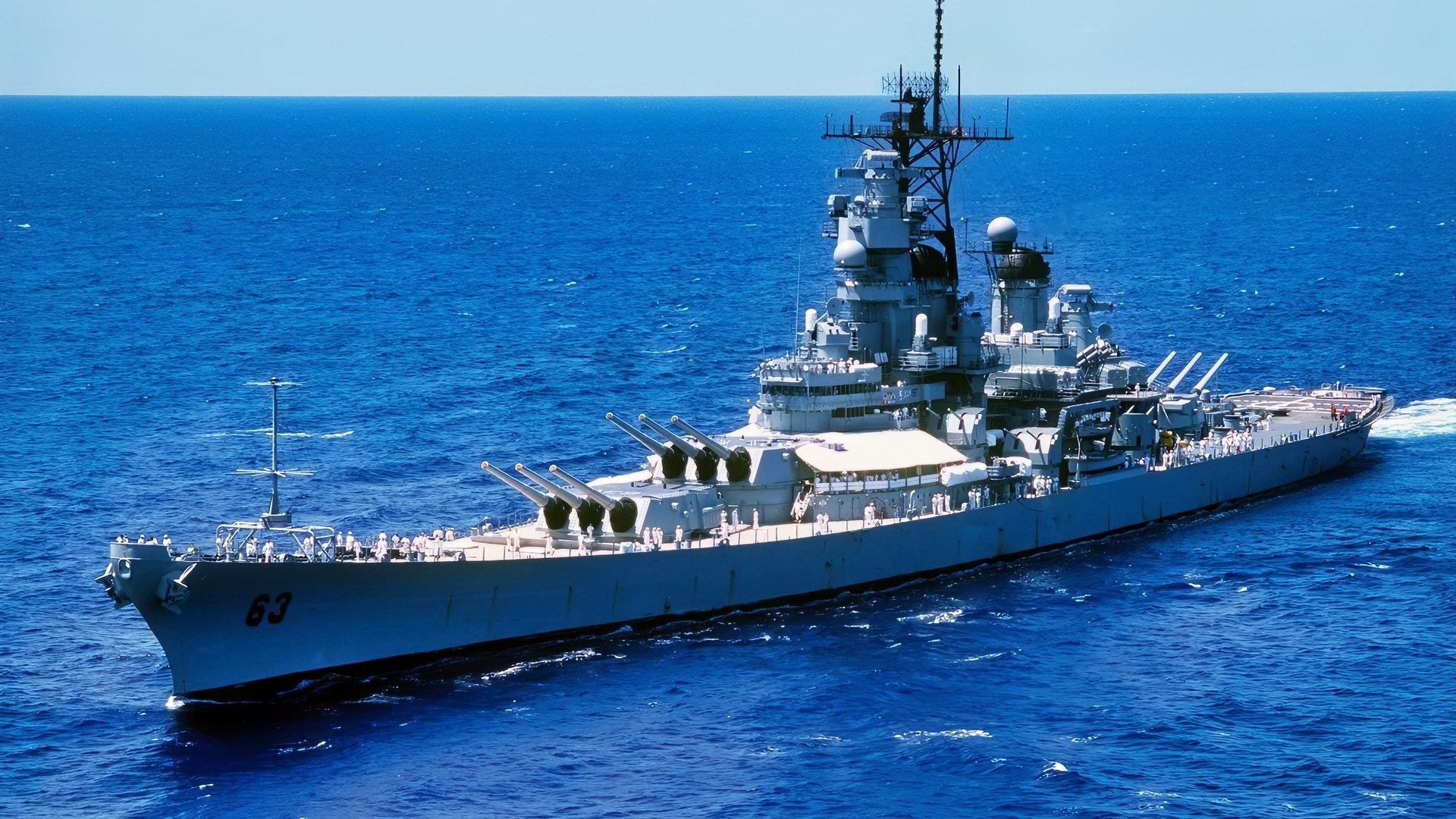
USS Missouri Iowa-Class USN. Image Credit: U.S. Navy.
The enormous ship was forced to steam through that tempest that was raging off the coast of North Carolina. This did not look good, and it was an inauspicious start to the deployment. Would this storm cause too much damage to the vessel and force it back to stateside for the repairs? The waves continued to crash against the Missouri, but there was no turning back.
The Journey to Pearl Harbor Wasn’t Easy
The helicopters on the stern were quickly tied down in the hope that the storm would not force them into the water, but at least one aircraft was knocked into the sea. There was additional damage, and the ship’s captain did not think it could make it all the way to Korea without stopping for repairs. The Mighty Mo reached Pearl Harbor, Hawaii, and everyone breathed a sigh of relief. Workers got busy and fixed some issues on the vessel, and the Missouri was back on its way after a week of work.
The Famous Inchon Landings
The Missouri finally reached the Korean peninsula on September 14, 1950. It was the first battleship deployed to the war zone. Rear Admiral Allan Edward Smith chose it as his flagship. Smith wasted no time in getting the dreadnought’s big guns blazing. There was the brilliant Inchon landings operation on hand, and the Missouri was going to play quite a role in making history once again.
Those Massive 16-Inch Guns
First, the Iowa-class battleship attacked Samchok.
This was a feint and not the main effort. It forced the enemy to move assets in that direction. The main attacking force was at Inchon. Missouri finished these few days of fire missions and headed to Inchon to deal out some death and destruction in support of the personnel making the landing. North Korean troops were retreating. As they fled north, the Missouri’s 16-inch guns made the enemy pay.
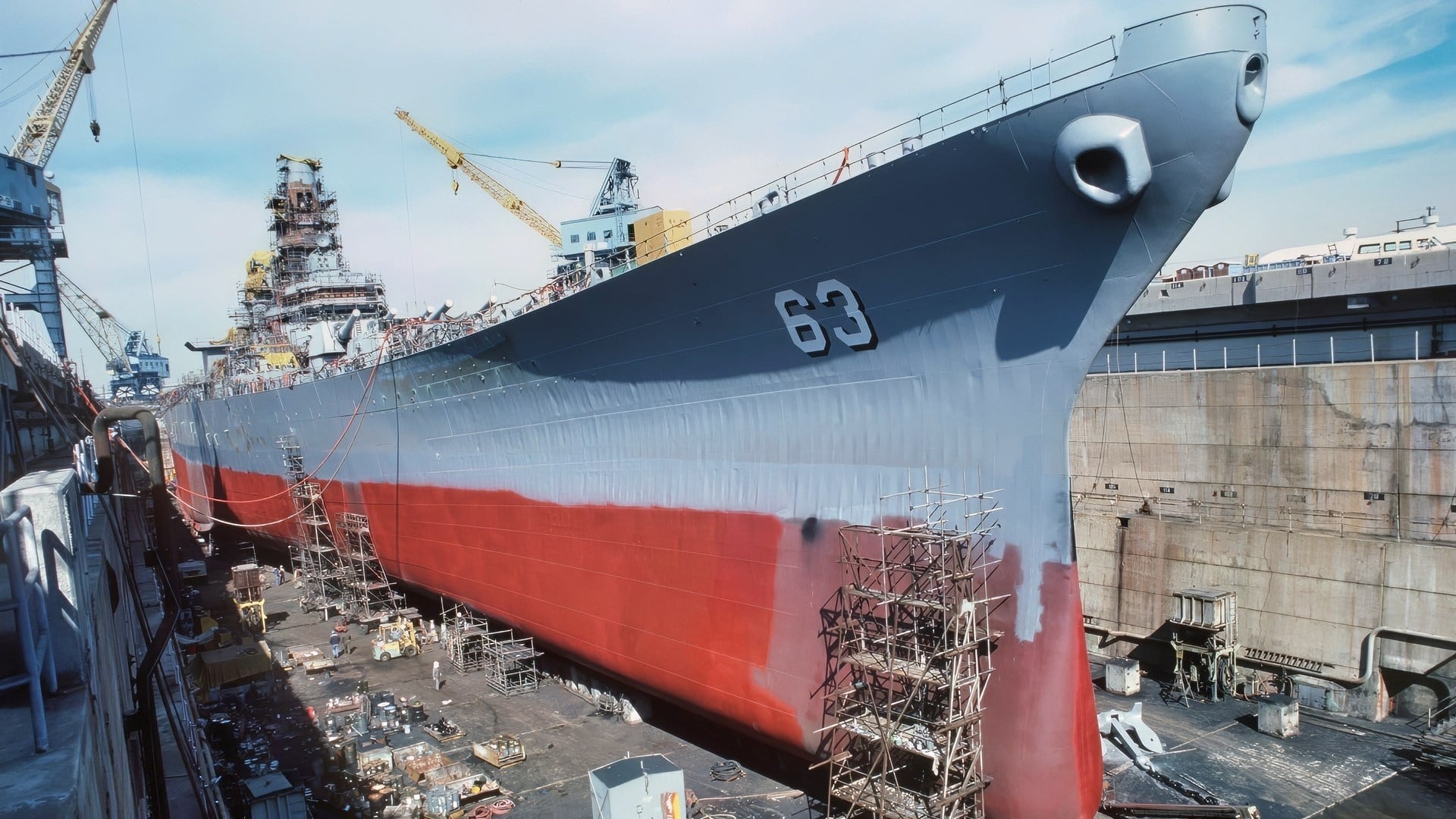
A starboard bow view of the battleship USS MISSOURI (BB 63) in dry dock for reactivation/modernization work prior to recommissioning. Image Credit: Creative Commons.
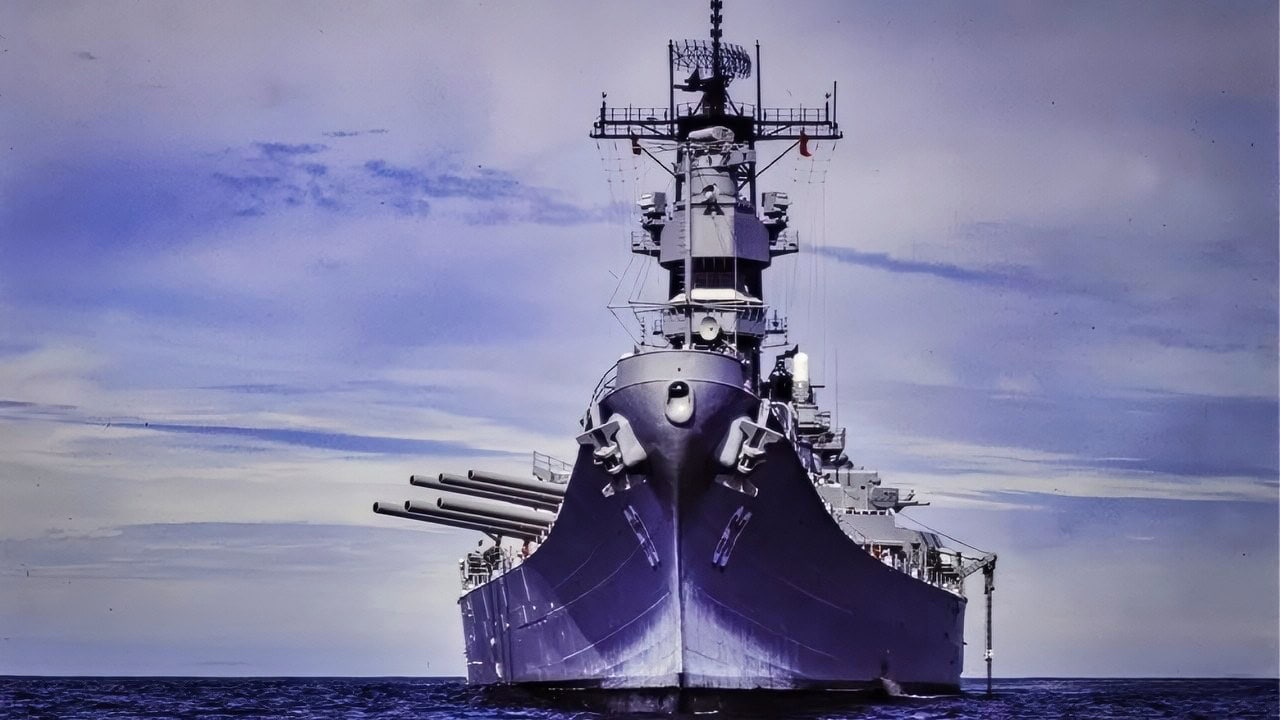
USS Missouri Navy Battleship. Image Credit: Creative Commons.
The Missouri would finally conclude its shelling of the enemy and settle down to more wartime patrols. The ship was eventually commanded by Vice Admiral A.D. Struble, and he made it the flagship for the 7th Fleet. The battleship was now ready for more action and became an escort vessel for the aircraft carrier USS Valley Forge. The big guns again fired steel at the enemy, targeting enemy installations and close air support targets in the Chongjin and Tanchon areas of operation. The naval gunfire proved useful during fierce fighting there.
To give sailors on the Missouri a breather, the comedian and entertainer Bob Hope paid a visit and gave three USO shows to the delight of the sailors.
The Chinese Enter the War
However, this respite was only temporary. The war soon shifted in the enemy’s favor when China intervened. There were 380,000 Chinese volunteers who streamed down from the North. They were maniacal and suicidal troops who were not going to stop attacking until they pushed the Americans out of North Korea. Wave after wave of Chinese, using blood-curdling screams with bugles blaring, streamed into U.S. and allied positions.
Christmas Miracle
The Missouri had to return to work because a large number of retreating troops needed to be evacuated. The Iowa-class battleship would play an important role during the resultant Hungnam evacuation – nicknamed the “Miracle of Christmas.”
The battleship was not done with Korea. Throughout 1951, the big guns were still thirsty for blood. They roared to life during additional support missions to maneuver UN troops.
Around 11,000 shells were fired at the Enemy
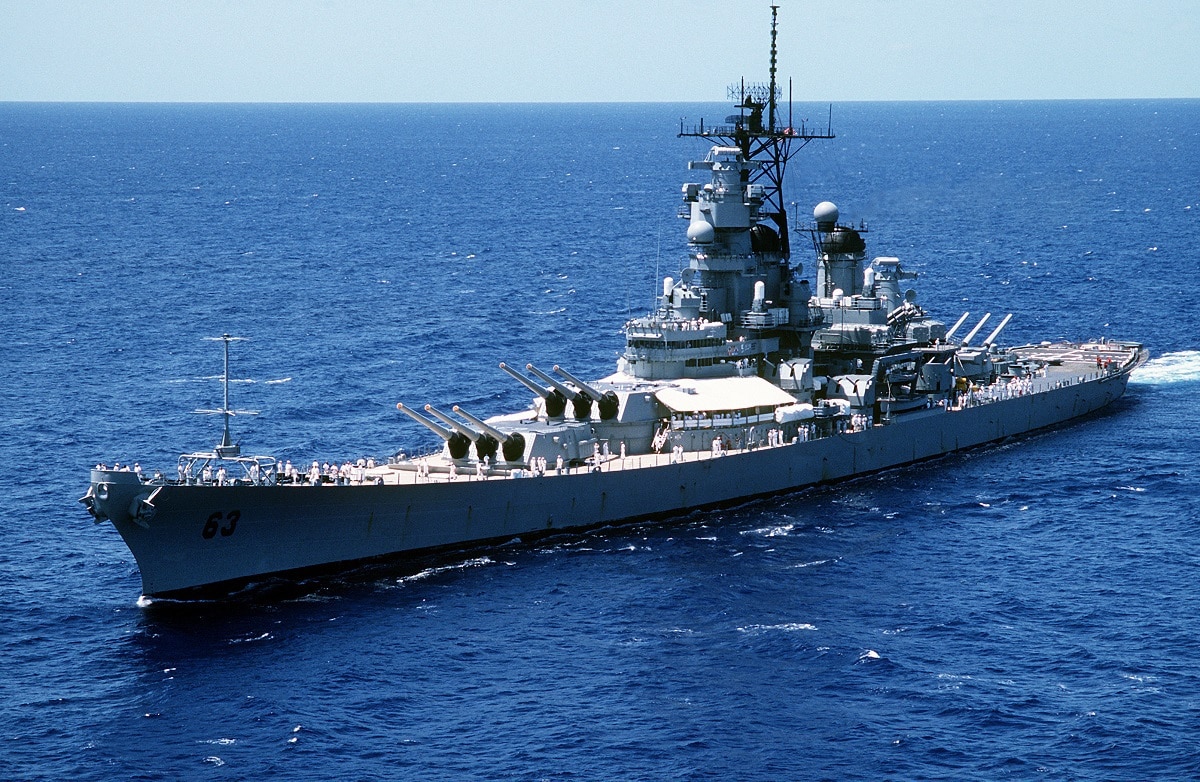
A port bow view of the battleship USS MISSOURI (BB-63) underway.
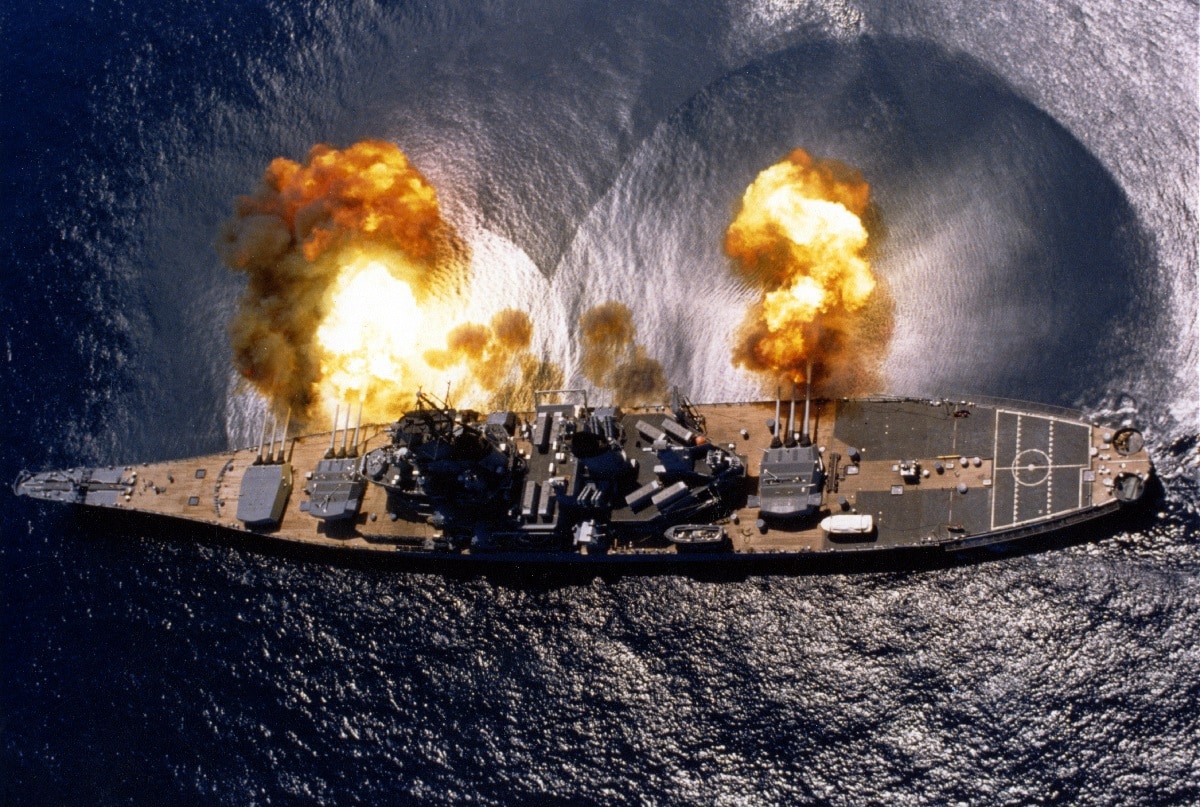
USS Iowa (BB-61) Fires a full broadside of nine 16/50 and six 5/38 guns during a target exercise near Vieques Island, Puerto Rico, 1 July 1984. Photographed by PHAN J. Alan Elliott. Note concussion effects on the water surface, and 16-inch gun barrels in varying degrees of recoil. Official U.S. Navy Photograph, from the the Department of Defense Still Media Collection.
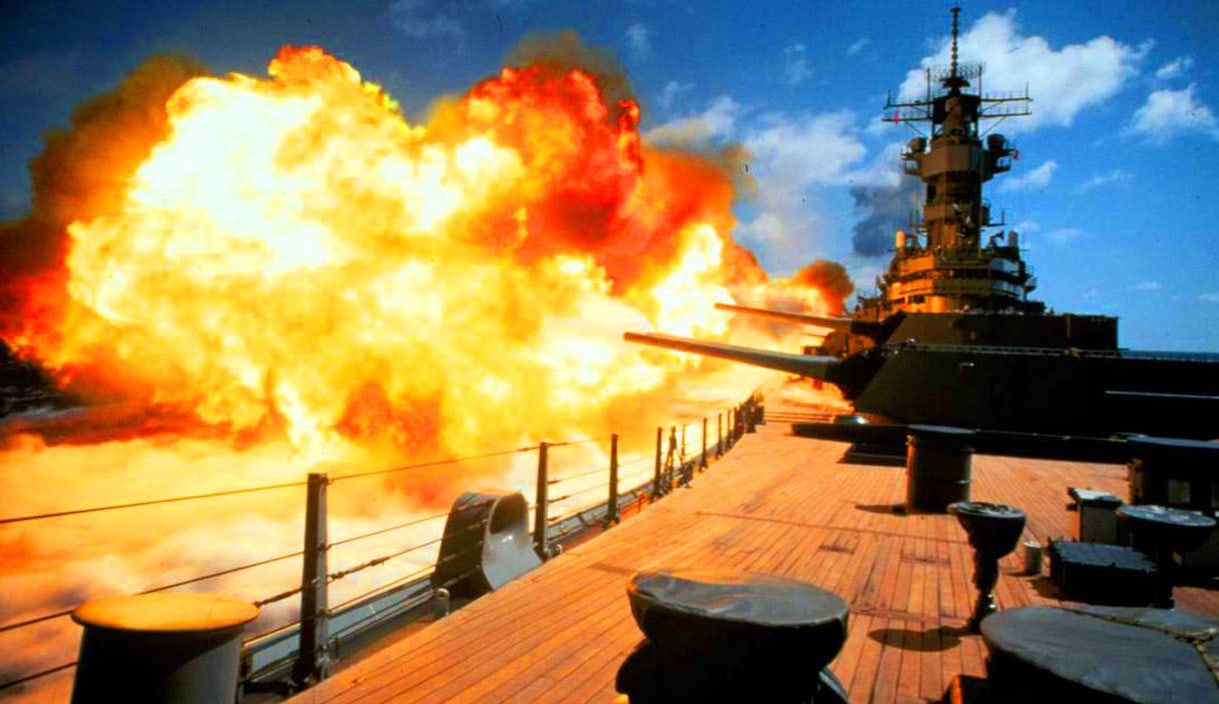
USS Missouri. Image Credit: Creative Commons.
When it was all said and done in that first mission to Korea, the Missouri fired 2,895 sixteen-inch rounds and 8,043 five-inch shells, according to the National Interest. The battleship was sent back to the United States for repairs, but the war was not over. The Missouri returned to Korea for additional fire mission support against coastal targets. The last operation was against the enemy in the Kojo area in 1953.
Missouri had a “good war” in Korea. Its guns were always busy. The sailors worked to the best of their ability. The Navy should be proud of the Missouri’s service during the conflict.
It started dangerously with that hurricane, and the shipmates probably wondered if that storm would be a harbinger of doom, but that was a mere hiccup. The Missouri did what it was known for – light up enemy targets with a wall of fire. This helped keep the Americans in the game until the Korean War ended in a stalemate.
About the Author: Dr. Brent M. Eastwood
Author of now over 3,000 articles on defense issues, Brent M. Eastwood, PhD is the author of Don’t Turn Your Back On the World: a Conservative Foreign Policy and Humans, Machines, and Data: Future Trends in Warfare plus two other books. Brent was the founder and CEO of a tech firm that predicted world events using artificial intelligence. He served as a legislative fellow for US Senator Tim Scott and advised the senator on defense and foreign policy issues. He has taught at American University, George Washington University, and George Mason University. Brent is a former US Army Infantry officer. He can be followed on X @BMEastwood.