
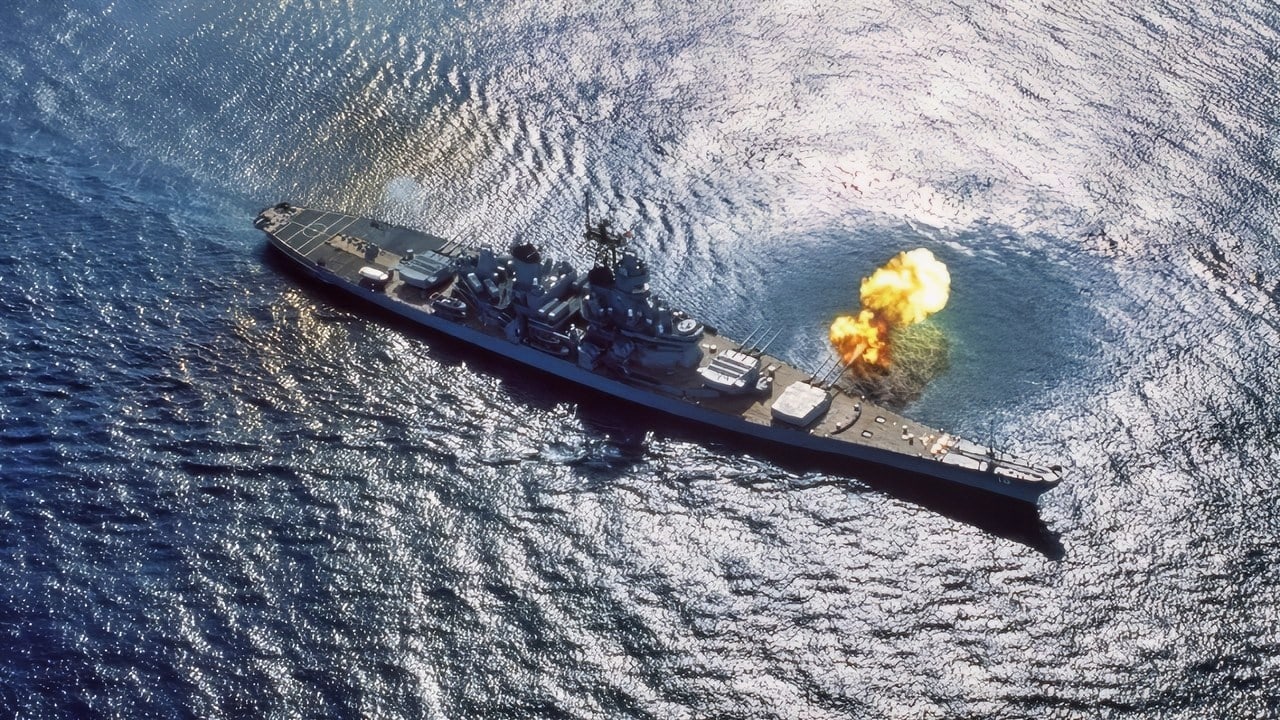
The 45,000-Ton Mistake? Why the Navy Scrapped the Massive USS Illinois Before It Could Fight
We love battleships at 19FortyFive, and our readers always clamor for more detailed information and analysis.
One U.S. Navy battleship you may not know much about is the USS Illinois (BB-65) – the dreadnought looked to dominate the seas – but was never completed and only lives on in our imagination. But what a mighty vessel it would have been. The battlewagon had powerful guns and thick armor and would have taught the Germans and Japanese a lesson about the prowess of U.S. shipbuilders.
It Could Have Enjoyed a Historic Combat Record
Construction of the USS Illinois was halted in 1942, and it was finally scrapped in 1958. While it would have perhaps made a difference in World War Two, the Illinois could have also served in the Korean War and in Vietnam, but the Navy gods did not smile on the ship, and we can only speculate on what would have happened should it have joined the fleet and used its big guns to punish the enemy.
No Longer the King of Battle
The Illinois was conceived when U.S. Navy battle planners figured that the battleship was the king of the sea. That heavy armor and gun-power was considered the essence of naval combat. Bigger was always seen as better than Germany and Japan, which armed themselves in the interwar period. The United States envisioned decisive ship-on-ship warfare in which accurate gunnery and better survivability were the name of the game.
Making Sailors Proud
Battleships also had a psychological quality. They were mighty vessels that gave sailors on board confidence they would be protected and be able to dish out the heat, making them the most elite crewmen in the Navy. Bringing the noise from the dreadnoughts was considered the ultimate way to fight.
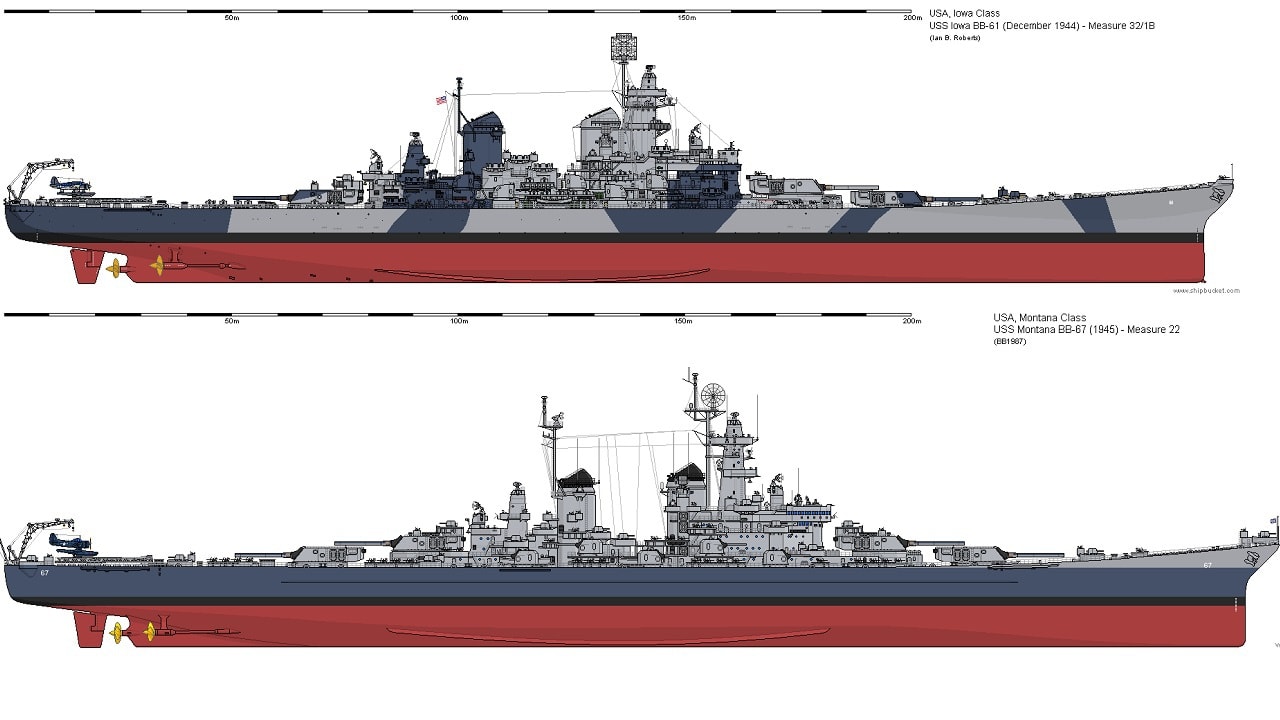
Image of Iowa-class battleship compared to Montana-class battleship that was never built. Image Credit: Creative Commons.
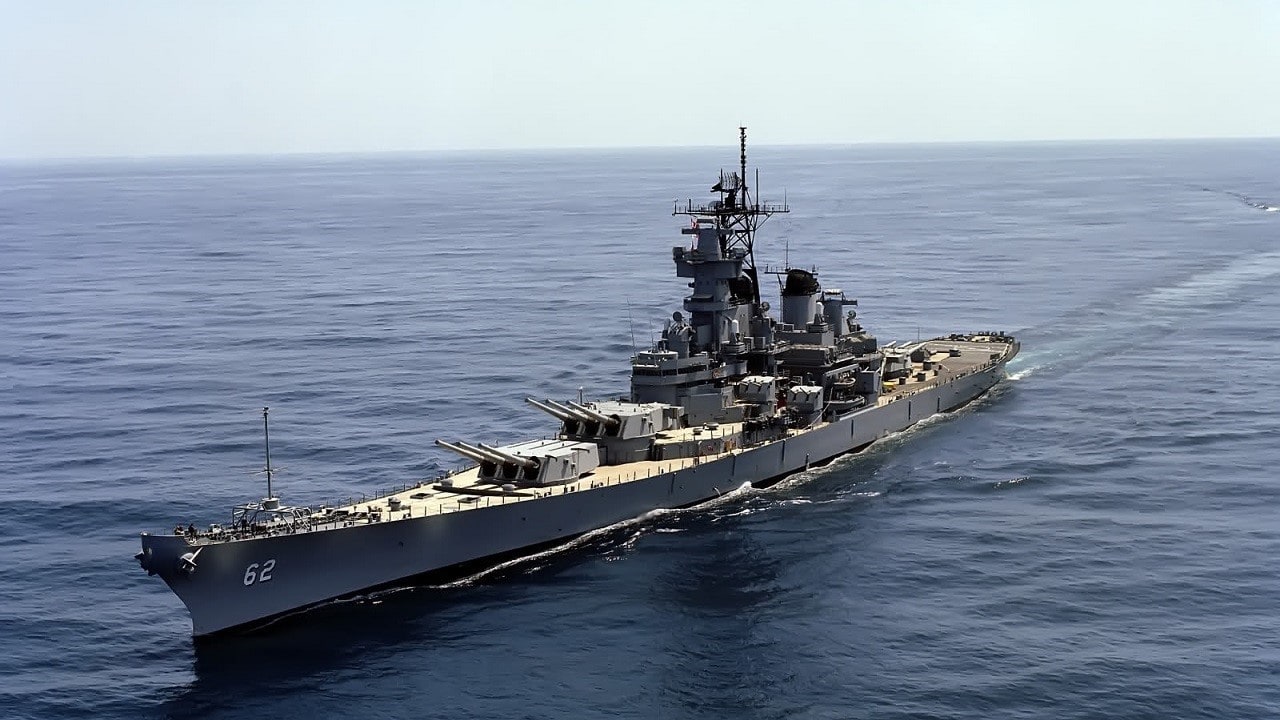
Image is of an Iowa-class battleship. Image Credit: Creative Commons.
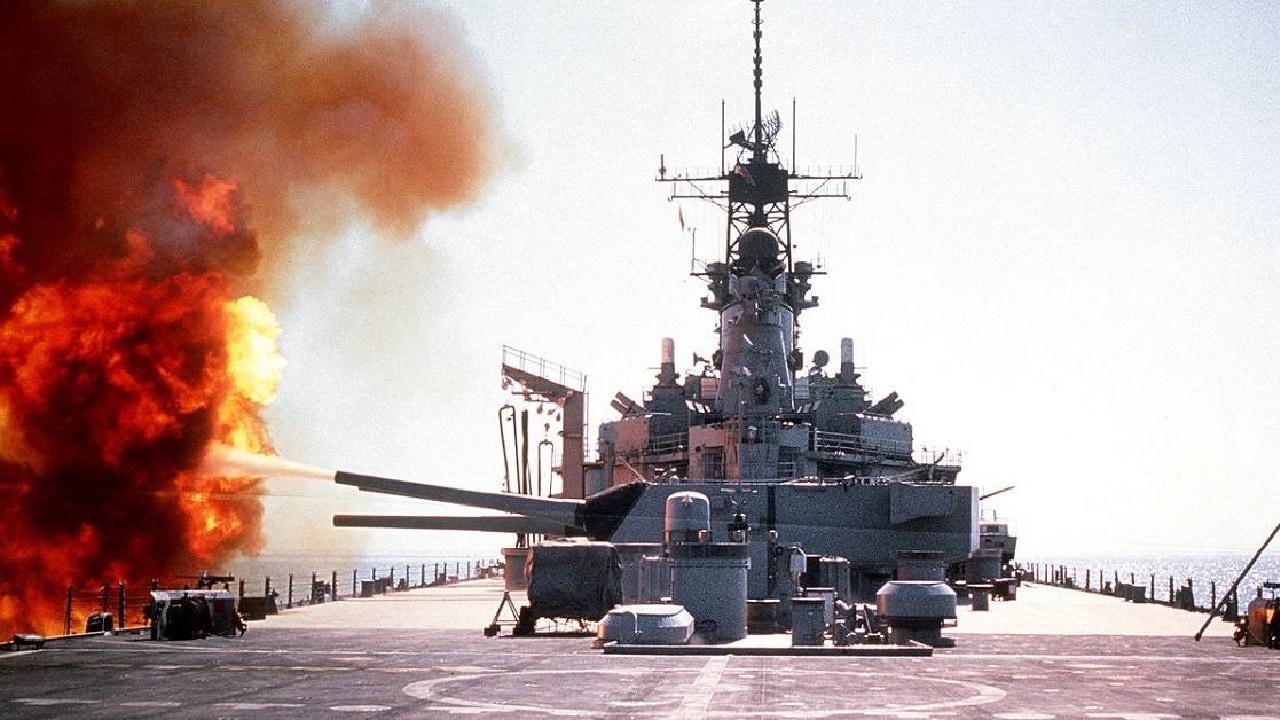
Image of Iowa-class battleships firing her 16-inch guns. Image Credit: Creative Commons.
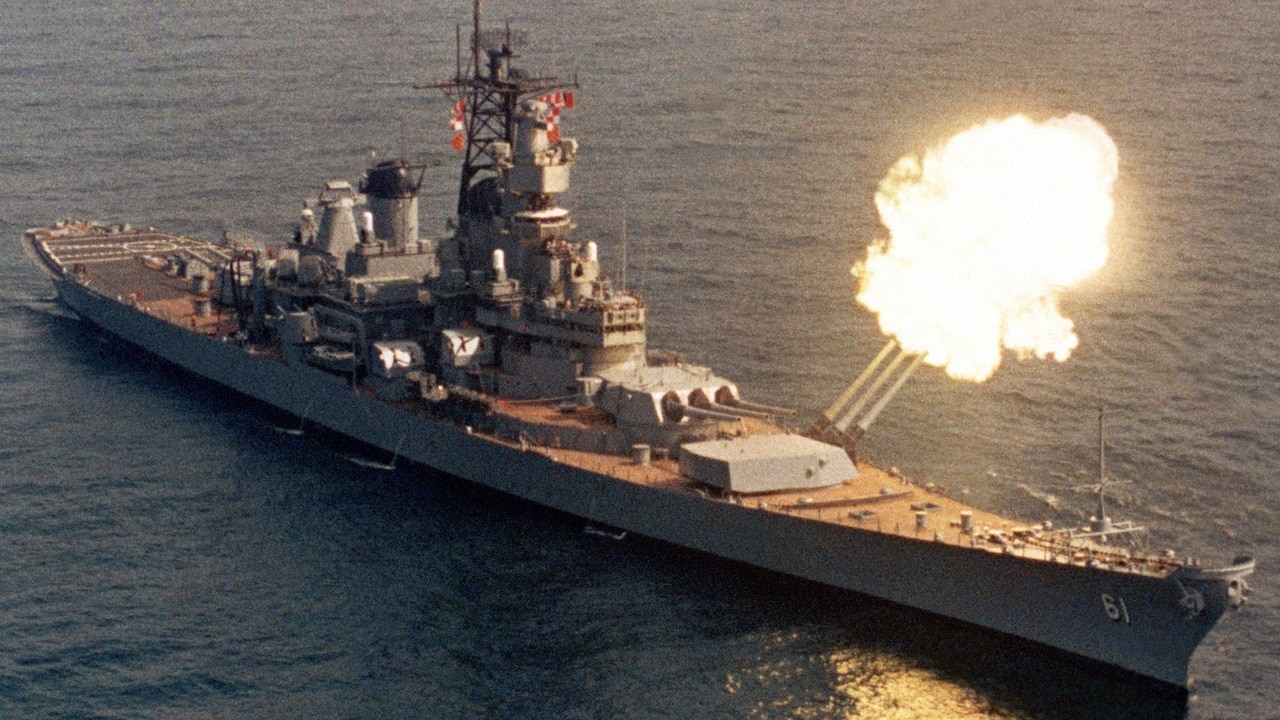
An aerial starboard bow view of the battleship USS IOWA (BB 61) firing a 2,700-pound projectile from the barrel of a forward 16-inch gun during sea trials off the coast of Mississippi. The IOWA is scheduled to be recommissioned into the fleet on April 28, 1984, after completion of modernization/reactivation construction at Ingalls Shipbuilding, Pascagoula, Mississippi.
New Montana-class Was Worth Writing Home About
The Navy wanted something even bigger and better than the vaunted Iowa-class, which thrilled sailors and onlookers with its devastating guns and enviable speed. They devised the new Montana-class that would be made up of the Illinois and the USS Kentucky.
The Rise of Japan Necessitated More Heavy Guns
Japan was forging ahead with heavy capital ships that could help it with its imperial and colonial ambitions. The idea was to get inside the enemy’s head and put the fear of god into adversaries. By 1937, the Japanese were sitting pretty, having already invaded and terrorized China. More land would be held by the imperial navy, and the battleship was the go-to naval option for projecting power and carrying the flag into battle.
Was It Time to Focus on Aircraft Carriers?
The Navy reconsidered the development of the Montana-class and transferred the Illinois and Kentucky to the Iowa-class. Then, U.S. battleships were in port during the devastating Japanese attack on Pearl Harbor. Eight battleships were sunk or damaged. This surprise move shocked the Navy and prompted it to reconsider its approach to warfare. Should the maritime branch focus on replenishing the number of battlewagons, or should it copy the Japanese and turn to producing more aircraft carriers that could turn the tide in battle?
New Role for the Battleship
Battleships were then reconsidered. Maybe they were better as escort ships that would also shell the various islands that were attacked by Marines. The big guns could make the Japanese run for cover and duck their heads while Marines navigated enemy defensive positions. Also, the amphibious landing zones needed to be softened up before an attack, and gunfire from the battleships would allow Marines to achieve a beachhead. That seemed to be a winning formula.
The Stand-off Fight With Carriers
The Battle of Midway and the Battle of the Coral Sea were instrumental in demonstrating that the Navy was right to shift the mission set to support and suppress enemy ground positions. These engagements showed that neither Japanese nor American ships ever even glimpsed each other. It was a long-range strike from carriers that created conditions for victory. The battleship had a smaller support role.
Shipbuilders turned to producing as many carriers as possible, and the Illinois became expendable. Work stopped in 1942, and the program was cancelled in 1945.
Specs on the Illinois Would Have Been Awe Inspiring
It’s too bad. This monster, despite the renewed focus on carriers, would have been a shiny jewel. It displaced 45,000 tons. It would have been 887 feet long with a 108-foot beam and a draught of 37 feet. The armor was up to 12 inches thick in most areas. The turrets were protected by 20 inches of armor. The decks had 7.5-inch-thick armored plates.
The armaments were awesome. There were nine 16-inch/50 caliber Mark 7 guns that could propel a 2,700-pound armor-piercing shot up to 20 miles. Twenty 5-inch/38-caliber guns fired rounds at targets 10 miles away.
Cancellation May Have Been a Wrong Move
Did the Navy make a mistake in cancelling the USS Illinois? Battleships were becoming outdated, but they still had combat roles, especially supporting marauding leathernecks and carrier escort duties. The Americans weren’t so sure these were decisive game-winners. Ship-on-ship warfare was becoming rare. Perhaps finishing the Illinois after so much time, money, and resources were invested was not the best way to run the Navy.
President Franklin D. Roosevelt could have made a personal plea to keep the Illinois construction intact, but the former assistant secretary of the Navy did not seem to make the battleship a priority in the latter stages of the war. He wanted more aircraft carriers, and the naval chain of command followed suit.
This was bad news for proponents of battleships who believed they were useful during the island-hopping strategy. We’ll never know whether the Illinois could have won a lion’s share of battle stars for exemplary duty or simply served as a close air support ship, mostly in the background during the war.
About the Author: Brent M. Eastwood
Author of now over 3,000 articles on defense issues, Brent M. Eastwood, PhD is the author of Don’t Turn Your Back On the World: a Conservative Foreign Policy and Humans, Machines, and Data: Future Trends in Warfare plus two other books. Brent was the founder and CEO of a tech firm that predicted world events using artificial intelligence. He served as a legislative fellow for US Senator Tim Scott and advised the senator on defense and foreign policy issues. He has taught at American University, George Washington University, and George Mason University. Brent is a former US Army Infantry officer. He can be followed on X @BMEastwood.