Summary and Key Points: Fleet Admiral Chester Nimitz’s Pacific campaign provides a timeless blueprint for naval dominance through intelligence and logistics.
-Inheriting a devastated fleet after Pearl Harbor, Nimitz prioritized aircraft carriers and signal intelligence to secure a decisive victory at Midway.

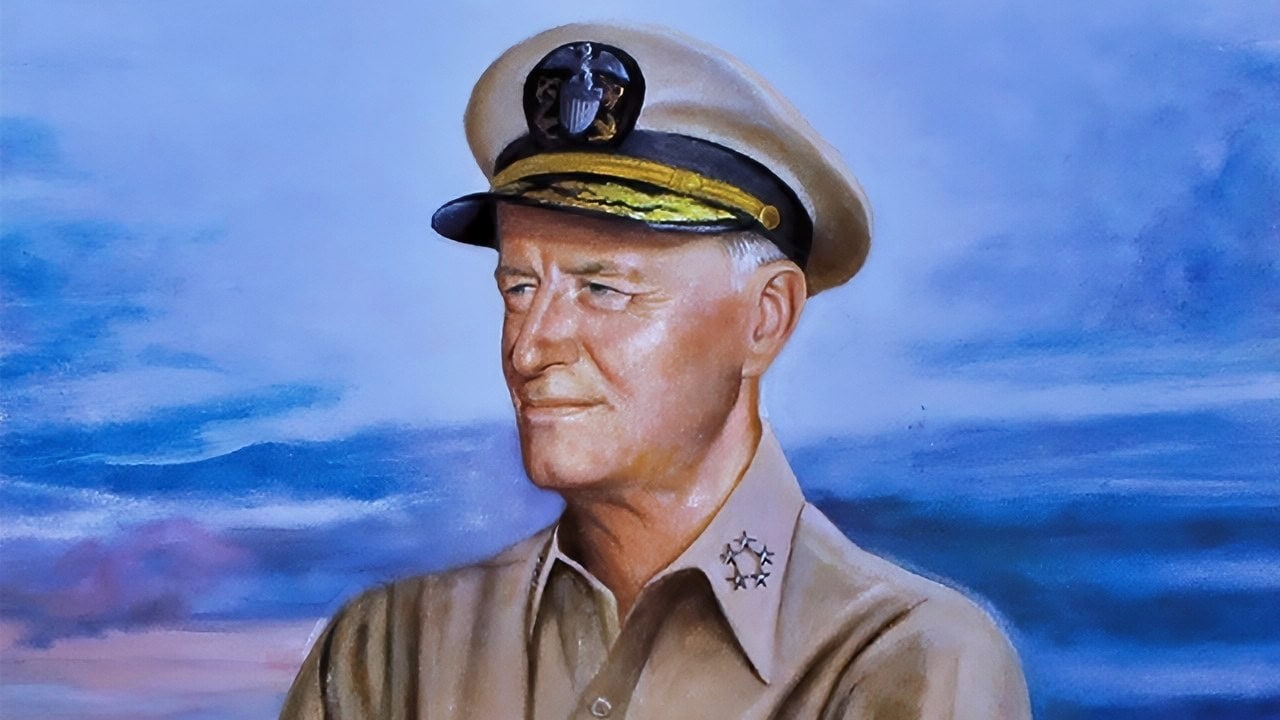
U.S. Navy Admiral Chester W. Nimitz Portrait. Image Credit: Creative Commons.
-His strategic “island-hopping” and mobile service squadrons allowed the Navy to project power across vast distances.
Quote of the Day From U.S. Navy Admrial Chester Nimitz
“Unless you want to kill off your own forces, the only way to practice war is to game it.” – U.S. Navy Admiral Chester Nimitz
Much ink has been spilled over the achievements the American Army made in Europe during WWII. Much has been written about the exploits of General Patton, General Eisenhower, and the courage of the men who fought from Normandy to the heartland of Germany.
At the same time, however, another war was being fought all the way in the Pacific Ocean. Under the command of Fleet Admiral Chester William Nimitz, the United States Pacific Fleet fought a hard and grueling campaign against Imperial Japan.
Recovering from the Shock of Pearl Harbor
When Nimitz assumed command on December 31, 1941, he faced a situation that many considered catastrophic.
The Japanese attack on Pearl Harbor destroyed or damaged the majority of the U.S. battleship fleet and killed thousands of sailors. Much of the public and many senior officers believed the Pacific Fleet had been neutralized for years to come.
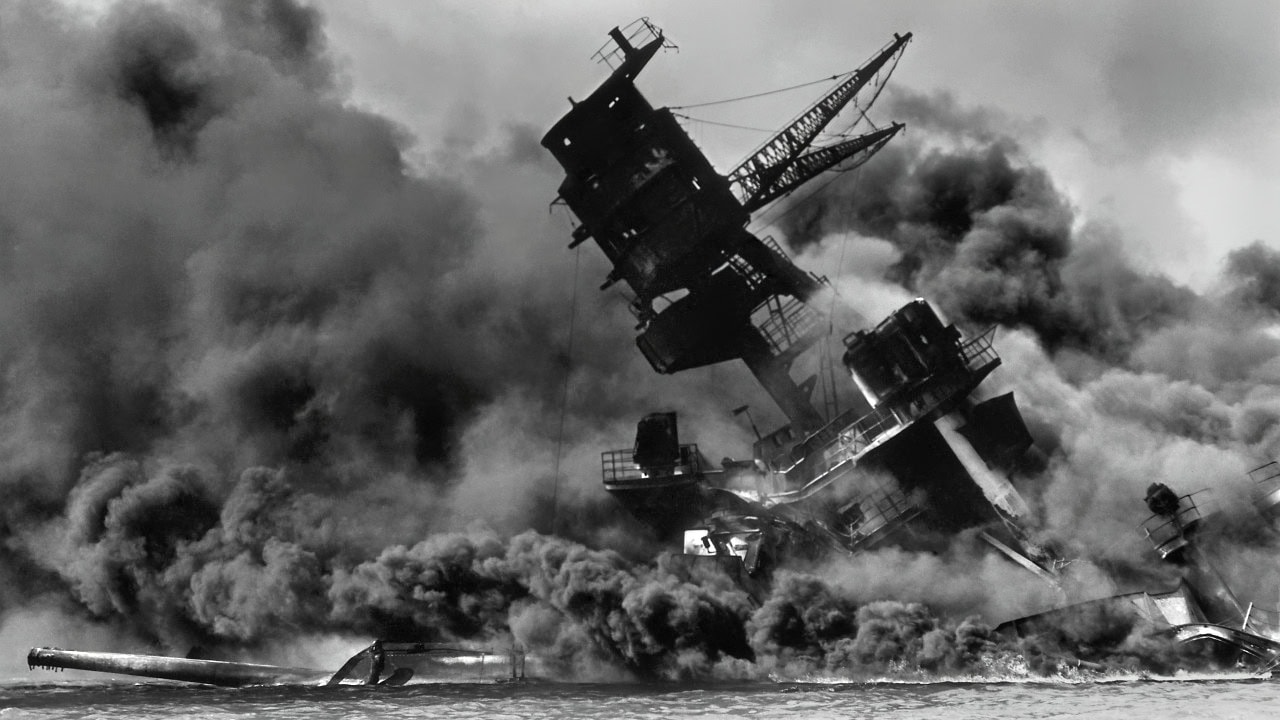
The USS Arizona (BB-39) burning after the Japanese attack on Pearl Harbor, 7 December 1941.
Yet Nimitz saw something different. He recognized immediately that the United States still possessed a decisive asset: its aircraft carriers, which had been at sea during the attack and had survived unharmed (the submarine base and the oil fields were also spared).
Even more importantly, he understood that the future of naval warfare would hinge not on battleships but on fast carriers, aviation, intelligence, and a logistical network capable of sustaining operations over thousands of miles of ocean.
In those critical first weeks, he quietly reorganized the fleet, worked to improve long-range reconnaissance and anti-submarine capabilities, and began cultivating a command climate that balanced resolve with realism.
Nimitz’s approach to risk and timing proved itself in May 1942 during the Battle of the Coral Sea. This engagement marked the first naval battle in history fought entirely by aircraft launched from carriers, with opposing fleets never coming within visual contact.
Under Nimitz’s direction, U.S. forces managed to frustrate Japan’s attempt to capture Port Moresby, which would have threatened Allied communication lines and exposed Australia to further danger. Although the U.S. suffered the loss of the carrier Lexington, Nimitz recognized that Coral Sea was overall a strategic victory because it halted Japanese expansion and proved the effectiveness of American codebreaking and carrier doctrines.
Midway: the War Shifts Decisively in America’s Favor
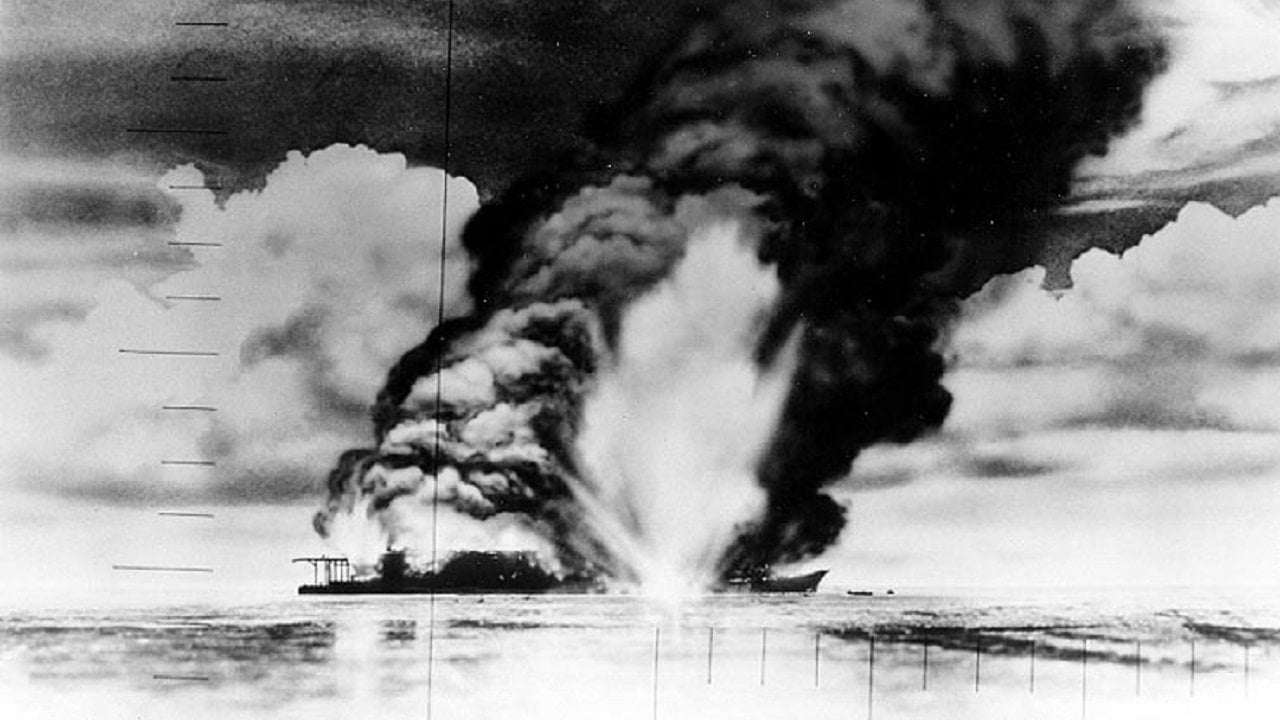
Diorama simulating periscope view from Nautilus, attacking a Japanese aircraft carrier at the Battle of Midway.

The Japanese heavy cruiser Mikuma, photographed from a USS Enterprise (CV-6) Douglas SBD-3 Dauntless during the afternoon of 6 June 1942, after she had been bombed by planes from Enterprise and USS Hornet (CV-8). Note her shattered midships structure, torpedo dangling from the after port side tubes and wreckage atop her number four 203 mm gun turret. The photo flight was led by Lt(jg) E.J. Kroeger, A-V(N), USNR, of Bombing Squadron 6 (VB-6) with photographer Mr. A.D. Brick of Fox Movietone News in a SBD-3 of VB-3 (“3-B-10”). Kroeger was accompanied by Lt.(jg) C.J. Dobson of Scouting Squadron 6 (VS-6) and photographer CP(PA) J.S. Mihalovitch in SBD “6-S-18”.
It was at the Battle of Midway, however, in June 1942, that Nimitz’s strategic genius achieved its fullest expression. With intelligence supplied by cryptanalysts at Station HYPO, Nimitz knew the Japanese planned a major assault on Midway Atoll. Armed with this knowledge, he took the audacious step of positioning his three available carriers north of the island in a concealed ambush formation. Trusting the intelligence completely, he committed nearly all of America’s remaining carrier strength to a single, decisive confrontation.
The result was a stunning victory in which Japan lost four of its frontline carriers along with many of its most experienced pilots. Midway marked the point at which strategic momentum shifted inexorably to the United States, largely because Nimitz combined intelligence, decisive commitment, and faith in his commanders to execute a high-stakes plan with precision.
Following Midway, Nimitz turned toward planning a sustained offensive across the Central Pacific. This phase of the war required not only tactical brilliance but also logistical innovation.
The distances involved were immense, the terrain widely dispersed, and the challenges of amphibious warfare formidable. Under Nimitz’s leadership, the U.S. Navy developed mobile service squadrons, comprising floating repair depots, supply ships, and maintenance units, that enabled the fleet to remain at sea for months at a time. This ability to project sustained power across the world’s largest ocean became a defining feature of American naval dominance.
The Island-Hopping Campaign
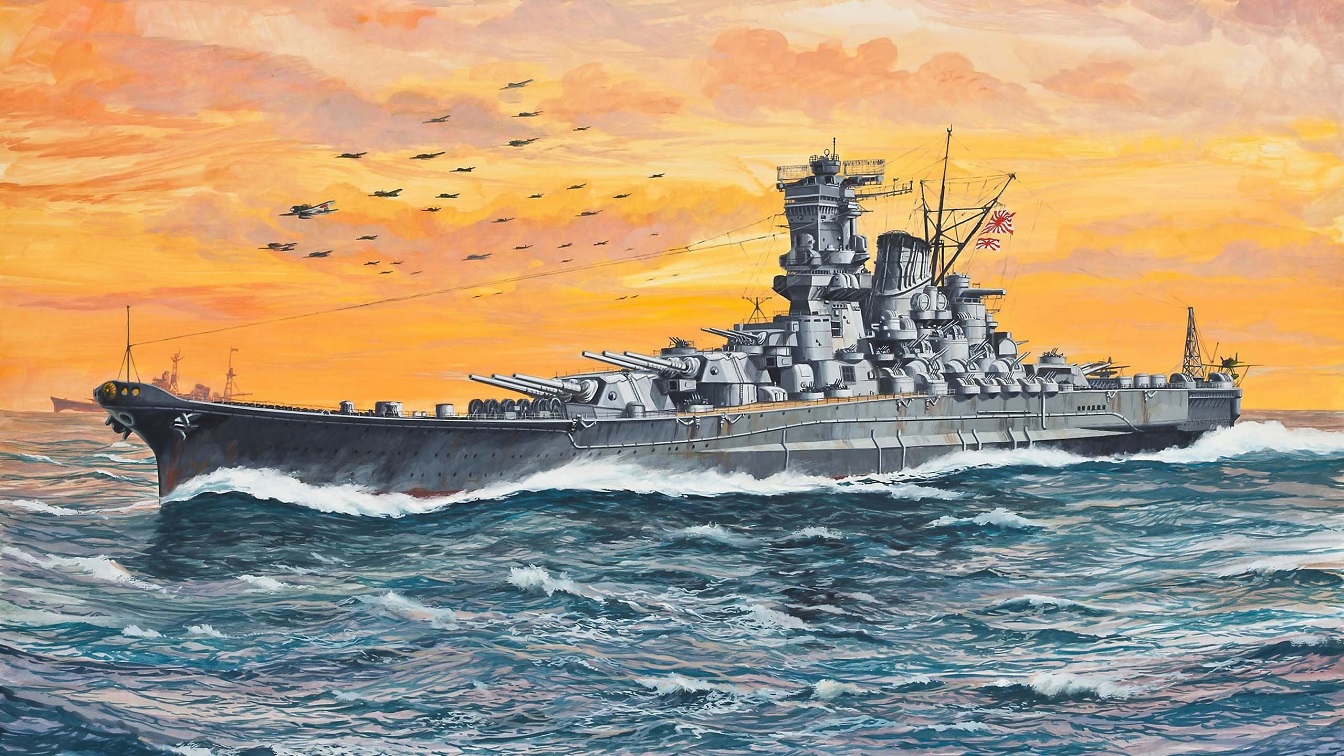
Yamato-Class Battleship/Artist Rendition. Image Credit: Creative Commons.
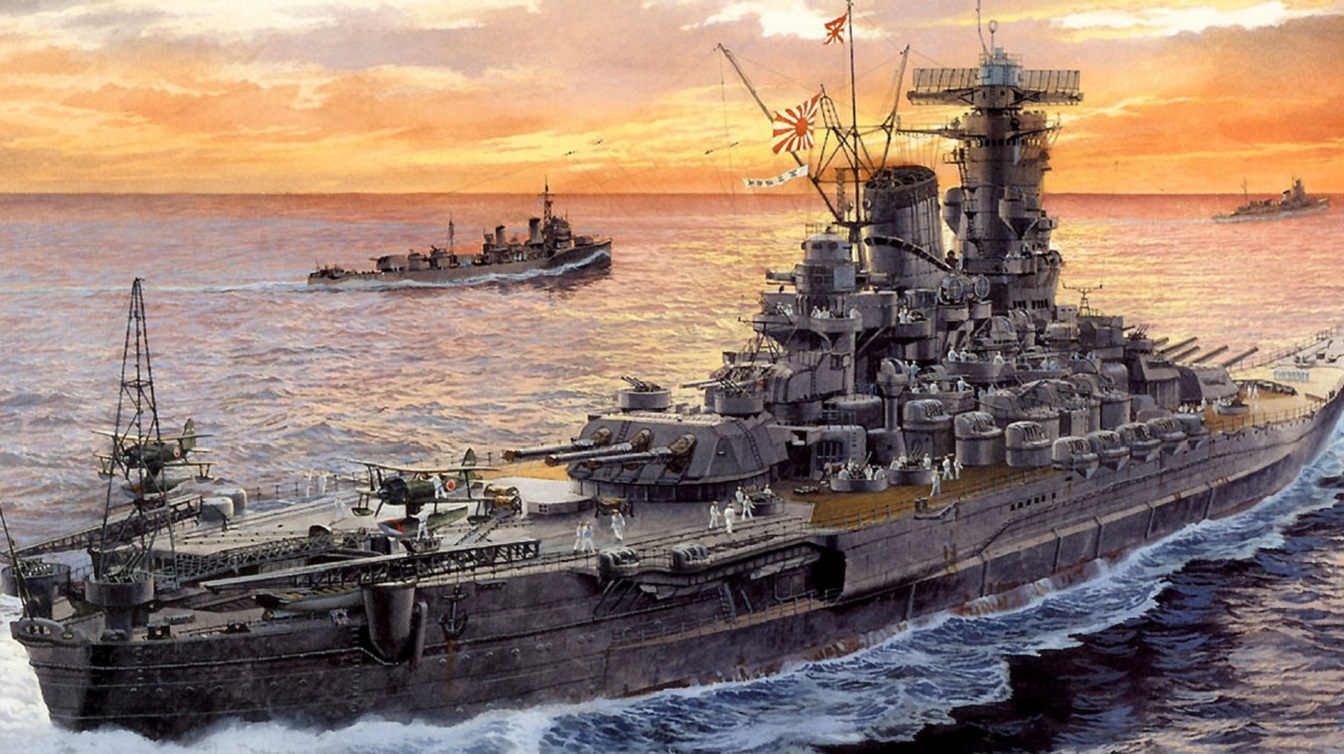
Battleship Yamato. Image Credit: Creative Commons.
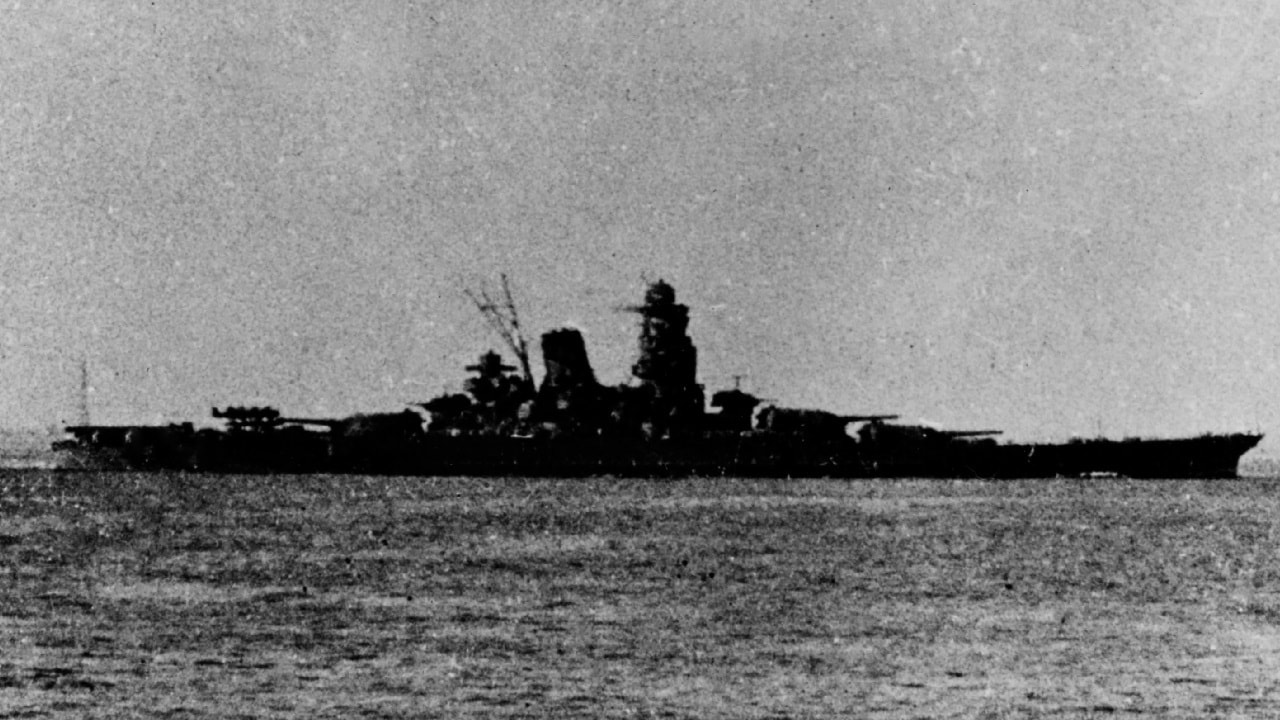
Yamato-class battleship Yamato. Image Credit: Creative Commons
The Central Pacific campaign advanced through the Gilbert Islands, then the Marshall Islands, and into the Marianas. Each step required increasingly sophisticated amphibious tactics, stronger coordination between naval gunfire, carrier aviation, and Marine landing forces, and an ever-expanding logistical base.
The Marianas campaign in 1944 proved especially significant. The capture of Saipan, Tinian, and Guam gave American forces airfields from which long-range B-29 bombers could strike Japan directly.
Japan tried to challenge the invasion with its remaining naval air strength, culminating in a massive carrier battle sometimes referred to as the “Great Marianas Turkey Shoot.” American aviators, benefiting from superior training, radar, and aircraft, decimated Japanese pilots in numbers that Japan could no longer replace. Nimitz’s strategic vision of sustained offensive pressure and overwhelming air superiority was steadily paying off.
The coordination of forces reached its climax in the Battle of Leyte Gulf in October 1944, the largest naval battle ever fought. As American forces began liberating the Philippines, the Japanese Navy launched a complex, multi-pronged counterattack intended to crush the invasion.
The battle unfolded across several independent engagements involving hundreds of ships spread across a vast area. Despite moments of confusion and miscommunication, Nimitz’s overall command structure ensured that American naval and air superiority prevailed. After Leyte Gulf, the Japanese surface fleet ceased to exist as an effective fighting force.
The Fall of the Japanese Empire
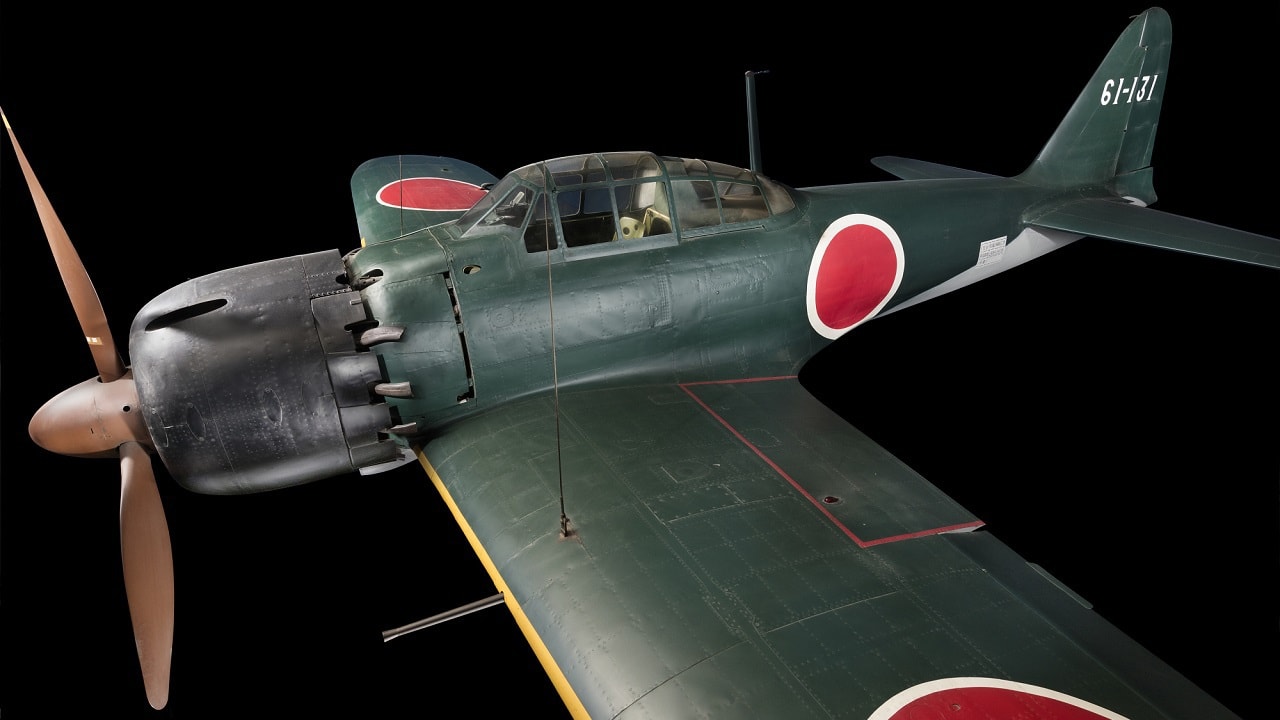
Japan Zero Fighter. Image Credit: Creative Commons.
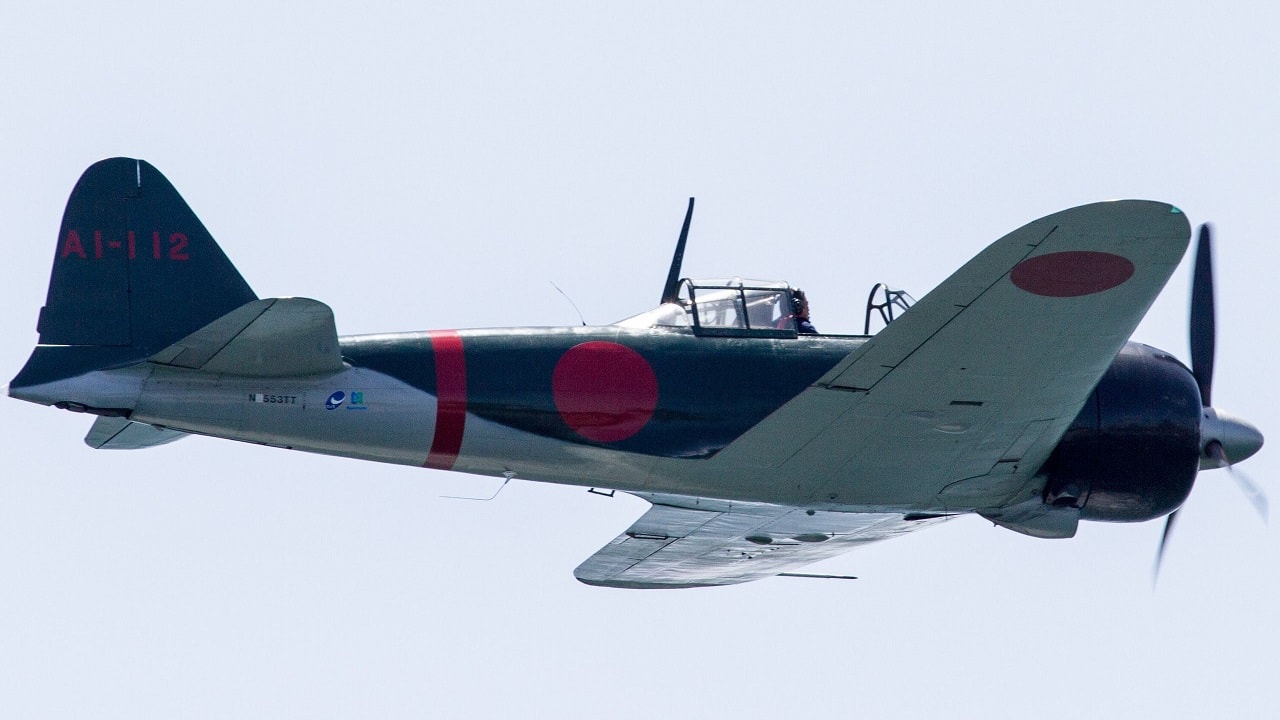
Japanese Zero Fighter Plane. Image Credit: Creative Commons.
In 1945, American forces undertook the costly campaigns for Iwo Jima and Okinawa. These battles brought U.S. forces closer to Japan’s home islands and introduced them to the ferocity of kamikaze attacks. Nimitz understood both the operational necessity of capturing these islands and the enormous human toll involved.
His leadership during these final months showed a continued commitment to decisive action tempered by a deep awareness of the sacrifices made by sailors, Marines, soldiers, and aviators under his command.
When Japan finally accepted Allied terms in August 1945, Nimitz represented the United States Navy at the formal surrender ceremony aboard the USS Missouri on September 2, 1945. His signature on the surrender document symbolized not only victory but also the culmination of one of the most extraordinary command performances in American history.
About the Author: Isaac Seitz
Isaac Seitz, a Defense Columnist, graduated from Patrick Henry College’s Strategic Intelligence and National Security program. He has also studied Russian at Middlebury Language Schools and has worked as an intelligence Analyst in the private sector.