
President Trump’s FY2027 defense budget requests $1.5 trillion, a record high representing a 44 percent increase over prior levels. The structure includes $1.15 trillion in base discretionary spending and $350 billion for “critical presidential priorities.” The administration is framing the budget request as a way to rebuild the military, meet Iran’s war demands, and prepare for competition with China. The immediate reaction is a sense of relative shock at the scale of the budget; the proposed increase is not normal—it’s a strategic and fiscal shock. But the proposal, historically large and packed with headline-grabbing systems, faces major political, industrial, and budgetary obstacles.
How Big is $1.5 Trillion?
Trump’s proposed budget would keep the US as the world’s top military spender—by an absolutely massive margin. The $1.5T price tag would represent a 500 percent increase over China’s defense spending; China, which is projected to spend around $280-300 billion, has the world’s second-largest defense budget. Trump’s proposal threatens to spend roughly ten times what Russia spends on defense annually ($130-150 billion).
So no one even comes remotely close. China and Russia combined barely hold a candle to the $1.5T proposal.
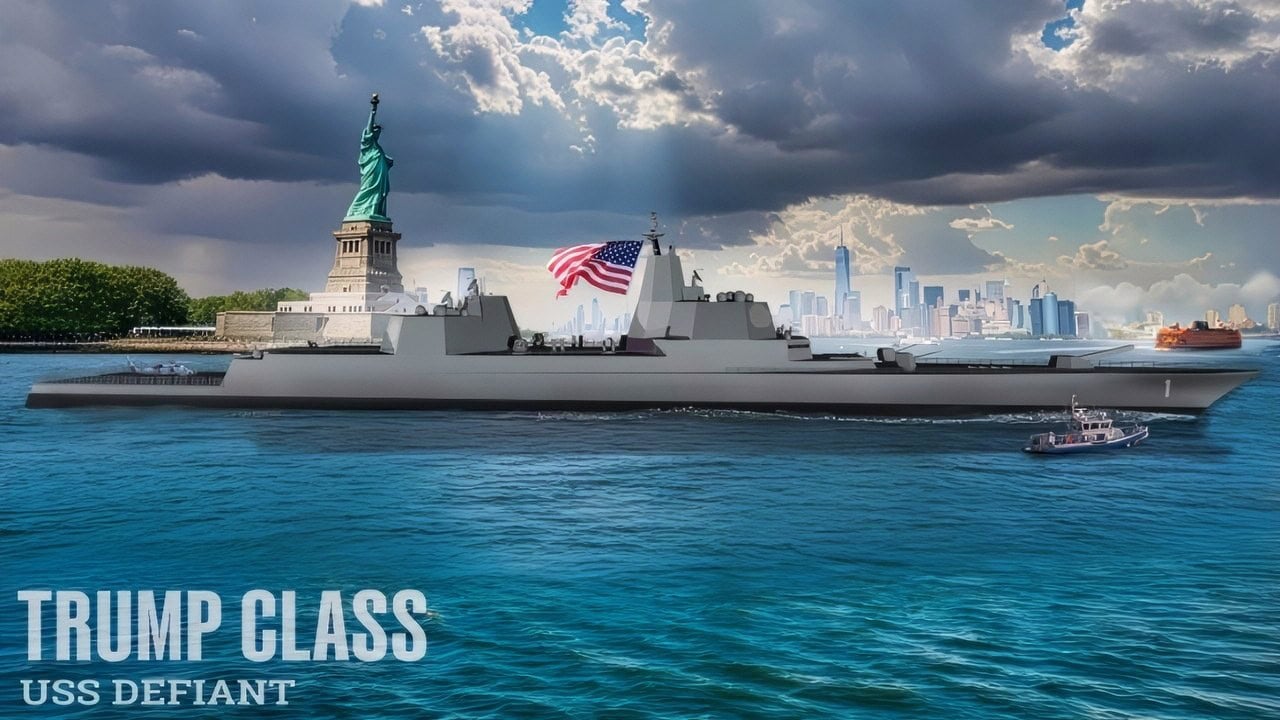
Trump-Class Battleship. Image Credit: Creative Commons/White House.
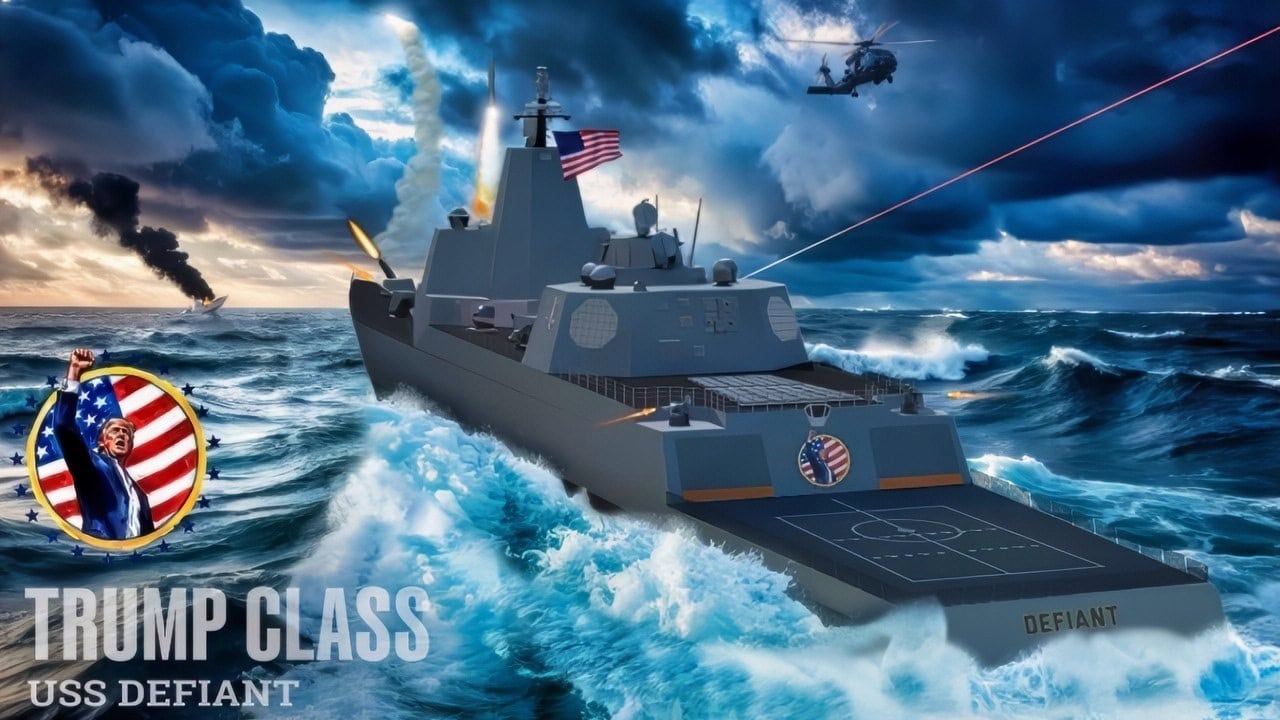
Trump-Class Battleship. Image Credit: Creative Commons/White House Photo.
Germany and India, themselves top defense spenders, don’t spend one-tenth of what Trump is proposing.
If enacted, the US would account for more than half of the world’s military spending, according to recent global totals. The budget would represent about five to six percent of the US GDP. The budget would not just be the biggest military budget in the world—the budget is so large that certain line items would rival whole national militaries.
What’s in the Budget
The biggest headline grabber is the Golden Dome missile defense system, with $17.5 billion earmarked for first-year funding.
Described as a layered, space-based missile shield, the full project cost is estimated at about $185 billion. Golden Dome is a major political centerpiece for the Trump administration, technologically ambitious, and extremely expensive from the outset. The system’s feasibility remains in question.
Another $68.5 billion has been earmarked for shipbuilding—the highest shipbuilding request since 1962, the height of the Cold War.
The funding would support 18 warships and 16 support ships, including the dubious “Trump-class” battleship concept.
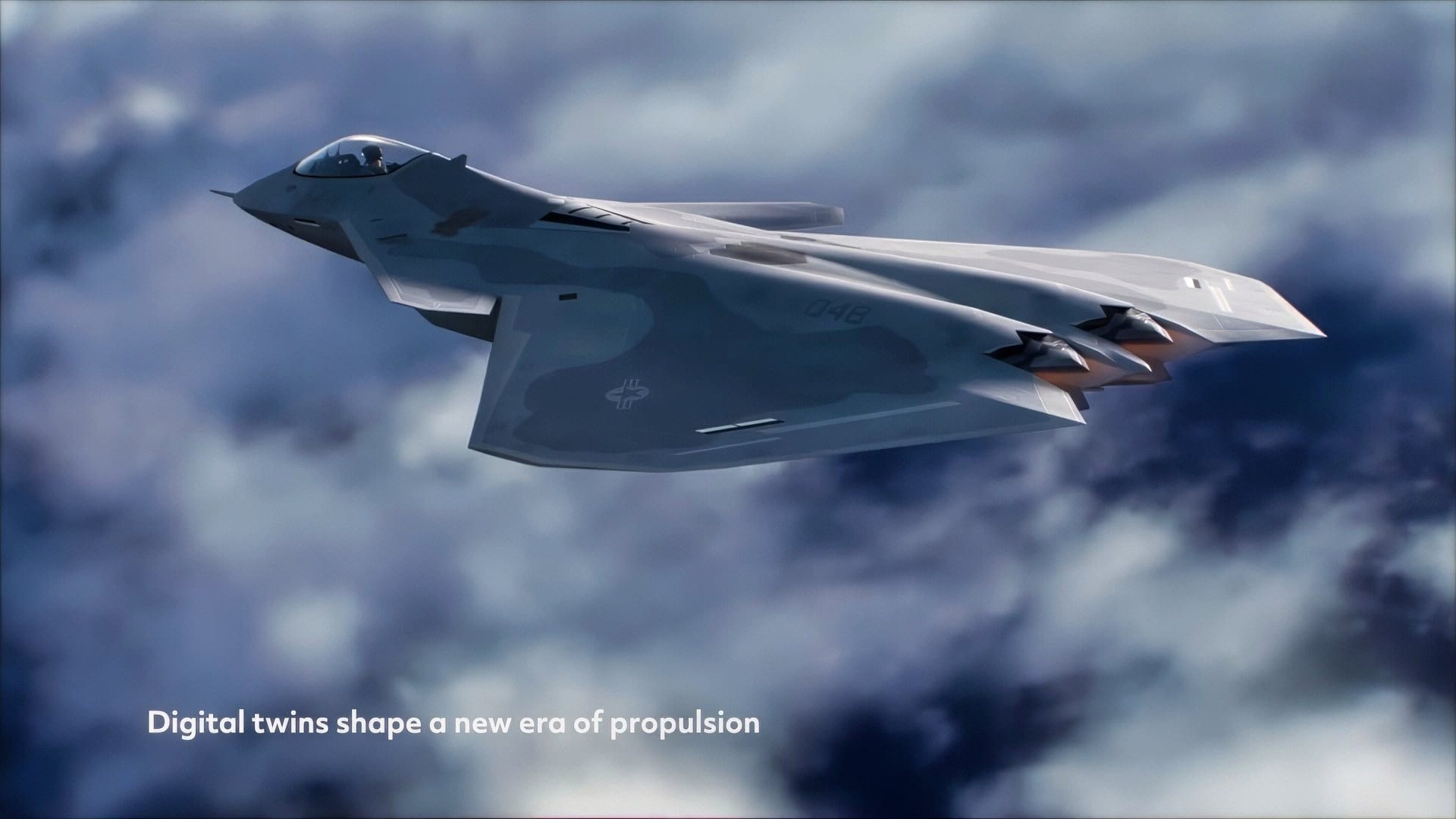
F-47 NGAD Fighter Possible Image. Image Credit: Screenshot.
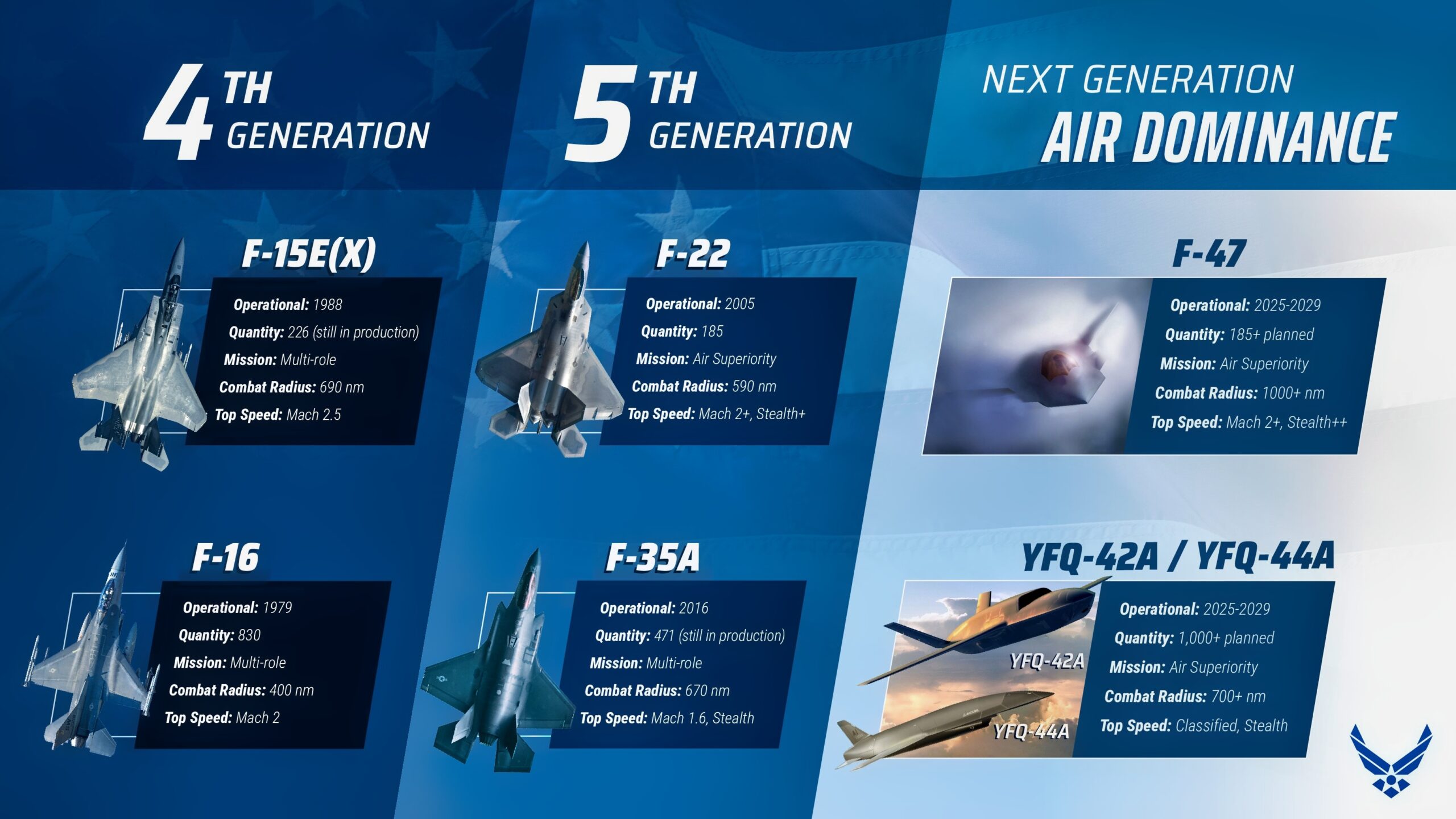
F-47 Infographic. Image Credit: U.S. Air Force
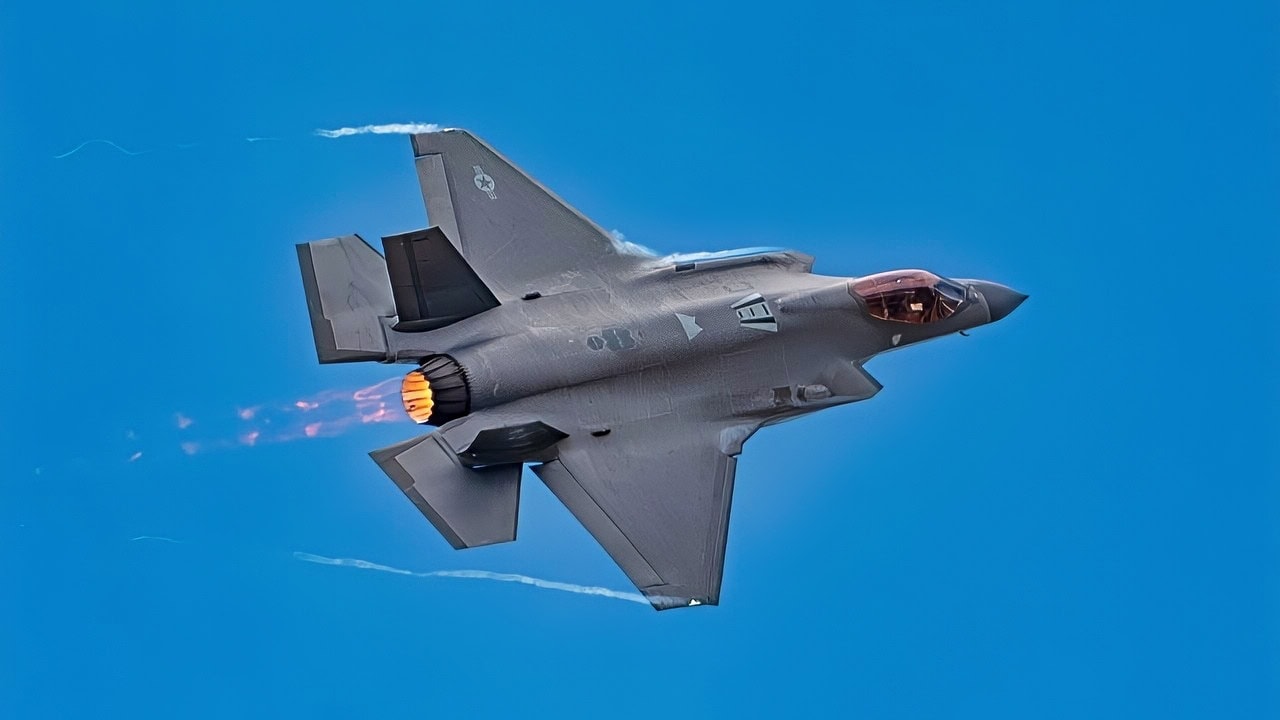
Advanced next-generation aircraft would also receive a large portion of funding. Funds were earmarked for 85 new F-35s, as well as the accelerated development of the F-47 and the B-21 Raider. The F-47 is slated to replace the F-22 Raptor, while the B-21 Raider will facilitate the retirement of the B-1B Lancer and B-2 Spirit.
The proposed budget will also allow for force expansion, adding 44,000 additional service members. Military pay will increase, too, with a tiered pay raise of 7% for junior enlisted, 6% for middle ranks, and 5% for senior ranks.
The Big Systems
The Golden Dome is a missile defense system framed as a homeland shield. The first-year cost is already massive at $17.5B.
The full bill of $185B suggests a long-term commitment, not some pilot project. The strategic rationale is that the Golden Dome provides homeland defense against missile saturation, helping mitigate advanced missile arsenals. The skepticism for the program is sharp, as the technology remains unproven, the implementation timeline is stretched, and the cost growth risk is obvious.
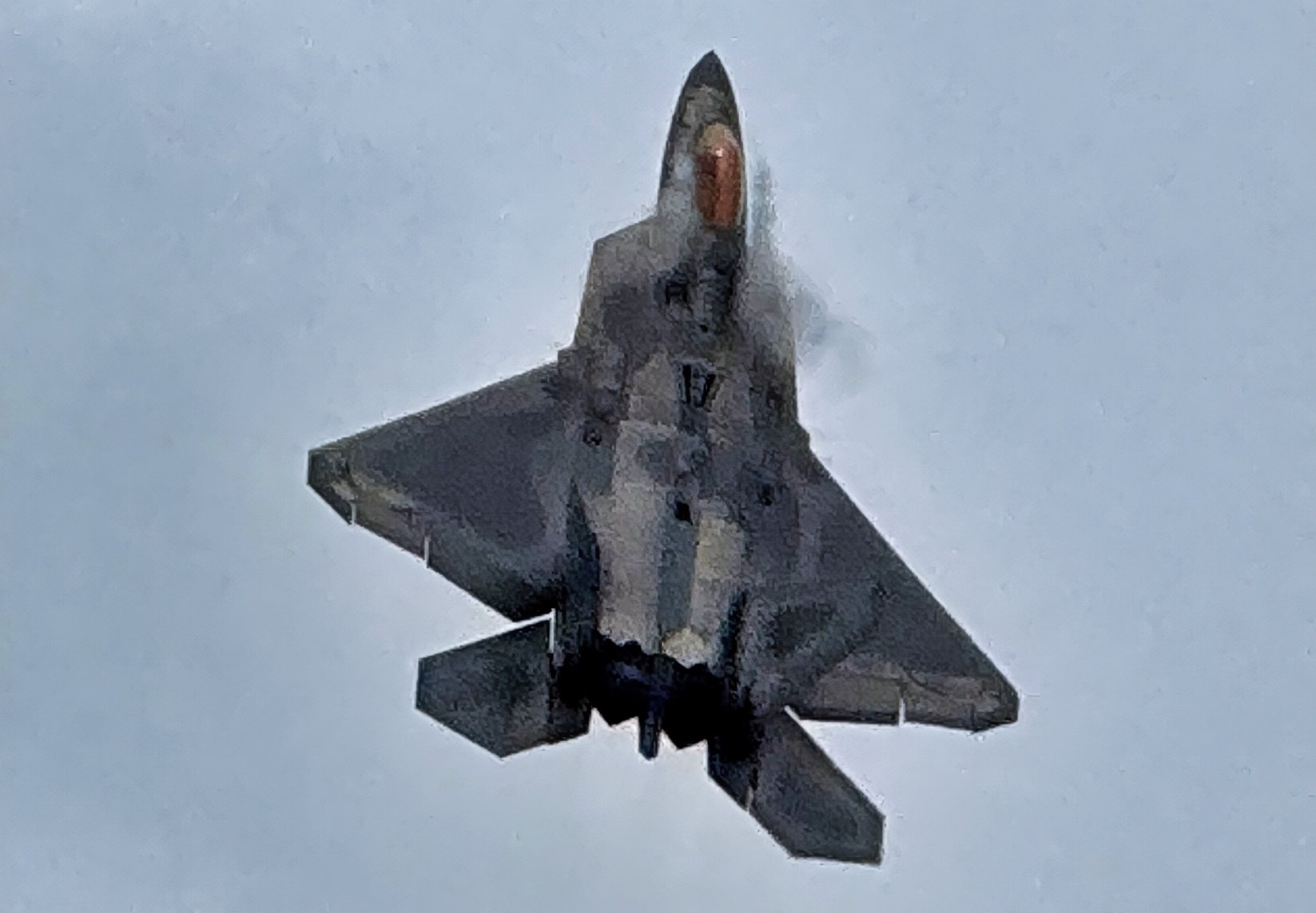
F-22 Raptor high in the sky. Image taken by Harry J. Kazianis in Lakeland, Florida on 4/19/2026.
The shipbuilding surge, referred to as the Golden Fleet, raises questions about industrial feasibility.
US shipyards are already strained, barely keeping pace with current output demands. Spending more money on ships does not instantly create the workforce, dry dock capacity, or supply chain resilience needed to build 18 additional warships and 16 supply ships. And then there’s the Trump-class battleship, a throwback expenditure whose utility in modern warfare is highly questionable.
What Gets Cut?
Resources are finite. If defense funding goes up, funding elsewhere must go down.
Accordingly, the administration is proposing non-defense cuts of roughly $73 billion to $163 billion as offsets. The Department of Education will suffer major cuts, perhaps leading to an eventual elimination.
Science and research will take a cut, with NASA getting slashed and the NIH losing $18 billion. The EPA, meanwhile, will suffer a 55 percent budget reduction, with the elimination of green and renewable programs that the administration opposes. Foreign policy and aid will also take a hit.
The State Department will be reduced by 30 percent. Humanitarian and global health spending will be hit. The political implications of the budgetary recalibrations are clear; the defense buildup is paired with domestic retrenchment, so this isn’t just a military budget story—it’s a story about wider priorities.
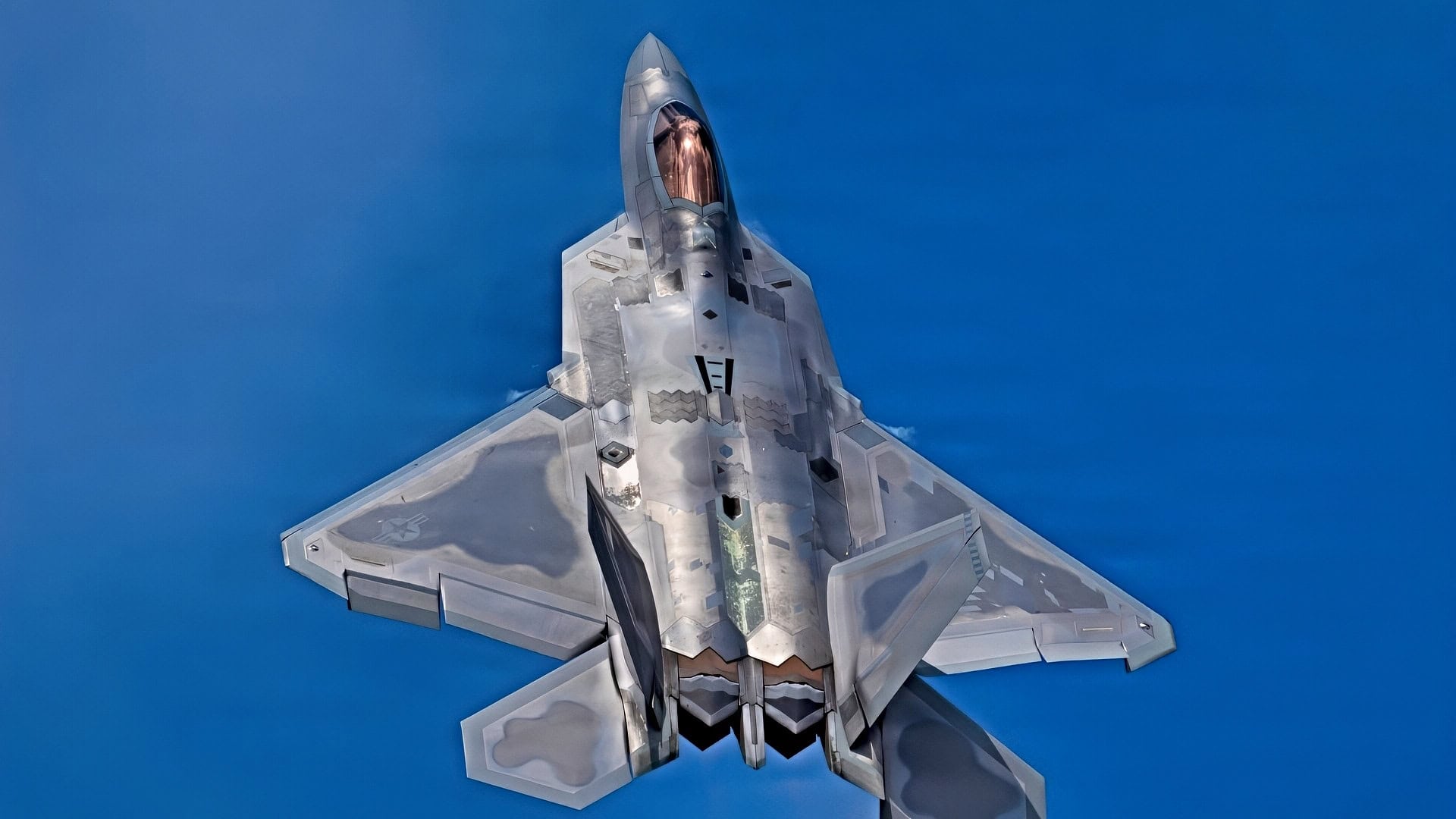
Members of the F-22 Raptor Aerial Demonstration Team perform at the Dyess Big Country Air Fest 2023, Dyess AFB, TX, March 25th, 2023. The F-22 Raptor Aerial Demonstration showcases the unmatched maneuverability of the airframe by executing a series of combat maneuvers to inspire Americans and their allies, and deter foreign adversaries. (U.S. Air Force photo by Staff Sgt. Michael Bowman)
The Iran War
One of the stranger features of the budget proposal is that the $1.5T does not include direct funding for the Iran war operations. Rather, the Pentagon is expected to seek another $200B in supplemental funding for Iran conflict costs, meaning that, despite the headline number already being enormous, it may not reflect the full spending burden of Epic Fury. So the official topline could be understating the full expenditure if the war continues.
The real spending could be enormous, given the base defense request plus the supplemental war funding. Politically, this leaves the administration vulnerable; critics have an obvious opening here.
Industrial Capacity
Can the US industrial base even support the proposed budget? Many analysts are questioning whether the US can handle a surge of this size. The shipbuilding surge is the most obvious bottleneck. Spending money does not create ships instantly.
The aerospace industry relies on more mature production lines—but there are still workforce and supplier constraints; building F-35s and B-21s is a complicated, time-intensive process, obviously. Adding 44,000 personnel is not trivial, either.
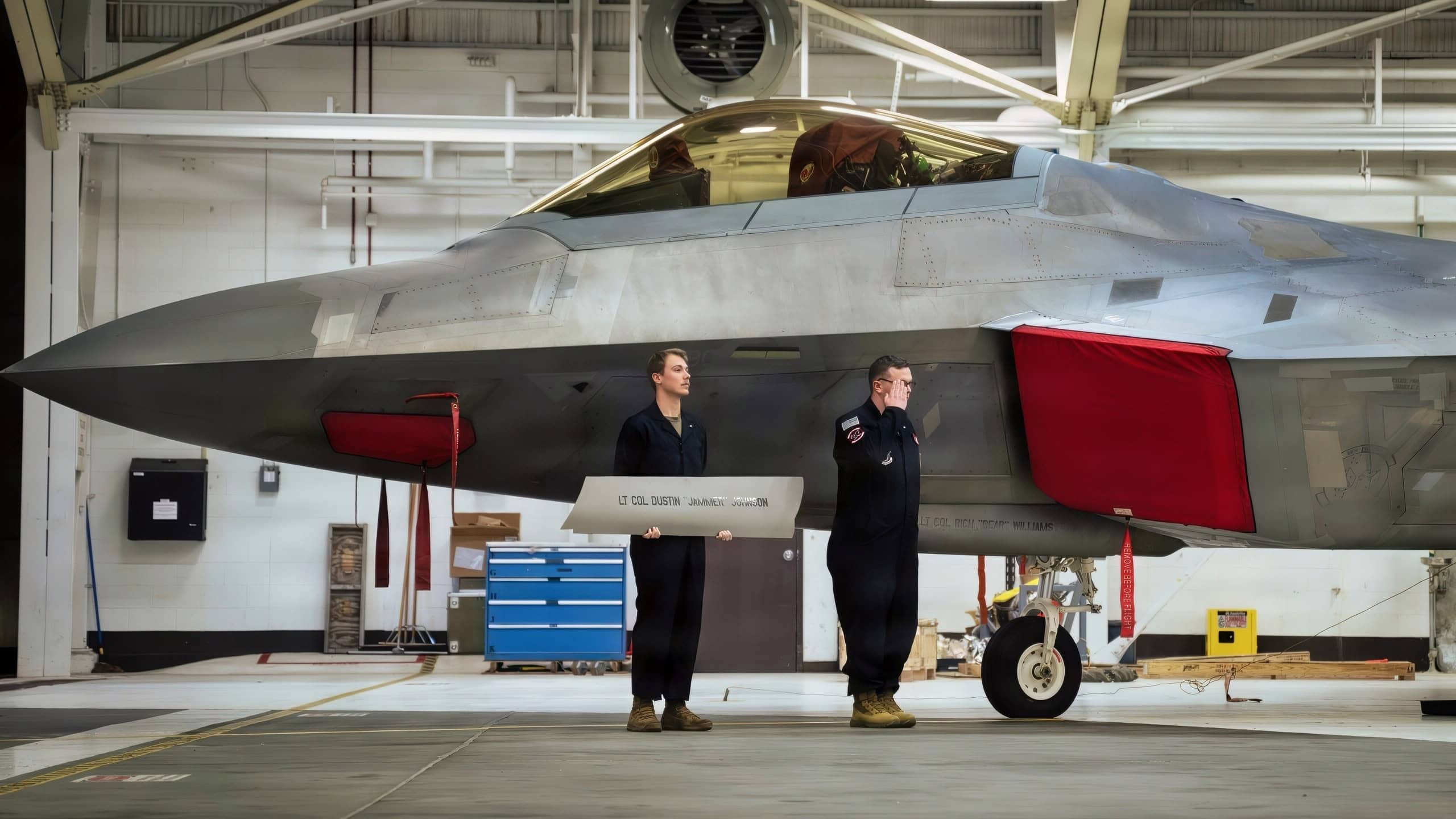
U.S. Air Force Airmen reveal the name of Lt. Col. Richard Williams, commander of the 90th Fighter Squadron, on an F-22 Raptor following the 90th FS change-of-command ceremony on Joint Base Elmendorf-Richardson, Alaska, March 16, 2026. (U.S. Air Force photo by Airman Keola Vischi)
The recruitment, training, and retention of these tens of thousands of troops is a highly expensive proposition, subject to external pressures such as economic conditions nationwide. In sum, the budget assumes the industrial base can just scale rapidly, immediately. But recent US industrial output suggests that may not be the case.
Political Support Explained
The budget proposal is divisive. GOP leadership broadly supports the budget as a way of establishing American dominance. The Golden Dome and shipbuilding surge are popular. The defense industry is likely supportive, naturally, as they will benefit from massive multi-year contracts.
The budget has skeptics, too. Democrats strongly oppose the budget, criticizing the domestic cuts and the lack of transparency about the Iran war. And fiscal conservatives are concerned.
Countries with $38 trillion in debt probably shouldn’t be spending six percent of their GDP on defense, in the wisdom of most financially responsible people. Many midterm-sensitive Republicans are worried that voting for deep cuts to popular domestic programs in an election year will harm their reelection chances. So, Trump’s budget is facing opposition from within his own party.
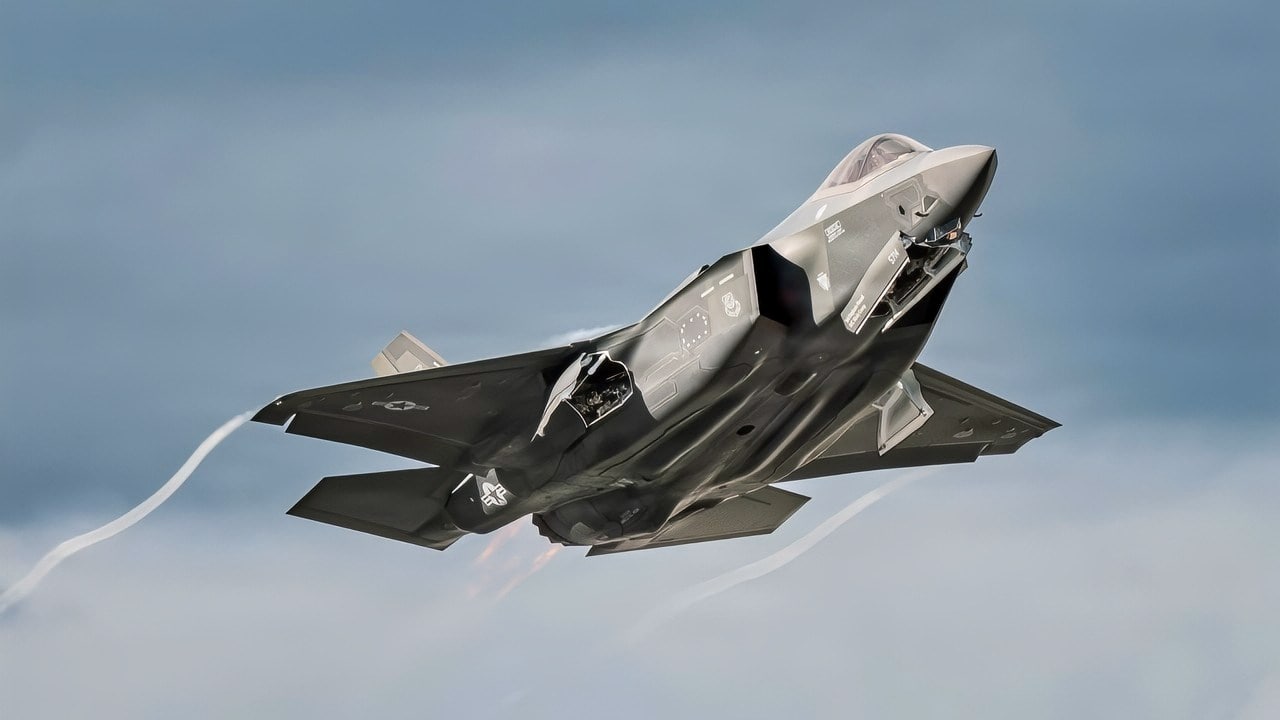
A U.S. Air Force F-35 Lightning II assigned to the 6th Weapons Squadron takes off in support of a U.S. Air Force Weapons School Integration (WSINT) mission at Nellis Air Force Base, Nevada, Nov. 18, 2025. WSINT incorporates multiple aircraft, domains and mission sets to challenge participants with dynamic problem-solving. (U.S. Air Force photo by Senior Airman Lauren Clevenger)
Will it Pass?
The budget is not likely to pass. Political headwinds over debt concerns and domestic cuts are likely fatal. The most likely outcome is a significant reduction, including major compromises. Some priorities could survive, but the topline will drop.
Expect the final bill to be much less dramatic than the opening ask. The $1.5T is historically large and globally unmatched; it threatens the national debt and the industrial capacity.
From a political perspective, the budget is unlikely to be feasible. The administration knows this; the budget proposal is likely more a statement of intent, a commitment to military power and ambition, than an actual expectation of what the final defense budget will be.
About the Author: Harrison Kass
Harrison Kass is a writer and attorney focused on national security, technology, and political culture. His work has appeared in City Journal, The Hill, Quillette, The Spectator, and The Cipher Brief. He holds a JD from the University of Oregon and a master’s in Global & Joint Program Studies from NYU. More at harrisonkass.com.