
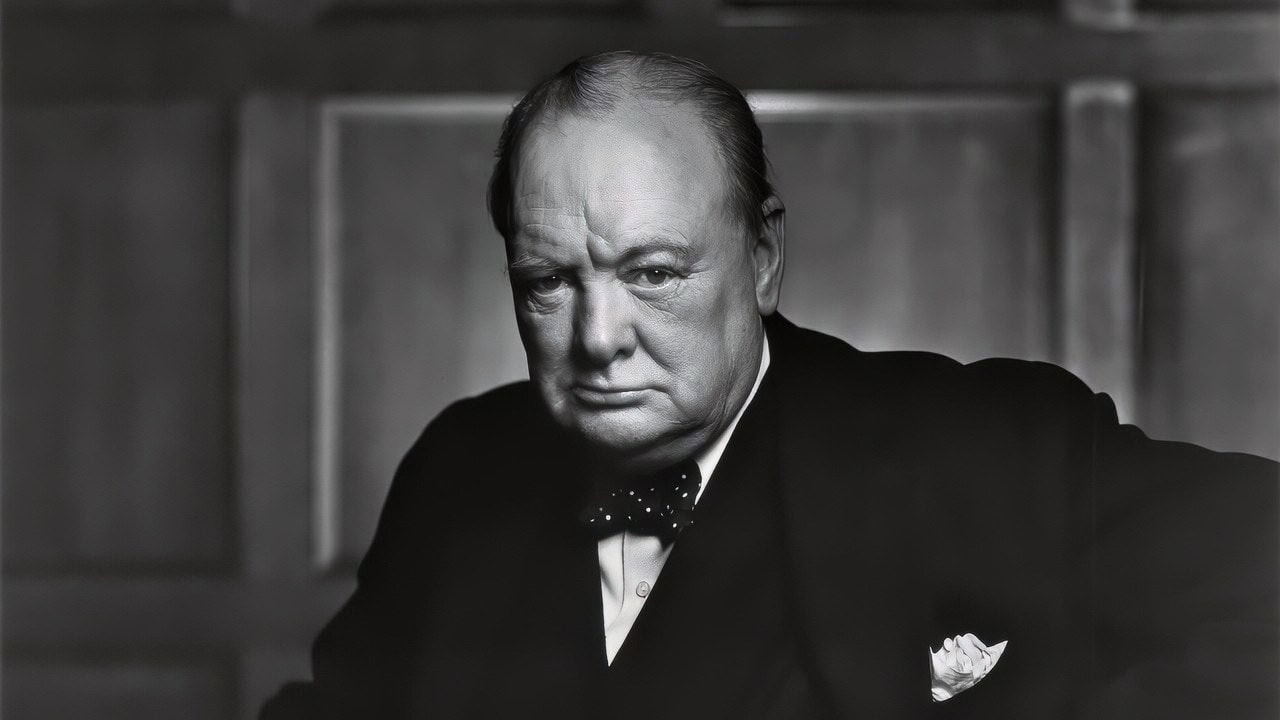
Winston Churchill had a soft spot for pigs. He also had a line about them that says more about him than most biographies do. “Always remember, a cat looks down on man, a dog looks up to man, but a pig will look man right in the eye and see his equal.” That’s the version that usually gets around.
The International Churchill Society traces the remark to around 1952, relayed by his private secretary, Sir Anthony Montague Browne.
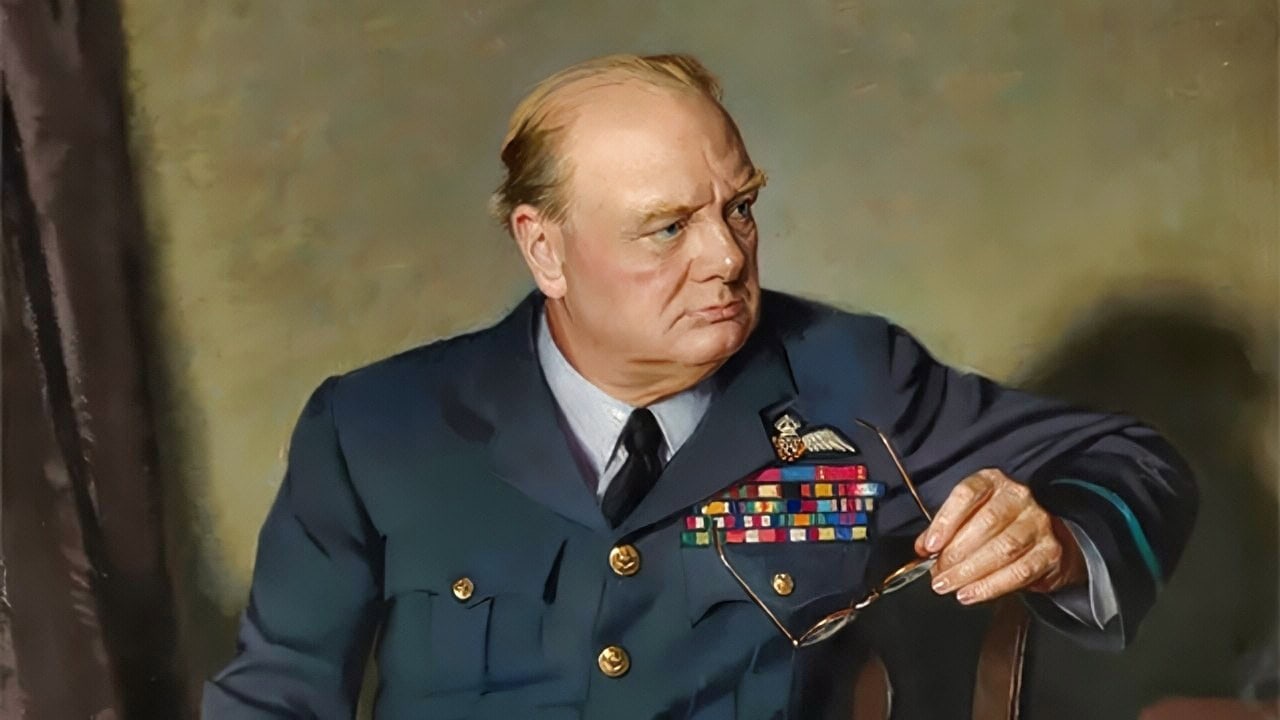
Winston Churchill Portrait. Image Credit: Creative Commons.
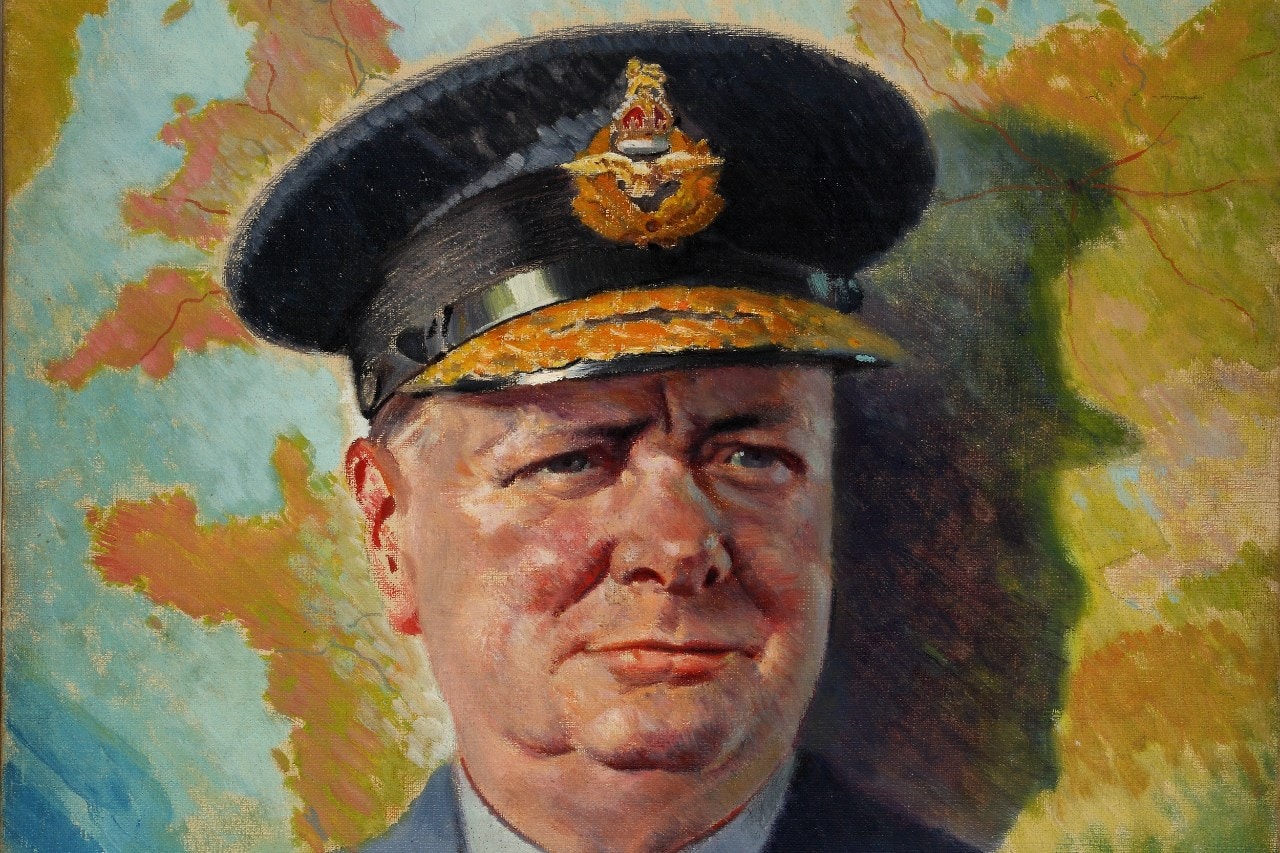
Winston Churchill. Image Credit: Creative Commons.
It fits.
Churchill spent his entire life looking kings, dictators, generals, and his own party right in the eye. He rarely blinked, and rank rarely impressed him.
Born In A Palace, Raised For A Fight
Churchill was born on November 30, 1874, at Blenheim Palace, the ancestral home of the Dukes of Marlborough.
He was educated at Harrow and Sandhurst, and then he went looking for a war, any war.
He found several.
He went to Cuba and India as a soldier and correspondent, and in 1898 he rode with the 21st Lancers in one of the British Army’s last great cavalry charges at Omdurman in the Sudan.
Then came South Africa.
Churchill arrived in Cape Town in October 1899 to cover the Boer War for the Morning Post, packing what he considered the essentials, including sixty bottles of spirits.
Two weeks later, Boer forces ambushed the armored train he was riding, and the 24-year-old was taken prisoner.
A month after that, he escaped from the prison in Pretoria, slipping through swamps and mines and dodging Boer patrols with a price on his head, dead or alive.
He came home a national hero.
In 1900, he won a seat in Parliament.
His escape told you everything you needed to know about him.
He didn’t wait for permission or a rescue.
Gallipoli Nearly Ended Him
By the start of World War I, Churchill was First Lord of the Admiralty.
He championed a bold plan to force the Dardanelles, knock Turkey out of the war, and open a supply route to Russia.
Turkish mines stopped the naval attack, and the land campaign at Gallipoli that followed, launched against Churchill’s wishes, turned into a bloody failure.
Much of the blame landed on him.
So what does a disgraced cabinet minister do?
Churchill resigned in November 1915 and went to the trenches.
From January to May 1916, he commanded the 6th Battalion of the Royal Scots Fusiliers on the Western Front as a temporary lieutenant colonel.
Say what you will about his politics. How many politicians answer a failure by picking up a rifle and joining the men in the mud?
The Wilderness Years Were Spent Watching Germany
Churchill bought Chartwell, his country house in Kent, in 1922, and it became the center of his world for the next four decades.
During the 1930s, out of office and dismissed by much of his own party, he used it as a base to warn anyone who would listen about German rearmament and the dangers of appeasement.
Very few people listened. This is arguably the most underrated part of his career.
Being right early is lonely work, and he did it for most of a decade while being called a warmonger.
He viewed Hitler and the Nazis as a movement driven by expansionist ambition and racial hatred.
While many British politicians believed that Germany’s grievances could be settled by appeasing Hitler, Churchill feared that concessions would only encourage further demands.
The Munich Agreement of 1938, Churchill alone, or nearly so, warned that appeasing Hitler was a complete disaster. However, public opinion was firmly behind Neville Chamberlain’s “peace in our time” agreement.
When war came in September 1939, he went back to the Admiralty.
In May 1940, as the Wehrmacht rolled into France, he became Prime Minister and Minister of Defense.
Britain stood nearly alone for the next year, and Churchill’s speeches held the country together through Dunkirk, the Battle of Britain, and the Blitz.
He was the face of the British war effort from the time they stood alone in the West to the alliance with the United States, and worked together to defeat the Nazis.
Losing The Election And Winning The Argument
Then the voters threw him out in 1945. He’d won the war and lost the peace at the ballot box.
However, he wasn’t finished.
On March 5, 1946, at President Harry Truman’s invitation, he spoke at Westminster College in Fulton, Missouri, and warned that an iron curtain had descended across Europe.
He called the speech “The Sinews of Peace,” and many see it as marking the start of the Cold War. Once again, he saw it coming before most.
He returned as Prime Minister from 1951 to 1955. In 1953, he was knighted and won the Nobel Prize in Literature for his historical writing and his oratory defending human values.
For those keeping score at home, that’s a soldier, war correspondent, prison escapee, battalion commander, wartime prime minister, and Nobel laureate.
Not bad for a kid whose teachers thought he’d amount to little.
Churchill The Gentleman Farmer…Of Pigs, Among Others
In his later years, Churchill bought up farmland around Chartwell and settled in as a gentleman farmer, raising pedigree Middle White pigs, sheep, and cows between painting and writing.
The estate was full of animals, from marmalade cats to black swans.
In letters to his wife, Clementine, he often signed off as “Pig,” and she was his “Cat.”
He died at his London home,28 Hyde Park Gate, on January 24, 1965, at the age of 90.
The pig line works because it was how he lived. He never looked down on the men in the trenches, and he never looked up to Hitler or Stalin. He looked them all right in the eye.
About the Author: Steve Balestrieri
Steve Balestrieri is a National Security Columnist. He served as a US Army Special Forces NCO and Warrant Officer. In addition to writing on defense, he covers the NFL for PatsFans.com and is a member of the Pro Football Writers of America (PFWA). His work was regularly featured in many military publications.