
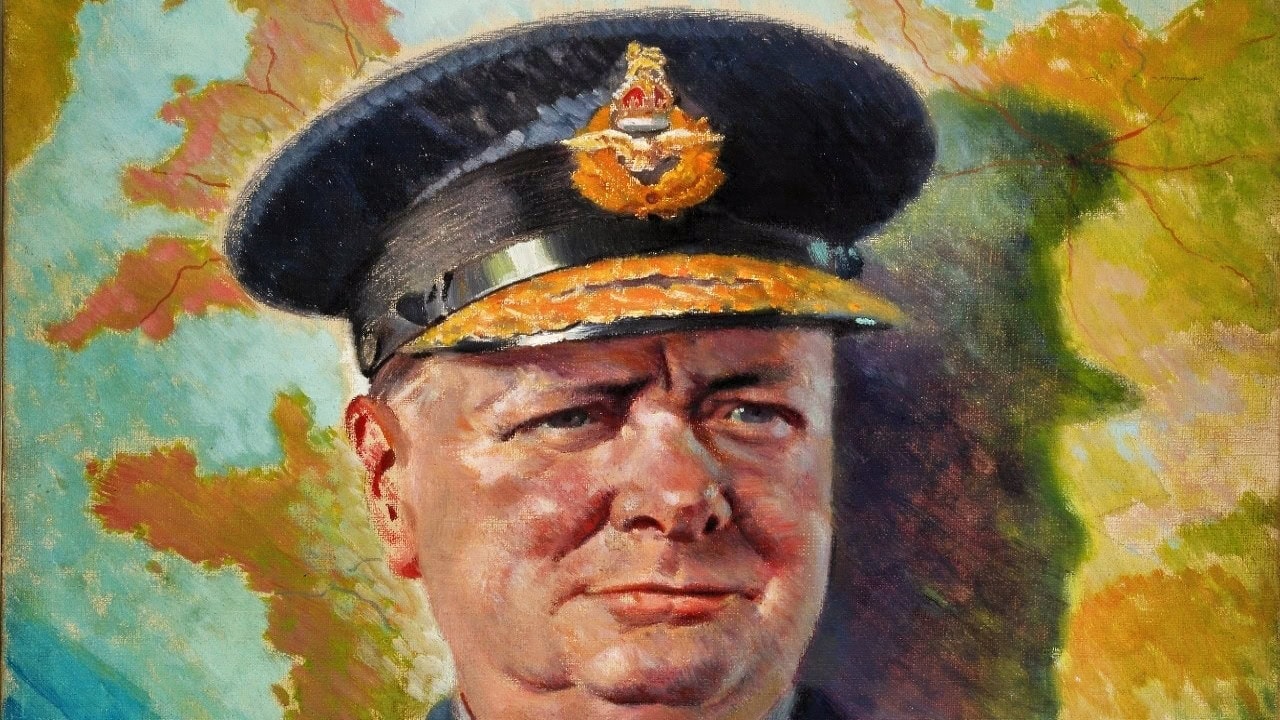
Summary and Key Points: Expert Stephen Silver examines Winston Churchill’s line “The problems of victory are more agreeable than those of defeat; but they are no less difficult,” spoken in Parliament on November 11, 1942, after the Second Battle of El Alamein. Churchill credited the 10th Corps’ camouflage and surprise, quoted Walt Whitman, and warned of mistakes ahead. Silver also revisits the Imperial War Museum’s view of his 1940-1941 leadership and the 1946 Iron Curtain speech at Westminster College, Missouri.
Winston Churchill Deserves His Place in History
Military Quote of the Day: “The problems of victory are more agreeable than those of defeat; but they are no less difficult.” – Winston Churchill
Winston Churchill, the British prime minister, has long been associated with World War II, for both his leadership during the war and his oratory before, during, and after it.
Churchill assumed the premiership in May of 1940, on the very day that the Nazis invaded France, Belgium, the Netherlands, and Luxembourg.
According to the Imperial War Museum’s biography of him, “It is for his leadership through these fraught years of 1940-1941 – through Dunkirk, the Battle of Britain and the Blitz – that Churchill is best remembered.”
Churchill in World War II
Churchill’s speeches to rally the war effort are legendary. But his strategy played a big role in Allied success as well.
But those words did make a difference.
“In the dark early days of the Second World War, Churchill had few real weapons. He attacked with words instead,” the bio said. “The speeches he delivered then are among the most powerful ever given in the English language. His words were defiant, heroic, and human, lightened by flashes of humour. They reached out to everyone in Britain, across Nazi-occupied Europe, and throughout the world.”
The prime minister’s military strategy was also crucial.
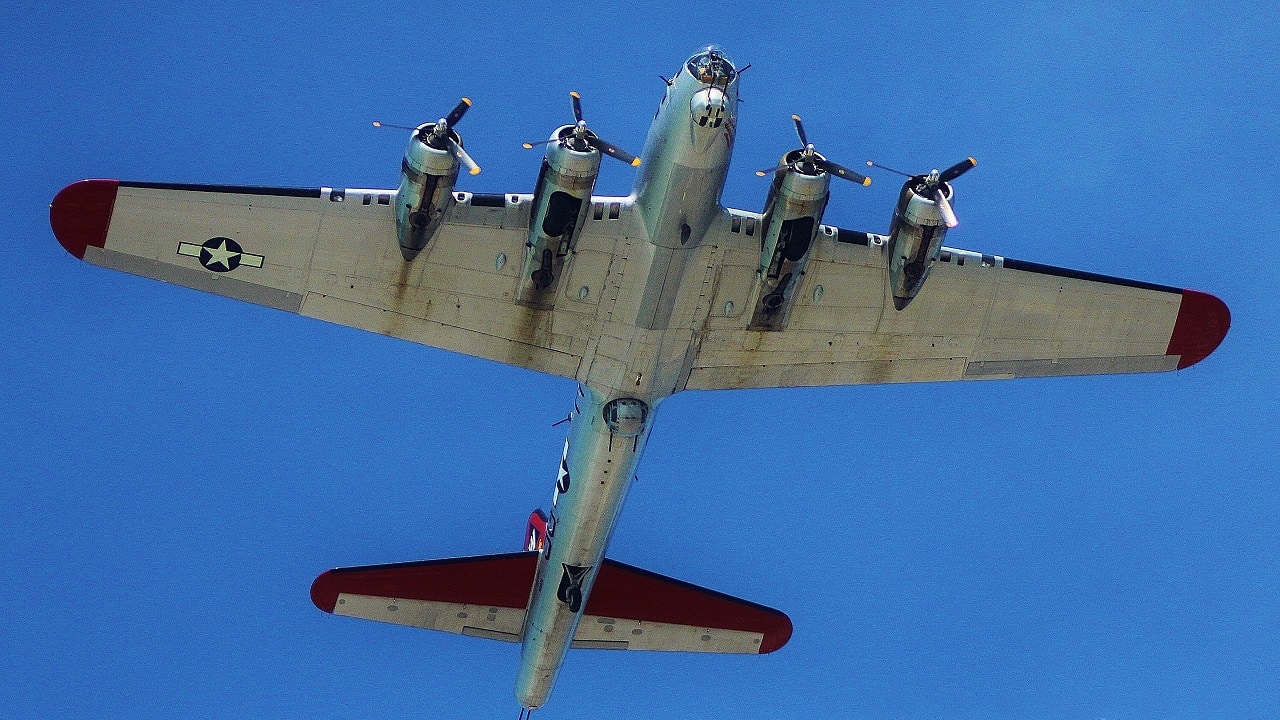
Boeing B-17. Image Credit: Creative Commons.
“Less obviously, Churchill made planning and decision-making – both political and military – simpler and more efficient,” the IWM biography says. “His force of personality was instrumental in cementing the ‘Big Three’ Alliance with Britain’s powerful allies, Russia and the United States. His unbounded energy and determination made him difficult to work with at times. But, as Field Marshal Sir Alan Brooke wrote, ‘It is worth all these difficulties to have the privilege to work with such a man.’”
The Quote
The quote, “The problems of victory are more agreeable than those of defeat; but they are no less difficult,” was said by Churchill as part of a parliamentary debate on November 11, 1942. The topic of discussion was the then-recent Allied victory in the Second Battle of El Alamein
It was part of a long, paragraph-long disquisition that began, ironically, with the warning that “while I do not want to detain the House too long, I must say one word about the third of these elements I mentioned, a word about surprise and strategy.”
“By a marvellous system of camouflage, complete tactical surprise was achieved in the desert. The enemy suspected, indeed knew, that an attack was impending, but where and when and how it was coming were hidden from him,” Churchill said in Parliament. “The 10th Corps which he had seen from the air exercising 50 miles in the rear moved silently away in the night, but leaving an exact simulacrum of its tanks where it had been, and proceeded to its points of attack. The enemy suspected that the attack was impending but did not know how, when or where, and above all he had no idea of the scope upon which he was to be assaulted.”
Leading into his famous quote, Churchill cited an unlikely inspiration: the American poet Walt Whitman.
“Now understand me well—it is provided in the essence of things that from any fruition of success, no matter what, shall come forth something to make a greater struggle necessary.”
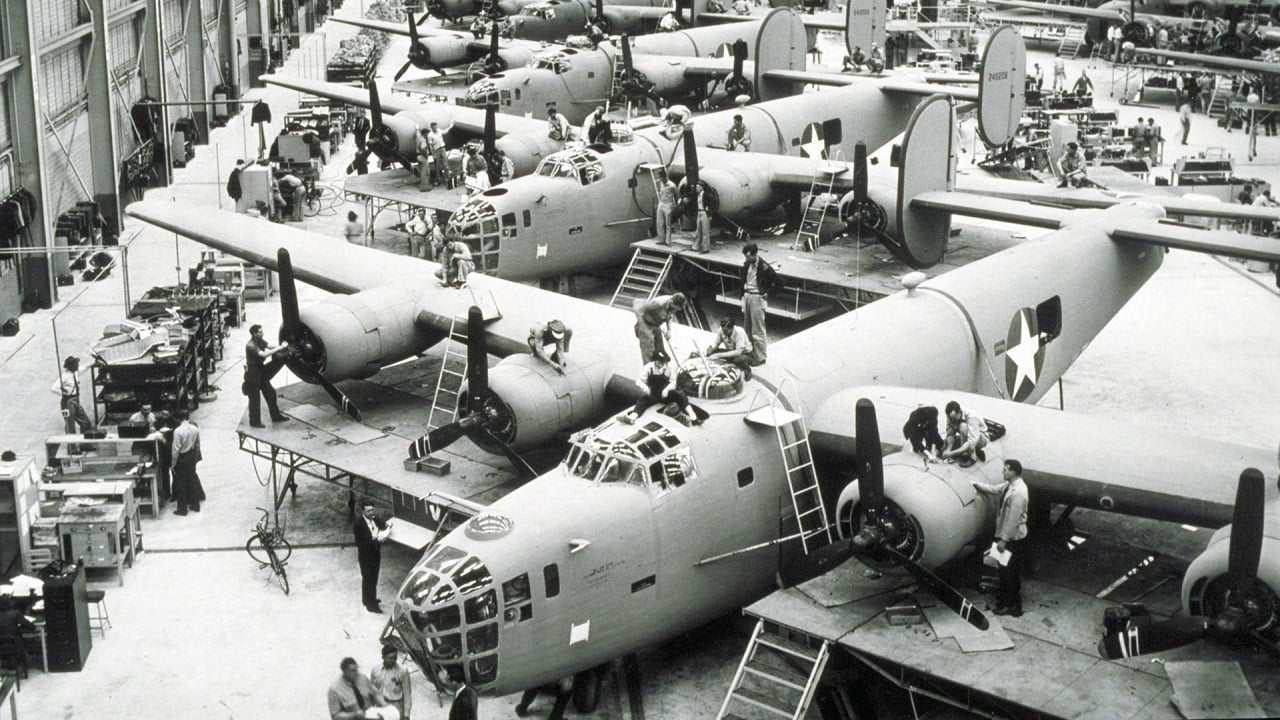
Conceived in 1938 by Consolidated Aircraft, a Lockheed Martin legacy company, the original B-24 prototype was designed to fly faster and carry a larger payload than the US Army Air Corps’s B-17 Flying Fortress. I
That led straight into the “problems of victory” statement.
“The problems of victory are more agreeable than those of defeat, but they are no less difficult. In all our efforts to recapture the initiative we shall be confronted with many perplexing choices and many unavoidable hazards, and I cannot doubt that we shall meet with our full share of mistakes, vexations, and disappointments.”
America’s View of Churchill
Churchill was, of course, as British as they come. But did you know there was an American Churchill Museum? It’s in Fulton, Mo., on the campus of Westminster College, where Churchill delivered his “Sinews of Peace” address, after the war, on March 5, 1946. He was joined that day by President Harry S. Truman.
The museum was established in 1969, first as the Winston Churchill Memorial and Library in the United States.
The speech, delivered after Churchill was defeated as prime minister and was serving as leader of the opposition, is a key moment of the early Cold War, as Churchill declared that “an iron curtain has descended across the Continent.”
The speech also gave rise to the phrase “The Special Relationship,” referring to the U.S. and Britain.
“It is also an honour, perhaps almost unique, for a private visitor to be introduced to an academic audience by the President of the United States,” Churchill said that day in Missouri. “Amid his heavy burdens, duties, and responsibilities-unsought but not recoiled from-the President has travelled a thousand miles to dignify and magnify our meeting here today and to give me an opportunity of addressing this kindred nation, as well as my own countrymen across the ocean, and perhaps some other countries too.”
The Iron Curtain portion of the address is also worth revisiting, as it laid out Europe’s realities and how they would persist for the next 40-plus years.
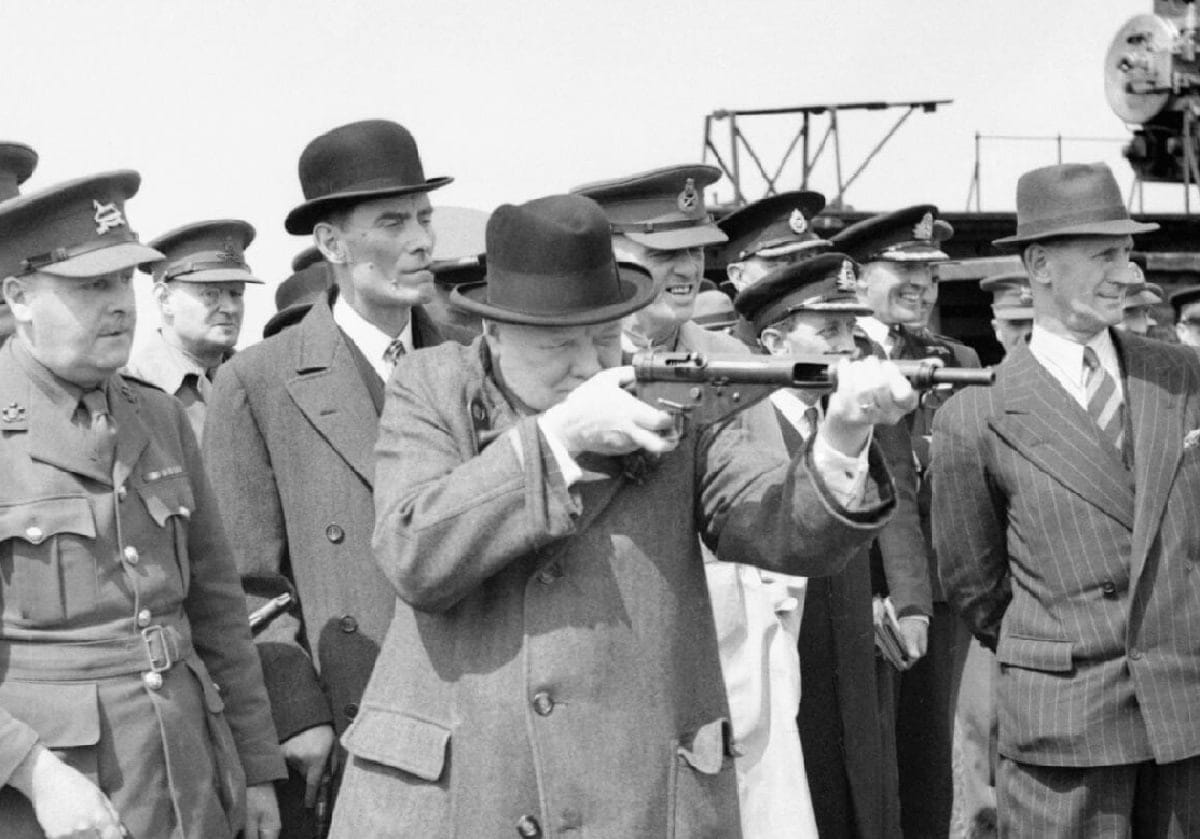
Winston Churchill. Image: Creative Commons.
“From Stettin in the Baltic to Trieste in the Adriatic, an iron curtain has descended across the Continent. Behind that line lie all the capitals of the ancient states of Central and Eastern Europe. Warsaw, Berlin, Prague, Vienna, Budapest, Belgrade, Bucharest, and Sofia, all these famous cities and the populations around them lie in what I must call the Soviet sphere, and all are subject in one form or another, not only to Soviet influence but to a very high and, in many cases, increasing measure of control from Moscow.”
The Cold War would continue until the fall of the Soviet Union, symbolized by the Berlin Wall’s fall in 1989.
Indeed, the Churchill Museum in Missouri “includes the largest continuous section of the Berlin Wall in North America” — now in the form of a sculpture by Churchill’s granddaughter, Edwina Sandys.
About the Author: Stephen Silver
Stephen Silver is an award-winning journalist, essayist, and film critic, and contributor to the Philadelphia Inquirer, the Jewish Telegraphic Agency, Broad Street Review, and Splice Today. The co-founder of the Philadelphia Film Critics Circle, Stephen lives in suburban Philadelphia with his wife and two sons. For over a decade, Stephen has authored thousands of articles that focus on politics, national security, technology, and the economy. Follow him on X (formerly Twitter) at @StephenSilver, and subscribe to his Substack newsletter.