
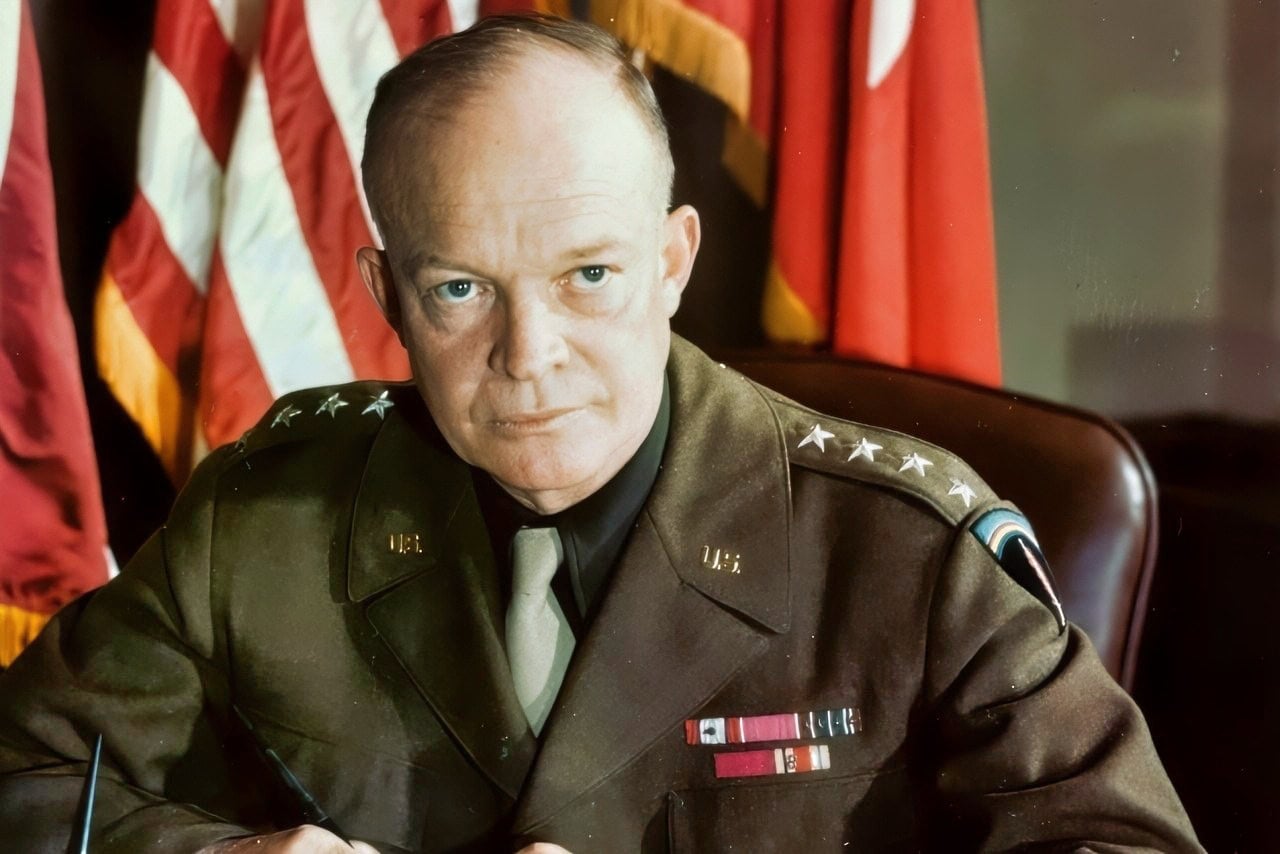
Summary and Key Points: Dwight D. Eisenhower’s 1956 convention address in San Francisco delivered a sharp distinction between principled reform and instability, crystallized in his line: “Change based on principle is progress. Constant change without principle becomes chaos.”
-Framed amid debates over farm policy, labor relations, and the concentration of federal power, Eisenhower argued that unclear government direction paralyzes risk-taking, planning, and enterprise.
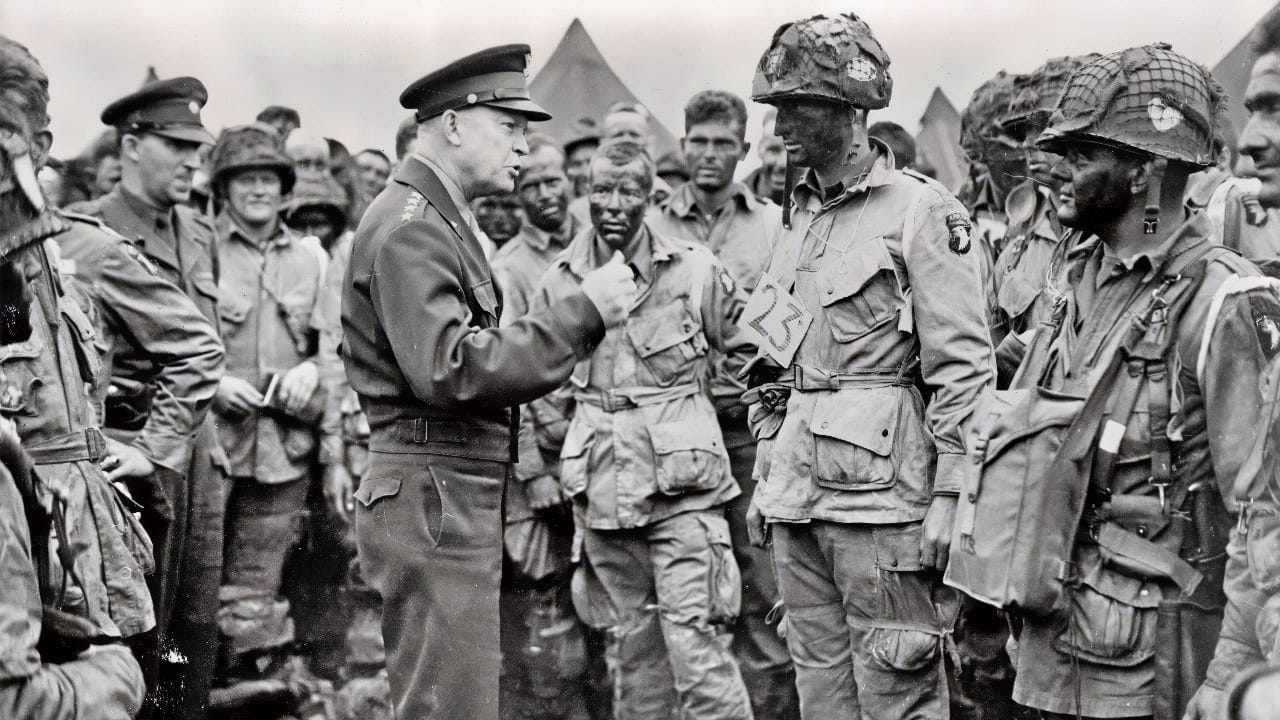
Dwight D. Eisenhower D-Day 1944. Image Credit: Creative Commons.
-The speech cast the Republican Party as a steward of balanced federal leadership that preserves local initiative.
-The piece then walks through key milestones of Eisenhower’s presidency—from Korea’s armistice and “Atoms for Peace” to the interstate highways, NASA’s creation, and his enduring farewell warning about the military-industrial complex.
Quote of the Day: Eisenhower’s 1956 Warning About “Change Without Principle”
“Change based on principle is progress. Constant change without principle becomes chaos.” – President Dwight D. Eisenhower
Dwight D. Eisenhower, after serving as Supreme Allied Commander during World War II, made the transition to politics and was elected in 1952 as the 34th president of the United States.
The above quote comes from August 23, 1956, when Eisenhower was running for his second term as president, and it’s from an address at the Cow Palace in San Francisco, at the Republican National Convention.
In that speech, in which he once again accepted the Republican nomination for president, “Ike” called for change- but not too much change.
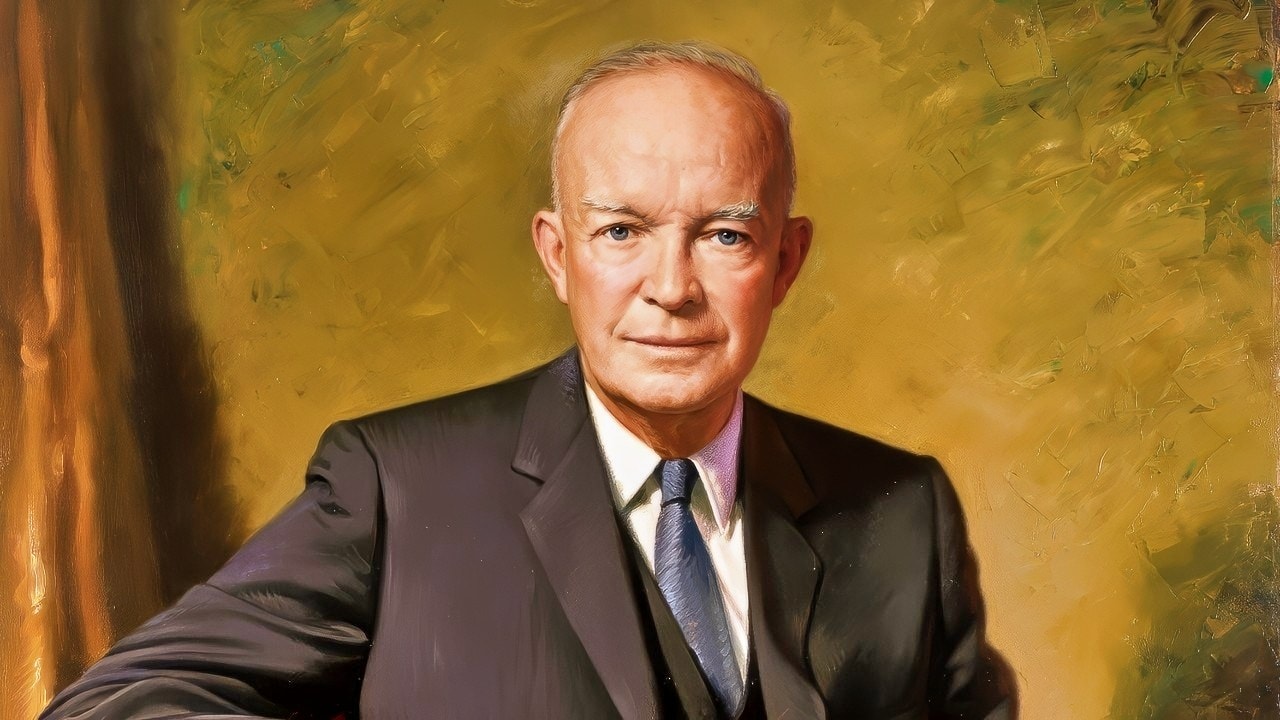
Former General Dwight D. Eisenhower. Image Credit: Creative Commons.
“It is because what government does affects profoundly the daily lives and plans of every person in the country. If governmental action is without the solid guidelines of enduring principle, national policies flounder in confusion. And more than this, the millions of individuals, families and enterprises, whose risk-taking and planning for the future are our country’s very life force, are paralyzed by uncertainty, diffidence, and indecision,” the president said in the 1956 speech. “Change based on principle is progress. Constant change without principle becomes chaos.”
Eisenhower was speaking specifically about farm issues, labor relations, and what Eisenhower described as “concentration of power in Washington.”
“Our Founding Fathers showed us how the Federal Government could exercise its undoubted responsibility for leadership, while still stopping short of the kind of interference that deadens local vigor, variety, initiative, and imagination,” the 1956 speech said. “So today we say to our young people: The Party of the Future will pass along to you undamaged the unique system of division of authority which has proved so successful in reconciling our oldest ideals of personal freedom with the twentieth-century need for decisiveness in action.”
Eisenhower concluded the speech by returning to Abraham Lincoln.
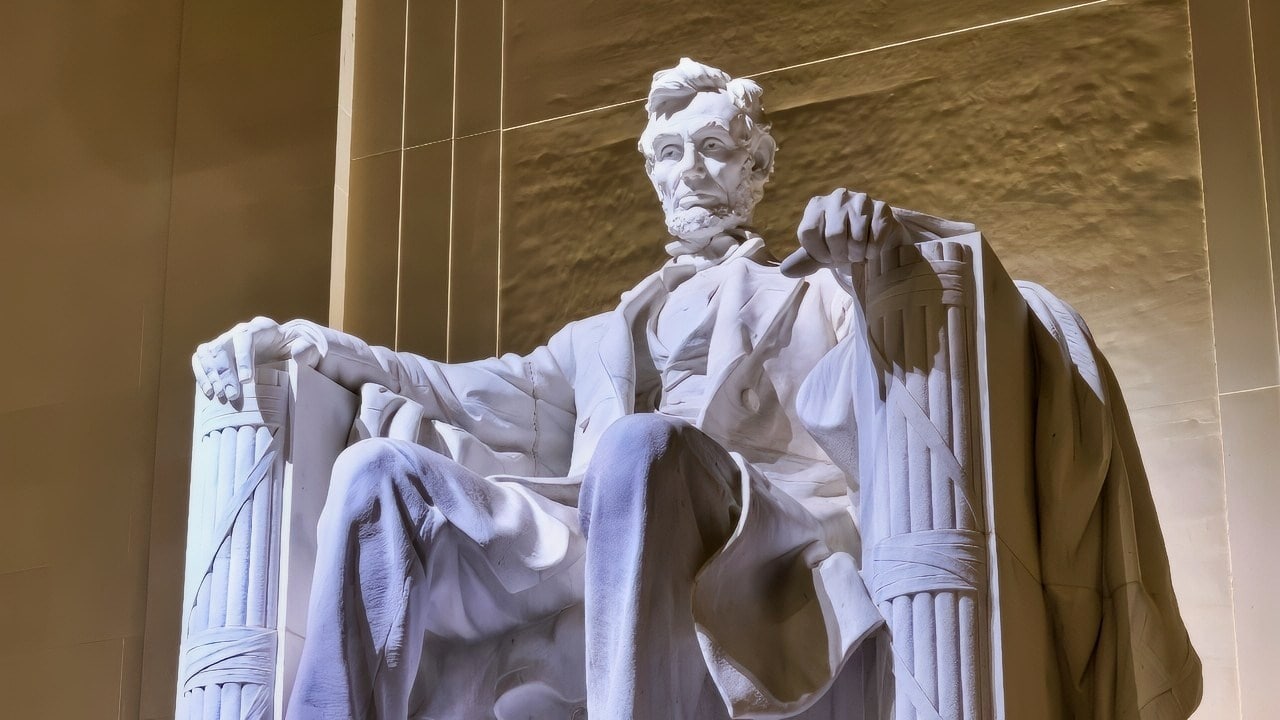
Statue of Abraham Lincoln at the Lincoln Memorial in Washington D.C. on June 12, 2024. The 170-ton statue, sculpted by Daniel Chester French (1850–1931) is located in the Lincoln Memorial on the National Mall. It was carved by the Piccirilli Brothers, assembled in 1920 and unveiled on May 30, 1922.
“Lincoln, speaking to the Republican State Convention in 1858, began with the biblical quotation, ‘A house divided against itself cannot stand,’” Eisenhower said. “Today the world is a house divided.”
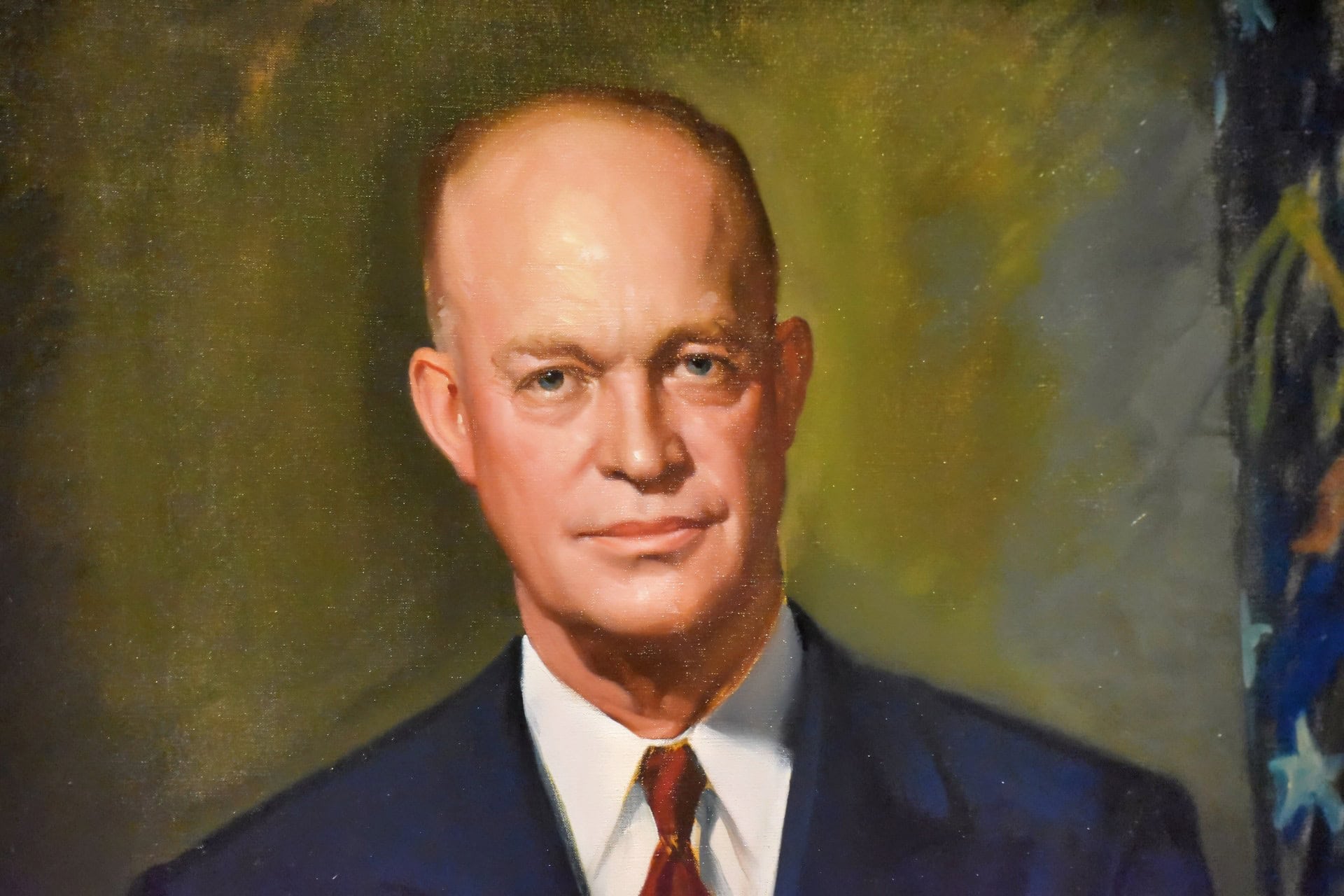
Dwight D. Eisenhower 19FortyFive.com Image. Taken on 1/23/2026 at the National Portrait Gallery in Washington, DC By Dr. Brent M. Eastwood.
“But–as is sometimes forgotten–Lincoln followed this quotation with a note of hope for his troubled country: ‘I do not expect the house to fall,’ he said, ‘but I do expect it will cease to be divided.’”
“A century later, we too must have the vision, the fighting spirit, and the deep religious faith in our Creator’s destiny for us, to sound a similar note of promise for our divided world; that out of our time there can, with incessant work and with God’s help, emerge a new era of good life, good will and good hope for all men.”
Eisenhower’s Presidency
The Eisenhower Presidential Library’s website offers a timeline of significant events from Eisenhower’s two-term presidency.
“After 40 years of military service, Eisenhower devoted his presidency to waging peace. He strengthened the nation through alliances, promoting prosperity, and demonstrating moral leadership,” the library bio says.
Eisenhower created what was then known as the Department of Health, Education, and Welfare. He presided over the armistice in the Korean War in 1953, and the subsequent repatriation of that war’s prisoners of war. He created the Small Business Administration, made the 1953 “Atoms For Peace” speech, and shared unclear information with Britain and France.
In 1954, Eisenhower launched the first nuclear submarine. He expanded Social Security to 10 million more people and agreed to the Southeast Asia Defense Treaty. In the following year, his administration formally ended the U.S. occupation of Germany.
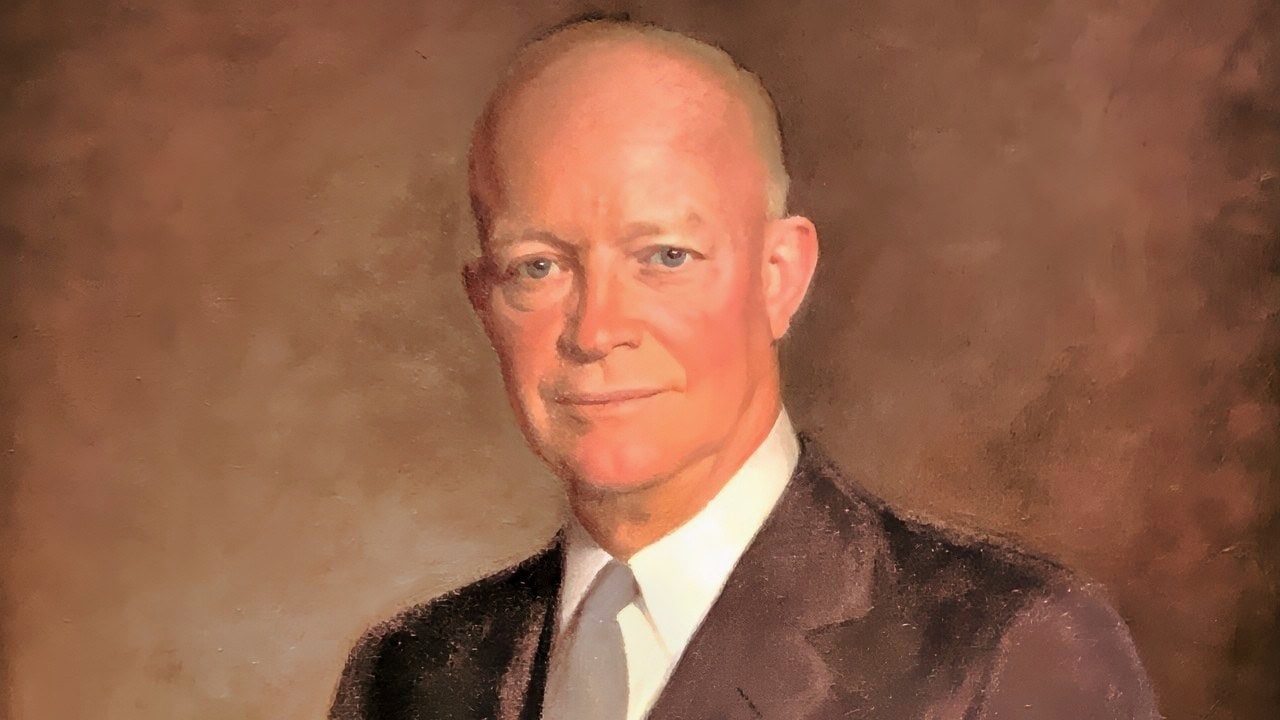
Dwight D. Eisenhower President. Image Credit: Creative Commons.
In 1956, Eisenhower signed the law that would create one of his most important legacies, the interstate highway system. He also chose not to join the British/French/Israeli military campaign that followed Egypt’s nationalization of the Suez Canal. At the end of that year, Eisenhower was re-elected to a second term as president.
Eisenhower’s Second Term
In early 1957, Eisenhower signed the Eisenhower Doctrine bill, “authorizing use of U.S. forces to assist Middle East nations threatened by Communist aggression,” the library biography said.
He hosted Prime Minister Kishi of Japan in Washington and ratified the International Atomic Energy Agency. Following Supreme Court decisions that outlawed segregation, Eisenhower sent federal troops to Little Rock, Arkansas. The Sputnik launch, meanwhile, jump-started the space race, leading Eisenhower to sign a law creating NASA in 1958.
In 1959, Alaska and Hawaii became the 49th and 50th states, and Soviet Premier Nikita Khrushchev visited the United States.
And in Eisenhower’s final year as president, 1960, the U-2 spy plane crash incident took place, after which a summit in Paris between Eisenhower and Khrushchev collapsed. That November, John F. Kennedy was elected president, defeating Eisenhower’s vice president, Richard M. Nixon.

U-2 Spy Plane. Image Credit: Creative Commons.
“In facing the threats of his time, he positioned the United States to win any conflict. He consistently sought peaceful, positive alternatives to military action. In doing so, Eisenhower helped to establish the post-war order that guided American policy for more than 60 years. The Eisenhower Administration became known for its eight years of peace and prosperity. And, Dwight David Eisenhower became known as the Champion of Peace.”
“The Military-Industrial Complex”
Eisenhower’s farewell address, on January 17, 1961, is one of his most famous addresses. His warning of the power of the “military-industrial complex” has been much-analyzed in the years since, and the audio of it opened JFK, Oliver Stone’s 1991 film about the Kennedy assassination.
“In the councils of government, we must guard against the acquisition of unwarranted influence, whether sought or unsought, by the military-industrial complex,” Eisenhower said in the eaddress.
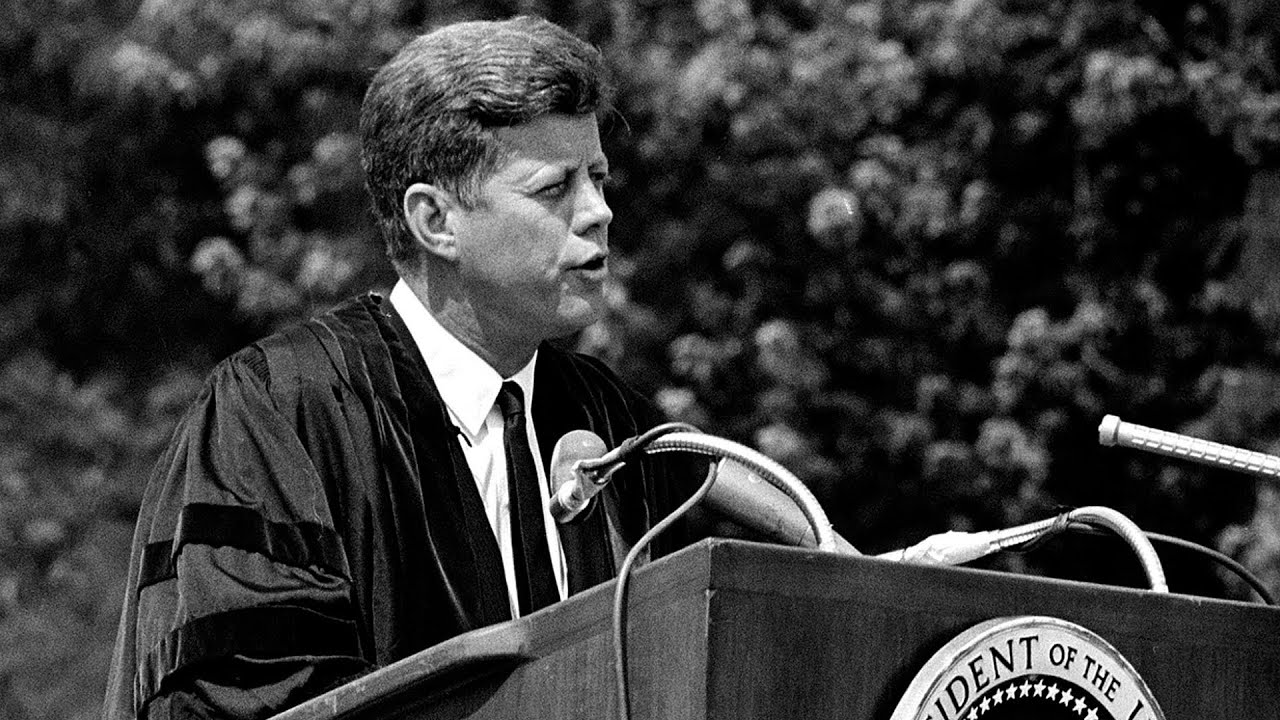
Peace Speech by John F. Kennedy. Image Credit: Creative Commons.
“The potential for the disastrous rise of misplaced power exists and will persist. We must never let the weight of this combination endanger our liberties or democratic processes. We should take nothing for granted. Only an alert and knowledgeable citizenry can compel the proper meshing of the huge industrial and military machinery of defense with our peaceful methods and goals, so that security and liberty may prosper together.”
About the Author: Stephen Silver
Stephen Silver is an award-winning journalist, essayist, and film critic, and contributor to the Philadelphia Inquirer, the Jewish Telegraphic Agency, Broad Street Review, and Splice Today. The co-founder of the Philadelphia Film Critics Circle, Stephen lives in suburban Philadelphia with his wife and two sons. For over a decade, Stephen has authored thousands of articles that focus on politics, national security, technology, and the economy. Follow him on X (formerly Twitter) at @StephenSilver, and subscribe to his Substack newsletter.