
Quote of the Day: Thanks to General and President Dwight D. Eisenhower
Synopsis: Dwight D. Eisenhower’s warning that the next world war must be prevented is framed against the 1956 Cold War shocks of political upheaval inside the Soviet sphere, including unrest in Poland and the crushed Hungarian Revolution.
-Eisenhower’s answer was the “New Look” strategy: avoid another grinding ground war by leaning on nuclear deterrence, the threat of massive retaliation, and covert CIA actions to counter Soviet influence at lower cost.
-The approach also pressed allies to shoulder more of the defense burden, limiting U.S. troop commitments in Europe while keeping readiness high.
-The argument holds that disciplined spending, deterrence, and proxy pressure helped preserve peace in a volatile decade.
Eisenhower’s Quote of the Day: “The Only Way to Win the Next World War Is to Prevent It”
“The only way to win the next world war is to prevent it.” – President Dwight D. Eisenhower.
Eisenhower uttered this quote in an unlikely place. While running for re-election in 1956, he discussed foreign policy to a small crowd that was tired of the Cold War, but the audience was definitely opposed to the spread of communism. This phrase was used in a speech to campaign supporters in the Civic Auditorium in Seattle, Washington.
The Soviet Menace Was Evolving
The era of the Cold War showed that the United States must always be ready for a Soviet ground or nuclear attack. Russia was changing, though. In 1956, Joseph Stalin had been dead for three years, but a new supreme leader, Nikita Khrushchev, had come to power. He gave a famous speech denouncing Stalin and criticizing aspects of his reign.
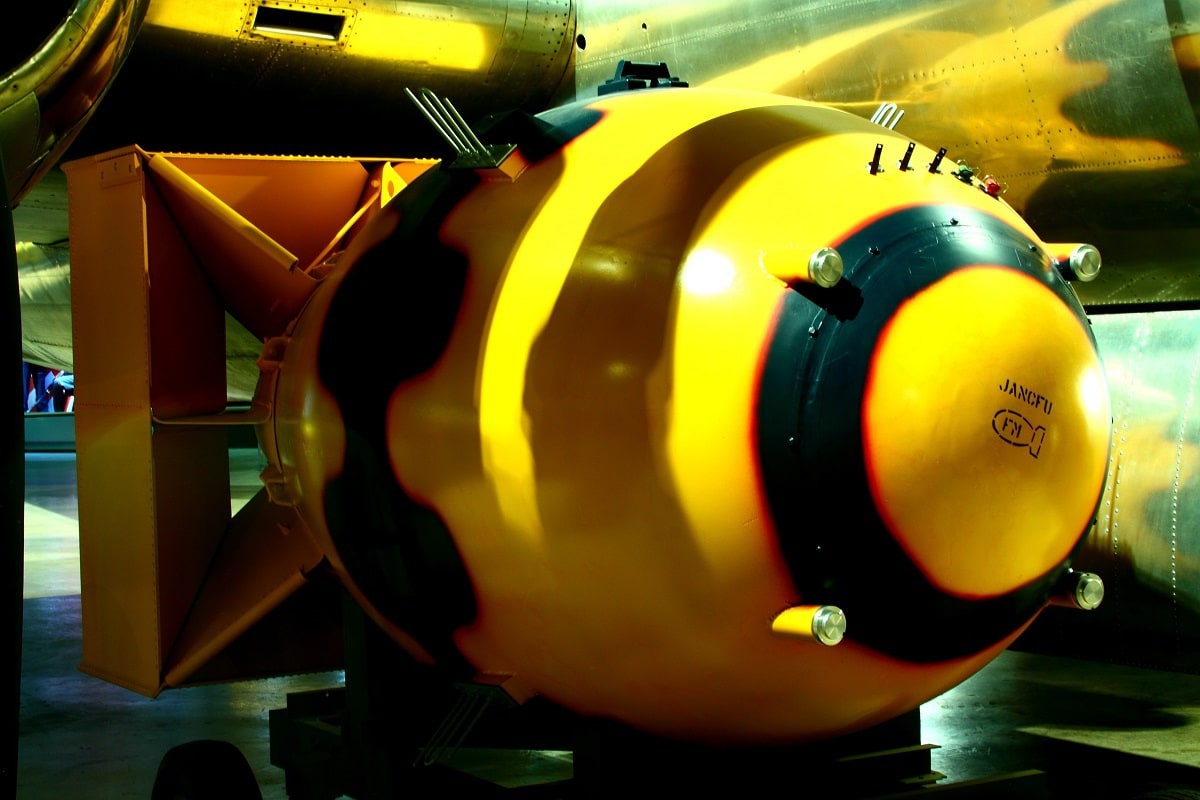
Fat Boy Nuclear Weapon. Image: Creative Commons.
Moves Toward Freedom Within the Iron Curtain
A few communist countries took the criticism to heart and realized that they could rise against Soviet rule. Polish workers revolted in Poznan in 1956, yearning for their freedom. While the regime put down this uprising, it showed that communism could be challenged in other countries behind the Iron Curtain.
The Soviets Nipped the Hungarian Revolution in the Bud
Hungary could have been the next domino to fall. The people there began to protest against communism. The secret police fired their weapons at protesters. Khrushchev was forced to use Soviet troops to put down the revolution. But for a week, Hungary had a provisional government that claimed it wanted to leave the Warsaw Pact and become a democracy.
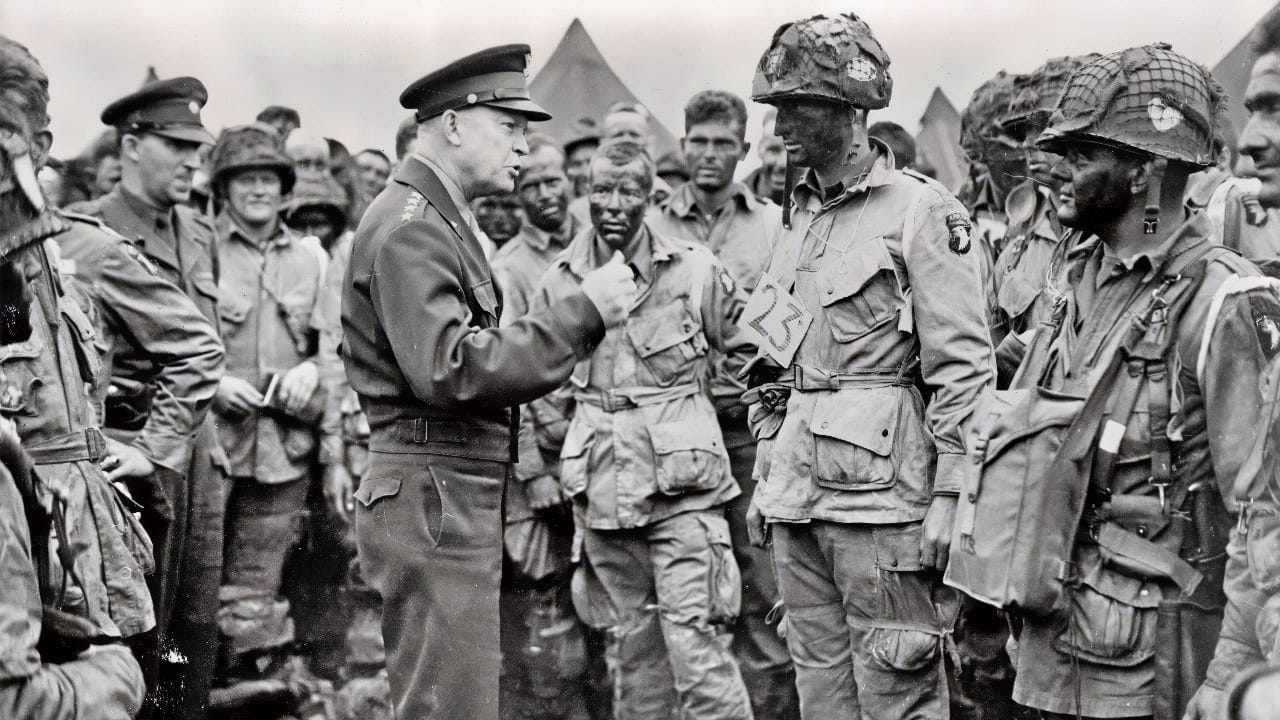
Dwight D. Eisenhower D-Day 1944. Image Credit: Creative Commons.
This was anathema to the Russians, and they struck back decisively. The Soviets installed a puppet government that was able to jail the offending new leadership and restore communist rule in Hungary.Eisenhower knew that the war could have broken out at any time, and it could have sucked the United States into a nuclear confrontation. The Soviets were even more determined to subjugate all citizens under their rule.
Ike’s ‘New Look’ Grand Strategy
Eisenhower was mostly an anti-war president. He believed that the military should always be able to fight back, but he frowned upon instigating hostilities. Ike wanted to avoid a ground war at all costs. His strategy during his reign was called the “New Look.”
The United States, under this rubric, would prevent a conflict in Eastern Europe by nuclear deterrence and CIA covert actions that became proxy wars against the Soviet Union.
Massive Nuclear Retaliation
Eisenhower appeared to de-emphasize the Army and grant the Air Force more power to wage a nuclear war if needed. The core belief during the New Look period was the use of the massive retaliation strategy.
If the Soviets struck first, there would be a gigantic nuclear counter-attack that would instill fear and resistance against Russia – hopefully making them realize that a first strike would be futile.
Reduce Defense Spending
Plus, Ike believed in a smaller military budget by spending less on a large ground force and investing more in nuclear forces. After the horrors of World War II and the Korean War, Eisenhower wanted no part in battling the Soviets with tanks and infantry soldiers. A huge loss of life would be necessary during a bloody ground offensive and the subsequent defensive struggle after a Soviet military assault.
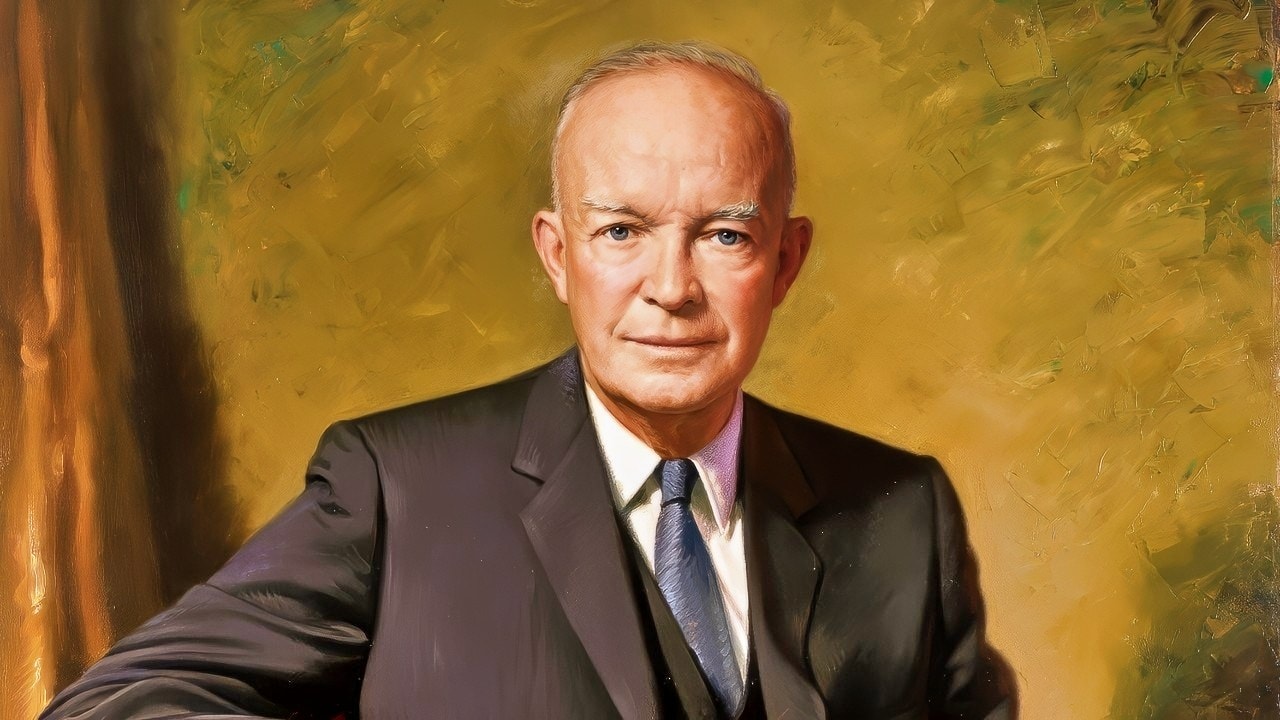
Former General Dwight D. Eisenhower. Image Credit: Creative Commons.
Utilize the CIA for Regime Change
Eisenhower also believed that the CIA could help turn the tide against Soviet aggression and abate the spread of communism.
The overthrow of Iranian Prime Minister Mohammad Mossadegh with the aid of the CIA in August 1953 was an example of how a covert action could upend a government that was thought to be pro-Soviet Union. The Americans did not have to fire a shot, and the coup was considered cost-effective.
Prod the Allies to Do More
Eisenhower also believed in burden sharing among U.S. allies. He wanted NATO countries to spend more on defense and to be better trained in case the Soviets attacked the alliance. The idea was for the United States not to have to station so many troops in Europe and to refrain from spending significantly to keep them ready for battle.
The Genesis of the Domino Theory
Ike’s grand strategy, known as the Eisenhower Doctrine, was effective in maintaining the peace against the Soviet Union. The doctrine also led to the “Domino Theory” in Asia that would later turn into the Vietnam War, but during the 1950s, war with the Russians was averted.
The First Peace Through Strength President
Eisenhower’s strategy was nuanced and developed the first instance of Peace Through Strength. He showed that investing in nuclear weapons instead of huge defense budgets devoted to ground troops could show the world that the United States could still deter the Soviets but avert a nuclear exchange or a ground war.
Ike lived up to his quote. The United States was always prepared for complete nuclear or conventional war, but it was never sparked. This New Look strategy was effective at keeping the peace. Ike never wanted to create what he later called the “military industrial complex” and worried that unabated defense spending would ultimately hurt the United States. He wanted to pursue his grand strategy by getting “more bang for the buck” and relying on cheaper covert methods to win a series of small victories against communism.
Inspiring Ronald Reagan
The New Look was effective, and later historians gave Ike credit as an underrated president in foreign policy making. He was a strategist who kept the peace but gave no quarter to the Soviet Union. Other presidents, such as Ronald Reagan, would look back on the 1950s as a time when a Communist rollback could occur without firing a shot. This was to influence Reagan’s belief in covert action by the CIA and proxy wars with anti-communist leaders to keep the Soviet Union from expanding.
Dwight D. Eisenhower Forged Peace During a Dangerous Time
Eisenhower needed his own doctrine to show the world that the United States could be successful at home and abroad. Spending on conventional forces was reduced, and peace was at hand during a productive eight years on the home front. Ike should get credit for preparing for World War III and for avoiding it.
About the Author: Brent M. Eastwood
Author of now over 3,000 articles on defense issues, Brent M. Eastwood, PhD is the author of Don’t Turn Your Back On the World: a Conservative Foreign Policy and Humans, Machines, and Data: Future Trends in Warfare plus two other books. Brent was the founder and CEO of a tech firm that predicted world events using artificial intelligence. He served as a legislative fellow for US Senator Tim Scott and advised the senator on defense and foreign policy issues. He has taught at American University, George Washington University, and George Mason University. Brent is a former US Army Infantry officer. He can be followed on X @BMEastwood.