
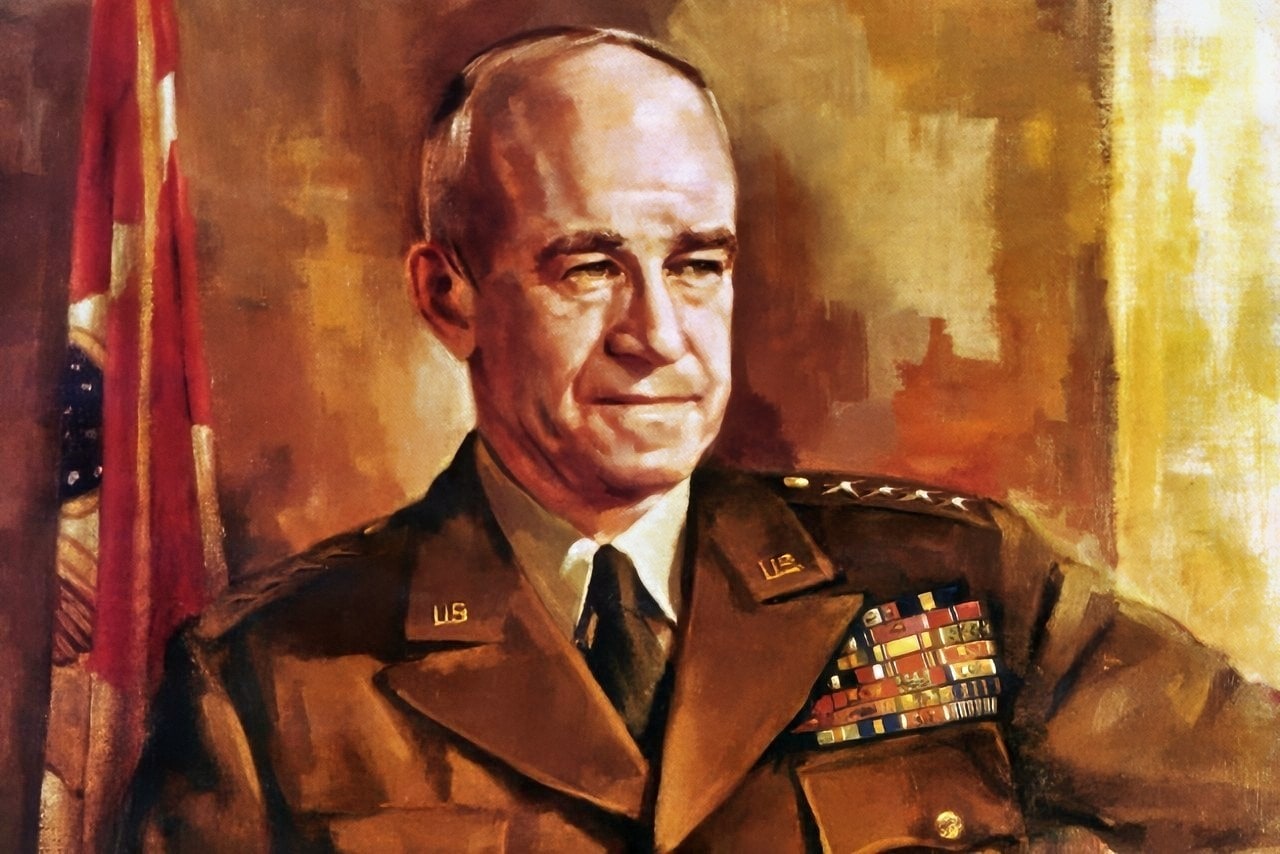
Key Points and Summary – Omar Bradley’s blunt maxim—professionals study logistics—underscores the unglamorous truth of war: victory depends on fuel, ammo, food, maintenance, medical evacuation, and the steady flow of information.
-The piece explains how readiness and resupply enable speed and surprise, and why striking an enemy’s supply chain can decide campaigns—now including cyber and communications infrastructure.
-It then situates the quote in Bradley’s career: a humble, methodical West Point graduate, overshadowed by bigger personalities, who earned Eisenhower’s trust, helped restore the II Corps in North Africa, and later commanded massive U.S. forces through Normandy and the Battle of the Bulge.
Military Quote of the Day by U.S. Army General Omar Bradley
“Amateurs study tactics; professionals study logistics.” – General Omar Bradley
Soldiers need beans and bullets to win wars. The glory comes from bursting through enemy lines and pursuing a frightened enemy in rapidly moving tanks and armored personnel carriers, creating havoc and chaos. All soldiers have dreams of this kind of glory.
Keep Them Fed Before They Can Be Led
But logisticians do not get nearly enough credit. Tanks need fuel and ammunition. Soldiers require ample amounts of food. And their vehicles must be maintained when not on duty. Large-scale combat operations need to be sustained and handled delicately when the logisticians are hard at work.
No army can sustain itself without being resupplied, and there are many instances in history when fighting forces move beyond supply lines, only to have their attack bog down, only to see the enemy counterattack successfully and destroy the main effort that is now surrounded.
Take Care of the Wounded
Troops also require medical care after being wounded. Surgeries are often necessary, and this aspect of warfare is rarely mentioned in after-action reviews of battles. Moreover, successful logistical efforts lead to mobility, speed, and surprise – all essential principles of warfare.
Are Soldiers Ready for Combat?
Another important aspect of warfare is readiness. Is it a fighting force prepared for combat? Do they have the correct uniforms for the weather? Can soldiers continue to march without food or water? If the questions are not answered affirmatively, the force is not ready to fight.
Hit The Enemy’s Means of Resupply Hard
The reverse is also true. The enemy needs resupply, too. Attacking logistical targets behind adversarial lines is a popular way to fight, and using air power and artillery to punish the quartermaster corps can turn the tide of battle. Modern armies also need to communicate effectively through continuous electricity and internet connections. Logistical support is also about countering cyberattacks that could compromise the force’s ability to deliver orders to the front. Quartermasters also resupply command and control centers.
Sometimes Omar Bradley Was Overlooked
The general who shared his remarks about logistics, Omar Bradley, is one of the most underrated generals of World War II. Bradley was steady and not flashy. He never seemed to have a big ego like Patton or the swashbuckling British General Bernard Montgomery.
Bradley had his own brand of understated expertise, too. He wasn’t blood thirsty and did not seek glory. He did not know how to handle the press, which became more critical in World War II, but Bradley was not comfortable in the limelight.
Bradley was a soldier’s soldier, though. He did not complain or make a big show of his authority. He was humble and often gave credit to others while maintaining a subtle sense of humor. Bradley was a gracious commander and served to the highest level of his abilities. He was often worried about casualties and liked to take the long view of a battle, looking many steps ahead in his strategy development.
A meticulous planner, Bradley allowed his staff to do their jobs without micro-managing. He sought to take advantage of enemy mistakes, and when he saw an opening, he struck back with a supply chain that could propel him to victory.
Beyond the Quote: The History of Army General Omar Bradley
Omar Nelson Bradley was born near Clark, Missouri, on February 12, 1893. His father died early, and his mother ran a boarding house. Bradley’s family could not afford college, and the future general had to work on the railroad to pay for his education as he considered attending the University of Missouri. But fortune led him to West Point. A great athlete with size and skill, he played football and basketball at the US Military Academy. He graduated 44th out of 164 in the same class as Dwight Eisenhower. Bradley served as a 2nd Lieutenant at the Mexican border under General John J. Pershing in the US effort to capture Pancho Villa.
Then Bradley’s career entered a period of dormancy. He was assigned to the 14th Infantry and served in the Pacific Northwest guarding copper mines during World War I. This was not what the boy from Missouri wanted out of his military career. He tried to get re-assigned to France to join the war, but his transfer requests were denied. He spent four years at West Point teaching and was then promoted to the rank of major. Bradley was still smarting from missing the war. His training was exemplary, though, and he excelled in the military courses that he was assigned to, even though he had no combat experience.
But Bradley made a good impression on one of his commanding officers – George C. Marshall – who valued his hard work and grit. When World War II started, Bradley had the kind of confidence that inspired troops under his command. He was assigned to train the 82nd and 28th Divisions for combat and was promoted to brigadier general.
At Eisenhower’s request, now the Supreme Commander of US troops, Bradley headed to North Africa in early 1943 to assess the then-struggling Allied campaign there and make improvements.
“Thanks to Bradley’s recommendation, General George S. Patton was given command of the US II Corps; as his deputy commander, Bradley helped restore discipline and improve the soldiers’ training. After Patton left for another assignment, he took charge of the corps himself and led it ably for the rest of the North Africa campaign,” according to History.com.
Bradley served under Patton in Sicily. There, he became famous for being what correspondent Ernie Pyle called the “G.I.’s General.”
Eisenhower was impressed and chose Bradley to command the invasion forces for D-Day in Normandy. Bradley later led the 12th Army Group and was instrumental in the counterattack that propelled the Americans to strike back against the Germans during the Battle of the Bulge. When the war ended, Bradley was the commander of 43 divisions and 1.3 million men.
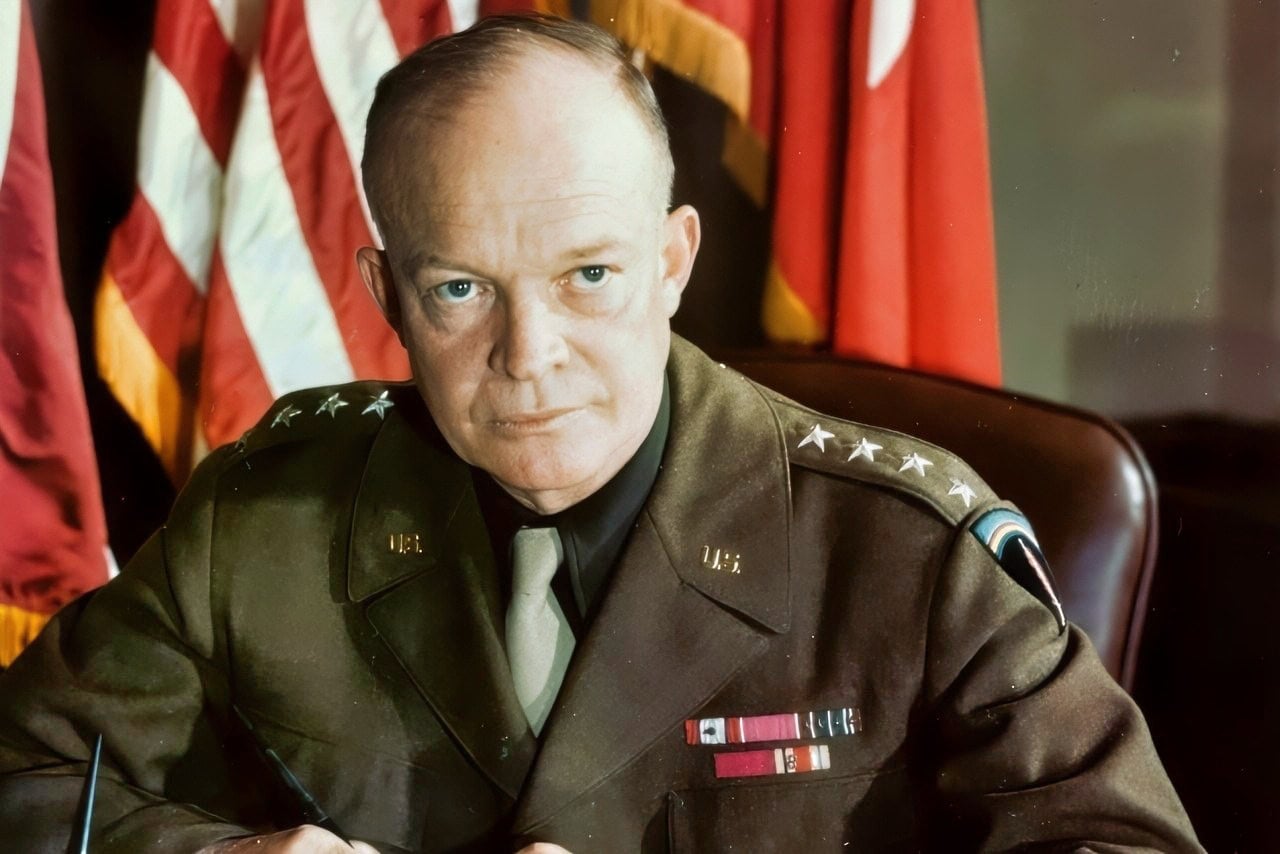
U.S. Army General Dwight D. Eisenhower. Image Credit: Creative Commons.
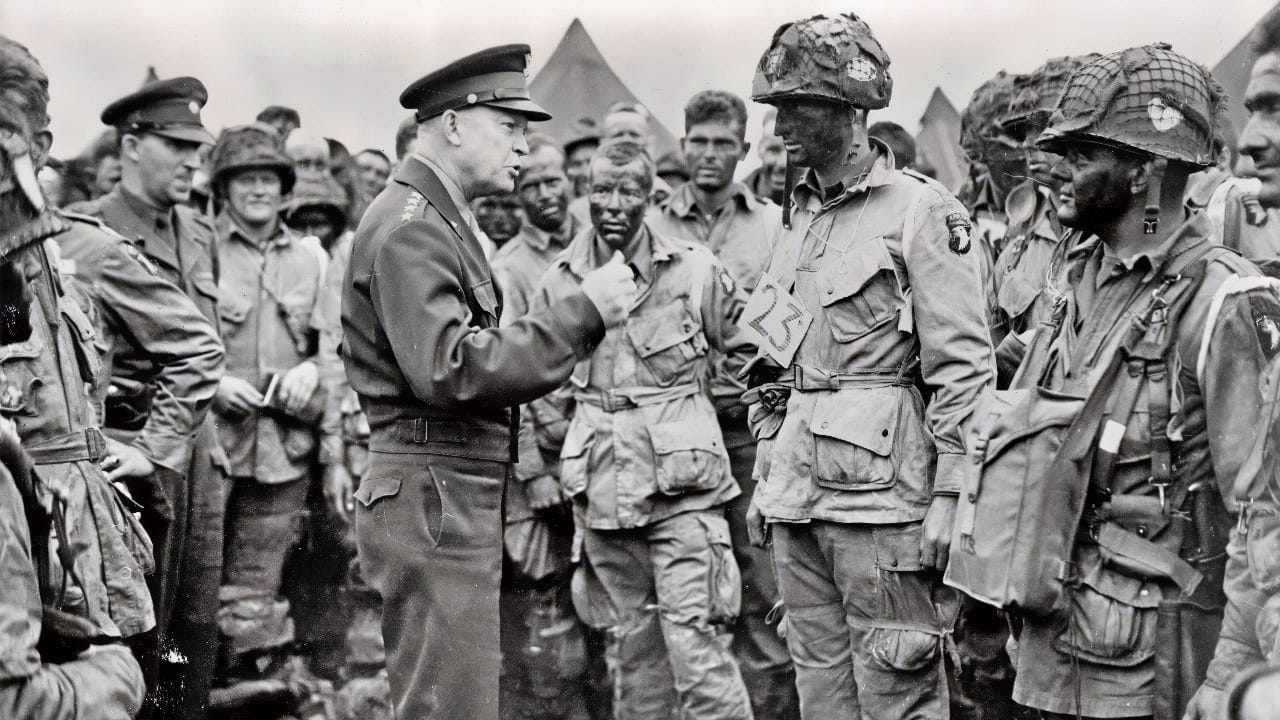
U.S. Army General Dwight D. Eisenhower D-Day 1944. Image Credit: Creative Commons.
The Legacy
Omar Bradley was one of the most respected commanders of World War II. Never flashy and rarely able to promote his profile in the media, he was still considered an architect of Allied victory. Bradley just kept improving at every stop during his career, and his maxim about logistics outlived him.
The boy from Missouri with a thick Midwestern drawl knew how important it was to keep his men fed and resupplied. This led to overall victory and allowed his name to be etched in the annals of military history.
About the Author: Former Army Officer Dr. Brent M. Eastwood
Author of now over 3,000 articles on defense issues, Brent M. Eastwood, PhD is the author of Don’t Turn Your Back On the World: a Conservative Foreign Policy and Humans, Machines, and Data: Future Trends in Warfare plus two other books. Brent was the founder and CEO of a tech firm that predicted world events using artificial intelligence. He served as a legislative fellow for US Senator Tim Scott and advised the senator on defense and foreign policy issues. He has taught at American University, George Washington University, and George Mason University. Brent is a former US Army Infantry officer. He can be followed on X @BMEastwood.