

Synopsis: George S. Patton’s leadership is often remembered for bluntness and aggression, but his defining trait was resilience—his ability to rebound fast after setbacks and force his formations to do the same.
-He helped shape early U.S. armored thinking, then proved it under pressure in North Africa after Kasserine Pass, driving II Corps back to fighting form.
-In Sicily and then Normandy, Patton emphasized speed, tempo, and relentless maneuver, even when fuel shortages and higher-level strategy slowed his campaigns.
-His most dramatic moment came during the Battle of the Bulge, when he pivoted Third Army to relieve Bastogne—an operational feat that cemented his legend.
Patton’s Best Quote Explains Why His Army Wouldn’t Break
“I don’t measure a man’s success by how high he climbs, but by how high he bounces when he hits bottom.” This is one of the most famous quotes from General George S. Patton, one of the most famous generals of the Second World War. He is known for being blunt, profane, a bit insane, and for his resilience.
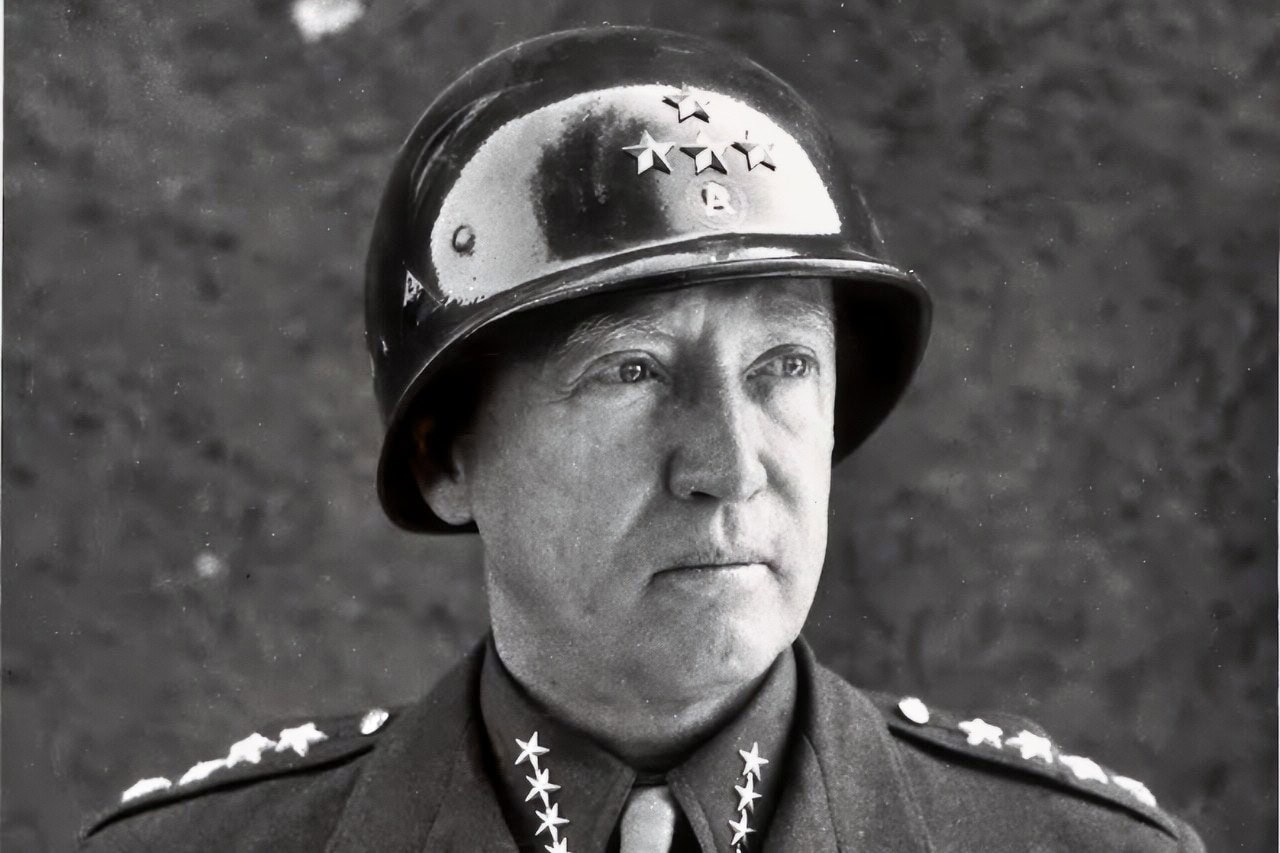
U.S. Army General George Patton
Not only is this quote one of the less profane quotes from General Patton, but it also underlines one of the most enduring values of the U.S. Armed Forces: resilience.
General Patton, and by extension the U.S. Army, were extraordinarily resilient in the face of overwhelming odds during WWII, and it was this resilience, among many other factors, that led the Americans to victory.
George Patton and the Shaping of American Mechanized Doctrine
General Patton first made a name for himself during his service in WWI, where he commanded American-operated Renault FT tanks as part of the 1st Provisional Tank Brigade. He was wounded during the Meuse-Argonne offensive on September 28, for which he received the Distinguished Service Cross.
Despite being known as the Rommel of the American Army, Patton did not warm up to the tank concept until Germany’s invasion of Poland, which inspired him to build up the U.S. Army’s armored forces. While Europe was plunged into war, Patton became the leading figure of American armored doctrine, conducting exercises and refining tank warfare.
Patton’s first test of resilience in the war came in 1942 when the U.S. officially entered WWII. Now promoted to the rank of Major General, Patton was tasked with assisting in the liberation of North Africa, which was occupied by Germany and Italy.
After liberating Casablanca, Patton was given a daunting task: he was put in command of the U.S. II Corps, which had just suffered a defeat at the hands of Generalfeldmarschall Erwin Rommel at the Battle of Kasserine Pass. Unfazed by the battered and beaten state of his Corps, Patton wasted no time in getting the unit back up to combat standards and was determined to beat back the combined German and Italian forces. Despite suffering a defeat earlier, the U.S. II Corps was able to successfully push back the German Afrika Korps and secure the city of Gabès.
The Liberation of Europe
General Patton was then placed in charge of U.S. Corps I for Operation Husky, the invasion of Sicily. Initially, his troops were tasked with protecting British forces, though he was later granted permission to seize the strategically significant city of Palermo while Montgomery’s forces were bogged down.
Patton wanted to go even further. He wanted to stage an amphibious assault on the city of Messina; however, this assault was delayed by the lack of landing craft. By the time he had reached the city, the Germans and Italians had already pulled the majority of their troops out of mainland Italy. Patton’s actions up to that point had made him into a legendary figure among the German high command, who ironically respected him more than any Allied commander ever did.

M42. Image Credit: Creative Commons.
Patton’s next test came in Normandy after D-Day. Placed in command of the Third Army, his forces attacked in multiple directions in Normandy, simultaneously attacking into the north, west, and south. Patton’s tactics favored speed and aggression. During the Lorraine campaign near Germany’s borders, his troops ran out of fuel, effectively halting the entire campaign. This was because Eisenhower favored a “broad-front” approach rather than the quick breakthroughs that Patton preferred.
This forced him to fight more conservatively, which resulted in a protracted and needlessly bloody battle for the Metz fortress. Of all the battles that the Third Army fought in Europe, a third of all casualties were suffered in the Lorraine campaign.
General George Patton: Battle of the Bulge and the End of WWII
By December 1944, the Germans were getting desperate and launched one last-ditch offensive to push the Allies back in the West.
While the offensive ultimately failed to secure the goals of German high command, it did succeed in taking considerable amounts of territory across Belgium, Luxembourg, and northern France. Patton, however, did not flinch at this offensive and was already drafting plans to provide relief for the now encircled 101st Airborne Division.
Skeptical of Patton’s confidence, Eisenhower reluctantly approved his relief plans. In a few short days, Patton rerouted 133,000 Third Army vehicles for offensive operations and moved more than six divisions near Bastogne. On December 26, the first of his units reached Bastogne in an operation that can only be described as Patton’s most brilliant operation to date.
With the loss of Bastogne, the German Army was in full retreat. With the Soviets closing in from the east and the Allies pressing on in the west, the writing was on the wall for the Third Reich. Despite fierce German resistance, Patton and his forces were practically unstoppable.
To his shock and alarm, he learned that the Soviets, whom he viewed as a threat, would seize Berlin. Third Army ultimately halted in Bavaria, near Czechoslovakia, as the war came to an end and victory was finally declared.
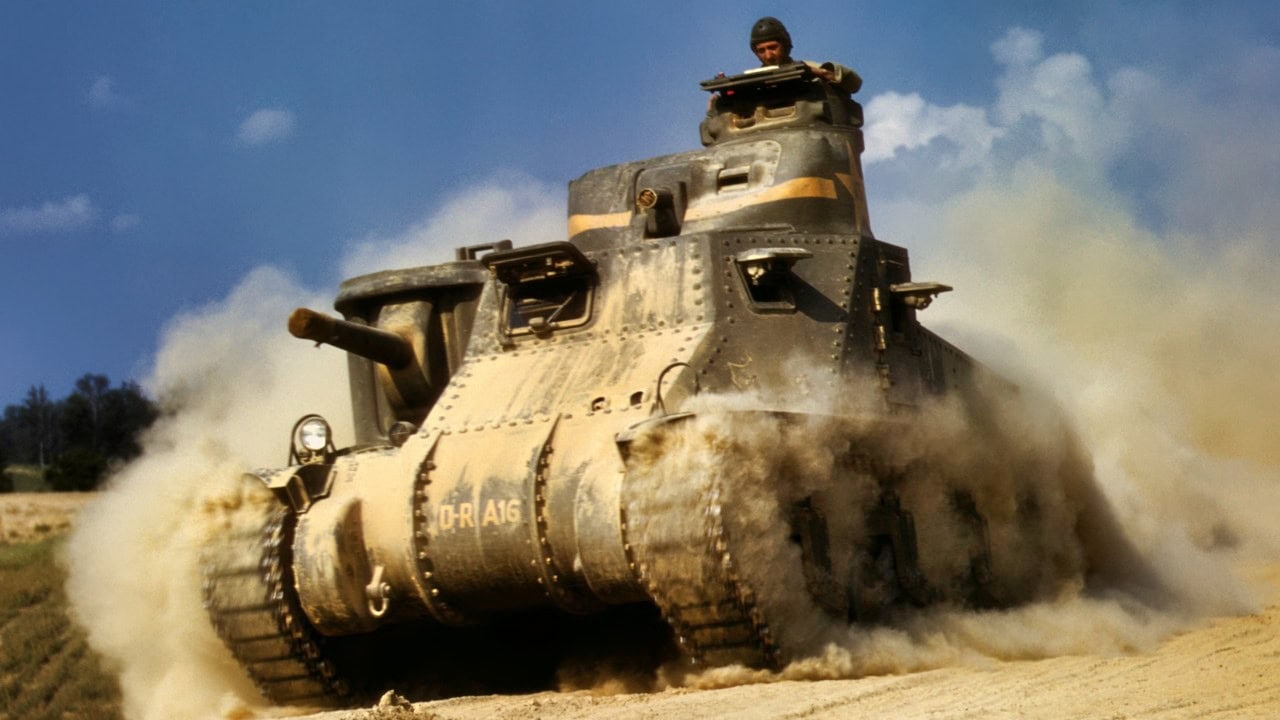
M3 Grant Lee Tank World War II.
George Patton remains one of the greatest American generals in WWII. Not only was he a competent strategist and tactician, but he was an extraordinarily resilient character. This near-insane stubbornness allowed him to turn the tide in Africa, push the Germans out of Italy, and push back the German counterattack in northern France.
Even when obstacles came up and the Americans suffered setbacks, Patton’s resilience always ensured victory in the end. Patton’s confidence was reflected in his soldiers, who held their commander in high regard and valiantly carried out his orders even in less-than-ideal circumstances.
George Patton was vital in shaping American armored doctrine of the time, and his exploits are still studied in academies to this day.
About the Author: Isaac Seitz
Isaac Seitz, a Defense Columnist, graduated from Patrick Henry College’s Strategic Intelligence and National Security program. He has also studied Russian at Middlebury Language Schools and has worked as an intelligence Analyst in the private sector.