
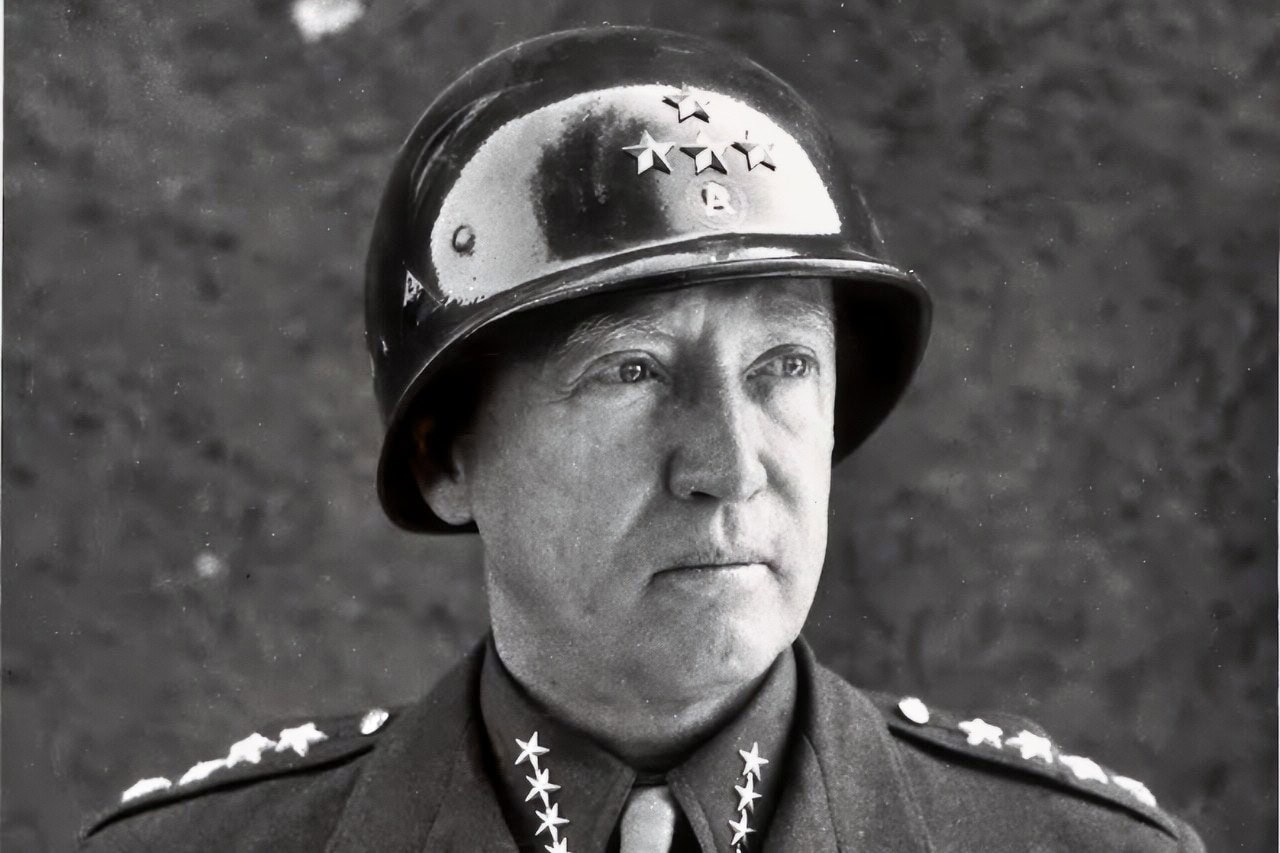
Key Points and Summary – U.S. Army General George S. Patton remains a study in contrasts shown through one quote and beyond: fearless in action, deeply aware of fear, and relentless about duty.
-This piece zeroes in on the World War II campaigns that shaped his public legend—especially the Battle of the Bulge, where his rapid Third Army pivot helped relieve Bastogne at a moment of Allied danger.
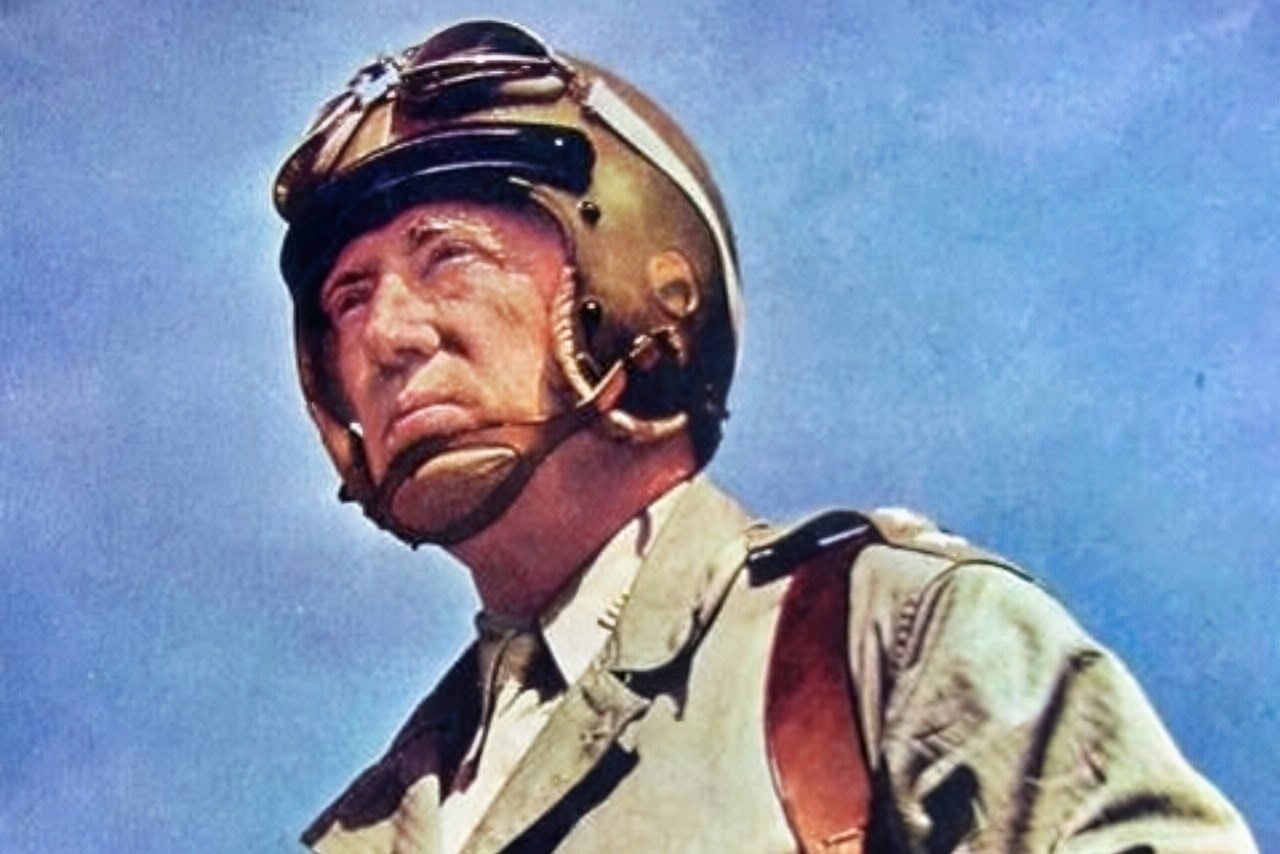
General George Patton of the U.S. Army. Image Credit: Creative Commons.
-It also revisits his triumphs in Sicily, including the “race” to Messina, while confronting the soldier-slapping incidents that stained his record and forced Eisenhower’s blunt rebuke. From El Guettar onward, the theme is consistent: urgency, momentum, and the cost of intensity.
Quote of the Day by Patton: ‘All men are afraid in battle. The coward is the one who lets his fear overcome his sense of duty.’
“All men are afraid in battle. The coward is the one who lets his fear overcome his sense of duty. Duty is the essence of manhood.” That quote belongs to General George Smith Patton Jr., one of the U.S. Army’s most beloved yet also most controversial generals of all time (along with Douglas MacArthur).
During his legendary speech to the Third Army (which was actually toned down for the 1970 movie in order to maintain a “PG” rating), he reworded it slightly: “Yes, every man is scared in his first battle. If he says he’s not, he’s a liar. Some men are cowards but they fight the same as the brave men or they get the hell slammed out of them watching men fight who are just as scared as they are. The real hero is the man who fights even though he is scared.”
Having previously done an overview of the breadth of Gen. Patton’s life and career, this time we focus on the portion of his career that made him most famous in the eyes of the American public, i.e., World War II.
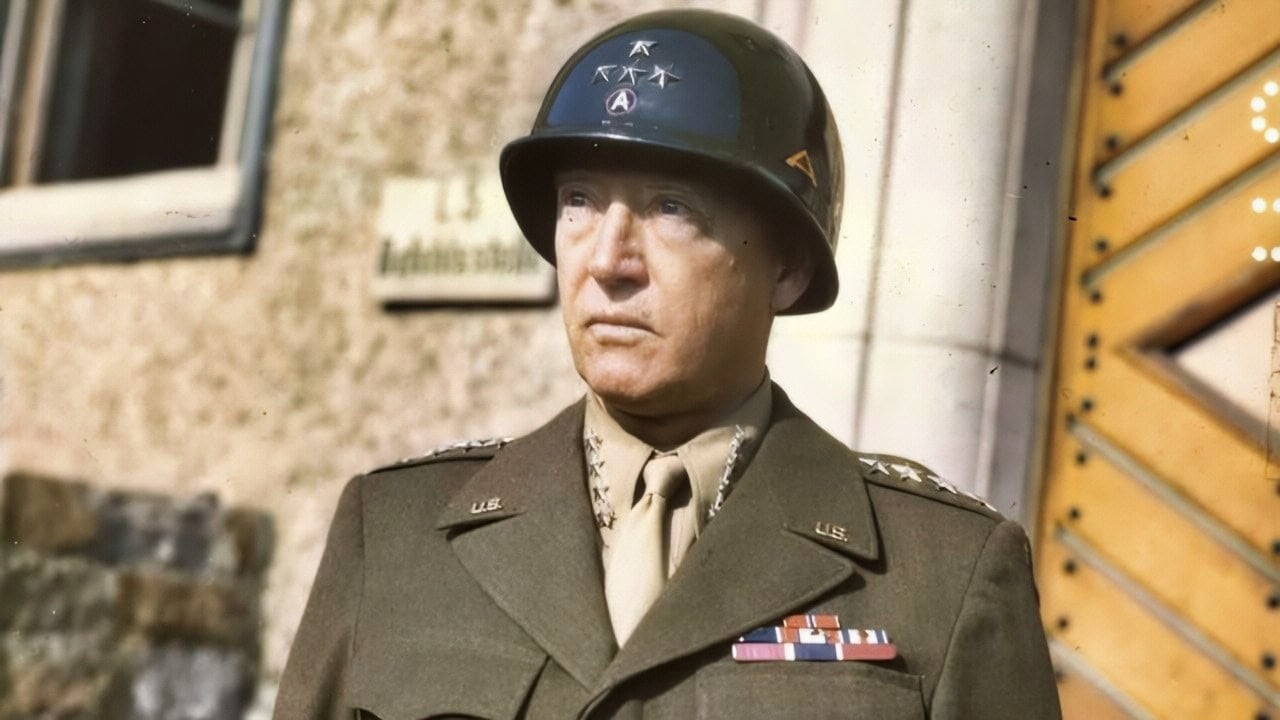
General George Patton U.S. Army Photo
His Finest Hours: The Battle of the Bulge AKA The Ardennes Offensive (December 16, 1944 – January 28, 1945
Thanks to a major intelligence failure—and Gen. Omar Bradley’s complacent dithering—the Battle of the Bulge could have been a huge disaster for the Allies.
However, thanks to Gen. Patton, a major victory was snatched from the jaws of defeat.
As renowned historical Alex Kershaw puts it in a January 19, 2023 article for Friends of the National WWII Memorial, “I knew that his finest hours came during the Battle of the Bulge…he was also the only senior Allied general to emerge from the Battle of the Bulge with his reputation enhanced…When Allied Supreme Commander Dwight Eisenhower held a crisis meeting on December 19, 1944, Patton alone promised and then delivered decisive action, pivoting his entire Third Army of over 250,000 men, and hundreds of tanks, in atrocious conditions, and then sending the 4th Armored Division to break the German siege of Bastogne.”
The Sicily Campaign AKA Operation Husky (July 9, 1943 – August 17, 1943)
Arguably also in the Top Three amongst Gen. Patton’s greatest triumphs of WWII, culminating when his 7th Army arrived in Messina several hours before British Field Marshal Bernard Law Montgomery (with whom Patton had a well-known mutual personal animusv) and his 8th Army, winning the unofficial “Race to Messina” and completing the Allied conquest of that key island region of Italy.
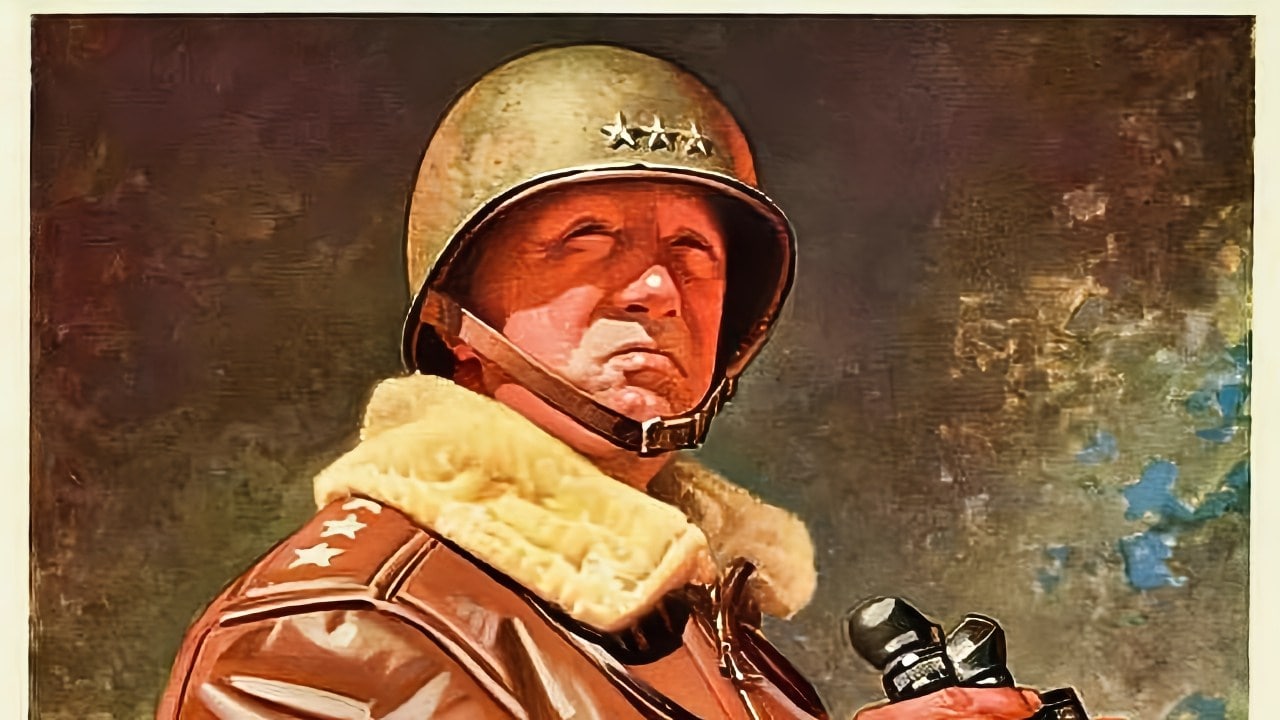
General George Patton. Image Credit: Creative Commons.
However, it was during this same triumphal Sicily campaign that history bore witness to the most shameful moments of George Patton’s career, which went to show that this great military hero was flawed (hey, we’re all only human, right?): the two soldier-slapping incidents. On August 3 and August 10, respectively, Patton slapped Private Charles Kuhl and Private Paul Bennett, accusing both soldiers of cowardice when in fact they were both suffering from combat fatigue (what we now know as post-traumatic stress disorder [PTSD]); for (not so) good measure, Pvt. Kuhl was also suffering from malaria, dysentery, and a 102-degree fever.
This did not sit well with Patton’s superiors, especially the Supreme Commander of the Allied Expeditionary Force in Europe, Gen. Dwight David Eisenhower, who ordered Patton to apologize to the victimized soldiers and the hospital staffs.
In Ike’s own words, “I clearly understand that firm and drastic measures are at times necessary in order to secure the desired objectives. But this does not excuse brutality, abuse of the sick, nor exhibition of uncontrollable temper in front of subordinates. I must so seriously question your good judgement and your self-discipline as to raise serious doubts in my mind as to your future usefulness.”
Incidentally, both Pvt. Kuhl and Pvt. Bennett received the proper medical attention once Gen. Patton was away, and they both made a full recovery and returned to duty with their units.
Battle of El Guettar (North Africa/Tunisia Campaign), March 23, 1943 – April 3, 1943
In some ways, Patton’s triumph at El Guettar could be seen with 20/20 hindsight as a foreshadowing for the Battle of the Bulge, as this was also an instance of Patton saving the U.S. Army from initial disaster.
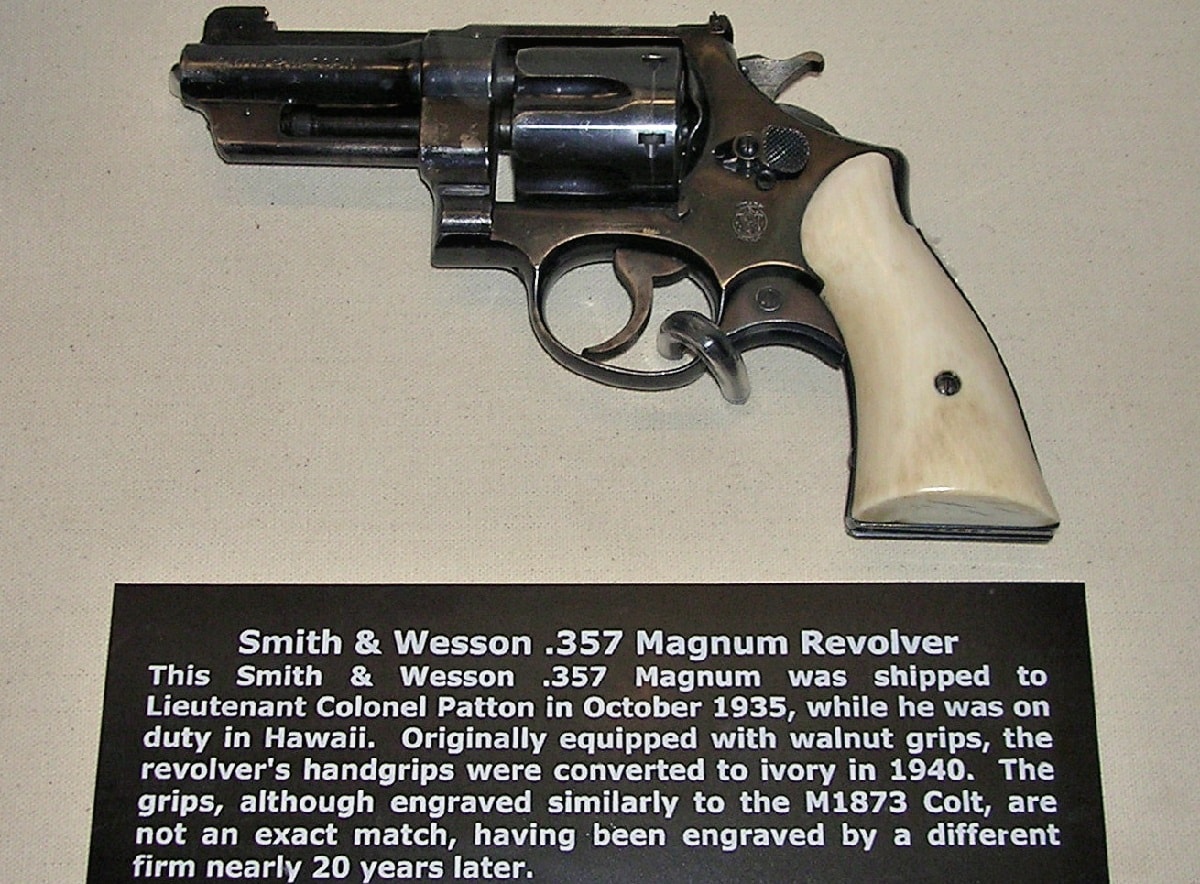
Patton’s well-known custom ivory-handled revolver.
During the Tunisia Campaign, that disaster had manifested itself in the humiliating defeat in the Battle of Kasserine Pass, which took place from February 19–24,1943.
Thanks to Patton’s fiery leadership, the American Army’s reputation and confidence were restored just over a month later; as noted by Stephen L. Moore, “For George Patton, it would prove to be his first big victory, and the U.S. Army’s first major triumph against the German army in World War Two.”
More on Patton’s Lasting Legacy
During my previous write-up on Patton’s posthumous legacy, I was remiss in failing to mention the General Patton Memorial Museum, which is located at Chiriaco Summit, California.
Even though I grew up in Southern California, I’ve yet to visit this museum, for which I kick myself. Rest assured that it’s on this writer’s Bucket List.
About the Author: Christian D. Orr, Defense Expert
Christian D. Orr is a Senior Defense Editor. He is a former Air Force Security Forces officer, Federal law enforcement officer, and private military contractor (with assignments worked in Iraq, the United Arab Emirates, Kosovo, Japan, Germany, and the Pentagon). Chris holds a B.A. in International Relations from the University of Southern California (USC) and an M.A. in Intelligence Studies (concentration in Terrorism Studies) from American Military University (AMU). He is also the author of the newly published book “Five Decades of a Fabulous Firearm: Celebrating the 50th Anniversary of the Beretta 92 Pistol Series.”