
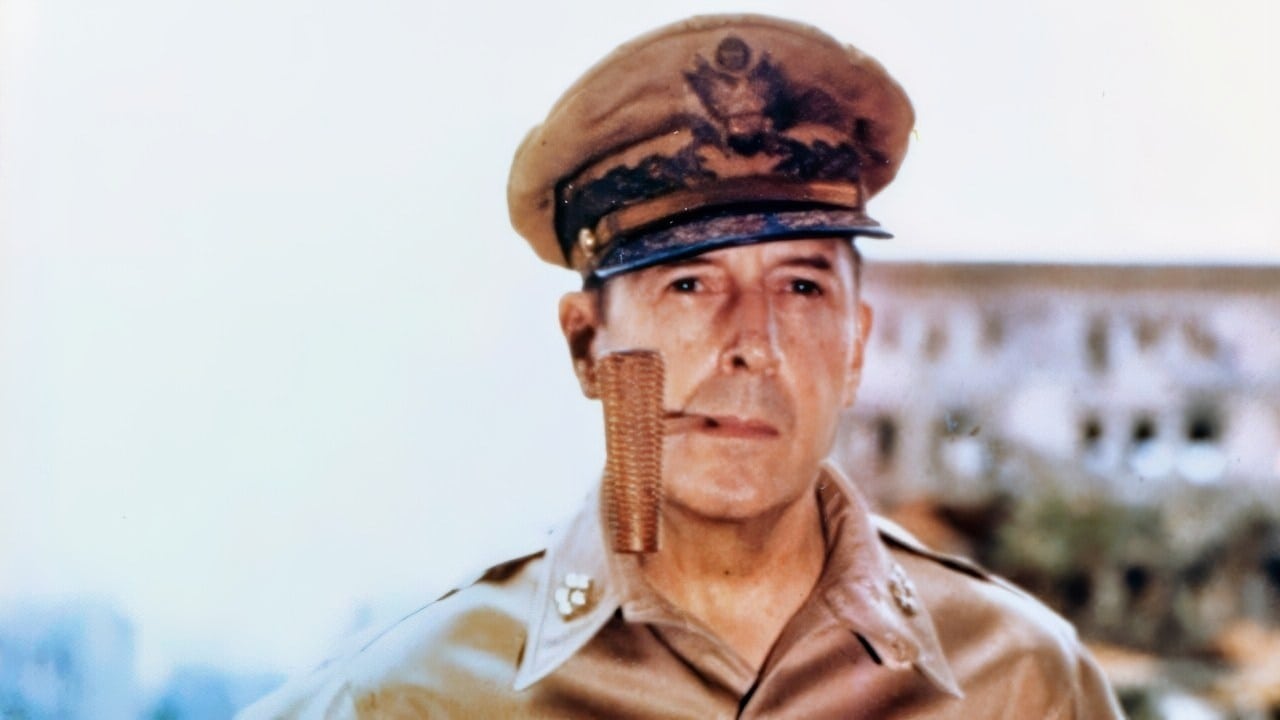
Synopsis: General Douglas MacArthur, a decorated commander in WWII and the Korean War, famously declared, “In war, there is no substitute for victory,” during his 1951 farewell address to Congress.
-This speech followed his controversial dismissal by President Truman due to irreconcilable strategic disagreements over expanding the Korean War into China.
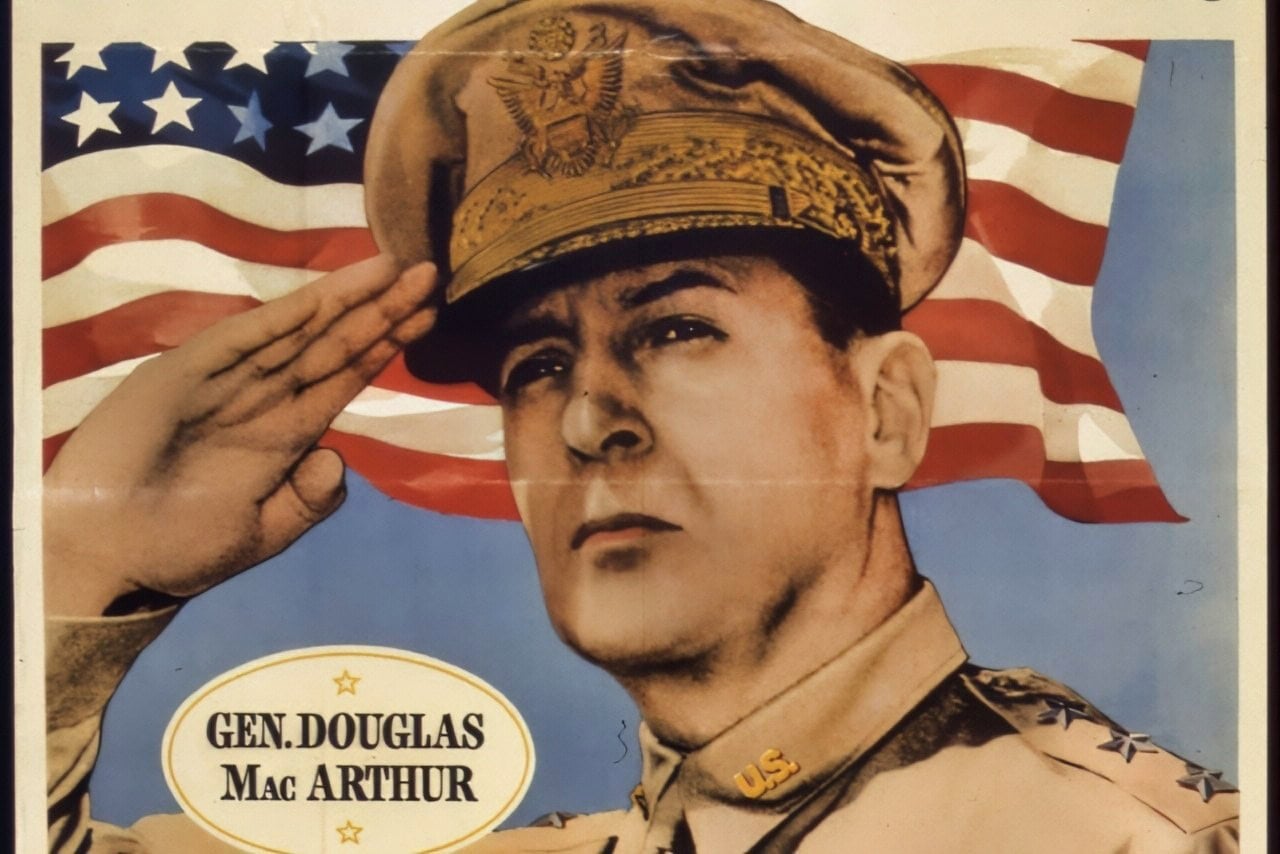
Douglas MacArthur. Image Credit: Creative Commons.
-While Truman sought a limited conflict and a ceasefire to save lives, MacArthur publicly advocated for total victory, leading to a clash of authority that ultimately ended his 52-year military career.
General Douglas MacArthur Explained in 1 Quote of the Day
“In war, there is no substitute for victory.” – U.S. Army General Douglas MacArthur
Gen. Douglas MacArthur was a top commander in both World War II and the Korean War. Per his official bio in the National Museum of the United States Army, MacArthur was awarded the Medal of Honor and 17 other medals, and “distinguished himself as a talented, brave, and able military commander.”
He was, the bio acknowledges, a “controversial figure.” And most of that has to do with his time in command in the Korean War.
MacArthur in Korea
Per the museum bio, MacArthur was appointed as commander-in-chief of United Nations forces in Korea by President Truman in June of 1950.
“MacArthur successfully counterattacked North Korean forces at Inchon and pushed the enemy back to the Yalu River, the North Korean border with China,” the bio said. However, China entered the war and pushed back the forces. MacArthur, after disagreeing with Truman, was relieved of his command in April 1951.

Gen. Douglas MacArthur wades ashore during initial landings at Leyte, Philippine Islands.
That month, MacArthur returned to the United States, marking the first time he had set foot on the U.S. mainland since 1937.
Why He Was Fired
The website of the Truman Presidential Library looked at the episode of MacArthur’s firing by the president in 1951.
“President Truman’s main concern was saving as many lives as possible, even if that meant signing a ceasefire along the 38th parallel. General MacArthur did not think a ceasefire was an appropriate solution. The two men clashed. For Truman, the war represented an opportunity to stop the spread of communism into South Korea. For MacArthur, the war was an opportunity to liberate the North from communist control, and aggressive action was required.”
But then, MacArthur moved north.
“MacArthur thwarted Truman’s attempt to negotiate a ceasefire when the general ordered his troops to invade North Korea and push the NKPA up past the 38th parallel. This was not the first time the general had ignored direct orders from his Commander in Chief. On April 11, 1951, President Truman officially relieved Douglas MacArthur of his command. Word of his firing spread quickly, and the American public found the news upsetting,” the Truman library said.
“Truman felt that his decision was just because MacArthur had overstepped his authority, defied direct orders from his superior, and interfered with Truman’s hope of ending the Korean War quickly.”
A Farewell Address
Soon after his return to the United States, MacArthur came to Washington to deliver an address to Congress on April 19, 1951, which included his famous quote.
“I stand on this rostrum with a sense of deep humility and great pride — humility in the wake of those great American architects of our history who have stood here before me; pride in the reflection that this forum of legislative debate represents human liberty in the purest form yet devised,” MacArthur told the Congress.
The address was delivered when the general was 71.
“I address you with neither rancor nor bitterness in the fading twilight of life, with but one purpose in mind: to serve my country. The issues are global and so interlocked that to consider the problems of one sector, oblivious to those of another, is but to court disaster for the whole. While Asia is commonly referred to as the Gateway to Europe, it is no less true that Europe is the Gateway to Asia, and the broad influence of the one cannot fail to have its impact upon the other,” MacArthur said.
The general went on to discuss what he called “the communist threat.”
“The Communist threat is a global one,” he said. “Its successful advance in one sector threatens the destruction of every other sector. You can not appease or otherwise surrender to communism in Asia without simultaneously undermining our efforts to halt its advance in Europe.”
MacArthur then turned to a discussion of Korea itself.
“I have from the beginning believed that the Chinese Communists’ support of the North Koreans was the dominant one. Their interests are, at present, parallel with those of the Soviet. But I believe that the aggressiveness recently displayed not only in Korea but also in Indo-China and Tibet and pointing potentially toward the South reflects predominantly the same lust for the expansion of power which has animated every would-be conqueror since the beginning of time.”
He went on to defend his actions on the battlefield and his disagreements with President Truman.
“For entertaining these views, all professionally designed to support our forces committed to Korea and bring hostilities to an end with the least possible delay and at a saving of countless American and allied lives, I have been severely criticized in lay circles, principally abroad, despite my understanding that from a military standpoint the above views have been fully shared in the past by practically every military leader concerned with the Korean campaign, including our own Joint Chiefs of Staff,” MacArthur added.
“I made clear that if not permitted to destroy the enemy built-up bases north of the Yalu, if not permitted to utilize the friendly Chinese Force of some 600,000 men on Formosa, if not permitted to blockade the China coast to prevent the Chinese Reds from getting succor from without, and if there were to be no hope of major reinforcements, the position of the command from the military standpoint forbade victory.”
He then quoted his own statements from after the Japanese surrender in 1945, and then delivered the most famous part of the address.
The Quote
“Once war is forced upon us, there is no other alternative than to apply every available means to bring it to a swift end,” MacArthur said. “War’s very object is victory, not prolonged indecision. In war, there is no substitute for victory.”
“I am closing my 52 years of military service. When I joined the Army, even before the turn of the century, it was the fulfillment of all of my boyish hopes and dreams. The world has turned over many times since I took the oath on the plain at West Point. The hopes and dreams have long since vanished, but I still remember the refrain of one of the most popular barrack ballads of that day, which proclaimed most proudly that “old soldiers never die; they just fade away,” he said at the speech’s end.
MacArthur went on to pass away in April 1964, at the age of 84.
About the Author: Douglas MacArthur
Stephen Silver is an award-winning journalist, essayist, and film critic, and contributor to the Philadelphia Inquirer, the Jewish Telegraphic Agency, Broad Street Review, and Splice Today. The co-founder of the Philadelphia Film Critics Circle, Stephen lives in suburban Philadelphia with his wife and two sons. For over a decade, Stephen has authored thousands of articles that focus on politics, national security, technology, and the economy. Follow him on X (formerly Twitter) at @StephenSilver, and subscribe to his Substack newsletter.