
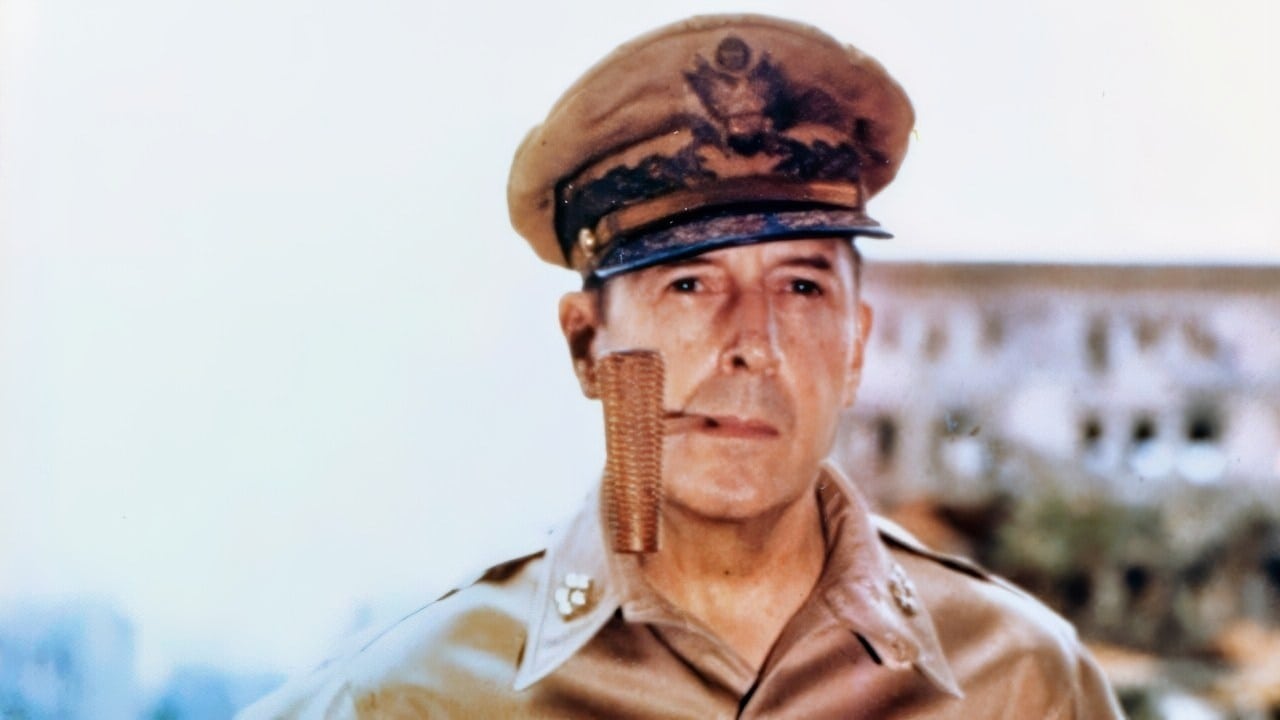
Synopsis: Douglas MacArthur’s career is a study in how command success depends on the people who execute it. Raised in an Army family, he excelled at West Point, fought in the Philippines and Veracruz, and became one of World War I’s most decorated American officers.
-In World War II he turned “I shall return” into a defining Pacific campaign, then oversaw Japan’s postwar occupation.
-Korea brought his boldest stroke at Inchon—and his most costly gamble as China entered the war, ending with President Truman’s dismissal. Admired and disputed in equal measure, MacArthur remains a symbol of ambition, brilliance, and risk.
MacArthur’s One Line on Leadership Explains His Whole Career
“A general is just as good or just as bad as the troops under his command make him.” That quote belongs to General of the Army Douglas MacArthur, though it’s nowhere near as famous as his saying, “Old soldiers never die; they just fade away.”
Douglas MacArthur is one of America’s most controversial generals of all time: he was revered by the American public for his smashing military victories, but he rankled his superiors with his imperiousness and insubordination. Indeed, the late great historian William Manchester chose “American Caesar” as the title of his bestselling 1978 biography.
Early Life
Douglas MacArthur was born (as the youngest of three kids) on January 26, 1880, at Little Rock Barracks in Arkansas, to U.S. Army Lt. Gen. Arthur MacArthur Jr., and Mary Pinkney (“Pinky”) Hardy MacArthur. Arthur Jr. was an American Civil War veteran and Medal of Honor recipient who earned that Medal for his actions as a mere 18-year-old Union Army officer at the Battle of Missionary Ridge. (Ironically enough, Pinky’s brothers fought for the Confederacy!)
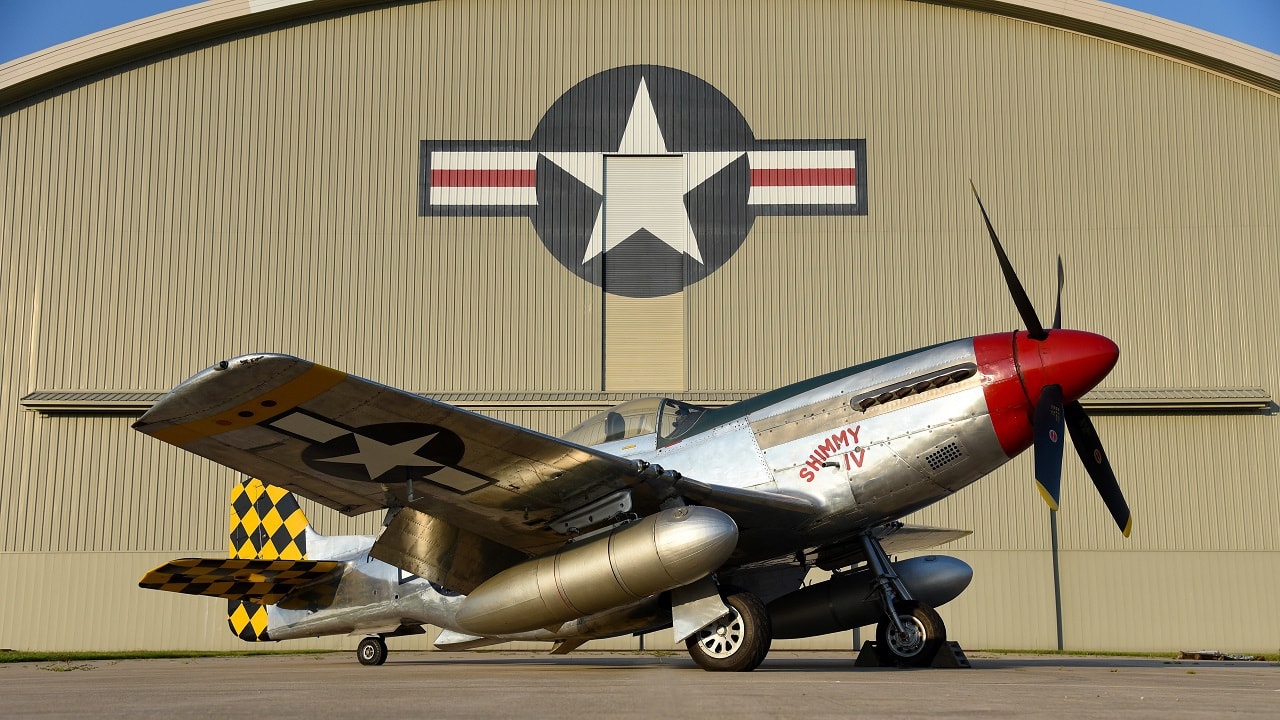
The Mustang was among the best and most well-known fighters used by the U.S. Army Air Forces during World War II. Possessing excellent range and maneuverability, the P-51 operated primarily as a long-range escort fighter and also as a ground attack fighter-bomber. The Mustang served in nearly every combat zone during WWII, and later fought in the Korean War.
Clearly, young Douglas had a strong martial tradition in his family. (Arthur Jr. and Douglas ended up sharing the distinction of having been the first father and son to each be awarded a Medal of Honor.) As he wrote in his memoir, “Reminiscences,” “I learned to ride and shoot even before I could read or write—indeed, almost before I could walk and talk.”
Douglas did his secondary schooling at the West Texas Military Academy, where he was class valedictorian. The United States Military Academy at West Point was a logical next step.
West Point
MacArthur received that West Point appointment from Congressman Theobald Otjen (R-WI), and he matriculated on June 13, 1899; among his classmates was Ulysses S. Grant III. He was First Captain of the Corps of Cadets in his senior year, played left field for the baseball team, and academically earned 2424.12 merits out of a possible 2470.00 or 98.14%, which was the third-highest score ever recorded.
He graduated first in his 93-man class on June 11, 1903, and was commissioned as a second lieutenant in the Corps of Engineers.
The Philippines and Veracruz
It didn’t take long for the newly minted 2LT MacArthur to be “blooded” in combat. He deployed to the Philippines in October 1903. The following month, while working on the island province of Guimaras, he was ambushed by a pair of Filipino brigands; he killed both.
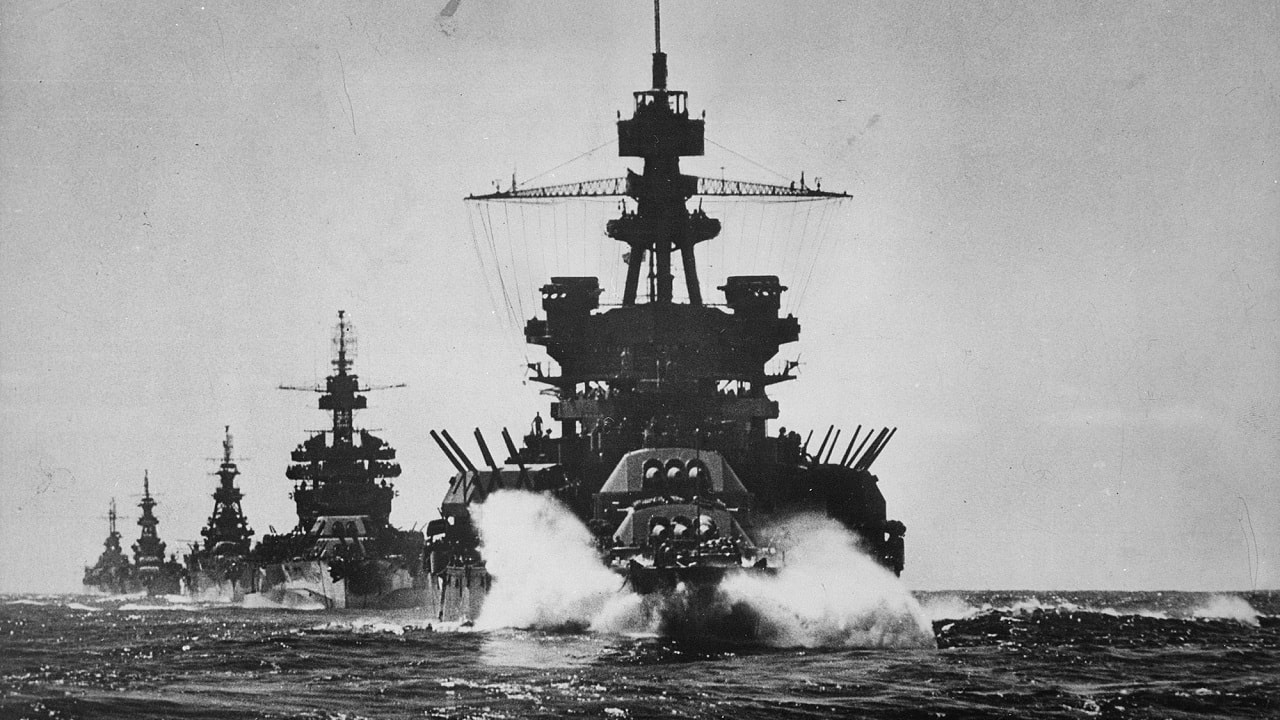
US Navy Battleships during World War II.
During the Siege of Veracruz in 1914, MacArthur again experienced the crucible of combat. On May 1, MacArthur and his party faced three separate attacks by insurgents totaling 23 assailants; miraculously, he took four bullets in his uniform that left his body unscathed, and in return, he personally shot seven of them.
World War I
During the “Great War,” MacArthur earned multiple accolades for his combat leadership:
-First member of the American Expeditionary Forces (AEF) to be awarded the Croix de Guerre
-Two Distinguished Service Crosses and seven Silver Stars
-Youngest general in the AEF, at age 38, upon being promoted to Brig. Gen. on June 26, 1918
-Only American general in World War I to be wounded while ranked as a general
Between the World Wars
MacArthur’s interwar years were fraught with strife:
–Superintendent of West Point from 1919 to 1922, a tenure described as “a tempestuous one.”
-Overseeing the controversial expulsion of the Bonus Army protestors in Washington, DC, in 1932
-Marrying his first wife, Louise Cromwell Brooks, in 1922 … only to divorce her seven years later
On a more positive note, he became the Army’s youngest major general at the age of 44 on January 17, 1925, and on April 30, he married his second wife, Jean Marie MacArthur (née Faircloth); that marriage lasted until Douglas’s death did them part in 1964, and they had one son, Arthur IV.
World War II
At the start of that war, he was back in the Philippines, this time as a lieutenant general and commander of U.S. Army Forces in the Far East (USAFFE), when the Imperial Japanese Army and Navy attacked. Four months later, FDR ordered MacArthur to evacuate to Australia, and the general reluctantly complied, whereupon he famously declared, “I shall return.” Fairly or unfairly, he was given the derisive nickname “Dugout Doug, but he was awarded the Medal of Honor and his fourth star, nonetheless.

Shinano Aircraft Carrier from Japan.
He came back with a vengeance, overseeing the island-hopping campaign that reclaimed Japanese-occupied territory bit by bloody bit, and on October 20, 1944, he made good on his promise: “People of the Philippines, I have returned!” He was awarded a fifth star and the rank of General of the Army on December 18, 1944.
At the war’s end, he was Supreme Commander for the Allied Powers (SCAP) in Japan, where he stripped Emperor Hirohito of his demigod status and also showed remarkable forbearance toward the defeated Japanese people.
The Korean War and Beyond
Gen. MacArthur’s Korean War tenure was one of extreme highs and lows: commanding the triumphant Inchon Landing, but then pushing past the Yalu River, drawing Red China into the war, and getting fired by President Harry S. Truman for insubordination on April 11, 1951. 11 years later, the “old soldier” delivered his immortal “Duty, Honor, Country” speech at West Point.
Douglas MacArthur died of primary biliary cholangitis at Walter Reed Army Medical Center on April 5, 1964, at the age of 84. He was laid to rest in the rotunda of the Norfolk City Hall in Virginia.
MacArthur’s Lasting Legacy
Among many other things, he’s been immortalized in cinema. The best example is the 1977 film “MacArthur” starring Oscar-winning actor Gregory Peck in the title role.
Speaking for myself, as someone born in the Philippines and with partial Filipino ancestry, this writer can attest that Filipino nationals and Filipino-Americans revere Gen. MacArthur to this day. My own mother (God rest her soul) was a 2-year-old girl living in the Philippines when the Imperial Japanese Army invaded, and thusly lived three years of her toddlerhood under brutal enemy military occupation; Mom had nothing but positive things to say about MacArthur. Meanwhile, one of my fellow Filipino-American U.S. Air Force Security Forces veterans paid this tribute in a text message one time: “MacArthur: the reason Filipinos speak English.”
About the Author: Christian D. Orr, Defense Expert
Christian D. Orr is a Senior Defense Editor. He is a former Air Force Security Forces officer, Federal law enforcement officer, and private military contractor (with assignments worked in Iraq, the United Arab Emirates, Kosovo, Japan, Germany, and the Pentagon). Chris holds a B.A. in International Relations from the University of Southern California (USC) and an M.A. in Intelligence Studies (concentration in Terrorism Studies) from American Military University (AMU). He is also the author of the newly published book “Five Decades of a Fabulous Firearm: Celebrating the 50th Anniversary of the Beretta 92 Pistol Series.”