
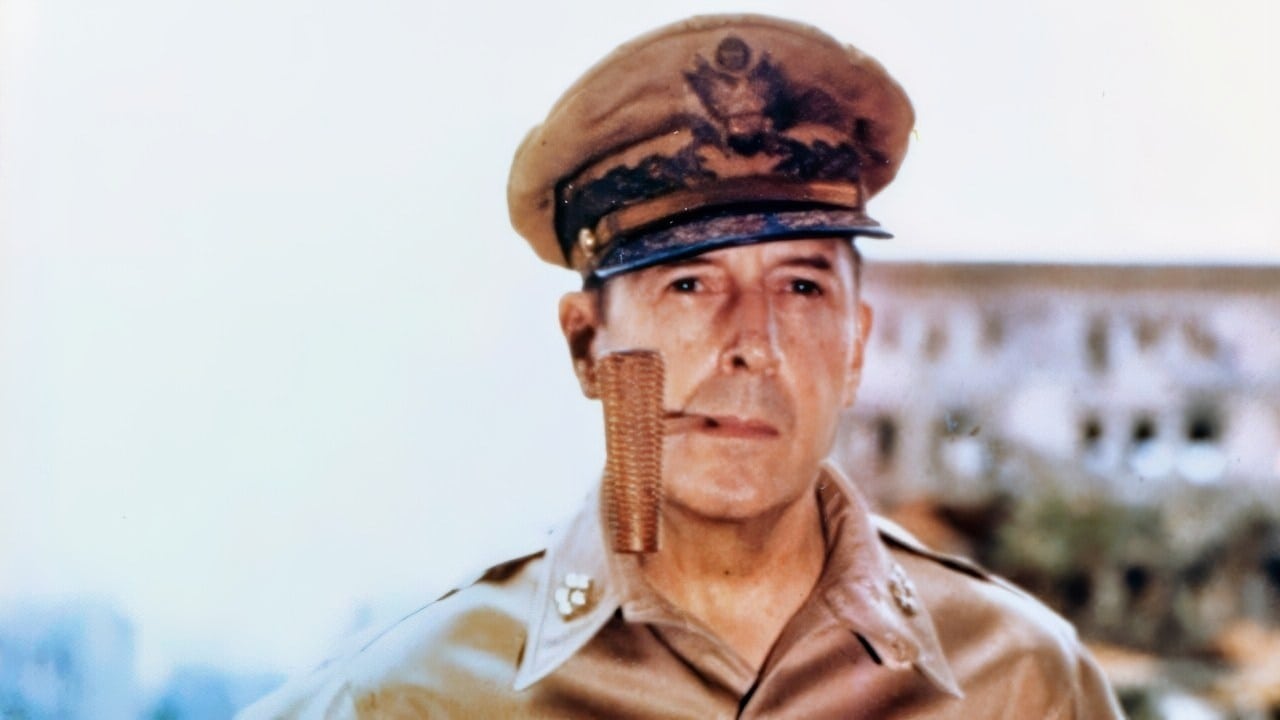
Key Points and Summary: Douglas MacArthur’s reputation as a war-winning icon was forged long before World War II. As a young officer, he saw early combat in the Philippines and later faced danger again during the Veracruz expedition, building a legend for personal courage.
-In World War I, his frontline leadership earned major decorations and accelerated promotion, making him one of the AEF’s youngest generals.
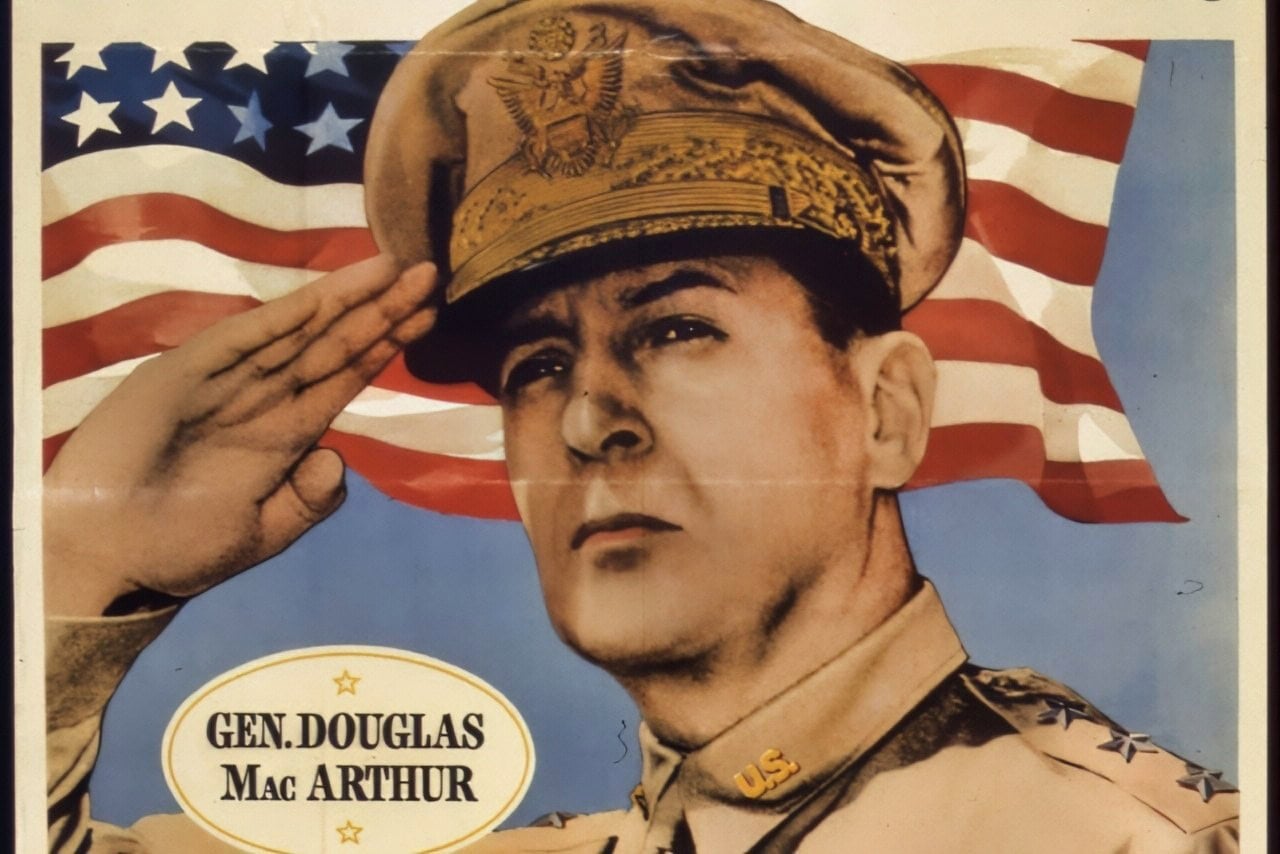
Douglas MacArthur. Image Credit: Creative Commons.
-Back at West Point as superintendent, he pushed reforms that sparked institutional friction.
-But the defining controversy of his pre-war career came in 1932, when MacArthur led the crackdown on the Bonus Army—an episode that shadowed his ascent even as his rank continued to climb.
MacArthur Has a Message: Never Enter a War Without the Will to Win
“It is fatal to enter any war without the will to win it.” That quote belongs to General of the Army Douglas MacArthur, one of America’s most admired yet controversial generals of all time.
Alas, MacArthur’s commander-in-chief at the time of the Korean War, President Harry S. Truman, failed to heed MacArthur’s words—Truman’s own ardent anticommunism notwithstanding—and ultimately fired the 5-star general for insubordination. Seventy-four years after that firing, the Korean War still hasn’t officially ended, as the long pregnant pause since then stems from an armistice, not an actual peace treaty.
Two decades later, MacArthur’s warning again rang true when America squandered a would-be victory in the Vietnam War.
Now we rewind to the years long before MacArthur’s humiliation; for good measure, we’re focusing on the period even before World War II made him a household name amongst Americans and Filipinos alike.
“Blooded” in Battle as a Young Lieutenant
Douglas MacArthur graduated first in his 93-man class at the United States Military Academy at West Point on June 11, 1903, and was commissioned as a second lieutenant in the Corps of Engineers.
From there, it didn’t take long for the newly minted, 23-year-old 2LT MacArthur to get his first taste of combat. (In a sense, he was following in the footsteps of his father, Arthur MacArthur, Jr., who earned the Medal of Honor and a brevet as a “Boy Colonel” during the American Civil War for his actions as a mere 18-year-old Union Army officer at the Battle of Missionary Ridge.)
Douglas deployed to the Philippines (where his father had been military governor from 1900-1901) in October 1903. The following month, while working on the island province of Guimaras, he was, in his own words, “‘ waylaid on a narrow jungle trail by two desperados, one on each side…Like all frontiersmen, I was an expert with a pistol. I dropped them both dead in their tracks, but not before one had blazed at me with an antiquated rifle.”
That Philippine tour was cut short by a bout with malaria. Among his follow-on assignments was a stint as an aide in the White House during the presidency of Theodore Roosevelt.
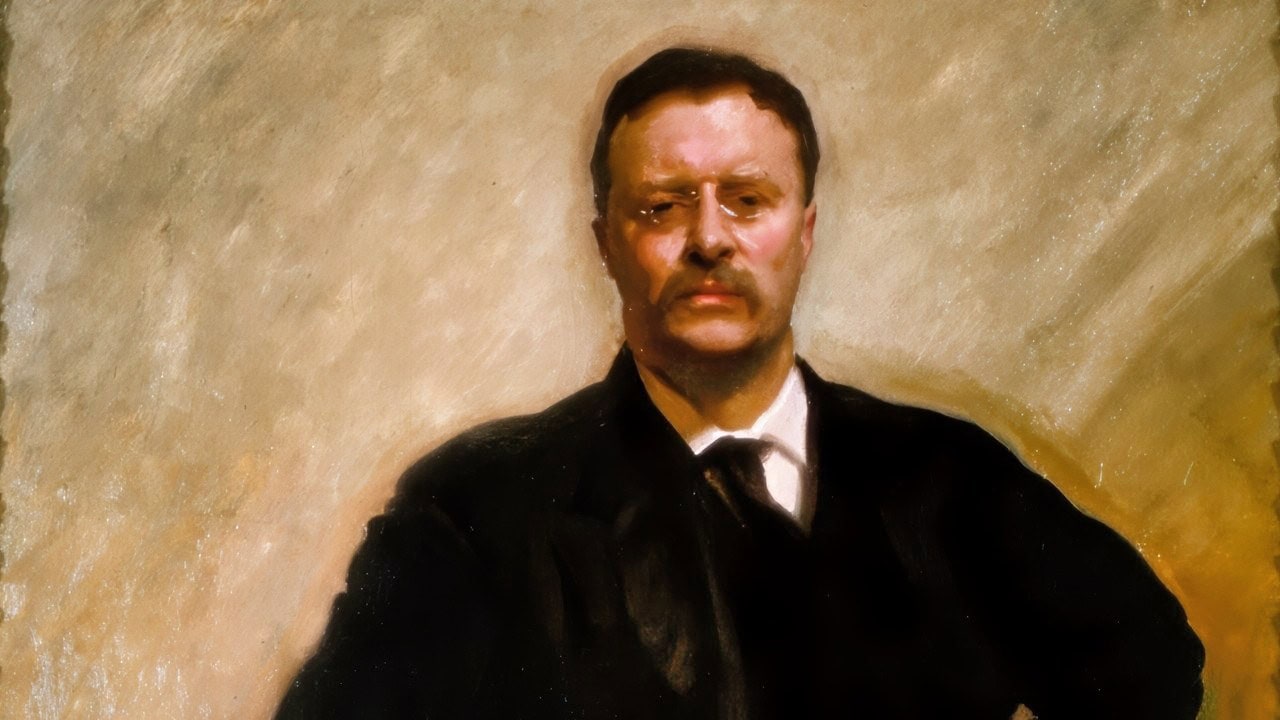
‘Speak softly and carry a big stick; you will go far.’ A Quote by Theodore Roosevelt.
Back In Battle: Veracruz
During President Woodrow Wilson’s Siege of Veracruz (a port city in Mexico) in 1914, now-CPT MacArthur again experienced the crucible of combat. On May 1, the 34-year-old captain ventured into enemy territory with several guides to find locomotives that the Army could use to transport troops and supplies into Mexico, where they were attacked by bandits several times. Armed with a mere .38 caliber revolver, MacArthur killed seven attackers (out of 23 total assailants, equating to a 30.4 percent kill rate), and escaped with only four bullet holes in his clothing that miraculously left him unwounded.
CPT MacArthur was nominated for the Medal of Honor for this action, but the award was denied. Nonetheless, he was promoted to major the following year and colonel two years after that (conveniently skipping the rank of lieutenant colonel). (MacArthur would eventually receive the MOH as a WWII general, thereby resulting in the first father & son pairing to be awarded the Medal.)
Though MacArthur would later be derided by some critics as “Dugout Doug” during WWII, his actions in 1903 and 1914 clearly demonstrated that he did not lack personal battlefield courage.
World War I
During the “Great War,” MacArthur earned multiple accolades for his combat leadership:
-First member of the American Expeditionary Forces (AEF) to be awarded France’s Croix de Guerre
-Two Distinguished Service Crosses and seven Silver Stars
-Youngest general in the AEF, at age 38, upon being promoted to brigadier general on June 26, 1918 (four months later, Lesley J. McNair and Pelham D. Glassford both topped that by being promoted to BG at age 35)
-Only American general in WWI to be wounded in action whilst actually holding a general officer’s rank (Army general Edward Sigerfoos and Marine general Albertus W. Catlin were still colonels and awaiting their promotions to brigadier general at the time they received their wounds)
Back to West Point
In 1919, BG MacArthur returned to his beloved alma mater, this time as Superintendent of West Point. He served in this position in 1922, but his tenure was described as “a tempestuous one.” As military historian Arthur Coumbe elaborates, “Many historians have framed it as MacArthur’s futile struggle against traditionalism and reaction, with MacArthur’s efforts at reform being thwarted by a resistant and backward-looking Academic Board. Others depict his changes as ahead of their time, that, although temporarily derailed by the board and a close-minded faculty, eventually triumphed in the decades ahead.”
Bonus Army Controversy
Unfortunately, it was during his time as MG that MacArthur had the most infamous and controversial moment of his pre-WWII career: the expulsion of the Bonus Army protestors in Washington, DC, in 1932.
In 1924, six years after the WWI victory, the U.S. government promised the former “doughboys” a bonus for their service… but not until 1945, which inspired the morbidly humorous “Tombstone Bonus.” However, by 1932, the Great Depression was still dragging on after three miserable years, with no end in sight. Out of sheer desperation, some veterans decided to march on Washington to demand the bonus right away and set up camps for good measure.
Long story short, MG commanded the crackdown on the Bonus Army, backed up by MG George Smith Patton, then-MAJ Dwight David Eisenhower, cavalry troops, and Renault tanks. Fifty-five of the Bonus Army protestors were injured, and two of them were fatally shot in clashes with the Metropolitan Police Department of Washington, DC.
The crackdown was a huge public relations nightmare, to say the least. However, that didn’t prevent MacArthur from becoming the Army’s youngest major general at the age of 44 on January 17, 1925. On July 27, 1941, he was promoted to lieutenant general, a rank he held when America entered WWII five months later.
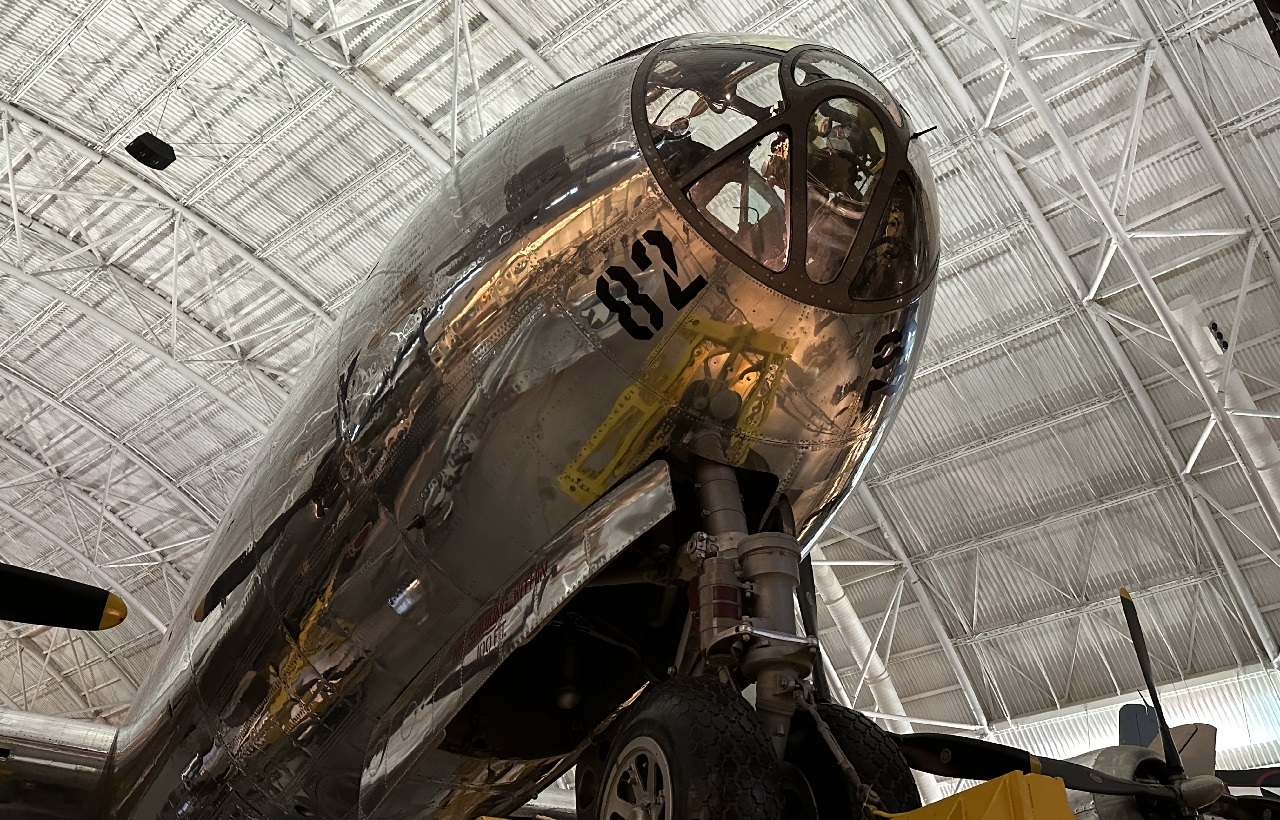
Enola Gay B-29. Image was taken on October 1, 2022. Image Credit: 19FortyFive.com
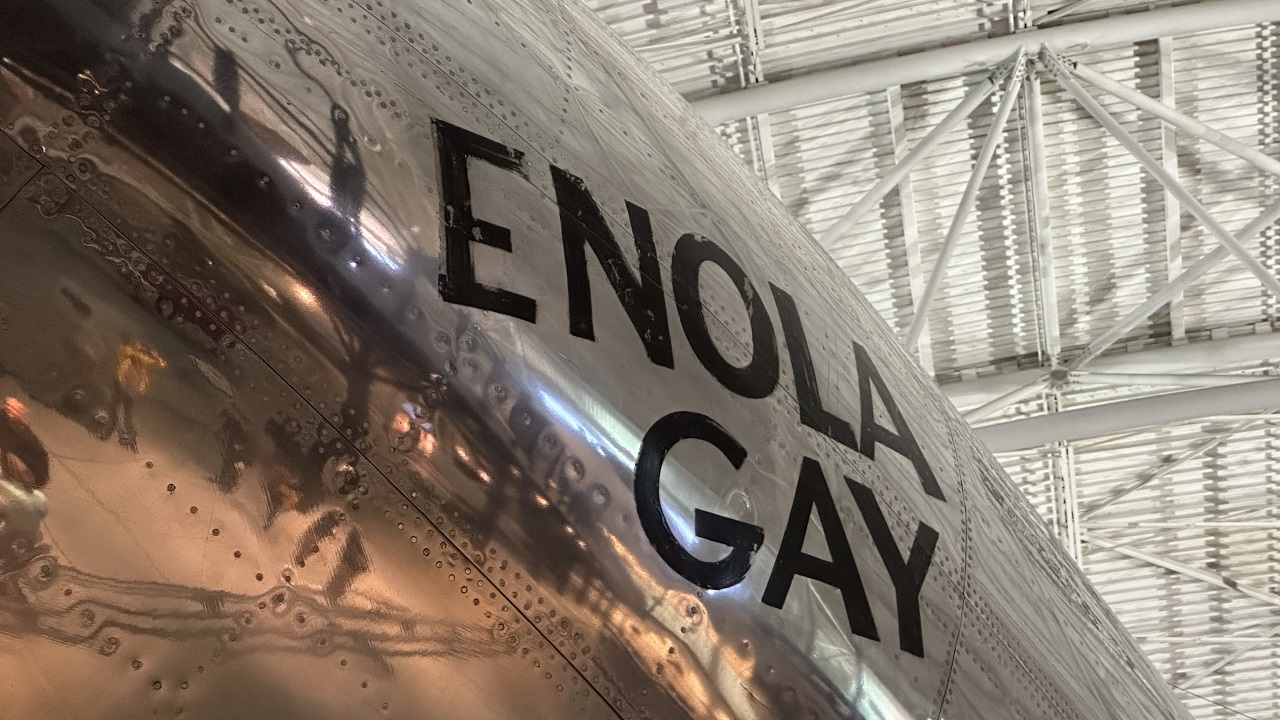
Enola Gay B-29. Image was taken on October 1, 2022. Image Credit: 19FortyFive.com
About the Author: Christian D. Orr, Defense Expert
Christian D. Orr is a Senior Defense Editor. He is a former Air Force Security Forces officer, Federal law enforcement officer, and private military contractor (with assignments worked in Iraq, the United Arab Emirates, Kosovo, Japan, Germany, and the Pentagon). Chris holds a B.A. in International Relations from the University of Southern California (USC) and an M.A. in Intelligence Studies (concentration in Terrorism Studies) from American Military University (AMU). He is also the author of the newly published book Five Decades of a Fabulous Firearm: Celebrating the 50th Anniversary of the Beretta 92 Pistol Series.