
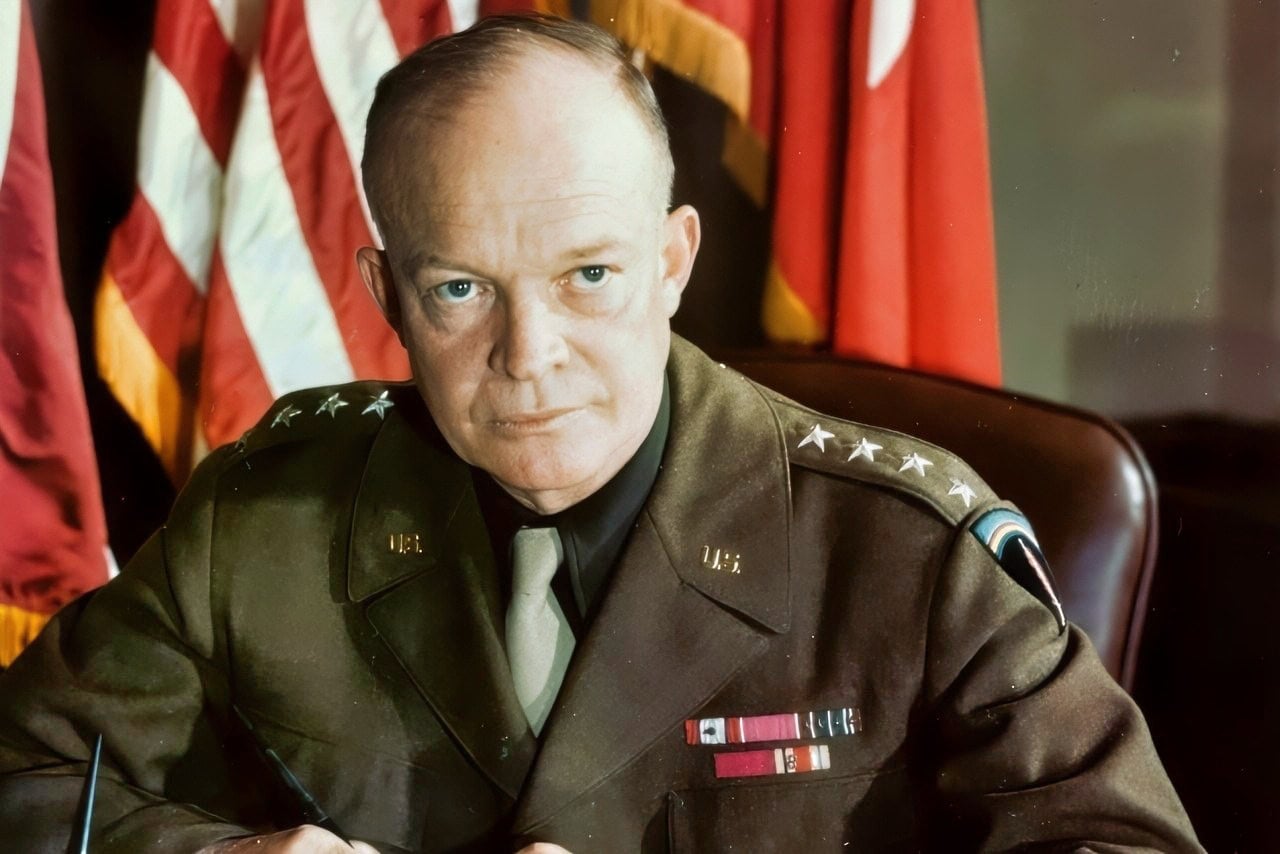
Eisenhower’s 1 Leadership Quote That Still Explains How Power Really Works
General Eisenhower Quote: “Leadership Is The Art Of Getting Someone Else To Do Something You Want Done Because He Wants To Do It.”
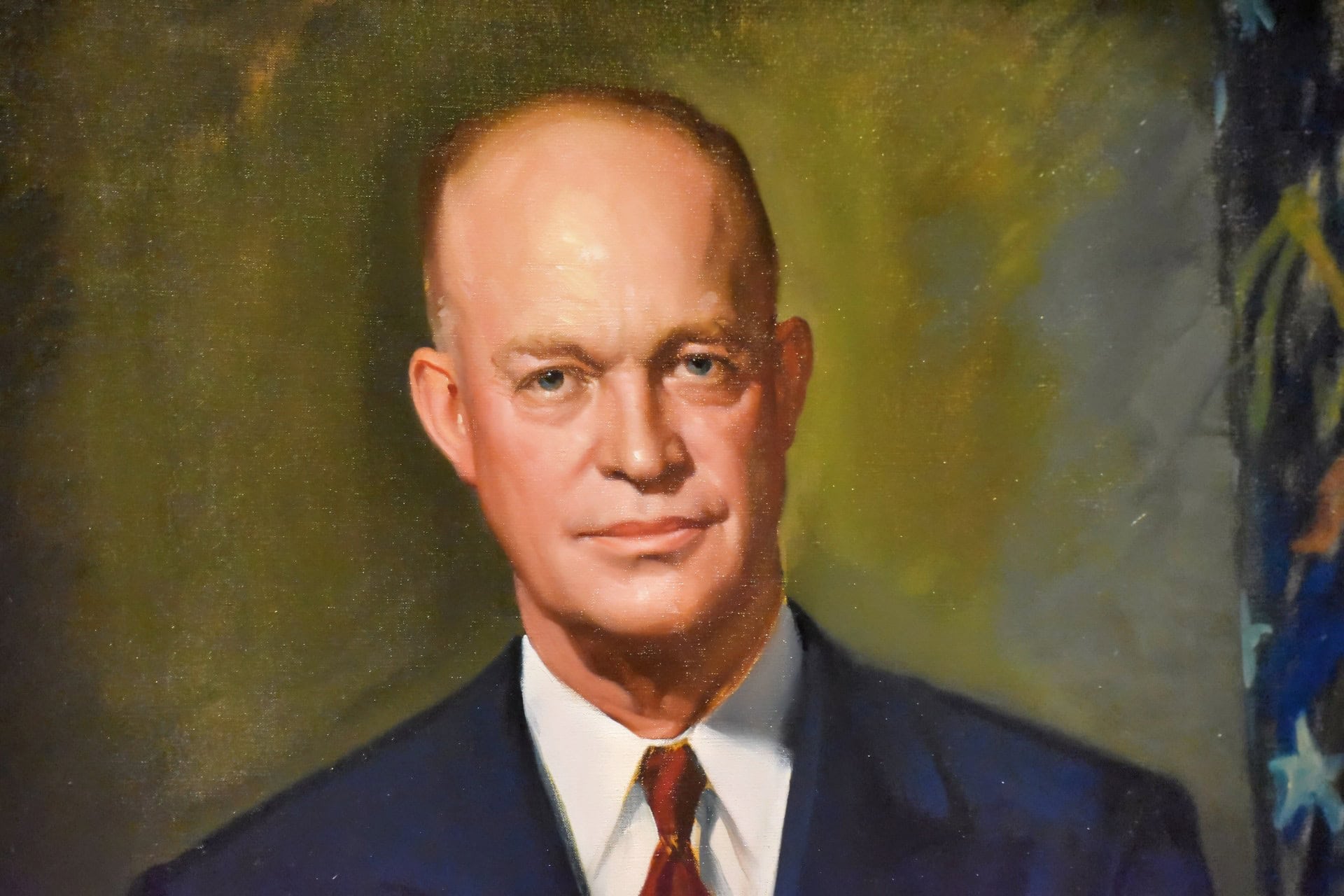
Dwight D. Eisenhower 19FortyFive.com Image. Taken on 1/23/2026 at the National Portrait Gallery in Washington, DC By Dr. Brent M. Eastwood.
The famous definition of leadership is a quote by US President and General Dwight D. Eisenhower that emphasizes influencing behavior through inspiration, motivation, and persuasion rather than coercion.
It focuses on fostering others’ internal desire to achieve a common goal, turning a leader’s objectives into a shared purpose.
Leadership Is An Art
Eisenhower is spot on that leadership, true leadership, is an art. Leadership is considered an art because it requires intuition, creativity, and subjective, nuanced application rather than a rigid formula. It involves creating a vision to inspire others, fostering emotional connections, and adapting to unique, ever-changing human contexts.
Unlike a technical skill, leadership relies on understanding and recognizing human emotions, building trust, and motivating individuals. There is no one-size-fits-all formula. Every situation is different, and different methods are necessary to reach every individual.
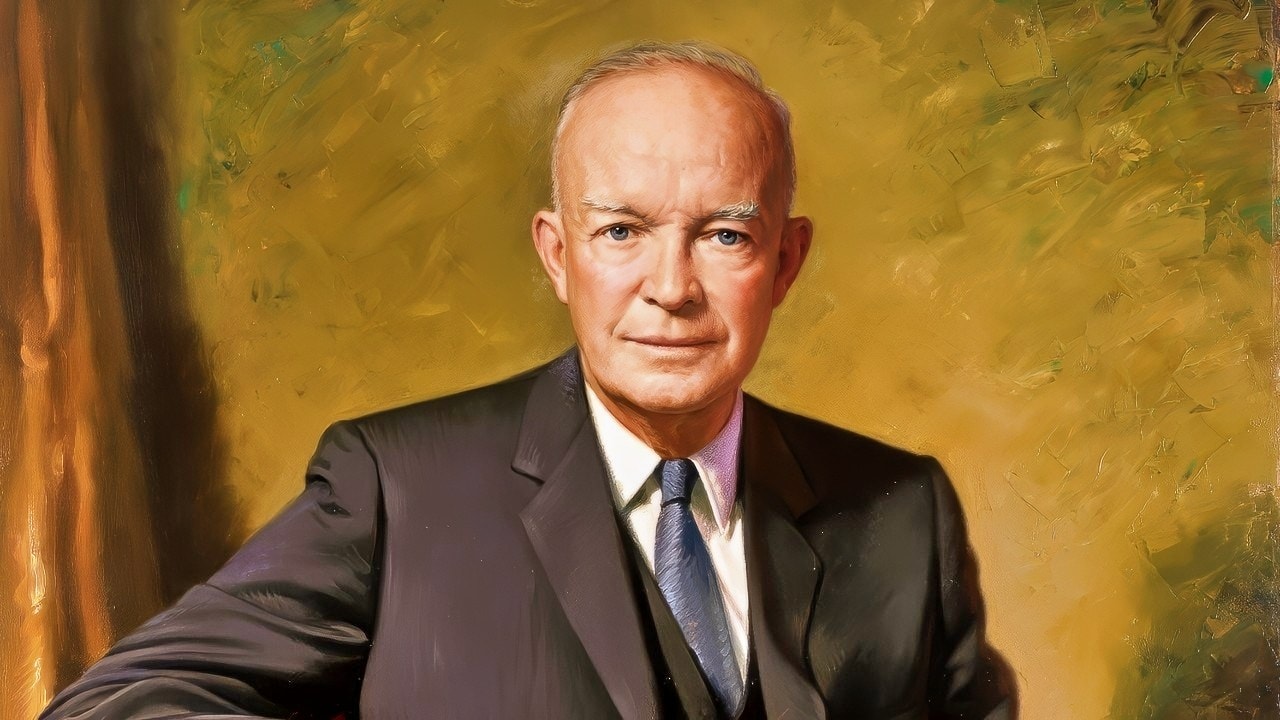
Former General Dwight D. Eisenhower. Image Credit: Creative Commons.
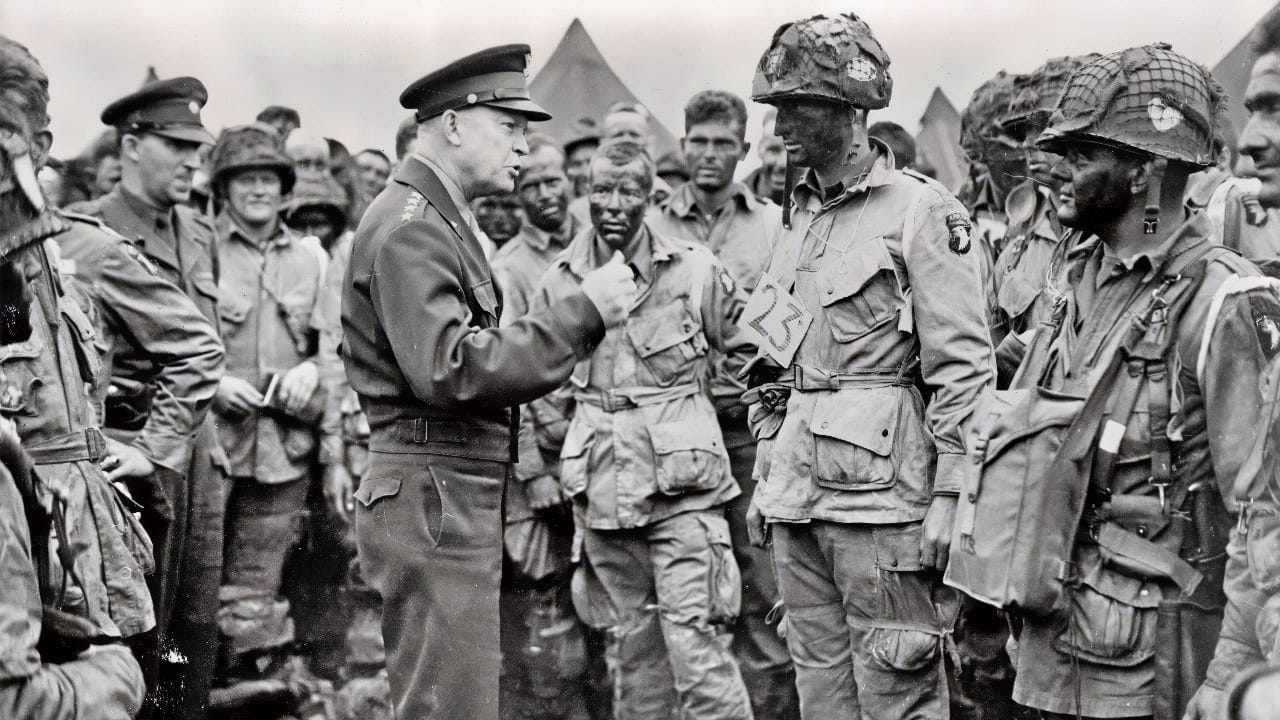
Dwight D. Eisenhower D-Day 1944. Image Credit: Creative Commons.
This is especially true in Special Forces operations, where missions are often unique and require creative, unorthodox problem-solving rather than relying on standard operating procedures.
It involved a combination known as the “3 C’s” (competence, commitment, and character). It is about fostering trust, mentorship, and empowerment rather than merely issuing commands. Therefore, leadership is the ability to inspire, innovate, and maintain human connection in the most challenging conditions imaginable.
Key Factors of Eisenhower’s Philosophy
Eisenhower’s philosophy centered on volition over compulsion: True leadership inspires action because followers want to do it, not because they are forced by power or position.
Effective leaders provide rationale, foster autonomy, and offer choices in how tasks are accomplished, allowing individuals to feel empowered rather than managed. Eisenhower commanded loyalty among his troops because they believed that he cared for them.
Motivation and a calm vision are musts. A leader must passionately communicate a compelling vision, making people feel their work has deep-rooted value and is part of something important.
Eisenhower was a great believer in the Power of Persuasion.
“A trait always noticeable in a successful leader is his ability to persuade others. There are times, of course, when every leader must make a decision and see it carried out, regardless of what others may think. But whenever men can be persuaded rather than ordered – when they can be made to feel that they have participated in developing the plan – they approach their tasks with understanding and enthusiasm.”
Why Was General/President Eisenhower Such A Succesful Leader?
General and later President Eisenhower’s success as a leader stemmed from his ability to foster unity, maintain peace and prosperity, and apply strategic, calm decision-making rooted in his military background.
As president (1953–1961), he prioritized economic growth, initiated the Interstate Highway System, and effectively managed Cold War tensions.
Supreme Allied Commander Was A Tough Balancing Act
Ike, as he was popularly known amongst his peers, believed in “Waging Peace” & Diplomacy. He had exceptional coalition management, strategic acumen, and the ability to foster unity among difficult personalities.
Balancing the competing egos of leaders like Churchill, De Gaulle, Patton, and Montgomery, prioritizing a unified Allied strategy over national interests to ensure victory in Europe required a calm, deft approach.
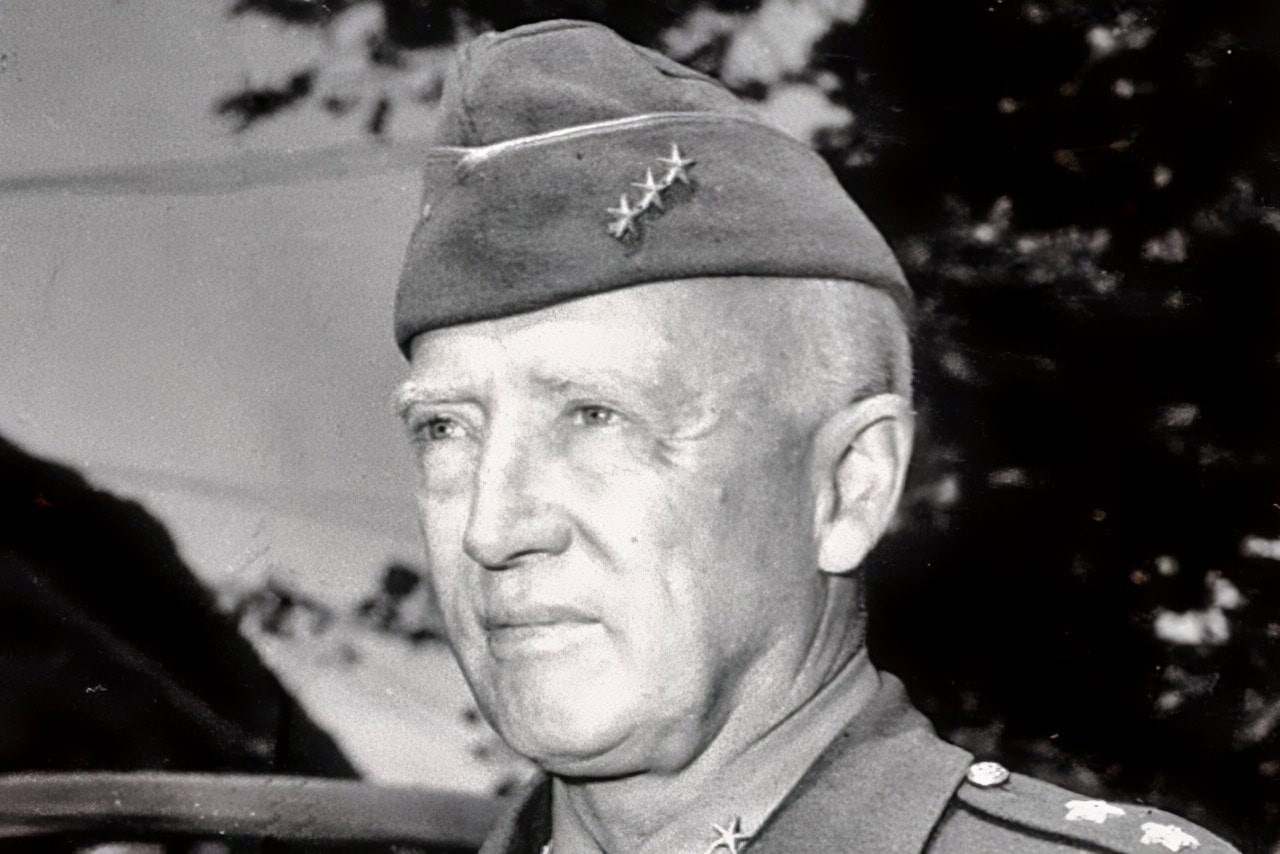
George S. Patton Quote of the Day. Creative Commons Image.
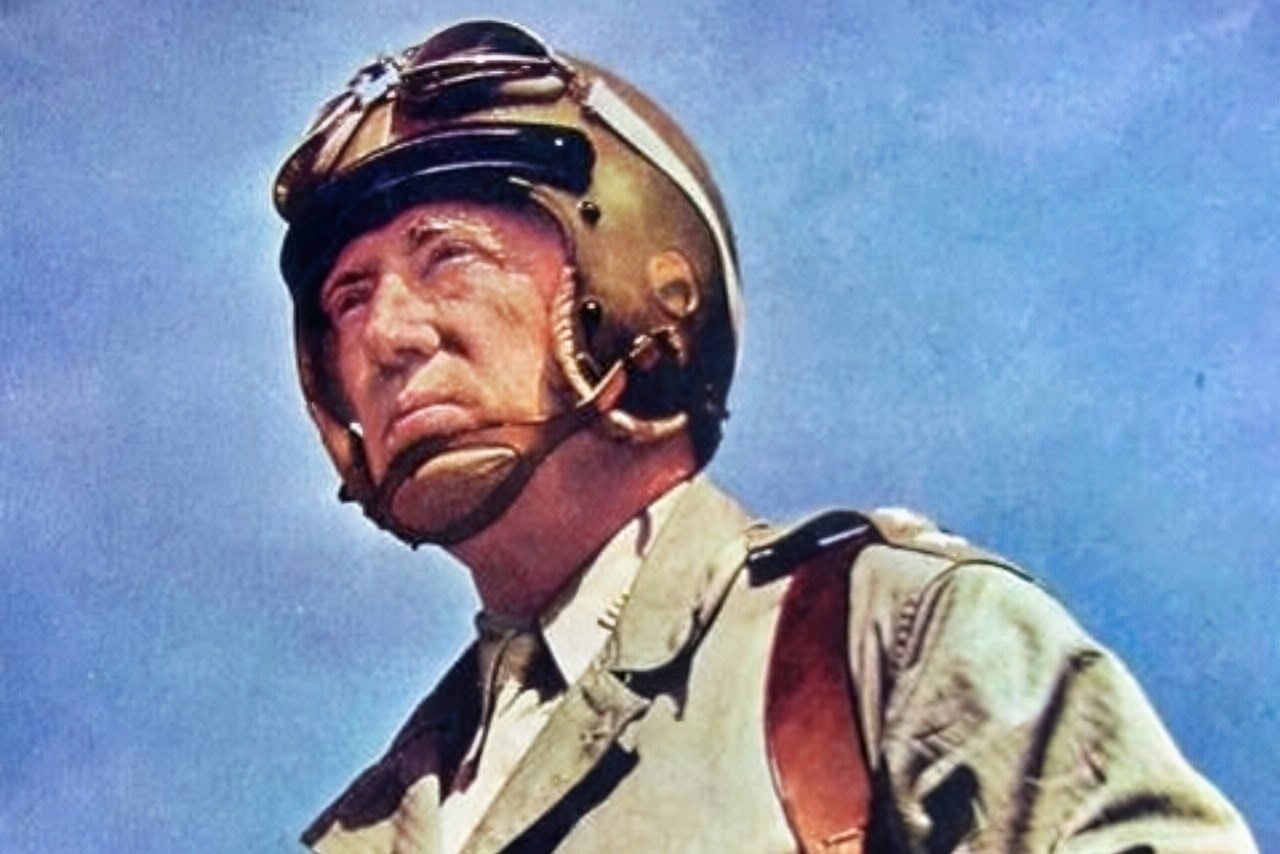
General George Patton of the U.S. Army. Image Credit: Creative Commons.
Ike managed a delicate alliance, building mutual respect among diverse commanders and fostering a “team-first” mentality. He understood that a successful leader shares the successes and failures of an organization. He prepared a letter in case the Normandy landings on D-Day failed, placing all responsibility on his shoulders.
Eisenhower was a highly competent planner who understood the big picture of the war, despite having no direct combat experience himself, and focused on the ultimate goal of liberating Europe rather than individual glory. Known for being calm and moderate, he avoided partisan politics and focused on long-term stability rather than short-term glory.
As a former Supreme Allied Commander, Eisenhower brought immense diplomatic skill to the presidency, ending the Korean War and avoiding direct military conflict, earning him the title “Champion of Peace”.
He used a highly structured, team-oriented approach, surrounding himself with diverse advisors to analyze complex issues, which he honed as a general.
Eisenhower’s policies jump-started a period of economic prosperity and infrastructure. He oversaw a period of significant economic growth and launched the Interstate Highway System, which stimulated the economy.
He was known for his integrity, honesty, and willingness to take personal responsibility for decisions, even when they were unpopular. Eisenhower espoused leadership skills that were proven both as a General and as the President of the United States.
About the Author: Steve Balestrieri
Steve Balestrieri is a National Security Columnist. He served as a US Army Special Forces NCO and Warrant Officer. In addition to writing on defense, he covers the NFL for PatsFans.com and is a member of the Pro Football Writers of America (PFWA). His work was regularly featured in many military publications.