Summary and Key Points: Greek and Israeli naval forces held live-fire exercises north of Crete on October 21, in waters Turkey claims, and sank the retired Hellenic Navy frigate HS Bouboulina. Greek Machitis-class gunboats and Mark V craft fired the Hellenic Navy’s new Israeli Spike NLOS and ER missiles in a simulated swarm attack, and a Type 214 submarine finished her with a German-made SUT-264 torpedo. The exercise followed Turkey’s SeaWolf-I show of force in September.
Greek And Israeli Navies Hold Joint Live-Fire Exercises Amid Increasing Tensions With Turkey

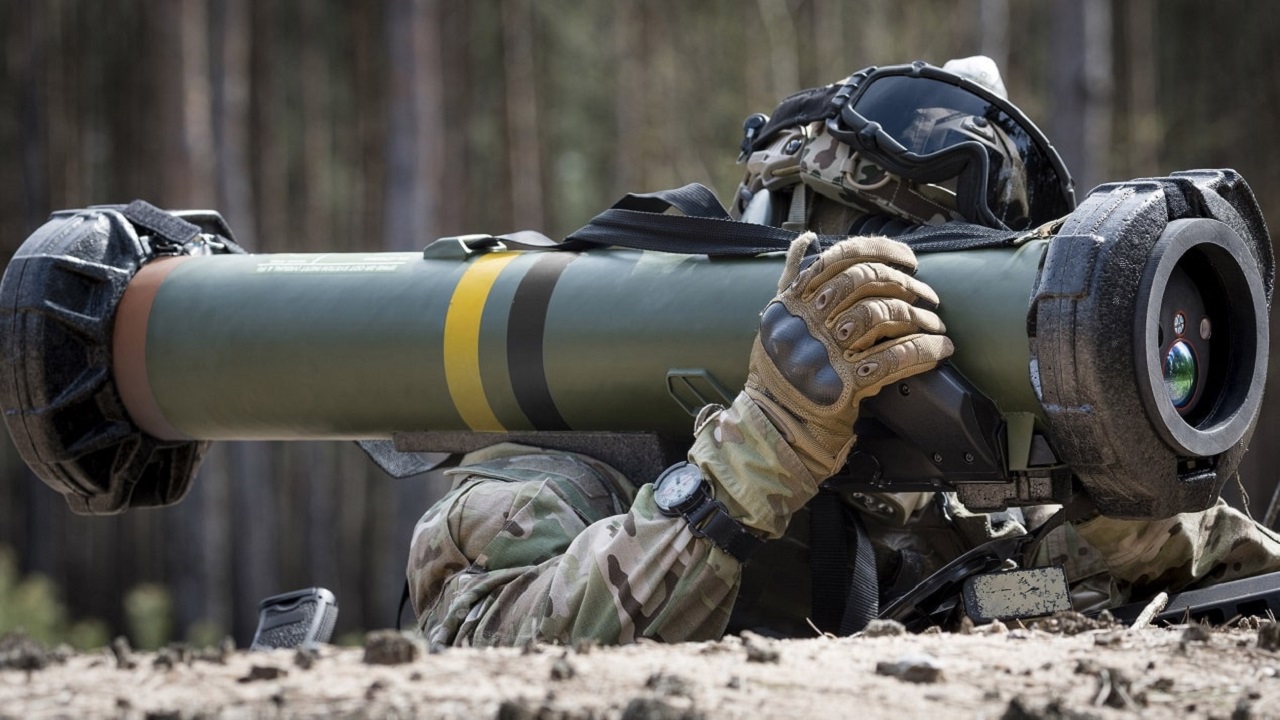
SPIKE Missile.

SPIKE anti-tank missile. Image Credit – Creative Commons.
Naval forces from Greece and Israel held joint live-fire exercises in waters north of the island of Crete on October 21st to show cooperation amid Turkey’s sovereignty claims over the area.
Turkey has long claimed that its continental shelf extends far south of Crete, rejecting Greece’s counterclaims that these waters belong to it.
A recent act by the Eastern Libyan parliament set sea boundary lines that backed Turkish claims, drawing condemnation from Greece and the EU.
This dispute centers on seabed energy exploration rights, fishing, and maritime jurisdiction between Greece and Turkey.
Both are ostensible allies under the NATO treaty, while Greece is an EU member and Turkey is not, with its EU application in limbo since 2005.
This exercise comes amid increasing tensions between Greece and Turkey over energy exploration rights in the region and Turkey and Israel at odds over Ankara’s support for Hamas in the Gaza conflict.
The Spike Missile is French-designed but built by Israel Under A Licensing Agreement
The combined exercises demonstrated a new weapon system and the cooperative integration between Greek and Israeli naval forces in the region.
The Hellenic Navy conducted its first live-fire exercise with the Spike missile system it recently purchased from Israel.
The Spike NLOS and Spike ER are designs by Rafael Advanced Defense Systems built under license by Israel.
Spike features a launch system design that can be fitted to helicopters, vehicles, and surface vessels.
Spike is a precision-guided munition using an electro-optical/infrared targeting system to strike targets 10-32 km away and beyond line of sight.
Warhead size varies from 8 to 18 lbs.
The exercise’s main target was the retired Hellenic Navy Frigate HS Bouboulina (F463).
To sink her, the Greeks deployed frigates, submarines, fast-attack craft, and naval helicopters.
The Greek Air Force was also present, demonstrating its in-flight refueling capability and interoperability with an Israeli Air Force tanker.
Israel sent two of its fast-attack craft.
While the Spike missile does not carry a warhead large enough to sink a frigate-sized target outright, it can, when fired in salvoes, precisely hit ship systems to disable them in a “mission kill” on larger ships.
The frigate used for this exercise had various target locations painted on it to demonstrate the Spike’s precision.
Greek Machitis-class gunboats and Mark V Special Operations Craft fired Spike missiles and repeatedly hit the frigate.
The gunboats fired the longer-range Spike Non-Line-Of-Sight type, while the smaller Mark Vs fired the shorter-range Spike ER2 in a simulated swarm attack of smaller craft on a large surface target.
The Target Frigate Was Sunk By A Submarine Using a German Torpedo
The exercise culminated in a Type 214 Papanikolis-class submarine sinking the target frigate using a SUT-type torpedo manufactured in Germany.
The Hellenic Navy operates four of these advanced diesel submarines, first launched in the late 2000s.
The sub uses an air-independent propulsion system, displaces 1,560 tons, and has a crew of 5 officers and 22 enlisted men.
It is a coastal patrol submarine capable of 84 days at sea.
The Papanikolis-class has 8 forward torpedo tubes, 4 of them modified to employ Sea-Harpoon anti-ship missiles.
The torpedoes are the German-made Atlas Elektronik SUT-264. A heavyweight dual-purpose weapon using active and passive homing to target both surface ships and other submarines.
Its 551 lb. warhead carries 99 lbs. less explosive weight than the 650 lb. warhead of the Mk-48 torpedo used by the US Navy.
While Greece and Israel did not name Turkey as the adversary in this exercise, Ankara reacted as if it were, given the exercise’s timing near the signing of the Libya-Turkey memorandum of understanding on the waters around Crete.
In this exercise, Greece and Israel demonstrated that they maintained a united front and continued presence in these waters of the Eastern Mediterranean.
Turkey, Greece And Israel Are In Conflict Over A Variety of Issues
Previous displays of cooperation between Greece, Israel and Cyprus have elicited strong reactions from Turkey.
In August, the Turkish Defense Minister informed their parliament that Turkey was making crisis plans for the outbreak of war in the region over these waters.
In September, Turkey conducted a large-scale exercise called SeaWolf-I as a show of force spanning the Black Sea, Aegean Sea, and Mediterranean with hundreds of ships and aircraft.
The Greeks and Israelis concluded the exercise was intended as a message to them.
The reply seems to have been this joint Greek/Israeli exercise in October.
For Israel’s part, tensions exist between Turkish President Recep Erdogan and Israeli leaders over regional conflicts and Hamas.
President Erdogan has been open in his support of Hamas as “freedom fighters” and “mujahideen” fighting for their homeland.
Erdogan has refused to align with the US or NATO in their designation of Hamas as a terrorist organization, and has hosted Hamas representatives, including a Hamas office in Turkey.
This has led to an end of bilateral trade between Turkey and Israel and the recall of ambassadors.
The Israeli response has been to align with Greece, creating an Athens/Jerusalem axis that both sides agree stands as a counterbalance to Turkish naval expansion aims in the region.
About the Author: Sean Spoonts
Sean Spoonts is the former Editor-In-Chief of SOFREP.com. He is a military analyst, writer, and commentator whose work has appeared in Newsweek, CNS News, Ukrinform, and various military/veteran media networks and professional publications, including the Military Intelligence Professional Bulletin. He is a U.S. Navy veteran, having served as an Aviation Anti-Submarine Warfare Operator and Search and Rescue Helicopter Aircrewman.