
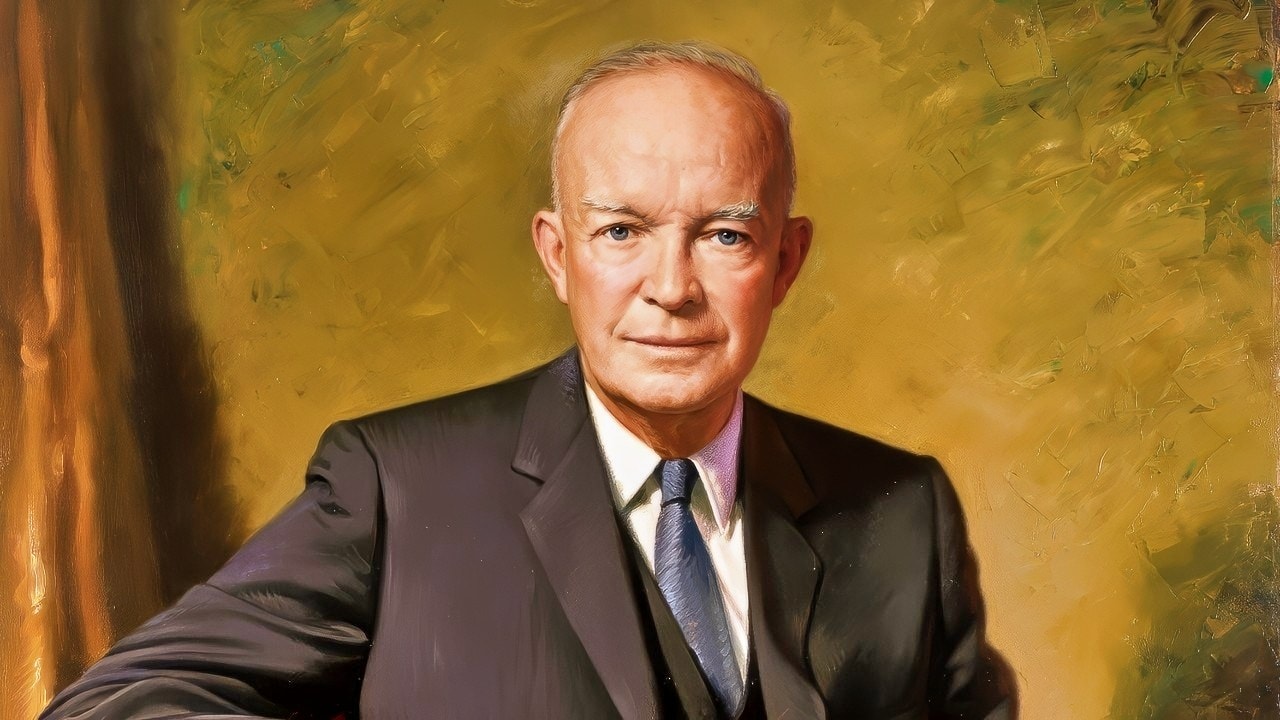
Quote of the Day: Eisenhower’s Warning About War “Mistakes” Still Hits Hard
“Nothing is easy in war. Mistakes are always paid for in casualties and troops are quick to sense any blunder made by their commanders.” – Dwight D. Eisenhower
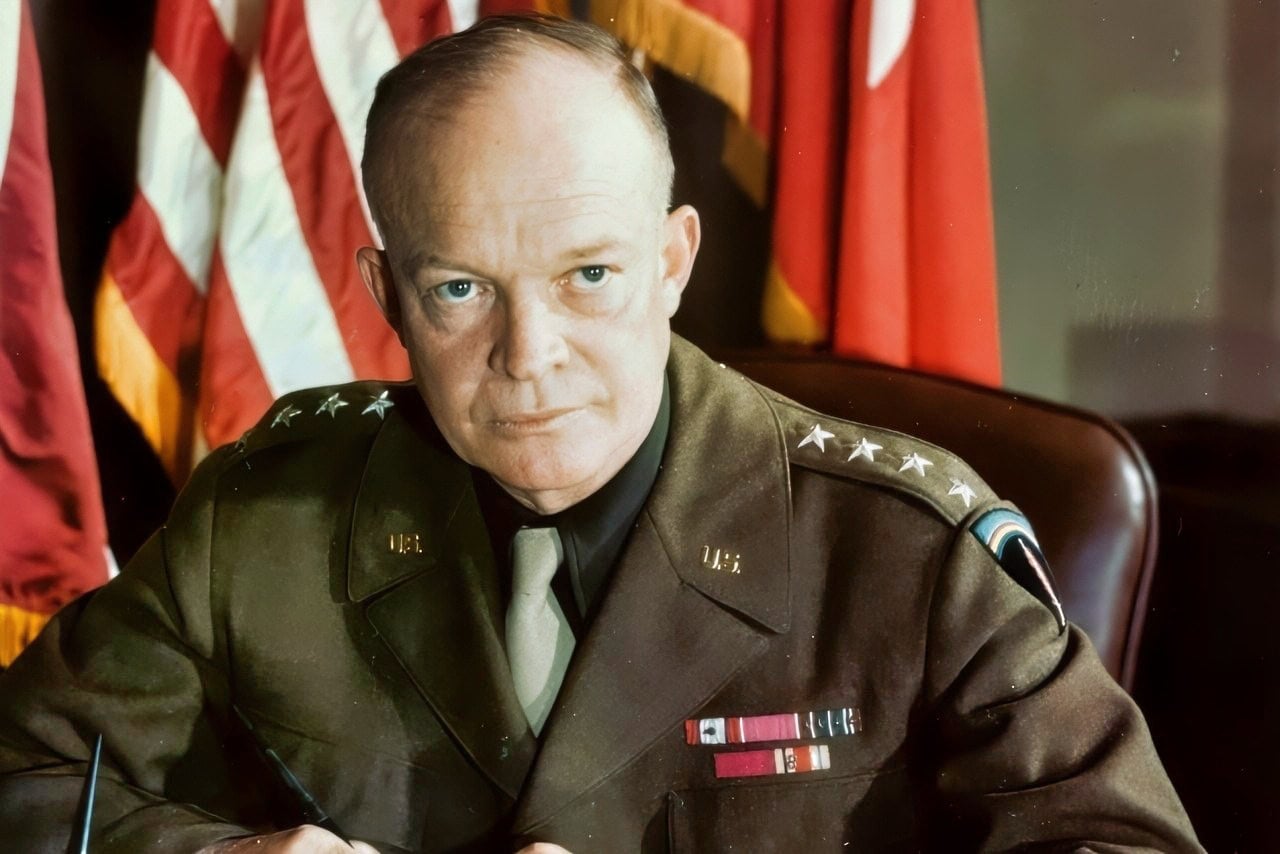
Dwight D. Eisenhower. Image Credit: Creative Commons.
That quote belongs to U.S. Army General Dwight David “Ike” Eisenhower. He wrote it in his memoir Crusade in Europe, which was published in 1948—four years before Eisenhower was elected President of the United States.
The quote probably explains at least in part why Ike was initially reluctant to run for the presidency. As a uniformed military officer, he had already been responsible for many of those casualties and blunders. As commander-in-chief of all U.S. Armed Forces, he would be burdened with even greater responsibility.
Yet, just like another fellow Army general turned president—Ulysses S. Grant—Eisenhower overcame his reluctance and successfully ran for the highest office in the land, not once, but twice.
General Eisenhower’s Immediate Post-WWII Years
Ike began World War II as a Brigadier General on the General Staff in Washington, D.C. As depicted in the 1979 TV miniseries Ike: The War Years, it appeared at first that his career would languish in relative obscurity.
However, he ended the war as Supreme Commander of the Allied Expeditionary Force in Europe, with the five-star rank of General of the Army, overseeing the D-Day invasion and the eventual defeat of Nazi Germany along the way. After the war ended, Eisenhower served as Army Chief of Staff (1945–1948) and as NATO’s first Supreme Allied Commander Europe (1951–1952).
Overcoming Reluctance: Candidate Ike
During the same year Ike wrote that memoir, public opinion polls were already citing him as the American people’s first choice for president of the United States.
Even mindful of this, then-President Harry S. Truman offered to run as his vice-president on an Eisenhower-Truman Democratic ticket. Ike refused, and Truman instead was re-elected to the office he had assumed when Franklin D. Roosevelt died. In both the summer 1949 and the fall of 1950, New York Governor Thomas Dewey approached Ike about running for president on the Republican ticket. Once again, Eisenhower insisted he was not interested.
However, Ike’s rebuffs couldn’t stave off a grassroots recruitment campaign under the umbrella of “Citizens for Eisenhower.” This grassroots movement was bipartisan in nature, as it included groups like “Democrats for Eisenhower” and “Democrats Anonymous for Ike.”
As noted by Kim Barbieri of the Eisenhower Foundation, “On his 61st birthday, October 14, 1951, he finally wrote a confidential letter to his closest supporters.
In it, he stated reluctantly that, if there were a clear call to duty from the American people, he felt he had no choice but to serve. And, if drafted as the presidential candidate at the Republican convention, he would run.” On June 4, 1952, he finally made his candidacy official. His Democratic opponent was Illinois governor (and later Ambassador to the United Nations) Adlai Stevenson.
The 1986 book Ike: His Life & Times by Piers Brendon includes a photograph on the campaign trail in Wisconsin, showing Ike meeting with controversial anticommunist Senator Joe McCarthy. The photo caption states that, “The president refused to ‘get into a pissing contest with that skunk.’”
However, that didn’t stop Ike from selecting another hardcore anticommunist, Richard M. Nixon, as his running mate.
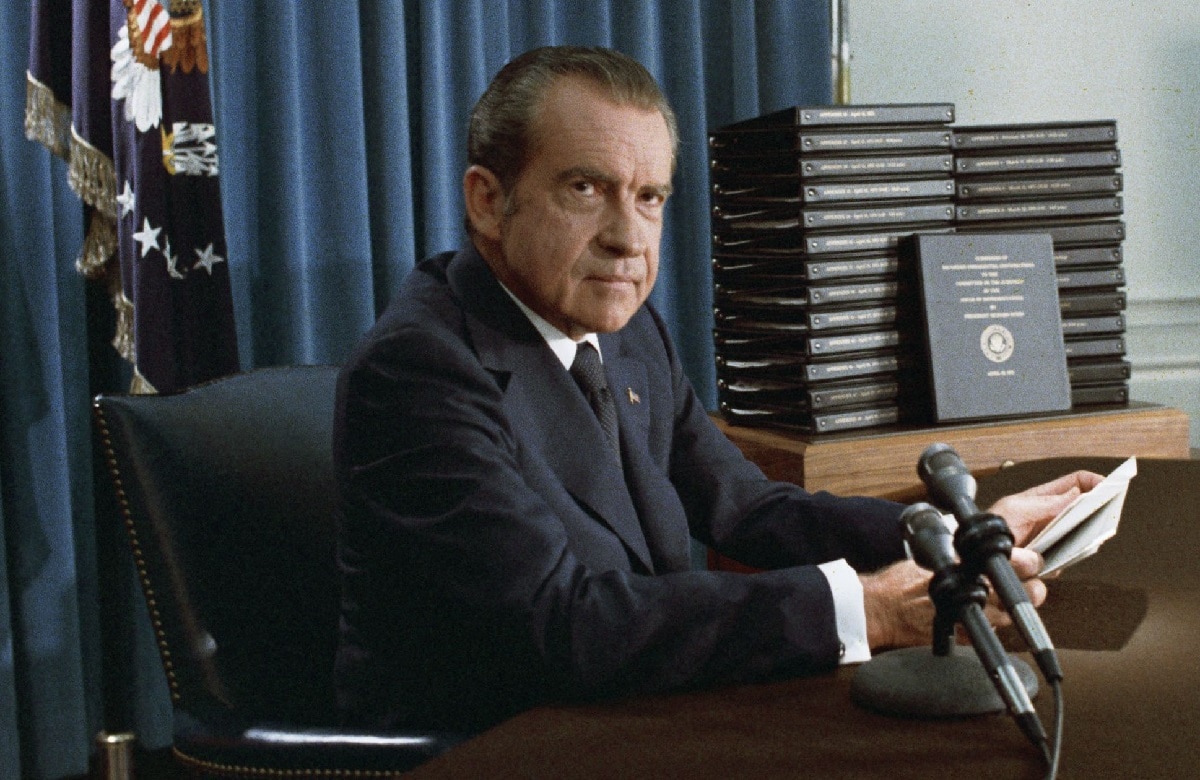
Richard Nixon. Image Credit: Creative Commons.
And, of course, there was the TV campaign advert with the unforgettable jingle: “I Like Ike.” Stevenson’s campaign staff couldn’t come up with anything nearly as catchy. Dwight D. Eisenhower handily won the 1952 presidential election, with 55.2 percent of the popular vote and a 442-89 score in the electoral vote.
This made Ike the first GOP president in 20 years. Stevenson fared even worse in the 1956 election rematch, garnering a mere 73 electoral votes versus 457 for Eisenhower, and a 42.0 percent versus 57.4 percent loss in the popular vote.
The Dwight D. Eisenhower Presidency: A Mixed Bag
Domestically, President Eisenhower is somewhat underappreciated (relative to JFK and LBJ) when it comes to helping desegregate Southern schools and ending Jim Crow laws.
On September 23, 1957, he signed Executive Order 10730, which directed the desegregation of Central High School in Little Rock, Arkansas. This E.O. was given teeth by the deployment of federal troops. In addition, on Ike’s watch, Explorer 1 became the first satellite launched by the United States when it was sent into space on January 31, 1958.
Among Ike’s significant foreign policy accomplishments, he helped bring about the Korean War armistice in 1953 and prevented the 1956 Suez Crisis from escalating into a major conflict.
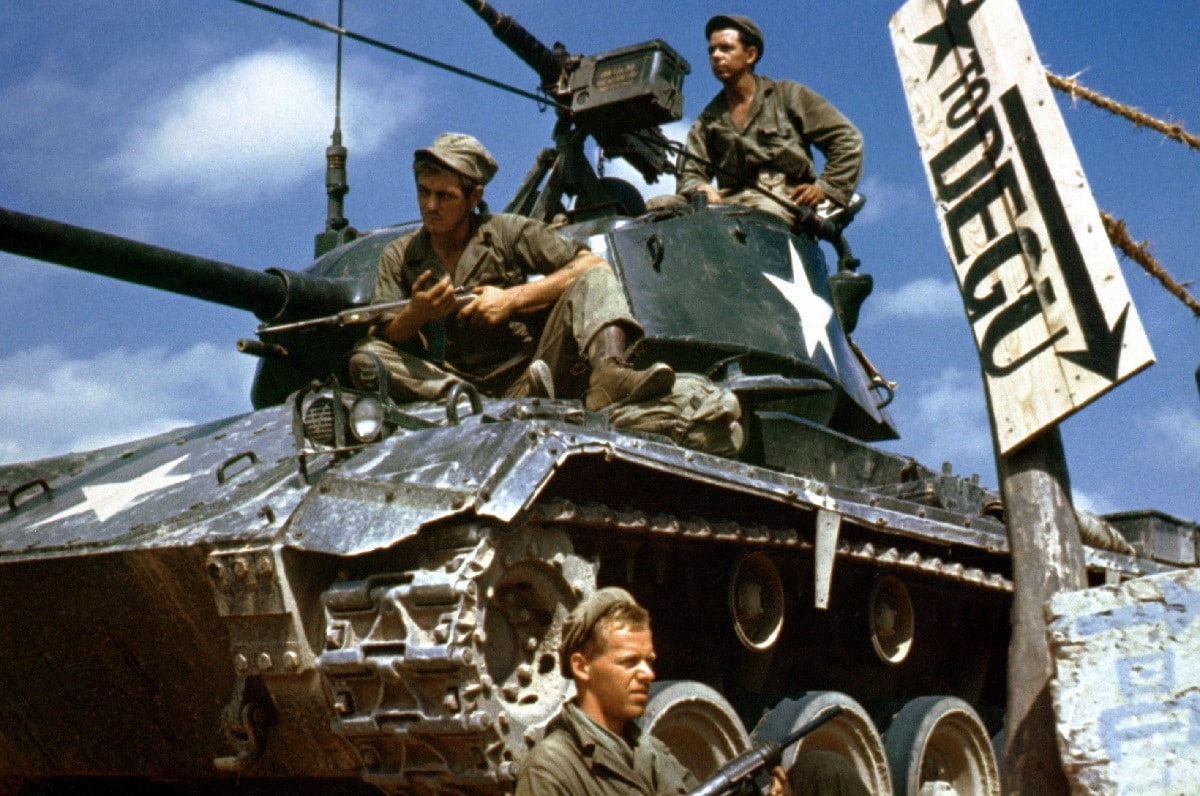
Korean War: Crew of an M-24 tank along the Naktong River front. On the ground is Pfc. Rudolph Dotts, Egg Harbor City, N.J. gunner (center); Pvt. Maynard Linaweaver, Lundsburg, Kansas, cannoner; and on top is Pfc. Hugh Goodwin, Decature, Miss., tank commander. All are members of the 24th Reconnaissance, 24th Division.
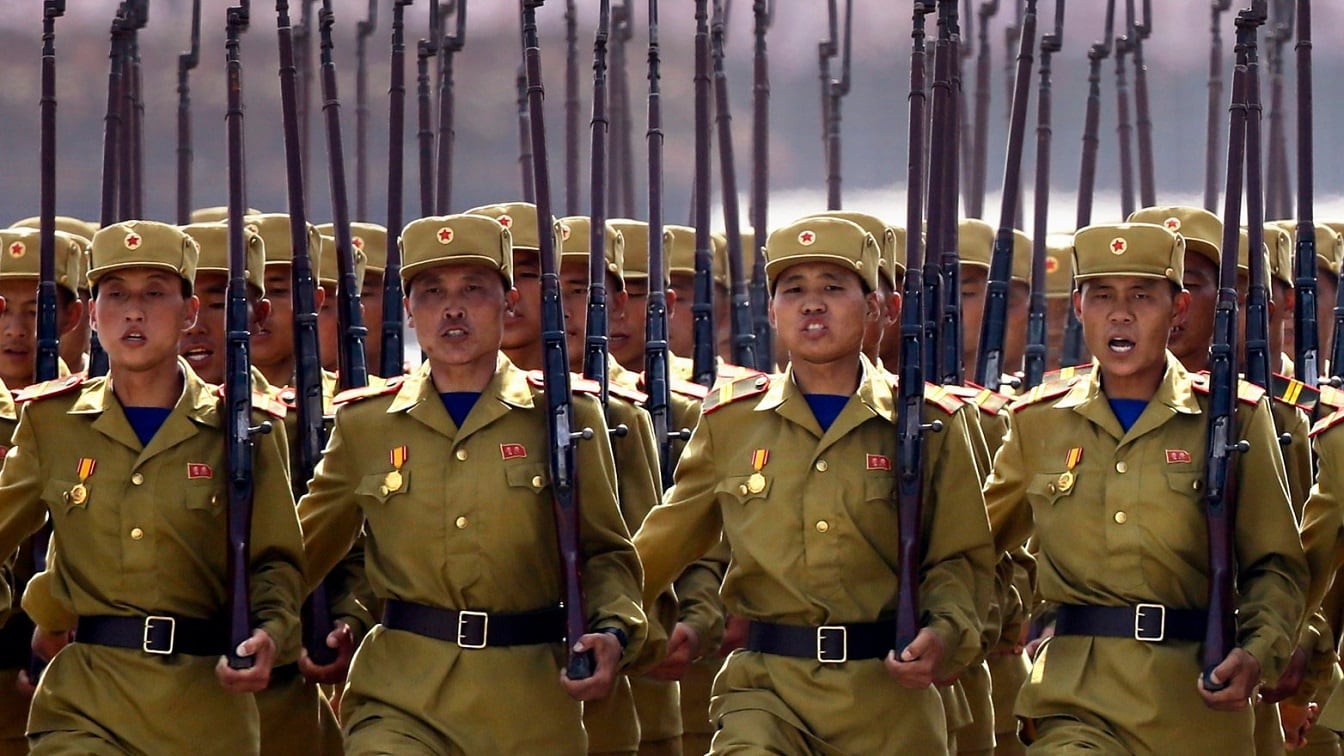
North Korean Military. Image Credit: Creative Commons.
On the flip side, despite having an outspokenly anticommunist vice president such as Dick Nixon, Eisenhower patently refused to lift a finger to help the freedom fighters of the 1956 Hungarian Revolution, thus enabling the Soviet invaders to triumph and forcing the Hungarians to live under Communist subjugation for more than three decades until finally achieving their freedom during the waning days of the Cold War.
That is not so surprising, coming from a former general who refused to pay heed to General George Patton’s prophetic warnings about the Soviet menace during World War II.
About the Author: Christian D. Orr, Defense Expert
Christian D. Orr is a Senior Defense Editor. He is a former Air Force Security Forces officer, Federal law enforcement officer, and private military contractor (with assignments worked in Iraq, the United Arab Emirates, Kosovo, Japan, Germany, and the Pentagon). Chris holds a B.A. in International Relations from the University of Southern California (USC) and an M.A. in Intelligence Studies (concentration in Terrorism Studies) from American Military University (AMU). He is also the author of the newly published book “Five Decades of a Fabulous Firearm: Celebrating the 50th Anniversary of the Beretta 92 Pistol Series.”